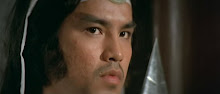
PAYMENT IN BLOOD 1967 aka SETTE WINCHESTER PER UN MASSACRO (SEVEN WINCHESTERS FOR A MASSACRE)
Edd Byrnes (Stuart), Guy Madison (Colonel Thomas Blake), Ennio Girolami (Chamaco Lattimer), Louise Barrett (Manuela), Attilio Severini (Mesa Alvarez), Federico Boido (Fred Calhoun), Alfredo Runachagua (Rios), Attilio Severini (Mesa Alvarez)
Directed by Enzo G. Castellari
 Texas, 1867...the Civil War had ended two years earlier. The Confederate Armies, defeated, had disbanded. The men returned to their farms and homes. Most, but not all. Some men had no homes to return to. Some refused to accept the taste of defeat...and some just enjoyed killing. For these men, the war went on. The most notorious of these outlaw guerrillas was Colonel Thomas Blake...gentleman marauder.

 A renegade Confederate, Colonel Thomas Blake, 'Gentleman Maurader', refuses to accept defeat at the hands of the Union. In turn, he rallies a group of sadistic cutthroats, Blake's Raiders, for a campaign of violence. His plan is to steal $200,000 dollars in hidden money from a retreated Confederate regiment. Belonging to General Beauregard, the whereabouts of the safe is unknown except to one person, Stuart (Byrnes); a mysterious character who served in the regiment that held the strongbox. Stuart discloses that the coveted funds are buried somewhere in a Comanche cemetery, only he doesn't give up the grave in which the money is buried. It soon becomes apparent that everyone has a hidden agenda leading to a final duel between the dwindled members of Blake's gang inside a cave.

 Directed by action specialist, Enzo G. Castellari using his English name, E.G. Rowland, this is a fight filled and brainless action spectacle from a man who could be counted on (most of the time) to deliver a lot of bang for the buck. This Italian western from Girolami's production company showcases production values slightly above the norm. Columbia handled distribution of the film in America. Castellari again proves his dominance as the king of action movies in Italy during the time as he fills his movie with lots of fights, gun battles and explosions. The first ten minutes grabs ones attention with enough battles for a whole other production.

 Compared with the myriad other directors of spaghetti westerns, Castellari was one of a select few able to showcase exciting action set pieces. Of course there were others, but Castellari was very consistent and seldom let his audience down. Granted, he did more bone headed shoot'em up movies than he did cerebral westerns (KEOMA and JOHNNY HAMLET are two examples of the latter), but that isn't necessarily a bad thing, unless you're a western fan that prefers a more serious approach to the material. No one will ever confuse PAYMENT IN BLOOD (1967) for high minded entertainment (nor most any of Castellari's movies for that matter). From an original story by Castellari's dad, Marino Girolami.

 Edd Byrne's is great as the acrobatic and cunning hero, even though he seems like he stepped off of a James Dean picture. Just after the hour mark, the character of Stuart is revealed to be in league with the sheriff in Durango. But then this ruse doesn't last long as the sheriff is found out and Stuart is beat up like so many countless other spaghetti western heroes of films past and future. What's curious is that Byrnes (despite his ruse) is supposed to be playing a Southerner, yet his voice is anything but Southern.
 Byrnes, among his other credits, also co-starred in Castellari's ANY GUN CAN PLAY (1967) and also in RED BLOOD, YELLOW GOLD (1967) directed by Nando Cicero as well as in the unusual split screen horror oddity, WICKED, WICKED (1973) featuring exploitation actress, Tiffany Bowling.

 The movie itself seems to be patterned after Corbucci's seminal HELLBENDERS (1967; a superior variation of THE TRAMPLERS) and a bastardized version of THE MAGNIFICENT SEVEN (1960) with a smattering of FOR A FEW DOLLARS MORE (1965) and THE GOOD, THE BAD & THE UGLY (1966). Also, the relationship between Stuart and Blake is vaguely similar to the one between Chuncho and El Nino in Damiani's classic BULLET FOR THE GENERAL (1966). Stuart even manages to convince Blake that his men may not be trustworthy. But again, as mentioned above, character plays second fiddle to action in Castellari's arena. There's even a nod to Django, "the tomb of the Comanche hero."

 There are several standout scenes in PAYMENT IN BLOOD. The opening ten minutes are a smorgasbord of action as we are introduced to the villains of the film replete with gun battles and explosions. Each villain is different and uses a weapon exclusive to their character in addition to their rifles; one uses a whip, another a knife and another uses his spur to kill. The sequence where Stuart is accepted into the camp is chock full of moments where the villains test Stuart's skill and he returns the gesture in kind. The concluding gun duel also features lots of fancy shooting from the cast members.

 The soundtrack is bombastic and very exciting. Francesco de Masi, one of the unsung contributors to Italian cinema music delivers one of the best and liveliest Italian western scores I've heard. I have a suite of music from the film, about 10 minutes worth on a compilation CD. Morricone will always be the most well known, and to a lesser extent, Bacalov and Nicolai. But de Masi belongs in their ranks as well. The vocal version of the main theme is mentioned in the credits but is nowhere to be heard in this version of the movie. It is present on one of the spaghetti compilation CD's I have.

 Wild East's DVD apparently uses the French disc as its source as some scenes play in French with English subtitles. Oddly enough, the French disc contains an Italian audio track. These subbed bits account for about 3 minutes worth of footage as they are missing from the US release print. A fitfully entertaining movie that contains little a fan hasn't already seen in numerous other movies. Castellari shoots his film with a fast pace and injects enough energy and fresh elements to overlook the fact that there are dozens of similarly plotted westerns out there. Like Castellari's similar KILL THEM ALL & COME BACK ALONE (1968), this is definitely an exercise in style over substance.
This review is representative of the Wild East double feature DVD paired with RED BLOOD, YELLOW GOLD.
For even more spaghetti western reviews, be sure to check out the 'A Fistful of Spaghetti' section of the site. The link is below...
http://www.coolasscinema.com/search/label/A%20Fistful%20of%20Spaghetti
 BOSS NIGGER 1975 aka BOSS
Fred Williamson (Boss), D'Urville Martin (Amos), William Smith (Jed Clayton), R.G. Armstrong (Mayor Griffin), Don "Red" Barry (Doc)
Directed by Jack Arnold
"Yeah, sheriff, I wants to thank ya. Sorry we ain't got time to stay for supper, but, uh, we got us some mo' whitey's to catch."

 Boss and Amos are two bounty hunters trudging across the violent western frontier in pursuit of wanted men. They enter the dusty town of San Miguel and discover there is no sheriff and also learn that the town is lorded over by the vicious Jed Clayton and his gang of cutthroats. With much of the town against them, the two African American bounty killers launch an assault on Clayton's gang eventually rallying some of the town to take up arms against the ruthless bunch of outlaws.

 Fred 'The Hammer' Williamson writes, produces and stars in this companion piece to his previous black westerns, THE LEGEND OF NIGGER CHARLEY (1972) and THE SOUL OF NIGGER CHARLEY (1973). Here, in BOSS NIGGER (1975), comedy seems to be the order of the day due most likely to the popularity of BLAZING SADDLES released the year before. The whole plot device of a black man entering a white town, taking over as sheriff only to receive resistance from the towns inhabitants prior to winning them over after dispelling a threat was the driving force of Brooks' film. Here, it's played for laughs as well, but with much less success. Some of the gags are funny, but they get right silly at times.
 The 'N' word is tossed around with frequent rapidity from both the white and black cast members dozens of times. This film quite possibly holds a record for the most times that word has been uttered on film. Williamson is obviously having fun with this role, much as he seems to enjoy nearly every role he takes on. As to his own testimony, he only does what he wants to do.

 The film opens with this disclaimer from Fred Williamson himself: In 1972 I had just completed THE LEGEND OF NIGGER CHARLEY and THE SOUL OF NIGGER CHARLEY. I made this sequel which you are about to see. I used the 'N' word to create sensationalism at the box office, and all three films were a success. You have to remember that all who used that word against me in those films regretted it. Enjoy the movie. I approve the title and the song with dialog intact. Fred "The Hammer" Williamson, 2008.

 Williamson enjoyed doing western movies as they were economical and cost efficient in that no permits were needed for big action scenes or blowing up cars or buildings. After starring in the above mentioned westerns, Williamson began work on another western entitled BLACK RIDER. The film ultimately became JOSHUA (1976), which began production in 1974. That film was shelved for a time until Williamson could raise the money to finish it. It was one of the first of Williamson's Po Boy Productions (the name of his production company).
 Before the film was completed, another western under the Po Boy banner, ADIOS, AMIGO (1975), was released. That film was a straight up comedy and starred Fred Williamson and Richard Pryor as a couple of bumbling buddies getting into trouble in the old west.

 Comedy also takes up a lot of screen time in BOSS NIGGER (1975) with a lot of it falling flat. There are some very funny moments though, such as one ruffian in a bar asking for Boss to come and shine his boots. Boss pretends to oblige only to shoot a hole right through the mans foot and kill another with his sawed off shotgun. Boss and Amos jail the rest of the troublemakers. A short time later, Jed Clayton comes into town to break his boys out with dynamite. The plan backfires. The same man with the hole in his foot gets left behind and Amos walks up to him and shoots him in the other foot to make sure he won't get away.

 Amos also puts up a list of 'Black Mans Law' around town. Whenever anybody breaks one of the rules (such as uttering a derogatory or racial remark) they are thrown in jail. The rules are broken a number of times resulting in some of the more prominent figures in San Miguel being imprisoned. The laughs cease almost entirely at the one hour mark and the film becomes serious save for one or two minor comedic moments. Boss is eventually captured by Clayton, beaten and has a hole shot through his hand. Amos rescues him setting up the big finale. The ending features an explosive battle between Boss and a few of the townsfolk against Clayton and his gang.

 William Smith is an actor with a massive resume in both film and television. He had previously traded blows with Fred Williamson in HAMMER (1972) where he played one of the main heavies. Smith got some big notoriety as one of three Texas Rangers in the western series, LAREDO (1965-1967) as well as during the last season of the 12 season long cop show favorite, HAWAII FIVE-O (1968-1980).

 Smith is also notable as the king of the biker genre with his starring role in the hugely successful RUN, ANGEL, RUN (1969) which beat EASY RIDER (1969) to theaters by a few months. In BOSS NIGGER, Smith plays the sadistic Jed Clayton and it's the type of role he excelled at; a sleazy, violent and unpredictable miscreant that isn't above killing women and children. Fred Williamson once stated in an interview that William Smith was probably the toughest man in the world during the 1970's.

 D'Urville Martin was a regular face in blaxploitation movies. He was often cast as Williamson's partner in his movies such as his recurring character in both the NIGGER CHARLEY westerns and the two Tommy Gibbs movies, BLACK CAESAR (1972) and HELL UP IN HARLEM (1973), where Martin played the docile Reverend Rufus. Martin was anything but docile as mean Willie Green in DOLEMITE (1975) starring comedy sensation, Rudy Ray Moore. Martin also directed this movie.
 Director Jack Arnold will ring a bell with fans of science fiction movies of the 1950's. Arnold was responsible for some of the most enduring sci fi pictures such as IT CAME FROM OUTER SPACE (1953), CREATURE FROM THE BLACK LAGOON (1954), its first sequel, REVENGE OF THE CREATURE and TARANTULA (both 1955 and both featuring brief roles by Clint Eastwood).
 Following those films is the seminal THE INCREDIBLE SHRINKING MAN (1957) and a couple lesser films like THE SPACE CHILDREN and MONSTER ON THE CAMPUS (both 1958). Arnold later went on to a hugely successful career directing television programs and his name can be seen on the credits of a fair number of GILLIGAN'S ISLAND episodes. Arnold also directed BLACK EYE (1974) also starring Fred Williamson.
 The soundtrack, and its title song, 'Boss Nigger', are a bit out of place considering the setting. Most people would expect a more traditional western sounding score. One of the cues sounds amazingly like equal parts 'Shaft' and the Temptations classic soul song, 'Papa Was A Rollin' Stone' from 1971. The thematically blaxploitation style score is also prevalent in Williamsons' previous black westerns.

 Although the actual filming isn't discussed much in the interviews on the disc, I would assume the film had a short production schedule. Most notably during the big finale, there are several scenes where there are no pick up shots that could have improved the dramatic element of those scenes. One scene involves the battered and bruised Boss leaving his office after Clara Mae has been captured by Clayton. Both Boss and Amos are a distance from the camera as Amos begs Boss to stay in town. The camera never cuts to Boss' face to capture his emotion or even that of Amos. The camera remains stationary as the two go back into the sheriffs office.
 Another example is during the scuffle between Boss and Clayton. At one point they both fall over behind the bar. You hear grunts and punches, but you see nothing for a brief time till the two stand up and continue on in front of the camera. Had there been some inserts during these two scenes in particular, the dramatic tone would have been increased considerably.

 BOSS NIGGER (1975) is an entertaining blaxploitation western film with plentiful action scenes and likable leads and another good villain role for William Smith. Definitely a fun popcorn adventure, it caters very well to those who have a love for politically incorrect films of the 1970's and blaxploitation cinema in general. It's never trying to be a great movie, but it encapsulates the style and a time in movies that will likely never be repeated again.
This review is representative of the VCI Entertainment All Region DVD.
copyright 2013. All text is the property of coolasscinema.com and should not be reproduced in whole, or in part, without permission from the author. All images, unless otherwise noted, are the property of their respective copyright owners.