Monday, April 5, 2010

Remakes: Redux, Or Ridiculous? -- Two Titans Clash


CLASH OF THE TITANS 1981 versus CLASH OF THE TITANS 2010

***Pics from CLASH OF THE TITANS 2010--google images and other websites***

In today's movie going experience, remakes of old favorites has become alarmingly commonplace. Any film that was popular, or amassed a huge following over the years is ripe for the picking at the hands of Hollywood producers. 1981's fantasy film favorite, CLASH OF THE TITANS is one of the more recent. It's difficult where to actually begin with the comparisons and differences as the remake keeps most of the originals characters, adds some new ones and then shuffles everything around.


The remakes director, Louis Leterrier, obviously a fan of the original film, does his best to create a straight up action film modeled on what made Desmond Davis' CLASH so endearing. What it lacks, at least in my eyes is cohesion and characters you either scarcely know anything, or even care remotely about. Some people claim this was also a problem in the original CLASH. I don't quite agree. We learn a great deal about the main characters and even the Gods themselves. You learn of the mischievous and sexual proclivity of Zeus and the vengeful jealousy of Thetis.


In the new film, you are only given a glimpse at what lies beneath Zeus and Hades as individuals. The latter character is, like a number of elements, an addition not present in the 1981 production. Aside from a line or two from a couple of the other deities, you know nothing about them as characters, or whatever traits they may possess. Speaking of the Gods, in the original movie, they made no bones about interfering in man's travails, whether for the good, or otherwise. Zeus looked after Perseus and aided him in his journey. In the new film, man rebels against the Gods and Perseus has a vendetta against them for the deaths of his adopted family. I assume this plot point is supposed to be a parallel for society's growing separation from religion; people preferring to think for themselves without having to be brainfed how you are supposed to act and what you are supposed to do.


Harry Hamlin carrying the head of Medusa in a shot not presented in this fashion in the finished film

Below I will list what else is different between the '81 movie and the 2010 remake since the variances are so vast--

CLASH 1981: Acrisius puts his daughter and her son, Perseus to the sea as retribution for Zeus visiting her one evening and impregnating her. For Acrisius' punishment, Zeus orders Poseidon to "Make sure that no stone stands, that no creature crawls...I command you to let loose the last of the Titans. Let loose the Kraken!! The kingdom of Acrisius must be destroyed!"


Sam Worthington carrying Medusa's head in a bag

CLASH 2010: This time it's Acrisius' WIFE who is ravished by Zeus; only here, it isn't welcomed as Zeus disguises himself as Acrisius, her husband. Out of anger, Acrisius puts his wife and baby Perseus to the sea. He is then struck by a lightning bolt from Zeus which deforms his body.


CLASH 1981: Calibos is the son of Hera. He is transformed into a monster by Zeus for trapping and killing his herd of flying horses with Pegasus (a white horse here and a black horse in the new film) being the only one remaining alive. For this picture, Calibos is urged by his mother to kill Perseus to keep him from accomplishing his mission.


CLASH 2010: For whatever reason, Acrisius, now residing in a cave, or underground grotto, is living (for lack of a better word) under a new alias, Calibos(?) How he comes to be called Calibos is not discussed. He is not the son of a God, or a Goddess in the new film. Here, he is an instrument of Hades to kill Perseus and his soldiers during their journey. There appears to be some exposition missing (I would think this was the case) prior to the first time we see Calibos when he is visited by Hades.


CLASH 1981: Acrisius is killed, along with his city and his people, by the Kraken during the beginning of the film just after the opening credits. The Kraken is seen twice here--once at the beginning and again, more prominently during the finale. The Kraken seen here is the tool of the Gods to pay back defiance. When Andromeda is to be sacrificed to the Kraken, the people of Jappa do not want to comply.


CLASH 2010: The Kraken is seen only once during the movie and that's during the finale. The creature looks vastly different from Harryhausen's creation with the new one bearing more than a passing resemblance to the monster in CLOVERFIELD. Here, the Kraken is the "son" of Hades. As opposed to the original, the people of Argos (destroyed during the beginning of the original) are almost welcoming the sacrifice of Andromeda to the sea beast.


CLASH 1981: When Cassiopeia compares her daughters beauty to Thetis, the head of a great statue of the Goddess falls off and foretells that for her blasphemy, her daughter, Andromeda, must be sacrificed to the Kraken in 30 days.


CLASH 2010: During a grand celebration of Argos' independence from the Gods, Cassiopeia makes a disparaging remark about her daughters beauty in comparison to the Gods. This time, Hades shows up and makes a mess of the place and states that for her insult, her daughter must be sacrificed to the Kraken in TEN days. The vocal Queen also suffers a grim fate in the new film.


The new Medusa was the most eagerly awaited segment of the new CLASH for me and was a bit of a let down. It's not a patch on the originals much more accomplished sequence

CLASH 1981: Much is made of the romance between Andromeda and Perseus. He goes through an ordeal to win her hand having to solve a life threatening riddle. The answer to the riddle lies in the hand of Calibos, which Perseus severs during a battle in the swamp (the circumstances of which are different in the new film). This is also a reason for Thetis orchestrating the death of Andromeda. The film is built around the relationship between Andromeda and Perseus.


Perseus and the Djinn in Medusa's lair

CLASH 2010: There is no romance between Perseus and Andromeda. There's really no romance at all in the entire film. There is a new character added, a demi-god named Io who has something of an attraction to Perseus. More time is spent with her than Andromeda. Very little time is even spent with Andromeda and her impending sacrifice to the Kraken has no meaning, or build up whatsoever. It comes off as something of an afterthought amidst all the action.

CLASH 1981: There's an entire adventure involving Perseus obtaining the white winged horse, Pegasus. The flying steed is an integral part of the movie and gets quite a lot of screen time. Pegasus is the most prized pet of Zeus.

CLASH 2010: Perseus more or less happens upon Pegasus, this time a black stallion. There's no mention of him prior to Perseus finding him in a forest and the winged equine is barely in the movie at all relegated to almost cameo status. There's no mention of Zeus having a flock of flying horses, just that Pegasus must be a gift from the Gods.


The best damn scene in the original CLASH OF THE TITANS

CLASH 1981: The Gods give Perseus a number of gifts to help him on his long and treacherous trip to save Andromeda. Zeus gives him a sword, a magic helmet that makes him invisible and a special shield which upon seeing Zeus's image glaring in it, tells him "Guard well this shield...for one day, it will guard your life." He is later given a mechanical owl named Bubo, a character aimed at the children in the audience. Bubo later rescues Pegasus after having been captured by Calibos.


The new Stygian Witches look cool and all, but seem like they're just thrown in and do not have the gruesome appeal of the three cannibalistic non-cuties from the '81 film

CLASH 2010: For the new film, Perseus gets a sword that only he can wield. There's no helmet or shield from Zeus. He does get a shield from the Djinn fashioned from the skin of the scorpions. He finds Pegasus out in the forest and he's seen only sporadically from there till the end. Actually, I think the winged horse isn't seen again until the finale although I don't quite remember. Bubo puts in a cameo appearance for all of ten seconds and that's it.


CLASH 1981: The battle with the scorpions takes place just prior to the Kraken sequence. The scorpions are born from the blood of Medusa. Calibos stabs her decapitated head and the blood hits the ground creating the scorpions.


In Hollywood movies today, everything has to be 'Big, Bigger, Biggest' while the plots and characterizations are 'small, smaller, smallest'.

CLASH 2010: For the remake, this fight is pushed up towards the middle. The scorpions are born after Calibos has his hand cut off during a fight between Perseus and his troupe of warriors. The scorpions here are at least three times bigger than the ones seen in the original film. What is most confusing is that a new character is introduced here--the Djinn. They also have giant scorpions of their own, so when they appear with even BIGGER arachnids, it makes this sequence a bit perplexing.


Now for one of the biggest alterations which was the sequence I was most looking forward to--the Medusa sequence....


Did I mention how great this sequence is? If you never see the original CLASH, you should at least watch this damn fine scene in its entirety

CLASH 1981: In what is quite possibly the best sequence of Harryhausen's esteemed career, the duel between Perseus and Medusa was a scene immersed in suspense and smothered with intense terror. The reference mentioned above regarding Perseus' magical shield comes into play here during this awesome scene. Everything in this sequence reeks of perfection. So perfect in fact, that Luigi Cozzi laughably ripped it off in his unintentionally hilarious HERCULES 2 (1984) starring Lou Ferrigno.


CLASH 2010: The Medusa sequence in the remake replaces the suspenseful buildup of the original with a cosmically shallow, video game oriented "run-and-gun" scenario. The remaining group that follow Perseus into the underworld are killed off here. The filmmakers even lace this scene with humor of all things. Medusa attempts to turn the Djinn to stone, but after three or so tries, the thing just laughs at her while she has a right dumbfounded look on her face. The scene itself isn't terrible, just terribly different from the perfection of the original.


At one time one of the top most requested movies on Turner's cable channels, the original CLASH slays the new one with veritable ease.

As already mentioned, the characters are simply cardboard cut outs to be used as fodder for the various creatures seen during the many action set pieces. A lot of them seem unnecessary (including two comic relief hunters) considering how little screen time they are given. In the original film, Perseus is shown honing his sword fighting skills over a period of time. In the new film, he learns in just one scene how to brandish his blade.


Andromeda is offered to the Kraken much to the delight of the seemingly bloodthirsty Argosians

One of the biggest cardinal sins of the new film is that Andromeda is a side character whom you only see in a couple of scenes. Her supposed sacrifice to the Kraken has no lasting importance (unlike the first film) considering there is no connection, or romance (nor the possibility of one) between herself and Perseus.


Also, the action scenes fall prey to pretty much every Hollywood movie of recent memory. They are shot often in close up and bearing rapid editing which often makes it extremely difficult to ascertain just what in the hell is going on onscreen. The camera and the editor seldom allows a scene to breathe even momentarily so we can enjoy what substance these bits possess. The grandeur of the real locations are the one saving grace, though. The score is vastly different from the original movie as well. The '81 CLASH had a thunderously big, bold and romantic score that covered the spectrum of a huge epic. The new movies soundtrack is fine, but abrasive and angry with nary a quiet moment that I can recall. It's good, but lacks the scope of Laurence Rosenthal's cues.


Perseus converses with the Stygian Witches in the new version of CLASH OF THE TITANS

Getting back to the characters, the Stygian Witches pretty much act in the same capacity only their cannibalistic tendencies are never mentioned (if they were, I missed it considering how fast everything moves). The bulk of their dialog is lifted from the original movie. The one major difference in this sequence is that Perseus and co. never get too close to them since they crave human flesh. Here, in the new film, Perseus even lets them feel him up! Unlike the original, there's no buildup to making the journey to their lair and the danger involved upon meeting them. It's all like, "We have to go to the Stygian Witches to find our next stop and big action set piece."


Everything surrounding Charon is a surreal nightmare...everything but Charon itself

Charon, the Ferryman of the river Styx is a lot different here from the original movie. The filmmakers did an incredible job creating the set for the unholy river and Charon's vessel dragged by zombies. However, Charon looks a tad bit disappointing. In the original movie, he was a skeletal monstrosity clad in a black hooded cloak, his bony hands being visible as he guides his boat to Medusa's lair. For the 2010 update, the cloak is gone and Charon resembles a haunted carnival attraction.


Death of Dioskilos

Also gone is the duel with Dioskilos, the giant two headed canine guardian of Medusa. Calibos' giant vulture is also excluded from the new film. As already mentioned, the Gods themselves are largely absent from the new film whereas they feature in a great many scenes from the 1981 original. Liam Neeson relished the chance to appear in this production, but his performance pales to the one essayed by Sir Laurence Olivier in the original.


Sir Laurence Olivier as Zeus

Director, Leterrier has stated his excitedness at the prospect of producing the two proposed sequels which he says will be much bigger than the first one. Hopefully when the remake hits DVD, it will be a better movie, as opposed to the 'Loud & Proud' production it presents itself as. In its current incarnation, it doesn't hold a candle to the wonderful original movie. If you are unfamiliar with the MGM film from 1981, or didn't like it for whatever reason, than this new version will likely present little problem for viewers. Fans of the original may end up being terribly disappointed.


Perseus & the Stygian Witches from the 1981 version

CLASH OF THE TITANS 2010 follows Hollywood's current stance of style over substance and action over exposition. I had high hopes for this one, but while it has its moments, it's ultimately a major league disappointment. Lacking the scope and adventure of its source material, the new CLASH is all flash and no focus.


Friday, April 2, 2010

Sins of Celluloid 3: The Most Controversial, Disturbing & Essential Exploitation/Grindhouse Movies

LONE WOLF & CUB: SWORD OF VENGEANCE

***WARNING! This article contains images of a sexual nature, nudity & bloody violence***

When most people think of Japanese cinema, generally the first thing that comes to mind are movies that feature giant monsters destroying Tokyo and aliens from outer space. Others will no doubt add warring samurai films to that list. Like Hong Kong movies (which most think of as being solely made up of kung fu flicks), there is so much more to Japanese cinema, as fans will wholeheartedly attest.


HANZO, THE RAZOR: SWORD OF JUSTICE

With Japanese film studios desperate to win back their audiences, having lost much of them to television, producers took a more salacious and graphic approach to moviemaking. Studios such as Nikkatsu and Toei began churning out the most demented and incredibly violent movies unlike anything that had been seen at that time.


INFERNO OF TORTURE (1969)

This resulted in a long list of films littered with corpses covered in gore drenched viscera left behind by vengeance seeking ronin. There was also a series of extreme sex and gore torture films that were unlike anything seen before or since. There were also films that melded sex and samurai's, blood and breasts, bone breaking, limb ripping Karate masters and sword wielding lady avengers. This was a time of creativity that bordered on the depraved and the ingenious.


A woman is brutally tortured and has her eyes gouged out in Teruo Ishii's INFERNO OF TORTURE aka HELL'S TATTOOERS from 1969

One of the masters of the macabre and endearingly grotesque was eccentric filmmaker, Teruo Ishii. He directed over 80 movies during his long, fascinating and controversial career. Other directors that excelled during this period are ace exploitation director, Norifumi Suzuki who also directed some of the best and most recognized 'Pinky Violence' actioners.


Meiko Kaji in FEMALE PRISONER #701: BEAST STABLE

This period during the late 60's and throughout the 1970's is a unique time in Japanese cinema that produced some truly choice and unique films that are exceedingly appealing even today alongside flashier, more expensive fare. Seeing these films now, some may be shocked and surprised at the level of insane depravity some of the movies mentioned below contain. The twelve listed below are only a small sampling of the wild, woolly and wholeheartedly weird world of Japanese exploitation movies. Some of the films listed are considered true classics of their respective genres while others are notorious for their taboo trashing excess.


One of the lighter moments from the sadistic SHOGUN'S SADISM (1976) aka OXEN SPLIT TORTURING

There are other notable movies not included on this list, but are still well worth tracking down. In some cases, this depends on how strong a stomach you have, or whether or not you are easily offended. These include the nauseating SHOGUN'S SADISM (1976;aka OXEN SPLIT TORTURING) and one of the sequels in Teruo Ishii's 'Joy of Torture' series, INFERNO OF TORTURE (1969;aka HELL'S TATTOOERS). The former is simply one of the most grueling cinematic experiences you are ever likely to come by.


OXEN SPLIT TORTURING

In SHOGUN'S SADISM, the sheer onslaught of torture, extreme gore, death, sleaze and sex is a mind melting experience. BLIND WOMAN'S CURSE (1970) is another Ishii film starring Japan superstar, Meiko Kaji. It's a mixture of Yakuza, chambara and horror thrills. Also starring Kaji are the two WANDERING GINZA BUTTERFLY films, the second co-starring international fan favorite, Sonny Chiba. Yet another Ishii sleaze fest is FEMALE YAKUZA TALE: INQUISITION & TORTURE from 1973, the sequel to Norifumi Suzuki's SEX & FURY released the same year.


Miki Sugimoto in ZERO WOMAN: RED HANDCUFFS (1974)

The following list is an eclectic selection of exploitation from the land of the rising sun produced during the 1960's through the 1970's. There's a little bit of everything in the films featured below. Sex, violence, gore, nudity, torture, disturbing imagery and definitely movies of questionable taste. One attribute viewers will notice in some of the films mentioned below is how artfully shot and directed some of them really are. It elevates the material to a whole other level creating a fascinating bridge between innovation and exploitation.


CELLULOID SINS PART 3: MADE IN JAPAN


JOY OF TORTURE 1968 aka SHOGUN'S JOY OF TORTURE aka TOKUGAWA ONNA KEIBATSUSHI


Teruo Ishii, a danger seeking and envelope pushing director of some of the most salacious films to ever seep from Japan cinema screens, made a name for himself with this film series of nasty little numbers. The director helmed at least eight of these movies all bearing the traits of showcasing the brutal torture and death of (mostly) women. Ishii's 'Cinema of the Grotesque' began with this seething, unnerving omnibus of three stories of sex, violence and torture during the Tokugawa Era of Japan. The first tale deals with an incestuous relationship of a brother and sister that ends badly for all involved. The second tale has to do with libidinous nuns and the torture that results from betraying ones vows. The third and final story deals with a tattoo artist who captures the pain of women in his body sketches.


Ishii shows a lot of flair here despite the tone of the film being despicable and misogynistic in the extreme. Other entries in this series vary in "quality", but this first film starts things off on a professional note despite all the disturbing scenes of violence on display. Of the entries I have seen in this series, they all begin with various spectacularly gruesome death scenes during the opening credits sequence. Here, a woman is lynched (Japanese reference; not hanged, but tied up and dangled from a tree) then decapitated and her body cut in half. Another woman is burned alive and a third is pulled into a giant blade by two oxen splitting the woman in half.


Ishii's movie is preoccupied with the pain and agonizing torture of women. There's an entire genre of movies that feature women in radical bondage scenarios. Some of that is explored here in extreme detail. The last story in particular features a demented torturer defiling a group of European female Christians. It's a well made production, despite the sole point of titillation being the subjugation, torture and ultimate death of women. Men are killed, too, but not in the degrading fashion of the females featured throughout the film. JOY OF TORTURE isn't a film for every horror fan. If you find such productions as HOSTEL (2005) and MARTYRS (2008) appalling, than you will probably wish to steer clear of this movie.


HORRORS OF THE MALFORMED MEN 1969 aka KYOFU KIKEI NINGEN: EDOGAWA RAMPO ZENSHU


Teruo Ishii's bizarre, disturbingly surreal tale stitched together from numerous works of famed Japanese author, Edogawa Rampo, is the single most outrageous film on this list. Banned shortly after its release in Japan, it is still banned today in its native state. It managed to garner an extras packed US DVDebut courtesy of Synapse Films a few years ago. Ishii has directed a fair number of the films on this list which should give some idea as to what type of cinema he was interested in.


A director prone to scenes of shocking violence and extreme sexuality, HORRORS OF THE MALFORMED MEN is of curiosity value to anyone with an interest in Japanese horror films. Upon seeing the film, viewers familiar with Japanese films like the RINGU series will notice images representative of Yurei, Japanese ghosts with long, straggly hair and white painted bodies. The plot is confusing at times. If you're not paying attention you will get lost amongst the miasma of absurdities and grotesque imagery.


The film concerns a man named Hirosuke Hitomi. He finds himself inside an insane asylum suffering from nightmares and not knowing how he got there in the first place. He escapes the asylum and following a series of clues, makes his way to a seaside hamlet where he discovers he is a dead ringer for a deceased aristocrat. Taking that man's identity and successfully fooling his quirky family, Hitomi then journeys to a mysterious island to meet the dead man's father, a disfigured scientist conducting inexplicable experiments on the inhabitants. From there, Hitomi learns of his past and how he connects to the strange family.


Ishii's movie contains a lot of offensive material with a lot of it being of a sexual nature. Anyone familiar with Ishii's ultra violent 'JOY OF TORTURE' films and his bloody 'Pinky Violence' exploitation pictures will know what to expect from this totally insane cinematic experience. The problem with the movie involves Japan's sensitivity regarding the deformed. The films literal Japanese title is something that apparently is forbidden to speak in society. Even the poster artwork is distasteful. Considered derogatory in the extreme, the film has been swept under the rug in Japan and only shown a scant few times one being in memorial of the directors death in 2005.


LONE WOLF & CUB 1972-1974 KOZURE OKAMI (various titles)


SWORD OF VENGEANCE (1972)

Released here as SHOGUN ASSASSIN by Roger Corman in a severely compromised version, much of the original movies exposition was eliminated, but wholesale scenes of dismemberment and massive blood sprays were retained. Melding the first and third films in this six movie series, SHOGUN ASSASSIN was born. Brimming with extreme gore and violence, SHOGUN ASSASSIN was a mystical period Samurai tale about a betrayed Shogunate decapitator traveling the road of vengeance slashing his way through a multitude of attackers till he gets to the Shogun himself.


WHITE HEAVEN IN HELL (1974)

Tomisaburo Wakayama (brother of Shintaro Katsu of ZATOICHI fame) sliced a name for himself assuring LONE WOLF & CUB would be remembered for years to come. The outrageous level of blood and gore gave birth to a sub genre of Jida Geki movies that featured geysers of spurting blood and severed limbs. SHOGUN ASSASSIN was a seriously stripped down version of both SWORDS OF VENGEANCE and BABY CART AT THE RIVER STYX. Cutting out much of the dialog, what remained was a cavalcade of cruelty and extreme gore. Well worth seeking out.


BABY CART IN PERIL (1972)

The popularity of this six film series began with the release of a hugely successful manga that was released in 1970. First Publishing in America released a translated version of most of the manga in the late 1980's. The films are SWORD OF VENGEANCE, BABY CART TO HADES, BABY CART AT THE RIVER STYX, BABY CART IN PERIL (all 1972), BABY CART IN THE LAND OF DEMONS (1973) and WHITE HEAVEN IN HELL (1974).


WHITE HEAVEN IN HELL (1974)

The basic premise concerns the betrayal of the royal decapitator for the Shogun. He becomes an outlaw and travels around with his young child complete with a weapons laced baby cart. Together, Ogami Itto cuts down various assassins and Yagyu clan killers on a mission of bloody vengeance to get to the Shogun himself. The way the sixth film ends, it's almost as if more films were planned, but never made.


BABY CART IN PERIL (1972)

These pictures inspired a small number of like minded arterial spraying, gore drenched chambara actioners. The TRAIL OF BLOOD trilogy is one example and LADY SNOWBLOOD (1973) starring cult fave Meiko Kaji is another. Wakayama also starred in the ultra violent jida geki show, THE MUTE SAMURAI as well as a villain in the Sonny Chiba fantasy horror picture, MAKAI TENSHO (SAMURAI REINCARNATION 1981) during his incredible career. This monumental and influential series was a co-production between Toho and Katsu Productions. It's required viewing for all Asian film fans.


HANZO, THE RAZOR: THE SNARE (1973)

HANZO THE RAZOR 1972-1974 GOYOKIBA (various titles)


Shintaro Katsu beats his meat in HANZO, THE RAZOR (1972)

Zatoichi himself, Shintaro Katsu, stars in this bizarre trilogy about a constable fighting criminals and corruption in Edo era Japan. Like many other Japanese films, the Hanzo series was based on a popular manga. Hanzo uses his sword to cut down villains and uses a different sword to interrogate female prisoners. He rapes them with his huge penis only to have these women succumb to his sexual prowess to become infatuated with him.


Assassins spring a trap in the house of Hanzo from THE SNARE

Hanzo frequently flagellates his "razor" to make it stronger and also strengthens it by having intercourse with large bales of rice. He also lives in a home laced with assorted booby traps.


Hanzo "interrogates" a woman with his "razor".

A far cry from the Zatoichi films of the previous decade, chambara films were prime for a change of one sort to another. Produced during a time of shifting movie trends in Japanese cinema, these three films mixed blood, sex and sleaze to create a memorable series of films made all the more jarring in that Katsu takes the lead in all three. You won't quite look at Zatoichi the same way again, even though the persona of Hanzo more closely resembles Katsu's personality than the Blind Masseur ever did. Famed director, Kenji Misumi, helmed the first entry. The first film has a score that would seem right at home in a blaxploitation movie; it adds to the overall weirdness. The three films are SWORD OF JUSTICE, THE SNARE and WHO'S GOT THE GOLD?


Fans of Katsu will no doubt wish to see what the enterprising filmmaker was up to outside of his hugely popular Blind Swordsman series. While this trilogy is far from matching the quality of those wonderful chambara movies, the character of Hanzo is truly unique and totally outrageous. Easily the most eccentric and off the wall character of the films on this list, they're worth a look for there notably quirky qualities alone.


FEMALE CONVICT SCORPION: JAILHOUSE 41 (1972)

FEMALE CONVICT SCORPION series (starring Meiko Kaji) 1972-1973; various titles


FEMALE PRISONER #701: SCORPION (1972)

This hugely popular and influential series of violent actioners are some of the most highly regarded in Japan's unique pantheon of exploitation history. Like so many other genre product from Japan, these movies were inspired by a popular manga series. With the 'Women In Prison' genre getting into full swing with the release of Jack Hill's THE BIG DOLL HOUSE (1970), Shunya Ito's series contains all the expected ingredients indigenous to the genre. Opposing the more salacious approach of his contemporaries, Ito opts to shoot his movies in a totally original and incredibly surreal fashion that sometimes defies its exploitation ties.


JAILHOUSE 41

Meiko Kaji (LADY SNOWBLOOD) is the star of the first four movies which lasted for seven entries and later, some direct to video productions of inferior quality. The four more popular productions are FEMALE PRISONER #701: SCORPION, FEMALE CONVICT SCORPION: JAILHOUSE 41, FEMALE PRISONER #701 SCORPION: BEAST STABLE and FEMALE PRISONER #701 SCORPION: GRUDGE SONG. Released in a nicely packaged box set by Media Blasters, only three of the films are featured. The second and probably most popular entry, JAILHOUSE 41, is not among the set. The fourth film is the weakest of the quartet. Each film carries over into the next entry and features much of the same cast from one film to the next. Arguably, the CONVICT SCORPION series (the ones directed by Shunya Ito at least) are the most artfully directed of the whole 'Women In Prison' genre.


JAILHOUSE 41

These four films (most particularly the first three) contain some of the most mesmerizing cinematography and entrancing scenes of beauty you will ever see. The first three films, with special notice to the classy second entry, border on avant garde, but with an accent towards sleaze. Unusual, exceptional and truly extraordinary, Kaji's star turns as the 'Scorpion' solidified her as the reigning Queen of Toei's violent action films of the 1970's. Fans of Asian cinema will not be disappointed.


Reiko Ike as Ocho Inoshika

SEX & FURY 1973 aka FURYO ANEGO DEN: INOSHIKA OCHO


Christina Lindberg and a Japanese prostitute perform for a sleazy patron

Norifumi Suzuki's 'Pinky Violence' classic is a convoluted story detailing a gambling thief named Ocho seeking out her fathers killers. Along the way, she promises a dying man to free his young sister from a prostitute ring and partakes in a gambling match between an equally skilled European spy named Christina. There are several story arcs for the various characters. The European woman (played by Swedish starlet, Christina Lindberg), a whore herself, had a prior relationship with a Japanese man. The two reunite, but their reunion is short lived during the blood soaked finale. Ocho (played with spirited zeal by Reiko Ike) enjoys meting out bloody retribution; preferably naked.


During one of the more astonishing sequences, she combats a group of killers completely naked in the snow. Considering showing genitalia was a no-no in Japanese cinema, the director expertly gets around this by shooting the scene with a lot of ingenuity. Also, Ocho revels in being covered in blood. During both this fight and the violent battle at the end, she ends up splattered with crimson. The films ending recalls the ending of Chang Cheh's THE BOXER FROM SHANTUNG released the year prior. Ocho takes a lot of punishment, but keeps on going till the last villain is cut down. Christina Lindberg, the star of the overrated THRILLER, A CRUEL PICTURE (1974), gets naked a lot along with a number of other women in the film. She is likewise abused, but embarks on some torture of her own towards the end of the film.


Teruo Ishii directed the even sleazier sequel, although it's slightly less fun than Suzuki's film. Euro-sleaze fans will surely want to check this one out because of the participation of erotic actress, Lindberg. Sexploitation specialist, Suzuki also directed the offensive, yet beautifully shot, CONVENT OF THE SACRED BEAST (1974;aka SCHOOL OF THE HOLY BEAST;also on this list), a prime example of the nunsploitation genre. He also directed one of Sonny Chiba's more popular movies, SHORINJI KEMPO aka THE KILLING MACHINE (1975). It featured a downright nasty scene where a rapist has his penis cut off and fed to a dog.


LADY SNOWBLOOD 1973 aka SHURAYUKIHIME


Toshiya Fujita's somber, hopelessly depressing vengeance classic is arguably, the signature film of action actress, Meiko Kaji. While she came to fame with her 'Sasori' character, Her character of Yuki Kashima has been the subject of a lot of attention in recent years. An accomplished singer, Kaji also performs the theme song, 'Flower of Carnage'. Kaji has also performed the vocals on some of her other movies as well. Kaji also featured in several of the more famous violent Yakuza gangster pictures prominent at the time.


Kaji plays Yuki, a vengeance starved young woman out to kill the bastards responsible for her family's murder. Her father and brother are viciously cut down and her mother is taken and brutally raped. She managed to kill one of the four attackers, but is put in prison. In an attempt to get pregnant for purposes of revenge, the woman gorges herself on sexual encounters. Eventually getting pregnant, she dies shortly after giving birth to Yuki. The young girl then trains for the day in which she can avenge her family to lay their souls to rest.


Fujita's movie is the simplest of exploitation storylines, but guided with an assured hand resulting in a polished piece of grim filmmaking. With an exaggerated amount of blood and gore, it's an easy sell for fans of the LONE WOLF & CUB series. Fujita's movie is as well made as any of that series' entries, but probably more sadistic. There was also a Hong Kong kung fu movie that adapted the same storyline in 1977 entitled BROKEN OATH. That film starred Angela Mao Ying in the Kaji role.


Tetsuro Tamba takes on an army of Bohachi warriors

BOHACHI BUSHIDO: CODE OF THE FORGOTTEN EIGHT 1973 aka BOHACHI BUSHIDO: PORUNO JIDAIGEKI


Teruo Ishii's "porno" chambara exploitation spectacular is a hugely enjoyable exercise in excess. Yet again, it's inspired from a manga, this one from LONE WOLF & CUB creator, Kazuo Koike. It's shocking to see revered Japanese actor, Tetsuro Tamba participating in a film such as this. This notion extends to those who worked on the film as is stated in one of the interviews on the US DVD. Tamba is reserved throughout the movie maintaining his composure even during the fight scenes. There's an incredible amount of sex and nudity in this movie and a healthy amount of splashing blood and flying limbs.


Tetsuro Tamba (right)

Tamba is Shino, an outlaw ronin saved from suicide by members of the Yoshiwara Bohachi clan. Revived in a most ingenious manner (he's "brought back to life" by two naked women writhing and kissing all over him), Shino is offered a place with the Bohachi, a clan of outcasts who have forsaken the eight virtures to embark on a life of debauchery and torture. The seedy clan run prostitution rackets and other sleazy endeavors as "Beasts masked in human flesh". Realizing his sword skill, the Bohachi enlist Shino to take out their competition with plans of getting rid of him soon afterwards. Things don't go according to plan and Shino flashes his blades against the Bohachi who hired him.


Ishii strikes again in this low budget feature from the purveyors of trash excellence, Toei Studios. Ishii's film is imbued with a Bavaesque color palette that makes the most of the predominantly studio bound set pieces. The sword battles are secondary to the sex and sleaze, but there are a handful of fights, only don't expect samurai excellence on the level of a Zatoichi film, or ones with Tomisaburo Wakayama, or Raizo Ichikawa. Tamba is still good in these scenes, they just don't resonate on quite the same level as one of the more "respectable" samurai entries.


The sinister Order at the CONVENT OF THE SACRED BEAST

SCHOOL OF THE HOLY BEAST 1974 aka CONVENT OF THE SACRED BEAST aka SEIJU GAKUEN


Exploitation ace, Norifumi Suzuki directs what I presume to be the first in a sporadic string of Japanese nunsploitation movies. Besides being incredibly offensive and overly blasphemous, Suzuki's movie is brimming with striking compositions and some incredible imagery. Christians will no doubt be totally offended by such scenes as self flagellation, lesbian nun action and countless bizarre scenes of topless girls wearing their habits.


Incest, a mass naked communion and a wholly distasteful sequence wherein a young nun is tortured into confession by urinating on a figurine of Christ are just some of the more questionable bits. Even with the high level of taboo breaking salaciousness, Suzuki masterfully turns a trashy, depraved movie into something meticulous and overly artistic.


Yumi Takigawa

The film deals with Mya Takigawa enjoying one final night of debauchery (she even takes in a showing of the Eurocrime film, BIG GUNS) before joining a nunnery in an effort to find out what happened to her mother who was also a member of the Order. It takes a while before you actually learn just what Yuki's intentions are, but until then, it's one series of gratuitous events after another. HOLY BEAST is one of, if not the most odious film on this list.


Miki Sugimoto during the opening moments of ZERO WOMAN

ZERO WOMAN: RED HANDCUFFS 1974 aka ZEROKA NO ONNA: AKAI WAPPA

Miki Sugimoto was already an established 'Pinky Violence' starlet when she got around to starring in this successful and glaringly misogynistic comic book film. Yet another in a long line of manga based movies, the 'Red Handcuffs' of the title are the seemingly magical weapon Rei uses to take down her targets. She is totally adorned in red clothing as well. The color red is in excess in this film and Toei surely must have spent a bundle on the red stuff. A direct to video series of ZERO WOMAN movies surfaced two decades later. Tetsuro Tamba has a supporting role in one of the more guileful and seedy roles of his career.


Sugimoto is Rei, a cop who delights in excessive force and one occasion wherein she removes a man of his manhood puts her in prison. When the daughter of a politician is kidnapped by an out of control gang of rapists-murderers, Rei is enlisted as a member of an "above the law" unit of the police force to infiltrate the gang and get the young girl out alive. If she is successful, she wins her freedom.


Interestingly, the plot point of the secret squad of police who act outside the law mirrors the similar storyline of the hugely successful Italian crime classic, EXECUTION SQUAD (1971). Oddly enough, Yukio Noda's movie rarely acts within the realm of reality, or sensibility. Virtually no one in the film is noble, or virtuous in any way. The police are just as vile and sadistic as the cruel gang of rough-housers they are in pursuit of. The film is loaded with extreme violence and vicious scenes of beatings and rape. I SPIT ON YOUR GRAVE (1979) comes to mind in some sequences. Still, there are some nice visual touches that never manage to raise this production above complete trash.


THE STREETFIGHTER 1974 aka GEKITOTSU! SATSUJIN KEN (CLASH! THE KILLING FIST)


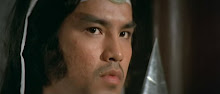
When Chiba begins making faces like this, you are in serious trouble

Quite possibly the single most famous Asian exploitation movie on this list. Sonny Chiba ripped and hammered a name for himself amongst gore fans everywhere with his amazingly over the top performance as half breed mercenary, Tokuma Tsurugi. Bones break and the blood flows freely in this wild Toei production that became the first film to be rated 'X' based on its gruesome action content. The film has a massive cult following around the world. Many of Chiba's other movies are overshadowed by this production. The extravagant characters and the violence are keys to the films success. The score is one of the most memorable of its kind.


Chiba plays the ultimate anti hero who finds himself in hot water when he refuses to do a kidnapping job for the Mafia. He also gets into trouble when a brother and sister can't pay his asking price for freeing their lawbreaking, Karate chopping sibling from the hangman's noose. Accidentally killing the brother and selling the sister into prostitution(!), the man Chiba freed comes after him with a vengeance. He soon discards his less than honorable ways just prior to laying waste to the mobsters in one of the most brutal and violent finales in martial arts cinema history.


Tokuma Tsurugi (Chiba) threatens Etsuko Shihomi, later to become a movie star in her own right

Chiba returned to the character for two more films. RETURN OF THE STREETFIGHTER might have actually been the better movie were it not for a lot of stock footage ported over from the first film. There's still a good amount of gory violence on hand to make it worth a look. The third film is an embarrassment as some serious tinkering has been done with Chiba's character. It has its moments, but not enough to recommend it. One of the most infamous films of its kind, THE STREETFIGHTER is prime entertainment for sleaze fans.


THE EXECUTIONER 1974 aka CHOKUGEKI! JIGOKU KEN (DIRECT HIT! HELL FIST)


Sonny Chiba stars in this bizarre Teruo Ishii directed sleaze-gore action film. Chiba plays Koga, a very similar character to the one he made famous in THE STREETFIGHTER. For this one, Chiba is partnered with two other hired killers to tackle a Japanese drug cartel. Possessing the same lunatic aura of Chiba's more widely known bone cruncher, THE EXECUTIONER could easily be mistaken as a sequel to THE STREETFIGHTER. The Japanese titles are also very similar.


Yasuaki Kurata

Yasuaki Kurata (HEROES OF THE EAST), a familiar face in many HK kung fu flicks, has a supporting role and gets to show off quite a lot during the finale. Among the strange and offbeat characters is a cannibal boxer who bites the ear off of one of his opponents. I wonder if Tyson happened to get his inspiration from this movie?


A cannibalistic boxer has lunch in Teruo Ishii's THE EXECUTIONER

The gore is plentiful as well. Curiously, director Ishii wasn't interested in doing Karate movies and tried to make the film as wild and as ridiculous as possible in the hopes Toei wouldn't ask him to do another. Unfortunately for him, it was a success and he was quickly commissioned to helm a fast sequel. For THE EXECUTIONER 2, Ishii turns in an even more insane movie. With an accent on totally unhinged scenes of comedy, the ending serves up lots of violence and intestine ripping gore. It's a shame Ishii couldn't be coerced into returning to helm a third EXECUTIONER movie.


Chiba, though, would continue on starring in further over the top martial arts bone crunchers such as the aforementioned THE KILLING MACHINE (1975) and a trilogy of movies based on his martial arts teacher (KARATE BULLFIGHTER, KARATE BEAR FIGHTER, KARATE FOR LIFE), the world renowned Matsutatsu Oyama, the possessor of the "God Hand". Chiba also featured in a number of respectable chambara movies such as HUNTER IN THE DARK and SHOGUN'S SAMURAI, but returned to samurai/ninja movie madness with such titles as SHOGUN'S NINJA (1981) and SAMURAI REINCARNATION (1982).


Those with a fondness for American and European exploitation features who have yet to explore Japan's own striking brand of brutal moviemaking, will find much to peak their interest.

COMING SOON IT'S PEOPLE PUSHED TOO FAR BY THE SCUM OF THE EARTH! VIGILANTE JUSTICE PASSES FINAL SENTENCE WHEN THE LAW FAILS TO SERVE AND PROTECT! REVENGE IS A DISH BEST SERVED COLD! WATCH FOR IT!!


Related Posts with Thumbnails

ShareThis

copyright 2013. All text is the property of coolasscinema.com and should not be reproduced in whole, or in part, without permission from the author. All images, unless otherwise noted, are the property of their respective copyright owners.