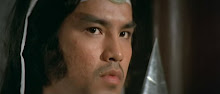
This is a special edition of the Shaw Brothers Cinema column. This is a multi-part look at the life of one of the biggest stars of Hong Kong Cinema told with lots of vintage B/W and color photos. Wednesday, October 20th is his birthday.
***DOUBLE CLICK A PIC TO SEE A LARGER IMAGE & READ THE ENGLISH TEXT WHERE APPLICABLE***

On Wednesday, October 20th, famed Shaw Brothers movie star, Alexander Fu Sheng would have been 56 years old. Taken far too soon from this world after a tragic car accident on July 7th of 1983, the bright, yet troubled actor left behind a healthy resume of films exclusively for Shaw Brothers studio. Fiercely loyal to Chang Cheh, the director that discovered him, the actor turned down lucrative offers outside the walls of Shaw becoming one of Asia's most beloved movie personalities.

Overcoming numerous obstacles such as alcoholism, rumors of infidelity and an alleged impending divorce from his songstress wife, Jenny Tseng, Fu Sheng still managed to give his all in the movies he appeared in. Featuring in some 40 productions (36 of which were lead, or major supporting roles), the enterprising young actor has transcended the shores of Hong Kong and other Asian territories to become a cult favorite all over the world. This multi-part tribute to one of the most jovial and playfully mischievous Chinese movie performers covers his career from the humble, ambitious beginnings all the way to the sad, tragic ending.

The plethora of pictures (nearly 40 for this article) are selected images from my collection of Shaw Brothers own promotional magazine publications, Southern Screen and Hong Kong Movie News between the years of 1973 through 1983.

Born Cheung Fu Sing in 1954, his English adopted name was Alexander, hence the oft used 'Alexander Fu Sheng', which graced the credits of many great Shaw Brothers productions for a prosperous decade. Above you'll notice revered director, Chang Cheh in the middle with Fu Sheng to the left of him.

On September 28th, 1972, Run Run Shaw and Yu Ching wei presented certificates to 45 graduates of the Shaw-TVB training center. You can see Fu Sheng in the photo below in the lower left corner as well as a shot of him receiving his certificate of graduation.

The actor training center, run co-operatively by both Run Run Shaw and HK-TVB was started in August of 1971. These 45 graduates (33 men and 12 women) were the first promising stars of the future. Some had already been used as extras in movies at that time and Fu Sheng was among those that got some early practice appearing before the camera.
 The 45 graduates of Shaw's-TVB training school
Some of the actors early appearances were small roles in films such as MAN OF IRON (1972), the sequel to the runaway hit, THE BOXER FROM SHANTUNG (1972). He also appeared in small capacity in Chang Cheh's fun and light-hearted youth picture, YOUNG PEOPLE (1972). His first role of substance was in POLICE FORCE (1973), which was already shooting when Fu was receiving his graduating honors. He was 17 when he debuted before the camera.

Beginning production as THE INSPECTOR, Fu Sheng plays a young martial arts tournament champion who is murdered by some thugs. His brother (played by Wang Chung), wishing to get the men responsible, joins the HK police force to do so and struggles with his emotions as well as abide by the law. He later gets mixed up in a gangster's drug syndicate.
 Fu Sheng clowning around with Lily Li
Fu Sheng next appeared in Chang Cheh's youth action drama, FRIENDS in 1974 co-starring David Chiang and Lily Li. The young actor really got noticed here as the son of a wealthy businessman who runs away from home and joins a small time, but honorable street gang led by a would be artist played by award winning action star, John "David" Chiang. Fu's character is kidnapped by a rival and dangerous gang and upon discovering his background, hold him for ransom.

Alexander Fu Sheng won the 'Best Young Newcomer' award at the 20th Annual Asian Film Festival for his performance. Above is a shot of Fu (at far right) and some of the cast of FRIENDS (1974).

The actor then joined Chang Cheh in Taiwan for, among other things, a string of true kung fu pictures about the Shaolin martial arts under the 'Chang's Company' banner, an "independent" production company set up by Chang Cheh to shoot movies for Shaw Brothers using funds the movie mogul could not take out of the country. It was here that Fu Sheng would undertake a role he would become universally synonymous with--that of famed Chinese folk hero, Fang Si Yu. He played this role four times in the films HEROES TWO (1973), MEN FROM THE MONASTERY (1974), SHAOLIN TEMPLE and SHAOLIN AVENGERS (both 1976).

Fu's performance personified the brash, rebellious youngster akin to the James Dean persona that fascinated Chang Cheh which he molded into his own style over his long, illustrious career. Fu Sheng made the role of Fang, the pseudo invincible warrior trained by his mother, the definitive performance that no other actor has been able to replicate to quite the same level of perfection.

Other films followed in this cycle such as the excellent SHAOLIN MARTIAL ARTS, the fan favorite FIVE SHAOLIN MASTERS (both 1974), DISCIPLES OF SHAOLIN (1975) and NEW SHAOLIN BOXERS (1976). The latter two had little relation to the previous 'Shaolin' movies save for featuring popular styles that emanated from the famous temple.
 Fu Sheng battles Tsai Hung in this still from SHAOLIN AVENGERS (1976)
FIVE SHAOLIN MASTERS was intended to have been the first movie, but problems during the filming caused it to be put on hold so HEROES TWO and MEN FROM THE MONASTERY were put into production ahead of it. HEROES was a hit while the MONASTERY crumbled. FIVE SHAOLIN MASTERS, taking a year to complete and exhausting Shaw's in-extractable Taiwan capital was worth the expense in ticket sales.

The other films in this series proved profitable, too. SHAOLIN MARTIAL ARTS paved the way for the teacher/student dynamic that became the rage after the mediocre SNAKE IN THE EAGLE'S SHADOW (1978) took kung fu in new, yet dismal directions; but extremely profitable just the same. DISCIPLES OF SHAOLIN became Chang Cheh's biggest HK hit and arguably the finest acting performance of the fabulous Fu Sheng.

 AD Wu Ma demonstrates a scene of affection between Fu and Chen Ming Li

NEW SHAOLIN BOXERS aka GRANDMASTER OF DEATH aka DEMON FISTS OF KUNG FU was a departure from the Chang Cheh super team dynamic. Fu Sheng would headline alone without the participation of his frequent co-star, the formidable Chi Kuan Chun (he, himself eventually left Shaw Brothers and started his own production company). The next four images are from NEW SHAOLIN BOXERS.


 Behind the scenes of NEW SHAOLIN BOXERS (1976)

Just prior to the Shaolin films, Fu Sheng also starred solo in a fantasy picture about the mythological Chinese Gods. Here, Fu played NA CHA, THE GREAT (1974). The movie itself is no great shakes, but does contain some good sequences including a bizarre take on Chang Cheh's generous level of bloody violence. In an underwater kingdom, the minions that fall to Na Cha's fire spitting spear gush blue blood in slow motion arterial sprays.
 NA CHA, THE GREAT
The special effects are terribly primitive, but some of them are not without some creativity. The picture moves at a snails pace, but it does feature a long string of fight scenes in the latter half including one against a Chinese dragon.
 Fu Sheng as NA CHA, THE GREAT (1974)
In between Cheh's Shaolin cycle, Fu Sheng took part in several 'Cast of Thousands' epics, movies the director had been doing since the 2.5 million HEROIC ONES from 1970. These would be the war epic, SEVEN MAN ARMY (released in 1976) and BOXER REBELLION (1975). The former was based on a true occurrence wherein a handful of Chinese soldiers staved off an attack from invading forces for five days and nights. Several Chinese commanders who took part in the battles against the Japanese were consultants on the movie.
 David Chiang (left), Fu Sheng (middle), Ti Lung (right); behind the scenes from SEVEN MAN ARMY
The film was made with the co-operation of the Chinese Defense Ministry and the Army Headquarters in Taiwan among other organizations. It was also during this time while shooting BOXER REBELLION in 1975 that Fu Sheng met someone that changed his life forever--Jenny Tseng aka Chen Ni. She was a popular singer who toured around the world and lent her voice to Chinese movies and television programs.
 Cast photo during the making of BOXER REBELLION, December 1974
BOXER REBELLION was another historical epic based on a tumultuous time in Chinese history. Released in a seriously compromised version eliminated much of the films 137 minute running time as SPIRITUAL FISTS, the uncut version was finally released to DVD some 30 years after its original release. The last of the Shaolin pictures was released in the early part of 1977. That film was the sprawling SHAOLIN TEMPLE, an episodic 2 plus hour super production.
 Shooting SHAOLIN AVENGERS and SHAOLIN TEMPLE (1976)
After the controversial political interference, the censoring and the subsequent theatrical disappointment of both SEVEN MAN ARMY and BOXER REBELLION, Chang's big productions were soon to be over.

Chang Cheh had one last war picture left on his slate. This one was the lackluster and inferior THE NAVAL COMMANDOS (1977). The monumental cast of SHAOLIN TEMPLE was retained for this last hurrah in this Shaw Brothers co-production with Taiwan's Central Film Company. The Taiwanese navy helped out in the making of the picture, but were unable to save it from mediocrity.
 In this photo: standing--Lu Feng, Kuo Chui; kneeling--Chiang Sheng, Chi Kuan Chun, Fu Sheng; from NAVAL COMMANDOS (1977)
Towards the end of 1976, Ti Lung married Amy Tao, who also acted alongside him in some of his movies. Fu Sheng, who quickly became a close friend to Ti Lung is seen below with Jenny at Ti's wedding. It wouldn't be long before wedding bells would be ringing for Fu as well.


Fu Sheng is seen below in a role in the embarrassingly bad comedic kung fu caper, MAGNIFICENT WANDERERS aka MAGNIFICENT WARRIORS (1977). During production, it was known under the oddly titled BATTLE IN THE SOUTH SEAS.

On December 4th of 1976, Alexander Fu Sheng and Jenny exchanged vows. Their brief time together would be filled with both happiness and turmoil and finally tragedy.


Even on their wedding day, the happy couple have no problem letting the child within them shine through.


With Fu Sheng now married, he would continue working with Chang Cheh but would also branch out and sporadically star in movies for other directors. He would also soon become close friends with one of Hong Kong's and Shaw Brothers biggest stars However, the concluding years of the 1970's would prove to be a near career ending catastrophe for the trouble young superstar. Part two will continue into 1977 and on to 1980 in this multi-part tribute to the life of Shaw Brothers mega-star, Alexander Fu Sheng.
CLICK HERE FOR PART 2