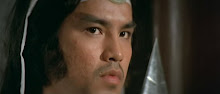
IVY LING PO
One of the Shaw's most wildly popular discoveries was Ivy Ling Po, a native of Amoy (Xiamen), China. She shot to overnight success with her role in the massive hit, THE LOVE ETERNE (1963). Many more roles followed in all genres. While she was most famous for her operas and dramas, Ivy likewise found a niche for her abilities in swordplay pictures such as DUEL FOR GOLD (1970), THE CRIMSON CHARM (1971) and THE 14 AMAZONS (1972).
 Various photos of Ivy with her fans
 Behind the scenes on THE CRIMSON CHARM (1971)
LILY HO
 This Taiwanese sensation made her official debut in Shaw's SONG OF ORCHID ISLAND (1965) sharing the screen with Cheng Pei pei and Paul Chang Chung.

 Possessing an innocence about her beauty, Lily Ho quickly made a name for herself in the Wuxia actioner, THE KNIGHT OF KNIGHTS (1966), a film that began production under the direction of the revered Chang Cheh, who also wrote the script. Showcasing her sensuality in the classic TILL THE END OF TIME (1966), Lily made a smooth transition into action films in both modern day and period piece fantasies.
 She was an ace as a Bond style super spy in ANGEL WITH THE IRON FISTS (1966), its sequel THE ANGEL STRIKES AGAIN (1968) and the elusive THE BRAIN STEALERS (1968). Her Wuxia spectaculars include THE WATER MARGIN (1972), THE 14 AMAZONS (1972) and the risque taboo trashing INTIMATE CONFESSIONS OF A CHINESE COURTESAN (1972).
 Behind the scenes on THE SILVER FOX (1968); Note Lily gets injured attempting a stunt.
 Lily Ho in LOVE BLOSSOMS aka THE ORCHID (1970) also starring Tina Chin Fei.
JENNY HU
 This mesmerizing beauty was a popular Shaw Brothers starlet predominantly during the latter half of the 1960s where she wowed audiences in dramas, thrillers and comedy-musicals such as TILL THE END OF TIME (1966), TORRENT OF DESIRE (1969), GUESS WHO KILLED MY TWELVE LOVERS (1970) and LOVE WITHOUT END (1970).
 A Cantonese speaker, Jenny Hu grew up in Taiwan, later joining her parents to live in West Germany in 1960. She returned to Taipei in 1965 and was eventually signed up for training in Shaw's Southern Drama Group before appearing in the studios TILL THE END OF TIME directed by Chin Chien (a popular director who was found dead in his quarters at Shaw studio June 15th, 1969).
 She left Shaw Brothers in August of 1970 to take time off for her son and husband, Hong Wei. By 1971, she had returned to acting in independent features and even managed to participate in an action picture, or two.
TINA CHIN FEI
 Another strikingly attractive actress, Tina was a graduate of Shaw's Southern Drama Group. Signing with the studio in 1964, she went on to a successful career at Shaw's throughout the remainder of the 1960s and into the early part of the 1970s before leaving the company in 1972.
 TEMPTRESS OF A THOUSAND FACES (1968)
 Amidst some dramas, Tina also featured in martial arts adventures including the troubled, unfinished production THE DRINKING KNIGHT (a film that started over from scratch twice and changed its cast and crew as many times and was still never completed), THE 14 AMAZONS (1972) and THE FOUR RIDERS (1972) for Chang Cheh.
 Tina Chin Fei and Lily Ho in LOVE BLOSSOMS aka THE ORCHID (1970)
SHEN YI
 Shen Yi (left)
 She made her big splash in PRINCESS IRON FAN in 1966 (the sequel to MONKEY GOES WEST from the same year) and followed that with CAVE OF THE SILKEN WEB (another MONKEY sequel, 1967), the modern actioner, GUN BROTHERS (1968) and Wuxia formula films like KILLER DARTS (1968) and SWORDSWOMEN THREE (1970).
CHIN PING
 Not to be confused with Shaw's exploitation Queen, Chen Ping, this fiesty young actress with the pouty face and powerful sword strike joined Shaw's in 1963, a short time before many of her more prolific and popular colleagues.
 Behind the scenes in Korea shooting THE BLACK ENFORCER (1972) in 1969
CHIAO CHIAO
 Another Taiwanese discovery, Chiao Chiao honed her acting chops in Chang Cheh he-man movies like ONE ARMED SWORDSMAN (1967) and THE ASSASSIN (1967). She married actor Huang Chung Shun in 1963, but by 1969, the couple was separated with Chiao then moving in with her brother.
 Chiao Chiao briefly enjoys her birthday in a break of the shooting for HEADS FOR SALE (1970).
 With her passive, but resolute stature in her early roles, Chiao turned some heads when she began cropping up as the lead in swordplay movies such as THE BLACK BUTTERFLY (1968) and HEADS FOR SALE (1970). She left Shaw Brothers in 1972.
ANGELA YU CHIEN
 This amazingly attractive and spunky woman from Beijing became one of the Shaw's biggest stars in the early 1960s. She was something of a pre 'Baby Queen', Li Ching in terms of popularity.
 But by the late 1960s, Angela's roles turned to a more sex bomb, sensual and duplicitous persona. This was exemplified in her man-eater role in Lo Wei's DEATH VALLEY (1968). Her high sexuality quotient was clearly evident here and also in other movies such as TORRENT OF DESIRE (1969) and Chang Cheh's DEAD END (1969).
 Some of her notable roles were in such films as THE BLUE & THE BLACK (1966), HONG KONG RHAPSODY (1968) and THE MILLIONAIRE CHASE (1969), the latter of which she shared the screen with the Shaw beauties Lily Ho, Chin Ping and a debuting Betty Ting Pei. Angela's 60s era pictures will undoubtedly be known as her most shining achievements.
 Known to be an incredibly down to earth individual, Angela Yu Chien's popularity (like some of her colleagues) was far reaching, and not just in Asian territories; even as far as the United States. She was also an accomplished saxophone player. Sadly, Angela Yu Chien passed away in 2004 from cancer. Like most of those featured above, Angela has left behind a memorable, as well as indelible resume and screen persona that has survived decades, becoming an important and classic addition to Hong Kong's illustrious place in world cinema.
UNTIL NEXT TIME....
 SORORITY ROW 2009
THE HOUSE ON SORORITY ROW (1983) vs. SORORITY ROW (2009)
 HOUSE ON SORORITY ROW 83
 One of the last truly watchable slashers from the 1980s is Mark Rosman's THE HOUSE ON SORORITY ROW (1983). Rosman co-wrote the script providing some choice additions that were lacking from any number of similar movies that were still flooding drive in's and video stores at the time. It had both likable and unlikable characters, young and old and had a little more going on as opposed to the typical stalker in the woods motif. The killer is unusually pitiable here reaching an almost FRANKENSTEINian level of tragedy. If there's one element of this well made slasher that barely makes a passing grade, it's the lackluster effects work-- generally considered the bread and butter of this frequently derided, much maligned sub genre. Without plentiful and juicily realistic gore shots, slashers have little else to offer horror sadists. More often than not, the slasher flicks of today have become far worse representations of the older variety only now they're spruced up with uncharacteristically physically fit cast members, shaky cam acrobatics and an overabundance of lifeless CGI gore that has since replaced the artistry of the hand made effects of yesteryear.

 SORORITY ROW (2009) is a supremely stupid slasher shit stain that is very much par for the course for horror of this day and age. The characters are yet more conveyor belt roughage of the detestable sort. Virtually all of these vapid vixens are hostile, vile, cruel bitches. And in typical modern horror style, the one (maybe two) characters "designed" for audience sympathy are far less expansive than the cruel company they keep. Incredible. Possibly SOMEONE will figure out one day that by killing off people we feel something for will make for a far more visceral, "rewarding" experience than filling your movie with a bunch of fake, self absorbed individuals whose sole existence is to piss off the viewer and be offed in some kind of elaborate fashion. Some may dig this kind of set up, but I hate it.

 This is one of those movies where the scriptwriters (the original films director, Mark Rosman wrote a treatment for the remake) were clueless as to how to make such an enterprise work in a cohesive manner. Both logic and common sense are thrown down into the well where one of the moronic beyond words duplicitous dames has been tossed after she's accidentally snuffed out in one of the most ridiculous story ideas this sub genre has ever embraced. For years the slasher film has been subjected to a hailstorm of unflattering labels, but seldom has one of these movies been this lifeless and unbelievably braindead as SORORITY ROW. In its defense, it does have a few funny lines and a couple of nods to the far superior original movie. As opposed to giving a credit to the new films origins, the credits have this at the beginning--'Based on the screenplay, "Seven Sisters", by Mark Rosman'. Incidentally, the original film had seven conspirators.
 The new version features five; odd especially considering movies nowadays are obsessed with overkill--more is better. Not to fear, though, as additional characters not associated with the crime ultimately buy the farm. However, the new movie does pay some homage to the original in a couple of ways such as that films weapon of death putting in a cameo appearance and the Theta Pi house itself is reminiscent of the sorority house in the original.

 The plot of both films are vastly different with only minimal similarities. Still, both films do share some minor affiliation with William Castle's I SAW WHAT YOU DID (1965) in some tweaks of plot details. It's curious as to why the makers of the new version even bothered making any connection at all. Outside of the 'sorority prank gone wrong' plot device, there's little else the two pictures share with one another. I assume with the society we live in today where everyone is conditioned to look a certain way, this sort of emotional detachment naturally spills over into the movies. In the world of SORORITY ROW, everyone "looks the same"; like they've just stepped off a modeling gig. Again, par for the horror course these days. I wonder if Rod Serling and his crew realized just how prophetic the old TWILIGHT ZONE episode, 'Number 12 Looks Just Like You' was really going to be?

 The makers of the original movie were at least cognizant in their ability to weave a plot that was within the realm of possibility. They also were aware enough to at least make their characters do things and react in a believably logical manner, something that's totally and irrefutably lost on the makers of the newer picture. Slasher films have regularly been cited for major lapses in logic and SORORITY ROW (2009) reinforces this popular notion to the point that it would be a parody if the whole enterprise wasn't taken so seriously. It's one thing to go in the basement alone--something many would never do, but it's an action that's not too difficult to imagine a person doing it. Illogical actions and responses are right at home in cinema, especially the horror genre; it's expected. But SORORITY ROW (2009) and its cast of callous characters bathes in it on several occasions.

 The sheer level of irrationality in the 2009 remake wastes no time in smacking the audience square in the face with a big stick of dumbass. The cruel prank that is played out during the opening ten minutes goes so far beyond the realm of common sense, it becomes caricature. These are purportedly civil minded, reasonably intelligent, if undeniably cold-hearted young people. One character, professing to love his supposedly dead girlfriend unequivocally, wastes no time in gruesomely maiming the body. Not only that, but by the end when the killer is finally revealed, this, too, makes absolutely no sense, yet falls neatly in place with all the rampant stupidity that preceded it. If you recall the big reveal in SCREAM (1996), you will have some idea of what happens here.
 The single best shot in the entirety of SORORITY ROW (2009)
 While Rosman's original is a bit different from the typical slashers of the time period, it still follows the narrative structure indigenous to the sub genre. The beginning of the movie takes place in 1961 before flashing forward some twenty years later. The difference here is that this opening sequence isn't a setup of retribution for a past wrong, at least not in the classical slasher sense. The plot device of a vendetta doesn't come until halfway into the movie. The remake forgoes this altogether and immediately thrusts the audience right into the action, ever how vacuous it may be. We follow the steadicam in and around the Theta Pi house observing the ripped and toned cast and extras mere moments before the vicious prank takes center stage.
 The Force wasn't strong with Mrs. Crenshaw. She's felled by a Sith Lord with a modified tire iron.
 The house mother, the major driving force in the original movie, takes a backseat in the remake as well as a name change. Carrie (THE BLUES BROTHERS, STAR WARS series) Fisher's Mrs. Crenshaw is mainly there as filler, or as a possible red herring. When she suddenly crops up at the end, she completes this unintentionally comedic wardrobe with unkempt tresses by showcasing this character as either inebriated, or coked out of her mind going through the house blasting away with a shotgun during the conclusion. This was one of relatively few genuinely laugh inducing moments seeing the former Princess Leia either missing her intended target, or simply wasting ammunition by firing at walls, pots and pans while spouting one liners and expletives.

 THE HOUSE ON SORORITY ROW (1983) has some noticeable homages to the classic Bob Clark movie BLACK CHRISTMAS (1974) and elements of vintage suspense thrillers in its air of mystery regarding the true identity of the killer. SORORITY ROW (2009) obviously takes its biggest cue from the tiresome SCREAM (1996) movies, but comes off sporting a level of intelligence that's more in line with I KNOW WHAT YOU DID LAST SUMMER (1997). Modern audiences will no doubt have more appreciation for the recent abomination likely because its cast is "hot stuff" and the look and editing of the film has that shaky cam, fast cut, fat stripped away, "cut to the chase" air about it. The photography is good, but has that typical monochrome look of movies these days. The original has better acting, a better, more believable story rife with characters the audience will care about and some fine photographic touches. It might be older, more slowly paced, but I'll take the far classier original over this lifeless, creatively handicapped cacophony any day of the week.
HOUSE ON SORORITY ROW images from the Elite DVD
SORORITY ROW images from the Summit DVD
copyright 2013. All text is the property of coolasscinema.com and should not be reproduced in whole, or in part, without permission from the author. All images, unless otherwise noted, are the property of their respective copyright owners.