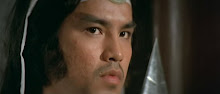
THE MANSTER 1959/1962
Peter Dyneley (Larry Stanford), Satoshi Nakamura (Dr. Suzuki), Jane Hylton (Linda Stanford), Terri Zimmern (Tara), Toyoko Takechi (Emiko Suzuki), Kenzo Kuroki (Genji Suzuki), Jerry Ito (Superintendent Aida)
Directed by George Breakston and Kenneth G. Crane
The Short Version: Shameful piece of American-Japanese exploitation madness is easily one of the sleaziest, most enjoyably awful pieces of late 50s exploitation nonsense ever conceived. The filmmakers refusal to create a sympathetic protagonist was a ballsy move for the time and the blatant extra-marital sex jabs is racy stuff for a trashy monster picture that aspires for little else than shock value. As inept as it all is, the film is a great deal of trashy fun and the sight of an eyeball bulging from a man's shoulder as well as a literal "split personality" during the closing moments is enough for drive in and late night creature feature lovers to do the MANSTER MASH all night long.

 Larry Stanford, a devoted reporter on assignment in Tokyo, interviews a reclusive Japanese scientist regarding his experiments on the evolution of man through cosmic rays, the mutation of the human species and other pseudo scientific jargon. While Larry shows a dedication to his job, he displays less of it towards his deteriorating marriage. During the interview, the mad Dr. Suzuki drugs Stanford and injects him with his murderously prehistoric hairy man concoction. Meanwhile, the devious doctor dangles various prostitutes around Stanford including his mysteriously alluring assistant, Tara all the while documenting the gradual genetic changes occurring within Larry's body.
 This substantially sleazy US-Japan co-pro features a high level of trash during its scant running time of 70+ minutes. The first five of those is an astonishingly gruesome opener that crams in an assault on bathing Japanese beauties slashed and mutilated by an ape monster, cages of failed and maimed human experiments and a secret laboratory built around a volcanic crater! Things slow down a bit till the last 15 minutes, but these middle portion sequences consist of "character development" regarding the single most despicable "tortured soul" of the Larry Talbot variety you're likely to ever see in a low budget monster flick. In another nod to THE WOLFMAN (1941), our zero hero is also named Larry!
 The script is especially lousy, but the finished product showcases such a vast disregard for good taste and human decency that you won't give a damn about how utterly ridiculous the whole thing is. The acting is barely passable, but everything else is dangling a notch below (or should that be above?) an Ed Woodian level of absurdity. For some, that will be a hearty endorsement. The major male characters are laughable caricatures of the most uncivilized sort. For a scientist, Dr. Suzuki is essentially the equal of the Missing Link he seeks to extract from the forced metamorphosis of a living subject. He displays a sadistic, Frankensteinian level of blind ambition that the script fails to capitalize on settling instead for the good doctors penchant for chauvinistic evil and the prevalent sexual innuendo. He's the coldest, lower level scum whose grossly reprehensible actions fail to even acknowledge familial ties.
 For instance, we learn he used both his wife and his brother as human guinea pigs in experiments that went disastrously wrong leaving his wife horribly deformed, locked up in a cage and looking like a reject from Eddie Romero's BLOOD ISLAND series. His brother is the bloodthirsty apeman that massacres the spa bathing women during the opener. Realizing he can't have a mad ape running around ripping people to pieces, the doctor has mercy on his now inhuman brother by gassing him prior to throwing him into the volcanic crater conveniently accessed by a metallic door in his lab. Suzuki wouldn't be a mad scientist without some outsized fauna growing and surrounding his underfunded laboratory. Among the mutants, you'll also spy bizarre plant life and gigantic, phallic shaped mushrooms erupting from the ground.

 Infidelity is a major recurring theme here and one that crops up at regular intervals. Yet again the script fumbles a golden opportunity to make a conclusive parallel between Dr. Suzuki's serum that induces man's repressed primitive sensibilities which in turn leads to rampant perfidy. Instead, Suzuki's living, breathing test subject is an unfaithful dirt bag from the very beginning. If the intention of the filmmakers was to signify that it was the doctor's serum that made a faithless, murderous, sex hungry monster out of our main protagonist, the connection is poorly made. Stanford talks of working things out with his wife, but instead decides to stay in Japan to work things out with a variety of geisha's including Suzuki's luscious assistant, Tara, whom we find out was previously a prostitute!
 The crudity of Stanford's behavior increases as he slowly begins to change. Again, a chance to make the script more than mere exploitable trash is wasted. Obviously he becomes more crazed and homicidal after he's been injected with the serum, but his seedy, sexual impulses and propensity for promiscuity were there all along. During the wild and wooly conclusion, the filmmakers attempt to turn Stanford into a hero of a sort, but by then, it's too late. Seeing him grow a whole other monster faced noggin straight out of his shoulder prior to splitting into two separate beings will make you forget all about any of the potentially fascinating subtext the film wantonly squanders.
 What with all the less than tasteful nods to THE WOLFMAN (1941) and FRANKENSTEIN (1931), the filmmakers also tip their hat to that jolly mad slasher, Jack the Ripper. Once Larry garners a single hairy hand and a watchful eyeball bulging from his right shoulder, he begins wandering the streets at night strangling random women. This Japanese tinted White Chapel murder plot point is quickly discarded a few minutes later once Larry becomes a literal gruesome twosome not only sprouting a rubber monster head, but his own visage turns noticeably ghoulish till the big split during the triple climax. Yes, the film has three endings. The cops chase our Manster through a ship yard in what would appear to be the end. Realizing the mad doctor is still alive and well, after killing a handful of policemen, the Manster makes his way to Suzuki's lab for the perennial "fiery finale". That, too, would seem to be the end. Well, the police trace the Manster to the mountainside laboratory when a volcano conveniently erupts. Stanford goes ape shit and splits into two beings--his normal self and the other a hairy ape creature. They briefly duke it out till the real ending arrives, whereby our remaining protagonists utter some profound dialog before the picture fades to black. Whew!
Even with all the lovable low-grade nonsense on display, the script actually yields some intriguing ideas such as man's repressed dark side, genetic tampering and the struggle between devout faithfulness versus a lack of fidelity in a fractured relationship. Instead, the film prefers sensationalism and more than a few infectiously goofy moments such as Larry the Letch climbing a mountain in a business suit and the mad Suzuki's laboratory is built over what appears to be a string of several live volcanoes!

Then there's the Japanese newspapers headlines that are inexplicably printed out in English and the moderately lewd and unbelievably foolish dialog exchanges peppered generously throughout. However, had this mess of a movie taken a more erudite path, it wouldn't have been the graceless, memorably tawdry kitsch klassic known and loved by fabulous 50s fiends and those passionate for all things unintentionally hilarious. THE MANSTER is an undeniably memorable mush of madcap monster madness for 'B' movie lovers....okay, 'C' movies.