poster image: google images
THE BLIND MENACE aka SHIRANUI KENGYO aka SECRETS OF A COURT MASSEUR
Shintaro Katsu (Suginoichi), Tamao Nakamura (Lady Iwai), Meiko Kondo ("Severed Head" Kurakichi), Matasaburo Tanba (Sir Iwai), Tsurumi Joji, Mayumi Kurata, Toru Abe
Directed by Kazuo Mori
"As long as you're always rising in the world, all your previous misdeeds don't matter."
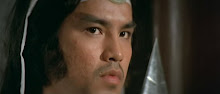
The Short Version: Two years before becoming world famous for his classic portrayal of the Blind Swordsman, Zatoichi in nearly 30+ films and a 100 episode television series, Shintaro Katsu played the flip side to that character. Katsu is devilishly evil and systematically sadistic as the title rapist, murderer, blackmailer and all around black-hearted scoundrel who just happens to be blind. The plot is simple and basically a string of tragic vignettes as this cunning and cruel yet sightless masseur destroys and eliminates a lot of lives along his selfish path to attain wealth and a powerful government position.

Little Shichinosuke, a blind, yet devious little boy comes from a poor family and is taught unscrupulous behavior by his greedy, domineering mother. Along with his sole childhood friend, Tome (pronounced Toe-may), he grows up to be the even more despicable Suginoichi, a blind masseur with designs on attaining great wealth and power through the pain, suffering and death of others. Aligning himself with a ragtag band of thieves and murderers, Suginoichi meticulously plots the death of his master in an effort to become head Kengyo (the highest rank given to blind masseurs, musicians and money lenders) garnering himself close ties with the Shogunate.

 Anyone remotely familiar with Katsu's enormously successful and timeless interpretation of the blind swordsman Zatoichi will be stunned to see him playing virtually the same role only sans the dignity and fighting skills of the kindly low level yakuza gambler/protector of the common folk. Here, the character of Suginoichi (even as a small child) is the exact antithesis of the much loved wanderer in that he beguiles his way into people's lives before stomping on them or simply stamping them out. His cruelty is consistently pulled off without the slightest ounce of remorse or regard for the possible consequences. Incredibly cunning, Suginoichi goes from one vitriolic vignette to the next leaving shattered lives and dead bodies in his wake.
It's a testament to Katsu's acting ability that he effortlessly pulls off not only the mannerisms of a blind person, but that he can make such a handicapped individual so reprehensible. It's all the more jarring when comparing this dramatic feature with the blind masseur adventures Katsu would begin essaying two years later. If you ever wondered what an evil Zatoichi from an alternate universe would be like (without the sword fighting skills), this film will satisfy that curiosity.

Even as a little boy, the title Menace proves problematic such as intentionally flinging boogers into a sake bucket.
There's also a good deal of political subtext here, whether intended or not. Those who firmly believe that the rich got where they are by stepping on everyone else will find much here to reaffirm that notion. But then, Suginoichi started out poor. His family was poor. His mother put such thoughts into his head while his father was the dignified head of household who couldn't provide the sort of life she wanted. The fact that she perpetuated such mischievous behavior in her child is almost as criminal as the calculated and meticulously orchestrated acts Suginoichi manages to pull off.

Suginoichi dreams he can see while he plays the shamisen for a sought after courtesan named Ohan.
Regardless of what the many current Occup-arasites around the nation might believe, anybody can gain wealth, it all depends on the individual and what they're willing to do to get it; There's the hard way (work for it) and the easy way (just steal it). The latter carries with it the most dire of consequences and it's that path that our non-hero "blindingly", if confidently, decides to take while nonchalantly shrugging off the shattered lives and destruction he leaves in his wake.

 With that said, the finale is the one area where the film fails to deliver. The film culminates with the required "justice is served" ending, only it isn't quite the satisfying denouement the viewer comes to expect considering the numerous murders, rapes and extortion Katsu's character has bequeathed to his many victims. One of the most outrageous involves Suginoichi's master sending him to answer a money lending request from a woman who's brother indulged in an embezzlement scheme. He is to decline the offer of lending 50 ryo to Nani'e Iwai, who asks for the funds in secret not wishing her husband to know. Suginoichi delivers the message, but casually states he himself can lend her the money which she need not pay back. Asking to stay the night by which to give lady Iwai a full body massage, our malevolent masseur ultimately rapes her. When her husband returns the following morning, Suginoichi asks if she will retrieve his money for him!
 Mind you, Nani'e can't really say anything lest she dishonor both herself and her husband. She reluctantly gives this blind bastard his 50 ryo back only to have him tell her he did it because she was mean to him(?!?!?) and that should she need the money, to come to his home. This she does, only for the avaricious rapist to molest her once more then further demeaning her spirit by giving her a mere 5 ryo(!) proclaiming once she visits him a total of ten times she will then have her 50 ryo! It should also be mentioned that the actress playing Lady Iwai, Tamao Nakamura, was also Katsu's wife in real life--the two having met on the set of this movie and remained together till the actors death in 1997. In a strange twist of irony, despite Katsu being famous for his iconic portrayal of the kindly Zatoichi, offscreen the actor more closely resembled his Suginoichi persona in that the real Katsu was quite the wild card.
Sir Iwai learns of his wife's infidelity

 Katsu really is quite polarizing here sporting a seemingly bumpkin style innocence one minute then unleashing a bolt of brazen callousness the next. The women receive the worst treatment; being raped, humiliated or blackmailed and sometimes all three. Unable to cope with the disgrace, one of Suginoichi's female victims kills herself to which the sightless scumbag cold-heartedly laughs off the suicide. It's virtually impossible to not be mesmerized by Katsu in this movie. For those more familiar with the man's work among the Chambara style of Jidageki, the absence of swordplay will possibly go unnoticed as the actor owns every second of the film. His shameless proclivity for obtaining money by any means necessary as well as his uncanny ability to emerge one step ahead of everybody else will keep you glued to the screen eagerly awaiting the end when the now wealthy Kengyo reaps all that he has sewn.
 It's also worthy of mention the group of yakuza Suginoichi makes friends with. Led by "Severed Head" Kurakichi, the masseur effortlessly frames him for a murder he didn't commit virtually moments after their first meeting! Later on, Kurakichi happens upon the blind man during a house raid. The blind menace talks his way out of death by promising them all money for jobs which he will set up should they release him. Everyone indeed makes money off of others misery, but once the devious masseur plots the death of his own master, Kurakichi and company begin to wonder whether they should keep this partnership. The group come to fear the blind man over time and even ponder killing him noting they would be doing a great public service!
According to the excellent liner notes on AnimEgo's DVD, Katsu was not a well liked leading man in Japan at the time so this tale was fashioned with him in mind as it suited his looks and only stoked the audience perception of him. The film was a huge success which ironically paved the way for the classic and well loved ZATOICHI film and television series that followed. Those films were tailor made for Katsu, too, with the enduring Zatoichi character seemingly ripped from an alternate universe to his previous Suginoichi persona. Katsu strikes an intriguing parallel between this early evil role and his later, and much loved anti heroic, yet lovable bringer of justice.

Aside from the moderately tepid ending, director Mori keeps things interesting throughout in his depiction of societal domination and decay through the propagation of evil and greed. Mori also helmed some of the equally enthralling SHINOBI NO MONO films (a series about ninjitsu), a few entries in the ZATOICHI series and also the last installment of the popular DAIMAJIN trilogy. If you're a fan of the Blind Swordsman series, than seeking out THE BLIND MENACE is a no-brainer. Casual fans may find this of interest, too.
This review is representative of the AnimEgo DVD