THE INCREDIBLE SHRINKING WOMAN 1981
Lily Tomlin (Pat Kramer/Judith/Ernestine the Telephone Operator), Charles Grodin (Vance Kramer), Ned Beatty (Dan), Henry Gibson (Dr. Nortz), Elizabeth Wilson (Dr. Ruth Ruth), Mark Blankfield (Rob), Maria Smith (Concepcion), Rick Baker (Sydney)
Directed by Joel Schumacher
The Short Version: If you enjoyed movies like Joe Dante's INNERSPACE (1987), than you're likely to get a giggle or two from this cheerful homage to Jack Arnold's THE INCREDIBLE SHRINKING MAN (1957) starring famous comedienne, Lily Tomlin. There's also quite a bit of social satire on hand showcasing America's obsession with consumer products (what WOULD we do without Galaxy Glue?), suburban communities and the plight of the 80s 'Suzie Homemakers' of the world. All that and Award winning make up artist Rick Baker decked out in yet another of his amazing ape suits.

 Suburban housewife Patricia Kramer enjoys a chaotic existence as a stay-at-home-mom till she develops a little problem. After being exposed to a new perfume that inexplicably reacts with a multitude of household products, Pat undergoes a peculiar transformation that results in her shrinking day by day. Becoming a community celebrity of sorts, she attracts the attention of a secret corporation led a group of malicious scientists. They plan to use her blood for a shrinking serum with the intention of reducing the Earth's population literally down to size.

 Joel Schumacher's (THE LOST BOYS, BATMAN FOREVER) theatrical feature film debut is an endearing, enjoyably low key science fiction comedy that will appeal to lovers of 80s cinema and those who get all nostalgic about having seen the film upon its original release. I remember my mom taking me to see it and despite not having any monsters in it, the flick clicked with me just the same. With its origins based in Richard Matheson's novel, 'The Shrinking Man' (already adapted for 1957s THE INCREDIBLE SHRINKING MAN), mad scientists and the golden age mainstay of a hairy ape creature (in this case, a kindly, intelligent gorilla proficient in sign language) there's quite a few laughs to be had by the young and the young at heart.
 This moderately successful comedic film starring one of the best female comedians was a television mainstay for a time before falling into relative obscurity. It had recently been released in an apparently unauthorized foreign release till Universal finally got it together and released the film as part of their own On Demand DVD-R service. While it's not technically an "official" release, at least it's out there. The film has also been enjoying steady airplay on numerous HD channels for quite a while now.

 Lily Tomlin goes all out in making Kramer a likable character in her depiction of a woman trying to keep her sanity at home amidst her lovably raucous kids, a dog and an excitable Hispanic maid. Meanwhile, her advertising husband brings home the bread. Whether it was intended or not, there's a lot of social subtext on parade within the comedic parameters set down by writer Jane Wagner. The 1980s woman is satirized here as is America's preoccupation with consumerism (a concept translated in a far more gruesome fashion in George Romero's DAWN OF THE DEAD in 1978); the latter of which would grow to decadent heights once Ronald Reagan successfully pulled America out of the economic muck that former President Jimmy Carter had placed the country in.

 Tomlin also manages to pull multiple duties here as a few different characters. One of which is Judith Beasley, Pat's closest friend and head of their neighborhoods community group. Judith provides a number of the funniest moments with her sternly domineering delivery. Tomlin also throws in a cameo as one of her most famous characters from the TV show LAUGH IN (1968-1973), the obnoxious, squinty eyed, nose snorting telephone operator, Ernestine. She also had a brief scene as little Edith Ann (another classic comedy character of hers) that wasn't part of the theatrical release, but utilized in television airings of the film.


 While the movie playfully makes light of the Women of the Tupperware Party Era, it also manages to spoof the dead serious 1957 B/W science fiction classic, the aforementioned THE INCREDIBLE SHRINKING MAN. Some of the scenes from that earlier picture are restructured here to fit the films comical slant, but the tip of the hat to Jack Arnold's original is clearly in evidence. Also, whereas atomic testing was a major concern in 50s society, by the time the 80s rolled around, such issues became less serious than the slew of new products that were voraciously flooding store shelves across the country. As per their respective time periods, a mysterious atomic cloud was responsible for shrinking Grant Williams and in this version, it's a combination of assorted household items set off by a side effect from a new perfume created by Pat's husband's corporation.

 Just like the perils encountered by our shrunken hero in the '57 flick, Tomlin finds herself in a number of far sillier predicaments such as falling into a garbage disposal, assaulted by battery operated toys, chased by a dog and catapulted off of her bed. The film turns semi serious once the Kleinman Institute For the Study of Unexplained Phenomena hatches a plan to use Pat's blood to bring the planets population down to minuscule size. Carted away to a secret laboratory, Pat befriends a bumbling janitor named Rob (played by Mark Blankfield, the star of JEKYLL & HYDE...TOGETHER AGAIN) and a lovable gorilla (played by ace ape designer, Rick Baker).

 Among the other cast and befitting of the consumer-product placement nature of the production, is Dick Wilson as a grouchy supermarket manager. Folks will likely remember him for uttering the immortal line, "Don't squeeze the Charmin" on many commercials advertising the line of toilet paper. The busty Sally Kirkland of a few Roger Corman spectaculars plays a cashier. Mike Douglas, former talk show host and entertainer is on hand playing himself and singing the timely tune, 'Little Things Mean A Lot'. Henry Gibson (THE KENTUCKY FRIED MOVIE, THE BLUES BROTHERS) is suitably gloomy as the main antagonist even though he isn't given a whole lot to do. Charles Grodin (THE GREAT MUPPET CAPER, MIDNIGHT RUN) and Ned Beatty (DELIVERANCE, SUPERMAN) round out the cast of familiar faces.
 This is the sort of comedy you can watch with the whole family. Fans of 50s science fiction will want to give this one a spin as well as lovers of 80s cinema. Definitely dated by that decade and representative of much of its memorable iconography, this is an unusually delightful, low key tour de force for Lily Tomlin. The box office may have shrank when compared to the gigantic success of Tomlin's previous years 9 TO 5 (1980), but the entertainment value is anything but diminutive.
 THE TALE OF ZATOICHI CONTINUES 1962 aka ZOKU ZATOICHI MONOGATARI
Shintaro Katsu (Zatoichi), Tomisaburo Wakayama (Yoshiro), Masayo Banri (Tane), Yaeko Mizutani (Setsu), Eijiro Yanagi (Sukegoro), Sonosuke Sawamura (Kanbei of Seki), Fujio Harumoto (Lord Kuroda)
Directed by Kazuo Mori
"...For the sake of a meaningless war between gangster clans, I lost a man it took me forever to find...a man I could call a friend."--Ichi ponders the previous years duel with Hirate Miki
The Short Version: This lesser sequel follows the popular trend of a fast follow up riding the coat tails of a box office success. At 72 minutes, the script suffers despite some fascinating character angles and exposition. Katsu and his real life brother Wakayama face off the first of two times (again in ZAT #6) and Zatoichi savors and suffers through an unusually high amount of lust and love. A fine sequel, but could have been a bit better. The series would find a lovably formulaic comfortability with its next entry.

 Zatoichi returns to Sasagawa one year later to pay his respects at the burial site of Hirate Miki in Joshoji Temple. While he's there, he's invited to lend his massage skills to the lord of the Kuroda household. Learning that the wealthy lord is quite insane, his subordinates can't let this information be revealed so they send killers after Ichi. Meanwhile, Sukegoro, the Yakuza gangster that survived the previous years massacre, learns the blind swordsman is back in town. Around the same time, a wanted man with only one arm appears. Both he and Ichi share a bond and a tragic secret from their past that is soon to come to a head.

 Unlike many of the later movies, this sequel has a direct link to the previous picture. Most of the series has no set order, but the first few films followed a sequence to lend continuity to the character and those he interacted with. This is the shortest entry of the entire series running a brisk 72 minutes. It also ends rather abruptly giving the impression that either the studio still didn't have complete faith in the casting of Katsu as the lead (considering how little audiences thought of him in such heroic roles) despite the success of the first picture, or the film was hampered with production problems. However, the plentiful box office receipts ensured that more movies would follow and oftentimes three to four in the same year. From here on out, the remainder of the series would be shot in color.
Katsu and Wakayama--surrounded and outnumbered...big deal
 A lot is revealed about Zatoichi in this movie, particularly in the realm of L'Amour--past, present and future. Love (both lost and found), sex and desire are the dominant themes here. This preoccupation with lust and romanticism elevate this fairly average film to another level. Uncovered and explored is Ichi's romantic background involving a past relationship with a woman named Chiyo and his possible romance with the returning character, Tane, who professed her desire to marry Ichi in the previous movie. It was a rare occurrence to see the kindly masseur relishing the company of a woman and this is one of those few and far between occasions. The addition of Katsu's real life brother, Tomisaburo Wakayama (billed as Kenzaburo Jo) was a novel touch as well as having them play brothers onscreen, too. It brought a whole other level of tension to the climactic duel scenario that would become an enjoyably recurring theme throughout the series.

 Their character arc is a love triangle as both loved the same woman and it was a woman that put a sharp wedge between them; so sharp that Yoshiro lost an arm to Ichi's sword in a fight over her affection. Ichi passionately and angrily explains to Setsu--who bears a resemblance to Chiyo--that she was the love of his life and that she left him upon discovering he was blind. Personally, it's difficult to understand how someone could overlook such a handicap, but then the script doesn't go into great detail and doesn't really need to. What's also intriguing is that Chiyo left one man because of an impediment and through her treachery, caused the crippling of another; even more tragic in that both men were brothers.
Setsu, attracted to Ichi, desires to spend the night with him as opposed to the gruff, one armed swordsman who also desires her attention.
 This is also the most fascinating portion of this relatively short little movie. When both Ichi and Yoshiro enter the Inn, it's discovered that Setsu looks very much like their long lost love. It also rekindles the enmity and past jealousy both brothers share between them. Yoshiro wishes to spend the evening with her, but she favors the more jovial masseur. The brothers are inadvertently forced to relive this past tragedy. This is also one of the few occasions where we see Ichi casually entertain the prospect of a sexual dalliance. In other films, he would brush such an offer off, or display reluctance, or apprehension at the thought of partaking in sex. In later films, it would seem Ichi is afraid of love. Well here, he accepts it with open arms!
Tane warns Ichi of Sukegoro and his men trailing him while paying respects for the fallen Hirate Miki.
While the script from frequent ICHI writer, Minoru Inuzuka excels in traversing a side of the blind masseur not normally traveled, this is also to the films detriment. The character of Setsu, who acts as something of a catalyst for the brothers prior female troubles, is summarily dropped from the film after her two day tryst with Ichi. Then, much is made of the return of Tane, yet the film fails to capitalize on her participation leaving her scenes looking like little more than an afterthought. It's possible that scenes were cut considering the shorter running time and the strange, HK cinema style abrupt ending is sloppy in execution. This, too, appears tacked on.
 Kazuo Mori directed three ZAT movies and none of them were spectacular experiences, instead being serviceable, workman-like affairs. His best of his trilogy would have to be the comically centered ZATOICHI & THE DOOMED MAN from 1965. His other ICHI outing was ZATOICHI AT LARGE from 1972, an entry produced by Toho following Daiei's bankruptcy the previous year. Mori also directed the third, and weakest of the DAIMAJIN films, WRATH OF DAIMAJIN (1966).

 This film is also the first of two Wakayama appearances, the second being the superb ZATOICHI & THE CHEST OF GOLD (1964) where Wakayama plays the main villain in a seething performance that's one of the most imposing of the entire run of Zato pictures. As Yoshiro, Wakayama is playing something of a tragic figure. He's wanted for being a robber, a rapist and murderer, although his roguish behavior stems from his tumultuous past with his brother. In a surprise moment, we don't learn of the two characters brotherly bond till the end of the film. We also learn that Chiyo is still alive and well (Yoshiro claims to have killed her), and while one would expect Ichi to run into her at some point in the series, this plot point is never heard from again.
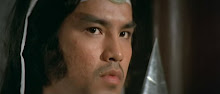
The brothers duel during the action packed climax
 Mori's movie has a lot more action than the predominantly drama-centric material present in its predecessor from famed director Kenji Misumi. This increase in sword action will likely be an attractive proposition to samurai fans as will the participation of the future Itto Ogami, the Lone Wolf himself. Furthermore, with its combination of action and a shorter running time, there's very little dramatic punch here. The filmmakers do manage to tie up the plot strands left open from part one and some of these carry over to the third production, too. The B/W photography may put off some viewers, but dedicated fans to this brand of genre won't mind at all. This was the first of four scores Ichiro Saito would contribute to the ZAT series. It's a standard sounding score especially when compared with any of the 11 the magnificent Akira Ifukube graced the series with.
 This is a steady, occasionally rocky entry in the series. The script presents some splendid ideas, but fails to fully expand on some of these. Still, it's the most lovelorn of all the ICHI tales. The ZAT pictures would only improve and become far more melodramatic from here, piling on cliffhanger and suspenseful moments for many of the succeeding entries. The fact that it's Katsu and Wakayama together (the latter with only one arm!) and doing battle with one another is reason enough for both the curious and the casual fan to give this one a spin.
ZAT STATS:
1. We learn Zatoichi is from Kasama in Joshu province. Kasama is located in Ibaraki, Japan. Surrounded by mountains, stone quarries are a lucrative venture there. Ichi returns to his hometown in the last of the 70s entries, ZATOICHI'S CONSPIRACY (1973) wherein he finds conflict with a now wealthy childhood friend attempting to extort a vital stone quarry from villagers.2. Ichi and his brother, Yoshiro, both vied for the affection of the same woman--Chiyo--who crushed the hearts of both men. Ichi's brother is never mentioned again during the series.
3. Ichi gets a lot of love in this movie, more than in any other entry. We learn of the blind swordsman's failed romances from the past, see his affairs in the present and the marriage possibility of the future. In a rare turn, Ichi jumps at the chance for sex with a tavern girl. In most of the films, he shies away from such encounters.
4. In the previous movie, Ichi leaves his sword at the grave of Hirate Miki. At the start of this movie, he has his sword back prior to paying his respect at the burial temple.
5. There are no gambling sequences in this film; a plot device that would become a major staple of the series.
6. There are no demonstrations of Ichi's sword skills (the amazing 'Ichi Sword Draw') outside of his lightning fast swordsmanship during the duel sequences.
7. The remainder of the series is in color and a formula is established that remains mostly unchanged for the rest of the films.
Feature running time: 1:12:14
This review is representative of the Home Vision DVD.
NEXT TIME IN ZATOICHI #3, THE BLIND MASSEUR MEETS HIS OLD SWORD MASTER, TANGLES WITH THE TENGU GANG, IS PURSUED BY A VENGEANCE SEEKING SWORDSMAN AND TRIES TO KEEP HIS DISTANCE FROM A YOUNG GIRL WHO FALLS FOR THE SENSITIVE CHARMS OF SWORDSMAN ICHI! DON'T MISS IT!!!
copyright 2013. All text is the property of coolasscinema.com and should not be reproduced in whole, or in part, without permission from the author. All images, unless otherwise noted, are the property of their respective copyright owners.


 Suburban housewife Patricia Kramer enjoys a chaotic existence as a stay-at-home-mom till she develops a little problem. After being exposed to a new perfume that inexplicably reacts with a multitude of household products, Pat undergoes a peculiar transformation that results in her shrinking day by day. Becoming a community celebrity of sorts, she attracts the attention of a secret corporation led a group of malicious scientists. They plan to use her blood for a shrinking serum with the intention of reducing the Earth's population literally down to size.

 Joel Schumacher's (THE LOST BOYS, BATMAN FOREVER) theatrical feature film debut is an endearing, enjoyably low key science fiction comedy that will appeal to lovers of 80s cinema and those who get all nostalgic about having seen the film upon its original release. I remember my mom taking me to see it and despite not having any monsters in it, the flick clicked with me just the same. With its origins based in Richard Matheson's novel, 'The Shrinking Man' (already adapted for 1957s THE INCREDIBLE SHRINKING MAN), mad scientists and the golden age mainstay of a hairy ape creature (in this case, a kindly, intelligent gorilla proficient in sign language) there's quite a few laughs to be had by the young and the young at heart.


 Lily Tomlin goes all out in making Kramer a likable character in her depiction of a woman trying to keep her sanity at home amidst her lovably raucous kids, a dog and an excitable Hispanic maid. Meanwhile, her advertising husband brings home the bread. Whether it was intended or not, there's a lot of social subtext on parade within the comedic parameters set down by writer Jane Wagner. The 1980s woman is satirized here as is America's preoccupation with consumerism (a concept translated in a far more gruesome fashion in George Romero's DAWN OF THE DEAD in 1978); the latter of which would grow to decadent heights once Ronald Reagan successfully pulled America out of the economic muck that former President Jimmy Carter had placed the country in.

 Tomlin also manages to pull multiple duties here as a few different characters. One of which is Judith Beasley, Pat's closest friend and head of their neighborhoods community group. Judith provides a number of the funniest moments with her sternly domineering delivery. Tomlin also throws in a cameo as one of her most famous characters from the TV show LAUGH IN (1968-1973), the obnoxious, squinty eyed, nose snorting telephone operator, Ernestine. She also had a brief scene as little Edith Ann (another classic comedy character of hers) that wasn't part of the theatrical release, but utilized in television airings of the film.


 While the movie playfully makes light of the Women of the Tupperware Party Era, it also manages to spoof the dead serious 1957 B/W science fiction classic, the aforementioned THE INCREDIBLE SHRINKING MAN. Some of the scenes from that earlier picture are restructured here to fit the films comical slant, but the tip of the hat to Jack Arnold's original is clearly in evidence. Also, whereas atomic testing was a major concern in 50s society, by the time the 80s rolled around, such issues became less serious than the slew of new products that were voraciously flooding store shelves across the country. As per their respective time periods, a mysterious atomic cloud was responsible for shrinking Grant Williams and in this version, it's a combination of assorted household items set off by a side effect from a new perfume created by Pat's husband's corporation.

 Just like the perils encountered by our shrunken hero in the '57 flick, Tomlin finds herself in a number of far sillier predicaments such as falling into a garbage disposal, assaulted by battery operated toys, chased by a dog and catapulted off of her bed. The film turns semi serious once the Kleinman Institute For the Study of Unexplained Phenomena hatches a plan to use Pat's blood to bring the planets population down to minuscule size. Carted away to a secret laboratory, Pat befriends a bumbling janitor named Rob (played by Mark Blankfield, the star of JEKYLL & HYDE...TOGETHER AGAIN) and a lovable gorilla (played by ace ape designer, Rick Baker).

 Among the other cast and befitting of the consumer-product placement nature of the production, is Dick Wilson as a grouchy supermarket manager. Folks will likely remember him for uttering the immortal line, "Don't squeeze the Charmin" on many commercials advertising the line of toilet paper. The busty Sally Kirkland of a few Roger Corman spectaculars plays a cashier. Mike Douglas, former talk show host and entertainer is on hand playing himself and singing the timely tune, 'Little Things Mean A Lot'. Henry Gibson (THE KENTUCKY FRIED MOVIE, THE BLUES BROTHERS) is suitably gloomy as the main antagonist even though he isn't given a whole lot to do. Charles Grodin (THE GREAT MUPPET CAPER, MIDNIGHT RUN) and Ned Beatty (DELIVERANCE, SUPERMAN) round out the cast of familiar faces.