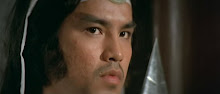
PIRANHA 1972 aka PIRANHA, PIRANHA
William Smith (Caribe), Peter Brown (Jim Pendrake), Ahna Capri (Terry Greene), Tom Simcox (Art Greene)
Directed by Bill Gibson
"I can taste the very soul of every animal I hunt... what I hunt becomes a part of me... and lives on in me. Someday I'll be out-hunted. And everything that I am will become part of that hunter..."
The Short Version: This early 70s wannabe exploitation movie/LAREDO reunion isn't quite as bad as its reputation suggests, but by and large, it's a missed opportunity. It has a few things going for it, but it also wastes a great deal of potential on outright sloppy direction and editing. Still, the location shooting in and around the amazon, numerous shots of gigantic anacondas, crocodiles and monkeys (not to mention a few animal deaths) will have fans of Italian jungle shockers reminiscing of Deodato and Lenzi. Smith is the 'Piranha' of the title essaying a demented hunter who hunts "everything". His former LAREDO co-star Peter Brown is among his prey, and also formulates a running gag between the two men; possibly the single smartest thing about the film. Only fans of Drive In fare, William Smith and those who have to see every adaptation of THE MOST DANGEROUS GAME will have the patience to stick with this 89 minute obscurity.

A fearless wildlife photographer and her brother hire intrepid amazonian guide Jim Pendrake to take them deep into the South American jungle for an exotic photo shoot on the locals, their lifestyle and the diamond mines in which they make their living. Upon arriving at a bar, they meet an American man named Caribe who lives in the jungle and has a reputation for being a ruthless hunter. The big man accompanies them on their journey to find diamonds, but the trio comes to regret it as Caribe turns out to be a psycho who has set his sights on a new form of prey.

Bill Gibson's sole known directorial effort is a major disappointment, but is a modestly worthwhile viewing experience for a few reasons. It also contains a couple underlying themes that may or may not have been intended in Richard Finder's screenplay; itself the sole listed credit for the writer. In fact, the film is peppered with numerous individuals who never worked again, or if they did, those productions are even more obscure than this one. Before discussing the films few bright spots, let's get the low points out of the way since the picture has garnered predominantly less than kind notices over the years.
 The films title -- despite proving to be a deceptive bit of creativity -- is likely its most telling err of judgment. This movie named 'Piranha' -- that also starts with the title laid over a real piranha -- is a cataclysmic example of false advertising for those unaware of the movies plot. It leads the viewer to expect one type of film, but end up with a different film entirely. For those who manage to pay attention as the drama slowly unfolds, it becomes apparent 60 minutes in that the title refers to William Smith's Caribe character -- the name means 'piranha' and was given to him by the local Indios.
 Piranhas do play a part in the film, though -- but this, too, is a disappointment. While the hungry little flesh-eating nibblers chow down on a victim at one point, an obvious bit of poetic justice never takes place that could have ended the film on a much more satisfying note. However, the ending does possess a sharp moment of irony; but it will only be picked up on by patient viewers who have absorbed background info on one of the characters -- and gotten over the fact that the film isn't about killer fish.

 Outside of losing a good deal of its audience who will feel cheated by the actual contents of the film (some DVD versions go a step further and promote the film as a killer piranha picture), Gibson's movie also suffers from a slow pace and an over-reliance on padding. Still, it's logical to ascertain that the extensive scenes of shantytown villagers working and going about their lives is from the perspective of Terry, the photographer. There's also a good deal of jungle footage including numerous animals and reptiles. However, the latter isn't nearly as intrusive as the stretches of sequences showing oldsters sifting for diamonds in rivers, or digging holes in the ground backed by music that feels like the movie has suddenly transformed into one of those old middle school film strips. That the editor Thea Bentler worked on documentaries afterward speaks volumes about why chunks of PIRANHA (1972) resembles one of them.
In their defense, the shots of the animals (particularly scenes of massive anacondas) do much to add a dangerous ambiance amidst the noticeably sweaty jungle surroundings. But had there been about ten minutes trimmed away, the film would flow, and move much better.
Outside of losing a good deal of its audience who will feel cheated by the actual contents of the film (some DVD versions go a step further and promote the film as a killer piranha picture), Gibson's movie also suffers from a slow pace and an over-reliance on padding. Still, it's logical to ascertain that the extensive scenes of shantytown villagers working and going about their lives is from the perspective of Terry, the photographer. There's also a good deal of jungle footage including numerous animals and reptiles. However, the latter isn't nearly as intrusive as the stretches of sequences showing oldsters sifting for diamonds in rivers, or digging holes in the ground backed by music that feels like the movie has suddenly transformed into one of those old middle school film strips. That the editor Thea Bentler worked on documentaries afterward speaks volumes about why chunks of PIRANHA (1972) resembles one of them.
In their defense, the shots of the animals (particularly scenes of massive anacondas) do much to add a dangerous ambiance amidst the noticeably sweaty jungle surroundings. But had there been about ten minutes trimmed away, the film would flow, and move much better.

 Then there's the static, occasionally clunky cinematography by a Jose Luis Andreu and Luis Jacko. There are a few choice camera touches in the first half (the camera mounts during the motorcycle chase being an example), but the creativity quickly runs out as the film progresses. Granted, there's a thick aura of local flavor, and you can almost feel the humidity coming off your TV screen, but the cameramen seem to lose their interest. It's very possible that the film began with one DP and finished with the other.
To elaborate, take the burning of the village during the finale. It's photographed without even a modicum of ingenuity. The camera just sits there as Caribe sets fire to these rows of huts to flush out his prey. What should have been a tense sequence, is lazy and lacking excitement.
Then there's the static, occasionally clunky cinematography by a Jose Luis Andreu and Luis Jacko. There are a few choice camera touches in the first half (the camera mounts during the motorcycle chase being an example), but the creativity quickly runs out as the film progresses. Granted, there's a thick aura of local flavor, and you can almost feel the humidity coming off your TV screen, but the cameramen seem to lose their interest. It's very possible that the film began with one DP and finished with the other.
To elaborate, take the burning of the village during the finale. It's photographed without even a modicum of ingenuity. The camera just sits there as Caribe sets fire to these rows of huts to flush out his prey. What should have been a tense sequence, is lazy and lacking excitement.
 With the negatives out of the way, it's now time to focus on the few good things found in this 70s curio obscurio. These high points revolve mostly around William Smith, who carries the weight of the movie on his shoulders. Some periodic tense moments also benefit the picture, but they're not enough considering the lack of vision that cripples the movie more often than not.
William Smith had been in motion pictures since the 1940s (where he first appeared as a child star in 1942s GHOST OF FRANKENSTEIN), and had recently come off a successful run of biker movies ending with 1971s CHROME & HOT LEATHER. So successful was Smith in those roles, he was crowned the 'King of the Bikers', and he gets to relive some of that steel horse glory here during a motorcycle race with his former LAREDO co-star Peter Brown.
 This race takes up approximately six minutes of the running time, and it's one of the few things the film does right. It's edited and photographed with more originality than the rest of the film can muster. It's not known if it was intentional or not, but both men wipe out on a few occasions (Brown's is particularly brutal) during their race, and the footage remains. Both men travel over various terrain, some of which invites danger -- fields, dirt roads, mud, and even swampland.
 Speaking of LAREDO, there are a couple of connections to that series as well as a couple of in-jokes that energize the film before its batteries start to run out. When Pendrake and Caribe are introduced, it's obvious Pendrake knows him, or of him. Caribe looks at him and says, "Do I know you?" Both men were partners on the western comedy series LAREDO which ran from 1966-1968. During the same scene, Pendrake asks Caribe if he knows how to ride a motorcycle just prior to challenging him to a race. This exchange is filled with all sorts of irony considering Smith's reigning status as the icon of Hog cinema. When the camera is tight on Smith's face, you can almost sense he wants to laugh when Brown asks him about his chopper prowess.

 Continuing with the LAREDO connection, aside from the star turns of Smith and Brown, the other two main stars (Capri and Simcox) had also appeared on the series during its first season. Capri had previously worked with William Smith in DARKER THAN AMBER (1970). Simcox later worked with Smith again on HOLLYWOOD MAN in 1976; so PIRANHA likely has some fondness attached to it via its cast if not for those watching it. It's worth mentioning that Peter Brown (who was already an actor of some repute from his role on the LAWMAN series) briefly delved further into exploitation cinema with FOXY BROWN and ACT OF VENGEANCE (both 1974).
 Going back to Smith, he plays the character of Caribe as this calculating madman. We see him at the beginning capturing some monkey's. His sly, guileful laugh lets us know he's not a nice character. When we meet him again a short time later, the evil inherent in his persona is carefully brought to the surface via Smith's facial expressions.
As the film moves forward, he drops more and more clues that he's far from sane. His speeches about hunting and killing hammer home THE MOST DANGEROUS GAME (a popular short story by Richard Connell adapted for the screen many times) aspects of the picture. Smith imbues Caribe with little nuances that adds tension to scenes where none would have been otherwise. We know he's crazy, it's just a matter of when and where he's going to erupt.
Going back to Smith, he plays the character of Caribe as this calculating madman. We see him at the beginning capturing some monkey's. His sly, guileful laugh lets us know he's not a nice character. When we meet him again a short time later, the evil inherent in his persona is carefully brought to the surface via Smith's facial expressions.
As the film moves forward, he drops more and more clues that he's far from sane. His speeches about hunting and killing hammer home THE MOST DANGEROUS GAME (a popular short story by Richard Connell adapted for the screen many times) aspects of the picture. Smith imbues Caribe with little nuances that adds tension to scenes where none would have been otherwise. We know he's crazy, it's just a matter of when and where he's going to erupt.

Aside from the homicidal Caribe, there are a scant few other moments of palpable dread. Sadly, these moments have no lasting power since their energy is sucked out of them by a permeating languidness. These include a building sense of danger once our trio reach their destination. There's a hint early on that the locals might not welcome the three visiting Americans. However, it's not long till it becomes apparent through subtle nods that Caribe grips the surrounding populace with terror and intimidation. It's not elaborated on, but it's definitely noticeable.
 The few onscreen animal deaths won't make anyone's day, but it's fascinating to find them here in a cinematically historical context. The Italians turned animal mutilation into something of a cottage industry during the 1960s and 1970s with their mondo movies and cannibal pictures. Considering this film was shot mostly, if not entirely in South America and the amazon, the muggy, mud-caked, and sweat inducing locales will bring to mind CANNIBAL HOLOCAUST (1980) and CANNIBAL FEROX (1981) for those who are familiar with those movies.
 It's not really a highlight, but just like so many 70s pictures, PIRANHA has its own theme song. It's a folksy tune titled 'Love All Things That Love the Sun'. Sung by Jim Stein, this song -- like others in 70s cinema -- relates to the onscreen action, but in an ironic fashion (and this film is brimming with irony). We see lots of animals, and Caribe is seen killing a few when he isn't talking about killing them. This survival of the fittest (as twisted as Caribe's logic is) mentality provides an interesting dichotomy for Terry's anti-gun stance -- one that would fit right in with today's 2nd amendment political maneuvering. Both characters briefly empower the film with some much needed relevancy found in their infrequent banter.
 The obscurity of PIRANHA (1972) is no doubt partially, or wholly due to its inferiority when compared with much better examples of Drive In motion pictures. I've never seen the trailer, or any promotional memorabilia for the film under this, or any other title; or even the title I saw it under on what was then the best local channel for monster movies, WGGT-TV 48. I can't recall if the onscreen title was in fact PIRANHA, PIRANHA, but that's what the commercial advertised it as. I only ever saw it the one time, and, like just about everybody else who saw it, it did nothing for me when I was a kid. I was expecting what most folks would expect -- a killer fish movie.
 Overall PIRANHA is a poor film, but one with a few merits. Granted, these merits are recommendations geared strictly to a core group of cinephiles. First and foremost, devoted William Smith fans will want to see this. Considering how many labels it's available on, and how cheap it is, it's well worth throwing away a few bucks on simply to see another William Smith movie. Those who feel compelled to see every filmic adaptation of 'The Most Dangerous Game' will also want to tune in. Everyone else will want to approach with caution, or steer clear of this Amazonian jaunt altogether.
This review is representative of the Miracle Pictures DVD.
 WHEN DINOSAURS RULED THE EARTH 1970
Victoria Vetri (Sanna), Robin Hawdon (Tara), Patrick Allen (Kingsor), Drew Henley (Khaku), Sean Caffrey (Kane), Magda Konopka (Ulido), Imogen Hassall (Ayak)
WHEN DINOSAURS RULED THE EARTH 1970
Victoria Vetri (Sanna), Robin Hawdon (Tara), Patrick Allen (Kingsor), Drew Henley (Khaku), Sean Caffrey (Kane), Magda Konopka (Ulido), Imogen Hassall (Ayak)
Directed by Val Guest
***WARNING! This review contains images of nudity***
The Short Version: Blondes don't always have more fun in this spectacular prehistoric epic that benefits from an exhaustive amount of dinosaur footage supplementing a standard caveman plot that includes the creation of the moon and human sacrifices. Amidst interior sets, an abundance of oceanic sequences, oiled up men and scantily clad (and naked) women, a thick aura of sex runs buck naked through what is ostensibly supposed to be a kids movie. Despite lacking the prestige of the cast from ONE MILLION YEARS B.C., Hammer's dino follow-up has more of an epic feel this time out, aided by a peplumesque score by Mario Nascimbene. The striking cinematography by the unfortunately named Dick Bush is a standout alongside stellar stop-motion animation sequences from Jim Danforth and his assistant Roger Dicken.

 Sanna is about to be sacrificed by her tribe, the Rock people, but is saved by the cataclysmic event of the birth of the moon. Washed out to sea by the resulting massive winds, and storm, she's rescued by the more advanced Sand people. Sanna is welcomed, and attracts the attention of Tara, one of the tribes leaders. Tara's woman, Ayak, becomes jealous and tries to get rid of the blonde Sanna. Eventually fleeing the seaside village, Sanna is soon followed by her new bare-chested suitor. Both are pursued by their own tribes and must endure various dangers, dinosaurs and ever changing elements to survive in the evolving, prehistoric world.
 Pleased with the box office returns for their initial cavemen vs. dinosaurs epic ONE MILLION YEARS B.C. (1966), Hammer eventually got around to a bigger, more expensive companion piece. With all the problems incurred by the laborious stop-motion animation still fresh in their minds, the execs at the 'studio that dripped blood at the dawn of time' had another go of it; but this time, instead of a returning Ray Harryhausen, it was his fellow animator and future collaborator Jim Danforth (and Danforth's assistant, Roger Dicken). The tumultuous production began in the latter part of 1968 and lasted as late as February of 1970, but the results proved to be well worth the trials and tribulations.

The plot is standard cave dweller drama, and a close approximation of the storyline of ONE MILLION YEARS B.C. (itself a remake of 1940s ONE MILLION B.C.). Both films not only share similarities in their plots, but also in their casts. Don Chaffey's film had the awe-inspiring frame of Raquel Welch (who did for fur-skinned, stone-age ladies wear what Farrah Fawcett did for the skimpy, bikini clad 1970s) and a tight, toned Martine Beswick. On the other hand, Val Guest's movie has the buxom curvature of Victoria Vetri and the bosomy, bodacious figure of Imogen Hassall.

 With this being a tale of prehistory, the language barrier is first and foremost an obstacle in terms of figuring out what the hell is going on; which is where the simplistic plot comes in handy. However, what little language the filmmakers have devised is often mired in repetitive verbage from a handful of words such as "Akeeta!" and "Neecro!" These two words (along with a few others) are spoken so randomly, that it's difficult to surmise their meaning from one scene to the next. There's no Evan Kim (the Asian English speaker in CAVEMAN from 1981) in the cast to give us a translated summation of what's being said; and outside of an opening English narration, it's all prehistoric dialect from there.

 As the film begins, we learn (through visual aids) that it doesn't pay to be a blonde (male, or female) in prehistoric times. If you have those lightly colored locks and are a member of the Rock tribe, you're sacrificed to the sun via a fatal whack to the side of the head from a neolithic version of a sling shot. But when this opening pagan sacrifice is interrupted by a storm and the gradual formation of the moon, Sanna's escape prompts the savage Rock people to lay blame for this new, mysterious sky-dwelling orb on her. And the lovely Sanna's problems don't stop there.
 The entire film revolves around Vetri's character and her encounters with dinosaurs and other cave people; who don't actually live in caves, but in huts by the sea. The impending human interactions are of the neanderthal mentality that women are secondary, and should know their place in the cave; they're there to be "loved" till the next best thing comes along. Having narrowly avoided execution for her hair color, Sanna now inadvertently brings jealousy to this small seaside community. Head hunk Tara gets eyes for her immediately, sending his dark haired companion Ayak into a state of confusion that leads to a murderous rage (although her evocation sounds more like a temper tantrum). This formulates the second arc of the story that intertwines late in the film.

 Vetri looks fabulous in her role -- which consists of basic facial expressions and lots of cleavage (which the camera shows us at regular intervals). Speaking of that, the outfits seem to have gotten skimpier in this second dinosaur outing in Hammer's stone-age trilogy. There's at least one nip-slip and some striking nudity that feels out of place in what is supposed to be a kid friendly movie. The skin is welcome, but out of place. Granted, the picture was cut for both its British release (both in 1970 and cut even more during its re-release in 1973) and its North American release in 1971; which eliminated all traces of sex and nudity entirely.
 The film, bearing a G rating on the box with a 96 minute running time, was released on DVD in 2008 and caused a minor stir. It was akin to its original British theatrical release when some folks saw the film expecting a kiddie style monster movie and got scenes of sex, bare bosoms and buttock's interspersed with the dino action. A 100 minute uncut version was what ended up on the WB disc. A recall was allegedly ordered, yet copies remained on Best Buy store shelves (the film, paired on DVD with MOON ZERO TWO was a BB exclusive) for a good while afterward. Now out of print, the picture was not re-released with the actual G rated version cut for content, nor has Warner bothered to place the film among their Archive library.

 It bears mentioning that if all cavewomen looked like Vetri, Hassall and Konopka, the prehistoric era wouldn't be such a bad place all things considered. Regarding the flesh and blood aspects present in the finished product, whether intended or not, there's a sexual energy present that is at odds with the rest of the picture. But seriously, what else was there to do during an anachronistic prehistoric era but have sex and fight dinosaurs? The men are, for the most part, toned and oiled up while many of the women are fit and wear as little as possible. The pictures sexual current is discussed below.

 One scene has Sanna evading capture by hiding in a tree. A huge python slithers down from the branches and, while she remains as still as possible, it wraps around her mid section sliding down her leg and onto the ground. Of course, the camera gives us some nice shots before the snake uncoils from Vetri's luscious frame. The implications are obvious, but possibly not intended. Ditto for a similar moment when Sanna again tries to hide from her pursuers only to discover her cover happens to be a phallic shaped man-eating plant! Barely escaping with her life, she is forced to cut away her hair to keep from being devoured by this bizarre looking, penile shaped plant creature.

Another scene has a caveman whisk a woman away for what appears to be an intended rape. Ultimately, the woman stops fighting and welcomes the advances. Her top is torn away and as they begin their dalliance, the scene cuts away.

 When Sanna and Tara finally engage in stone-age sex, it's in a cave by a lake. Nascimbene's romantic cues swell on the soundtrack as Tara grabs her gently by the hair. She goes to her knees. Tara then drops down and they indulge their lust. The scene continues with them now swimming in the lake. Sanna exits the water on a nearby rock so that we can all see her bare breasts. Tara then swims over to her and drapes her left leg over his shoulder all the while kissing it. So while there's a lot of sexism throughout (that will piss off the PC crowd), this is one moment where a bit of male submissive behavior is present.
 While Imogen Hassall is gorgeous, possessing a mesmerizing waistline, she's no Martine Beswick -- failing to display the level of sexuality and dominating presence Beswick emanated in ONE MILLION YEARS B.C. She comes off a tad virginal in her pouty reception of being rejected when Vetri's character distracts her man before unwittingly stealing him away permanently. When she tries to kill Sanna, it seems more like a schoolgirl quarrel than anything else. Thankfully, the numerous scenes with dinosaurs takes precedence over the occasionally lackluster human drama.
 The dinosaurs, and other assorted special effects, are the main stars of the picture. Danforth (along with his assistant Roger Dicken; David Allen also did some animation) created some truly spectacular set pieces. Everything from the numerous matte paintings, to the stop-motion animation, to the cinematography are all top notch. The effects wizards efforts were noticed as the film got an Oscar nomination for their work. The stop-motion alone took 17 months to complete, not to mention nearly two dozen additional matte paintings were ordered than originally planned. The budget was high at 2.5 million British pounds (roughly US 6 million), but the production was anything but smooth sailing.
 Since Ray Harryhausen was busy with THE VALLEY OF GWANGI (1969), Hammer went with Jim Danforth (JACK THE GIANT KILLER, THE 7 FACES OF DR. LAO). While a highly respected animator in his own right, Danforth didn't have the clout Harryhausen did (outside of doing the painstaking animation on ONE MILLION YEARS B.C., Harryhausen was also a producer on that movie), so he was at the mercy of the company. According to anecdotes from Danforth in Wayne Kinsey's invaluable book, Hammer Films: The Elstree Years, Danforth -- among others -- was not happy working on this production.
 With the film going over schedule and budget, some of the planned effects sequences had to be omitted. One of these involved an attack by giant red ants. A scene of a stuntman being assaulted by a three foot long mechanized ant monster was shot, but went unused. Some shots meant for this sequence exist in the finished film; these include the shots of Tara and Sanna running around this charred, volcanic landscape towards the end (see insert photo).

Another sequence that had its dinosaurs discarded entailed two Pterodactyls attacking the Sand people during the climactic tidal wave scene. The scene as it appears in the film is reduced to a battle against the elements minus the monsters. Having encountered giant crabs moments prior, the inclusion of flying creatures might have been overkill after the battle with the man-sized crustaceans.
 Speaking of overkill, if extended stop-motion animated monster attacks aren't enough, the filmmakers deemed it necessary to insert stock footage of real lizards (from the 1960 version of THE LOST WORLD) doctored to look like dinosaurs battling to the death. Oddly enough, scenes of lizards dressed up to look like dinosaurs was first seen in the original ONE MILLION B.C. from 1940. The gruesome, real life battle to the death of the alligator and iguana masquerading as prehistoric reptiles from THE LOST WORLD (1960) turned up in other 60s SciFi movies as well. This cheaper "special effects" alternative, ie real animal violence in American productions possibly influenced the practice as seen later in Italian jungle and mondo movies.
 Going back to the reptiles of the animated variety, Danforth's dino work is incredible -- and some of the best such effects
ever seen onscreen. It's not too far of a stretch to say his efforts
here surpass that of Harryhausen in some respects. The sequence with the
Rhamphorynchus for instance, is a top notch, seamless melding of
stop-motion photography and live action. The earlier sequence with the
captured Plesiosaur is a marvelous bit of animated magic in its own
right; it's made even more successful by Dick Bush's colorfully ornate
photographic work.
Going back to the reptiles of the animated variety, Danforth's dino work is incredible -- and some of the best such effects
ever seen onscreen. It's not too far of a stretch to say his efforts
here surpass that of Harryhausen in some respects. The sequence with the
Rhamphorynchus for instance, is a top notch, seamless melding of
stop-motion photography and live action. The earlier sequence with the
captured Plesiosaur is a marvelous bit of animated magic in its own
right; it's made even more successful by Dick Bush's colorfully ornate
photographic work.
 The aforementioned disaster scenes of calamity, and characters battling violent seas and storms could be a fitting analogy for the tensely heated production history. Although it was a box office success, and got Academy Award notice, WHEN DINOSAURS RULED THE EARTH failed to gain the same level of notoriety and reputation that ONE MILLION YEARS B.C. (1966) has managed to accrue over the years. The third film in Hammer's caveman series -- CREATURES THE WORLD FORGOT (1971) -- featured no dinosaurs at all.
Victoria Vetri never became the next Raquel Welch, but she did appear in lots of television (mostly) before and after her dinosaur romp. She also graced two additional exploitation pictures in the 1970s, those being Stephanie Rothman's GROUP MARRIAGE (1973) and Nicolas Meyers's INVASION OF THE BEE GIRLS (1973).
The aforementioned disaster scenes of calamity, and characters battling violent seas and storms could be a fitting analogy for the tensely heated production history. Although it was a box office success, and got Academy Award notice, WHEN DINOSAURS RULED THE EARTH failed to gain the same level of notoriety and reputation that ONE MILLION YEARS B.C. (1966) has managed to accrue over the years. The third film in Hammer's caveman series -- CREATURES THE WORLD FORGOT (1971) -- featured no dinosaurs at all.
Victoria Vetri never became the next Raquel Welch, but she did appear in lots of television (mostly) before and after her dinosaur romp. She also graced two additional exploitation pictures in the 1970s, those being Stephanie Rothman's GROUP MARRIAGE (1973) and Nicolas Meyers's INVASION OF THE BEE GIRLS (1973).
 If nothing else, WHEN DINOSAURS RULED THE EARTH (1970) was influential on other filmmakers. It can be felt in the low budget PLANET OF DINOSAURS (the Styracosaurus attack in that film mirrors the Chasmosaurus chase here) and also in the mega-budget JURASSIC PARK (a banner with the title 'When dinosaurs ruled the Earth' falls to the ground in front of a roaring Tyrannosaur) from 1993. The lighter scenes with Sanna, a cute baby dino and the mother dinosaur that takes her as one of her own may have influenced a similar plot device that cropped up a few years later in the LAND OF THE LOST television program. The look of this monster seems to have been the template for a goofier looking beast in the silly, but infinitely fun CAVEMAN from 1981.
 The shortcomings are few -- the film suffers from a lack of cohesion and characters who have little interest. Some of the effects don't fit (the intrusive, mock dinosaur lizards), and the nudity -- while pleasing to the eye -- feels out of place. The director and writer J.G. Ballard may hate it, but the film has its share of devoted followers. The monsters make the movie, and thankfully, Dinosaurs definitely Rule this picture.
This review is representative of the Warner Brothers double feature DVD paired with MOON ZERO TWO (1969).
copyright 2013. All text is the property of coolasscinema.com and should not be reproduced in whole, or in part, without permission from the author. All images, unless otherwise noted, are the property of their respective copyright owners.


 The films title -- despite proving to be a deceptive bit of creativity -- is likely its most telling err of judgment. This movie named 'Piranha' -- that also starts with the title laid over a real piranha -- is a cataclysmic example of false advertising for those unaware of the movies plot. It leads the viewer to expect one type of film, but end up with a different film entirely. For those who manage to pay attention as the drama slowly unfolds, it becomes apparent 60 minutes in that the title refers to William Smith's Caribe character -- the name means 'piranha' and was given to him by the local Indios.
 Piranhas do play a part in the film, though -- but this, too, is a disappointment. While the hungry little flesh-eating nibblers chow down on a victim at one point, an obvious bit of poetic justice never takes place that could have ended the film on a much more satisfying note. However, the ending does possess a sharp moment of irony; but it will only be picked up on by patient viewers who have absorbed background info on one of the characters -- and gotten over the fact that the film isn't about killer fish.
 Outside of losing a good deal of its audience who will feel cheated by the actual contents of the film (some DVD versions go a step further and promote the film as a killer piranha picture), Gibson's movie also suffers from a slow pace and an over-reliance on padding. Still, it's logical to ascertain that the extensive scenes of shantytown villagers working and going about their lives is from the perspective of Terry, the photographer. There's also a good deal of jungle footage including numerous animals and reptiles. However, the latter isn't nearly as intrusive as the stretches of sequences showing oldsters sifting for diamonds in rivers, or digging holes in the ground backed by music that feels like the movie has suddenly transformed into one of those old middle school film strips. That the editor Thea Bentler worked on documentaries afterward speaks volumes about why chunks of PIRANHA (1972) resembles one of them.
 Then there's the static, occasionally clunky cinematography by a Jose Luis Andreu and Luis Jacko. There are a few choice camera touches in the first half (the camera mounts during the motorcycle chase being an example), but the creativity quickly runs out as the film progresses. Granted, there's a thick aura of local flavor, and you can almost feel the humidity coming off your TV screen, but the cameramen seem to lose their interest. It's very possible that the film began with one DP and finished with the other.
  With the negatives out of the way, it's now time to focus on the few good things found in this 70s curio obscurio. These high points revolve mostly around William Smith, who carries the weight of the movie on his shoulders. Some periodic tense moments also benefit the picture, but they're not enough considering the lack of vision that cripples the movie more often than not.
 This race takes up approximately six minutes of the running time, and it's one of the few things the film does right. It's edited and photographed with more originality than the rest of the film can muster. It's not known if it was intentional or not, but both men wipe out on a few occasions (Brown's is particularly brutal) during their race, and the footage remains. Both men travel over various terrain, some of which invites danger -- fields, dirt roads, mud, and even swampland.
 Speaking of LAREDO, there are a couple of connections to that series as well as a couple of in-jokes that energize the film before its batteries start to run out. When Pendrake and Caribe are introduced, it's obvious Pendrake knows him, or of him. Caribe looks at him and says, "Do I know you?" Both men were partners on the western comedy series LAREDO which ran from 1966-1968. During the same scene, Pendrake asks Caribe if he knows how to ride a motorcycle just prior to challenging him to a race. This exchange is filled with all sorts of irony considering Smith's reigning status as the icon of Hog cinema. When the camera is tight on Smith's face, you can almost sense he wants to laugh when Brown asks him about his chopper prowess.
 Continuing with the LAREDO connection, aside from the star turns of Smith and Brown, the other two main stars (Capri and Simcox) had also appeared on the series during its first season. Capri had previously worked with William Smith in DARKER THAN AMBER (1970). Simcox later worked with Smith again on HOLLYWOOD MAN in 1976; so PIRANHA likely has some fondness attached to it via its cast if not for those watching it. It's worth mentioning that Peter Brown (who was already an actor of some repute from his role on the LAWMAN series) briefly delved further into exploitation cinema with FOXY BROWN and ACT OF VENGEANCE (both 1974).
 Going back to Smith, he plays the character of Caribe as this calculating madman. We see him at the beginning capturing some monkey's. His sly, guileful laugh lets us know he's not a nice character. When we meet him again a short time later, the evil inherent in his persona is carefully brought to the surface via Smith's facial expressions.
 The few onscreen animal deaths won't make anyone's day, but it's fascinating to find them here in a cinematically historical context. The Italians turned animal mutilation into something of a cottage industry during the 1960s and 1970s with their mondo movies and cannibal pictures. Considering this film was shot mostly, if not entirely in South America and the amazon, the muggy, mud-caked, and sweat inducing locales will bring to mind CANNIBAL HOLOCAUST (1980) and CANNIBAL FEROX (1981) for those who are familiar with those movies.
 It's not really a highlight, but just like so many 70s pictures, PIRANHA has its own theme song. It's a folksy tune titled 'Love All Things That Love the Sun'. Sung by Jim Stein, this song -- like others in 70s cinema -- relates to the onscreen action, but in an ironic fashion (and this film is brimming with irony). We see lots of animals, and Caribe is seen killing a few when he isn't talking about killing them. This survival of the fittest (as twisted as Caribe's logic is) mentality provides an interesting dichotomy for Terry's anti-gun stance -- one that would fit right in with today's 2nd amendment political maneuvering. Both characters briefly empower the film with some much needed relevancy found in their infrequent banter.
 Overall PIRANHA is a poor film, but one with a few merits. Granted, these merits are recommendations geared strictly to a core group of cinephiles. First and foremost, devoted William Smith fans will want to see this. Considering how many labels it's available on, and how cheap it is, it's well worth throwing away a few bucks on simply to see another William Smith movie. Those who feel compelled to see every filmic adaptation of 'The Most Dangerous Game' will also want to tune in. Everyone else will want to approach with caution, or steer clear of this Amazonian jaunt altogether.