Episode 2: TAKKONG'S BIG COUNTERATTACK (TAKKONGU DAI-GYAKUSHU) ***
 While going through the various MAT training courses, Hideki Goh aces them all garnering perfect scores every time. When the monster Takkong surfaces again sinking a tanker vessel, Goh and other MAT members plan to eradicate the beast with torpedoes. During the undersea attack, Goh gets trigger happy and nearly gets him and Minami killed. With Minami unconscious, Goh tries to change to Ultraman, but fails to do so. The monster retreats and Goh is released from MAT duty. He returns to his friend Sakata so as to build his specialized race car, Ryuusei #2; but he doesn't want to work with him, either. Meanwhile, Takkong attacks an oil refinery trapping Minami below ground leaving Captain Kato and his crew helpless to get to him and workers trapped below.

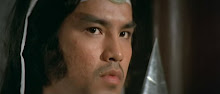
 This follow-up to episode one carries over the sole surviving kaiju from the debut show. Almost as soon as he signs up with MAT, Goh is already in trouble with his superiors. After having whipped his colleagues in Kendo, Karate, and on the shooting range, Goh is fired from MAT after botching a crucial mission. It's all an attempt to establish some viewer identification with the character even though we know he won't remain out of work long. At the same time, Goh (at far right in insert pic) is shown to be an unusually emotional man. He's just as heroic as his two predecessors, Hayata and Moroboshi, but Goh is far more impulsive. This is seen more as the series progresses.

This second show provides a bit more exposition than the first one did, but still manages to focus a lot of attention on action. The opening and finale is where the bulk of it lies, while the middle is reserved for building more on the title character's human host. Goh's friend Sakata gets some screentime, as well as his sister Aki, whom we sense has affection for Goh. The little boy Jiro Sakata is also on hand. These three will play an important part of a major story arc later in the series.
 The SPX are what you'd expect, but they're noticeably better than the two previous Ultra shows. The attack on the refinery is well staged, and includes some nice composite work. The battle between Ultraman and Takkong is relatively brief, though. The creature appears to have no special powers save for a moment where it spits some sort of liquid into Ultraman's face. It's a bizarre design that looks like a cross between a blow fish and a sqeaky dog toy. During the final battle, one of Takkong's arms is torn off, but not in graphic fashion -- unlike so many dead kaiju torn asunder in ULTRASEVEN (1967).

 The MAT submarines make their introductions here. They're smaller than the S Subs of ULTRAMAN (1966) and the Hydranger's of ULTRASEVEN (1967). However, they're much wider and look like a cross between a car and a hydroplane. We saw a glimpse of the MAT underwater facility in episode one; and since a portion of this episode takes place under the sea, the narrator briefly tells us about its functions here.
It's just two programs in and THE RETURN OF ULTRAMAN maintains its position as a strong action show -- light on plot, but high on creatures and explosions. Episode 2 rolls out with a nice balance of characterization and giant monster fights that will surely please Tokusatsu fans.
MONSTERS: Takkong
WEAPONS: MAT Submarine #1, #2, Arrow-1, MAT Gyro
To be continued in Episode 3: EVIL MONSTER REALM OF TERROR!!!
 Episode 1: ALL MONSTERS ATTACK (KAIJU SOH-SHINGEKI) ***1/2
"I am Ultraman... my mission is to defeat every enemy who threatens human freedom and happiness."
 Two giant monsters rise from the sea destroying several city blocks in Tokyo. MAT (Monster Attack Team) is called into action to quell the kaiju assault. During the attack, race car driver Hedeki Goh rescues a young boy and a dog, but dies from injuries after a building collapses on him. Not long after, he's revived by Ultraman -- forming a bond with the Nebula M-78 superhero to fight outer and inner threats to the Earth. For his heroism, Captain Kato offers him a job as a member of the MAT force. Initially unaware of the powers he possesses, a third monster appears at Asagiri Volcano. The MAT Force engage this new creature. As Goh rescues an old man, he's compelled to transform into Ultraman to battle the fire-breathing beast. Once the reptilian threat is vanquished, Goh finally realizes what he has become and his mission as the new member of the Monster Attack Team.

 This is the third ULTRA series from Tsuburaya Productions. Not counting 1965s ULTRA Q (which had no giant superhero), it follows ULTRAMAN (1966) and ULTRASEVEN (1967). Famed SPX artist Eiji Tsuburaya was the brains behind ULTRA Q and the Ultraman series (and its follow-up, U7). His sons carried on the Tokusatsu tradition after his death in 1970 with this new Ultra show. Whereas the previous series (ULTRASEVEN) often leaned towards plot heavy storylines, THE RETURN OF ULTRAMAN went with a far heavier accent on action. This first episode does an excellent job of establishing that.

 Directed by Ishiro Honda, the revered GODZILLA (1954) director was asked to helm this first program out of respect for his deceased colleague. Reportedly, Honda didn't like working on television, but he brought an undeniable level of seriousness to THE RETURN OF ULTRAMAN's debut program. He may not of enjoyed the small screen medium, but this
25 minute program was a vast improvement over Honda's 1970 big screen train wreck,
YOG, MONSTER FROM SPACE.
Some of the contrivances introduced here include an unusual amount of attention paid to citizens in peril during the handful of monster attacks -- more so than what you got in many Japanese giant monster movies of this time period.
 This version of Ultraman is also tinkered with beyond suit alterations and additions to his superpower repertoire. He isn't solely resigned to being a MAT member (more on this organization below). In his off time, Hideki Goh resumes his duties working on racing cars with his friend Ken Sakata (Mori Kishida). Furthermore, New Ultraman has no Beta Capsule, or Ultra Eye with which to transform. Here, Hideki Goh merely wills himself to transform. He raises his arms into the air as if he's taking flight -- only then to change into the space warrior from the Land of Light in Nebula M-78.
Some striking photographic shots are also on display (a recurring attribute in future episodes) that add extra production value to this third series. THE RETURN OF ULTRAMAN is regarded by a contingent of fans as the best of the Ultra shows.

Like its predecessors, a new arm of the Earth Defense Force is introduced. This time it's MAT -- Monster Attack Team. The various mechs showcased here are similar to those of the previous Ultra shows, but have a sleeker look to them; and they look less cumbersome, with more maneuverability. The MAT Arrow-1 and Arrow-2, and the MAT Gyro make their first appearances here.

 The monsters of RETURN OF ULTRAMAN's (later christened ULTRAMAN JACK) first episode are a wild trifecta of varied designs. The two monsters that battle it out in and around Tokyo Bay at the beginning are definitely creative, if diametrically different from one another. Takkong resembles a gigantic blowfish with arms and legs. His opponent is Zazan, another ocean dwelling monster that looks like a giant blob of seaweed.

 The third creature is of a more traditional reptilian lineage. This fire-breathing beast, Earthtron, does battle with Ultraman during the night-time finale. It's a good fight, too. This New Ultraman enjoys utilizing throws and suplexes in his fight set. Unlike U7, New Ultraman retains the Color Timer (warning light) of his 1966 antecedent. After a few minutes of battle, Ultraman's energy is rapidly depleted from the exposure to Earth's atmosphere.
Moreover, Shin Ultraman (New Ultraman), looks almost identical to the 1966 original; the only differences being alterations made to the red and silver designs on the suit. New Ultraman has the same classic arsenal as his '66 predecessor, but abilities exclusive to this incarnation surface in later episodes.
 The actor who takes up the Ultra mantle this third go round, Jiro Dan, doesn't initially give off the same aura of either Susumu Korobe (Hayata in the 1966 version), or Koji Moritsugu (Dan Moroboshi in 1967s ULTRASEVEN). At least in this first episode, Jiro Dan acts with indifference in the role of Hideki Goh that doesn't appear to change much for the next several shows.
 Fans of Toho's two 'Dracula' movies -- 1971s LAKE OF DRACULA and 1974s EVIL OF DRACULA will recognize Mori Kishida (Shin Kishida) as Goh's race car/mechanic partner. His distinctive visage contributed to the fun of Jun Fukuda's snazzy, jazzy and fun monster movie, GODZILLA VS. MECHAGODZILLA (1974). The late Kishida was at one time married to Japanese comedienne-actress, Kiki Kirin.
 An action packed start, the plot of episode one (such as it is) carries over into episode two. It's not technically a two-parter, but this debut overlaps into the next one; and the destruction doesn't let up there, either. 'All Monsters Attack' is an impressive intro to this third Ultra series; and it's helmed by a master of monsters in the hands of the late, great Ishiro Honda.
MONSTERS: Takkong, Zazan, Earthtron
WEAPONS: MAT Arrow-1, MAT Arrow-2, MAT Gyro
To be continued in Episode 2: TAKKONG'S BIG COUNTERATTACK!!!
copyright 2013. All text is the property of coolasscinema.com and should not be reproduced in whole, or in part, without permission from the author. All images, unless otherwise noted, are the property of their respective copyright owners.


 While going through the various MAT training courses, Hideki Goh aces them all garnering perfect scores every time. When the monster Takkong surfaces again sinking a tanker vessel, Goh and other MAT members plan to eradicate the beast with torpedoes. During the undersea attack, Goh gets trigger happy and nearly gets him and Minami killed. With Minami unconscious, Goh tries to change to Ultraman, but fails to do so. The monster retreats and Goh is released from MAT duty. He returns to his friend Sakata so as to build his specialized race car, Ryuusei #2; but he doesn't want to work with him, either. Meanwhile, Takkong attacks an oil refinery trapping Minami below ground leaving Captain Kato and his crew helpless to get to him and workers trapped below.

 This follow-up to episode one carries over the sole surviving kaiju from the debut show. Almost as soon as he signs up with MAT, Goh is already in trouble with his superiors. After having whipped his colleagues in Kendo, Karate, and on the shooting range, Goh is fired from MAT after botching a crucial mission. It's all an attempt to establish some viewer identification with the character even though we know he won't remain out of work long. At the same time, Goh (at far right in insert pic) is shown to be an unusually emotional man. He's just as heroic as his two predecessors, Hayata and Moroboshi, but Goh is far more impulsive. This is seen more as the series progresses.

 The SPX are what you'd expect, but they're noticeably better than the two previous Ultra shows. The attack on the refinery is well staged, and includes some nice composite work. The battle between Ultraman and Takkong is relatively brief, though. The creature appears to have no special powers save for a moment where it spits some sort of liquid into Ultraman's face. It's a bizarre design that looks like a cross between a blow fish and a sqeaky dog toy. During the final battle, one of Takkong's arms is torn off, but not in graphic fashion -- unlike so many dead kaiju torn asunder in ULTRASEVEN (1967).

 The MAT submarines make their introductions here. They're smaller than the S Subs of ULTRAMAN (1966) and the Hydranger's of ULTRASEVEN (1967). However, they're much wider and look like a cross between a car and a hydroplane. We saw a glimpse of the MAT underwater facility in episode one; and since a portion of this episode takes place under the sea, the narrator briefly tells us about its functions here.