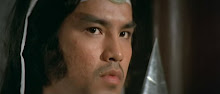
"Giuliano is a legacy and symbol of Italian cinema." -- Pasquale Squitieri, director of Gemma in 1977s IL PREFETTO DI FERRO (THE IRON PREFECT) aka I AM THE LAW
 The Italian western genre is one of Italy's most famous exports with fans all over the world. They have been a great influence on the American western just as much as the North American classic oater had inspired Europeans to brand their own interpretation of the wild west. Directors and actors have all played a major role in the genres universal success.
One of the most popular international box office stars to emerge from the Italian cinema scene was Giuliano Gemma, a man who quickly became as synonymous with the genre as his American counterparts, Clint Eastwood and Lee Van Cleef.
Covering his best works predominantly in the Euro-western field and beyond, this article is a tribute to the late actor, Giuliano Gemma, the Man with the Million Dollar Smile.
 Born on September 2nd, 1938, Giuliano was, in his own words, born to be an acrobat. Fiercely athletic in his younger years, he enjoyed gymnastics, and had a brief career as a boxer before becoming employed as a stuntman at the renowned Cinecitta Studios. Equally passionate about movies, his first acting gig came in 1958 with Dino Risi's VENICE, THE MOON AND YOU. Reportedly, he was hired because the director thought he looked like Marlon Brando. The following year, William Wyler chose him to appear as a centurion in BEN HUR (1959) -- one of a number of American productions that shot at the fabled Italian studio.

 Eventually realizing his dream of becoming a Silver Screen star, he appeared in Sword and Sandal pictures in roles of varying size. His breakthrough came in 1962 with his role as Krios (see above), the son of Jupiter in Duccio Tessari's ARRIVANO I
TITANI aka MY SON, THE HERO; and also under the title SONS OF
THUNDER. His hair was dyed blonde for the role. This would begin a lucratively prosperous working relationship for the actor and director Tessari in the ensuing years.
Gemma labored on lesser peplum adventures such as two with American Richard Harrison with TWO GLADIATORS and REVOLT OF THE PRAETORIANS (both 1964). He also co-starred with American Lou Degni, aka Mark Forest in the vastly inferior HERCULES AGAINST THE SONS OF THE SUN (1964; see insert). In this film, he plays an Incan prince who aids Hercules (after being shipwrecked on a South American island) in toppling a usurper.
Gemma did headline one sword slinging Italian adventure as Erik the Red in ERIK THE VIKING (1965), aka VENGEANCE OF THE VIKINGS -- where he essentially discovers America some 500 years before Columbus; and does battle with a scenery devouring Gordon Mitchell.

One of the actors best roles during his Torch & Toga tenure was co-starring with Mimmo Palmara alongside lead star Mark Forest in the epic entertainment of GOLIATH & THE SINS OF BABYLON (1963). This production would mark the first of another great partnership with director Michele Lupo that would last some 15 years. Between Tessari and Lupo, Gemma would formulate a memorable series of western films that are beloved to fans over 40 years running.
"God created men equal... the six gun made him different." -- A PISTOL FOR RINGO (1965)

 With the overwhelming success of Leone's FISTFUL OF DOLLARS (1964), Gemma would again team with Tessari for the film that would cement his popularity around the world. A PISTOL FOR RINGO (1965) was not only unique for its Christmas setting, but also in its lead character. Ringo, alias Angel Face, was a deadly gunslinger with a wagon load of sarcastic wit and a preference for milk as opposed to alcoholic beverages. He was essentially a live action version of Bugs Bunny -- always one step ahead of everyone else; and even in compromising situations, he's able to barter his way out of any ordeal and make a fool out of the bad guys before sending them to their maker. With all his cunning, and mischievously dangerous methods, Ringo was a clean-shaven hero at a time when facial stubble was quickly becoming the rage.
In both the Italian and US cuts, Gemma uses the pseudonym, Montgomery Wood. Gemma's Ringo is arguably one of the most memorable western characters of all time. Ennio Morricone's magnificent score bore a theme song that was a top ten radio success that only added to Gemma's popularity in his home country.
"Dead, huh? Well, they say 'Early to bed, early to rise gets you shot between the eyes'." -- A PISTOL FOR RINGO (1965)

 A PISTOL FOR RINGO was a huge hit for the actor and a sequel was inevitable. This time, Gemma's real name appeared in the credits with his Americanized handle in smaller font, and in brackets. Titled RETURN OF RINGO (1965), this second pistolero picture shared the same cast and crew as before, but little else to link it to the previous production. It, too, was a big success. Gemma went for a hardened, serious approach here in what amounted to a sagebrush re-telling of Homer's 'The Odyssey'. Tessari went for a more Italian tinted oater this time, as opposed to the singular American style of PISTOL.
Gemma is seen onscreen with a full beard for a good portion of the movie. He was often chastised by fans for his lack of stubble, but he did sport beards on a few occasions (BLOOD FOR A SILVER DOLLAR (1965) is one example), albeit briefly. Morricone delivers another stellar score ensuring a classy production.

 Gemma's box office stability was soaring and ARIZONA COLT soon followed in 1966. This time Gemma was under the direction of Michele Lupo in what amounted to an unofficial third RINGO movie. The similarities were striking -- the wily, delightfully cunning arrogance of Tessari's original RINGO is heavily in evidence here. There's even a reference to his love of milk, among other things. Francesco De Masi delivered a grand Morricone style score and the trailer did a magnificent job of selling both the film and its star.

 Aside from what's already been mentioned, Giuliano implemented his gymnastics background into his westerns. Any number of times he can be seen jumping, leaping, flipping, or diving from the bad guys and their bullets. This concept of the nimble, elastic hero became de rigueur once THEY CALL ME TRINITY exploded in 1970. Prior to that, it was a staple of Gemma's big screen characters that was also adopted for other Italian six-gun pictures.
Both prior, between, and after his two popular RINGO movies, Gemma did a few American style westerns for Giorgio Stegani (George Finley); and an adventurous, if conveyor belt-like trilogy of sorts for Giorgio Ferroni (Calvin J. Padget). For Stegani there was ADIOS, GRINGO (1965), while BLOOD FOR A SILVER DOLLAR (1965), FORT YUMA GOLD (1966) and WANTED (1967) were all for Ferroni. In 1971, Gemma was again guided by Ferroni when he headlined as Robin Hood in the star-studded, and rare L'ARCIERE DI FUOCO (THE FIERY ARCHER).
"With each of these last six bullets I'm gonna send six of them to hell!" -- Gemma in ADIOS, GRINGO (1965)

 Stegani's ADIOS, GRINGO (see above pic) was yet another top hit for the handsome actor. Loaded with fights, its standard action plot no doubt capitalized on the massive success of the two RINGO's. This film, like the trilogy Gemma did with Ferroni, all have similar plot threads -- Gemma's character must clear his name of blame for some brutal act of violence. This scripting element would also turn up in some of his later movies. Of the quartet, FORT YUMA GOLD (1966; see insert pic) is the most expansive in its Civil War Era setting.

 1967 was an especially interesting year for the actor. Other than the average WANTED, he starred in two big westerns that gave him the opportunity to further his acting range. The most ambitious of these was the Christmas release of Tonino Valerii's DAY OF ANGER (1967). It wasn't just a great story and exceptional characterizations that made this movie intriguing, but the pairing of Gemma with Lee Van Cleef. The European marketing made the most of this team-up, yet the US campaign virtually ignored Gemma focusing all the attention on Van Cleef; masking the fact that he was the villain in the movie.

 Earlier in February of that year saw the release of what was essentially a western version of 'The Count of Monte Cristo' with Florestano Vancini's THE LONG DAYS OF VENGEANCE (1967). With some of the cast of Tessari's two RINGO pictures on hand again, the viewer will feel a sense of familiarity with the whole affair. However, the story is much deeper than usual with a menagerie of characters and motivations. In addition to some fitfully suspenseful moments (the barber scene for instance), the action sequences are also varied. Aside from standard shootouts, Gemma's Ted Barnett (already an ace gunfighter) occasionally uses trickery to overcome those he's seeking revenge against. An above average, if overly long western movie with a few memorable sequences.

 The western hero with the whitest of teeth next appeared in the sort of western that would flood the marketplace in 1970. Giulio Petroni's AND FOR A ROOF A SKY FULL O' STARS (1968) paired Gemma with Mario Adorf (THE SPECIALIST [1969], MILAN CALIBER 9 [1972]). It was an oddly structured western film beginning and ending as a very serious western, while the middle section went for comedy in a prototype of what Terence Hill and Bud Spencer would get up to in THEY CALL ME TRINITY (1970). The only thing consistent was Ennio Morricone's score.

 ALIVE, OR PREFERABLY DEAD (1969) was a full on buddy comedy. Reuniting Gemma with Tessari, the film revisited RINGO's Christmas setting in turn of the century New York before switching over to more familiar horse and buggy territory. The film was a chase picture that bridged traditional western trappings with an encroaching modernism. It's all played for laughs, though, save for a few violent moments. Just as AND FOR A ROOF A SKY FULL O' STARS teamed Gemma with Adorf, this full on comedy paired the actor with his friend, champion boxer Nino Benvenuti (see insert and above photos). The fights are extraordinarily good; and both Gemma and Benvenuti have a great clash in and around a mud-caked valley. The sort of comedy and fight choreography found here is of the TRINITY school, although Tessari's movie emerged nearly a full year before Enzo Barboni's iconic motion picture struck gold across the globe.
 Speaking of THEY CALL ME TRINITY (1970), Gemma participated in another buddy western in 1972 entitled BEN AND CHARLIE. George Eastman (Luigi Montefiori) was in the Bud Spencer role while Gemma was channeling Terence Hill. This one was a clear cut TRINITY clone. Not a bad western, but virtually interchangeable from the dozens of other brainless, balsa wood breaking comedy westerns in theaters at this time. In 1973, Gemma took Hill's place for Barboni's hit film, EVEN ANGELS EAT BEANS alongside Bud Spencer. The following year, a sequel (known as CHARLESTON outside of Europe) emerged with Gemma returning, but Spencer laid out with Swedish Olympic medal winner Ricky Bruch taking his place.
 Giuliano's last movie of the 1960s was a serious, politically charged affair that melds presidential assassinations and racial tensions. THE PRICE OF POWER (1969) reunited Gemma with Valerii after the magnificent, and character driven endeavor, DAY OF ANGER (1967). Bereft of the usual theatrics, action packed style of Gemma's previous movies, it's a more somber affair with the actor attempting to find the conspirators behind the assassination of the president. In some territories, the picture was marketed as a Ringo movie.

In 1975 he worked with Sergio Corbucci in one of the worst westerns of that decade, THE WHITE, THE YELLOW, THE BLACK. Gemma headlined a cast that included co-stars Tomas Milian and Eli Wallach. This painful wild west comedy has an occasional good gag, but mostly it just makes you want to gag.

Two years later he returned to the genre with two pictures that were of grittier stock; and two that heralded the dying days of the this type of film. These were CALIFORNIA (1977) for Michele Lupo and SILVER SADDLE (1978) for Lucio Fulci; the latter of which Gemma enjoyed working with very much. Gemma's last two oaters of the 70s lacked the pulp style whimsy of his earlier movies. In 1985, the actor teamed once again with Duccio Tessari for a live action version of the popular Tex Willer comic strip character with TEX AND THE LORD OF THE DEEP (see above photo).

 It was also in 1985 Gemma met journalist and film critic Daniela "Barbara" Richerme for the first time. They would meet again in 1995 while the actor was coping with the loss of his first wife, Natalia Roberti -- with whom he had two daughters, Giuliana and Vera. Gemma and Richerme would marry September 11th, 1997.
Throughout the 1970s, Gemma would frequently put down the gun holster and lend his talents to other genres such as crime films (THE MASTER TOUCH [1972], THE MAGNIFICENT DAREDEVIL [1973], I AM THE LAW [1977], A MAN ON HIS KNEES [1979]), war pictures (CORBARI [1970], THE BIGGEST BATTLE [1978]), and comedies (WHEN WOMEN HAD TAILS [1971], AFRICA EXPRESS [1976], SAFARI EXPRESS [1977]).
 Among his resume, Gemma shared the screen with a number of well known and famous personalities such as Kirk Douglas, Ursula Andress, Jack Palance, Stacy Keach, John Huston, Henry Fonda and others.
In the 1980s, he added horror to his oeuvre with the role of the inspector in Dario Argento's TENEBRE (1982) starring Anthony Franciosa and John Saxon.
He continued to act in movies and eventually made the transition to television. One of his most recent movies was TO ROME WITH LOVE (2012) from director Woody Allen.
"Clint [Eastwood], you're a great actor and director. If you want to do a film together, call me and I will come running." -- Giuliano at the Giffoni Experience Film Festival of 2012
 It wasn't all escapist entertainment for the acrobatic, charismatic actor. Aside from his most popular and memorable heroic interpretations in westerns, Gemma featured in cinema of a more high-minded, intellectual sort. Luchino Visconti's expansive epic THE LEOPARD (1963) is one of these films. Burt Lancaster was the lead star. The American actor was a favorite of Gemma's so this was a dream come true for him. French actor Alain Delon, Claudia Cardinale and Terence Hill were also among the cast.
In 1976 Gemma won Italy's prestigious David di Donatello award (their Oscar) for his role in DESERT OF THE TARTARS from director Valerio Zurlini.
Aside from that award, Gemma was the recipient of numerous other awards recognizing him for his work in the industry. These included a bounty of film festival tributes and honorary awards.
 Even more still was Italy's version of the Golden Globe, the Globi d'Oro that Gemma won in 2008. That same year, he also won the Nastri D'Argento (Silver Ribbon) Lifetime Achievement award. Some of his public appearances were to keep his image fresh in the minds of his fans, and new ones who may have discovered his heroic movies on television and DVD. In 2007, Gemma's daughters launched a clothing line with an Italian western theme; which Gemma himself helped promote (see insert photo).
 In 2012 at the Giffoni Experience Film Festival, his daughters unveiled a
documentary about him detailing his life and career titled GIULIANO GEMMA: AN ITALIAN IN THE WORLD. At this event, Gemma expressed interest in
making a film with Clint Eastwood. This event would be among his last public appearances.
According to those who knew him best, Giuliano never let his ego consume his integrity. Even after years of success, he remained as humble as he was before he became one of Italy's best loved film stars.
 Reportedly, he sometimes did films for little pay merely out of passion for the project --
such as the war picture CORBARI. Gemma took foreign rights in exchange for a paycheck. He was a passionate, dedicated actor and husband who worked hard to deliver great entertainment for his audience.
In 2010, Gemma began publicly showcasing another lifelong passion of his -- sculpting. A number of his exhibitions were made available in various Italian cities with objects ranging from animals, to boxers, to Hercules and to various examples of the female form.
"Guiliano's death deeply affects me. He was not only beautiful, but also a wonderful, extraordinary person. We were the same age... I always had a very nice working relationship with him. His death is terrible for all of us who met and worked with him. For Pasquale Squitieri, Franco Nero, for me, we're all a little more alone." -- an excerpt from Claudia Cardinale on Gemma's passing.
 On October 1st, 2013, the great Giuliano Gemma left this world after a head on
collision took his life in Cerveteri near Rome. He died of cardiac arrest shortly after his arrival at the San Paolo
hospital. Before he died, Giuliano was able to put in one last call to
his wife. By the time she reached the hospital, the man who dazzled audiences as Ringo, Arizona Colt, and a slew of other stoic, big screen heroes had passed away. He was 75 years old.
"The death of Giuliano is one of the ugliest shots I've ever taken in my life." -- Nino Benvenuti on Gemma's passing.

Just two days prior to his death, Gemma was a guest at the Terra Di Siena Film Festival where he received a Lifetime Achievement Award (see photo above). At this festival, a restored version of DESERT OF THE TARTARS (1976) was screened.

 For over 50 years, Giuliano Gemma has touched the lives of many people both with his onscreen characters, and his offscreen one. He's enthralled audiences the world over with his spirited interpretations of Silver Screen heroes. Whether he was essaying wily western gunfighters, men of adventure, military leaders, or historical figures, the Man with the Million Dollar Smile gave his fans their money's worth. Italy may be famous for its pasta, but it's also famous for Giuliano Gemma -- now gone, but never forgotten.
***For more information on Giuliano Gemma, click HERE for this excellent article on him posted at the Spaghetti Western Database.
For this article, some of the anecdotes, information and photos were taken from various Italian websites.***