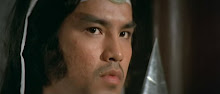
HERCULES 1958/1959 US release aka LE FATICHE DI ERCOLE (THE LABORS OF HERCULES)
Steve Reeves (Hercules), Sylvia Koscina (Iole), Fabrizio Mioni (Jason), Ivo Garrani (Pelias), Gianna Maria Canale (Antea), Arturo Dominici (Eurysteus), Mimmo Palmara (Iphitus), Lidia Alfonsi (The Sybil), Gabriele Antonini (Ulysses), Aldo Fiorelli (Argos), Andrea Fantasia (Laertes), Luciana Paluzzi (Iole's maid)
Directed by Pietro Francisci
The Short Version: The original superman, as played by the original he-man, brings together a multitude of Greek mythologies for an adventurous, if flawed sword and sandal epic. A worldwide success, the feats of Hercules and other fantastical superheroes flexed their big screen muscles till the mid 60s when the genre got sand kicked in its face by gun-toting anti-heroes in hundreds of Euro westerns. For motion picture Tough Guys, Steve Reeves remains a god among men.

 On his way to train the militia of King Pelias, Hercules rescues his daughter after her horse-drawn chariot nearly goes off a cliff. Hercules is introduced to the King and instantly riles his arrogant son, Iphitus. The Demi-God eventually becomes embroiled in a murder plot of the previous King Aeson, a prophecy that foretells doom for Pelias, and the search for the Golden Fleece, stolen from the kingdom of Jalco and said to contain the name of the King's killer and usurper. Hercules and Aeson's son, Jason set sail aboard the Argo to find it, and to learn who killed King Aeson.
Pietro Francisci's monumental muscleman movie benched, curled and crunched an entire genre upon its shoulders for a healthy seven year period. Much of that weight revolved around American bodybuilder, Steve Reeves. The American born bodybuilding champion was, and has remained a massive influential force on the lasting physique of the sword and sandal genre, long after it lost its chiseled features.
 As gigantically popular as the picture and its star was, Reeves flexed little acting muscle in this movie. While a sight to behold, and looking every bit the Demi-God, a sizable chunk of the film is given to Fabrizio Mioni as Jason. For a good stretch of footage, you might temporarily forget the film is titled HERCULES. The Olympian strongman does battle it out with the Nemean Lion, the Cretian Bull, but the much more lithe Jason takes centerstage in the middle of the movie, and slays a giant dinosaur that roars like Godzilla. Sometimes it feels like the film stops and one character is swapped out for the other for a while. It makes for an awkward experience. Francisci would make a much better movie for the sequel.
 The Italian title translates to 'The Labors of Hercules', yet we only see two of the twelve. At times, it's labor getting through Francisci's movie. It's occasionally plodding, clumsily photographed, and lacking excitement. In its defense, all the genre concepts are present and accounted for. The muscular hero; the quest; beautiful women; dancing girls in diaphanous gowns; convoluted court intrigue; monsters; feats of strength. Other films (including the sequel to this one) improved on what began here; so while HERCULES doesn't hold up as well as other entries, it was a trendsetter that paved the way for many other bodybuilders turned actors both American and Italian; and it also made its star, Steve Reeves the highest paid actor in Europe at that time.
 Born in Montana, Reeves became interested in bodybuilding as a teenager. By age 21 in 1947, he was a Mr. America contest winner; Mr. World in 1948; a Mr. Universe title soon followed in 1950. Key to his unique form was working all the muscle groups per workout, and only training three days a week. After his Mr. America win, he aroused interest of acting coaches; later finding his way into vaudevillian stage acts, and then, a meeting with Cecil B. De Mille for the title role in SAMSON & DELILAH (1949). When that didn't pan out because of Reeves' not desiring to lose 15 pounds, he ended up making his motion picture debut in Ed Wood's JAIL BAIT (1954). Reportedly, a lot of Hollywood's big names at the time -- guys like Gregory Peck, Burt Lancaster, and Gary Cooper -- refused to work with him matters of physicality. Another film Reeves did work on, ATHENA (1954), was seen in Italy by the daughter of Pietro Francisci. The director was scouting for the right man to play his HERCULES and upon his daughters notification, Reeves was contacted to be the lead in the soon to be box office smash. Francisci's five year long mythological mission to locate his Demi-God had come to an end.

Reportedly costing $500,000 to make, Reeves was paid $10,000 for HERCULES and its superior sequel HERCULES UNCHAINED (1959). As his motion picture resume increased, so did his salary. Reeves headlined some fantastic historical-fantasy-adventure epics -- some of which went on to become defining examples of sword and sandal cinema.
When picked up for North American distribution by Joseph E. Levine, the film, dubbed into English, was a surprise hit. It made millions, and turned Steve Reeves into a major worldwide star whose onscreen stature was as big as his musculature.
 According to Reeves in interviews, he was offered the lead role in A FISTFUL OF DOLLARS (1964), but turned it down due to not believing in the project. He'd worked with that films director, Sergio Leone, on the grand-scale production, THE LAST DAYS OF POMPEII (1959); a film which Reeves stated Leone directed 90% of. A progressively worsening shoulder injury suffered during the last days of shooting POMPEII led to the actor ending his acting career in 1969. He also stated to have been offered the role of James Bond in CASINO ROYALE (1967), and asked to headline ONE MILLION YEARS B.C. (1966) alongside Raquel Welch, but turned both down over money. He made more money in Italy, and that's where his career stayed till his last film, and his favorite of his works, A LONG RIDE FROM HELL (1968). He moved back to the US and raised horses on his California ranch, and remained associated with the bodybuilding industry till his death in 2000.

 Italian actor Mimmo Palmara (Domenico Palmara) had already been in a few peplum adventures prior to HERCULES, but it was the Reeves film that shot him to stardom in his home country. Palmara proceeded to quickly fill up his resume with one Torch & Toga movie after the other; working with virtually every American bodybuilding import Italian producers could get their hands on after all the dollari that were ringing up in box office cash registers. Palmara was, at the time, one of the few European film actors with an imposing build for these kinds of pictures. Not long after, Italian bred He-man stars came in the form of Adriano Bellini (Kirk Morris), Sergio Ciani (Alan Steel), and Pietro Torrisi. Palmara later founded his own voice dubbing company in 1967 that handled a wide array of genre features, television shows, and cartoons.

 Peplums and their Fusto/Muscleman companion features aren't just half dressed beefcake parading around onscreen; there's also a good deal of lovely examples of cheesecake, too. If you love cheesecake as much as this reviewer, than you frequently get quite a selection in this genre. Sylvia Koscina got a career bump from HERCULES; and the gorgeous Luciana Paluzzi (seen above at left of Koscina) had a small role here. Gianna Maria Canale (see insert) was already established actress, but her role as the Queen of the Amazons led to many more similar roles as heroines and villainesses.

 Mario Bava, a favorite filmmaker among European movie fans, handled the lighting, and special effects on this movie. His handiwork and penchant for vivid colors is apparent in more than a few sequences. His would become more increasingly apparent in other other movies of this genre till he was given the chance to direct one exclusively on his own; the result being the astonishing HERCULES IN THE HAUNTED WORLD (1961).
 Enzo Masetti's score for HERCULES is occasionally pleasing to the ear, but other times, it feels like you're watching a science fiction movie. The distinguishable epic style of S&S score would be much better represented in later films like ROMULUS & REMUS (1961), THE FURY OF ACHILLES (1962), GOLIATH AND THE SINS OF BABYLON (1963), THE REVENGE OF SPARTACUS (1964) and the rollickingly upbeat SEVEN REBEL GLADIATORS (1965).
HERCULES has been released countless times on various budget labels (VHS and DVD), but has yet to conquer America in a superior digital presentation. Likely France has represented this classic the best. The German Concorde version (paired with the sequel, and the source of this review) is unfortunately cut by ten minutes and not full 2.35 widescreen anamorphic.
 Despite its significance, HERCULES is one of Reeves' lesser efforts. HERCULES UNCHAINED, GOLIATH AND THE BARBARIANS (1959), and especially THE TROJAN HORSE (1961) are better mounted features. However, it will always be HERCULES that is the defining film that immortalized Steve Reeves' stunning displays of masculinity that amazed legions of fans, and influenced scores of filmmakers. Furthermore, credit is due for Francisci building the body of the peplum/fusto film genre; refining and sculpting the movie muscles that flexed the pecs of some 200 films in Italy, and gave fans overseas escapist entertainment value for years.
This review is representative of the German Concorde DVD.
 DIRTY HARRY 1971
Clint Eastwood (Harry Callahan), Harry Guardino (Bresslar), Reni Santoni (Chico), John Vernon (The Mayor), Andy Robinson (Scorpio Killer), John Larch (Chief), John Mitchum (De Georgio)
Directed by Don Siegel
The Short Version: Clint Eastwood has been western heroes; then Italy turned him into a western anti-hero; and in 1971, that "nameless", hard bastard with a cool swagger was transplanted to a modern day setting. It's still the Wild West, but fought on streets of concrete and skyscrapers; and a .44 magnum, that would blow your head clean off. It's the maverick vs. the maniac in a film that produced four sequels, and multiplied countless imitations. If you've not seen it, now's a good time to feel lucky with DIRTY HARRY.
 The city of San Francisco is gripped in fear after a serial killer calling himself Scorpio murders random victims till a ransom is met. Harry Callahan is a no-nonsense tough cop assigned to the case, but his superiors and a flawed legal system constantly impede his methods. Eventually capturing Scorpio after another brutal murder, the psychopath is let go on technicalities. He then goes about ruining Callahan's reputation before committing more indiscriminate crimes.
The progenitor of the 'Tough Cop' genre, and prototype for the modern day action hero is this riveting, intense thriller from director Don Siegel. Eastwood had already established himself as a superstar of the western genre; and now was branching out into the next phase of his lengthy career creating the character he's most often associated with.
 Oddly enough, Eastwood had already played a character that was essentially a dry run for Harry Callahan in 1968s COOGAN'S BLUFF, also directed by Don Siegel. The tone was much lighter, and Eastwood's 'Tough Guy' cop is from Arizona as opposed to San Francisco. Despite some characteristic similarities, it was the '71 film that set this style of action picture in motion, and it remains a viscerally important film not just in Eastwood's oeuvre, but in cinema history.
 Clint Eastwood is fantastic in the role of Harry Callahan. He brings a cool swagger to this unorthodox, immeasurably honorable police detective who speaks his mind and occasionally lets his .44 magnum do the talking for him when the time arises. Eastwood might be a cop in a bustling metropolis, but his actions are straight out of the old west. Harry Callahan is a modern day cowboy; a reflection of his Leone gunslingers, but clean-shaven. With an aversion for street scum, Callahan is prone to play with his quarry in an effort to give him an excuse to shoot them dead; such is his famous speech giving a criminal a chance to reach for his weapon while gambling on whether Harry's gun has spent all six bullets. If some bank robbers had interrupted me and my lunch at Burger Den, I'd be a bit cranky, too.
Other actors were up for the role before Eastwood got it; which is odd considering he'd played a similar role in the aforementioned COOGAN'S BLUFF (1968). John Wayne and Steve McQueen were two to pass on the role. A few years later, Wayne would have a change of heart and star in his own 'Tough Cop' movie titled McQ (1974). All these years later, it would appear the stars were in perfect alignment for Eastwood obtaining this role.
 Andy Robinson is absolutely terrifying as the Scorpio Killer. The actor was perfectly cast in this role of an unpredictable maniac who not only kills children, but taunts his victims and plays games with the police as they try to find him. Inspired by The Zodiac Killer, Robinson is a cunning, savagely evil bastard who takes delight in playing cat and mouse games with his pursuers; and even goes through the trouble of paying a man to beat him to a pulp so as to tarnish Callahan's career.
Three screenwriters are credited, and they all do a fantastic job speaking on a multitude of topics relating to the legal system, and the victims of said system. It's especially cognizant about giving us just enough details in getting to know our title hard-ass detective -- including why he's so "Dirty".
Lalo Schifrin's Hendrixian funk-rock score is one of the greats of gritty 70s cinema; and is likely just as influential in scores for 'Tough Cop' movies as DIRTY HARRY was for influencing other, similarly patterned films.
 DIRTY HARRY is often linked to kicking off the 'Violent Cop' thrillers in Italy that began in the early 1970s with highly influential films like HIGH CRIME (1973) and a flood of similar pictures. Siegel's film inspired European producers to make their own versions that were frequently based on real life civic figures and scores of violent crimes those in Italy were living everyday. DIRTY HARRY itself was loosely based on real life crime, but the Italians made an art form out of it. Interestingly enough, the plot of MAGNUM FORCE (1973) mirrors that of the classic Steno film, LA POLIZIA RINGRAZI (1972), aka EXECUTION SQUAD released a year earlier.
Regarding the Italian variants, most of them were glaringly political; some of them rubbing your face in it much like Harry applying a size 12 compress to a leg wound. To this reviewer, DIRTY HARRY is less about politics than it is a modern day western. But since virtually no one can discuss this movie without bringing politics into it....
 Some critics weren't all that impressed with HARRY upon its release amidst much controversy revolving around what they termed the films "right wing politics"; and tagging it as fascist -- the tried and true go-to label for leftists. They called it fascistic then, and they call it fascistic now. Fascism shares a great deal in common with communism -- government, or authoritative control over the populace. In the movie, Harry is constantly at odds with the AUTHORITATIVE system of law that, ironically, protects the guilty against the innocent. It is this authoritative system that he answers to. So exactly who is fascist here? Callahan is the common man. He doesn't live the high life. He's one step up from the proletariat, and his status on the social strata is who would be controlled by so-called fascists; and he's not the sort that can be bought, either.
According to left-leaning critics (which is most of them), Harry is fascist because he imposes his own law onto the criminal element; who have rights, too. No matter the severity of the crime, or if a life hangs in the balance, sentence is carried out in a court of law; and in the movies, just as in real life, sometimes the guilty goes free and the innocent suffer.

 For example, there's a tense sequence where Scorpio has buried a young girl alive and gives the police a time limit to meet his demands before she dies. When Harry meets up with Scorpio (wearing a red ski mask), the sadist beats Harry up and decides he's going to let the girl die anyways. Harry gains the upper hand, stabs Scorpio in the leg, and chases him onto a football field. Pointing his gun at the killer, Harry asks where the girl is, to which Scorpio can only muster hysterically, "I HAVE RIGHTS" over and over again. So Harry applies pressure with his foot onto Scorpio's bloody leg wound. Later on, he's chastised for torturing the suspect(!) in addition to all sorts of minor details that end up working in the favor of the serial killing son of a bitch. Nevermind the prolonged torture of a girl whom was raped and buried in a well with limited oxygen.
It's worth mentioning that Feminists were naturally abhorred by this movie; despite the fact that in the
film Harry tries desperately to save the above-mentioned woman that Scorpio had raped and
buried alive.
 "You're crazy if you think you've heard the last of this guy. He's gonna
kill again.... because he likes it"; with that line, I would imagine
leftist critics would make a connection that Harry was really talking
about himself. To them, Harry is the villain while Scorpio, the sicko who utters lines like, "Hear me, old hag, I'm telling you to drive or I'll decorate this bus with your brains", would be called a victim of society; a poor soul not responsible for his actions.

 Taking the unanimous amount of reviews that slam this movie for its right-wingedness, if you're a liberal, than most likely you will somehow find this a disturbing movie for its so-called scenes of police brutality; particularly in an age where the media (itself controlled by the left) is culpable in the spread of hatred and violence by propagandizing details before the truth ever comes out; or simply making up "facts" to suit a particular agenda. If you want to see a truly brutal, savage cop movie, then go watch something like BAD LIEUTENANT (1992). DIRTY HARRY is little more than a modern day cowboy flick dotted with pontifications on a judicial system that, like it or not, often works in favor of the bad guys.
Interestingly enough, the public sided with Harry (much like they did with Paul Kersey in DEATH WISH) and his free-wheeling approach to street cleaning (and rightly so), making his debut a
box office smash that led to four more sequels between 1973 and 1988.
Characters like Callahan are perfect representations of the types of
heroes most people want to believe in, but seldom exist in real
life.
It's a safe bet that it would be difficult to make a movie like DIRTY HARRY in today's oppressively political environment -- what with the PC police ruthlessly monitoring, and shutting down any and everything deemed hurtful, or offensive to their view of society; and that, my friends, is fascism at its finest.
This review is representative of the Warner Brothers DVD.
copyright 2013. All text is the property of coolasscinema.com and should not be reproduced in whole, or in part, without permission from the author. All images, unless otherwise noted, are the property of their respective copyright owners.