THE MCMASTERS 1970
Burl Ives (Neal McMasters), Brock Peters (Benjie), David Carradine (White Feather), Nancy Kwan (Robin Lightfoot), Jack Palance (Kolby), John Carradine (Preacher), L.Q. Jones (Russel), R.G. Armstrong (Watson), Dane Clark (Spencer), Alan Vint (Hank)
Directed by Alf Kjellin
The Short Version: Middling, melodrama-heavy bigot western has a great cast and an unusually complex main protagonist but fumbles when trying to fuse exposition with exploitation. Director Kjellin repeatedly pulls back the reigns, rarely letting his cinematic mare roam the range. A Swedish filmmaker mostly resigned to television work in the US, THE McMASTERS feels like a rougher version of an episode of THE WALTONS (of which Kjellin directed 10). In the 70s these types of westerns thrived on gratuitous violence and Kjellin focuses more on the threat of brutality or its aftermath instead of actually showing it. Other than the language and a rape scene, the tone is so light, one expects to hear Burl Ives whip out his banjo and sing a folks song or make a gallon of Luzianne Iced Tea. Jack Palance and L.Q. Jones are appropriately despicable, uttering the obligatory epithets with conviction; yet their comeuppance is another area where the director denies his audience a satisfyingly emotional payoff. Not terrible, but not terribly memorable either; in the end, THE MCMASTERS is little more than McMediocre.

 In 1865, Benjie "Benjamin" McMasters, a soldier in the Union Army, returns to the southern town of his former owner and adoptive father, Neal McMasters. Naturally, nobody expected him to come back after a 4 year sojourn, nor is everybody happy to see Benjie, especially while wearing a Union Army uniform. Shortly after his arrival he receives a less than friendly reception from Kolby, a one-armed Reb who is never without a mouth full of chewing tobacco. Much to Benjie's surprise, Neal offers him a contract giving him half of everything he owns. Enraged that Neal has given a black man ownership of property, Kolby and his crew ensure Neal will have no help working the land. Solving the problem upon finding Indian cattle thieves on his property, Benjie gives them jobs and they give him a Squaw as a gift. Meanwhile, Kolby and his gang sabotage the McMaster homestead, plot to find and destroy Benjie's contract, and kill off the McMasters clan once and for all.

 Shot in Santa Fe, New Mexico this American western financed by a British company is a strange brew of traditional and defeatist westerns featuring Brock Peters as an unlikely hero battling bigots in a Collum County Civil War. Director Kjellin, a Swedish filmmaker who worked primarily in television during his US career, made an efficient, if unmemorable movie. Linear in execution and bland when it needs to have some flavor, the filmmakers tease the audience with a surprising nude scene, racially charged language and some moderate, bloodless violence (during the last half). Bearing a PG rating (still GP at the time), the exploitation crowd will likely be disappointed if expecting something excessively trashy.... and THE McMASTERS has great potential for it.

 The biggest coup for the Dimitri de Grunewald production is Brock Peters (TO KILL A MOCKINGBIRD [1962]), a fine actor headlining a movie specifically tailored for him. At first glance, he would seem an odd choice for a picture like this since the film's promotional materials gives the impression of sleazier prospects than what you actually get. More of an acting showcase than an action movie (think John Ford's SERGEANT RUTLEDGE [1960] starring Woody Strode), it would be a couple more years before Fred Williamson would come along and turn out the first black action western with THE LEGEND OF NIGGER CHARLEY in 1972.

 Often lumped in with the blaxploitation genre, THE McMASTERS (1970) doesn't technically fit the criteria of those movies. Brock is the sole black actor in a film with no lingering exploitation; and essaying a performance that is more John Wayne than Jim Brown. There's plenty of exploitable elements, but the director just skims the surface of them. Harold Jacob Smith's talky script foreshadows a lot but delivers very little. Even the action is restrained. The finale, for instance, is unique in that the cavalry that comes to the rescue is a Redskin militia--only the shootout is extremely brief. Again, this is more of a drama than anything else. In that area it works even if it gets a little too stagy at times.

 Benjie (Peters) is a complicated character; at times stoic and others a guy with issues in dealing with the opposite sex. The war is over and he comes back to a home nobody expected him to return to. A southern town. A town where both his blue uniform and black skin is a detriment to some. Apparently Benjie didn't see too many women during his military tenure. Upon meeting Robin Lightfoot (played by Nancy Kwan), White Feather's sister, Benjie is smitten. White Feather, out of courtesy, simply gives her to him; and like any budding romance, Benjie takes her off into a field, throws her down and rapes her. It's okay, though, because he's conflicted afterward. She doesn't seem to mind, and the two slowly evolve from a master/slave relationship to marriage.

 The complexity of the Benjie character lies mainly in his interactions with Robin... the rape scene in particular. I read this in two ways--either he's consumed by his libido from a years long lack of a woman; or the casualness by which she is handed over simply overwhelms him to the point that he is now in the position of the slavemaster as opposed to the slave. Benjie, formerly a slave, but raised like a son by Neal, feels immediate regret over the way he took her. Robin treats it like she has went through the ordeal before (and she will go through it again later on), returns with Benjie to his home, and takes on the role of servant and sperm dispenser--later to marry and open up an entirely new can of worms with Kolby and company.

Going back to the rape scene, it's shot from a distance with only the audible brush of the wind and intercut with closeups of Nancy Kwan being violated; the most powerful sequence in the picture in terms of editing and photography. After this, everything is the usual routine with little else standing out from a technical standpoint. However, Brock Peters, as operatic as he is at times, isn't the only thespian bright spot in an otherwise meandering movie....

 Like Vesuvius, Jack Palance heats and stews till finally erupting in a magma flow of overacting that consumes the last half of the film--giving a clear vision as to the sort of sleaze-lovin' patronage THE McMASTERS could (and maybe should) have catered to. Palance's tobacco-chewin', epithet spewin' Kolby is the scene-stealer here; it's just too bad it takes him till the last 30 minutes to really start upstaging everybody with his brand of honey glazed ham. He had just burned up the screen as a Quantrill-like psychopath in what is possibly his most unhinged acting ever in the brutalist western, THE DESPERADOS (1969); and he channels that manic acting style here as well.
Much like Benjie who, for a time, wears his Union uniform, the one-armed Kolby is never seen out of his Confederate outfit. Palance strikes a memorable chord even if he doesn't get to do a lot till the end except spit nasty tobacco, sneer nastily at Peters, and grab at his stump as if it had been a buffalo soldier (the Union Army's negro cavalry as they were referred) that took it.

 Burl Ives gets top billing but it's Brock Peters' movie all the way. It's odd seeing the banjo-playing Sam the Snowman from the classic 1964 Rankin-Bass special RUDOLPH THE RED-NOSED REINDEER in a western; even more odd is knowing he played Robert Ryan's nemesis in the 1959 snow western classic, DAY OF THE OUTLAW. The 70s-80s spokesman for Luzianne Tea is on the right side of the law this time out and, compared to some of his co-stars, is reserved in the acting department. An award winning actor and singer with many hits under his belt, Burl Ives is a totem for family-friendly entertainment--sucking any lowbrow elements out of the picture whenever he's onscreen.

 Eurasian Nancy Kwan is an odd casting choice as the metaphorical doormat, Robin Lightfoot. She has little to say and do but be used and abused and bear her bottom and front in a tastefully done, but awkward nude scene. Raped twice--first by Benjie and again by four assailants including perennial western star L.Q. Jones and Alan Vint (MACON COUNTY LINE [1974]). Kwan was a sex symbol back in the 60s with such films as THE WORLD OF SUZIE WONG (1960) and FLOWER DRUM SONG (1961). She had an action role in the Bruce Lee choreographed THE WRECKING CREW (1969) with Dean Martin and Sharon Tate. If you grew up in the 1980s you will most likely remember Nancy Kwan as the spokeswoman for Pearl Cream ("Have you ever wondered why it's so hard to tell how old most Oriental women are?").

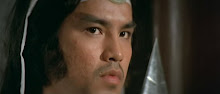
 The strange casting continues with David Carradine as White Feather, the thievin' Injun who is befriended by Benjie. Consistently referring to Benjie as a "white man" because he desires ownership of things, his thinking is contradictory since he gifts his sister to Benjie as some sort of trade for giving him a job. Ostensibly a slave, they later get married; which only riles the Rebs even more. Carradine's portrayal of White Feather is about as convincing an Indian as Nancy Kwan is. Two years later Carradine would go from living in Teepees to Shaolin as Caine in KUNG FU (1972-1975).
 THE McMASTERS marks the second time David Carradine featured in a movie with his father, John Carradine--who plays the Collum County preacher. Father and son don't share a scene together, however.
Black composer Coleridge-Taylor Perkinson (THOMASINE AND BUSHROD [1974]) performed his first theatrical score with THE McMASTERS (1970). It's not a great score, but some of the cues reach sonic heights that you wish the film did elsewhere and with more frequency.

 The budget was reported to be in the 2 million range; which is
surprising considering all the interior sets are extremely cramped or
mostly seen from the same angle. DP Lester Shorr, a veteran of numerous western programs, counters the claustrophobic settings with some evocative, wide open expanse of the New Mexico locales. These shots are one area where the film shows kinship with the traditional western; those films often displayed the majesty of nature's beauty in stark contrast to the dusty, filthy, apocalyptic landscape of the defeatist west where life was cheap, women were raped and murdered instead of rescued, and gunmen had facial hair down to their kneecaps.
The budget was reported to be in the 2 million range; which is
surprising considering all the interior sets are extremely cramped or
mostly seen from the same angle. DP Lester Shorr, a veteran of numerous western programs, counters the claustrophobic settings with some evocative, wide open expanse of the New Mexico locales. These shots are one area where the film shows kinship with the traditional western; those films often displayed the majesty of nature's beauty in stark contrast to the dusty, filthy, apocalyptic landscape of the defeatist west where life was cheap, women were raped and murdered instead of rescued, and gunmen had facial hair down to their kneecaps.
 According to sources of the time, THE McMASTERS was released in two versions in some territories--one approved by the star, the writer and the producer; and another version disowned by them with the blessing of the distributor. The latter was said to have upwards of eight minutes removed including Robin's rape by Benjie. The version on this French DVD appears to be the complete release--or at least the one approved by cast and crew members.

An average western at best, THE McMASTERS (1970) is yet another sagebrush saga with an intriguing premise half-heartedly realized. Brock Peters, Jack Palance and L.Q. are its greatest strengths and yet they, like everything else, are hindered in some way. Yet to be available in a legit digital format in America, the star power alone warrants a wider audience. There are better 70s westerns, but few with as peculiar a premise, bungled as it is, than THE McMASTERS.
This review is representative of the French Zylo R2 PAL DVD. Specs and Extras: anamorphic widescreen 1.78:1. No extras. running time: 1:25:49 (PAL speed).

 In 1865, Benjie "Benjamin" McMasters, a soldier in the Union Army, returns to the southern town of his former owner and adoptive father, Neal McMasters. Naturally, nobody expected him to come back after a 4 year sojourn, nor is everybody happy to see Benjie, especially while wearing a Union Army uniform. Shortly after his arrival he receives a less than friendly reception from Kolby, a one-armed Reb who is never without a mouth full of chewing tobacco. Much to Benjie's surprise, Neal offers him a contract giving him half of everything he owns. Enraged that Neal has given a black man ownership of property, Kolby and his crew ensure Neal will have no help working the land. Solving the problem upon finding Indian cattle thieves on his property, Benjie gives them jobs and they give him a Squaw as a gift. Meanwhile, Kolby and his gang sabotage the McMaster homestead, plot to find and destroy Benjie's contract, and kill off the McMasters clan once and for all.
 Shot in Santa Fe, New Mexico this American western financed by a British company is a strange brew of traditional and defeatist westerns featuring Brock Peters as an unlikely hero battling bigots in a Collum County Civil War. Director Kjellin, a Swedish filmmaker who worked primarily in television during his US career, made an efficient, if unmemorable movie. Linear in execution and bland when it needs to have some flavor, the filmmakers tease the audience with a surprising nude scene, racially charged language and some moderate, bloodless violence (during the last half). Bearing a PG rating (still GP at the time), the exploitation crowd will likely be disappointed if expecting something excessively trashy.... and THE McMASTERS has great potential for it.
 The biggest coup for the Dimitri de Grunewald production is Brock Peters (TO KILL A MOCKINGBIRD [1962]), a fine actor headlining a movie specifically tailored for him. At first glance, he would seem an odd choice for a picture like this since the film's promotional materials gives the impression of sleazier prospects than what you actually get. More of an acting showcase than an action movie (think John Ford's SERGEANT RUTLEDGE [1960] starring Woody Strode), it would be a couple more years before Fred Williamson would come along and turn out the first black action western with THE LEGEND OF NIGGER CHARLEY in 1972.
 Often lumped in with the blaxploitation genre, THE McMASTERS (1970) doesn't technically fit the criteria of those movies. Brock is the sole black actor in a film with no lingering exploitation; and essaying a performance that is more John Wayne than Jim Brown. There's plenty of exploitable elements, but the director just skims the surface of them. Harold Jacob Smith's talky script foreshadows a lot but delivers very little. Even the action is restrained. The finale, for instance, is unique in that the cavalry that comes to the rescue is a Redskin militia--only the shootout is extremely brief. Again, this is more of a drama than anything else. In that area it works even if it gets a little too stagy at times.
 Benjie (Peters) is a complicated character; at times stoic and others a guy with issues in dealing with the opposite sex. The war is over and he comes back to a home nobody expected him to return to. A southern town. A town where both his blue uniform and black skin is a detriment to some. Apparently Benjie didn't see too many women during his military tenure. Upon meeting Robin Lightfoot (played by Nancy Kwan), White Feather's sister, Benjie is smitten. White Feather, out of courtesy, simply gives her to him; and like any budding romance, Benjie takes her off into a field, throws her down and rapes her. It's okay, though, because he's conflicted afterward. She doesn't seem to mind, and the two slowly evolve from a master/slave relationship to marriage.
 The complexity of the Benjie character lies mainly in his interactions with Robin... the rape scene in particular. I read this in two ways--either he's consumed by his libido from a years long lack of a woman; or the casualness by which she is handed over simply overwhelms him to the point that he is now in the position of the slavemaster as opposed to the slave. Benjie, formerly a slave, but raised like a son by Neal, feels immediate regret over the way he took her. Robin treats it like she has went through the ordeal before (and she will go through it again later on), returns with Benjie to his home, and takes on the role of servant and sperm dispenser--later to marry and open up an entirely new can of worms with Kolby and company.
Going back to the rape scene, it's shot from a distance with only the audible brush of the wind and intercut with closeups of Nancy Kwan being violated; the most powerful sequence in the picture in terms of editing and photography. After this, everything is the usual routine with little else standing out from a technical standpoint. However, Brock Peters, as operatic as he is at times, isn't the only thespian bright spot in an otherwise meandering movie....

 Like Vesuvius, Jack Palance heats and stews till finally erupting in a magma flow of overacting that consumes the last half of the film--giving a clear vision as to the sort of sleaze-lovin' patronage THE McMASTERS could (and maybe should) have catered to. Palance's tobacco-chewin', epithet spewin' Kolby is the scene-stealer here; it's just too bad it takes him till the last 30 minutes to really start upstaging everybody with his brand of honey glazed ham. He had just burned up the screen as a Quantrill-like psychopath in what is possibly his most unhinged acting ever in the brutalist western, THE DESPERADOS (1969); and he channels that manic acting style here as well.
Much like Benjie who, for a time, wears his Union uniform, the one-armed Kolby is never seen out of his Confederate outfit. Palance strikes a memorable chord even if he doesn't get to do a lot till the end except spit nasty tobacco, sneer nastily at Peters, and grab at his stump as if it had been a buffalo soldier (the Union Army's negro cavalry as they were referred) that took it.

 Burl Ives gets top billing but it's Brock Peters' movie all the way. It's odd seeing the banjo-playing Sam the Snowman from the classic 1964 Rankin-Bass special RUDOLPH THE RED-NOSED REINDEER in a western; even more odd is knowing he played Robert Ryan's nemesis in the 1959 snow western classic, DAY OF THE OUTLAW. The 70s-80s spokesman for Luzianne Tea is on the right side of the law this time out and, compared to some of his co-stars, is reserved in the acting department. An award winning actor and singer with many hits under his belt, Burl Ives is a totem for family-friendly entertainment--sucking any lowbrow elements out of the picture whenever he's onscreen.
 Eurasian Nancy Kwan is an odd casting choice as the metaphorical doormat, Robin Lightfoot. She has little to say and do but be used and abused and bear her bottom and front in a tastefully done, but awkward nude scene. Raped twice--first by Benjie and again by four assailants including perennial western star L.Q. Jones and Alan Vint (MACON COUNTY LINE [1974]). Kwan was a sex symbol back in the 60s with such films as THE WORLD OF SUZIE WONG (1960) and FLOWER DRUM SONG (1961). She had an action role in the Bruce Lee choreographed THE WRECKING CREW (1969) with Dean Martin and Sharon Tate. If you grew up in the 1980s you will most likely remember Nancy Kwan as the spokeswoman for Pearl Cream ("Have you ever wondered why it's so hard to tell how old most Oriental women are?").
 The strange casting continues with David Carradine as White Feather, the thievin' Injun who is befriended by Benjie. Consistently referring to Benjie as a "white man" because he desires ownership of things, his thinking is contradictory since he gifts his sister to Benjie as some sort of trade for giving him a job. Ostensibly a slave, they later get married; which only riles the Rebs even more. Carradine's portrayal of White Feather is about as convincing an Indian as Nancy Kwan is. Two years later Carradine would go from living in Teepees to Shaolin as Caine in KUNG FU (1972-1975).
  THE McMASTERS marks the second time David Carradine featured in a movie with his father, John Carradine--who plays the Collum County preacher. Father and son don't share a scene together, however.
Black composer Coleridge-Taylor Perkinson (THOMASINE AND BUSHROD [1974]) performed his first theatrical score with THE McMASTERS (1970). It's not a great score, but some of the cues reach sonic heights that you wish the film did elsewhere and with more frequency.

 The budget was reported to be in the 2 million range; which is
surprising considering all the interior sets are extremely cramped or
mostly seen from the same angle. DP Lester Shorr, a veteran of numerous western programs, counters the claustrophobic settings with some evocative, wide open expanse of the New Mexico locales. These shots are one area where the film shows kinship with the traditional western; those films often displayed the majesty of nature's beauty in stark contrast to the dusty, filthy, apocalyptic landscape of the defeatist west where life was cheap, women were raped and murdered instead of rescued, and gunmen had facial hair down to their kneecaps.
The budget was reported to be in the 2 million range; which is
surprising considering all the interior sets are extremely cramped or
mostly seen from the same angle. DP Lester Shorr, a veteran of numerous western programs, counters the claustrophobic settings with some evocative, wide open expanse of the New Mexico locales. These shots are one area where the film shows kinship with the traditional western; those films often displayed the majesty of nature's beauty in stark contrast to the dusty, filthy, apocalyptic landscape of the defeatist west where life was cheap, women were raped and murdered instead of rescued, and gunmen had facial hair down to their kneecaps. According to sources of the time, THE McMASTERS was released in two versions in some territories--one approved by the star, the writer and the producer; and another version disowned by them with the blessing of the distributor. The latter was said to have upwards of eight minutes removed including Robin's rape by Benjie. The version on this French DVD appears to be the complete release--or at least the one approved by cast and crew members.
An average western at best, THE McMASTERS (1970) is yet another sagebrush saga with an intriguing premise half-heartedly realized. Brock Peters, Jack Palance and L.Q. are its greatest strengths and yet they, like everything else, are hindered in some way. Yet to be available in a legit digital format in America, the star power alone warrants a wider audience. There are better 70s westerns, but few with as peculiar a premise, bungled as it is, than THE McMASTERS.
This review is representative of the French Zylo R2 PAL DVD. Specs and Extras: anamorphic widescreen 1.78:1. No extras. running time: 1:25:49 (PAL speed).