THE LIVING HEAD 1963 aka LA CABEZA VIVIENTE
Ana Luisa Peluffo (Marta), Mauricio Garces (Roberto), German Robles (Professor Mueller), Abel Salazar (Inspector Toledo), Guillermo Cramer (Xiu), Antonio Raxel (Professor Urquizo), Salvador Lozano (Professor Rivas)
Directed by Chano Urueta
***WARNING! This review contains nudity***
 The Short Version: Arguably the best (which isn't saying a lot) of Mexico's B/W Mummy movies even if there isn't a traditional cloth-wrapped shambler; everything else is the same, though, just the mythology has been tweaked. German Robles steps out of his vampire cloak and steps into Peter Cushing mode as one of three professors that desecrate an Aztec tomb--successfully setting the obligatory revenge in motion; slow motion, but motion nonetheless. Not as insanely goofy as THE BRAINIAC or even remotely as classy as THE CURSE OF THE CRYING WOMAN, glaring plot holes and random stupidity render THE LIVING HEAD dead from the neck up.
 A trio of archaeologists uncover the ancient Aztec tomb of Acatl, a great warrior killed by a traitorous priest centuries ago. Once inside, the diggers find Acatl's decapitated head and the mummies of his high priest and priestess, Xiu and Xochiquetzal. The released pressure of the sepulcher disintegrates the beautiful priestess leaving only dust and a strange ring with an eye in the center. Ignoring the warning of the Aztecs that all desecrators will die, the scientists return home with the head of Acatl, the mummy of Xiu and the Ring of Death. It isn't long before Xiu returns to life and, commanded by the head of the Acatl, seeks revenge for the defilement.
 Mexican horror movies were often a startlingly unique blend of imitation and originality. Taking their cues from the B/W Univeral horrors of the 30s and 40s, they set themselves apart with Mexican culture, folklore, and a wildly creative sense of the macabre; or, in some cases, all three together. THE LIVING HEAD falls into the latter camp. Sadly, writers Federico Curiel and Adolfo Lopez Portillo aren't entirely successful in melding this trio of elements to create something as memorably absurd as THE BRAINIAC (1961) or the perpetually gothic ambiance of THE CURSE OF THE CRYING WOMAN (1963).
 Director Chano Urueta has directed some of the most wildly chaotic examples of Mexican cinema such as the aforementioned THE BRAINIAC (1961), THE WITCH'S MIRROR (1961); and several of the Blue Demon entries--notably the hilariously grotesque Lucha Sci-Spy flick BLUE DEMON AGAINST THE INFERNAL BRAINS (1968). The no-holds barred style of those films is mostly absent here. That's not to say THE LIVING HEAD is bereft of entertainment, it simply sacrifices the Ed Woodian level of assertive unreality for the sake of being taken serious... and isn't entirely successful there, either.
 Unrelated to the AZTEC MUMMY series, THE LIVING HEAD links itself to them with its backdrop of Aztecan folklore. What it doesn't have are criminal organizations, masked wrestlers, or a monstrous mummy that can transform itself into bats and spiders. Not unlike its genuinely mummified antecedent from 1957, THE AZTEC MUMMY, this one is straight horror. Despite there being actual monsters in those movies, HEAD bests them because its plot is built specifically around the horror of its title character. The AZTEC MUMMY series gives you very little Mummy action--the monster relegated to what amounts to cameo appearances in his own movies.
 Sharing the same writing duo from Urueta's THE BRAINIAC (1961), it's essentially the same movie (even borrowing some of its musical cues) from a narrative perspective, but reworking various plot points; as well as trading BRAIN's deliriousness for HEAD's lethargy that takes over in the second half of the movie.
Outside of some intriguing spins on Mummy myths and Aztecan lore, THE LIVING HEAD was thinking clear enough to cast a number of high profile Mexican movie stars whom were well-known in their home country.

 The one most familiar to international fans was the late, great German Robles--famous for, among other things, the classic EL VAMPIRO (1957); and several other vampire roles. Urueta's movie sees him cast in a Peter Cushing type role--akin to Cushing's professor in Hammer's THE MUMMY from 1959. Robles' Professor Mueller is given a bit more to grapple with as he not only must contend with the possible loss of his own life, but that of his daugher and son-in-law. Robles played a similar character in Urueta's THE BRAINIAC, but in a less significant part compared to Abel Salazar's title encephalon sucker. You can read our tribute article to Robles HERE.
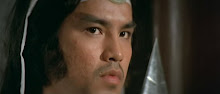
 The other male lead was popular actor Mauricio Garces. Being something of a ladies man in his movies (offscreen he was said to have been a very lonely man who was dedicated to his mother), this Mexican Clark Gable (whom he favors) will be recognizable to fans of these movies from the likes of Rene Cardona's LA LLORONA (1960); the lead protagonist in Alfonso Carona Blake's THE WORLD OF THE VAMPIRES (1961); and in a smaller capacity in the kooky cult favorite THE BRAINIAC (1961) for Urueta. As for HEAD, Garces plays both the romantic lead and the living melon, belonging to the Aztec chieftain, Acatl.
The lovely Ana Luisa Peluffo doubles as both Xochiquetzal of ancient times, and her reincarnated form as Marta. She doesn't have a lot to do till the end; remaining in a nightgown throughout much of the movie. She only starred in a few genre pictures like THE INVISIBLE MAN IN MEXICO (1958), THE WOMAN AND THE BEAST (1959), and the Blue Demon Lucha Sci-Spy flick, PASSPORT TO DEATH (1968).
 Ms. Peluffo created quite a stir in 1955 when, in one of her first roles, became the first Mexican actress to appear nude in a movie. The film, called THE FORCE OF DESIRE, saw her playing a model who drives a wedge between two men who desire her attention; one of the men was played by frequent Mexi-horror collaborator, Abel Salazar. Peluffo stirred the pot further in her next feature, THE SEDUCTOR (1955), her first for Chano Urueta. Ms. Peluffo found herself involved in a scandal of another sort ten years later in 1965 when a journalist was found dead in her swimming pool on June 27th of that year. She nonetheless amassed over 200 credits for film and television; making her one of the most prolific actresses of her time. Her first film credit was in the Johnny Weissmuller Tarzan flick, TARZAN AND THE MERMAIDS (1948).
 There's not a great deal to recommend THE LIVING HEAD, although the fleeting instances of atmosphere and flashes of
gore with bloody hearts ripped from chest cavities are among the film's minimal qualities. The opening Aztec
temple sequence is engaging as is the opening of the crypt that follows. The disintegration of Xochiquetzal's mummified remains is a nice in-camera effect. And yet, had Urueta's movie been more outrageous in its potential for loopiness, the inadequacies would've worked in the picture's favor.
There's not a great deal to recommend THE LIVING HEAD, although the fleeting instances of atmosphere and flashes of
gore with bloody hearts ripped from chest cavities are among the film's minimal qualities. The opening Aztec
temple sequence is engaging as is the opening of the crypt that follows. The disintegration of Xochiquetzal's mummified remains is a nice in-camera effect. And yet, had Urueta's movie been more outrageous in its potential for loopiness, the inadequacies would've worked in the picture's favor.
The possibilities for another BRAINIAC were all here--a severed head that lives; a walking corpse that carves out human hearts; an accursed ring with a glowing eyeball at its center... instead, crippling lapses in logic derail the serious tone the filmmakers wish to establish. Questions arise like...

 After the first murder, why don't the police cordon off professor Mueller's house as a crime scene? After the second killing why don't the police bother to remove the gory evidence in the room with the mummy where, lying on the tray holding Acatl's severed head, sits a freshly removed heart? Why is the mummy and Acatl's noggin kept in Professor Mueller's home anyway--as opposed to a museum? What classy lady would ever want to wear a ring with an eyeball on it?
 During one attack sequence, the victim is right next to an open door. Does he escape? No. He runs over into a corner. Why doesn't the policeman instantly realize something is amiss when he finds Marta brandishing the same knife the Mummy was holding while she stands in a trance-like state in her father's room? These are some of the plentiful, perplexing plotting malfunctions littering the production. Others involve the character of Xiu, the movie's "Mummy".
After he's revived, Xiu lumbers around for a chunk of the flick, gruesomely killing the desecrators of the tomb by cutting out their hearts. Towards the end, though, Xiu becomes more spry, running and leaping around the set--diminishing his otherworldy menace. Additionally, his mission to kill the infidels is inexplicably given to other players for no discernible reason than a late-blooming plot point used as a convenient means to kill off the antagonists.

 Guillermo Cramer plays Xiu, the musclebound Mummy who isn't wrapped too tightly; actually, he isn't wrapped at all. Unlike the Aztec Mummy series, this ancient shambler looks the same as the time of his death centuries earlier. In later scenes when Xiu is sleeping in his sarcophagus, you can see him breathing. Guillermo Cramer appeared in dozens of movies, including two others dealing with cranial removal; THE HEAD OF PANCHO VILLA and THE RIDER WITHOUT A HEAD (both 1957).
 THE LIVING HEAD was one of the titles to have been released by CasaNegra Entertainment, a label specializing in classic Mexican cinema; all exquisitely restored to a level not normally afforded niche market fare like this. Surfacing in 2006, the company was out of business roughly a year later. Nineteen titles were reported to be under their banner, but only half of them saw release. THE LIVING HEAD, along with the superior THE WORLD OF THE VAMPIRES, were both announced, but never released. Both titles were put out by Bach Films in France. The latter title also received an Italian DVD release from Luigi Cozzi's Sinister Films as LA VENDETTA DEL VAMPIRO. HEAD, however, had its English version previous available via Something Weird video, paired with THE LIVING COFFIN (1959). Creature Feature Video put out an English subbed edition from what is presumably a Spanish language VHS (the source of this review).
 HEAD's first 20-30 minutes are very good, yet Urueta is unable to maintain his assured hand for the duration. As the picture nears the finale, it takes forever to finish. Characters move around like molasses dripping from a bottle; it's as if the filmmakers realized they were coming up short on footage and simply had cast members take turns being put under trances to pad the scenes of walking from set to another. Mummy completists and Mexi-horror mavens will want to see it--and likely the best audience to get the most out of this headless horror hokum. In the end, THE LIVING HEAD isn't good enough to stand alongside Mexi-horror's best; nor is it bad enough to share a spot with it's best of the worst.
Feature running time: 01:15:00