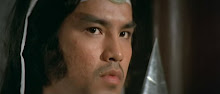
"Blacula is the only vampire I am aware of who is not enjoying his drinks."--William Marshall, Famous Monsters of Filmland Magazine #103, December 1973
 Famous the world over for his performance as Prince Mamuwalde, the regal African dignitary doomed to a bloodsucking eternity as BLACULA (1972) and summoned once more in its sequel SCREAM, BLACULA, SCREAM (1973), William Horace Marshall is recognized as one of the finest actors of stage and screen. Born in Gary, Indiana on August 19th, 1924, Mr. Marshall possessed an incredible, unmistakably commanding basso cantante voice that served him well in a distinguished career as a stage actor; but, unfortunately, left him vastly underrated on the Big Screen.
 A few decades prior to donning the fangs and cape of Prince Mamuwalde, William Marshall displayed a determination for something other than an ordinary life. Attending Gary College during the day, and working in a steel mill at night, he enlisted into the military where he served in the Intelligence Reconnaissance Division of the Infantry in Georgia. One of his many passions was artistry; so after a medical discharge from the military, he enrolled in the Art Students League. Theater studies came soon after with enrollment at The Actors Studio and studied under the tutelage of Sanford Meisner at the Neighborhood Playhouse, both in New York City.
In 1944 at 19 years of age he got his first role in a Broadway show called 'Carmen Jones'. It was at this point Mr. Marshall discovered his knack for singing. The burgeoning actor was now juggling his artistic studies, working a factory job, and strengthening his singing voice in musicals making $45 a week. Prestige and greater accomplishments were just around the corner for the enterprising young artist.
 One crucial role came in a stage production of 'Peter Pan' wherein Marshall was cast to play the Black Pirate; although he preferred essaying Captain Hook instead, a part to be played by none other than Boris Karloff. Desiring the Hook role, Marshall requested to be Karloff's understudy. Given the opportunity due to Karloff's agreement, Marshall did indeed get to stand-in for the famed FRANKENSTEIN (1931) actor as Captain Hook for two performances. Both men became good friends with Karloff helping Marshall during these initial theater days.
In his early 20s, the 6'5" Marshall was chosen to play God in the 1951 revival of 'The Green Pastures', a critically lauded 1930 play with an all-black cast. That same year, the actor would move on to the next stage of his illustrious career.


 While Mr. Marshall never completely left the stage, he soon ventured into big screen features; and at 28 years old, he made his screen debut in 1952s LYDIA BAILEY (see above) where he played King Dick, a
leader in the Haitian war against Napoleon. The 1954 Biblical drama DEMETRIUS AND THE GLADIATORS (see insert) followed, in which Marshall shared the screen with Victor Mature as the gladiator Glycon; and onto essaying a Mau Mau
leader in SOMETHING OF VALUE (1957), starring Sidney Poitier and Rock
Hudson.
These early excursions in film eventually led to even more stage work, and much of it outside of the USA. Marshall toured the globe for the performing arts in European countries like England, Ireland, France, Switzerland, Belgium and the Netherlands.
 He returned to America in late 1963, embarking on a healthy diet of television and movie appearances. One of the most stoic, best-remembered of his TV portrayals was on the season five episode of BONANZA, 'Enter Thomas Bowers'. Here Marshall played the real life 19th century opera singer of the same name. This episode gave the actor a chance to sing opera; so those who weren't familiar with his stage work got a glimpse of it on the small screen in addition to the commanding sound of his pipes. Debuting in April of 1964, this episode had great significance since the Civil Rights Act of 1964 was signed into law a few months later in July.

 Marshall appeared in other series' like RAWHIDE (another part where his singing voice is heard) and STAR TREK; the latter
of which he played Dr Daystrom (see above), a genius who designs a computer modeled
on his brain, to control the running of spaceships. Titled 'The Ultimate Computer', this episode from the second season is among the most popular. Other TV programs he guest starred on were BEN CASEY (1961-1966); TARZAN (1966-1968); THE MAN FROM U.N.C.L.E. (1964-1968); THE WILD, WILD, WEST (1965-1969; see insert); MANNIX (1967-1975); and THE JEFFERSONS (1975-1985).

 If you grew up in the 1980s, you'll likely remember Marshall as the King of Cartoons (see above) from 1987-1989 on the Saturday morning children's television
show PEE-WEE'S PLAYHOUSE, a job he accepted on behalf of his
grandchildren.
One of Marshall's best roles was a small one; but no less integral to his career playing as the Massachusetts
attorney general Edward W. Brooke in THE BOSTON STRANGLER (1968) wherein he shared the screen with Henry Fonda (see insert).
 But out of all the reverential stage appearances, and eye-opening early film roles, William Marshall will remain synonymous with the horror genre--three films in particular, beginning with 1972s BLACULA; its 1973 sequel, SCREAM, BLACULA, SCREAM; and ABBY (1974), a black version of THE EXORCIST (1973). All made on low budgets, but frequently high on ideas; especially the two vampire productions since Marshall commands the audience attention from start to finish.
In old magazine articles of the time, the esteemed actor revealed he was a huge fan of the genre; stating THE INVISIBLE MAN (1933) frightened him the most as a child. Had there been a version of H.G. Wells's classic novel in the 70s, Marshall no doubt would have brought a great deal of pathos and madness to the role as Claude Rains had impressed upon him as a child.
 The first time I became aware of BLACULA was within the pages of the Crestwood House Monster Series (see insert); these elementary school library books I would rent out over and over again in the early 1980s. I'd read them on the bus going to school; going home from school; and at home when I should've been doing homework. There were more than a dozen of them covering monsters both foreign and domestic like Frankenstein, The Blob and Godzilla. The Dracula book showed me there was more to Stoker's cinematic offspring than Bela Lugosi and Christopher Lee in regards to American made vampires. Other than Robert Quarry's eerie visage as Count Yorga, the one that stood out to me was the unusually feral appearance of William Marshall's Prince Mamuwalde. As small boy, I would see many monster movies on Shock Theater and scour the TV Guide for any others I could find--hoping I could stay awake long enough to see them considering they were almost always on in the early morning hours. Anyway, I'd never seen anything like the makeup that Marshall sported in the photos I saw from his movie. It would be approximately a decade later in the early 90s before I got to see BLACULA for the first time, and I was not disappointed.
 The story surrounding how Mamuwalde became a vampire was unique; as was the character itself and his fate. Some portions of the plot followed the classical undead canon, but otherwise, this was a predominantly original creation. Produced on a budget of $500,000 at the height of the 70s Black Action boom, Mr. Marshall didn't consider BLACULA (1972) in the same category. Initially, Marshall was appalled at the idea after being approached about playing the part by the film's producer, Joseph T. Naar; the title didn't exactly strike him as a serious endeavor. However, the idea of playing Stoker's famous character from a black perspective eventually won the actor over. Moreover, he and the other actors adjusted their lines to their specifications on both movies.
 Studios do not promote movies the way they used to do. Nowadays it's just a poster; but back then, you'd have lobby cards and B/W stills adorning the theater lobby and a poster outside the auditorium beckoning patrons to open their wallets. Gimmicks outside the usual poster publicity were still huge in the 1970s and AIP were experts in these tricks of the trade.
To promote BLACULA, AIP's publicity department offered patrons Vampire Protection Kits (see insert); the contents being a small envelope of bay leaves nestled within a bag bearing Blacula artwork. Other means of exploitation that likely didn't see much use was setting up a dentist chair in a corner of the theater lobby with a guy posing with a drill ready to de-fang some vampires. Another being a small garden fence with a sign stating that all anti-vampire weapons be excluded from the auditorium as per Blacula's request!

William Crain's movie, spearheaded by William Marshall's sublime portrayal, was popular enough to garner a sequel. Scripted as 'Blacula 2', the title eventually changed to SCREAM, BLACULA, SCREAM. This time Mamuwalde is pitted against Pam Grier's black magic in probably the first and only time a vampire is resurrected and wishes to be put back to rest again. Bob Kelljan, director of the box office smash COUNT YORGA, VAMPIRE (1970) and its flashier sequel THE RETURN OF COUNT YORGA (1971), directs Mamuwalde's second in the same style as those two hit films.
 That same year in 1973, William Marshall was inducted into the Count Dracula Society to join the ranks of Christopher Lee, Robert Quarry, Barry Atwater and others. If you've ever read Famous Monsters of Filmland magazine, you've likely ran across an ad or a mention of The Count Dracula Society. The organization called BLACULA "The most horrifying film of the decade." Founded in 1962 by Dr. Donald A. Reed, the organization promoted itself as "dedicated to the serious study of horror films and Gothic literature." In 1975, they began televising their events from the KTLA television studios in Los Angeles, California. Reed also founded the Academy of Science Fiction, Fantasy and Horror Films in 1972; a non-profit organization recognizing notable works in their respective genres. The Academy issued their equivalent of a Best Picture award to BLACULA (1972) that same year in 1972.

 According to William Marshall, his favorite film role was his first, LYDIA BAILEY (1952); with BLACULA right behind it--given it was the first time he was the main lead. However, the actor felt his work in the sequel surpassed what he'd done in the previous picture. "The tasks and demands were greater. But in the sequel he has no one to love and nobody loves him", the actor said in a Famous Monsters interview in 1973.
Ballyhoo for the sequel was more varied in some cases; with ideas like having a man dressed up as Blacula walking around shopping areas handing out flyers; wooden coffins with signs reading 'Home Sweet Home', 'Do Not Disturb!', etc. Other ideas were radio show screaming contests offering free tickets to those with the best shrieking skills; a voodoo fire-pit display; and a voodoo protection kit that was just the bay leaves gag without the colorfully illustrated bag offered during BLACULAs distribution the year prior.


 Instead of BLACULA 3, American International Pictures produced ABBY (1974), an exorcism movie in lieu of the wild box office success of THE EXORCIST (1973). Since Marshall had lectured on all aspects of African culture and its folklore he saw this as an opportunity to explore the subject onscreen. Playing Bishop Garnet Williams, an archaeologist on a Nigerian excavation, his party accidentally unleashes an evil spirit that takes over the body of Abby, played by Carol Speed. Unlike his two lead vampire pictures, Marshall was relegated to a supporting role, large as it were. He still manages to steer attention away from anyone else when he's on the screen.
Theater exploitation for ABBY included a bizarre hypnotism exhibition using a professional hypnotist and willing audience participants that probably never took off; screenings for ministers and church groups prior to release that likely never took place; demon makeup contests; and an African art display in some corner of the theater lobby.
 A big hit for AIP that caught the attention of Warner's legal department, it unfortunately didn't lead to more leading roles for William Marshall; although at the time, the company was intent on creating more scripts with him in mind, but nothing else
materialized. What a shame an updated version of THE INVISIBLE MAN didn't see the light considering the actor was so fond of the 1933 classic. That sort of picture was going by the wayside and AIP was soon to make a failed attempt at becoming a major studio. As for William Marshall, it's also tragic the African Prince of the Undead didn't rise from
the grave just once more.
Marshall did continue to work in film and even some television movies (and as a voice actor), but nothing of a celluloid nature he could sink his teeth into like the three horror pictures he did for AIP. The Shakespearean actor would return to the medium he loved--the stage--obtaining the opportunity to achieve some of his greatest successes as well as realize a dream of playing one of history's most important men.
 Mr. Marshall played abolitionist and advisor to Abraham Lincoln, Frederick Douglass on the stage for the first time in 1974. Afterward, he toured the country portraying Douglass as a one-man show titled 'Enter Frederick Douglass'. In 1983, his impassioned performance as Douglass was televised on PBS in February of that year. One of the highlights was Marshall's oration of Douglass's 4th of July speech on the meaning of Independence Day for blacks in pre-emancipation times. The revered actor had hoped to see a motion picture made about the former slave and confidant of the President that freed them in his lifetime. Marshall would've been ideal to play the Republican Douglass since he bore a remarkable resemblance to the man.
The same year he played Douglass, Marshall would win an Emmy in 1974 for his one-man show 'As Adam Early
In The Morning', built around the works of playwrights and poets like William Shakespeare and Walt Whitman among others.


His portrayal of Shakespeare's 'Othello' is considered by some as the greatest interpretation ever performed. Marshall acted in the play a multitude of times on stage including a jazz musical version and even one in record form. Another grand interpretation by the actor was in a 1991 video of the play, which had Jenny Agutter (AN AMERICAN WEREWOLF IN LONDON [1981]) as Desdemona.


During his twilight years, the actor's few film credits offered little substance. Of these, only his skit as a pirate captain in the 'Video Pirates' segment of AMAZON WOMEN ON THE MOON (1987) allowed the man to have some fun with a limited part. He passed away on June 11th, 2003, aged 78, succumbing to complications from Alzheimer's and diabetes.


 With a varied career lasting some five decades, William Marshall may not have achieved superstardom on the big screen, but he certainly lived a life full of adventure, rich with history and magnificent versatility rarely afforded those of greater fame but possessing lesser talents. Eternally famous for playing Blacula in two horror films, William Horace Marshall will continue to rise from the grave so long as there are fans eager to resurrect the screen's Dark Knight of Horror.