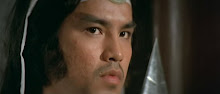
THE FORGOTTEN PISTOLERO 1969 aka IL PISTOLERO DELL' AVE MARIA
Leonard Mann (Sebastian Carrasco), Alberto de Mendoza (Tomas), Peter Martell (Raffael), Luciana Paluzzi (Anna Carrasco), Pilar Velazquez (Isabella Carrasco), Piero Lulli (Francisco), Luciano Rossi (Juanito), Jose Manuel Martin (Miguel)
Directed by Ferdinando Baldi
The Short Version: Probably Baldi's best western of his career, THE FORGOTTEN PISTOLERO is a forgotten, unsung classic of monumentally tragic proportions. Foregoing lots of meaningless action, the film focuses on characterizations using gunfights and fisticuffs to accentuate the drama. The film concludes with a satisfyingly fiery climax and possesses one of the best ever western scores. Highly recommended.
 A victorious General returns home from the war only to be double crossed and brutally murdered by his scheming wife and her lover. Her young son, Sebastian, disappears, the shock of the events that night causing him to forget much of what happened. His sister, Isabella and his childhood friend, Raffael, end up lost in all the commotion. Years later, Raffael finds Sebastian and explains his past hoping to trigger a memory so that he may reunite with his sister and avenge the family name of Carrasco.

 Ferdinando Baldi’s best western relies heavily on dramatic elements leaving the action scenes in the back seat while giving them more punch in the process. THE FORGOTTEN PISTOLERO is an operatic spaghetti oater with Shakespearean tragedy at its core. The above synopsis only covers a modicum of the various character and story arcs found in the pictures scant 81 minute running time. The film is brimming with infidelity, betrayal, revenge and a last minute revelation. Gently peppered with low key action scenes, this tragic love story in the old west never lets you forget that you're watching a western.

 If not for the stoic and majestic soundtrack by Roberto Pregadio (apparently Franco Micalizzi had a hand in the score, too), the movie would be far less endearing. Truly one of the best western scores, Pregadio's cues, especially the main theme, is frequently soaring perfectly capturing the feel of the wild, open spaces of the vastness and beauty of the old west. The 3:30 main theme is an orchestral reworking of the old cowboy song, 'Home On the Range' as well as maintaining the Italian Euroater touch with whistling and a horn section. This theme has been very popular in recent years as it's been heard on numerous television commercials and even kids cartoon programs.

 The cast is well chosen for this production and the leads are all attractive, especially the female cast members. Leonard Mann, an American actor, is fine, but about as engaging as a piece of petrified wood. Considering the role and genre, this plays to his advantage. Mann plays Sebastian, a young man who lives in isolation alone on a small farm. After spying a ringing church bell in town, he remembers a similar occurrence from his violent childhood. This sets in motion his revenge against Tomas and his mother, Anna. Mann also went on to appear in some Italian crime movies during the latter part of the 1970's and even co-starred in Deodato's CUT & RUN in 1985. Mann is the main star in FORGOTTEN PISTOLERO. His angelic looks and eyes suit him just as other actors with similar looks have stood out in this genre.

 The late Peter Martell (Pietro Martellanza) co-stars alongside Mann as his childhood friend trying to trigger his memory enabling him to restore the family name to its former glory. Martell was a much better actor, but under the circumstances, the main lead suited Mann better. Martell plays the character of Raffael who had suffered greatly as a small boy by the hands of Francisco under the leadership of Tomas. It's never shown, but we're given several hints throughout as to why Raffael refuses to enjoy the company of women. Near the end, Francisco cruelly reveals that he had castrated Raffael as a small boy and openly relishes in the destruction of his manhood.

 What makes this plot point even more tragic, is that Raffael was the young love to Isabella, Sebastian's sister. Now, they can never truly be together. Curiously, Isabella was forced to marry a timid young man named Juanito played with subdued trepidation by Luciano Rossi. Pushed into the marriage by her mother and Tomas, she patiently waits for years to avenge her fathers murder. The character of Juanito is also tragic in that he truly loves Isabella, but she feels nothing for him. He's also the doormat to Tomas and his men. He redeems himself towards the end, though. Rossi was almost always featured as a nasty villain of some sort, so seeing him in a role such as this was indeed a change of pace for the character actor.

 Luciana Paluzzi is an ice cold beauty who stands for money and power and goes through any man she has to to get it. The main villain of the piece, she pulls the strings of Tomas played by Alberto de Mendoza in addition to several other men. When she gets what she wants, she tosses them aside. That's not to say she doesn't some remnants of feelings. She frequents a monastery to seek guidance from a friar played by former peplum actor, Enzo Fiermonte.
 The cherubic beauty of Pilar Velazquez is on hand as Isabella. She does well displaying the right amount of fiery resentment and resistance. Several other female performers in the movie also look very alluring. One of them is a saloon dancer who lets Raffael know she is interested in him sexually. He pushes her away and begins binge drinking while she basically performs the sexual act onstage. At this point, it hasn't been revealed what Raffael's problem is.


 This is a rare Italian western that isn't preoccupied with lots of action and wide swinging fist fights. They're there, but in moderation. The shoot outs are relegated to a couple of opponents are small number of people. There are no overly populated gun battles with a large group of combatants. No doubt the budget was small for this, but Baldi makes it work with what resources he has at his disposal. The fist fights are well done for a change. Too often, Italian westerns have some of the worst fight sequences looking horribly telegraphed utilizing stuntmen who often stick out their faces in anticipation of the punch they are about to receive.

 The costuming here is reminiscent of what characters wore in Baldi's BLINDMAN from 1971. Many of the characters look like post apocalyptic hippies in that film, and the unusual look is seen here, too. Ferdinando Baldi never did direct a great western, but FORGOTTEN PISTOLERO comes mighty close. Some of his other works include TEXAS, ADIOS (1966) starring Franco Nero, the goofy musical, LITTLE RITA OF THE WEST (1967), DJANGO, GET A COFFIN READY (1968) starring Terence Hill, HATE THY NEIGHBOR (1968) with George Eastman and CARAMBOLA (1974), a TRINITY clone.

 With such a grand storyline, THE FORGOTTEN PISTOLERO is the type of film that would benefit greatly from some additional funds. As it stands now, it's possibly the best all around film in Baldi's filmography with BLINDMAN coming in close behind it. Fans of European westerns should give this forgotten film a look, just don't go into it expecting lots of meaningless gun battles. Despite its short running time, this bonafide sagebrush saga delivers some choice characters and one of the most memorable soundtracks of all time.
This review is representative of the R2 X Rated Kult limited edition PAL DVD
 A BULLET FOR SANDOVAL 1969 aka QUEI DISPERATI CHE PUZZANO DI SUDORE E DI MORTE aka THE DESPERADOES
George Hilton (John Warner), Ernest Borgnine (Don Pedro Sandoval), Alberto de Mendoza (Lucky Boy), Leo Anchoriz (Friar Converso), Gustavo Rojo (Guadalupano), Jose Manuel Martin (One Eye)
Directed by Julio Buchs
The Short Version: One of the best of the latter period Italian westerns and one of the darkest. George Hilton's finest performance, he was often confined to less serious, comedic portrayals, but delivers a grandly tragic showcase of a soldier who has lost everything and decides to take it out on those he feels are responsible. A very good western picture for fans and newbies alike.

 John Warner, a Confederate soldier, learns that his girlfriend is soon to have his baby. He deserts his regiment the night before a great battle to be by her side. Captured and about to be executed, he escapes with the help of two friends. Upon his arrival at Sandoval's home, he learns that she has died giving birth to their child. Her father, Don Pedro Sandoval, blames Warner for her death. He forces him to take the child, sick from an outbreak of Cholera, to leave and never return. The child dies soon after. Grief stricken, Warner swears revenge on Sandoval and forms a gang of vicious thugs and deserters. The group rampage across the land until the fateful meeting with Sandoval. During a violent battle, the military corner Warner and his gang in a coliseum for a final, grim showdown.

 Hilton, who seemed to be more at home in overly silly comedy westerns such as ANY GUN CAN PLAY (1967), MAN CALLED INVINCIBLE (1973) or playing less than serious roles in MASSACRE TIME (1966) and RED BLOOD, YELLOW GOLD (1968) occasionally dabbled in serious roles like THE MOMENT TO KILL (1968) and THE RUTHLESS FOUR (1968). But here, he evocatively portrays a destroyed and broken man who has nothing left but hate. The scenes leading up to the moment Warner joins "the Dark Side", you get the impression he has tried very hard to do the right thing but people around him refuse to allow it. Most notably Sandoval who holds nothing but contempt for Warner. I would assume this is to be a racist angle since Sandoval is a Spaniard and Warner is American.

 The outbreak of a deadly disease is unusual for this type of film and adds a desolate, hopeless backdrop to the films first half. After that, it becomes a revenge story with lots of action and shootings. The first half is undoubtedly very dramatic and grim leading up to the point where Warner totally decides there's nothing left to live for, but hate and revenge. This downward spiral begins when Warner tries to get the occupants of a small town to give him some milk for his sick child. The villagers refuse when they learn the baby is sick from the Cholera outbreak. Warner goes over the deep end.
 This point is fully realized as Warner buries the dead infant leaving his humanity behind and "living" only for revenge not just against Sandoval, but against mankind. If the Army had only granted him the chance to see his girlfriend a final time, if the town had only helped him save his infant and if only Sandoval had accepted him then maybe things would not have ended up the way they did.
 Hilton is excellent in this role and perfectly captures the melancholy and dread you would expect for a man who has totally lost his sanity. Even though by this point, he is clearly not a hero nor an anti-hero but you still feel sympathy for him regardless even in the face of the cruel events he participates in. Much has been made of Warner's and Sandoval's final confrontation. The title, "Bullet for Sandoval", is a bit of a misnomer. When the two finally meet, they engage in a knife fight above a holding pen housing a rampaging bull.

 Sandoval is mortally gored by the animal and Warner just watches as the bull mutilates him. First, the films original title is not A BULLET FOR SANDOVAL, second, by allowing Sandoval to be mauled by the bull, the hate within Warner is visualized further. Instead of putting a bullet into Sandoval, relieving him of a more violent, less dignified death, Warner decides to watch his hated enemy succumb to the powerful weight and fury of the wild bull.

 Borgnine is also very good as the somewhat unhinged Don Pedro Sandoval. He has nothing but hate for Warner which is incited further with the death of his daughter. Even though I felt he was totally wrong for the part as he doesn't sound anything at all like a Spaniard, he was probably chosen for his marketability from the controversial THE WILD BUNCH (1969). The ending when the last four desperadoes march right into their doom is reminiscent of Peckinpah's finale.
 Regardless of the peculiarity of him playing a Spanish patriarch, Borgnine does a fine job making you despise him. Sandoval and Warner share a lot in common in the film as both lose everything over something so minuscule. All because Sandoval refused to accept him as a husband for his daughter, many lives were either destroyed or lost throughout the films running time. In fact, the remainder of the cast is made of similarly lost souls such as cutthroats, deserters and a fallen priest who all join Warner's band of killers.
 The ending is handled quite well as the military finally catch up with Warner and his band cornering them inside a coliseum. The group are surrounded in the center with the soldiers lined all around in the seats of the arena. Realizing there is no escape, the gangsters go out guns blazing ending the film on a major downer. Interestingly, the original Italian poster gives the ending away, but there's little doubt as to how it will end up what with all the tragedy from start to finish. The score by Gianni Ferrio succeeds in enhancing the gloomy aura put off by this Italian-Spanish co-production.

 Director Buch's perfectly captures an atmosphere of dank hopelessness and dread not only by filling his movie with sadistic, heartless characters, but also the presence of Cholera which assists in the frightened nature of some of the individuals in the movie giving weight to their actions. In fact, the film begins unlike a typical western appearing at first glance like a horror film as we see a field littered with corpses and a man cutting a ring from a dead man's fingers. Buch's film seems to revolve mostly around the nature of hate and in that he succeeds as everybody seems to hate somebody in the movie. It's not a perfect film by any means and the final third of the film never quite matches the downbeat theatrics of the opening 30 to 40 minutes. This isn't to say the latter portions are any less good, only the action scenes take over peppered with the earlier, more despicable nuances.

 Supposedly, it was rumored that Fulci co-directed this film with Buch's but that has been found to be just that, a rumor. Fulci directed five westerns total and this wasn't one of them. The US DVD is quite nice quality-wise, only it's missing something like 10 minutes. Mostly dialog, the cut scenes are present on a Spanish VHS, but from what I understand, add immeasurably to the exposition. Hopefully, a new version will surface with this additional footage as it could only enhance this already unappreciated and highly recommended gem, one of the last and best, serious spaghetti westerns.
This review is representative of the VCI DVD
copyright 2013. All text is the property of coolasscinema.com and should not be reproduced in whole, or in part, without permission from the author. All images, unless otherwise noted, are the property of their respective copyright owners.


 Ferdinando Baldi’s best western relies heavily on dramatic elements leaving the action scenes in the back seat while giving them more punch in the process. THE FORGOTTEN PISTOLERO is an operatic spaghetti oater with Shakespearean tragedy at its core. The above synopsis only covers a modicum of the various character and story arcs found in the pictures scant 81 minute running time. The film is brimming with infidelity, betrayal, revenge and a last minute revelation. Gently peppered with low key action scenes, this tragic love story in the old west never lets you forget that you're watching a western.
 If not for the stoic and majestic soundtrack by Roberto Pregadio (apparently Franco Micalizzi had a hand in the score, too), the movie would be far less endearing. Truly one of the best western scores, Pregadio's cues, especially the main theme, is frequently soaring perfectly capturing the feel of the wild, open spaces of the vastness and beauty of the old west. The 3:30 main theme is an orchestral reworking of the old cowboy song, 'Home On the Range' as well as maintaining the Italian Euroater touch with whistling and a horn section. This theme has been very popular in recent years as it's been heard on numerous television commercials and even kids cartoon programs.
 The cast is well chosen for this production and the leads are all attractive, especially the female cast members. Leonard Mann, an American actor, is fine, but about as engaging as a piece of petrified wood. Considering the role and genre, this plays to his advantage. Mann plays Sebastian, a young man who lives in isolation alone on a small farm. After spying a ringing church bell in town, he remembers a similar occurrence from his violent childhood. This sets in motion his revenge against Tomas and his mother, Anna. Mann also went on to appear in some Italian crime movies during the latter part of the 1970's and even co-starred in Deodato's CUT & RUN in 1985. Mann is the main star in FORGOTTEN PISTOLERO. His angelic looks and eyes suit him just as other actors with similar looks have stood out in this genre.
 The late Peter Martell (Pietro Martellanza) co-stars alongside Mann as his childhood friend trying to trigger his memory enabling him to restore the family name to its former glory. Martell was a much better actor, but under the circumstances, the main lead suited Mann better. Martell plays the character of Raffael who had suffered greatly as a small boy by the hands of Francisco under the leadership of Tomas. It's never shown, but we're given several hints throughout as to why Raffael refuses to enjoy the company of women. Near the end, Francisco cruelly reveals that he had castrated Raffael as a small boy and openly relishes in the destruction of his manhood.
 What makes this plot point even more tragic, is that Raffael was the young love to Isabella, Sebastian's sister. Now, they can never truly be together. Curiously, Isabella was forced to marry a timid young man named Juanito played with subdued trepidation by Luciano Rossi. Pushed into the marriage by her mother and Tomas, she patiently waits for years to avenge her fathers murder. The character of Juanito is also tragic in that he truly loves Isabella, but she feels nothing for him. He's also the doormat to Tomas and his men. He redeems himself towards the end, though. Rossi was almost always featured as a nasty villain of some sort, so seeing him in a role such as this was indeed a change of pace for the character actor.
 Luciana Paluzzi is an ice cold beauty who stands for money and power and goes through any man she has to to get it. The main villain of the piece, she pulls the strings of Tomas played by Alberto de Mendoza in addition to several other men. When she gets what she wants, she tosses them aside. That's not to say she doesn't some remnants of feelings. She frequents a monastery to seek guidance from a friar played by former peplum actor, Enzo Fiermonte.


 This is a rare Italian western that isn't preoccupied with lots of action and wide swinging fist fights. They're there, but in moderation. The shoot outs are relegated to a couple of opponents are small number of people. There are no overly populated gun battles with a large group of combatants. No doubt the budget was small for this, but Baldi makes it work with what resources he has at his disposal. The fist fights are well done for a change. Too often, Italian westerns have some of the worst fight sequences looking horribly telegraphed utilizing stuntmen who often stick out their faces in anticipation of the punch they are about to receive.
 The costuming here is reminiscent of what characters wore in Baldi's BLINDMAN from 1971. Many of the characters look like post apocalyptic hippies in that film, and the unusual look is seen here, too. Ferdinando Baldi never did direct a great western, but FORGOTTEN PISTOLERO comes mighty close. Some of his other works include TEXAS, ADIOS (1966) starring Franco Nero, the goofy musical, LITTLE RITA OF THE WEST (1967), DJANGO, GET A COFFIN READY (1968) starring Terence Hill, HATE THY NEIGHBOR (1968) with George Eastman and CARAMBOLA (1974), a TRINITY clone.