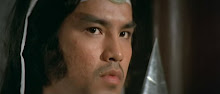
MR. VAMPIRE 1985
Lam Ching Ying (Master Ko), Chin Siu Ho (Harry/San Kun), Moon Lee (Yam Ting), Pauline Wong (Jade), Ricky Hui (Dan/Man Choi), Yuen Wah (Vampire), Huang Ha (Mr. Yam Fat), Anthony Chan (Taoist Priest)
Directed by Ricky Lau
The Short Version: Golden Harvest had an unexpected smash hit with this comedic horror actioner that started a phenomenon of like minded movies of varying quality and seriousness. Like the kung fu film before it, comedy came to the HK horror genre and proved even more profitable so long as there were laughs to go along with the scares. The film is a lot of fun and while it takes about thirty minutes for things to get going, it's a fast ride from that point onward. Horror fans looking for something off the beaten path will find a lot to sink their teeth into here.

 Master Ko, a Taoist priest, is asked by a struggling businessman, Yam Fat, to oversee the re-burial of his dead father in the hopes of rekindling his family's good fortune. By burying the patriarch on a better plot, renewed success and prosperity are promised. Ko's two bumbling acolytes stumble onto a bad omen before leaving the remote graveyard--an omen that foreshadows death. Deciding to take the corpse back to the mortuary, Ko suspects the dead elder suffered a wrongful death. The priest and his students soon find themselves up against supernatural forces and a very powerful vampire.

 Among Asian cinephiles, this is the quintessential Hong Kong comedy-horror-kung fu extravaganza. While Sammo Hung's SPOOKY ENCOUNTERS (1980) had set a precedent for Chinese kung fu horror mixed with comedy, Ricky Hui's movie struck a chord with audiences both in Hong Kong and abroad creating a hopping mad genre of hopping vampire/ghost pictures that multiplied at an alarming rate. Sammo Hung was also involved here as well in addition to being an Executive Producer. Prior to this wildly popular film, there had been many other HK horrors including those that touched on subjects explored in this mid 80s success.
 The initial burial site of the elder Yam family member

 While the Shaw style of horror movie was far more serious, Liu Chia Liang introduced corpse herding and Mao Shan black magic practices in the thoroughly unremarkable comedy kung fu caper, SPIRITUAL BOXER 2 (1979; retitled THE SHADOW BOXING on the HK DVD). Despite the pictures mostly bland execution (in light of Liu's usually reliable and dynamic approach to filmmaking), there's no doubting this relatively lifeless (but occassionally funny) kung fu spooky comedy film dealing with the superstitions surrounding corpse herding (a shaman who specializes in returning the dead back to their home villages so they may be properly buried) was an inspiration to Sammo and Ricky Liu's later successes.

 After the release of Sammo Hung's SPOOKY ENCOUNTERS (1980), more similar comedy horror movies began taking form such as Shaw's own THE FAKE GHOST CATCHERS (1982) starring Alexander Fu Sheng and MR. VAMPIRE's Chin Siu Ho and the indy cult favorite KUNG FU ZOMBIE (1982) starring Billy Chong among others. Like the Shaw Brothers heavily influential BLACK MAGIC (1975) ten years prior, Golden Harvest's MR. VAMPIRE (1985) begat a plague of hopping vampire clones of varying quality including several sequels and spin offs. Many of these starred Lam Ching Ying in his genre defining role as a Taoist priest proficient in expelling exponents of the supernatural.

 To those unfamiliar, the sight of a Chinese decked out in Qing era garb, arms outstretched (with claws at the ready) and hopping frenetically towards its intended prey may seem laughable even in non comical surroundings. These Asian ghouls and ghosts are a lot more feral than their Anglo counterparts. There's no romanticism here, long flowing cloaks, or changing into bats (a more traditional Dracula did turn up in KUNG FU FROM BEYOND THE GRAVE, DRAGON LIVES AGAIN and the much later VAMPIRE VS. VAMPIRE also directed by, and featuring Lam Ching Ying) for these undead creatures. These Jiang Shi/gyonshi (pronounced like 'Jhaang Shur' in mandarin) ghosts have no compunction about ripping you apart. They tend to seek out living family members and don't have to bite a victim in the neck to infect them; a scratch, or puncture from their sharp nails will do the trick. Also, some have fangs and others don't. This, too, varies.
 Hold your breath and the ghouls can't find you! Just one of the many bizarre, yet refreshing aspects of HK horror
 As for the hopping, there's several explanations given for this with the effects of rigor mortis being the most plausible. MR. VAMPIRE trots out an array of Chinese undead folklore and the methods used to stop them, plot devices that give way to a series of elaborate action scenes mostly during the last half. Asian vampires aren't supposed to be able to see, but find their victims by their breathing. It should be noted that some of the mythical powers of these jumping flesh mongers changes from one film to the next. Generally, an unusually strong vampire has abilities the lesser monsters lack. This is showcased here when the lead creature (played by genre vet Yuen Wah) gains the ability to actually SEE those he intends to kill, no longer reliant on finding victims by their breath. The monsters enhanced strength adds to the suspense raised during the extended fight sequence during the conclusion.

 The tools by which to combat the Asian undead are as far removed from Anglo conventions as you can get. Chicken's blood, sticky rice, incantations written on yellow pieces of paper, wooden swords and Yin Yang 8 Tri Gram Mirrors are some methods of defense. All are employed here in a string of elaborate and intricate action scenes laced with horror and comical shenanigans. Lam Ching Ying is one of the major factors in the success of this movie--a film in which seemingly no one involved in its production had any faith outside of the director. Nearly going double over its budget, Golden Harvest brass reportedly feared the film was going to be a bomb. Instead, it solidified the popularity of the 'Hopping Ghost/Vampire' sub genre and the celebrated Taoist priest character, a component integral to the formula.

 In what would seem to be padding, a beautiful female ghost played by popular sexbomb, Pauline Wong is thrown into the mix as a lonely spirit who lusts after San Kun (Chin Siu Ho). Upon learning what his disciple has been up to, Ko engages this otherworldy creature in a special effects battle prior to the big finish with the rampaging vampire. This battle also showcases some WITCH WITH THE FLYING HEAD (1977) theatrics as the ghost's head separates from her body to battle with Ko. It's not necessarily a distraction, but this subplot does make you forget about the vampiric villain momentarily. Chin Siu Ho essentially played the same character in the Shaw pictures FAST FINGERS (1983) and CRAZY SHAOLIN DISCIPLES (1984).

 Lam Ching Ying has went down in the HK film history books for this defining role. Having one of the most prolific careers in HK cinema, Lam, like so many others, appeared in dozens of Shaw Brothers pictures during his early career. Upon joining Golden Harvest, his roles got bigger such as the Peking Opera martial arts master in Sammo Hung's THE PRODIGAL SON (1981). But it was with Ricky Liu's trendsetting kung fu comedy classic that really put Lam on the map and a fan favorite among audiences around the world. Lam would also undertake the Lo Lieh role in the remake of the hit Shaw Brothers revenge film, THE KISS OF DEATH (1973) with 1988's HER VENGEANCE starring Pauline Wong (also in MR. VAMPIRE).
 Chin Siu Ho (right)
 Former Shaw Brothers actor, Chin Siu Ho (Chen Hsiao Hao), a discovery of the highly respected and revered Chang Cheh, puts his acrobatics to good use in a handful of action sequences without the use of a stunt double. Chin was first seen as one of Lu Feng's spearmen in Cheh's THE REBEL INTRUDERS (1980), but was formally introduced in the director's TWO CHAMPIONS OF SHAOLIN (1980). Never considered famous on a level of some of HK's higher profile celebrities, Chin was nonetheless a well known and busy actor who had a long career in movies. Some of these include MASKED AVENGERS (1981), GHOST'S GALORE (1983), THE SEVENTH CURSE (1986), BLONDE FURY (1989) and FIST OF LEGEND (1994) starring Jet Li.
 Moon Lee, here presented as a damsel in distress, would wow international action fans two years later with a powerful martial arts performance as one of the leads in the Chinese 'Girls With Guns' trendsetter, ANGEL (1987) aka IRON ANGELS. Like Lam's 'One Eybrow Priest' character, Moon Lee would headline a flurry of fighting female action films, many of which featured Japanese fan favorite, Yukari Oshima. Apparently, these types of movies were far more financially viable in Asian territories outside HK and other countries around the world. Whatever the case, they provided brain dead thrills, lots of dangerous stunts, guns, kung fu and attractive leads.

 Portions of MR. VAMPIRE were shot in Taiwan and one of the locations looks a great deal like the hillside and cave locale seen in Kuei Chi Hung's women in prison sleaze spectacular, BAMBOO HOUSE OF DOLLS (1973). While a creepy good time, there are some minor mistakes such as a few shots where wires are visible and the walls in the prison attack sequence are seen to be flimsy. Also, the makeup around the vampire's face is sloppy on a few occasions. The film was nominated for a number of Awards and ended up winning for Best Film Score. Kung fu fans will also recognize former Chang Cheh disciple, Wu Ma as a devious rice shop owner as well as fan favorite, Yuen Wah as the lead monster.

 With its wacky subject matter, MR. VAMPIRE may not be the most original movie of its kind, but it introduced fans of Asian cinema to a new style of HK action film and made hopping vampires fashionable. Utilizing themes and ideas already seen in past pictures, Ricky Liu's movie took something used and put a fresh spin on it to make it new again. Not only was it a box office success, but it helped "discover" Lam Ching Ying, a man who had already been in movies for 15 years. An enormous amount of fun, it's slow to get started, but once it gets going, there's nothing to stop MR. VAMPIRE...unless you happen to have some yellow paper incantations inscribed with chicken's blood and sticky rice handy.
This review is representative of the Fortune Star/IVL remastered DVD
 THE BEYOND 1981 aka L'ALDILA' aka SEVEN DOORS OF DEATH
David Warbeck (Dr. John McCabe), Catriona MacColl (Liza Merrill), Cinzia Monreale (Emily), Al Cliver (Dr. Harris)
Directed by Lucio Fulci
The Short Version: One of the best examples of Italian horror, this 1981 Gothic gore mini epic is a flawed, yet shining effort in Senor Fulci's directorial catalog; a career that spans all genres. Bearing a visual style akin to the likes of Sergio Leone and Dario Argento, Lucio Fulci's movie about demonic forces entering our world is a visual feast of flesh splattered onto a cinematic canvas not unlike the hauntingly macabre landscape painted by the guardian of hell's gate at the films beginning.

 In 1927 Louisiana, a group of angry villagers brutally assault, mutilate and crucify a man named Sweick, a painter and alleged warlock living in the Seven Doors Hotel, the apparent guardian of a door to hell situated in the hotel's basement. Fifty-four years later, Liza Merrill purchases the old hotel and notices bizarre occurrences that are intensified after she meets a peculiar blind girl named Emily. Detailing that she must leave the establishment before the gate is opened, a plumber inadvertently locates a hidden room in the bowels of the hotel thereby allowing hells minions to walk the Earth.
 Fulci often took minor roles in his movies and here he is as the librarian (left)
 One of the best and creepiest shots in the film
 THE BEYOND (1981), while possessing some narrative hiccups, nonetheless contains a nightmarish quality that, whether by intention, or by accident, is undeniably omnipresent. It's noticeable from the opening prologue and doesn't stop till the shockingly surreal final moments. Fulci touches on this otherworldy quality using it to good effect in his CITY OF THE LIVING DEAD (1980), but is far more creatively inclined in its utilization here. HOUSE BY THE CEMETERY also possesses this aura of dread, as intermittent and lazily cobbled together as that film may be. One of four films dealing with the living dead, Dardano Sachetti's script (along with two other contributors including Fulci) attains Lovecraftian levels of arcane spookery even if all of the elements seldom grasp coherence. Exactly how does the book of Eibon fit into the scheme of things? If Sweick was actually the guardian to the gateway to hell, why does he ultimately end up as the key proponent of the demonic assault? Why does the little girl--whose eyes turn a milky white akin to Emily the friendly ghost--become evil?
 Another grand photographic image worthy of a painting features the blind Emily in the middle of a causeway

 Over the years, Italian horror pictures have lovingly indulged in a fascination for ocular mayhem and THE BEYOND may well be the orb abuse champion. Whether poked, impaled, stabbed or crushed, eyes are also symbolic of a more supernatural level, such as the character of Emily, a blind, ghostly emissary from 'The Beyond' bearing solid white eyes. Also a young girl, who witnesses her mother's face turned into a pulpy miasma of grue loses her sight and ocular pigmentation after an encounter in a surreally imagined coroner's room replete with creepy cadavers.

 THE BEYOND would likely be a lesser effort if not for the Gothic enhancement of Sergio Salvati's entrancing cinematography. The prologue is wonderfully captured on film and arguably one of the best sequences in horror cinema and a helluva way to kick off the movie. Sweick, the gatekeeper and a purported alchemist is working on a painting of a vast, barren landscape littered with lost souls. He's interrupted by a gaggle of torch bearing executioners. Proclaiming the consequences of his death, the villagers proceed to sadistically murder the man by the use of chains, nails and quicklime. As Sweick is viciously whipped (his flesh shredded by chains), close ups of his painting are seen accompanied by each thrash and cry of pain.
 This painting plays an important role in the film, too, and is either the most linear aspect of the movie, or one of the most contrived. Apparently, it, too, acts as a door into hell. By the end of the movie, all roads figuratively lead to the basement of the Seven Doors Hotel. Entering the fog enshrouded hidden room uncovered earlier in the picture by Joe the Plumber, our two sole survivors find themselves unwitting occupants in the very landscape painted by Sweick--they have become a part of the painting--their eyes burned solid white, permanent occupants of this bleakly apathetic afterworld.
 Sound effects are a fundamental component in foreign made movies, particularly those shot without live sound. It's not very difficult to discern a film shot with live sound and one without. In Italian horror pictures at least, the sounds of death weigh heavily on the effectiveness of the judiciously gory make up effects. As expected, they play an unnerving, yet crucial role in Fulci's malevolent masterstroke. From the shrill squeaking of a gurney, to the eight legged scuttling of an army of hellish tarantulas, to the oft used, unsettlingly heavy breathing of the living dead Fulci's film provides both an audible and visual assault on the viewers senses.
 In what must have been an excuse to detonate additional blood squibs, David Warbeck refuses to notice that only shots to the head put the dead guys down
 While it's a predominantly well made Euro excursion into demonic territory, the picture isn't all blood and roses. In one or more instances, a victim(s) merely stand there without the slightest bit of emotional response to the ghastly sights in front of them. Granted, this could be explained as a person being frozen with fear, but said character never registers fear, or any other impression. Also, how can the bodies of supposed netherworld specter's erupt in massive arterial fountains of blood and viscera? Can ghosts bleed?? While poverty row production budgets were de rigueur for Italian genre pictures, Fulci takes full advantage of the limited resources at hand. The hospital seen in the movie is almost as barren as the landscape painted by the warlock at the beginning of the movie. We only ever see two doctors--McCabe and Harris. Aside from the sight of numerous corpses in various stages of decay and mutilation, it's a fairly empty establishment.

 While many (including Fulci himself) state the frequently nonsensical nature of these movies was intentional--owing more to a surrealist, baroque approach then to a fractured script and chaotic production schedule. Still, there's no excuse for the shot of Warbeck attempting to reload his gun from the end of the barrel to have made it past the editing stage and you even see Catriona McCall smiling at this obvious gag! Intended as a joke, how could something like that make it past the entire crew? Without knowing that was unintentional, someone seeing that for the first time would surely think the filmmakers were lacking in grey matter on par with the shuffling zombies up on the screen. With such oversights, it's no wonder foreign made genre product has never pierced the circle of the mainstream on a wider scale, much less taken seriously.
 In the defense of THE BEYOND, there are some truly macabre, dream-like visuals and more than a few staggeringly impressive photographic shots that ably capture the sinister air of the plot. The intermingling of the natural and the metaphysical isn't as confounding as it is in Fulci's CITY OF THE LIVING DEAD (still an incredibly nightmarish movie experience just the same) However, one of the main culprits of Italian horror movie derailments are unnatural dialog exchanges. The spoken word does translate better in Italian in many cases. Generally the English dubbing does actually put these films in a dream-like world where individuals of the Earthbound sort would likely have a much different delivery.

 Gianetto De Rossi's splatterific effects work are a major highlight that has since become the bread and butter of Fulci's most oft discussed portion of his directorial career. The aforementioned and numerous eyeball destruction share the screen with throat rippings, a bloody crucifixion, flesh shredding chain throttlings, a gruesome attack by hell sent tarantulas and a young girls head obliterated by a gunshot. There's also a climactic assault by the living dead, but gorehounds have shockingly never made mention that none of them are ever shown feasting on the flesh of the living, the then most popular plot device in zombie movies that extends to this day. De Rossi's gross out delights have graced the screen in pictures like LET SLEEPING CORPSES LIE (1974), ZOMBIE (1979), RAIDERS OF ATLANTIS (1983) and American features like DUNE (1984), CONAN THE DESTROYER (1984) and also in the French horror flick, HIGH TENSION (2003). He also tried his hand at directing with the uniformly inferior KILLER CROCODILE 2 (1989) and CY WARRIOR (1990).
 Released to American theaters by sleaze specialists, Aquarius Releasing in a heavily truncated version under the juicy title of SEVEN DOORS OF DEATH, that version was widely available on VHS by Thriller Video. The lurid, EC style box art was marketed with bogus critical blurbs by TEXAS CHAINSAW MASSACRE makers, Tobe Hooper and Kim Henkel--both of whom had never seen the movie. Fabio Frizzi's score was replaced with an all new soundtrack that fit the film just fine.
 While it isn't perfect by any stretch of the imagination, THE BEYOND is almost unanimously heralded as Fulci's best picture in the horror arena by the legion of his dedicated fans. Of his zombie quartet, it's easily his most ambitious and most artistically realized amidst noticeable shortcomings and painfully low budgetary restrictions. Visually impressive thirty years after its making, Fulci and his cadre of usual suspects deserve accolades for what they were able to accomplish.
This review is representative of the Anchor Bay Limited Edition Tin set.
copyright 2013. All text is the property of coolasscinema.com and should not be reproduced in whole, or in part, without permission from the author. All images, unless otherwise noted, are the property of their respective copyright owners.


 Master Ko, a Taoist priest, is asked by a struggling businessman, Yam Fat, to oversee the re-burial of his dead father in the hopes of rekindling his family's good fortune. By burying the patriarch on a better plot, renewed success and prosperity are promised. Ko's two bumbling acolytes stumble onto a bad omen before leaving the remote graveyard--an omen that foreshadows death. Deciding to take the corpse back to the mortuary, Ko suspects the dead elder suffered a wrongful death. The priest and his students soon find themselves up against supernatural forces and a very powerful vampire.

 Among Asian cinephiles, this is the quintessential Hong Kong comedy-horror-kung fu extravaganza. While Sammo Hung's SPOOKY ENCOUNTERS (1980) had set a precedent for Chinese kung fu horror mixed with comedy, Ricky Hui's movie struck a chord with audiences both in Hong Kong and abroad creating a hopping mad genre of hopping vampire/ghost pictures that multiplied at an alarming rate. Sammo Hung was also involved here as well in addition to being an Executive Producer. Prior to this wildly popular film, there had been many other HK horrors including those that touched on subjects explored in this mid 80s success.
 The initial burial site of the elder Yam family member

 While the Shaw style of horror movie was far more serious, Liu Chia Liang introduced corpse herding and Mao Shan black magic practices in the thoroughly unremarkable comedy kung fu caper, SPIRITUAL BOXER 2 (1979; retitled THE SHADOW BOXING on the HK DVD). Despite the pictures mostly bland execution (in light of Liu's usually reliable and dynamic approach to filmmaking), there's no doubting this relatively lifeless (but occassionally funny) kung fu spooky comedy film dealing with the superstitions surrounding corpse herding (a shaman who specializes in returning the dead back to their home villages so they may be properly buried) was an inspiration to Sammo and Ricky Liu's later successes.

 After the release of Sammo Hung's SPOOKY ENCOUNTERS (1980), more similar comedy horror movies began taking form such as Shaw's own THE FAKE GHOST CATCHERS (1982) starring Alexander Fu Sheng and MR. VAMPIRE's Chin Siu Ho and the indy cult favorite KUNG FU ZOMBIE (1982) starring Billy Chong among others. Like the Shaw Brothers heavily influential BLACK MAGIC (1975) ten years prior, Golden Harvest's MR. VAMPIRE (1985) begat a plague of hopping vampire clones of varying quality including several sequels and spin offs. Many of these starred Lam Ching Ying in his genre defining role as a Taoist priest proficient in expelling exponents of the supernatural.

 To those unfamiliar, the sight of a Chinese decked out in Qing era garb, arms outstretched (with claws at the ready) and hopping frenetically towards its intended prey may seem laughable even in non comical surroundings. These Asian ghouls and ghosts are a lot more feral than their Anglo counterparts. There's no romanticism here, long flowing cloaks, or changing into bats (a more traditional Dracula did turn up in KUNG FU FROM BEYOND THE GRAVE, DRAGON LIVES AGAIN and the much later VAMPIRE VS. VAMPIRE also directed by, and featuring Lam Ching Ying) for these undead creatures. These Jiang Shi/gyonshi (pronounced like 'Jhaang Shur' in mandarin) ghosts have no compunction about ripping you apart. They tend to seek out living family members and don't have to bite a victim in the neck to infect them; a scratch, or puncture from their sharp nails will do the trick. Also, some have fangs and others don't. This, too, varies.
 Hold your breath and the ghouls can't find you! Just one of the many bizarre, yet refreshing aspects of HK horror
 As for the hopping, there's several explanations given for this with the effects of rigor mortis being the most plausible. MR. VAMPIRE trots out an array of Chinese undead folklore and the methods used to stop them, plot devices that give way to a series of elaborate action scenes mostly during the last half. Asian vampires aren't supposed to be able to see, but find their victims by their breathing. It should be noted that some of the mythical powers of these jumping flesh mongers changes from one film to the next. Generally, an unusually strong vampire has abilities the lesser monsters lack. This is showcased here when the lead creature (played by genre vet Yuen Wah) gains the ability to actually SEE those he intends to kill, no longer reliant on finding victims by their breath. The monsters enhanced strength adds to the suspense raised during the extended fight sequence during the conclusion.

 The tools by which to combat the Asian undead are as far removed from Anglo conventions as you can get. Chicken's blood, sticky rice, incantations written on yellow pieces of paper, wooden swords and Yin Yang 8 Tri Gram Mirrors are some methods of defense. All are employed here in a string of elaborate and intricate action scenes laced with horror and comical shenanigans. Lam Ching Ying is one of the major factors in the success of this movie--a film in which seemingly no one involved in its production had any faith outside of the director. Nearly going double over its budget, Golden Harvest brass reportedly feared the film was going to be a bomb. Instead, it solidified the popularity of the 'Hopping Ghost/Vampire' sub genre and the celebrated Taoist priest character, a component integral to the formula.

 In what would seem to be padding, a beautiful female ghost played by popular sexbomb, Pauline Wong is thrown into the mix as a lonely spirit who lusts after San Kun (Chin Siu Ho). Upon learning what his disciple has been up to, Ko engages this otherworldy creature in a special effects battle prior to the big finish with the rampaging vampire. This battle also showcases some WITCH WITH THE FLYING HEAD (1977) theatrics as the ghost's head separates from her body to battle with Ko. It's not necessarily a distraction, but this subplot does make you forget about the vampiric villain momentarily. Chin Siu Ho essentially played the same character in the Shaw pictures FAST FINGERS (1983) and CRAZY SHAOLIN DISCIPLES (1984).

 Lam Ching Ying has went down in the HK film history books for this defining role. Having one of the most prolific careers in HK cinema, Lam, like so many others, appeared in dozens of Shaw Brothers pictures during his early career. Upon joining Golden Harvest, his roles got bigger such as the Peking Opera martial arts master in Sammo Hung's THE PRODIGAL SON (1981). But it was with Ricky Liu's trendsetting kung fu comedy classic that really put Lam on the map and a fan favorite among audiences around the world. Lam would also undertake the Lo Lieh role in the remake of the hit Shaw Brothers revenge film, THE KISS OF DEATH (1973) with 1988's HER VENGEANCE starring Pauline Wong (also in MR. VAMPIRE).
 Chin Siu Ho (right)
 Former Shaw Brothers actor, Chin Siu Ho (Chen Hsiao Hao), a discovery of the highly respected and revered Chang Cheh, puts his acrobatics to good use in a handful of action sequences without the use of a stunt double. Chin was first seen as one of Lu Feng's spearmen in Cheh's THE REBEL INTRUDERS (1980), but was formally introduced in the director's TWO CHAMPIONS OF SHAOLIN (1980). Never considered famous on a level of some of HK's higher profile celebrities, Chin was nonetheless a well known and busy actor who had a long career in movies. Some of these include MASKED AVENGERS (1981), GHOST'S GALORE (1983), THE SEVENTH CURSE (1986), BLONDE FURY (1989) and FIST OF LEGEND (1994) starring Jet Li.


 Portions of MR. VAMPIRE were shot in Taiwan and one of the locations looks a great deal like the hillside and cave locale seen in Kuei Chi Hung's women in prison sleaze spectacular, BAMBOO HOUSE OF DOLLS (1973). While a creepy good time, there are some minor mistakes such as a few shots where wires are visible and the walls in the prison attack sequence are seen to be flimsy. Also, the makeup around the vampire's face is sloppy on a few occasions. The film was nominated for a number of Awards and ended up winning for Best Film Score. Kung fu fans will also recognize former Chang Cheh disciple, Wu Ma as a devious rice shop owner as well as fan favorite, Yuen Wah as the lead monster.

 With its wacky subject matter, MR. VAMPIRE may not be the most original movie of its kind, but it introduced fans of Asian cinema to a new style of HK action film and made hopping vampires fashionable. Utilizing themes and ideas already seen in past pictures, Ricky Liu's movie took something used and put a fresh spin on it to make it new again. Not only was it a box office success, but it helped "discover" Lam Ching Ying, a man who had already been in movies for 15 years. An enormous amount of fun, it's slow to get started, but once it gets going, there's nothing to stop MR. VAMPIRE...unless you happen to have some yellow paper incantations inscribed with chicken's blood and sticky rice handy.