MY FRIENDS NEED KILLING 1976
Greg Mullavey (Gene Kline), Meredith MacRae (Laura Kline), Clayton Wilcox (Gil Perkins), Roger Cruz (Les Drago), Bill Michael (Walter Miller)
Directed by Paul Leder
"...After what we did in 'Nam...I mean, we all gotta pay...we gotta pay for that."
The Short Version: This bleak little 73 minute psuedo horror picture is about a mentally dysfunctional freakshow who, after spending time under psychiatric care, decides that his ex-war buddy Friends Need Killing. Despite an obvious skid row production, the guy who brought you the touching exploitation classick, I DISMEMBER MAMA (1974) and the US-Korean Krap fest A*P*E (1976) manages to capture an occasional atmosphere of dread in one of the least discussed post Vietnam trash pics. Leder goes for the throat much of the time, but at least one sequence opts out of nauseating the audience for a more upbeat, if still ultimately gloomy coda. Worth it for Mullavey's amazing, brain-fried meltdown performance alone.
 Deeply disturbed after his experiences in the Vietnam War, former POW, Gene Kline, sits up in bed one night and comes to the realization that he and his old war buddies deserve to die for the crimes they perpetrated while overseas. Kline sends out letters to his friends letting them know he's coming for a visit to reminisce about old times. Little do they know that he's coming to kill them.
 The 1970s is my favorite era of cinema. There are so many movies that dared to cross lines, push envelopes and turn stomachs with alarming rapidity. The sheer volume of films is staggering as is the amount of low budget wonders that remain unaccounted for on the digital format. The beauty of this era was that it wasn't unusual for a meagerly budgeted movie of questionable taste to get booked in a theater or Drive In considering the video boom wouldn't take hold till the 80s broke. MY FRIENDS NEED KILLING (1976) is one of those movies that has slipped through the cracks of exploitation cinemas extensive canon.
"You keep makin' those funny remarks...I don't even think about the war no more."
 Director and MAMA DISMEMBERer, Leder, returns to the sleazy territory first trampled in his 1974 staple about a psycho mother-woman hater; a film bearing one of the most well known titles of that era. Here, though, the script substitutes I DISMEMBER MAMA's mentally unbalanced mother fixated malcontent with a mentally unbalanced ex 'Nam vet fixated on war atrocities he was involved in.
It's apparent in nearly every scene that Leder had an extremely low amount of money to work with here. All the interiors are shot within single rooms, or what is likely somebody's house helping out with the production with nary a scene transition in sight. There's a lot of post dubbed dialog laid over the onscreen action at times, which helps in hurrying things along. It also doesn't help matters that this difficult to obtain film is only currently available in a battered videotape copy floating around within collectors circles. A widescreen presentation would at least open things up a bit.
"How many did we kill? How many? Let's see...there was a chief...his wife...two old ladies...four old men...and four kids...and four kids...and four...a dozen...twelve...that's how many, twelve..."

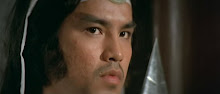
 The main selling point here is the lead performance by Mullavey. He's absolutely terrifying to say the least. He spends the film either staring blankly off into space, talking as if he is somebody else, or erupting in fits of violence that tend to leave people dead throughout his corpse strewn trek between California and Texas. From the opening scene we realize there are serious issues going on inside his brainpan.
To add to Kline's mania and the abhorrent ambiance, the filmmakers occasionally, and generously dot his scenes with actual Vietnam atrocity footage. This adds an even more queasy element that surpasses Leder's more well remembered movie. While I DISMEMBER MAMA had a tasteless aura all its own, there's no mama dismembering, but in MY FRIENDS NEED KILLING, the title pretty much tells it all.
 Meredith MacRae plays Gene's wife, Laura Kline. She's very good, too, as the concerned, and eventually grieving wife upon learning what her husband is up to. She starts out as merely worried as to her husbands whereabouts, but quickly crumbles when he calls fearing he may commit suicide. Little does she know he has been on a killing spree the entire time.
These two performers make up for the slack of some of the others. Both she and Mullavey had the lengthiest careers and were both married in real life. MacRae even sings the main theme song, 'Mirror of Time'. Some of Leder's family contributed to this picture as well.
"...Just before he was captured, he was flippin' out a couple of times."
 It would be beneficial to learn what the participants think of this movie today. It would be interesting to know if anything was cut from the finished product. There's actually a bonafide good piece of storytelling buried just beneath the surface. By the time it claws its way to the surface, the film is over.
There's fleeting moments here that foreshadow the grim visceral punch of ROLLING THUNDER from the following year, arguably the most famous example of the 'Disturbed 'Nam Vet' sub-genre. That film benefited from a substantially larger (if still low) budget, notable technicians behind the camera, and thespians who went on to bigger things."They didn't count, they were just gooks!"
An uncomfortable dinner conversation that begins with laughter, but ends with lots of screaming.
The violence itself is rather tasteless and made all the more unnerving in that Kline moralizes with each friend before snuffing them out in assorted gruesome ways that befit the violence they perpetrated in 'Nam. The editing scheme here is also worth mentioning, lending itself to the unsettling groove established right from the start; the aforementioned 'Nam death footage inserts being extremely effective.
 Easily the grimmest sequence is the second killing. Kline ends up at his friend Gil's house in Southern California. Spending the night, it becomes known that Gil had no desire to even entertain Kline. He reveals to his wife of Gene's crumbling state before and after he ended up as a prisoner of war. We also see that Gil is into rough sex and pretty much rapes his wife when she doesn't feel like entertaining him.
Kline then gets out of bed a short time later, grabs the revolver from his suitcase and enters their room. Suddenly changing his personality, Kline is now back in 'Nam and thinks he's Gil and that he's stumbled upon a couple of Vietcong. When information about captured men and supplies isn't forthcoming, Kline shoots Gil in the hand and leg. He forces his wife to tie him up then rapes her in front of him.
Not only did this woman suffer a rough ride from her husband, but later in the night, she's raped yet again, this time by a psycho who thinks he's still slumming it in the sweltering Vietnamese jungle.
"I should'a left you in that loony bin when you cracked up over there."
 The third murder is possibly the most revealing conver-sational piece when Gene Kline next visits his old friend Les; living alone and a member of a theater group. Les is obviously disturbed, too, but not to the murderous degree of our main character. Gene uses Les's feelings of regret and detachment to help him in his last big "performance" that culminates in a twisted level of Kevorkian death dealing.
It's one of a few times this movie belies its exploitation roots in an effort to strive for something more than mindless brutality.
"Walt made Les kill the kids, he made him kill the kids! I think one of those kids belonged to the chief's wife...Walt thought it was funny when the chief's wife threw herself on that kid...he then told me to kill the chief! My hands were shaking so hard I could hardly hold the gun!! Walt saved the chief's wife for himself...she was pregnant...just like you. Her belly was out to there...he did it with a knife...it comes to an end now, anyway. No more memory...no more pain..."
 The last fifteen minutes of the picture wherein Kline confronts his former Sergeant is the most suspenseful section of the movie.
All of the scenes with Kline in the presence of those unknowing that he intends to cancel them out are very well done on this shoe-string budget. You're left wondering just when Kline is going to snap and what he has in store for his victims. That Walter, his former commander, has a pregnant wife, makes the finale all the more distressing.
 However, the fate of one character pretty much goes how you expect save for one bit that, despite taking the "high" road, is rather surprising after everything that's come before it. For a movie rife with so much revulsion, this moment during the finale may disappoint hardened trash peddlers. I was nonetheless surprised and thought this bit of exploitational deceptiveness was commendable and went a long way in allowing me to forgive the director for A*P*E (1976).
Fans of rare, obscure 70s movies will want this in their collections as will those with a predilection for lower rung Hollywood fare built around controversial topics that were raging in the news of the day. Without doubt a product of its time period, and in spite of its under-budgeted short-comings, MY FRIENDS NEED KILLING is in dangerous need of a wider audience.
*A big thank you to Chris P. for allowing me the opportunity to finally see this 70s rarity*
 JOHNNY FIRECLOUD 1975
Victor Mohica (Johnny Firecloud), Ralph Meeker (Colby), David Canary (Jesse), Christina Hart (June), Frank DeKova (White Eagle), Sacheen Littlefeather (Nenya), Richard Kennedy (Ned), George 'Buck' Flower (Wade), John Goff (Newt)
Directed by William Allen Castleman
"How long is it since we hung an injun?"
The Short Version: There's no time to pass the peace pipe around in this high caliber racist revenge picture that follows in the footsteps of other similar flicks like BORN LOSERS (1967) and WALKING TALL (1973). This country fried DEATH WISH sees a Native American Vietnam vet doing a savage war dance on the town big wheel bigot, Colby and his five cronies who terrorize, rape and murder his people. Political statements typical of the era creep in on a few occasions, but racial slurs, degradation, floggings, and gruesome violence drown them out every time. The strangely compelling verbal stand-off of the final scene may end up confusing some considering everything that's transpired before it.
***WARNING! This review contains images of nudity***
 Johnny Firecloud returns home from his tour in Vietnam only to be harassed by the police and humiliated and hated by the local town cretins led by the brutal, racist rancher, Colby; a man who holds the entire town and the law in his money pocket. The bigoted Colby hates Johnny for having a relationship with his daughter, and upon his return home, racial tensions boil over into a miasma of rape, sadistic violence, death and revenge.
 Seeing David F. Friedman's name among the credits immediately lets you know what you are about to see is going to be anything but subtle.
The same man who produced numerous nudies, several Herschell Gordon Lewis movies, the awful SHE FREAK (1967) and the controversial ILSA, SHE-WOLF OF THE SS (1974) got behind this savage tale of Red Man Revenge. JOHNNY FIRECLOUD is in the tradition of WALKING TALL (1973) with a dash of BORN LOSERS (1967), two major league box office champions of the Drive In days.
 Noticeably glossier than the usual Friedman film, the $220,000 budget gets some extra mileage out of its scope photography, a script peppered with good and gritty 70s style dialog, and some good gore effects. Among the gruesome highlights is a man being NAVAJO JOE'd, a scalping, death by bag of rattlesnakes, another has dynamite strapped between his legs, and one poor sap buried up to his head for the vultures to pluck out his eyes. Beneath the surface, and almost lost amidst all the hate-speech and depravity, is a slight message regarding American Indians that was a heady topic during the early 1970s.
 At least since the late 1960s, tensions with Native Americans had swelled right along with all the other chaos going on during that defining decade. Not even taking into consideration the bloody turmoil and countless corpses that resulted from the centuries long American Indian Wars, racial tension reached dangerous levels in the early part of the 1970s. Racism was a major topic of contention during this time and throughout the 70s including a few news-making cases of racially fueled hate crimes.
 The American Indian was also the subject of a number of movies and TV commercials. One of the most (in)famous examples of this was the 1971 'Keep America Beautiful' commercial with Iron Eyes Cody; which featured the image of tears running down his face amidst Americans polluting the environment with trash, bustling cars and also thick, black smoke emanating from an ominously chocking display of factories.
 JOHNNY FIRECLOUD does little to temper animosity with its scenes of extreme prejudices and sadism. It also shows which side of the fence it's on (message movie vs. exploitation picture) by not featuring any actual Indians among its principal cast.
However, there are a moment or two where a flicker of a political statement arises, but then descends the waves of bigotry and moral perversion. In its slight defense, the ending is surprising in its philosophical civility, when it's expected to go balls out topping its bloody banana split with a viscera flavored cherry. Also surprising, the script takes a serious look at homosexuality during a time when it was fashionable to poke fun of it.
Sasheen Littlefeather about to get "railroaded".
In keeping with its controversial subject matter, the filmmakers even brought activist Sacheen Littlefeather on board in a supporting role. She gained a good deal of notoriety for accepting Brando's THE GODFATHER (1972) Oscar on his behalf along with a 15 page speech written by him. This speech protested the treatment of the American Indian in movies and television, including the 70 some odd day standoff at Wounded Knee that began in late February, 1973. Incidentally, the site of this stand-off was the locale of a previous massacre that took place in 1890.
 Whether this film came along at the "right" time is debatable. 20th Century Fox was on board as distributor, but according to Friedman, only in overseas markets (the opening card is the famous Fox logo). Possibly with everything going on at the time, they were a bit nervous to make waves. Aside from the ending, the entire picture is awash in feelings of hatred. Even the advertisements were steeped in as much negativity as possible to get people into theaters. So screamed the poster artwork, "Redskins no longer bite the dust... they just eat dirt!"
 Revenge movies have always been popular, and the 70s saw more than their fair share of them. As stated above, this one occasionally strives for something more than just blatant exploitation thrills although the frequent nudity (such as the gratuitous scene shown at right), ethnic degradation and gory shenanigans (courtesy of Joe Blasco) aim to keep the picture squarely within the Drive In and sleaze pit realm. That's not a bad thing, mind you. There's also a great group of exploitation thespians and even a couple big names not normally associated with this sort of picture.
 The cast is good much of the time, but mostly when the performances call for heated, and or insensitive conflict; of which there's quite a lot of yelling, screaming and gritting of teeth.
Victor Mohica, a big, strapping man of Puerto Rican descent, gets some great tough guy lines here and hammers home the post Vietnam anxiety with his slasher style rampage during the finale when he goes suitably apeshit after the wave of injustices he suffers through.
 Some viewers may recognize his face from numerous TV shows and possibly from VICTORY AT ENTEBBE, one of two 'Entebbe' movies from 1976.
One of Mohica's best moments here is when he gets his hands on Colby and strings him up in his barn. Dangling barely off the ground, Firecloud dick punches him and lashes him with a whip resulting in Colby flinching in pain while trying to keep from hanging himself! It's actually a satisfyingly hilarious scene, and if not interrupted by a shotgun toting hillbilly, we'd of likely seen more dick punching and back lashing followed up with more of Meeker's head turning red from the ever tightening rope around his neck.

 Speaking of Ralph Meeker, he will likely always be best known for KISS ME DEADLY (1955), but trash fans will know him best from the likes of FOOD OF THE GODS (1976) and a brief bit in WITHOUT WARNING (1980). Like many once big name actors, he found a home in a trash barrel towards the end of his career.
He plays quite the bigoted sadist here as Colby, a rich rancher who holds the town in the palm of his hand. Meeker (like the film itself) plays the character much like those seen in countless westerns, and does a damn good job, too. Colby works outside the law and uses his money to keep the civic authorities comfortably in his shirt pocket.
 Speaking of westerns, anybody who's ever watched BONANZA has probably seen David Canary on the show in the role of Candy, a ranch foreman. His character was something of a replacement after Pernell Roberts departed the show in 1965. Canary appeared in a handful of seasons, left the show, then came back again till the end after Dan Blocker (Hoss Cartwright) passed away in 1972. His role of the sheriff in JOHNNY FIRECLOUD is possibly the best out of the bunch given how strong the character is scripted for a movie of this sort.
David Canary has a heated exchange with Richard Kennedy after stopping a brutal barroom brawl.
According to Friedman (in an incredibly energetic and fun commentary track), Meeker wanted to play the sheriff, but Canary pulls off the character extremely well. Struggling with maintaining his homosexuality as a closely kept secret, Sheriff Jesse begrudgingly asks "How high?" when Colby tells him to jump. The sheriff shares an uneasy bond with Firecloud since both men were in the army, although Jesse was dishonorably discharged for his sexual orientation. It's this portion of the script that rises above the bountiful exploitation trappings that dominate the bulk of the movie.
 With the participation of Sasheen Little-feather, viewers may think the filmmakers were going for some sort of political statement. If that was the intention, it gets lost amidst all the hate-mongering and speeches of standing against the abuse of power.
Littlefeather's performance is incredibly bland during her few minutes of dialog. The rest of her role involves her being raped and brutalized by five men in a disturbing sequence where her painfully obvious breast enlargement puts in a more memorable performance. Above you'll see exploitation perennial, George 'Buck' gettin ready to fuck in a grim gang rape scene.
 This scene could have been a powerful scene in more capable hands for a movie that was gunning for a serious look at the Native American plight during this time period. Instead we get delirious camerawork that zips and zooms over a child scribbled assemblage of the alphabet, a poster that says "See the scenic wonders of your United States"(!) and closes out on a close up of Abraham Lincoln. It's still a disturbing sequence, embracing the trashiness of the whole affair captured by a cameraman who may or not have put back a few beers prior to shooting it.
 Richard Kennedy (the guy laughing in the ten gallon hat at far right)
Exploitation regular, John Goff (left) and an almost unrecognizable, beardless George 'Buck' Flower (right)
 Another ILSA alumni is George 'Buck' Flower. He was a Nazi doctor in the first, and a Syphilis infested peasant in the second.
Flower has been in dozens of Drive In flicks including numerous horror pictures and 'Danger In Dixie' style movies. This is made all the more surprising that he also had supporting roles in family fare such as ACROSS THE GREAT DIVIDE (1976). One of his best remembered roles was as the recurring character of Boomer in the family classic series, THE WILDERNESS FAMILY (1975)!
 Even more shocking is that in JOHNNY FIRECLOUD, Flower actually had a bag full of snakes placed on his head (not the rattlers seen in close up); you see one of the slithery reptiles escaping the bag as Firecloud affixes it around his body.
The score is nothing to write home about, which is basically the only major blotch on the movie. Nothing spectacular, just typical 70s beats and WaWa sounds. Outside of a couple pieces, it never quite fits the onscreen action. A suitable score would have added an extra dimension to the film.
 I first saw JOHNNY FIRECLOUD via the old Prism big box tape. It's been available on other VHS labels, too, including one that sold the film as REVENGE OF JOHNNY FIRECLOUD with artwork not in the movie.
At times, this brutal tale of Injun Justice shows signs of violent exuberance, occasionally engaging, but mostly a typical entry in the revenge flick sweepstakes. Recommended, but some might be left wondering what happened during the contemplative final scene. Possibly there was hope for JOHNNY FIRECLOUD 2?
This review is representative of the Something Weird DVD paired with BUMMER (1973)
copyright 2013. All text is the property of coolasscinema.com and should not be reproduced in whole, or in part, without permission from the author. All images, unless otherwise noted, are the property of their respective copyright owners.


 The 1970s is my favorite era of cinema. There are so many movies that dared to cross lines, push envelopes and turn stomachs with alarming rapidity. The sheer volume of films is staggering as is the amount of low budget wonders that remain unaccounted for on the digital format. The beauty of this era was that it wasn't unusual for a meagerly budgeted movie of questionable taste to get booked in a theater or Drive In considering the video boom wouldn't take hold till the 80s broke. MY FRIENDS NEED KILLING (1976) is one of those movies that has slipped through the cracks of exploitation cinemas extensive canon.
 Director and MAMA DISMEMBERer, Leder, returns to the sleazy territory first trampled in his 1974 staple about a psycho mother-woman hater; a film bearing one of the most well known titles of that era. Here, though, the script substitutes I DISMEMBER MAMA's mentally unbalanced mother fixated malcontent with a mentally unbalanced ex 'Nam vet fixated on war atrocities he was involved in.
 The main selling point here is the lead performance by Mullavey. He's absolutely terrifying to say the least. He spends the film either staring blankly off into space, talking as if he is somebody else, or erupting in fits of violence that tend to leave people dead throughout his corpse strewn trek between California and Texas. From the opening scene we realize there are serious issues going on inside his brainpan.
 Meredith MacRae plays Gene's wife, Laura Kline. She's very good, too, as the concerned, and eventually grieving wife upon learning what her husband is up to. She starts out as merely worried as to her husbands whereabouts, but quickly crumbles when he calls fearing he may commit suicide. Little does she know he has been on a killing spree the entire time.
 It would be beneficial to learn what the participants think of this movie today. It would be interesting to know if anything was cut from the finished product. There's actually a bonafide good piece of storytelling buried just beneath the surface. By the time it claws its way to the surface, the film is over.
 Easily the grimmest sequence is the second killing. Kline ends up at his friend Gil's house in Southern California. Spending the night, it becomes known that Gil had no desire to even entertain Kline. He reveals to his wife of Gene's crumbling state before and after he ended up as a prisoner of war. We also see that Gil is into rough sex and pretty much rapes his wife when she doesn't feel like entertaining him.
 The third murder is possibly the most revealing conver-sational piece when Gene Kline next visits his old friend Les; living alone and a member of a theater group. Les is obviously disturbed, too, but not to the murderous degree of our main character. Gene uses Les's feelings of regret and detachment to help him in his last big "performance" that culminates in a twisted level of Kevorkian death dealing.
 The last fifteen minutes of the picture wherein Kline confronts his former Sergeant is the most suspenseful section of the movie.
 However, the fate of one character pretty much goes how you expect save for one bit that, despite taking the "high" road, is rather surprising after everything that's come before it. For a movie rife with so much revulsion, this moment during the finale may disappoint hardened trash peddlers. I was nonetheless surprised and thought this bit of exploitational deceptiveness was commendable and went a long way in allowing me to forgive the director for A*P*E (1976).