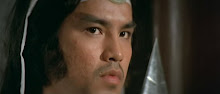
TOP OF THE HEAP 1972
Christopher St. John (George Lattimer), Florence St. Peter (Viola Lattimer), Paula Kelly (Black Chick), Leonard Kuras (Bobby Gelman), John Alderson (Captain Walsh), Patrick McVey (Tim Cassidy), Ji-Tu Cumbuku (drug dealer #1), Damu King (drug dealer #2)
Directed by Christopher St. John
"Damn, brotha', are you The Man, or somethin'?!"
The Short Version: Christopher St. John wrote, starred, produced and directed this unique, mesmerizingly metaphoric character study of a troubled black police officer attempting to get a handle on his home life, his job, and his humanity; and often making it worse in the process. If you go in expecting the usual black action tropes, you'll be disappointed. This isn't that sort of movie. St. John veers into those areas, but briefly; and even then, uses those scenarios to put the viewer inside the head of its lead character trying to make sense of his world.
George Lattimer is a frustrated D.C. cop struggling with turmoil within and without, attempting to juggle problems out on the street, on his job, and in his home all the while desiring, and dreaming to one day be at the Top of the Heap.
 Christopher St. John (SHAFT) turns in a stunning tour de force both in front of, and behind the camera in his first, and only directorial effort; a picture he also wrote and produced. His engrossing script concerns George Lattimer, a black D.C. cop vying for acceptance in an insane world, all the while trying to maintain his own sanity, and not doing a very job of it. He fails his exam for police sergeant, and is failing in his home life. He finds solace in dreams that often juxtapose his emotional state at that moment with where he'd like to be. Towards the end of the picture, George's real life intertwines with his fantasy one in which neither turn out to be all that different, not to mention tragically prophetic.

 In TOP OF THE HEAP, the directors
cornucopia of dream sequences propel the inner workings of our main
character, George Lattimer. They take us back to his African roots, to a
final moment with his mother he never got to have, and even to outer
space. He always looks much younger, and with a goatee in these sequences. Incidentally, many of them deal with NASA and space flight. One key dream sequence just before he and his partner Bobby and Tim, his former Captain, are to take off, he receives a
call that his mother has passed away. When Tim asks what the call was
about, Lattimer states it was the wrong number. Throughout the movie
he's reminded of his mother's death, and it's clear it weighs heavy on
his conscious.
In TOP OF THE HEAP, the directors
cornucopia of dream sequences propel the inner workings of our main
character, George Lattimer. They take us back to his African roots, to a
final moment with his mother he never got to have, and even to outer
space. He always looks much younger, and with a goatee in these sequences. Incidentally, many of them deal with NASA and space flight. One key dream sequence just before he and his partner Bobby and Tim, his former Captain, are to take off, he receives a
call that his mother has passed away. When Tim asks what the call was
about, Lattimer states it was the wrong number. Throughout the movie
he's reminded of his mother's death, and it's clear it weighs heavy on
his conscious.

 One vision sees George wearing full astronaut garb while three police cars violently circle him signifying his job is holding him back. Another dream sequence has George laid up in hospital after a deadly space training accident. He explains he bailed before the machine exploded after a voice told him to do so. This feels like a reference to Robert Henry Lawrence, Jr., who would have been the first black astronaut had he not been killed in a flight training accident in 1967. A
handful of scenes in the real world also have space iconography in them,
too.
One vision sees George wearing full astronaut garb while three police cars violently circle him signifying his job is holding him back. Another dream sequence has George laid up in hospital after a deadly space training accident. He explains he bailed before the machine exploded after a voice told him to do so. This feels like a reference to Robert Henry Lawrence, Jr., who would have been the first black astronaut had he not been killed in a flight training accident in 1967. A
handful of scenes in the real world also have space iconography in them,
too.
"All you care about is putting on that damn uniform and gun and playing the big nigger cop!" -- Viola Lattimer lets her husband know just how invisible he is at home... even when he's there.
 Lattimer the man (or 'The Man'), is
far from a perfect person. He's probably got more bad qualities than
good, actually. The script goes to great lengths to make him a seriously
flawed individual. He's a cop who formerly took bribes, smokes weed, cheats on his wife,
and shows little interest in his nightclub singer mistress outside of
having sex with her when it's clear HE means more to her than a mere
fuck. Unfortunately, she's not free of faults, either with her steady
diet of pills and pot. His teenage daughter is having sex and likewise
doing drugs; and Lattimer is detached with his role as a father figure, too.
Lattimer the man (or 'The Man'), is
far from a perfect person. He's probably got more bad qualities than
good, actually. The script goes to great lengths to make him a seriously
flawed individual. He's a cop who formerly took bribes, smokes weed, cheats on his wife,
and shows little interest in his nightclub singer mistress outside of
having sex with her when it's clear HE means more to her than a mere
fuck. Unfortunately, she's not free of faults, either with her steady
diet of pills and pot. His teenage daughter is having sex and likewise
doing drugs; and Lattimer is detached with his role as a father figure, too.

 Chris St. John doesn't stop at simply building a uniquely complex main character
-- he does the same with the rest of his cast, as well as the supporting
players. It's remarkable to see a black themed movie with such a
balanced approach to black-white relations as this one. It covers the
stereotypes of conventional black action pictures, but remains an
unconventional movie in the way it deals with its subject matter. As a cop, he expects a certain degree of respect, and gets very little of it. In a few instances, some of the white characters (particularly another cop from a different precinct during a bus ride debacle) fail to recognize him as a police officer. Astonishingly, the highest level of hatred towards him comes from other blacks.
Chris St. John doesn't stop at simply building a uniquely complex main character
-- he does the same with the rest of his cast, as well as the supporting
players. It's remarkable to see a black themed movie with such a
balanced approach to black-white relations as this one. It covers the
stereotypes of conventional black action pictures, but remains an
unconventional movie in the way it deals with its subject matter. As a cop, he expects a certain degree of respect, and gets very little of it. In a few instances, some of the white characters (particularly another cop from a different precinct during a bus ride debacle) fail to recognize him as a police officer. Astonishingly, the highest level of hatred towards him comes from other blacks.

 This is represented to great effect when Lattimer busts two small time drug pushers enjoying some soul food and a little cocaine on the side. Pointing his gun at the two crooks after their bribery attempt fails, he tells them to put their hands on the wall. One of them refuses stating, "...Now if you shoot me, you gonna have to shoot me right in my face, Mr. Black Pig." Things nearly escalate when the man refuses to comply while calling him a "nigger", and "black ass pig". When Bobby enters, the two criminals show no resistance to him, a white man, putting them against the wall. The main drug dealer (played by BLACULAs Ji-Tu Cumbuku) looks disgusted at a fellow black man wearing the threads of 'The Man'. He sees Lattimer as a sell-out despite the fact he and his partner-in-crime are contributing to societal woes with their drugs.

 What makes this sequence even more fascinating is just before Lattimer enters the room, the two crooks are having a conversation and one of them sarcastically states he forgot to go down to the unemployment office to get his check. His friend replies "How the hell you gonna collect some unemployment, baby, when you ain't ever had a J-O-B?" The significance is that Lattimer, for all his faults, has made something of himself. He has a good job (although he's frustrated with it), and a family (as fractured as it may be). It is ridiculous to think that bettering oneself is "selling out"; although in today's climate, this sort of attitude is primed for political posturing in an effort to grow the entitlement state. For the time in which the film was made, it's understandable why there would be such sentiments so soon after the Civil Rights Movement of the 1960s.

 George has a faithful bond with his police partner Bobby and the elder, Tim Cassidy. The scenes they share are like two brothers and father son relationship respectively. These scenes are the ones where George seems the most content. These three men do not recognize color between them -- they are all individuals. They share food and drink together, and discuss personal matters together. This sort of male friendship between black and white was rarely seen at this time, and certainly not observed with this level of maturity.

 In another case of life imitating art, Christopher St. John, to a degree, literally lived the character he played. According to news reports of the day, he tried out for the lead in SHAFT (1971), but lost to Richard Roundtree -- settling instead on a co-starring role. He then had a lot of trouble getting his movie made since blaxploitation was what the studios wanted and not some existential tragedy stocked full of symbolic dream sequences. The promotional campaign heightened what little action-thriller elements the film possessed, much to the directors dismay. He wasn't a fan of the violent, stereotypical black-themed action movies, and did remain true to his word in refusing to sell out to the studios for the sort of product they were demanding.

 Just like the NASA symbolism discussed above, a lot of the striking imagery residing in the frames of Christopher St. John's movie is centered around the American flag. Like everything else in the film, there's a balance as to how it is presented; there's the upside down flag on the moon (signaling a nation in distress), and black military school kids play fighting with an American flag that strangely resembles the iconic Iwo Jima flag raising; the opening scene shows a group of protesters inexplicably beating each other up in a mud hole, and several of them tear a flag to pieces; then there's the woman wearing tight jeans with an American flag patch right on the ass of her pants! There are others, of course.

 There were a few times I said to myself, "What is he saying here?" I may be reading too much, or seeing things not intended, but this is how the film spoke to me. It's actually quite a brilliant movie, if a little rough around the edges in places. Still, it's a highly recommended piece of 70s cinema that is not at all like your typical black action picture that was extremely popular in the early part of that decade. It's SWEET SWEETBACK without the excessive sex; it's WATERMELON MAN without the comedy; and it's THE SPOOK WHO SAT BY THE DOOR without the militant atmosphere. Christopher St. John's stunning directorial debut dabbles in all three, but is ultimately a humanist story about mankind; particularly a black man in 1970s America. TOP OF THE HEAP deserves to be there, and to be seen by a wider audience.
This review is representative of the Code Red DVD.
 WOLF CREEK 2 2014
John Jarratt (Mick Taylor), Ryan Corr (Paul Hammersmith), Shannon Ashlyn (Katarina Schmidt), Philippe Klaus (Rutger Enqvist), Gerard Kennedy (Jack), Annie Byron (Lil)
Directed by Greg McLean
"In this world there's people like me... and there's people like you. And people like me eat people like you for breakfast and shit'em out. You're nothin' but foreign vermin... a stinkin' introduced species. And it's up to my kind to wipe your kind out. And that makes me the winner... which makes you..."
The Short Version: The sequel to the cruel, if character driven WOLF CREEK (2005) has no plot whatsoever -- unless you consider near nonstop torture and gore as a narrative substitute. Still, it's very well shot, photographed and acted; although the merciless violence is a major turn-off till about 45 minutes in when it becomes a chase picture, and something of substance finally happens shortly thereafter. This substance is equally nasty, but it allows us a look into the (black) heart of Mick Taylor and what makes Mick tick. And kill. Ostensibly a remake of the first film, it's double the blood, guts, and Mick Taylor. Your tolerance towards twice the pervasive brutality will be a deciding factor in whether you plan to visit this Outback Hell a second time, or bypass it entirely.

 After two German tourists have a brutal run-in with Outback serial killer Mick Taylor, British vacationer Paul Hammersmith intervenes, ending up in the middle of Mick's human hunt, and quickly becomes the savage Australian madman's new quarry. Chasing him over miles of territory, Paul is caught, tortured, and promised a gruesome death till he gambles on a game of wits against his captor in order to survive both him, and his underground hell, and the ghastly secrets it harbors.
 In 2005 Greg McLean burst on the scene with the powerfully nasty Aussie horror WOLF CREEK. Among the glut of so-called 'Torture Porn' cinema, it was one of the best considering you spent a good deal of time with the victims-to-be; a trio of likable young adults. A good chunk of that films success was due to actor John Jarratt's mad, unhinged performance as serial killer Mick Taylor. Based on the real life Ivan Milat backpacker killings, Jarratt arguably became one of the screens most evil personas in horror. His jovial, pseudo charming exterior harbored an intense hatred for people -- particularly outsiders -- whose unremitting rage was boundless. That McLean showed no mercy towards the innocents in his cast was a breath of fresh air. The horror in WOLF CREEK was truly horrible to watch; a testament to the writers for including enough characterization that made these ghoulish scenes all the more disturbing. No such luck in this sequel that ramps up everything else -- tossing in homages from a variety of sources. There's nothing wrong with this, of course; it's just difficult to watch at times, making one wish there was a better balance with all the stylish, gore-drenched flourishes hammering the screen every few minutes.

 Exposition is scarce, and lengthy stretches are focused on John Jarratt's psychopathic Mick Taylor. Suspense is sacrificed for giving him a ton of screen time; so much time, you get the feeling this is an attempt to turn him into a horror franchise icon. He's even more vile this second go round; and prone to a Freddy Kruegerish stand-up schtick; yet despite that, the violence is so repugnant, these attempts at "lightening the mood" fail spectacularly. Extra Jarratt isn't a bad thing, yet this hard focus on endless scenes of gore is moderately off-putting.

 The opening bit of savagery where Mick is pulled over by two bored cops with nothing better to do contains a promising bit of tension that quickly dissipates from there once a large chunk of the film becomes a remake of the first movie. It's not till the latter half that things take an interesting turn when Paul is captured after an extended chase sequence that mimics Spielberg's DUEL (1971); tossing in a blackly comical splattering of a herd of kangaroo to the accompaniment of 'The Lion Sleeps Tonight' feels out of place, though. Old westerns figure into McLean's vision, too. Some of the shots of the wide expanse of the Australian Outback at the beginning recall imagery right out of Leone's ONCE UPON A TIME IN THE WEST (1968). Now about that last half of the movie....
 Paul awakens in the monsters lair -- an underground charnel house littered with tortured bodies, mangled corpses, and assorted grisly human hunting trophies. Since he's such a "smart cunt", Paul is allegedly promised his freedom if he can answer five out of ten questions on Ozzy history. This lengthy sequence is one of the best in the entire movie as it shows Paul pretending to be Mick's 'mate' in what amounts to a potentially futile escape attempt. Regardless of his chumming up to madman Mick, the crazy bloke nonchalantly explains that for every wrong answer he'll grind down a finger. Mind you, he doesn't wish to simply cut off a finger, but GRIND THEM DOWN. So how many fingers do you think Paul comes away with? You'll just have to see the movie.
The chase segment in Mick's underground hellhole is a highlight, too. It's here where the special effects crew and other technicians really get to show their stuff. Scattered among this Haunted House of carnage are living, if half-crazed victims, and countless mutilated bodies; not to mention the booby traps to prevent escape. Those hungry dogs Mick kept caged in the first picture encore as well.
Characterizational connections might be nil, but there's no shortage of gore; most all of which is practical effects. Mick skins and "cleans" humans much like cows and pigs in a slaughterhouse. There's no telling what he does with all the spare bits and pieces, but we can use our imagination. Aside from an overabundance of dismemberments and dollops of viscera there's an unusual amount of vehicular stunts; and when Mick isn't running down cops in his truck, or commandeering an 18 wheeler to taunt his prey, he's tracking victims on horseback and brandishing a whip!
 As stated above, McLean abandons most of the exposition that marked the first journey into Wolf Creek. However, taking a look at the 24 minutes of deleted scenes (of a nearly 2 hour movie) on the DVD, a lot of additional dialog -- mostly with our two German tourists -- was in fact filmed, but was, if you'll pardon the expression, GUTTED for the sake of screaming, torture, and gore. Refreshingly, all their scenes are spoken in German with accompanying subtitles. On a few occasions, they speak English, but this is one area where this reviewer is thankful that McLean went this route for that extra layer of realism. Unfortunately, some of these cut scenes would have made WOLF CREEK 2 a far more compelling movie than it is.
McLean does play with the audience a bit by pulling a PSYCHO (1960) with these characters. The script also introduces other individuals that don't live long enough for us to get an idea as to who they are other than a name. It hurts the picture to a degree, but if you go into this expecting a rollercoaster of cruelty and graphic gore, you will get more than your money's worth.
 With that said, it's difficult to imagine another one of these without the participation of Jarratt as the killer. He's incredible here, peppering his character with layers never broached in the earlier movie. His existence was previously ambiguous, and this time, there's an unrealistic, over the top Jason Voorhees level of sophistication afforded him that clearly aims to mold the character into super-serial-killer-star status. Mick Taylor comes off as not only off his rocker, but a racist man who hates anyone not Australian. He refers to Germans as Nazi's; one kraut victim (as he also refers to them) as a nigger because of the size of his manhood (cut segment found in DVD extras); and reveals to a bound and tied Paul that he's not particularly fond of the British, either; or any foreign "intruders" to Australia. Paul turns the tables on him by referring to Mick as a faggot after the maniac threatens to dress him up like a woman and rape him. Naturally Mick doesn't like Paul's inference.

 Jarratt has been acting since the mid 1970s. Some of his genre credits include NEXT OF KIN (1982) and two crocodile horrors, DARK AGE (1987) and ROGUE (2007); the latter title also directed by McLean. Jarratt was the lead star in DARK AGE and took a supporting role in the later picture. It's interesting to compare his earlier heroic role with his later despicable turn as Mick Taylor. His approach to tackling his WOLF CREEK role is unusual (revealed on the DVD extras), but makes for an effective portrayal. Since then, the actor has carved out a niche for himself as a performer to watch for on these shores.

 WOLF CREEK 2 opened #1 in its home country, and ended up as a moderate domestic success. It went straight to DVD here. Until about 60 minutes in, I began questioning what the point of it all was. Whether it's intentional or not, WOLF CREEK 2 and others like it are just more flashy throwback attempts at imitating grueling exploitation of past decades without the raw power, grittiness, and scorched film stock of those cult curios. Even with a larger budget, and a polished sheen in all departments, it feels empty. The additional exposition given to Jarratt's character isn't quite enough to make this a great sequel, but it is an entertaining one. Outside of that, it's little more than a souped up retread with some added bells and whistles. It worked for America's horror icons, so it remains to be seen if McLean's series has legs to last a few more sequels. If that sounds appealing, than revisiting the isolation and hopelessly downbeat atmosphere of Mick Taylor's back yard is your type of vacation.
This review is representative of the Image/RLJ Entertainment DVD.
copyright 2013. All text is the property of coolasscinema.com and should not be reproduced in whole, or in part, without permission from the author. All images, unless otherwise noted, are the property of their respective copyright owners.