ZORRO CONTRO MACISTE (ZORRO AGAINST MACISTE) 1963 aka SAMSON AND THE SLAVE QUEEN aka EL ZORRO CONTRA MACISTE
Pierre Brice (Zorro/Ramon), Alan Steel (Maciste), Moira Orfei (Malva Gutierrez), Maria Grazia Spina (Isabella Larzon), Massimo Serato (Garcia Higuera), Andrea Aureli (Rabek), Attilio Dottesio (General Savedra), Ignazio Balsamo (Joaquin), Aldo Bufi Landi (Daikor), Nazzareno Zamperla (Santos)
Directed by Umberto Lenzi
The Short Version: Italy's globetrotting strongman teams up with Johnston McCulley's Spanish fox for this action packed, rollickingly good family entertainment from Umberto Lenzi no less. It's typical old fashioned matinee escapism as two hissin' cousins -- one good, one evil -- vie for the throne vacated by their dead uncle. Enter our two heroes and their mission to be the first to find the late King's will. Lots of action, double-crosses, traps, and subterfuge enhance this fast-paced adventure. Lenzi even finds room for a battle with an uncharacteristically hyper alligator! It's muscle flexing and buckle swashing aplenty in this high-spirited action fantasy.

 King Philip IV of Nogara dies a victim of the Plague while in Guadarrama in Madrid. One of his two nieces, Malva and Isabella, is promised the kingdom, written down in the King's will that he kept with him. Till it can be read, the document is being transported back to Nogara through hostile territory by General Savedra. Fearing her virtuous cousin will be named heir, the duplicitous Malva and her greedy lover, Garcia hatch a plan to intercept the will, and replace it with one that will name her the successor. Both Malva and Garcia hire Maciste, a strongman raising money for a sick child, to retrieve the scroll, giving him a false story as the motive for the task. The mission is complicated once ruthless bandit Rabek ambushes Savedra, killing him and his men, and making off with their supplies and the dead King's will. Meanwhile, the Spanish swordsman Zorro is intent on procuring the document as well.
When AIP snagged this bizarre 1963 strongman adventure they pulled one of their typical title change maneuvers. They turned Maciste into Samson, and left Zorro totally out of the title billing; replacing him with a non-existent Slave Queen. As popular as Zorro was, and as eager as AIP was to milk every possible drop of exploitable elements from their films and acquisitions, this was a perfect opportunity to do so. Possibly 'Samson vs. Zorro' was too risky a concept even for AIP. Re-christened SAMSON AND THE SLAVE QUEEN, it was the 'B' side to the more lavishly mounted, but equally entertaining GOLIATH AND THE SINS OF BABYLON, also from 1963.

 Much like the mythological Hercules, Maciste, and other Torch & Toga personages, Zorro became its own cottage industry in Europe with some two dozen adventures of the Spanish fox in the 50s, 60s, and 70s. Like the peplums and westerns, Zorro showed his versatility by doing comedy in some of his features; especially once the topic was sufficiently milked for all it was worth. When a film proved popular, the European showmen could easily put American producers to shame when it came to cranking out bandwagon pictures. Regarding Umberto Lenzi's curious mishmash, it is an astonishingly well fashioned entry of both the Fusto and Zorro canon. Many actors familiar to European genre movie fans have played the role -- Guy Stockwell, Fabio Testi, Howard Ross, George Ardisson (twice), George Hilton, Alain Delon, Gordon Scott, and Pierre Brice (twice). The same can be said for the other popular heroic figure sharing the screen with El Zorro.

 Maciste, that Italian loincloth-wearing, world traveler for good, was played by most of the big name stars of the genre. Alan Steel, alias Sergio Ciani played the role twice; that other occasion being the cult favorite, HERCULES AGAINST THE MOON MEN (1964). An unknown commodity in America, the character was a household name in Europe dating back to cinema screens as early as 1914. The character was never assigned to any particular time period, and showed up in numerous eras, both modern and mythological. The 60s films put him exclusively in a time frame ranging between prehistory and the 17th century. For the purposes of Lenzi's movie, Maciste, that mountain of muscle is temporarily calling Spain home.

Much like the mythological Hercules, Maciste, and other Torch & Toga personages, Zorro became its own cottage industry in Europe with some two dozen adventures of the Spanish fox in the 50s, 60s, and 70s. Like the peplums and westerns, Zorro showed his versatility by doing comedy in some of his features; especially once the topic was sufficiently milked for all it was worth. When a film proved popular, the European showmen could easily put American producers to shame when it came to cranking out bandwagon pictures. Regarding Umberto Lenzi's curious mishmash, it is an astonishingly well fashioned entry of both the Fusto and Zorro canon. Many actors familiar to European genre movie fans have played the role -- Guy Stockwell, Fabio Testi, Howard Ross, George Ardisson (twice), George Hilton, Alain Delon, Gordon Scott, and Pierre Brice (twice). The same can be said for the other popular heroic figure sharing the screen with El Zorro.Maciste, that Italian loincloth-wearing, world traveler for good, was played by most of the big name stars of the genre. Alan Steel, alias Sergio Ciani played the role twice; that other occasion being the cult favorite, HERCULES AGAINST THE MOON MEN (1964). An unknown commodity in America, the character was a household name in Europe dating back to cinema screens as early as 1914. The character was never assigned to any particular time period, and showed up in numerous eras, both modern and mythological. The 60s films put him exclusively in a time frame ranging between prehistory and the 17th century. For the purposes of Lenzi's movie, Maciste, that mountain of muscle is temporarily calling Spain home. The script (a joint effort of Guido Malatesta and Umberto Lenzi) is pure matinee styled escapism. The plot is good, even if it's recycled from a hundred other similar movies. Unlike the joviality and constant playfulness of Luigi Capuano's own crossover, ZORRO AND THE THREE MUSKETEERS (1963), there's a real sense of adventure unfolding in Lenzi's movie. There's a lot going on, but not a cascade of characters that muddies the scenario. The romance angle is also more believable than the two presented in Capuano's picture. The relationship between Ramon and Isabella (two names that were also utilized in the other Zorro film) has substance to it. However, Capuano's picture has the upper hand in the action department with its better sword duels. Still, Lenzi's movie is more creative with its action and the variance of it.
 Pairing a cunning masked man with a Herculean superman is pure comic book nirvana that would put any young boy into a tailspin of fantasy euphoria. The script takes numerous twists and turns with its characters, putting its protagonists in a variety of perils; the most outrageous being the pirate leader Rabek feeding Maciste to his pet alligator that he keeps locked up in a cave! An alligator fight is a familiar trope of muscleman movies. Mark Forest fought what looked like a stuffed animal in the otherwise exciting HERCULES AGAINST THE BARBARIANS (1964); and Kirk Morris engaged with a stiff, overly large model in SAMSON AND THE SEA BEASTS (1963). The crocodilian featured in Lenzi's movie is the liveliest of the lot. It doesn't look real, but it is mobile, opening and closing its toothy maw with rapidity. It's also uncharacteristically intelligent. Maciste tries to thwart it with a torch, but the angry alligator slings water (an offscreen stage hand, no less) on him dousing the fire!
 Umberto Lenzi, a director best known on these shores for such morbid melees as EATEN ALIVE! (1980), NIGHTMARE CITY (1980), and CANNIBAL FEROX (1981), had the capability to make movies that could be deemed family entertainment. This, like his Sandokan films with Steve Reeves is among them. However, he does show a penchant for brutality in one scene where Maciste throws a spear that impales not one, but two targets! Signor Lenzi's directorial hands have their prints on virtually every genre with his works in adventure, crime, giallo, and war pictures as some of the best on his resume.
 Fusto favorite Sergio Ciani (billed as Alan Steel) is naive as Maciste. He never questions the mission he's tasked with undertaking. He takes Malva and Garcia completely at their word, never doubting their intentions. Later on, he's fooled yet again by Zorro dressed in a devil costume during a carnivalesque celebration to the backdrop of drinking, dancing, and a risible cue from the ever reliable Angelo Francesco Lavagnino. At one point, the villains even refer to him as stupid! Later in the film, Maciste pokes fun of himself for this alleged lack of thinking skills. Maciste may be gullible in his trustworthiness, but he's far from dumb, using schemes of his own; one of which sees him pull one over on Zorro (not once, but twice!) using the sworsman's own trickery against him.
Alan Steel was one of a few Italian bodybuilders who had a healthy run in these movies, and like some of his colleagues, dabbled in westerns. Unfortunately, a plethora of roles eluded the actor throughout the 1970s when guys with barrel chests and inflated arms had fallen out of favor with audiences. Steel wasn't much of an actor, but he did show a more rambunctious side in this film. One of his best roles was as the main villain in THE REBEL GLADIATOR (1962).

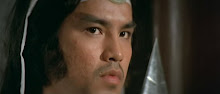
 French actor Pierre Brice makes a fine Zorro. He has the required dashing good looks, but is missing the mustache of other Zorro's. The Spanish swordsman is something of an incidental character in this movie. He's in the film almost as much as Maciste, yet as usually depicted in other Zorro films, he's not viewed as a threat by anybody. Not everyone knows who he is, nor is there a militia searching for him, or seeking out his identity. He merely enters and exits the screen in search of the late King's will to ensure the throne promised to his betrothed isn't stolen right out from under her. Brice attracted audience attention to himself with his German WINNETOU western film series. Brice again played Zorro in another Umberto Lenzi adventure titled L'INVINCIBILE CAVALIERE MASCHERATO (1963), or in English as THE INVINCIBLE MASKED RIDER.
Circus owner, acrobat, trainer, and actress Moira Orfei excelled at playing evil Queens and sorceresses in these type of movies. She hasn't any slaves in Lenzi's picture, but no doubt she is the intended 'Slave Queen' of the Americanized moniker. Often in cahoots with a male villain, Orfei was frequently the brains behind the insidious operations. Her co-conspirator for this tale of good vs. evil is the reputable, and award winning actor, Massimo Serato.

 Maria Grazia Spina plays Isabella, the do-gooder cousin. She sets herself apart from the usual lady in distress by her defiance, and refusal to be intimidated. She was well known as a stage actress, making the jump to the Silver Screen not long after. She acted as Jose Greci's maid in Luigi Capuano's similar styled adventure, ZORRO E I TRE MOSCHETTIERI (1963); and again opposite another bad girl role from Moira Orfei in SON OF THE SHEIK (1962) starring Gordon Scott. She posed nude in the Italian magazine Playmen in 1974. In her later years, Maria would take up painting.
AIP's release replaced Lavagnino's catchy, sprightly score with leftover cues from Les Baxter, or music from other films that Baxter worked on for the US version. Lavagnino's score captures that Spanish spirit very well with the main title theme (cropping up one other time) being the most catchy of the set.

With a title like ZORRO AGAINST MACISTE, how can any exploitation fan of Euro cinema resist such a spectacle? This is an Umberto Lenzi movie, after all -- a director well known to fans of all your finer cinematic cannibal cuisine. For this particular Sword and Sandal Swashbucker, Lenzi shows a kinder, gentler side; transforming his low budget into a colorful instance of high adventure that's sure to appease lovers of Italian costume epics.
With a title like ZORRO AGAINST MACISTE, how can any exploitation fan of Euro cinema resist such a spectacle? This is an Umberto Lenzi movie, after all -- a director well known to fans of all your finer cinematic cannibal cuisine. For this particular Sword and Sandal Swashbucker, Lenzi shows a kinder, gentler side; transforming his low budget into a colorful instance of high adventure that's sure to appease lovers of Italian costume epics.
This review is representative of the Spanish R2 Rider Films DVD. There are no English options.