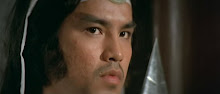
THE FURY OF ACHILLES 1962 aka L'IRA DI ACHILLE
Gordon Mitchell (Achilles), Jacques Bergerac (Hector), Cristina Gaioni (Zania), Gloria Milland (Bryseis), Piero Lulli (Odysseus-Ulysses), Mario Petri (Agamemnon), Ennio Girolami (Patroclus)
Directed by Marino Girolami
The Short Version: Brutal, epic in scope peplum extravagance told in a more adult style than usually afforded these movies. Gordon Mitchell solidifies his status as one of the best and most formidable actors to appear in the Italian costume dramas with his sometimes feral performance as Achilles. A classic of the genre.

 After ten long years of war between the Greeks and the Trojans, the Grecian armies led by embittered rivals Agamemnon and Achilles, having failed to overthrow Troy, set their sights on the city of Lynessos and lay siege to it. While the head leaders of the Greek forces are away on a mission, the formidable Hector, leader of the Trojan military forces launches an attack on the weakened Greeks along the coastline. With the prophecy of the Gods set in motion that Hector will die by the hands of his Grecian enemy, the determined Trojan is soon beset by the Fury of Achilles.
 Hector, barely escaping with his life, is taunted into exiting the walls of Troy to meet Achilles to avenge the fallen Trojan soldier
Simply stunning peplum revenge thriller is one of the best the genre ever produced. An amazingly well made movie, Girolami (the father to famous action director, Enzo G. Castellari) alternated between good movies (VIOLENT ROME, SPECIAL COP IN ACTION) and mediocre ones (TWO R-RINGOS FROM TEXAS, ZOMBI HOLOCAUST). This brutally opulent epic is possibly his magnum opus.

Despite a face like granite, the film would likely not be as good without the intimidating features of Gordon Mitchell as Achilles. His performance perfectly suits the title as Mitchell is ferocious from start to finish. Mitchell was one of several Mae West musclemen who sent photos to interested Italian producers for American bodybuilders to star in the then burgeoning sword and sandal movies.

 His facial features and hulking form was most suitable to villain roles, but Mitchell first took off as a heroic Maciste in the mediocre, but occasionally creative MACISTE IN THE LAND OF THE CYCLOPS (1961). From there, he was mostly featured as an antagonist, but did get heroic roles such as his turn in Michele Lupo's SEVEN SLAVES AGAINST THE WORLD (1964). He appeared in over 200 movies over the years in virtually every genre.
 Achilles mourns the death of his best friend, Patroclus and his lover, Zania
 Patroclus (left), Achilles (middle) and Agamemnon (sitting right) set their sights on the woman slave of their choosing
 The script of this peplum adventure is told in a fashion befitting an opera, or play. The dialog is of a verse design and benefits the production to an enormous degree. The speech adds an air of respectability that belies many of the other less serious entries in the genre. The script is also faithful to its source material, 'The Illiad'. Some critics make note that the relationship between Achilles and Patroclus has been altered to be one of simple friendship when allegedly it is alluded to as a supposed homosexual relationship in Homer's version.
This film could be viewed as something of a "second act"; the first being the 1956 Robert Wise production of HELEN OF TROY. That film showcased what led to the Trojan War in its depiction of Helen eloping with Paris, the son of Priam, the king of Troy. In 1961, the Italian produced THE TROJAN HORSE, a sprawling epic from Giorgio Ferroni that details events that take place shortly after the ending of THE FURY OF ACHILLES. Girolami's movie, while shot in 1962, can be viewed as a prequel to Ferroni's film from '61.

Of the three films, Girolami's motion picture is the most successful at melding the two worlds of Gods and man. The mythological elements are presented here in such a way as they manage to keep the film from fully entering the realm of fantasy. Even as Bryseis attempts to murder Achilles with a dagger to his back resulting in the blade melting away as if struck by lightning, the scene comes off as natural. An attribute of the script and performers.
 Hector ferociously slays the Greeks prior to the entrance of Achilles
 Also of note in ACHILLES are numerous large scale battle sequences. It is in this area that the film equally excels. The battles are undeniably brutal and performed with a rage rarely seen in the genre. Both characters of Hector and Achilles are the main proponents of the frequently bloodthirsty display of savagery during these sequences. Among the cast Italian genre fans will find Mario Petri and frequent spaghetti western villain Piero Lulli as Odysseus (or Ulysses). The beautiful Gloria Milland is also on hand as the lover of Achilles.
 Hector and Ulysses duel within the burning Greek fort near Troy
 Hector incurs THE FURY OF ACHILLES
 Any serious fan of mythology and these movies will find much to enjoy in THE FURY OF ACHILLES. It's truly one of the best films the genre has to offer. For those seeking brawny entertainment filled with monsters and tossing of boulders, you're likely to be disappointed. Those familiar trappings are replaced with such things as strong performances and an opulence relegated to a small contingent of pictures in this most underrated of Italian film genres.
This review is representative of the Rider Films Spanish R2 PAL DVD. There are no English options