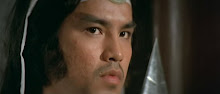
Behind the scenes on THE HEROIC ONES (1970)
OF SWORDS AND GUNS IN WUXIA & THE EARLY REPUBLIC CHAPTER 2

The late 60s were banner years for the "million dollar director" Chang Cheh. Granted, other directors such as Lo Wei and Ho Meng Hua were also given this name, but its application to the Shanghai native was more significant. Cheh had single-handedly altered the perception of Hong Kong cinema virtually over-night with his generously violent scenes of bloodletting and human suffering married to the masculine machinations of the order of Chinese chivalrous knights. Having directed more or less the entirety of THE BUTTERFLY CHALICE (shot in 1963 and released in 1965), initially tapped to helm THE KNIGHT OF KNIGHTS (1966), directed the B/W experiment TIGER BOY (1966) and explored the Wuxia realm with the likes of THE MAGNIFICENT TRIO (1966) and TRAIL OF THE BROKEN BLADE (1966), Chang Cheh finally found his niche in 1967 with THE ONE ARMED SWORDSMAN. More moneymakers and innovations would follow.
 Promo shots for THE INVINCIBLE FIST (1969)
With three back-to-back hits on his hands, Cheh's intriguing 1969 Eastern with a touch of western--THE INVINCIBLE FIST (see Chang Cheh part 5 for more on this movie) was the only Shaw swordplay to be entered into the 15th Annual Asian Film Festival. It was also the directors return to the genre after wrapping up the modern settings of the failed experiments THE SINGING THIEF and DEAD END. An ambitious production, it made a meager impression at the Hong Kong box office. Another Cheh picture, THE FLYING DAGGER (1969), shot concurrently with THE GOLDEN SWALLOW (1968), also floundered. An auspicious lead role for Lo Lieh and a notable supporting role for David Chiang, this was the first and last starring role for Lo in a Chang Cheh film having previously shared the screen with Wang Yu in both MAGNIFICENT TRIO and GOLDEN SWALLOW and Cheng Pei pei in that latter production as well as in THE FLYING DAGGER. Lo Lieh of course, would go on to garner even more notoriety over the next couple of years.
 15th Annual Asian Film Festival Awards ceremony for entry film DEAD END (1969)
 With a proliferation of similar swordplays bombarding theaters, Cheh began intermittently dabbling in modern day theatrics with the artistic flourishes of the aforementioned DEAD END (1969), the second of two Chang films to be entered into the above mentioned film festival. DEAD END was a tragic melodrama in the style of James Dean movies such as REBEL WITHOUT A CAUSE (1955) and other similar Juvenile Delinquency pictures--a genre Cheh would experiment with over the course of the next few years (see Chang Cheh part 4). This first starring role for genre vet Ti Lung was a modern day drama feature that contained elements not too far removed from the tragic heroes of the Martial World the director had become famous for.
 Behind the scenes of THE SINGING THIEF (1969); Below: Lo Lieh meets singing sensation Jimmy Lin Chong
Having problems with censors and another troubled, if peculiar modern day crime comedy by the name of THE SINGING THIEF (1969) under-performing in Hong Kong, Cheh had momentarily hit a 'Dead End' and retreated back to the safety of his martial homeland--the Wuxia universe. After the veritable failure of THE INVINCIBLE FIST, though, Chang remained undaunted carrying on behind the scenes much like his virtuous swordsmen in front of the camera.
 Chang Cheh (right) on set of RETURN OF ONE ARMED SWORDSMAN
Armed with sword swinging titles such as RETURN OF THE ONE ARMED SWORDSMAN, HAVE SWORD WILL TRAVEL and THE WANDERING SWORDSMAN in production with a whole other slew of sword clanging tales of blood and vengeance in pre-production, 1969 was a busy year for the enterprising director and would only get bigger over the next couple of years. RETURN OF THE ONE ARMED SWORDSMAN wasn't of the same caliber of the genre defining first film, but it piled on the action and gore drenched spectacle to an alarming degree. Having to trim a number of scenes of violence, what this sequel lacked in exposition it made up for in escapist entertainment. Gone are the brooding scenes of Jimmy Wang Yu's Fang Gang coming to grips with his loss of his arm and his dedication and loyalty to not only his master, but to perfecting his skills. For the sequel, it's basically one fight filled bloodfest after another brimming with outrageous creativity that strains the level of believability, but nothing that isn't indigenous to the Wuxia universe.
 RETURN OF THE ONE ARMED SWORDSMAN (1969)
Both Ti Lung and David Chiang turn up briefly and it would only be a matter of months before they were taking the Asian box office by storm. RETURN brought in good returns for the Shaw Brothers and Wang Yu eventually got to direct his own movie before the hot headed actor abruptly jumped ship to the competition at Golden Harvest (see Shaw Brothers & Kung Fu Cinema Part 2). Armed with his box office clout, Wang Yu made a string of (mostly) bad movies built around characters he played at Shaws, or moneymaking bonanzas produced by his former boss. A replacement was quickly required to fill the gap left by the controversial star so the Shaw's entrusted Chang Cheh and his uncanny ability to spot potential talent. He found it in Shaw stuntman David Chiang and former Southern Drama student Ti Lung. Combined with director Chang Cheh, these three were known as 'The Iron Triangle' and together this indomitable set of 'Triple Irons' were a force to be reckoned with. However, when separated, neither actor fared very well.
 poster for THE WANDERING SWORDSMAN (1970)
Interestingly enough, both actors tried their luck as a single (although some of these solo efforts were released afterward) before being paired up in HAVE SWORD WILL TRAVEL (1969). After THE INVINCIBLE FIST (1969) was finished, Cheh began work on THE WANDERING SWORDSMAN (1970), a solo vehicle for David Chiang, co-starring with Lily Li, an actress he was often associated with onscreen. KING EAGLE was also put into production, but that picture was built solely around Ti Lung. Shaws baby queen, the immensely popular Li Ching, was his co-star. Both films were built around the typical Chang Cheh righteous hero, but with some differences that reflected the strengths of the lead actors. David Chiang was a ROBIN HOOD styled character for his introductory lead role, a swordsman who helps the downtrodden and ultimately seeks redemption when his stubbornness leads to deception by villains when he's fooled into snatching a consignment of treasure.

This was familiar territory for the director and his brand of heroism--present an affable yet stoic personality whose righteousness and implacable attitude leads to eventual tragedy. While it's not a wholly worthwhile picture, it's a standard swordplay with an indelible performance by David Chiang which would become de rigueur for the actors onscreen mannerisms. It, like Ti Lung's solo outing in KING EAGLE, featured a few stand out moments mostly dominated by spectacularly gory heroism, but little else to differentiate themselves from other similar movies of the day. With KING EAGLE (production began right after DEAD END was completed, but not released till 1971) in the can, the director embarked on the profitable partnership of the two actors, a bond that would formulate a lasting friendship for many years and many memorable movies.
 Since both Ti Lung and David Chiang were unproven commodities at that moment, Li Ching is showcased as the centerpiece of this poster.
HAVE SWORD WILL TRAVEL (1969) was a special film within the directors repertoire. It was the first motion picture pairing of David Chiang and Ti Lung in lead roles as well as adding Li Ching to the mix. It also featured a reasonably engulfing plot that was spearheaded by David Chiang's honorable swordsman, Luo Yi. As would become common practice, Ti Lung would often suffer being placed in the "back seat" in his movies with David Chiang. It wasn't intentional, but one of the directors numerous brainstorms was to put the strengths of his performers to their maximum capacity. In this case, David Chiang was the better, more charismatic actor while Ti Lung was the more masculine, rugged performer. Both worked off of each other incredibly well and it only became more evident with each succeeding movie the two did together.
 Behind the scenes on HAVE SWORD WILL TRAVEL (1969)
There's a bit of a love triangle here between Siang Ding (Ti Lung), Yun Piao (Li Ching) and the mysterious knight in clouded armor Luo Yi (David Chiang). John (David) Chiang essayed a similar role in 1971's THE DUEL, a film that was later remade by Chang Cheh as FLAG OF IRON (1980). There's some obvious innuendo that Siang's betrothed harbors feelings for the more complicated character of Luo, the typically stoic, yet tragic Chang Cheh hero. As per many of the directors movies, this angle isn't explored with any depth, but is nonetheless there shuffled between scenes of slow motion bloodletting. Still, such male and female romanticism is clearly evident in many of the directors films predominantly in the formative years between 1966 through 1970 and sporadically up to 1973.
 Shooting HAVE SWORD WILL TRAVEL
Aside from a brooding performance from David Chiang, his character is one step up from the dogmatic knight in that he has an affectionate relationship with his trusted horse. There's a somewhat touching scene where an almost starving Luo begrudgingly sells his horse so that he and his loyal equine can eat. The film is also notable for showcasing the enormous pagoda on the Shaw back lot, here representing the villains lair--each succeeding level housing various thugs brandishing assorted weaponry. Bruce Lee no doubt saw this movie and incorporated the pagoda plot device into his GAME OF DEATH (1977). The 100 foot construct was built specifically for this production and cost HK70,000 dollars. The studio got a lot of mileage out of this incredible set incorporating it in many more movies.
 Taking a break during the shooting of VENGEANCE! (1970)
With this latest swordplay a big hit, the inspired director had the idea of bringing the knight errant into the 20th century and with it, his star pupils. The result yielded an award winning production, but just shy of another million dollar success at the HK box office. The film was VENGEANCE! (1970), a picture that has went on to accumulate a certain degree of respectability emboldened by the participation of John Woo as an assistant director. The plot is standard revenge fare, but told with a meticulous flair by Chang Cheh. While he became known for his smirkingly mischievous roles, David Chiang downplays his roguish image for a more solemn, melancholic aura as Guan Hsiao Lou, the younger brother of an opera performer who died unjustly at the hands of a malicious gangster.
 Notice Chen Kuan Tai and Pai Piao to the right of this scene from VENGEANCE! (1970)
The modernity of updating the lone swordsman with knives and guns was a novel concept and Cheh treats the material in much the same fashion an artist would treat a great painting. VENGEANCE! is a work of art--of moving pictures with broad red brushstrokes throughout. Watching the film one can easily see just how influential Chang Cheh's style was on John Woo. There's relatively little difference between the two filmmakers with Woo adopting many of his teachers techniques and innovations which became increasingly apparent in his later works. But where John Woo had Chow Yun Fat, Chang Cheh had David Chiang and Ti Lung among a handful of others that became equally famous.
 Awards ceremony with winners from VENGEANCE!, actor David Chiang and director Chang Cheh
It should be noted that while Ti Lung preceded his frequent co-star, it was David Chiang who caused critics and audiences alike to take notice to his acting abilities despite his slight build. Ti Lung took a supporting role here as the doomed elder brother. The film won two awards at the 16th Annual Asian Film Festival--Best Actor for David Chiang and Best Director for Chang Cheh. From here on out, most if not all of the pairs movies had David top billed and Ti Lung second. Something similar took place in the directors THE SINGING KILLER (1970), a non musical retelling of Cheh's lively THE SINGING THIEF (1969).
 lunch break during filming of THE DUEL (1971)
During production, promotional materials attest to a much larger role for Ti Lung, but in the finished film his screen time amounts to little more than a brief cameo during the opening dance club scene. Interestingly enough, David Chiang explained his comfortability in portraying a musician, yet onscreen, he seems anything but comfortable. He does show off some flamboyant costumes and engages in some raw, but slick fight scenes. This film acts as something of a bridge between the directors action pictures and his series of rebellious youth movies. Nonetheless, THE SINGING KILLER fared much better at the box office than its similar counterpart did.
 The Iron Triangle on the set of THE DUEL (1971)
There were two other movies in production during the early part of 1970--one was another modern day-early Republic Era gangster picture and the other was a sprawling period piece. The former was THE DUEL (1971), one of the directors more brutally gruesome pictures which began production in 1970. Following the template laid down by the more singularly focused VENGEANCE! (1970), THE DUEL is more expansive as an updated approach to the Wuxia conventions. Only here, the heroes are more anti heroic, but still righteous. This is also one of the earliest examples that glorified Triad organizations. Ti Lung's character also sports a tattoo spread across his chest. This was during a time when such a body modification was often associated with gangsterism, yet he's the good guy. The plot of THE DUEL is a convoluted scenario about rival gangs and the resulting treachery. If you've seen the directors later venom movie FLAG OF IRON (1980), then you have an idea what the storyline entails. It's virtually identical only instead of the acrobatic maneuvers of the latter film, there's wildly gory knife battles with dozens of combatants onscreen at one time. Both 'Iron Triangle' actors are given ample opportunity to shine here in this violent and successful effort from Chang Cheh.
 The massive exhibit for THE HEROIC ONES (1970)
One of the biggest movies of the year as well as one of the directors biggest spectacles of his career was the enormous and expensive production of THE HEROIC ONES (1970). A very famous film in Asia, it's still remembered today. It's distinguished for several reasons one of them being the bloated budget of HK2.5million. Unheard of at the time, a gala exhibit showcasing the many props, costumes and even severed body parts and blood jelly used in the film were showcased. Not only that, but a documentary detailing the arduous production was also part of the show. In another bit of movie mogul magic, Shaw Brothers had a 'Heroic Ones' basketball game between the Shaws stable of stars involved in Cheh's picture and the camp at TVB several days before the films release.
 Note Bolo Yeung among the players at top
All the key components that made up the Chang Cheh formula were on hand here and the expansiveness of the script allowed for a greater number of characters and a good deal of honor and treachery to boot. This majestic two hour epic had amazing battle sequences for the time period and Cheh's trusted chief choreographer, Liu Chia Liang had his work cut out for him. Hundreds of extras and teams of horses were required for the many wine guzzling 'Heroic Ones' and the armies under their guidance. The enormity of what was then called a "super production" cropped up on Cheh's filming slate with regularity up to 1977 when changing audience trends and high production costs made such expensive endeavors almost obsolete without the participation of a partner studio. But by then, Chang Cheh had lost much of his box office clout. However, during the early 70s he reigned supreme and was a force to be reckoned with for several more years.

Shaw Brothers movies dominated the Hong Kong box office in 1970 and two of the directors films were in the top five, those being THE HEROIC ONES and THE SINGING KILLER. Showing a striking assured hand at maintaining a tight ship on the set of such a huge picture, the enterprising director would soon be undertaking his ultimate ideological epic in late 1971. The fact that Chang would be shooting multiple big budget and opulent pictures simultaneously made his abilities all the more impressive for the amount of quality he was able to procure on what was undoubtedly a hugely hectic schedule. The year 1971 and especially 1972 would prove among the busiest ever for the visionary filmmaker.
TO BE CONTINUED in PART 7....