REVOLT OF THE SLAVES 1960 aka LA REVOLTA DEGLI SCHIAVI
Lang Jeffries (Vibio), Rhonda Fleming (Claudia), Ettore Manni (Sebastian), Wandisa Guida (Agnese), Fernando Rey (Valerio), Serge Gainsbourg (Corvino), Burt Nelson (Catellus), Van Aikens (Iface), Dario Moreno (Maximian), Jose Nieto (Sesto), Julio Pena (Torquato), Gino Cervi (Claudius)
Directed by Nunzio Malasomma
"It seems the more these Christians are tortured, the more they like it!"
The Short Version: Strikingly violent peplum picture from 1960 is a sprawling epic with lavish sets and a big cast. The plot is as thin as the wooden beams gladiators battle atop while a fire pit rages below them, but it makes up for its lack of a story with several poignant moments and enough brutality for a few additional movies. Jam packed with action and stunts, the abundance of violence detracts from the productions shortcomings. It's essentially Roman decadence versus Christian faith and the various soap operatic subterfuge and political intrigue that comes with the territory.

Lang Jeffries as Vibio (center) escapes with his dwindled band of fighting slaves during the violent conclusion
 The capture and enslavement of a steadfastly righteous Christian man reveals that a good number of those within the city of Rome have secretly converted to Christianity, a hated religion that has slowly penetrated the Roman way of life. The Roman Tribune and Emperor Maximian's trusted aid, Sebastian, is one of them. The city's cruel head of the Secret Police, Corvino, exposes them and along with Iface, the leader of the African Centurions, they arrest any and all Christians to be tortured and killed in the gladiatorial arena.
 This lesser known peplum epic is one of the most brutally action packed historical sagas the genre ever exploited to the sword and sandal masses. The level of violence and torture is extremely high. Malasomma's movie seems to go out of its way to showcase as much ferocious sadism as its 103 minute running time will allow. The plot is paper thin, but there's plenty of incidental operatics to maintain the flow of the film when people aren't being speared, tortured and crucified.
Rhonda Fleming as Claudia looks on in horror as the Christian captives are executed
 This one here is of the 'Kill the Christians' school of peplum historical pictures and possibly the most violent of the bunch. The last eye opening twenty minutes are punishingly somber. Women and children are fair game while the crowd in the arena roars in bloodthirsty ecstasy as followers of Christ are cut down in a shocking display of cruelty. Gladiators are promised their freedom should they spear a Christian before they make their escape. Men and women of varying ages are ordered to make a run for it while a warrior pierces their body's with an expertly thrown spear. This type of sequence was later adopted for dozens of spaghetti westerns only there the banditos are the gladiators, Mexican peasants replace the Christians and six shooters take over for the spears.
 As mentioned above, the violence level is extraordinarily high as well as a good amount of blood being splashed about. It's not extremely graphic, but it's a bit shocking to see such a display of barbarism in a film from 1960. Right from the beginning, a slave has his hands lopped off and a short time later, Fernando Rey is fed to a pit of starving dogs! In addition there's rack torture, jousting with flaming spears, crucifixions, and multiple lashings in what has to be the ultimate whipping peplum. One scene towards the end sees combatants high in the air atop thin wooden beams above fire pits battling each other with whips! The loser ends up with a serious third degree burn.
From left to right: Rhonda Fleming, Ettore Manni, Lang Jeffries
 This picture is of particular interest because it's neither a muscleman epic nor a gladiator actioner. The only time the latter is present is during the amazingly savage twenty minute finale. For a film with virtually no overly husky lead actors, fans of the genre may be a bit put off, but the action is so frequent and well choreographed, you likely won't care. Lang Jeffries bears a striking resemblance to a smaller version of Gordon Scott and Burt Nelson favors Steve Reeves, but slimmer. Rhonda Fleming rounds out the North American performers in what is predominantly a European cast. Fleming was married to her co-star, Lang Jeffries, who plays the slave named Vibio. They apparently met on the set of this picture and in hindsight, it's amusing in that early in the film her character, Claudia, has him flogged for his defiance against the Roman court by refusing to humiliate himself by fighting for the enjoyment of his masters.
Wandisa Guida (left) and Fernando Rey (right)
 Of course the two are destined to fall in love. As usual in these movies, there's always a love triangle or two. Even if these elements of romanticism get drowned in the agonizing cries of the tortured and dying, they are still present and accounted for. Sebastian (played by peplum mainstay, Ettore Manni), the Roman Tribune, is in love with the lovely Agnese. But someone else has eyes for her, too. Valerio (played by a very young and clean shaven Fernando Rey) pays the sniveling Corvino, the head of the city's Secret Police, to follow her wherever she goes.
Ettore Manni (right) as Sebastian pleads with Emperor Maximian (Dario Moreno) to spare the followers of Christ.
Ultimately, Corvino discovers that Agnese secretly meets with the Christians at an isolated location. He also spies a fair number of Emperor Maximian's cohorts who have defected to the Christian faith. Corvino is ousted as a spy and nearly killed by the muscular Catellus, but he's stopped and the deceptive interloper is allowed to leave in one piece.

Serge Gainsbourg as the devious Corvino (center) nearly has his neck snapped by Catellus played by Burt Nelson (left).
This is the downfall of the good guys as it presents these passive people as easy game for self destruction. Upon his return to the city, Corvino proceeds to inform the Emperor of what he has seen to which Maximian orders their arrest and subsequent death. The love struck Valerio objects to Agnese being captured and he meets a decidedly gruesome end at the teeth and claws of a pit full of hungry dogs. One by one the Roman "traitors" are discovered including Sebastian.

His fate is one of the most accomplished sequences in the film. Iface straps him to a tree and orders his men to each shoot an arrow into a non vital part of his body saving the final arrow for himself. A voiceover reveals Sebastian's silent prayer to himself as each centurion gleefully fires an arrow into his arms, legs and shoulders.
Sebastian is slow tortured by having arrows shot into various parts of his body.
His fate is one of the most accomplished sequences in the film. Iface straps him to a tree and orders his men to each shoot an arrow into a non vital part of his body saving the final arrow for himself. A voiceover reveals Sebastian's silent prayer to himself as each centurion gleefully fires an arrow into his arms, legs and shoulders.

Corvino gets his just desserts attacked by his own pack of wild, and unfed dogs
Another scene that's quite good is also humorous in its sense of poetic justice. Throughout the film, Corvino (played with evil relish by Serge Gainsbourg) had been key in the downfall of the heroic and non violent Christians who, by the end of the film, have freely embraced martyrdom. Corvino is a wily, weaselly rat of a man who dies in a fittingly ironic fashion at the paws of his own pack of dogs after they've been pacified by a captured and kindly old priest.

With so many stars on hand, one man nearly steals the show and that's Van Aiken. Throughout the Sword & Sandal genre, black actors were common, but rarely were they given as much screen time as is seen here. Aiken, who plays Iface (pronounced as Ee-fa-chi), is just as duplicitous as Corvino, but a much more formidable opponent. Iface feigns being bought off by Claudia and even turns on his woman at one point towards the end of the film when it looks like he might actually side with the good guys.

Iface also orders the death of Sebastian, but refuses to allow him a quick death, instead making him suffer a painful one by having him riddled with arrows shot into non-fatal parts of his body. His character also commits one of the more shocking scenes of flagrant murder in the film made all the more frustrating in that he never pays for all his indignities.

Aiken also plays a significant, but slightly smaller role in the excellent horror tinged fusto film GOLIATH & THE VAMPIRES (1961) starring the always reliable Gordon Scott. Aiken carves an impressive character here in REVOLT OF THE SLAVES and it's definitely interesting and wholly unusual to see a film in a period setting wherein black tribal warriors make slaves of white captives.
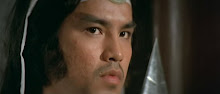
Van Aiken plays the sadistic centurion leader Iface
With so many stars on hand, one man nearly steals the show and that's Van Aiken. Throughout the Sword & Sandal genre, black actors were common, but rarely were they given as much screen time as is seen here. Aiken, who plays Iface (pronounced as Ee-fa-chi), is just as duplicitous as Corvino, but a much more formidable opponent. Iface feigns being bought off by Claudia and even turns on his woman at one point towards the end of the film when it looks like he might actually side with the good guys.
Iface (right) inspects the seemingly lifeless body of Sebastian.
Iface also orders the death of Sebastian, but refuses to allow him a quick death, instead making him suffer a painful one by having him riddled with arrows shot into non-fatal parts of his body. His character also commits one of the more shocking scenes of flagrant murder in the film made all the more frustrating in that he never pays for all his indignities.
Vibio (Lang Jeffries) is captured during the films opening by Iface and his men
Aiken also plays a significant, but slightly smaller role in the excellent horror tinged fusto film GOLIATH & THE VAMPIRES (1961) starring the always reliable Gordon Scott. Aiken carves an impressive character here in REVOLT OF THE SLAVES and it's definitely interesting and wholly unusual to see a film in a period setting wherein black tribal warriors make slaves of white captives.

 The final twenty minutes is the movies major showstopper. While the slaves attempt to break out of the dungeon, a gaggle of Christian women, children and old men are escorted out into the arena where they are about to meet their deaths. A number of them are crucified with a fire burning below them and others are killed off in a sick game for the amusement of the crowd. While the helpless disciples are dying in the arena, the slaves are fighting their way out with many of them dying a bloody, if heroic death in the process. Claudia cuts off Iface's reinforcements by unleashing a cage full of lions(!). Truly this film has it all and pulls out all the stops for the big finish.
Claudius (Gino Cervi at left) bickers with, and threatens Maximian (Dario Moreno at right)
 This Italian-Spanish-German co-production has some good technicians working behind the scenes as well. Duccio Tessari, the director famous for his classic A PISTOL FOR RINGO (1965) and its loose sequel served as a scriptwriter here as well as performing second unit directing duties. The score (conducted by fellow composer, Carlo Savina) by the unsung Italian composer Angelo Francesco Lavagnino lends the best scenes a high degree of substance and pathos.
Lang Jeffries (on bottom with spear at his throat) fights to the death
 If the film falters at all, it's in the final moments. It ends happily for those remaining alive, but a few of the despicable antagonists never pay for their misdeeds by the time 'The End' closes the film out. With everything else going on in this action packed semi exploitation peplum, this 'Toga & Torch the Christians' entry is mostly concerned with heroic theatrics and succeeds mightily in that respect. Fans of the genre will get more than there money's worth if they can forgive the fact that there's no Gordon Scott or Mark Forest running around rescuing everybody. Casual fans looking for an entertaining quick fix may even find this of passing interest as well. It's definitely a cut above the norm and unusually engaging despite its lack of muscle flexing genre regulars.
Feature running time: 1:42:54