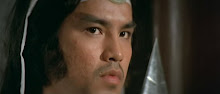
NIGHT OF THE DEVILS 1972 aka LA NOTTE DEI DIAVOLI
Gianni Garko (Nicola), Agostina Belli (Sdenka), Mark Roberts (Jovan), Cinzia de Carolis (Irena), Teresa Gimpera (Elena), William Vanders (Gorca Ciuvelek), Umberto Raho (Dr. Tosi), Luis Suarez (Vlado), Maria Monti (The Witch)
Directed by Giorgio Ferroni
The Short Version: This is underrated Italian filmmaker Giorgio Ferroni's modern day take on the Tolstoy tale that served as inspiration for Mario Bava's 50 minute 'The Wurdulak' segment from BLACK SABBATH (1963). If you're familiar with it, then you know how this 90 minute version plays out, but not without some differences. Well known for his Euro westerns, Gianni Garko essentially essays the same role Mark Damon held in Bava's interpretation. Marked by flashes of graphic gore and a palpable sense of dread, Ferroni's last horror film (he only did two) is remarkably tense and suspenseful in places despite jettisoning the Gothic ambiance that made Bava's version so memorable. A suitably cruel sting in the tail closes out this obscure, highly recommended, and forgotten gem of 70s European horror cinema.

 On his way to a business deal to procure lumber for his company, Nicola takes a shorter route through a thickly wooded area and ends up in a car accident after a mysterious woman runs out in front of him. Searching the increasingly dense woods for help, he finds an isolated farmhouse owned by Gorca Ciuvelek, where he lives with his family. Refusing to help with the darkness closing in, Gorca offers Nicola a room for the night. During dinner, Nicola notices a lot of tension and fear between the family members regarding a curse on the lineage and a mysterious witch that lives somewhere out in the woods.

The name Giorgio Ferroni isn't one that's bandied about much in cult film circles. Of his known filmography, the films that always get the bulk of the attention are his westerns and Sword and Sandal pictures. He did only two horror pictures -- one of them has been fairly well known amongst genre aficionados, while the other, the one being reviewed here, has been obscure for many years and only available via bootleg outlets till recently.

The period of Ferroni's directorship that is of most interest is a twelve year stretch between 1960 and 1972. His works before and (the one) after are not as well known, or accessible outside of Italy. What's interesting to note is that his first film of special mention was a horror film (MILL OF THE STONE WOMEN [1960]) and his last -- the horror film NIGHT OF THE DEVILS from 1972.
 Things kick off with a solemn and soothing cue from composer Giorgio Gaslini (DEEP RED) setting a tone that hints at dark romanticism. There's very little romance here, but what's here is treated in the darkest horror styling possible. This main theme is used generously throughout and serves the same purpose as the equally lighter toned main themes of such extremely violent Euro horror pictures like MARK OF THE DEVIL (1970) and CANNIBAL HOLOCAUST (1980).

 From there the film follows our main protagonist Nicola, (Nicolas in the dubbed version) noticeably shaken from some major ordeal. In shock, he's taken to a hospital leading to a bizarre hallucinatory sequence packed with gore (a face is blasted away by gunshots and a heart is ripped out) and some graphic nudity where a naked woman lies on a slab while two characters wearing skull masks apparently mean to do her harm. This is all in Nicola's head, of course, and the bulk of the movie details the horrifying events that have brought him to this point.
 NIGHT OF THE DEVILS is essentially a retelling of Aleksey Tolstoy's 'The Wurdulak', which was most famously adapted in Mario Bava's BLACK SABBATH (1963). Ferroni's movie stays faithful to Bava's interpretation of the tale (even replicating some classic shots from Bava's rendition), but transplants the action to modern times as opposed to a period setting. The Gothic, dark fairy tale ambiance of Bava's version is also jettisoned in favor of a growing sense of dread deep within an oppressively dense forest. However, it does display a striking parallel between tradition and modernization; and not just as a reflection of the real world, but also of the changing trends in genre cinema as well.

The script draws a fine line between superstition and reality; between a burgeoning modern society and those who prefer to live in the past, sticking to old traditions and values. These (anti) social mechanics also stretch out into the world of religion -- those who believe and those who do not. Ironically enough, having faith and believing in the palpable threat of evil to be able to conquer it doesn't guarantee salvation as the cruel twist at the end attests.

 This clash of times and traditions begins almost immediately once Nicola discovers the Ciuvelek family dwelling deep in the woods, far from the modernity of the concrete forests of industrialized cities. Clearly by the films opening and that Nicola drives a car, it's obvious the time is the 1970s. Yet, you'd never know from the way this family lives. They've not heard of a television, nor do the children recognize such words as 'disease'. They're seemingly living in a bubble; a state not too far removed from the medieval era setting of Bava's take on this tale.
 It's also of interest that NIGHT OF THE DEVILS can be viewed as a filmic clash between the dying Gothic era horror film and the much more blatantly graphic, gore-drenched horror theatrics that took over in the 1970s. Mario Bava, for instance -- his 60s films had a quality about them that was missing in his 70s works. BARON BLOOD (1972) was an attempt at re-capturing the feel of the previous decade. Ferroni's movie makes a case for tradition, but ultimately accepts the conventions horror was embracing at this time and does so with an artistic flavor lacking in other Euro horror films of this time period.

 Back to the culture clash of DEVILS, we learn that there were others that lived in these woods, but they left for life in the city. Unlike those others mentioned, the patriarch Gorca refuses to leave his home. But instead of being afraid of abandoning tradition, it's to eradicate a supposed family curse brought on by his now dead brother. Once welcomed into their home, Nicola, exceedingly curious of this out of time family, questions why the other woodland dwellers moved away. The elder son Jovan (who frequently clashes with his fathers reasoning) states that the younger generation fled because they only want money, finding it undesirable to work hard for ones earnings. This is as political as this movie gets, yet that statement does speak fervently on the subject of elder generational work ethic versus what was the modern era of the time.

 The Wurdulak itself (not even called by name till past the hour mark) takes the form of a witch that wanders around in the woods during the daytime and especially the night. Where she comes from is not known, but she is the source of the horror in the film. There's some great moments that foreshadow the terror ahead such as a bit where Nicola asks why the windows are boarded up. He attempts to open one after dark and Sdenka becomes excited, begging him to leave it locked. Horror movie protocol dictates that whatever measures you take to keep something out is only going to last for so long.

 The violence is strong and the gore (by Carlo Rambaldi) is splashy and generous at times. Some of these scenes are pervasively gruesome; particularly a murder committed by a child. Again, if you've seen Bava's interpretation of the story, you will have an idea of how this film plays out. The gore is well done for the most part, yet limitations of the time are evident in a few shots. Rambaldi created, among other things, dismemberments, bloody impalements and decomposing bodies for the camera to lovingly caress with its zoom lens. The performances are also believable across the board.

Gianni Garko might forever be associated with the sleuthing, trick gadget gunslinger of his famous Sartana character, but he tackles the role of Nicola with conviction. He spends the opening and closing sequences in either shock or a straight jacket, so the flashback segment of how he got to his mentally fractured state builds up to that. Outside of a scant few roles, Garko was mostly known for playing sardonic, TRINITY style gunmen in western productions, so this serious turn -- in a horror film no less -- is a welcome deviation from his familiar norm.

Garko's most well known roles among fans in the US would be a slew of Italian westerns. Among these are 1967s 10,000 DOLLARS FOR A MASSACRE (where he played a bounty hunting Django), THEY CALL HIM CEMETERY (1971) and his most popular, the aforementioned SARTANA (1968); a role he returned to in three official sequels. Garko also donned a bizarre, white colored, feathery get-up in MOLE MEN AGAINST THE SON OF HERCULES (1961) and fought Steve Reeves in WAR OF THE TROJANS (1962), the sequel to Ferroni's classic THE TROJAN HORSE (1961). He also led the brigade of FIVE FOR HELL (1969) against the Nazis under the command of Klaus Kinski among other roles.
 As for Ferroni, he is best known for his peplum sagas and westerns. For his Torch & Toga movies, he never showed interest for delving into the fantasy realm that represented the best and worst of the genre; instead his examples of the genre had a hand in the historical, as well as actual Greek mythology. His westerns encompassed just as many examples, including a trilogy of pictures all starring the charismatic, and wildly popular Giuliano Gemma. Ferroni's westerns were well made and filled with action and twisting plots, but were more in the American style of western as opposed to the barren wasteland of Leone's template.

 With the release of MILL OF THE STONE WOMEN (1960) showing Ferroni possessing a deft hand at handling horror, this restored release of NIGHT OF THE DEVILS (1972) reinforces that claim. Furthermore, both films showcase diametrically different styles of horror -- one is of the Bava school of atmospheric gloom and the other, while re-doing a story brought to cinematic life by Bava, tells the tale in a grim style that would personify Italian genre films of the 1970s. Ferroni's DEVILS is a wonderfully haunting, occasionally scary, and near seamless bridge between the fog enshrouded Gothics of the 1960s and the new approach that took over in the coming decade.
This review is representative of the Raro Video DVD.
 THE PEOPLE WHO OWN THE DARK 1975 (released in 1977/1980) aka ULTIMO DESEO aka PLANET CIEGO
Alberto de Mendoza (Professor Bill Fulton), Nadiuska (Clara), Paul Naschy (Borne), Maria Perschy (Lily), Julia Saly (Marion), Teresa Gimpera (Berta), Tomas Pico (Victor), Diana Polakov (Tania), Leona Devine (Luna), Antonio Mayans (Vasily), Emiliano Redondo (Dr. Messier), Ricardo Palacios (Dr. Robertson)
Directed by Leon Klimovsky
***WARNING! This review contains images of nudity***
"Dear friends, I welcome you to Villa Amour. Even those who have come for the first time, know what this name signifies... and what shall be offered to them here -- the grand ceremony of pure pleasure. Once here, prejudice, all compassions, conventions, craven doubt shall be put aside. I expect you to be ruthless in the gratification of your desires... so you can be transformed into worthy disciples of our grandmaster, Donatien Alphonse Francois Marquis De Sade."--Maria Perschy as the head madam of a country club style bordello doing introductions before "The Big One" hits.
The Short Version: The plot of this modest little tale of Armageddon is more ambitious than the low budget will allow, yet the performances carry the picture leading up to a surprisingly, and suitably downbeat finale. It's a bizarre Spanish horror-science fiction production with a touch of erotica that never totally satisfies with its peculiar melding of genres. Klimovsky can't deliver the enormous potential the script offers, but periodically the film has a saving grace of morbidity to invigorate the proceedings. The Gothic, hilltop mansion and superb cast aid immeasurably in making this a worthwhile viewing experience, although it will likely find its best audience with diehard Euro genre fans and Paul Naschy devotees.

 A diverse group of wealthy businessmen gather at a secluded, mountaintop mansion that doubles as a bordello for a cult of De Sade worshipers. Meanwhile, a nuclear bomb explodes somewhere in the vicinity leaving the exposed populace blind and gradually descending into madness. Eventually, a mass of these blind maniacs from the nearby village lay siege to the mansion. The survivors fight for their lives to escape the crazies and to escape the contaminated countryside.

 Spanish horror strikes again from Leon Klimovsky, who this time graces his film with shades of science fiction paranoia in the spirit of such productions as THE DAY OF THE TRIFFIDS (1962), NIGHT OF THE LIVING DEAD (1968), TOMBS OF THE BLIND DEAD (1971) and a dash of the Disaster movies that dotted the decade. But while those epic cataclysm pictures featured a dozen or so big Hollywood names, Klimovsky's movie features many recognizable faces from Euro genre cinema in a minor tale of pseudo Armageddon.
 The holocaust in question is the "aftermath" of a nuclear blast. It's hinted at during a phone conversation at the beginning between Professor Fulton (De Mendoza) and a colleague. But when the disaster actually takes place, there's nary a sign of devastation save for the white, burned eye sockets of the two maids and everyone in the village below (in an apparent budget saving move, only the two maids are seen bearing bleached white eyes while everyone else wears sunglasses or have their eyes covered). Wherever the actual blast took place, the aftershock has somehow incurred blindness on those exposed to the radiation.
 The fallout has also caused the irradiated survivors to display murderous tendencies, marching onto the mansion's grounds in an effort to kill everyone inside, or seemingly anyone that still possesses their sight. However, the blind killers aren't the only problem for our financially established protagonists. Some of them turn on each other. At one point, one of the doctors loses his sanity highlighted by a scene where he scurries down a hallway on all fours while wearing a pig mask!

The horror element builds ever so slowly till around the 50 minute mark when it becomes apparent the main cast that remain alive can no longer stay in the besieged mansion. The action is pretty much nonstop from that point on. The violence, while never overly graphic, is at its strongest during the last reel. The gore is minimal and limited to a scene where a cast member has her eyes gouged out (we only see the aftermath). The gloomy ending, while somewhat telegraphed ahead of time, is still effective.

 The script presents some fascinating ideas, but the scope is simply too much for the meager budget to explore sufficiently. We're teased with so many things, but rarely get to savor the taste as there's always an ingredient or two that's missing. The highlights include the bizarre dinner sequence near the beginning wherein the aristocratic clients prepare for a night of debauchery. The sight of the men in their rubber masks with deformed faces is an eerie sight. It's made all the more bizarre as five sexy women enter the room in see-through nightgowns wearing nothing underneath.

 Another memorable moment occurs when the blind assailants storm the house. The survivors attempt to hide in the basement -- but unlike Ben in NIGHT OF THE LIVING DEAD, the basement proves to be anything but a safe haven. It's during this nighttime siege that the sightless antagonists display their growing penchant for brutality.
The script has a noticeable subtext running through it depicting social class disruption between the aristocracy with their wealth, power, and gluttonous behavior contrasted against the "subjugated" peasantry that dwells in the village below. This is possibly commenting on the Francisco Franco dictatorship that had recently ended in 1975 when this film was made.

 Speaking of those with money, the wealthy characters of this movie are not shown to be bad individuals, or as those evil rich as is often popularly designed and propagandized all too often. The dichotomy of the rich and the poor is made clear early on between a blind beggar and one of the high class sex performers (see above photo with Julia Saly at right). The beggar is tapping his empty tray with his cane till she gives him a coin. After the bomb blast, the men descend into the village for food and are approached by the same blind man who asks them for help in the monastery where the others are herded. They do try to help, but one of the men remains outside and is attacked by a mob of cane wielding blind guys. This is where the trouble begins for the cast.

 Alberto de Mendoza is the leader of this diverse pack of wealthy associates, doctors and politicians and gets the bulk of the films screen time. We never learn what precipitated this alleged nuclear attack, but Fulton knows more about it than either he, or the script lets on. Mendoza's very good here in such a heroic role as he also excelled as villains of one sort or another. He was the main villain in the excellent and underrated operatic oater THE FORGOTTEN PISTOLERO (1969); a sadistic bandit in A BULLET FOR SANDOVAL (1969); a crazed monk in HORROR EXPRESS (1972) and also as a tortured captive hunted down by Peter Fonda and John Phillip Law in OPEN SEASON (1974) among others. For THE PEOPLE WHO OWN THE DARK, the late Mendoza added another act of versatility to his lengthy resume.

 Maria Perschy was a stunning Austrian beauty who appeared in numerous Spanish horror pictures during the 1970s. Here, she plays Lily, the head mistress of this sex club for high society. In the opening minutes, she's preparing for the nights festivities and lets it be known that she has become tired of this sort of life; although the audience is unaware that sort of life involves hosting orgies in the name of De Sade. Her character is also among the most interesting of the lot. We later learn she prefers women, and a love affair with one of her hired girls is touched upon towards the middle portion. Like most everything else in this movie, the script (or this dubbed version) never gives much breathing room for this arc.

 The mesmerizing beauty of Nadiuska will entrance viewers from her the moment she first appears onscreen. She has the co-lead with Mendoza. She gets more screen time than Perschy does, but we learn less about her character, relegating her to damsel status with little to maintain interest outside of those hypnotic eyes and full lips. Fans may remember her as Conan's mother from the opening sequence of Milius's CONAN THE BARBARIAN (1982). She also has a major role in the incredibly trashy HK kung fu movie, CHALLENGE OF THE TIGER (1980) directed by one of Bruceploitation's most prolific performers, Bruce Le.
 Julia Saly, who plays the young, naive Marion (one of the main call girls), carved out a nice career for herself in Spanish horror, with more than a few movies featuring Paul Naschy. Some of the horror pictures include the witch-hunting movie INQUISITION (1976), the bizarre modern thriller HUMAN BEASTS (1980), the retro monster brawler NIGHT OF THE WEREWOLF (1981) and another late blooming 70s throwback, PANIC BEATS (1983).

 Last, but certainly not least, there's Paul Naschy. The Spanish wolfman has basically a supporting role here, but he dominates the picture as Borne, the ex French Foreign Legionnaire, drug trafficker, and all around bad guy. Naschy takes command making his role feel much bigger than it actually is. Some of the man's best work is in this picture. Possibly his disdain for putting up with the primadonna behavior of Mendoza and Nadiuska (as stated in his own memoirs) contributed to his dominating presence. Naschy packs in some terrific nuances to make his role stand out. For example, his character enjoys his alcohol and an attempt to acquire a taste for milk has less than satisfying results.
 The same year he worked on this production, Naschy took the lead in the eighth Waldemar Daninsky werewolf epic, NIGHT OF THE HOWLING BEAST (1975) and tackled the subject of demonic possession with EXORCISM (1975). THE PEOPLE WHO OWN THE DARK was significant in that it marked the last time Naschy would work with his frequent collaborator/director Leon Klimovsky. It was likely for the best, as Naschy produced his best, most focused work when he was directing himself.

 The film was finished in 1975, but for whatever reason, wasn't released in Spain till the latter part of 1977. Reportedly, the US release came even later in 1980. The US poster is one of the best examples of in-faux used to sell a product. The cast listing is made up entirely of pseudonyms (Naschy is billed as Paul Mackey, for instance) and Sean S. Cunningham (producer of LAST HOUSE ON THE LEFT and FRIDAY THE 13TH for example) is listed as a producer despite not having anything to do with the movie whatsoever.

 Klimovsky's intriguing film is somewhat of a disappointment, but it does enough things right to make it worth a bit more than mere curiosity value; and it has enough good points to warrant its rescue from the bowels of obscurity. The music score sounds like a patchwork of cues lifted from other movies including THE BLOB (1958) and even some classical tunes, yet it all works. The authentic and isolated Spanish locales add much flavor and contribute to the apocalyptic aura even though no true apocalypse is visibly seen. A missed opportunity, but also a film with immense possibilities and one that shouldn't necessarily remain shrouded in darkness.
This review is representative of the Code Red DVD.
Klimovsky's intriguing film is somewhat of a disappointment, but it does enough things right to make it worth a bit more than mere curiosity value; and it has enough good points to warrant its rescue from the bowels of obscurity. The music score sounds like a patchwork of cues lifted from other movies including THE BLOB (1958) and even some classical tunes, yet it all works. The authentic and isolated Spanish locales add much flavor and contribute to the apocalyptic aura even though no true apocalypse is visibly seen. A missed opportunity, but also a film with immense possibilities and one that shouldn't necessarily remain shrouded in darkness.
This review is representative of the Code Red DVD.
copyright 2013. All text is the property of coolasscinema.com and should not be reproduced in whole, or in part, without permission from the author. All images, unless otherwise noted, are the property of their respective copyright owners.


 On his way to a business deal to procure lumber for his company, Nicola takes a shorter route through a thickly wooded area and ends up in a car accident after a mysterious woman runs out in front of him. Searching the increasingly dense woods for help, he finds an isolated farmhouse owned by Gorca Ciuvelek, where he lives with his family. Refusing to help with the darkness closing in, Gorca offers Nicola a room for the night. During dinner, Nicola notices a lot of tension and fear between the family members regarding a curse on the lineage and a mysterious witch that lives somewhere out in the woods.

 Things kick off with a solemn and soothing cue from composer Giorgio Gaslini (DEEP RED) setting a tone that hints at dark romanticism. There's very little romance here, but what's here is treated in the darkest horror styling possible. This main theme is used generously throughout and serves the same purpose as the equally lighter toned main themes of such extremely violent Euro horror pictures like MARK OF THE DEVIL (1970) and CANNIBAL HOLOCAUST (1980).
 From there the film follows our main protagonist Nicola, (Nicolas in the dubbed version) noticeably shaken from some major ordeal. In shock, he's taken to a hospital leading to a bizarre hallucinatory sequence packed with gore (a face is blasted away by gunshots and a heart is ripped out) and some graphic nudity where a naked woman lies on a slab while two characters wearing skull masks apparently mean to do her harm. This is all in Nicola's head, of course, and the bulk of the movie details the horrifying events that have brought him to this point.
 NIGHT OF THE DEVILS is essentially a retelling of Aleksey Tolstoy's 'The Wurdulak', which was most famously adapted in Mario Bava's BLACK SABBATH (1963). Ferroni's movie stays faithful to Bava's interpretation of the tale (even replicating some classic shots from Bava's rendition), but transplants the action to modern times as opposed to a period setting. The Gothic, dark fairy tale ambiance of Bava's version is also jettisoned in favor of a growing sense of dread deep within an oppressively dense forest. However, it does display a striking parallel between tradition and modernization; and not just as a reflection of the real world, but also of the changing trends in genre cinema as well.

 This clash of times and traditions begins almost immediately once Nicola discovers the Ciuvelek family dwelling deep in the woods, far from the modernity of the concrete forests of industrialized cities. Clearly by the films opening and that Nicola drives a car, it's obvious the time is the 1970s. Yet, you'd never know from the way this family lives. They've not heard of a television, nor do the children recognize such words as 'disease'. They're seemingly living in a bubble; a state not too far removed from the medieval era setting of Bava's take on this tale.
 It's also of interest that NIGHT OF THE DEVILS can be viewed as a filmic clash between the dying Gothic era horror film and the much more blatantly graphic, gore-drenched horror theatrics that took over in the 1970s. Mario Bava, for instance -- his 60s films had a quality about them that was missing in his 70s works. BARON BLOOD (1972) was an attempt at re-capturing the feel of the previous decade. Ferroni's movie makes a case for tradition, but ultimately accepts the conventions horror was embracing at this time and does so with an artistic flavor lacking in other Euro horror films of this time period.
 Back to the culture clash of DEVILS, we learn that there were others that lived in these woods, but they left for life in the city. Unlike those others mentioned, the patriarch Gorca refuses to leave his home. But instead of being afraid of abandoning tradition, it's to eradicate a supposed family curse brought on by his now dead brother. Once welcomed into their home, Nicola, exceedingly curious of this out of time family, questions why the other woodland dwellers moved away. The elder son Jovan (who frequently clashes with his fathers reasoning) states that the younger generation fled because they only want money, finding it undesirable to work hard for ones earnings. This is as political as this movie gets, yet that statement does speak fervently on the subject of elder generational work ethic versus what was the modern era of the time.
 The Wurdulak itself (not even called by name till past the hour mark) takes the form of a witch that wanders around in the woods during the daytime and especially the night. Where she comes from is not known, but she is the source of the horror in the film. There's some great moments that foreshadow the terror ahead such as a bit where Nicola asks why the windows are boarded up. He attempts to open one after dark and Sdenka becomes excited, begging him to leave it locked. Horror movie protocol dictates that whatever measures you take to keep something out is only going to last for so long.
 The violence is strong and the gore (by Carlo Rambaldi) is splashy and generous at times. Some of these scenes are pervasively gruesome; particularly a murder committed by a child. Again, if you've seen Bava's interpretation of the story, you will have an idea of how this film plays out. The gore is well done for the most part, yet limitations of the time are evident in a few shots. Rambaldi created, among other things, dismemberments, bloody impalements and decomposing bodies for the camera to lovingly caress with its zoom lens. The performances are also believable across the board.

 As for Ferroni, he is best known for his peplum sagas and westerns. For his Torch & Toga movies, he never showed interest for delving into the fantasy realm that represented the best and worst of the genre; instead his examples of the genre had a hand in the historical, as well as actual Greek mythology. His westerns encompassed just as many examples, including a trilogy of pictures all starring the charismatic, and wildly popular Giuliano Gemma. Ferroni's westerns were well made and filled with action and twisting plots, but were more in the American style of western as opposed to the barren wasteland of Leone's template.
 With the release of MILL OF THE STONE WOMEN (1960) showing Ferroni possessing a deft hand at handling horror, this restored release of NIGHT OF THE DEVILS (1972) reinforces that claim. Furthermore, both films showcase diametrically different styles of horror -- one is of the Bava school of atmospheric gloom and the other, while re-doing a story brought to cinematic life by Bava, tells the tale in a grim style that would personify Italian genre films of the 1970s. Ferroni's DEVILS is a wonderfully haunting, occasionally scary, and near seamless bridge between the fog enshrouded Gothics of the 1960s and the new approach that took over in the coming decade.