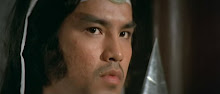
"He truly took great care of
people around him, and he was very willing to help the younger
generation. He was a treasure of the film industry."--Chow Yun Fat on Master Liu Chia Liang's death.
 The vain, yet romantic Liu Chia Liang entered the 1980s helming a set of back-to-back box office hits. Offscreen, his personification of Chinese kung fu was just as important. Not only was he heavily involved in charity and martial arts events, he would mentor even more actors (including Eric Tsang Chi Wai, Yuen Te and Adam Cheng [see insert], and current instructor of Lau's Hung Fist, Mark Houghton). Moreover, the 80s would contain numerous, sometimes devastating obstacles for the master martial artist to traverse.
 LEGENDARY
WEAPONS OF CHINA (1982) was Liu Chia Liang's inaugural motion picture
for the 1982 year. The cast was his usual stock of capable performers,
but with the addition of Alexander Fu Sheng. Chang Cheh made him famous
in 1973, and the young actor was incredibly loyal to him -- much like a
son to his father; and that's the way their relationship was perceived. When the actor finally went to work for other directors, he was eventually mentored by Master Liu once more. He would appear in a few of his films leading up to the young actors death in 1983.
But prior to that, Liu Chia Liang put the
characteristically impish demeanor of Fu Sheng into overdrive -- first
playing a faux spiritual boxer in LEGENDARY WEAPONS OF CHINA; then a
co-starring role opposite Adam Cheng in the colorful, but painful CAT
VS. RAT (1982); and finally, another co-starring role in 8 DIAGRAM POLE
FIGHTER (1984).
 Plot
wise, Fu's grating portrayal operates as a red herring, but thankfully,
the director packs in enough spectacular action sequences to make up
for the films early segue into nonsense. LEGENDARY WEAPONS starts off
like gangbusters with a Darth Vaderish Chu Te Hu commanding subordinates
to gouge out their eyes and rip off their extremities! Voodoo style
kung fu and lots of magic tricks are trotted out via the evil Mao Shan
priests. Director Liu complements his love letter to ancient Chinese
weapons by giving each of the 18 implements the spotlight throughout the
picture, and encores them all in rapid succession during the climactic
duel.
DISCIPLES OF THE MASTER: WONG YU (real name Wang Chi-chuan)
 |
| Wong Yu (left) cons Lo Mang in LION VS. LION (1980) |
 |
| As a young assassin in THE FLYING GUILLOTINE (1975) |
Debuting in Li Han Hsiang's FACETS OF LOVE (1973) as the Emperor, Wong Yu (sometimes listed as Huang Yu, or Young Wang Yu)
was selected by Liu Chia Liang for his breakout role in THE SPIRITUAL
BOXER (1975). The young actor found fame under the tutelage of Master
Liu, and expanded his resume under other directors like Sun Chung. His
popularity allowed him to live comfortably, but he was never a huge
star, and didn't have much staying power after Shaw's closed in 1985.
Wong Yu was also an entrepreneur involved in a gasoline business in
North America. Diagnosed with a chronic disease in 1980, Wong
contemplated leaving the movie industry multiple times during his Shaw
tenure. In later years, personal and health problems (heart and brain surgeries) took their toll on him. At just 53, and reportedly living in poverty, he died from hepatitis in May of 2008.
 For
the most part, Liu's previous movies were very successful. LEGENDARY
WEAPONS OF CHINA no doubt shocked everybody when it grossed
approximately 10 million in Hong Kong alone. It ended up being the
directors biggest hit of his Shaw Brothers years. The picture was in
competition with Jackie Chan's DRAGON LORD (1982) released on the same day. To put things into perspective, Jackie Chan had reinvented the genre in 1978, reaching a box office pinnacle in 1980 with the release of THE YOUNG MASTER. Shortly thereafter, he was one of the leaders in a New Wave style that usurped the old, practical style of HK filmmaking. Chan's DRAGON LORD
grossed approximately $18 million. Furthermore, Chang Cheh's FIVE
ELEMENT NINJAS (1982), released in April of that year, pulled in a
meager $1.6 million.
Over the course of his career, Liu Chia Liang had subverted genre conventions to suit his vision. He now had a sizable smash on his hands versus the encroaching New Wave, and Jackie Chan's one after the other blockbusters.
 |
| Filming CAT VS. RAT in 1982 |
Unfortunately, he followed LEGENDARY WEAPONS up with CAT
VS. RAT -- a rather tired, irrepressibly childish picture. The storyline
involving two rival youngsters constantly trying to outdo one another
had been done multiple times already, and the unbearable comedy does the
film no favors. The choreography is good, of course. The cramped sets
were indicative of stormy weather ahead for Shaw Brothers.
 The
same applies to the directors THE LADY IS THE BOSS (1983); although
it's a vast improvement. Essentially a modernized, 80s reworking of MY
YOUNG AUNTIE (1981), the fights take a backseat to pervasive comedy as
the cast shouts their lines as quickly as possible. Master Liu does make
an effort to dichotomize tradition with modernity, but this is merely
recycled and updated from his AUNTIE picture; and the topic isn't
elaborated upon. However, seeing the directors stable of actors decked
out in 80s attire and reliving characters of past hits is a nice touch.
An added bonus is seeing throngs of patrons waiting to see Tang Chia's
SHAOLIN PRINCE (1983) at Shaw's Rex Theater!
 Speaking
of Tang Chia (see insert pic), the former choreographing partner to Liu Chia Liang was
somersaulting into the directorial arena himself in 1982. The humble
action designer began an ever so brief gig as a director with the wild
wuxia-fantasy fan favorite SHAOLIN PRINCE (1983). Tang's turn as a
director was highly touted, and his long-time friend, Master Liu was
excited for him -- even if Tang wasn't particularly thrilled about the
added responsibility. He directed only two more features culminating in
the exciting, if rushed OPIUM & THE KUNG FU MASTER (1984); which
could have been a Liu Chia Liang film.
DISCIPLES OF THE MASTER: HSIAO HOU (real name Hao Yiu Chung)
 |
| Hsiao Hou (right) in DISCIPLES OF THE 36TH CHAMBER |
 Another discovery of Master Liu/Lau was this agile,
Peking Opera trained martial artist. Like many of Chang Cheh's stock
players, Hsiao Hou was a prominent performer in Liu Chia Liang's movies.
He got a shot at a co-starring role alongside his master in the fan
favorite, MAD MONKEY KUNG FU in 1979. He never caught on as a leading
man, but he got one more go at it in 1985s disappointing DISCIPLES OF
THE 36TH CHAMBER where he played famous folk hero, Fong Shih Yu. Towards the end of his Shaw tenure and beyond, Hsiao
Hou (his name translates to 'little monkey') was resigned to supporting
roles, or bit parts. Up to the mid 1990s, he managed to thrive as an action choreographer and
stuntman. His resume includes a
number of pictures for Sammo Hung.
 It
was also around this time the Shaw's were losing their place in Hong
Kong cinema. Since the start of the 1980s, their audience (in HK, anyways) grew increasingly weary of their old fashioned approach to filmmaking (much like what happened to Hammer in the 1970s). The Shaw's soldiered on making one action period piece after another as these types of pictures were vital to their
overseas markets. It allowed them to thrive a bit longer in this
respect. But in HK, patrons were gradually flocking to the new wave
style of productions at Golden Harvest and other up and coming studios.
The same could be said of Master Liu's movies during this
period. Whether this was due to a noticeable decline in Shaw's
production values, or a disinterest on the part of Liu, himself, his
films lacked the luster of his works from the previous decade. Although
he had one great movie left in him before the Shaw's closed their doors.

This depressive mood is stamped all over Liu's 8 DIAGRAM
POLE FIGHTER (1984). Despite Fu Sheng's death during production, this
one was a serious affair from the start. Begun as 'The Heroic Family' in May of 1981, the bulk of the film was already completed with shooting continuing right up to Fu's fatal car accident.
 Around this time in 1981, Fu Sheng was interested in becoming a movie director, himself. With the help of the Lau brothers and Wong Jing, Fu began work on WITS OF THE BRATS (1984; see insert photo) during this time frame. The actors death on July 7th, 1983, left his film unfinished, as well as POLE FIGHTER. The last we see of Fu's character in Liu's picture, he's told he must testify at court for Poon Mei's treachery and he's not seen again.
Work on Liu Chia Liang's 'The Ten Heroes of Shaolin' was likewise postponed; and when it was completed, it had turned into the third 'Master Killer' movie, DISCIPLES OF THE 36TH CHAMBER (1985).
 |
| Liu sits to himself at Fu Sheng's funeral in 1983. |
 POLE FIGHTER was a modest success, yet it's fondly remembered as one of Liu's greatest efforts today. DISCIPLES (see magazine promo insert pic)
fared less well at the box office. The Shaw's were making the
transition solely to television, leasing their studio out to other
companies, so this picture was seemingly dumped onto a public that
couldn't care less. Even the poster design is lackadaisical and bland.
It doesn't even utilize any images from the film! A shot of Gordon Liu
from POLE FIGHTER and Hsiao Hou from LEGENDARY WEAPONS are front and
center. The film itself is a tired retread of Ming vs. Qing with folk
hero Fong Shih Yu at the forefront and San Te (played by Gordon Liu this time) as a supporting character. The final fight is spectacular, and the sole saving grace of this weak sequel.
 |
| Liu and his first wife Ho Sau Ha (left of him) and four daughters from first marriage. |
 |
| Liu and soon-to-be wife, Yung Jing Jing in 1983. |
Even with the Shaw Brothers studio output at a low ebb
and the death of Fu Sheng, all wasn't gloomy for the passionate martial
arts movie-maker. Throughout his career, Liu Chia Liang was reported to
be quite the ladies man -- even when he was married to his first wife,
Ho Sau Ha. He was most famously associated with his frequent kung fu
starlet, Hui Ying Hung. In 1983, he was often seen with a much younger
actress (29 years his junior), Yung Jing Jing (Mary Jean Reimer). In 1987, the two married (although it was rumored they had married in 1984).
Just like in his movies, Master Liu believed in family. He had four
daughters and a son with first wife, Ho Sau Ha, and two daughters with
the woman he remained with for 26 years till his death. Both families
were by his bedside when he passed.
 Immediately
after the closing of Shaw's studio doors, Master Liu didn't sit idly
by. Unlike some of his colleagues, he made a successful transition to
Hong Kong's New Wave style, and remained a viable force for about ten
more years. His post-Shaw hits include the Jet Li vehicle MARTIAL ARTS
OF SHAOLIN (1986) aka SHAOLIN TEMPLE 3. The star-studded modern day
actioner TIGER ON THE BEAT (1988) is another -- which may as well have
been a Shaw production with all the former luminaries on hand. One of the highlights is a spectacular chainsaw duel between Gordon Liu and Conan Lee (see insert).
The esteemed old man of kung fu worked with Americans for the first time in 1993s TEENAGE MUTANT NINJA TURTLES 3: TURTLES IN TIME. According to Liu, Raymond Chow sent him to work on the film for a week. He designed 11 action sequences in 7 days, although it appears none of his work survived the finished version. Then there's DRUNKEN MASTER 2 (1994). It had Liu directing Jackie Chan in the first of two non-Shaw Wong Fei-hung movies.

DM2 is of interest because of the controversy surrounding
it. Much like the relationship between Liu and Chang Cheh had soured
over time, the collaboration of these two titans of kung fu cinema
dissolved much quicker. Both men have strong personalities that just
didn't match. It was life imitating art -- like the familiar plot device
pitting tradition against modernism found in Liu's Shaw pictures.
Problems arose between the two with Liu's traditional style clashing
with Chan's new style. This resulted in Master Liu's exit from the picture.
The
embittered elder filmmaker retaliated rushing out a DRUNKEN MASTER 3
(1994) without Chan's involvement. It performed poorly. He was redeemed
to a degree by receiving a Best Choreography award for DRUNKEN MASTER 2.
Unfortunately, he was diagnosed with lymphomatic cancer the same year.
DISCIPLES OF THE MASTER: YANG TSING TSING (Yueng Ching Ching)

 Yang Tsing Tsing (sometimes listed as Yan Ching Ching)
was a petite practitioner of martial arts hired by Liu Chia Liang.
She was only 16 when she joined Shaw's in 1979. Her first role of substance was in the kung
fu comedy, EVERY MAN FOR HIMSELF. She was also working on TWO CHAMPIONS
OF SHAOLIN and CLAN OF THE WHITE LOTUS (all three 1980) at the
same time. She was a
magnificent martial artist, but alas, a breakout performance eluded
her. Even so, she graced a number of wuxia and kung fu favorites with
her fighting prowess and presence. Arguably her most significant role
was as Wang Lung Wei's
mute, but deadly girlfriend in THE TREASURE HUNTERS (1981). The majority
of her roles
were as sidekicks, or bodyguard/assassin types; and when Shaw's
closed, she thrived as a stunt double and action choreographer in other
films and on television. Ann Hui's AH KAM (1996) aka THE STUNTWOMAN, is
based on her life.
When
the news broke in 2000 that the old Shaw Brothers catalog of movies
were being restored for release on DVD, it was hoped a return to old
style kung fu would be revived with it. The Shaw's themselves attempted
resurrection with a BOXER FROM SHANTUNG (1972) remake entitled HERO in
1997 starring Takeshi Kaneshiro and Yuen Biao.

Sadly, that film performed poorly. With anticipation of
the Shaw restorations, Liu Chia Liang was leading the charge of this
second wave of Shaw Brothers revivification. DRUNKEN MONKEY (2003) was
intended to be a breath of fresh air in contrast to all the CGI enhanced
Wuxia pictures that had dominated Chinese movie screens since the
release of STORM RIDERS in 1996.

Yet again, a new era of Shaw productions was denied when
DRUNKEN MONKEY failed miserably at the HK box office. Bolstered by a
cast of old hands in top form such as Gordon Liu and Chi Kuan Chun (as well as director Liu),
and up and comer Wu Jing, the action was spectacular; but marred by a
thick, penetrating aura of comical shenanigans. The failure of DRUNKEN
MONKEY was the end of Liu Chia Liang's directorial career.
 He
acted in, and co-choreographed one more movie -- SEVEN SWORDS (2005)
from Tsui Hark. A case of pneumonia during the shoot aggravated his
condition. Liu Chia Liang would leave the limelight of the silver screen
never to return before the camera. In 2010, he received a Lifetime Achievement Award at the 29th Annual HK Film Awards. That same year in May, it was reported he would act as an advisor on Wong Kar Wai's THE GRANDMASTER (2013). His nephew, Jimmy Liu, took a role in that picture as a Hung Gar fighter. By 2011, it was reported Master Liu had to receive blood transfusions on a regular basis.

 Then on
June 25th, 2013, martial arts cinema lost one of, if not its greatest,
purely authentic representative of the Chinese arts in Asian motion
picture history. There were others who were devout towards their art,
but none so steadfast and resolute as the Master, Liu Chia Liang/Lau Kar
Leung. Born in 1936 (the actual month and date varies), his 76 years on this earth were filled with numerous successes, disappointments, triumphs and tragedies the likes of which many of us will never experience.
He may be gone, but he'll never be forgotten so long as we, the fans
have his movies and the memories shared by those he mentored, knew him,
and loved him.
THE END
 "We want to show our foreign fans that, although the Chinese people are small in stature, we are good fighters..."-- Liu Chia Liang in Southern Screen, July 1977 page 30.
 |
| Shooting the opening scene of 36TH CHAMBER OF SHAOLIN |
THE 36 CHAMBERS OF SHAOLIN (1978) was essentially Master Liu's version of Chang Cheh's SHAOLIN TEMPLE ([1976]; it even included a brief expansive shot from that film showing the inside of the temple set).
Easily one of the best movies of its kind to depict the actual training
of Chinese kung fu, Liu again manages to weave some genuine pathos for
his characters keeping them grounded in reality and overly sympathetic. This was in direct opposition to the adrenaline charged, testosterone fueled masculinity of Chang's pictures.
Liu's
magnum opus took 3 months to complete and employed upwards of 500
extras. All the hard work paid off handsomely, as the film was a huge
success. The directors devotion to Chinese martial arts is embedded in
virtually every frame. It's a brilliant movie from a brilliant director.
 Chang
Cheh's massive Shaolin spectacle was episodic in structure detailing an
array of characters and featuring many training sequences leading up to
a 30 minute battle at the end. When Liu Chia Liang made 36TH CHAMBER,
his film was equally sprawling, but put the central focus on a single
character -- the historical monk, San Te essayed to perfection by Gordon
Liu. He magnified the amount of kung fu training sequences going into
much greater detail than had been seen before. What was ingenious about
this was that through the meticulous, and varied training methods (detailing how the monks became martial arts masters)
San Te endures, the character is gradually built before our eyes. It's
one of the most fascinating character arcs ever seen in a martial arts
film. You're virtually watching a young boy grow up to be a man within a
two hour time span. It's easy to see why this film is so well regarded today.
 |
| Behind the scenes on 36TH CHAMBER OF SHAOLIN with Master Liu Chia Liang (middle) |
 |
| Master Liu cuts his adopted brothers hair for his iconic role. |
There
were many great kung fu movies, and many great directors of kung fu
movies. Liu Chia Liang was unique in that he was a martial artist making
them. He was always interested in delivering top kung fu pictures for
the domestic Asian markets. But now, he was recognized outside of Asian
territories. His enormous success and accolades seemed to imbue the
director with a desire to impress his foreign fans as well.
Unfortunately, this all seemed to change by 1980. Still, there was much
for the director to celebrate, and it was a great time to be Liu Chia
Liang and his adopted brother, Gordon Liu.
ALL IN THE FAMILY: JIMMY LIU CHIA YUNG (real name: Ho Chi-hung)
 |
| DRAGON'S CLAWS (1979) |
 |
| THE TIGRESS OF SHAOLIN (1979) |
The
youngest of the Liu/Lau family of fighters, Jimmy Liu is the nephew of
Liu Chia Liang. He had a good look about him, but he never hit it big in
movies. Some of the films he headlined were clones of whatever was popular
at the time, while others were barrel scrapers of the highest order.
His sole starring role for Shaw Brothers in the disastrous TIGRESS OF
SHAOLIN (1979) is a superb example of the latter. And who could forget
him being raped by a homosexual ghost in THE FEARLESS DUO (1978)? Even
Hwang Jang Lee couldn't save that one. He did co-star in the Lau Brothers production, CARRY ON WISEGUY (1980) aka WARRIOR FROM SHAOLIN. Two other pictures he starred in -- CRAZY COUPLE and DRAGON'S CLAWS (both 1979) were run of the mill, but worth watching. The latter film benefits from a lead villain performance by
Hwang Jang Lee. Jimmy Liu didn't confine his showbiz prowess solely in
front of the camera. He also operated in other duties behind it, as
well. Reportedly, he's still active today as a kung fu instructor.
 |
| L-R: Master Liu, David Chiang, Cecilia Wong; SHAOLIN MANTIS |
Sandwiched
between two of the directors greatest movies was possibly his oddest,
most divisive film for Shaw Brothers. While equally subversive (particularly in its treatment
of protagonist and antagonist) when compared to both his first movie, and HEROES OF THE EAST (which was also in production at the time),
SHAOLIN MANTIS (1978) was an unusual blend of Liu's typical
familial martial values mixed with a tragic plot line. The typical hero
role is made complicated for this film clouding discernment as to
whether he's actually a good guy or bad guy. The proposed hero is sent
by the tyrannical Qing emperor to uncover a powerful family of
government rebels. He manages to get close to the family to learn their
secret, even marrying the daughter in the process!
It
sets up a bewildering arc that confuses the audience on how they should
feel regarding the lead character. It's both a unique plot contrivance,
and also the films greatest detriment. Liberties are also taken in the creation of the Mantis style. It's simply a bizarre movie all around, but a rather daring experiment for the esteemed director.
 |
| Liu Chia Yung (left) fights David Chiang (right) during finale of SHAOLIN MANTIS |
Whatever ones opinion of SHAOLIN MANTIS, there's no denying that Master Liu made David Chiang (he's known as John Chiang nowadays) look the best he'd ever looked in a kung fu movie (he was also impressive in THE CHALLENGER [1979] and THE LOOT [1980]). Earlier in the decade, David was known as the 'Movie King'
at Shaw's for his popularity with fans and the number of box office
hits he was attached to. He was believable in swordplay films, but his
hand-to-hand failed to convince at times. Liu made him look good. Chiang
got a second wind at this point in his career, and headlined a slew of
kung fu movies in the late 1970s and into the early 1980s.
 |
| David Chiang (left) battles Gordon Liu (right) in SHAOLIN MANTIS |
Gordon
Liu has a guest star turn at the opening of SHAOLIN MANTIS playing a
bald shaolin monk ordered to fight Chiang's character in a duel.
Speaking
of Gordon Liu, his bald head became such an iconic image, that to see
him in a movie sporting a head full of hair seemed downright bizarre.
And seeing him with hair in his next movie is at first odd, but it's
such a great film, you soon separate the familiarity of San Te from
Gordon Liu.
 |
| Cast photo for Liu Chia Liang's production of HEROES OF THE EAST |
 |
| Gordon Liu and Yuka Mizuno promoting HEROES OF THE EAST |
Master
Liu continued his own brand of innovation with his next project, HEROES
OF THE EAST (1978). Working with the tentative title of 'The Heroic Chinese', Liu's next film was essentially the polar opposite of all the blood and viscera strewn 'Chinese vs. Japanese'
fist and kick flicks that dominated the early part of the 1970s. Liu's
film trades violence and generous splashes of red for a battle of the
sexes that leads to a serious misunderstanding between the two cultures.
What follows is a series of intricate duels wherein Gordon Liu takes on
a new Japanese villain each with their own varied style of martial art.
Peppered
with highlights, the Shaw's were apparently confident they had another
hit on their hands as HEROES OF THE EAST was heavily promoted in their
magazine publications. The Japanese heavy cast was ballyhooed to a great
degree, most especially the participation of Yasuaki Kurata and the
gorgeous model, Yuka Mizuno.
 |
| L-R: Gordon Liu, Yuka Mizuno, Liu Chia Liang |
In
the end, Liu had outdone himself yet again with this subversive take on
a familiar storyline packed with incredible, ingenious fighting
sequences. It's all the more amazing in that nobody dies. Chang Cheh,
and Shaw Brothers movies in general were renowned for their countless,
gory martial arts movies. Unlike most directors, Liu Chia Liang focused
more attention to family and tradition than to blood and guts.
From
here on out, Liu Chia Liang's movie career would be dominated by kung
fu pictures saturated with increasingly grating comedy shenanigans. The
films themselves were a delight in the intricacies of the fight
sequences, but often the heavy-handed humor made for a difficult viewing
experience at times. Save for one motion picture, all of Liu's Shaw
movies from this point on would contain a thick aura of comedy, or
operate as kid friendly entertainment.

This was readily apparent in Liu's next two movies -- DIRTY HO and MAD MONKEY KUNG FU (both 1979).
The humor is concentrated in the former -- born out of certain
characters parcel to some jarringly bizarre battles; but it points
towards the sort of extreme silliness Liu's movies were angling for in
subsequent pictures. The latter is non-stop action laced with near
constant goofiness.
 |
| Behind the scenes on DIRTY HO; Liu Chia Liang at right |
The
English title of DIRTY HO refers to the conman character played by Wong
Yu. The plot is somewhat complicated, if cynical in execution.
Essentially, it's the tale of the 11th Prince covertly mingling amongst
commoners while manipulating a petty thief to help eliminate a string of
assassins hired by 4th Prince, Frankie Wei Hung to keep him from
ascending the throne. The final scene, while humorous, is pessimistic as
the prince discards Ho after he's served his purpose; much like you
would a piece of garbage. The 11th Prince basically wants his cake and
eat it, too. Slaves aren't to question, but only do, and that's how
Gordon Liu's character shows himself to be come the finale.
DIRTY HO features some of the directors most creative choreography; most particularly in the 'congenial duels'
found throughout -- a number of fights take place while hidden under
the guise of a friendly conversation. For example, everyone else is
oblivious to the fact that two men are trying to kill each other while
sharing their love for art!

Both
here and in MAD MONKEY KUNG FU, Master Liu devises creative fighting
sequences that are enhanced by the artfully designed Shaw sets. MAD
MONKEY KUNG FU is a particularly irritating movie, but the fights save
it, and that's really all it has going for it. Liu Chia Liang not only
directed and designed the plethora of action, but he took the lead role,
as well. Master Liu often took small roles in his films, but this was
the first time he'd taken the lead. His student, Hsiao Hou, co-stars (see above photo),
but he fails to be a memorable presence despite being an incredible
acrobat and kung fu performer. The film is very popular among fans, and
it probably has the most action of all the films on the directors
resume.
DISCIPLES OF THE MASTER: HUI YING HUNG
 |
| Hui Ying Hung both castrates and guts Wang Lung Wei in 8 DIAGRAM POLE FIGHTER |
 |
| L-R: Hui, Chiang Sheng, Sun Chien; INVINCIBLE SHAOLIN |
Reportedly
spotted by a Shaw talent scout, Kara Hui Ying Hung was a nightclub
dancer before Chang Cheh put her in a few of his movies including THE
BRAVE ARCHER (1977) and INVINCIBLE SHAOLIN (1978). She signed with the
company in February of 1975. Other early roles include an assaulted teen
in Kuei Chi-Hung's nasty CRIMINALS 5: TEENAGERS NIGHTMARE (1977) and
came to a tragic end in Wang Feng's obscure THE LAST JUDGMENT (1979).
Having learned martial arts from her sisters prior to appearing in
movies, she didn't get a chance to do much in the way of fighting till
her co-starring role in the awful THE TIGRESS OF SHAOLIN (1979). From
1981 onward, she got many fighting roles, most famously in the works of
Liu Chia Liang. She won a Best Actress award for her role in MY YOUNG
AUNTIE (1981) aka THE ELDER. She was also alleged to have been
romantically involved with Liu. Her brother was the late Austin Wai Tin Chi. Kara has had one of the longest careers of any HK movie actress, and still appears in motion pictures today.
 In
1979, Lo Lieh was given an opportunity to fulfill his dream of
directing a film solely of his own. That particular movie was CLAN OF
THE WHITE LOTUS (1980). Operating as something of a sequel/remake of Liu
Chia Liang's EXECUTIONERS FROM SHAOLIN (1977), the revered Master Liu
helped out his friend by choreographing all the marvelous fight scenes.
Lo Lieh even played the White Lotus of the title -- the superior
colleague of the now dead White Brow Priest, Pai Mei. The team-up of Lo and Liu (see insert photo) was a much ballyhooed event at the time.
 Sometime around the completion of MAD MONKEY KUNG FU (1979), Liu's temperament changed. Despite his wealth (he had an affinity for fancy cars) and popularity, Master Liu became disenchanted with the company. As relayed to Chang Cheh by Sir Run Run Shaw himself, Liu was not "someone for long-term partnerships."
His sense of pride and
ego seemingly got the best of him at times. His relationship had soured
with Chang Cheh in 1975, and a few years later, the same had happened
between him and the Shaw's. Whereas at one time he seemed eager for international appeal,
he had now changed that sentiment, too. Still, he remained constant in
always displaying traditional Chinese martial arts onscreen with
superlative choreography.
 Liu
left the company briefly to work with his brother on a few independent
films under the Lau Brothers Film Company banner. Liu didn't direct any
of these, only designed the action sequences. Reportedly, Liu was an
avid gambler on horse races, but luck wasn't on his side when it came to making independent movies.
He eventually returned to Shaw's, and to familiar territory, with RETURN TO THE 36TH CHAMBER and MY YOUNG AUNTIE. The Shaw's, obviously excited about the potential of Liu's 36TH CHAMBER sequel, entered the picture at Cannes; but Liu was reportedly not interested in this sort of exposure. It's worth noting that Liu Chia Liang took a huge gamble with RETURN by having Gordon Liu play an entirely different character the second go round.
MY
YOUNG AUNTIE (1981) is arguably the more interesting of the two; mostly
in the way the director bridges the generation gap while presenting
Western influence on Eastern culture. Some fans dislike Fu Sheng for his
impish antics, but Liu Chia Liang lets his disciple Hsiao Hou run wild
seemingly every time. He's a marvel to watch onscreen, but too often he appears to suffer from ADD.
 |
| Liu Chia Liang battles Korean, Kwan Young Moon (right) in MY YOUNG AUNTIE |
 |
| Director Liu instructs Mai Te Lo in MY YOUNG AUNTIE |
Both films are incredibly silly, and despite being suitable for the entire family (nobody dies in these two, either), the oppressive, forced humor may be too much for some viewers to take.
Overly exaggerated comedy was a staple of Liu's movies beginning in
1980. Even predominantly serious films like LEGENDARY WEAPONS OF CHINA
(1982) wasn't immune to irksome humor (not to mention some scenes being backed by annoyingly shrill music). However, the fight sequences remained incredible, and both those pictures (RETURN and AUNTIE)
benefited from supporting villain roles from Chuan Yung-wen aka Kwan
Young Moon; a Korean Taekwondo expert familiar to kung fu movie fans.
 |
| Director Liu on set of MARTIAL CLUB |
The silliness continued with 'The Gyms'; or MARTIAL CLUB as it was known upon its theatrical release in 1981. This was Master Liu's favorite of his films (previously it was HEROES OF THE EAST),
and considering his upbringing and early career pre-Shaw's, it's not
hard to understand why. MARTIAL CLUB contains some of the directors best
work, and it's obvious the subject of a young Wong Fei-hung amidst
rival gyms was close to the directors heart. Master Liu tinkered with
cinematic tropes once more -- this time in having perennial villain,
Wang Lung Wei play a good guy! The film is one of the best kung fu films ever made, and while the comedy is prolific, it's not nearly as abrasive as it is in some of the directors other productions. Strangely enough, it was titled INSTRUCTORS OF DEATH on these shores despite nobody dying in the movie.
 |
| Liu Chia Liang and his brother Liu Chia Yung (right) |
It
was around this time that the troubled actor, Alexander Fu Sheng would
star alongside his brother, Chang Chan Peng, in Liu Chia Yung's
hilarious THE TREASURE HUNTERS (1981). He would also become a pupil of
Liu Chia Liang, and star in a few of his movies. This meant there were
more overwrought comedy scenarios coming, but also some true kung fu
classics. An example of the latter began shooting in May of 1981 as 'The Heroic Family'.
With virtually zero humor, it was to be the directors most serious,
gloomy work yet; and ultimately proved so in more ways than one.
FINAL INSTALLMENT TO BE CONTINUED IN PART 3
copyright 2013. All text is the property of coolasscinema.com and should not be reproduced in whole, or in part, without permission from the author. All images, unless otherwise noted, are the property of their respective copyright owners.


 The vain, yet romantic Liu Chia Liang entered the 1980s helming a set of back-to-back box office hits. Offscreen, his personification of Chinese kung fu was just as important. Not only was he heavily involved in charity and martial arts events, he would mentor even more actors (including Eric Tsang Chi Wai, Yuen Te and Adam Cheng [see insert], and current instructor of Lau's Hung Fist, Mark Houghton). Moreover, the 80s would contain numerous, sometimes devastating obstacles for the master martial artist to traverse.
 LEGENDARY
WEAPONS OF CHINA (1982) was Liu Chia Liang's inaugural motion picture
for the 1982 year. The cast was his usual stock of capable performers,
but with the addition of Alexander Fu Sheng. Chang Cheh made him famous
in 1973, and the young actor was incredibly loyal to him -- much like a
son to his father; and that's the way their relationship was perceived. When the actor finally went to work for other directors, he was eventually mentored by Master Liu once more. He would appear in a few of his films leading up to the young actors death in 1983.
 Plot
wise, Fu's grating portrayal operates as a red herring, but thankfully,
the director packs in enough spectacular action sequences to make up
for the films early segue into nonsense. LEGENDARY WEAPONS starts off
like gangbusters with a Darth Vaderish Chu Te Hu commanding subordinates
to gouge out their eyes and rip off their extremities! Voodoo style
kung fu and lots of magic tricks are trotted out via the evil Mao Shan
priests. Director Liu complements his love letter to ancient Chinese
weapons by giving each of the 18 implements the spotlight throughout the
picture, and encores them all in rapid succession during the climactic
duel.


 For
the most part, Liu's previous movies were very successful. LEGENDARY
WEAPONS OF CHINA no doubt shocked everybody when it grossed
approximately 10 million in Hong Kong alone. It ended up being the
directors biggest hit of his Shaw Brothers years. The picture was in
competition with Jackie Chan's DRAGON LORD (1982) released on the same day. To put things into perspective, Jackie Chan had reinvented the genre in 1978, reaching a box office pinnacle in 1980 with the release of THE YOUNG MASTER. Shortly thereafter, he was one of the leaders in a New Wave style that usurped the old, practical style of HK filmmaking. Chan's DRAGON LORD
grossed approximately $18 million. Furthermore, Chang Cheh's FIVE
ELEMENT NINJAS (1982), released in April of that year, pulled in a
meager $1.6 million.

 The
same applies to the directors THE LADY IS THE BOSS (1983); although
it's a vast improvement. Essentially a modernized, 80s reworking of MY
YOUNG AUNTIE (1981), the fights take a backseat to pervasive comedy as
the cast shouts their lines as quickly as possible. Master Liu does make
an effort to dichotomize tradition with modernity, but this is merely
recycled and updated from his AUNTIE picture; and the topic isn't
elaborated upon. However, seeing the directors stable of actors decked
out in 80s attire and reliving characters of past hits is a nice touch.
An added bonus is seeing throngs of patrons waiting to see Tang Chia's
SHAOLIN PRINCE (1983) at Shaw's Rex Theater!
 Speaking
of Tang Chia (see insert pic), the former choreographing partner to Liu Chia Liang was
somersaulting into the directorial arena himself in 1982. The humble
action designer began an ever so brief gig as a director with the wild
wuxia-fantasy fan favorite SHAOLIN PRINCE (1983). Tang's turn as a
director was highly touted, and his long-time friend, Master Liu was
excited for him -- even if Tang wasn't particularly thrilled about the
added responsibility. He directed only two more features culminating in
the exciting, if rushed OPIUM & THE KUNG FU MASTER (1984); which
could have been a Liu Chia Liang film.

 Another discovery of Master Liu/Lau was this agile,
Peking Opera trained martial artist. Like many of Chang Cheh's stock
players, Hsiao Hou was a prominent performer in Liu Chia Liang's movies.
He got a shot at a co-starring role alongside his master in the fan
favorite, MAD MONKEY KUNG FU in 1979. He never caught on as a leading
man, but he got one more go at it in 1985s disappointing DISCIPLES OF
THE 36TH CHAMBER where he played famous folk hero, Fong Shih Yu. Towards the end of his Shaw tenure and beyond, Hsiao
Hou (his name translates to 'little monkey') was resigned to supporting
roles, or bit parts. Up to the mid 1990s, he managed to thrive as an action choreographer and
stuntman. His resume includes a
number of pictures for Sammo Hung.
 It
was also around this time the Shaw's were losing their place in Hong
Kong cinema. Since the start of the 1980s, their audience (in HK, anyways) grew increasingly weary of their old fashioned approach to filmmaking (much like what happened to Hammer in the 1970s). The Shaw's soldiered on making one action period piece after another as these types of pictures were vital to their
overseas markets. It allowed them to thrive a bit longer in this
respect. But in HK, patrons were gradually flocking to the new wave
style of productions at Golden Harvest and other up and coming studios.

 Around this time in 1981, Fu Sheng was interested in becoming a movie director, himself. With the help of the Lau brothers and Wong Jing, Fu began work on WITS OF THE BRATS (1984; see insert photo) during this time frame. The actors death on July 7th, 1983, left his film unfinished, as well as POLE FIGHTER. The last we see of Fu's character in Liu's picture, he's told he must testify at court for Poon Mei's treachery and he's not seen again.

 POLE FIGHTER was a modest success, yet it's fondly remembered as one of Liu's greatest efforts today. DISCIPLES (see magazine promo insert pic)
fared less well at the box office. The Shaw's were making the
transition solely to television, leasing their studio out to other
companies, so this picture was seemingly dumped onto a public that
couldn't care less. Even the poster design is lackadaisical and bland.
It doesn't even utilize any images from the film! A shot of Gordon Liu
from POLE FIGHTER and Hsiao Hou from LEGENDARY WEAPONS are front and
center. The film itself is a tired retread of Ming vs. Qing with folk
hero Fong Shih Yu at the forefront and San Te (played by Gordon Liu this time) as a supporting character. The final fight is spectacular, and the sole saving grace of this weak sequel.


 Immediately
after the closing of Shaw's studio doors, Master Liu didn't sit idly
by. Unlike some of his colleagues, he made a successful transition to
Hong Kong's New Wave style, and remained a viable force for about ten
more years. His post-Shaw hits include the Jet Li vehicle MARTIAL ARTS
OF SHAOLIN (1986) aka SHAOLIN TEMPLE 3. The star-studded modern day
actioner TIGER ON THE BEAT (1988) is another -- which may as well have
been a Shaw production with all the former luminaries on hand. One of the highlights is a spectacular chainsaw duel between Gordon Liu and Conan Lee (see insert).


 Yang Tsing Tsing (sometimes listed as Yan Ching Ching)
was a petite practitioner of martial arts hired by Liu Chia Liang.
She was only 16 when she joined Shaw's in 1979. Her first role of substance was in the kung
fu comedy, EVERY MAN FOR HIMSELF. She was also working on TWO CHAMPIONS
OF SHAOLIN and CLAN OF THE WHITE LOTUS (all three 1980) at the
same time. She was a
magnificent martial artist, but alas, a breakout performance eluded
her. Even so, she graced a number of wuxia and kung fu favorites with
her fighting prowess and presence. Arguably her most significant role
was as Wang Lung Wei's
mute, but deadly girlfriend in THE TREASURE HUNTERS (1981). The majority
of her roles
were as sidekicks, or bodyguard/assassin types; and when Shaw's
closed, she thrived as a stunt double and action choreographer in other
films and on television. Ann Hui's AH KAM (1996) aka THE STUNTWOMAN, is
based on her life.


 He
acted in, and co-choreographed one more movie -- SEVEN SWORDS (2005)
from Tsui Hark. A case of pneumonia during the shoot aggravated his
condition. Liu Chia Liang would leave the limelight of the silver screen
never to return before the camera. In 2010, he received a Lifetime Achievement Award at the 29th Annual HK Film Awards. That same year in May, it was reported he would act as an advisor on Wong Kar Wai's THE GRANDMASTER (2013). His nephew, Jimmy Liu, took a role in that picture as a Hung Gar fighter. By 2011, it was reported Master Liu had to receive blood transfusions on a regular basis.

 Then on
June 25th, 2013, martial arts cinema lost one of, if not its greatest,
purely authentic representative of the Chinese arts in Asian motion
picture history. There were others who were devout towards their art,
but none so steadfast and resolute as the Master, Liu Chia Liang/Lau Kar
Leung. Born in 1936 (the actual month and date varies), his 76 years on this earth were filled with numerous successes, disappointments, triumphs and tragedies the likes of which many of us will never experience.
He may be gone, but he'll never be forgotten so long as we, the fans
have his movies and the memories shared by those he mentored, knew him,
and loved him.