Monday, December 23, 2013

Conquest (1983) review


CONQUEST 1983

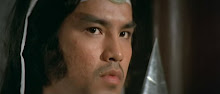
Jorge Rivero (Mace), Sabrina Sellers/Siani (Ocron), Andrea Occhipinti (Ilias)

Directed by Lucio Fulci

The Short Version: The famed king of close-ups and eyeball violence turns his attention to a stone-age version of CONAN THE BARBARIAN (1982) in this hazily lensed, plotless nonsense. This swordless sorcery substitutes iron age weaponry for stone axes and a pair of bone-chucks. CONQUEST features scores of Chewbacca-like wolfmen, teleporting zombies, batmen, stone-fishmen whatzits, prehistoric drug use, gore, and a naked Sabrina Siani writhing about with big snakes. With so much trash value you'd expect this numskull effort to be a ton of fun, but it's not. Only periodically of interest, this tale of not-so-high adventure is still among the best of the early 80s Italian Conan clones that came, saw and briefly conquered video store shelves around the world.


Ilias leaves his pacifist tribe armed with a magical bow to challenge the evil Ocron who terrorizes the land. Ilias meets up with a nomadic warrior named Mace. The two become friends and must battle Ocron's minions along the way.


With the popularity of Jean Jacques Annaud's QUEST FOR FIRE (1981) and John Milius's CONAN THE BARBARIAN (1982), Lucio Fulci ventured forth into prehistory with a quasi entertaining hybrid of his own. Melding caveman histrionics with sword and sorcery stylings (but minus the swords), Fulci's movie lacks a sense of adventure; which is an essential ingredient for this type of fantasy movie. Furthermore, this was the bane of virtually all the Italian Conan clones; yet some were able to take their lack of funds and make an unintentionally funny escapade out of it -- which doesn't apply in CONQUEST's case. It does have an unusual visual palette that doesn't always work in the films favor, either.

Whatever it is that's smeared on the camera lens, it does little but aggravate a virtually barren landscape that's already doused in perpetual fog. Some scenes are free of this gauze effect, but these are few and far between. When the action isn't drowning in mist and Vaseline, liberal doses of backlighting illuminate much of the movie. The film has always looked blurry, though; from its US VHS release through Media Home Entertainment to Blue Undergrounds DVD from 2004 (the DVD case lists a 93 minute running time while the film is actually just shy of 89 minutes, by the way).


Aside from the haze, the photography was handled by the accomplished cinematographer Alejandro Ulloa. His lens has captured the scenery from many fine European westerns, Paul Naschy horrors, giallos, and one of the best horror films of the 1970s, HORROR EXPRESS (1972). So whoever came up with the idea of obscuring Ulloa's efforts with that awful smearing effect made a massive error in judgment.


Hindering the controversial directors movie further is a plotline that's as sterile as the unattractive locations. Why it took four writers to formulate this non-cohesive barbarian blandness is anyone's guess. What little plot there is concerns a peaceful tribe terrorized by Ocron, a naked, snake-loving villainess with a golden mask on her head. She commands a race of wolfmen who go into caves and take naked women with flour covering their bodies so Ocron can suck out their brains. In a scene at six minutes in, a hapless girl has her legs spread as two of the Chewbacca creatures make a wish and split the girl in half lengthwise. Fulci presented this trick once again in his 1990 horror film, DEMONIA. 

 
The poor girls decapitated head is split open and the brains slurped out. How Ocron does this through her metal mask is never explained. In fact, very little is sufficiently explained in this movie. Had the rest of the film contained this level of savagery at a more even pace, we could have had a trash masterpiece to savor alongside Fulci's faves of this time period. 


Speaking of which, there are a few things here that recall the directors previous zombie movies. Once Mace reaches what is presumably the Valley of Evil (Ocron mentions it in passing, but it looks like any of the other locations seen in the movie), he's attacked by a slew of slow moving zombies that rise from a fog-encrusted swamp. Only these shuffling dead are simpler to kill; blows to the head are out and chest impalements are in. 


Apart from the mostly naked Ocron (played by popular barbarian babe, Sabrina Siani), and various stunt men in various full body monster suits, there's also a giant man in full metal regalia named Zora, who possesses evil powers. He resembles Redolphis, the metal-headed monster from the classic bad movie HERCULES AGAINST THE MOON MEN (1964).


In a bit of wild speculation that puts CONQUEST as some sort of fantasy prequel to Fulci's THE BEYOND (1981), Mace (Rivero) has a reversed symbol of Eibon on his forehead! Furthering the correlation, the dollops of fog and peculiar smeared look of the movie hint at an otherworldy doorway painted by Sweick in Fulci's much celebrated horror film. There's likely nothing to this, but considering there's little in this movie to maintain interest, something taken from a much better Fulci movie does enliven things a bit.

 
Jorge Rivero, a huge star in Mexico, is in the lead here as Mace, a nomadic barbarian whose only friend is a pair of bone-chucks he uses to battle enemies in an un-Bruce Lee style. Mace does make friends with Ilias, a young kid who resembles Michael Beck. Ilias is supposed to be on a journey to free his tribe from Ocron; but his mission is sidelined shortly after it's begun allowing Mace to take center stage. Again, the fragmented nature of the movie makes very little sense, and with four hands on the script, it has done the film no favors.


The script even flirts with a bit of BEASTMASTER (1982) conceits by hinting at Mace's connection with animals. This too is eventually tossed by the wayside. At one point, he's crucified and ends up in the ocean. Two dolphins rescue him after he's been submerged for far longer than is humanly possible. But then logic is not one of CONQUEST's strong points.


The script attempts to forge a father-son relationship between Mace and Ilias, but this too is haphazardly handled with inconsequential dialog strung together substituting for exposition. From some of this dialog, a bow and arrow is some sort of forbidden weapon as Mace states his land "is not ready for it". Ilias's bow is a special bow, of course. It fires laser arrows that home in on their targets!


Rivero hit further acclaim after co-starring with John Wayne in John Ford's RIO LOBO (1970). The same year, Rivero played Indian chief Spotted Wolf in the gruesome, gore-drenched western SOLDIER BLUE (1970).


The synth score by Claudio Simonetti of Goblin fame is extremely irritating, but one or two cues are easy on the ears. Even so, it's an unmemorable soundtrack that's just loud and frequently abrasive.


With little to recommend it, the gore and slow motion trampoline leaping monsters are this pictures sole diversions. Being an Italian-Spanish-Mexican co-production, the budget appears to have been painfully low. A curio in his filmography, CONQUEST (1983) is little more than a footnote in Fulci's career -- which was already on shaky ground at this point. For this reviewer, Fulci was more miss than hit, but some of those misfires were entertaining fluff, and this swordless sorcery movie is among that ilk.

This review is representative of the Blue Underground DVD.

Sunday, December 22, 2013

So Sweet, So Dead (1972) review


SO SWEET, SO DEAD aka RIVELAZIONI DI UN MANIACO SESSUALE AL CAPO DELLA SQUADRA MOBILE (REVELATIONS OF A SEX MANIAC TO THE HEAD OF THE POLICE SQUAD), THE SLASHER ...IS THE SEX MANIAC!

Farley Granger (Inspector Capuana), Sylvia Koscina (Barbara Capuana), Chris Avram (Prof. Casali), Silvano Tranquilli (Paolo Santangeli), Annabella Incontrera (Franca Santangeli), Angela Covello (Bettina Santangeli), Femi Benussi (Serena), Luciano Rossi (Gastone), Nieves Navarro (Lily), Krista Nell (Renata), Jessica Dublin (Rossella)

Directed by Roberto Bianchi Montero

***WARNING! This review contains images of nudity***


The Short Version: An unusually good script punctuates this tale about a depraved avenger of morality snuffing out licentious Italian housewives married to men of stature. The newly transferred police inspector finds small town life of little difference from the manic city in Roberto Montero's sex and breasts obsessed giallo thriller. The minimalist political pandering is a welcome change of pace -- supplanted by a storyline demonstrative of immorality; and it's brought to you by a director who dabbled in movies with sexual themes, and ended his career doing porn pictures. One helluva punch at the end, too. SO SWEET is so recommended.


A serial killer with a twisted moral sensibility is slashing the unfaithful wives of prominent, successful men and leaving photographic evidence of their infidelity at the scene of the crime. Curiously, the faces of the men in the photos have been removed. Inspector Capuana is a former Sicilian policeman trying to piece the small town murder mystery together. Coming up with a number of false leads and obstacles in his way, Capuana learns more than he bargained for upon discovering the killers identity.


Roberto Montero's movie starts off in suitably nasty fashion displaying a perfectly posed, and naked female corpse with knife wounds on various parts of her body. His giallo thriller gets off to a fabulously grim start with this gruesomely sexual image; and while it maintains a level of professionalism and sleaze appeal, the nastiness of this opening scene dissipates quickly. The murder scenes all occur in the same fashion and never get too messy. However, there's a great deal of suspense derived leading up to some of them.


The film has some striking subtext regarding women of status in their marriages to powerful men. It doesn't paint them in a very dutiful, or positive light. They're often depicted as gossiping, callous, horny females who want their cake and eat it too; or simply have lost interest in their significant other and seek satisfaction elsewhere -- sometimes with other men of power. The inspector doesn't shirk from making his opinions known when referring to the licentious, and now dead women as whores.


The writers touch on a variety of pertinent subjects, but some of these are just glossed over without much time spent on them. Young adults interested in politics and anarchy are among the topics broached. Loneliness, societal detachment and homosexuality are likewise touched upon. The decline of Italian culture into a more salacious arena where married couples, as one character puts it, knowingly look for other sexual partners via newspaper ads is likewise explored.


The film wallows in a sexual paradigm indicative of the decade; and of a deviancy that knows no social status -- from the bourgeois, to the squalor at the bottom of the totem pole. The difference is the former hide their lewd conduct to preserve reputation while those of lesser standing (prostitutes and such) depend on their reputations to stay in business. The picture also paints with a voyeuristic brush in that both the killer, and the cops are constantly watching and snapping away with cameras. 

Refreshingly, Montero avoids leftist-centered politics that dominate so many Italian productions with their sometimes overbearingly repetitive reliance on social class warfare. However, the film does flirt with politics on a few occasions with dialog regarding the medias opposition to civic authorities and their handling of the murder case by protecting the names of those involved to save their reputations. This later proves contradictory as it becomes apparent that everybody knows your business in a small town.


Jettisoning a central political theme, the main focus is on morality; and at the crux of that morality is the promiscuity of the women depicted in the film. The men aren't free from guilt, but it's the women (all of upper class standing, mind you) whose lives are being ended out of some sort of moral retribution -- depraved as it may be. The means by which the women are dispatched is always the same, and equally coital in nature. The carnal violence visited upon their bodies results in cut throats and slashes at the breasts and extremities; the last two clearly denoting the killers hatred towards feminine sexual proclivities. At one point in the movie, the black-clad killer is confronted by a male paramour. The slasher shows no interest in killing the man, but merely keeping him at bay to make his escape. 


On the opposite end of the spectrum, the justification, and the frequent reasoning for the ladies' lascivious behavior is stated rather succinctly by one of the female characters with 'it's the adventure that gives danger its flavor'. Montero's script is steeped in a dichotomy of sex and death. The progeny of the giallo, the slasher movie, often presented sex (of the teen-aged, premarital variety) as a precursor to death. In SO SWEET, SO DEAD, it's extramarital affairs that result in murders, but directed exclusively at (older) women. Some may find this misogynistic while others may see this as societal decline with Catholicism being quietly subjugated by hedonism.

Personally, I don't think the filmmakers -- the director in particular -- were trying to make a concerted statement on immorality. Moral decay is the central motif, but considering the director previously dabbled in sexually oriented motion pictures, and ended his career doing porn movies, it would seem Montero was simply making a movie using a subject he was familiar with.


In the pictures only true misstep, at approximately 45 minutes in, the film introduces a subplot that threatens to derail the police procedural of the first half. This concerns a young revolutionary named Bettina who witnesses one of the murders. This deviation lasts about five minutes before it's abandoned altogether, and Bettina is never seen again. After that, we're back into the main storyline right up to the rather shocking ending.


Giorgio Gaslini's score is quite beautiful and jazzy, even if it sounds like the same few cues playing in a loop. There's little diversity in the soundtrack, but you will likely find yourself humming along just the same.

The plentiful murders themselves are repetitive, and occasionally feel pedestrian in execution. Some of these sequences are enlivened by variances in location, while others succeed by a suspenseful build.


In America, the film was modified with hardcore porn inserts and re-christened PENETRATION some time in the late 1970s. It also played under a variety of other titles. Considering the trajectory Roberto Montero's career took around this time towards the end of the decade, a porno version of SO SWEET, SO DEAD kind of makes sense.

SUSPECTS: Who do you think is the killer?


Gastone the morgue attendant: He is fascinated with the bodies of the young women. He laughs wildly upon satisfaction with his work. He fawns over their "remodeled" corpses, and is essentially a societal outcast and possible necrophiliac.


Professor Casali: Works closely with inspector Capuana in deciphering the mindset of the mysterious black masked, black gloved murderer.


Paolo Santangeli, the lawyer: His wife is among the murdered women. He was enjoying dalliances with his crippled next door neighbors' wife, Lily. He lies to the inspector about the last time he saw his wife before her death.


Fans of Giallo cinema are rewarded with a tight story that touches on numerous topics, but focuses primarily on a single one. The sexual content is high in this, so if you're into sleaze done classy, this is par for your course. SO SWEET, SO DEAD is capped by a great shock ending, too. Lots of big names here in what was a fairly obscure murder thriller till Camera Obscura gave it newly restored life on the digital format.

This review is representative of the Camera Obscura R2 DVD.


Related Posts with Thumbnails

ShareThis

copyright 2013. All text is the property of coolasscinema.com and should not be reproduced in whole, or in part, without permission from the author. All images, unless otherwise noted, are the property of their respective copyright owners.