AT THE EARTH'S CORE 1976
Doug McClure (David Innes), Peter Cushing (Dr. Abner Perry), Caroline Munro (Princess Dia), Cy Grant (Ra)
Directed by Kevin Connor

 Doctor Abner Perry and his student, David Innes travel below the Earth's surface in a gigantic drilling machine. The scientific duo stray from their original geological course and end up in a strange land thousands of miles beneath the Earth. There they find a civilization of humans ruled over the cruel Sagoths, a race of strange creatures that serve the Mahars, a species of telepathic and prehistoric flesh eating bird monsters. David and the batty doctor Perry must find the means to destroy the Mahar city and free the enslaved people of Pellucidar.

 The one cinematic adaptation of Edgar Rice Burroughs' series of novels based on his fictional world of Pellucidar. It's a fantastic realm at the center of the Earth featuring a wild menagerie of monsters and vicious creatures. The monsters seen in the Amicus film are pretty faithful to those in Burroughs' book, only they are less violent taking into account that the film version is made for the kids or the young at heart. Conner's direction is good and the film moves along from one set piece to the next with very few slow spots. The only time the film really bogs down are several scenes featuring lots of walking around in dark caves and tunnels.

 Other than that, the production design of Maurice Carter is stunning and commendable. The entire film is shot on studio sets and this adds immeasurably to the fantasy elements found herein. Carter handled designing duties on the first three of the John Dark & Kevin Conner quartet of lost world fantasy movies. Michael Vickers handled the rousing score which could certainly do with an issue on DVD. Vickers also returned to do scoring duties on WARLORDS OF ATLANTIS (1978), the fourth in this quartet, but the only one not a Burroughs novel.
 The opening theme is right adventurous and majestic. Similar to the playfulness of the ending theme, the score changes drastically once the intrepid explorers enter the bizarre world of Pellucidar. Possessing an otherworldly and alienesque sound, the music for the Pellucidar sequences perfectly matches the unearthly and quasi-prehistoric locations.

 Doug McClure returns in full on hero mode playing a brash, yet brave, stranger in a strange land quickly turning into something of a civilized Tarzan character. There's not as much time spent with the characters as there was for the previous entry and most especially the one that follows it. However, McClure, Cushing and Munro get just enough depth for the viewer to not want to see anything bad happen to them. AT THE EARTH'S CORE is purely escapist comic book entertainment and that's all it want to be is entertainment. Anybody looking for subtext, or a serious and realistic picture would do well to look elsewhere.

 McClure was known for roles in numerous American western television programs most notably on the long running western show, 'The Virginian'. He occasionally appeared in genre work on television in between the western programmers, but his career changed once he appeared in THE LAND THAT TIME FORGOT (1975). After that, more and more movie roles came his way including some extreme horror starring roles. His four lost world adventure movies are high points and memorable efforts in his long career.

 Peter Cushing plays the wonderfully daffy Doctor Abner Perry. Comparable to his role as Dr. Who in two cinematic adaptations of the famed British science fiction series, Cushing plays Perry as a lively and spirited soul despite his age. Perry has no problem getting in on the action which is most prominent during a scene where he makes a bow and arrow out of the surrounding fauna to dispel an attack by a giant fire breathing frog monster that makes a hasty and unannounced appearance.
 Cushing also relives one of his most memorable lines from HORROR EXPRESS (1972). In that film, he responds to a query that he may in fact be the monster on the train, "Monster? We're British you know." In CORE, the Mahar creatures use telepathy to control their victims. In an attempt to hypnotize Perry, Cushing blurts out stoically, "You can't mesmerize me! I'm British!"

 The stunning beauty of Caroline Munro is one of the main reasons for male viewers to tune in. Her pouty veneer showcases an inherent sexiness that threatens to burst forth from her limited and somewhat revealing costume. Munro was one of the most famous Hammer girls despite never really getting a role worthy of her talents. Her turn in CAPTAIN KRONOS: VAMPIRE HUNTER (1972) was pretty good, but Amicus seemed to get a bit more mileage out of her looks in AT THE EARTH'S CORE (1976).
 By the time STARCRASH (1978) rolled around, Munro was in full on fighting femme fatale mode playing an intergalactic bombshell in a movie that mixed STAR WARS bravado with BARBARELLA style silliness.

 When AT THE EARTH'S CORE (1976) was released, it ultimately became the biggest grossing Amicus production ever with $3.5 million in box office returns. It was also the last. The next film, THE PEOPLE THAT TIME FORGOT (1977), which was not really an Amicus picture, came close to matching it with $3 million in profit. Despite the successes of the dinosaur opuses, the end of Amicus was nigh when shady business practices and the subsequent dissolving of the partnership of Max J. Rosenberg and Milton Subotsky spelled doom for the company.

 There were a couple other notable lost world movies made by European filmmaker, Juan Piquer Simon. Those films were THE FABULOUS JOURNEY TO THE CENTER OF THE EARTH (1976) and MYSTERY ON MONSTER ISLAND (1980). The latter picture featured Peter Cushing briefly onscreen. There was also another series of similar style adventure yarns in 1977 to 1980. It was a trilogy of US-Japan co-productions between America's Rankin/Bass Productions and Japan's Tsuburaya Productions.
 The trilogy began with THE LAST DINOSAUR (1977) and continued with THE BERMUDA DEPTHS (1978) and concluded with THE IVORY APE (1980). All three went straight to television in the United States but played theatrically on the international circuit. There's no doubt the success of Amicus' lost world epics inspired these other productions.

 At one time the chief rival to the famous (and infamous) Hammer Studios, it's questionable whether Amicus could have survived in the changing markets what with big budget Hollywood blockbusters becoming the norm since the release of JAWS in 1975. This style of fantasy adventure was becoming extinct much like the dinosaurs featured in the Conner movies. The resurgence didn't take place till the release of JURASSIC PARK in 1993.

 For their time, movies like AT THE EARTH'S CORE (1976) offered the type of serial inspired thrills that prospered in the 30's and 40's. Compared with the other three films, CORE contains so many more cliffhanger moments. The third film, THE PEOPLE THAT TIME FORGOT comes close as the final act is a rapid fire exchange of close calls and tight spots for the heroes.

 In CORE, there's the journey to the Mahar city replete with dangers from giant man eating monsters, the ensuing escape from the city, the duel with "Jubal, the Ugly One", returning to the city to destroy the Mahar's, a duel between man and monster and finally, the obliteration of the Mahar city. It would seem the writers of WARLORDS OF ATLANTIS (1978) took the template laid down for AT THE EARTH'S CORE for the later film as there are several similarities which are discussed in that films review elsewhere on this site.

 AT THE EARTH'S CORE (1976) is a highly enjoyable monster romp made during a more simpler time when sheer imagination fueled the ambitions of filmmakers capabilities. A time when budgetary constraints were channeled towards the imagination and creativity of those putting their vision up on the big screen. If you come to these types of movies with an open mind, a big smile and a buttery bucket of popcorn, you're sure to walk away with the notion you've just had a good time enjoying an old style adventure for kids, both young and old alike.
This review is representative of the MGM DVD (single disc edition).
 HITMAN IN THE HAND OF BUDDHA 1980
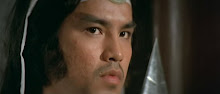
Hwang Jang Lee (Weng Cheng), Kao Hsiung (The Tiger), Fan Mei Sheng (Beggar Fan Yeh Mei), Tino Wong (Shen Hao), Tu Shiao Ming (Ah Chu)
Produced & Directed by Hwang Jang Lee
Monk to Weng Cheng: "Alright now, I wanna see how bad your kung fu is."
Weng Cheng to monk: "How would you like to take a long walk off a short plank?!"
Weng Cheng to Shen Hao: "One of us will die. Care to make bets on who?!"
The Tiger to Weng Cheng: "You must really wanna die bad. I'm not called the Tiger for nothin'. Today I'm gonna eat ya up and spit ya out!"

 Weng Cheng arrives in a small town to visit his sister and see how she and her husband, Ah Chu, have been coming along. Working in the Weng Li rice shop, Ah Chu gets into trouble after using underhanded methods to snatch away customers lost to the more enterprising Han Cheung rice factory which is run by a small time gang of thugs. Weng rescues his brother-in-law several times from the villains until he is lured into a fight with a top Snake Fist fighter, Shen Hao. Easily defeating Shen, the Snake Fist specialist calls for his teacher, a gangster known as the Tiger, to come to the town to take care of Weng.

 A local beggar, Fan Yeh Mei, being a former colleague of the Tiger, warns Weng of the Tiger's skills. Disgraced of his students defeat, The Tiger and his men rape Weng's sister, Ah Chan, and make her husband watch. The two meet and Weng is defeated. Beggar Fan stops the fight and cashes in a previous favor owed him by the Tiger by allowing Weng Cheng to escape with his life. Unknowing of his sisters death, Beggar Fan sends Weng off to the Tien Ching temple to improve his kung fu skills. While there, the Abbot secretly trains Weng for his showdown against the claws of the fearsome Tiger.

 Possibly kung fu cinemas greatest villain, Hwang Jang Lee trades in his patently evil scowl for a portrayal of more heroic proportions. Not only does Hwang partake in the role of the lead protagonist, but he also acts as producer and director and does a fine job of it. Hwang manages to do something different from the laborious viewing experience of the typical independent kung fu movie. Instead of endless scenes of mindless incongruity that plagues most of the kung fu cheapies, Hwang's movie has no ridiculously meandering moments that string most of these movies together. In so many of these movies the real plot never gets going till 40 or 50 minutes in. Here, the plot is introduced from the get go and stays its course till the end.

 There's a hint early on, though, that the picture has strayed when Weng Cheng finds a group of child thieves led by Beggar Fan. This meeting would seem to have been an afterthought but later serves the picture well as Beggar Fan proves to be an integral part of the story. It's a shame Hwang didn't direct more movies as he is a capable hand at it. HITMAN IN THE HAND OF BUDDHA would appear to have been influenced by Shaw Brothers films such as SHAOLIN MARTIAL ARTS (1974) and DIRTY HO (1979).
 Once arriving at the temple, Weng is forced to do strenuous, and (at the time) aggravating exercises which secretly build his skill level and power. This is similar to the plot device in Chang Cheh's instrumental Shaolin film, SHAOLIN MARTIAL ARTS wherein a short tempered student must learn the Eagle Claw through hard labor, a conceit that was later adopted for THE KARATE KID (1984).

 In DIRTY HO there are a number of scenes that featured the hero and a villain of some sort engaged in a duel that was masked in circumstance. Whether looking at art or enjoying a fine wine, the two individuals attempt to kill one another in anonymity. A similar scene takes place when Shen Hao invites Weng to dinner and immediately makes it known it will be a heated discussion. The two (rather forcefully) have a drink together before battling each other. Hwang's film also contains bits and pieces borrowed from his two Seasonal movies he did starring Jackie Chan. The most obvious is the Beggar Fan character. This personality became a kung fu comedy staple with the film SNAKE IN THE EAGLE'S SHADOW (1978).
 Hwang Jang Lee starred in well over 50 movies most often as the main heavy. Some of his more notable performances are THE SECRET RIVALS (1976), INVINCIBLE ARMOR (1977), THE DRAGON & THE TIGER KIDS (1979), YOUNG HERO (1980), TIGER OVER WALL (1980) and KID FROM KWANGTUNG (1982). Hwang also did a handful of kung fu cheapies that signaled the end of the genre in American theaters in the early 80's. Some of these movies were EAGLE VS. SILVER FOX (1982), FIVE PATTERNS DRAGON CLAWS (1982), RAGING MASTERS TIGER CRANE (1983) and MARTIAL MONKS OF SHAOLIN TEMPLE (1983).
 Most all of these flicks accentuated fight scenes and nothing else. Hwang played a hero on at least four occasions. The other three are RAGING RIVALS (1981), the awful BUDDHIST FIST & TIGER CLAWS (aka SECRET EXECUTIONERS;1982) and BLOOD CHILD (1983) in which Hwang (briefly) shares the screen with fellow Korean bootmaster, Kwan Young Moon.

 Eddie Kao Hsiung was a natural at playing bad guys and he's pretty formidable here even though he only fights with both Beggar Fan and Weng Cheng on two occasions. Possibly his most nasty turn as a screen antagonist came in the indy film, THUNDERING MANTIS (1979). He also played villains in films such as SLEEPING FIST (1979), AVENGING EAGLE (1978), THE DEADLY BREAKING SWORD (1979) and SHAOLIN DRUNKARD (1983). Kao (or Eddie Ko) was also seen in the US production, LETHAL WEAPON 4 (1997) where he was quickly, and unceremoniously killed by the villain played by Jet Li.

 Fan Mei Sheng will be instantly recognizable to Shaw Brothers fans from what is likely to be his most famous role as Li Kwei, The Black Whirlwind, from Chang Cheh's THE WATER MARGIN (1971) and it's sequel, ALL MEN ARE BROTHERS (1973). He featured in countless Shaw pictures throughout the 1970's including numerous character roles in many of Chu Yuan's swordplay movies. Fan moved on to Golden Harvest in the early 80's where he played comedic roles in such films as THE YOUNG MASTER (1980) and DREADNAUGHT (1981). In HITMAN IN THE HAND OF BUDDHA, Fan plays Beggar Fan, a character that appears to have been designed for Yuen Siu Tien, who got a career boost carving a niche for himself playing lowly drunken beggars in over a dozen films between 1978 and 1980.

 Tino Wong was a Shaw Brothers bit player for Chang Cheh before obtaining meatier roles in Season Films productions such as INVINCIBLE ARMOR (1977) and Jackie Chan's two breakout films for the fledgling indy company. An early memorable appearance was as an ill fated Shaolin student who challenges Wang Lung Wei in Chang Cheh's classic, SHAOLIN MARTIAL ARTS (1974). Tino Wong had a good face and got a chance to show off a bit in a couple of international productions such as LEGEND OF THE SEVEN GOLDEN VAMPIRES (1974) and CLEOPATRA JONES & THE CASINO OF GOLD (1975).
 The cross eyed character actor Tu Shiao Ming plays the recalcitrant Ah Chu (sounds like a sneeze). His role here is a bit more dramatic than usual but the horrid English dubbed voice calls upon comical connotations than it does pity. Tu played similarly put upon characters throughout his career (at least in the movies I saw him in) including such kung fu comedies as TWO FISTS AGAINST THE LAW (1980), LACKEY & THE LADY TIGER (1980), TREASURE HUNTERS (1981), FAKE GHOST CATCHERS (1982) and FAST FINGERS (1983).

 The aforementioned dubbed dialog is hilarious and filled with the usual high pitched voices for the mousy characters and the deep baritones of the more dastardly individuals. There are also some humorous moments such as when the rival rice shop seeks the aid of some questionable people to fight against Weng Cheng. "Can't anybody help me? I need someone who can talk, who can jump and never loses a fight." He's answered by three different cronies with, "The judge can talk...Jackie Chan can jump...and Bruce Lee can fight." The boss responds, "That's enough. Tell me where I can find these people now?" Another funny scene is when the rival rice shop owner goes to the brothel to find Shen Hao, he first finds a different Mr. Shen. Different women continuously exit from his room all replete with an exhausted expression. Every time the man tries to enter, he is stopped by the house madam exclaiming there's still more girls to come out.

 The fights are nothing short of amazing. Hwang doesn't disappoint in showcasing his repertoire of elaborate and powerful looking kicks. He unloads a flurry of these on some crooks during the opening credits and doesn't cut loose again with his dynamic and ferocious feet till the end fight. However, in between you get to see Hwang utilize some pole work and some strong fist techniques. He is so energetic in these scenes that it truly looks like he is really beating his opponents within an inch of their lives. This is all the more exciting in that Hwang is the main hero. Given that his bad guy roles only gave him one or two fight scenes, here, Hwang fights on multiple occasions.

 The soundtrack is made up of music lifted from the Italian western, NAVAJO JOE (1966) starring Burt Reynolds. That films score is the work of prolific composer Ennio Morricone under the pseudonym Leo Nichols. The bulk of the score is taken from Roger Corman's SEVEN SAMURAI in Space favorite, BATTLE BEYOND THE STARS (1980). That films composer is the future Award winning musician, James Horner. The pilfered music is used much better than what normally passes for a score in these indy pictures where sometimes half a dozen different movies of various genres are raped for their music. The tunes fit the movie very well.

 Hwang Jang Lee delivers one of the best Korea/Hong Kong indy kung fu co-productions to ever come out of Asia. It's not without faults but compared with so many muddled and nonsensical, liberally padded indy flicks out there, it's refreshing to see one that contains semblance of cohesion. There's even some interesting editing found here and there. There are two versions available of this picture, a Korean and a Hong Kong cut. The Korean version contains different scenes as well as different fights. This review is based on the more widely accessible Hong Kong cut. Highly recommended for kung fu fans.
DVD Availability: Tai Seng
copyright 2013. All text is the property of coolasscinema.com and should not be reproduced in whole, or in part, without permission from the author. All images, unless otherwise noted, are the property of their respective copyright owners.


 Doctor Abner Perry and his student, David Innes travel below the Earth's surface in a gigantic drilling machine. The scientific duo stray from their original geological course and end up in a strange land thousands of miles beneath the Earth. There they find a civilization of humans ruled over the cruel Sagoths, a race of strange creatures that serve the Mahars, a species of telepathic and prehistoric flesh eating bird monsters. David and the batty doctor Perry must find the means to destroy the Mahar city and free the enslaved people of Pellucidar.
 The one cinematic adaptation of Edgar Rice Burroughs' series of novels based on his fictional world of Pellucidar. It's a fantastic realm at the center of the Earth featuring a wild menagerie of monsters and vicious creatures. The monsters seen in the Amicus film are pretty faithful to those in Burroughs' book, only they are less violent taking into account that the film version is made for the kids or the young at heart. Conner's direction is good and the film moves along from one set piece to the next with very few slow spots. The only time the film really bogs down are several scenes featuring lots of walking around in dark caves and tunnels.
 Other than that, the production design of Maurice Carter is stunning and commendable. The entire film is shot on studio sets and this adds immeasurably to the fantasy elements found herein. Carter handled designing duties on the first three of the John Dark & Kevin Conner quartet of lost world fantasy movies. Michael Vickers handled the rousing score which could certainly do with an issue on DVD. Vickers also returned to do scoring duties on WARLORDS OF ATLANTIS (1978), the fourth in this quartet, but the only one not a Burroughs novel.

 Doug McClure returns in full on hero mode playing a brash, yet brave, stranger in a strange land quickly turning into something of a civilized Tarzan character. There's not as much time spent with the characters as there was for the previous entry and most especially the one that follows it. However, McClure, Cushing and Munro get just enough depth for the viewer to not want to see anything bad happen to them. AT THE EARTH'S CORE is purely escapist comic book entertainment and that's all it want to be is entertainment. Anybody looking for subtext, or a serious and realistic picture would do well to look elsewhere.
 McClure was known for roles in numerous American western television programs most notably on the long running western show, 'The Virginian'. He occasionally appeared in genre work on television in between the western programmers, but his career changed once he appeared in THE LAND THAT TIME FORGOT (1975). After that, more and more movie roles came his way including some extreme horror starring roles. His four lost world adventure movies are high points and memorable efforts in his long career.
 Peter Cushing plays the wonderfully daffy Doctor Abner Perry. Comparable to his role as Dr. Who in two cinematic adaptations of the famed British science fiction series, Cushing plays Perry as a lively and spirited soul despite his age. Perry has no problem getting in on the action which is most prominent during a scene where he makes a bow and arrow out of the surrounding fauna to dispel an attack by a giant fire breathing frog monster that makes a hasty and unannounced appearance.

 The stunning beauty of Caroline Munro is one of the main reasons for male viewers to tune in. Her pouty veneer showcases an inherent sexiness that threatens to burst forth from her limited and somewhat revealing costume. Munro was one of the most famous Hammer girls despite never really getting a role worthy of her talents. Her turn in CAPTAIN KRONOS: VAMPIRE HUNTER (1972) was pretty good, but Amicus seemed to get a bit more mileage out of her looks in AT THE EARTH'S CORE (1976).

 When AT THE EARTH'S CORE (1976) was released, it ultimately became the biggest grossing Amicus production ever with $3.5 million in box office returns. It was also the last. The next film, THE PEOPLE THAT TIME FORGOT (1977), which was not really an Amicus picture, came close to matching it with $3 million in profit. Despite the successes of the dinosaur opuses, the end of Amicus was nigh when shady business practices and the subsequent dissolving of the partnership of Max J. Rosenberg and Milton Subotsky spelled doom for the company.
 There were a couple other notable lost world movies made by European filmmaker, Juan Piquer Simon. Those films were THE FABULOUS JOURNEY TO THE CENTER OF THE EARTH (1976) and MYSTERY ON MONSTER ISLAND (1980). The latter picture featured Peter Cushing briefly onscreen. There was also another series of similar style adventure yarns in 1977 to 1980. It was a trilogy of US-Japan co-productions between America's Rankin/Bass Productions and Japan's Tsuburaya Productions.

 At one time the chief rival to the famous (and infamous) Hammer Studios, it's questionable whether Amicus could have survived in the changing markets what with big budget Hollywood blockbusters becoming the norm since the release of JAWS in 1975. This style of fantasy adventure was becoming extinct much like the dinosaurs featured in the Conner movies. The resurgence didn't take place till the release of JURASSIC PARK in 1993.
 For their time, movies like AT THE EARTH'S CORE (1976) offered the type of serial inspired thrills that prospered in the 30's and 40's. Compared with the other three films, CORE contains so many more cliffhanger moments. The third film, THE PEOPLE THAT TIME FORGOT comes close as the final act is a rapid fire exchange of close calls and tight spots for the heroes.
 In CORE, there's the journey to the Mahar city replete with dangers from giant man eating monsters, the ensuing escape from the city, the duel with "Jubal, the Ugly One", returning to the city to destroy the Mahar's, a duel between man and monster and finally, the obliteration of the Mahar city. It would seem the writers of WARLORDS OF ATLANTIS (1978) took the template laid down for AT THE EARTH'S CORE for the later film as there are several similarities which are discussed in that films review elsewhere on this site.
 AT THE EARTH'S CORE (1976) is a highly enjoyable monster romp made during a more simpler time when sheer imagination fueled the ambitions of filmmakers capabilities. A time when budgetary constraints were channeled towards the imagination and creativity of those putting their vision up on the big screen. If you come to these types of movies with an open mind, a big smile and a buttery bucket of popcorn, you're sure to walk away with the notion you've just had a good time enjoying an old style adventure for kids, both young and old alike.