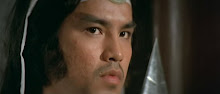
BEWITCHED 1981 aka GU
Ai Fei (Stephen Lam Wai), Melvin Wong (Bobby Wong King Sun), Fanny (Mary), Lily Chen (Bon Brown), Hussein Bin Abu Hassan (Magusu)
Directed by Kuei Chi Hung
***WARNING! This review contains pics of nudity & extreme gore & violence***
 Bizarre method of murder
 Wong King Sun, a detective in Hong Kong, investigates the violent death of a little girl. Learning that the girls father, Lam Wai, was responsible for the heinous crime, the murderer is soon taken into custody. The frightened man admits to the murder, but claims he was under the influence of a wizard's spell. Recounting the terrible story, Lam spins a gruesome yarn of black sorcery and a vile curse placed on him by a beautiful Thai girl. Through a series of bizarre events, Wong travels to Thailand to discover the secrets of the black magic rituals and ends up finding more than he bargained for.
 Finding the source of the gruesome curse

 Kuei Chi Hung directs this excellent horror tale that's in part, a spooky character piece punctuated by some gruesome scenes of gore, and a morality play about the dangers of promiscuity. This is still first and foremost an exploitation film, and among the many nasty bits are two elaborately staged duels between the monk and Magusu, the evil wizard. The first one is a staggeringly surreal 10 minute stand off between the magus and the necromancer. It's filled with ghoulishly creative back and forth exchanges of various magical counter moves including a nasty one in which Magusu drinks a bowl of blood poured from a huge urn filled with unborn babies and viscera.
 Maggot munching-a mainstay of Asian horror
 BEWITCHED (1981) was a hit in Hong Kong and Kuei returned to black magic territory two years later to helm a sequel. Entitled THE BOXER'S OMEN (1983), that film was an exercise in wild depravity and sadism daring itself to top each disgusting scene with another even more deplorable. Whereas BEWITCHED was more story driven focusing on the main characters and the consequences of their actions, the sequel pushes the envelope in what is permissible onscreen.
 BEWITCHED is the better movie in terms of filmmaking prowess and story, but THE BOXER'S OMEN is best for its ballsy attitude and ability to shock with one gross-out scene after another. That's not to say BEWITCHED doesn't have its share of sickening and nauseating scenes of gory nastiness, it's just not wholly dependent on such sequences as its phantasmagorical sequel.
 Ai Fei and Lily Chen
 In addition to Kuei's propensity for sleazy subject matter, he piles on a good amount of nudity here. So much in fact, that it threatens to derail the seriousness of the whole production. One such scene involves Lam and his Thai lovely, Bon. There is a slow motion sequence that seems to go on forever wherein Bon loses her swimsuit top. She runs half naked across the beach, her ample assets bouncing to and fro in a scene that brings to mind Bo Derek's slow motion trek across the sand in 10 (1979).
 Ai Fei & the busty Jenny Liang
 There's also some choice nudity by exploitation starlet, Jenny Liang who shows off her groceries in a bathtub. We even get to see her fully nude once she steps out of the bath. Jenny Liang was about the closest the Shaws came to replacing former exploitation starlet, Chen Ping, who by this time, had vacated her role as the 'Queen of Asian Exploitation'. Jenny Liang didn't stay in the (s)limelight for very long as she apparently became disenchanted with the increasing number of roles that required her to shed her clothes.
 Detective Wong learns the horrors of black magic
 Kuei was inarguably the best HK director working in the horror film industry there. He was an acolyte of Chang Cheh and his gritty crime thriller, THE DELINQUENT (1973) was a precursor to his later output of grim and disturbing fantasy pictures. Kuei was an unusually peculiar director with some brutal quirks that emerged while shooting his movies. He would often go to extremes to get the right reaction from his actors. These extremes often times matched the subject matter of whatever movie Kuei was working on. Chang Cheh remarked in his memoirs that Kuei once demanded an actor to eat rotten food to elicit the proper response for a scene. He also at one time refused to allow an actor to go to the emergency room after a failed motorcycle stunt until he caught the complete reaction on camera!

 Regardless of his methods, Kuei was an extremely talented filmmaker who failed to capitalize on his success by emigrating to America after Shaw Brothers closed their film production facilities in the mid 80's. The creatively harsh director channeled his curious tendencies in some of the most slimy and uncivilized movies ever to emerge from Hong Kong. Films like THE BAMBOO HOUSE OF DOLLS (1973), KILLER SNAKES (1974), CORPSE MANIA (1981) and episodes in THE CRIMINALS series showcase Kuei's penchant for raw and sordid screen violence.
 The black sorcerer raises the dead
 The foreshadowing of bad things to come
 Frequent supporting actor, Ai Fei (in a rare lead role), plays a swaggering and perpetually horny tourist on vacation in Thailand who meets up with a beautiful Thai girl. Feigning serious interest in her, he manages to steal her virginity before heading back to Hong Kong. Before he leaves, the girl gives him a love necklace to remind him of his imminent return a year later to continue their relationship together; only he has no intention of ever returning. One night while he sleeps, an oily liquid seeps from the necklace that sets off a terrible curse set in motion by the vengeful young Thai woman.
 With an evil force taking possession of his young daughter, Lam goes to see a local witch who states his daughter must die, that nothing can save her. Lam then murders his little girl while on a picnic in a vicious sequence where he bashes her over the head with a piece of wood. He then drives a ten inch spike into the top of her head per the request of the mysterious witch woman.
 Maggots and vomit-what would HK horror be without them?
 This entire section of the film is told in flashback to Detective Wong after Lam is condemned to hang. This plot device sketches the discovery of a reprehensible crime, the investigation and capture of the criminal, and the subsequent flashback detailing the horrible events. This would become a genre mainstay some ten years later when 'Police Procedural Horror' would take HK by storm with the release of the ultra violent, THE UNTOLD STORY (1993). It doesn't end well for Lam, though, as his body begins to sprout many pimple-like sores that ooze a greenish pus. At one point, he is completely wrapped in gauze, his stomach swelled like a balloon. He then pukes up hundreds of maggots before stabbing himself repeatedly in the gut, his huge, bloated belly erupting a thick, viscous substance.
 Wong begins his investigation of the bizarre child murder
 Melvin Wong turns in a serviceable performance as Detective Wong King Sun. His character is a victim of circumstance. When he makes the jaunt to Thailand, he inadvertently puts his life in danger after the cruel sorcerer places several curses on him and his wife, the reward for his meddling. He usually appeared in martial arts films and seldom ever got a big role like he does here. Wong often portrayed police officers, or that of some other type of civil servant. He studied law in America before joining Shaw Brothers and he spoke fluent English. He seemingly did relatively few movies for Shaws lest there are some that have yet to surface.
 Both sides prepare...
 Also of note is 'the participation of noted sorcerer Hussin(?) Bin Abu Hassan'(!) No doubt Kuei researched a lot about mystic arts and superstitions as Ho Meng Hua had done prior to this film when he had officially kicked off the 'Black Magic vs. Modern Society' genre with his film, BLACK MAGIC (1975). Here though, Kuei handles the material in a far more serious and unsettling way than Ho's more darkly fantastic, yet disturbing approach to soap opera conventions. Whereas Ho's films explored the dark side of Singapore and Malay folklore, Kuei tackles the mysterious and sorcerous underbelly of Thailand.
 ...for a magical duel to the death
 The poster for BEWITCHED is way over the top and promises a lot of bizarre and nutty thrills. What's most interesting is that everything on the poster is actually in the movie, but not in quite the manner presented on its advertising. What's even more curious, is that the poster for the sequel, THE BOXER'S OMEN (1983), masks the zany, totally freakish, and often psychedelically insane movie it promotes.
 For a much darker and more grueling experience for those more familiar with Ho Meng Hua's ghoulishly campy BLACK MAGIC films, Kuei Chi Hung's BEWITCHED (1981) is a recommended and highly enjoyable horror romp (for different reasons than its more outlandish sequel). Those that are fans of Asian horror pictures would do well to seek out this tale from the late master of revolting horror from Hong Kong.
This review is representative of the IVL region 3 HK DVD.
 SECRET SERVICE OF THE IMPERIAL COURT 1984 aka POLICE POOL OF BLOOD
Liang Chia Jen (Zhao Bu Fan), Liu Yung (Wang Zhen), Lo Mang (Zhao Bu Chin), Ku Feng (Zhao Wu Ji), Hu Guan Zhen (Shu Liang), Pai Piao (Yu Hua Long), Ko Fei (Chao Ji Sheng), Lo Lieh (Zhao Wu Chi), Lung Tien Sheng (Li Jin), Sun Chien (Li Yi), Ku Kuan Chung (Chang Qiang), Liu Yu Pu (Hsiao Nan), Liu Shao Jun (Emperor Ying Zhong), Kuan Feng (Li Zhou Wen), Cheng Kei Ying (Shi Hen), Chan Lau (Gao Shan), Lu Chin Ku (personal guard to Zhao Wu Ji)
Directed by Lu Chin Ku
***WARNING! This review contains pics of nudity and bloody violence***
"The rule here is 'No Mercy'."
 Introducing the vicious Brocade Guards
 The cruel Eunuch, Wang Zhen
Hunted by the vile Eunuch and his sadistic followers, Zhao runs away with his wife and young son. With danger at every turn, Zhao slashes a gruesome path paved in blood and betrayal till he comes face to face with the merciless and formidable Eunuch, Wang Zhen.

 Director and frequent action choreographer Tony Lu Chin Ku directs this ominously vicious and gloomily savage swordplay drama. It's based on the oft filmed exploits of real life Wang Zheng, a power hungry (and seemingly superhuman in the film) Eunuch who was the trusted aid to Emperor Ying Zhong (Zheng Tong), who ruled from 1435-1449. The arrogant, self serving and duplicitous Eunuch was responsible for thousands of deaths as well as the capture of his Emperor to the clutches of the invading Mongol hordes. Wang Zhen himself was killed in his birth home of Tumubao in Hebei Province when he led the depleted and confused Ming forces to their doom against the advancing Mongol army.

 Eunuch's have been a popular plot device in Hong Kong cinema and are the companion piece to the frequent white haired villains that were popularized in Liu Chia Liang's EXECUTIONERS FROM SHAOLIN (1976). The employment of Eunuchs differed from culture to culture and in Asia, they were often utilized as advisors and high ranking civil servants. The general thought process was, that by taking away their ability to bear children and desire of women, a Eunuch would be less likely to have designs on assuming power and usurping a ruling dynasty.

 The cinematic interpretation of Wang Zhen in Lu Chun Ku's movie paints an even more despicable picture of the man. Working on a smaller scale from real life, the canvas is smeared with blood and death. Treachery and deceit are the order of the day. The dynastic rulers in China, as seen through the eyes of the filmmakers at Shaw Brothers, are part of some of the most tumultuous and insidious time periods in mans history. You can just look at somebody in the wrong way and it means instant death to both you and your loved ones. Astonishingly, the cinematic counterparts were sometimes far less barbaric in their shameful deeds against humanity than the true to life individuals the films were sometimes based on.
 Yu Hua Long warns the conniving Eunuch
 The casualness of Wang Zhen's violence is made apparent near the beginning when one of the cabinet members recognizes the Eunuch's plans. Threatening him with death, the minister states he, nor his family are afraid of death. Wang Zhen summarily smacks the old man with a superhuman slap across the face sending the oldster flying backwards with incredible force killing him instantly. Wang then overbearingly wipes away the blood on his fingers then orders his chief guard, Chao Ji Sheng to "Arrest Li's entire family and his students. Slit them all from their mouth to their ears." His barbarous nature reaches its zenith past the midway point when he proclaims to Brocade Guard leader, Zhao Wu Ji, "I'm telling you...if you don't hand over your son, I'll cook your families as food for you!"
 Wang Zhen imagines himself the new Emperor
 Even though the main star of this star studded cast is Liang Chia Jen, Tony Liu Yung steals the movie away in every single scene. In his slimy elucidation of the real life usurper, Wang Zhen is the epitome of evil and Liu Yung brings to life one of the most sadistically flamboyant villain roles in action film history. There's another great, but brief scene that hammers home the real Wang Zhen's egomaniacal means of seizing the throne for himself. Once he has seemingly removed any and all threats preventing him from becoming the new Emperor, he sits atop the cathedra and imagines himself the ruler as a throng of worshippers announce his dominion. The camera lens is distorted on the outer edges of the frame alerting the viewer that they are witnessing a dream sequence. Suddenly, Wang is awoken from his reverie to find a mostly empty, half lit room occupied only by a few guards and a messenger bringing him word of Emperor Ying Zhong's capture.
 Zhao duels with Chao Ji Sheng
 Liang Chia Jen stars with searing intensity as honorable Sergeant of the Brocade Guard, Zhao Bu Fan. Brandishing an imposing and intimidating blade, his unwavering integrity and devout principles are the perfect foil to all the duplicity and disloyalty found throughout the movie. At one point, Zhao is washing away the many bloodstains from his body whilst in the company of his mistress, Lian Lian. She questions his ethics in cutting down supposed enemies of the state. He responds to her, "My blade only kills miscreants!" However, he soon discovers that some of the men he has been ordered to kill are honorable men who have been framed by the scheming Eunuch for learning of his plans.
 A father and son discussion
 Interestingly, Zhao's father, Zhao Wu Ji is the leader of the Brocade Guard and this causes a lot of tension between both characters. He and his son have several very heated arguments especially when the subject of loyalty to the Guard is brought up--"Being a Brocade guard, one prepares to die for justice!" Since members are trained to become killing machines that don't question orders, they are not to recognize familial ties lest they be killed for disobeying a directive of the Emperor. Even though Zhao Wu Ji seems to be adamant in the notion that he will sacrifice his son if necessary (which he demonstrates in an opening sequence) it soon becomes apparent that even with agonizing and cruel training methods, emotion can't be eradicated completely.
 A familial difference of opinion
 What's most puzzling is that over the course of the movie and through all the buckets of blood that's spilled, a number of innocent people give up their lives for Zhao and his family so he can avenge himself on the Eunuch, Wang Zhen. His friends, his mistress, the officers under him and even some of his family members die either from the result of an enemy attacker, or from Zhao's own sword. I found myself questioning Zhao's ethics as so many may not of had to die if he'd only given himself up. But then, if he had, then the evil Eunuch would have continued his reign of terror and not only that, there would have been no movie.

 Liang Chia Jen had one of the longest and most enduring careers in all of Hong Kong cinema. First appearing as one of the main villains in Chang Cheh's classic, SHAOLIN MARTIAL ARTS (1974), Liang featured in a handful of other villain roles before going out on his own appearing a string of indy kung fu favorites such as THUNDERING MANTIS and THE ODD COUPLE (both 1979) among many others.
 Liang returned to Shaws (of sorts) in the early 80's appearing in some of TVB's (Television Broadcasts Limited, HK) most memorable TV serials like RETURN OF THE CONDOR HEROES (1983). He also featured in a handful of Shaw Brothers Studio productions at the tail end of their run before closing up their theatrical branch in the mid 80's. He was most memorable in a few of Shaws violent modern day thrillers like DANGER HAS TWO FACES, THIS MAN IS DANGEROUS and HONG KONG GODFATHER (all 1985) in addition to a brief role in the classic, NEW TALES OF THE FLYING FOX (1984).

 Former star in a string of kung fu movies featuring a group of actors affectionately known as 'the Venoms', Lo Mang plays the role of Zhao's brother, Zhao Bu Chin. At the beginning, Zhao Bu Chin is ordered to slay a man purported to be a rebel. After slashing him and the resulting geyser of blood splashing him in the face, Zhao becomes disenchanted with the whole idea of 'Murder For Justice'. Ordered to be put to death for his disobedience, we naturally assume that Zhao Wu Ji has ordered the death of his son. Towards the end of the picture, a plot twist is revealed and Zhao Bu Chin turns out to be very much alive when he saves his brother from certain death.
 Zhao Bu Chin, the martyr
 Lo Mang had a nice career at Shaw Brothers and he continues to act today. Formerly an accountant at Shaws, Lo was soon put into some of Chang Cheh's movies as an extra before gaining prominent supporting roles in films such as CHINATOWN KID (1977) and LIFE GAMBLE (released in 1979) before co-starring alongside the crew that would become known as 'The Five Venoms' outside of Asia. Oddly enough, the Venom movies were much more popular outside of Hong Kong especially in America. When the Shaws split them up, Lo Mang went on to do movies on his own. Sometimes, his co-star, Sun Chien, would feature in a smaller role as he does here in SECRET SERVICE.

 Ku Feng showcases immense acting skills in his tortured performance as the leader of the Brocade Guard, Zhao Wu Ji. Displaying a full range of conflicted emotions from one scene to the next, Ku Feng shows why he is arguably one of the best, if not the best character actor to ever emerge from Hong Kong. One of his best scenes takes place near the end when he must display the head of one of his family members before the Emperor, much to the delight of Wang Zhen, who has spent a lot of the movie ridiculing him. For his deed, Zhao is rewarded with $10,000 taels of gold. After a few seconds, tears begin to run down his face profusely. Wang Zhen then questions why he should cry after being awarded such a prize and the elder Zhao replies that they are tears of joy, but we know otherwise.

 To list just a few of Ku Feng's credits would be doing the man a serious disservice, as he appeared in so many quality productions. He was easily the most prominent figure in Shaw Brothers pictures appearing in literally dozens upon dozens of movies for the company. Ku Feng also did a lot of indy movies and was without doubt, like his colleague, Lo Lieh, one of the busiest actors working in Hong Kong. Ku Feng's career reached a highpoint when he earned a much deserved Best Supporting Actor Award for his performance as the put upon diminutive brother to Ti Lung's character in TIGER KILLER (1982).

 The cast of SECRET SERVICE is made up of a boat load of seasoned veterans and recognizable faces from the esteemed Lo Lieh, to Taiwanese actor, Lung Tien Sheng, who enjoyed a very brief run after starring in Chang Cheh movies like FLAG OF IRON (1980) and the troubled TEN TIGERS OF KWANG TUNG (1978-1980). The distinguished Jason Pai Piao is on hand as an ethical military officer and the prolific and frequent antagonist, Ko Fei is on hand playing another bad guy.
 The Emperor enjoys some candy
 There are also up and coming stars and starlets such as Liu Shao Jun as the immature and careless Emperor Ying Zhong and the pretty Liu Yu Pu as a doomed lovely. The dependable screen fighter, Kuan Feng is also on hand for a couple of scenes to help propel the story along and frequent comic relief, Chan Lau also stars in a serious role as one of the framed officers. Interestingly, Chan Lau always played a serious role in his Shaw Brothers movies. Whereas he portrayed bumpkins or brain fried outcasts in indy movies, Chan Lau frequently portrayed villains or, on this occasion, a righteous soldier.
 Director, Lu Chin Ku
 Director Lu often had cameos in his pictures and here is no different. Lu can be spotted in several scenes playing a guard to Zhao Wu Ji. Lu Chin Ku became a promising action film director during the late 70's through the 80's. He began his movie career as an actor, a sometimes writer and also an action choreographer. In his LADY ASSASSIN (1981), Lu plays the fearsome ninja character that is brought in to deal with the title female. Speaking of ninjas, Lu Chin Ku was fascinated with Japanese cinema. Many of his movies feature a subtle hint of Japanese cinematic stylings. Whether it be in costumes or in the way a scene is shot, Tony Lu had an appreciation for Japanese filmmakers.
 Actor, Ko Fei
 A very Japanese style finish to a HK style duel
 The camera cuts tighter in as both fighters have their backs to one another. Then, a geyser of blood erupts from Chao Ji Sheng's chest. He then falls over dead. Very reminiscent of Samurai movies, Tony Lu also pays tribute to Japan's famed LONE WOLF & CUB series. Zhao carries his son with him on his road to retribution and the little boy bears witness to all the bloodshed around him.

 In keeping with the tradition of extreme blood and violence in most Shaw Brothers productions, Tony Lu infuses his film with a barrage of bloody stabbings, decapitations, dismemberments and, at one point, a character is split in half lengthwise. This film rivals FLYING GUILLOTINE (1974) in how many heads roll. Over a dozen come off during the first few minutes alone. There are also a great many massive, and wholly unrealistic arterial sprays of blood seen throughout the picture; another nod to the comic book gruesomeness of the series of ultra violent Japanese Chambara movies.

 Also of note is the cinematography by Ma Kam Cheung. He helmed the camera on several of Tony Lu's other productions. Here, like in those other films, Ma fills the frame with lots of extreme close ups reveling in the characters emotions. There are also a plethora of swirling tracking shots that circle a character accentuating the dramatics of the scene. Ma also employs an interesting camera motion that moves back and forth from one side of the screen to the next during conversations involving two characters usually depicting topics of importance to the narrative.
 The rapid fire editing (Lu's frequent editor, Liu Shao Guang is one of three editors on this film) would become a mainstay in later HK action films. It's sometimes so hectic, you often don't have enough time to soak up the ambiance of some sequences. Where certain scenes are allowed to breath, others are virtually choked of all their substance and depth.

 The set design, for the most part, is quite striking. This is especially notable for a Shaw production from this time when they were struggling to stay afloat against powerful opposition from Golden Harvest and the formidable indy company, Seasonal Films. A lot of Shaw pictures from the mid 80's had a very low budget look that sometimes lends them a TV Movie image. Some of the sets appear hastily put together, but the main hall and some of the Emperor's dwellings have that Shaw Brothers touch about them.

 Also, there is a dream-like quality to a lot of the sequences in the film. For some shots, instead of walls, there is usually a bright light that is engulfed in a sea of fog that remains in the background. This motif is relegated to the scenes of the Brocade Guards in the Torture and Interrogation chamber. It also surfaces again later in the film when Zhao must fight his uncle played by Lo Lieh on a set that can also be seen in DISCIPLES OF THE 36TH CHAMBER (1984).

 The script (co-written by Lu) also hearkens back to two other popular Shaw Brothers productions already mentioned above. FLYING GUILLOTINE (1974) and KILLER CONSTABLE (1980). Like the hit film about the deadly flying head chopper, SECRET SERVICE featured a secret elite group of killers for the Emperor who recognized no kin nor friend. KILLER CONSTABLE had a righteous, yet at the same time, somewhat bloodthirsty hero who killed only evil men; or so he thought, much like Liang Chia Jen's character.

 Also of note, the same imposing sword prop from KILLER CONSTABLE is used here by lead actor, Liang. SECRET SERVICE also shares the same doom laden tone of CONSTABLE. One of the most interesting things about this production is that Lu Chin Ku had stated in interviews that he much preferred directing action movies with comedy in them as they were far more profitable at the time. Considering all his comedy kung fu movies were very successful, it's perplexing why Shaws would stick him with such gloomy and pessimistic material.
 Zhao meets Wang for the first time
 The film, while incredibly downbeat and possessing an unusually relentless tone even by Shaw Brothers standards, is symbolic of where the company stood at the time. Having been seriously crippled at the Hong Kong box office by chief competitor, Golden Harvest. By this point in the game, Shaw Brothers movies lost a lot of the pizazz their productions contained in years prior. There were still some nice production design, but nothing compared with what they were doing ten years earlier.

 Lu Chin Ku preferred his action movies (his 80's output) to be heavily undercranked and this film is no exception. There is also enhancement in some scenes with the burgeoning use of wirework which was quickly becoming all the rage in HK. The film also sports an original soundtrack that is well put together and features a theme song that is sung by a woman. The somber tune coincides with the onscreen actions and feelings of lead character, Zhao Bu Fan.
 The end was nigh, yet SECRET SERVICE OF THE IMPERIAL COURT (1984) was one of the best of their last films to go theatrical. Around this time a number of their movies were never released to theaters in Hong Kong. Even so, the film fared poorly at the box office wrangling barely $HK1.4 million. By 1984, this type of picture was relegated primarily to television where such things could be seen for free, albeit without the extreme level of violence found here. A modern style approach to film and a handful of hungry new wave directors successfully put an end to Shaws 'old fashioned' way of moviemaking.
 It's apparent from the overall production, that this film was meant to a picture of importance from the Shaws Studio, but the audience just wasn't interested, at least not in Hong Kong. Nonetheless, SECRET SERVICE OF THE IMPERIAL COURT (1984) is an incredibly violent and gory good time highly recommended to Shaw Brothers fans and an obscure gem well worth rediscovering.
This review is representative of the IVL region 3 DVD from Hong Kong (OOP).
copyright 2013. All text is the property of coolasscinema.com and should not be reproduced in whole, or in part, without permission from the author. All images, unless otherwise noted, are the property of their respective copyright owners.


 Bizarre method of murder
 Wong King Sun, a detective in Hong Kong, investigates the violent death of a little girl. Learning that the girls father, Lam Wai, was responsible for the heinous crime, the murderer is soon taken into custody. The frightened man admits to the murder, but claims he was under the influence of a wizard's spell. Recounting the terrible story, Lam spins a gruesome yarn of black sorcery and a vile curse placed on him by a beautiful Thai girl. Through a series of bizarre events, Wong travels to Thailand to discover the secrets of the black magic rituals and ends up finding more than he bargained for.
 Finding the source of the gruesome curse
 Kuei Chi Hung directs this excellent horror tale that's in part, a spooky character piece punctuated by some gruesome scenes of gore, and a morality play about the dangers of promiscuity. This is still first and foremost an exploitation film, and among the many nasty bits are two elaborately staged duels between the monk and Magusu, the evil wizard. The first one is a staggeringly surreal 10 minute stand off between the magus and the necromancer. It's filled with ghoulishly creative back and forth exchanges of various magical counter moves including a nasty one in which Magusu drinks a bowl of blood poured from a huge urn filled with unborn babies and viscera.
 Maggot munching-a mainstay of Asian horror
 BEWITCHED (1981) was a hit in Hong Kong and Kuei returned to black magic territory two years later to helm a sequel. Entitled THE BOXER'S OMEN (1983), that film was an exercise in wild depravity and sadism daring itself to top each disgusting scene with another even more deplorable. Whereas BEWITCHED was more story driven focusing on the main characters and the consequences of their actions, the sequel pushes the envelope in what is permissible onscreen.
 Ai Fei and Lily Chen
 In addition to Kuei's propensity for sleazy subject matter, he piles on a good amount of nudity here. So much in fact, that it threatens to derail the seriousness of the whole production. One such scene involves Lam and his Thai lovely, Bon. There is a slow motion sequence that seems to go on forever wherein Bon loses her swimsuit top. She runs half naked across the beach, her ample assets bouncing to and fro in a scene that brings to mind Bo Derek's slow motion trek across the sand in 10 (1979).
 Ai Fei & the busty Jenny Liang
 There's also some choice nudity by exploitation starlet, Jenny Liang who shows off her groceries in a bathtub. We even get to see her fully nude once she steps out of the bath. Jenny Liang was about the closest the Shaws came to replacing former exploitation starlet, Chen Ping, who by this time, had vacated her role as the 'Queen of Asian Exploitation'. Jenny Liang didn't stay in the (s)limelight for very long as she apparently became disenchanted with the increasing number of roles that required her to shed her clothes.
 Detective Wong learns the horrors of black magic
 Kuei was inarguably the best HK director working in the horror film industry there. He was an acolyte of Chang Cheh and his gritty crime thriller, THE DELINQUENT (1973) was a precursor to his later output of grim and disturbing fantasy pictures. Kuei was an unusually peculiar director with some brutal quirks that emerged while shooting his movies. He would often go to extremes to get the right reaction from his actors. These extremes often times matched the subject matter of whatever movie Kuei was working on. Chang Cheh remarked in his memoirs that Kuei once demanded an actor to eat rotten food to elicit the proper response for a scene. He also at one time refused to allow an actor to go to the emergency room after a failed motorcycle stunt until he caught the complete reaction on camera!
 Regardless of his methods, Kuei was an extremely talented filmmaker who failed to capitalize on his success by emigrating to America after Shaw Brothers closed their film production facilities in the mid 80's. The creatively harsh director channeled his curious tendencies in some of the most slimy and uncivilized movies ever to emerge from Hong Kong. Films like THE BAMBOO HOUSE OF DOLLS (1973), KILLER SNAKES (1974), CORPSE MANIA (1981) and episodes in THE CRIMINALS series showcase Kuei's penchant for raw and sordid screen violence.
 The black sorcerer raises the dead
 The foreshadowing of bad things to come
 Frequent supporting actor, Ai Fei (in a rare lead role), plays a swaggering and perpetually horny tourist on vacation in Thailand who meets up with a beautiful Thai girl. Feigning serious interest in her, he manages to steal her virginity before heading back to Hong Kong. Before he leaves, the girl gives him a love necklace to remind him of his imminent return a year later to continue their relationship together; only he has no intention of ever returning. One night while he sleeps, an oily liquid seeps from the necklace that sets off a terrible curse set in motion by the vengeful young Thai woman.
 Maggots and vomit-what would HK horror be without them?
 This entire section of the film is told in flashback to Detective Wong after Lam is condemned to hang. This plot device sketches the discovery of a reprehensible crime, the investigation and capture of the criminal, and the subsequent flashback detailing the horrible events. This would become a genre mainstay some ten years later when 'Police Procedural Horror' would take HK by storm with the release of the ultra violent, THE UNTOLD STORY (1993). It doesn't end well for Lam, though, as his body begins to sprout many pimple-like sores that ooze a greenish pus. At one point, he is completely wrapped in gauze, his stomach swelled like a balloon. He then pukes up hundreds of maggots before stabbing himself repeatedly in the gut, his huge, bloated belly erupting a thick, viscous substance.
 Wong begins his investigation of the bizarre child murder
 Melvin Wong turns in a serviceable performance as Detective Wong King Sun. His character is a victim of circumstance. When he makes the jaunt to Thailand, he inadvertently puts his life in danger after the cruel sorcerer places several curses on him and his wife, the reward for his meddling. He usually appeared in martial arts films and seldom ever got a big role like he does here. Wong often portrayed police officers, or that of some other type of civil servant. He studied law in America before joining Shaw Brothers and he spoke fluent English. He seemingly did relatively few movies for Shaws lest there are some that have yet to surface.
 Both sides prepare...
 Also of note is 'the participation of noted sorcerer Hussin(?) Bin Abu Hassan'(!) No doubt Kuei researched a lot about mystic arts and superstitions as Ho Meng Hua had done prior to this film when he had officially kicked off the 'Black Magic vs. Modern Society' genre with his film, BLACK MAGIC (1975). Here though, Kuei handles the material in a far more serious and unsettling way than Ho's more darkly fantastic, yet disturbing approach to soap opera conventions. Whereas Ho's films explored the dark side of Singapore and Malay folklore, Kuei tackles the mysterious and sorcerous underbelly of Thailand.
 ...for a magical duel to the death