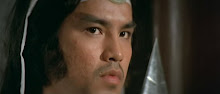
TERROR OF MECHAGODZILLA 1975 aka MEKAGOJIRA NO GUYAKUSHU (MECHAGODZILLA'S COUNTERATTACK) aka THE TERROR OF GODZILLA
Katsuhiko Sasaki (Akira Ichinose), Tomoko Ai (Katsura), Akihiko Hirata (Dr. Shinzo Mafune), Katsumasa Uchida (Interpol agent, Jiro Murakoshi), Goro Mutsumi (Mugal)
Directed by Ishiro Honda

 Commander Mugal, leader of alien beings residing on a dying world, hatch a plan to decimate Earth cities in an effort to provide a new civilization for their own diminishing race. To accomplish this, Mugal and his minions have redesigned the powerful giant robot, Mechagodzilla. With the aid of a disgruntled and disgraced Earth scientist, Dr. Mafune, the aliens utilize Mafune's own monstrous discovery, a prehistoric creature named Titanosaurus to level Japan. Godzilla, with the help of Interpol and Japans military forces, must battle the aliens and their monsters to stop the destruction of Japan.
 Famed director and colleague of Akira Kurosawa, Ishiro Honda returns to the Godzilla series to helm the last entry of the 'Showa' Godzilla films. This final film for nearly a decade proves to be a somber affair and easily the most adult entry in over ten years. Bolstered by an amazingly downbeat and throbbingly menacing score by master Japanese composer, Akira Ifukube, Honda's last hurrah has a lot to recommend it to Godzilla fans. Some may be put off by a general lack of monster action during the first half, this one focuses a lot of attention on some of the characters. Although there is monster action sprinkled throughout, the bulk of it doesn't come until the last 30 minutes.
 By this time in Toho's famed franchise the writing was on the wall that changes needed to be made due the downward spiraling box office returns. Some of the previous films during the 70's were lackluster and embarrassing efforts that, despite being extremely silly in some cases (GODZILLA VS. THE SMOG MONSTER, GODZILLA VS. GIGAN and GODZILLA VS. MEGALON I'm looking at you), nonetheless have their succession of fans. Considering GODZILLA VS. MECHAGODZILLA (1974) attracted a slightly bigger audience than the previous few 70's entries, Toho initiated a contest for fans to submit story ideas for a new G film. The winner, Yukiko Takayama, impressed producer, Tomoyuki Tanaka to such a degree, that he hired her to write a full script. This was the first time a woman had written a script for a Godzilla movie.
 What is fascinating about TERROR OF MECHAGODZILLA, is that a woman is the centerpiece of the picture. The entire film revolves around the character of Katsura Mafune played by Tomoko Ai. She is an extremely tragic figure and the amount of screen time she receives lends this film some heart and soul that is lacking in the other 70's Godzilla pictures. Honda gives her and her possible love interest, Ichinose (Katsuhiko Sasaki) more time on screen than normally afforded human characterization in these movies at least at this stage in the series.
Katsura has more of an impact on the film for several reasons. Her father, Dr. Mafune, has a hatred for mankind as they dispelled his ideas about the existence of a living dinosaur. As a result of his scientific exile, he seeks revenge on mankind by helping the black hole aliens in taking over the world starting with Tokyo. What's especially cruel is that the aliens use Mafune's daughter as the catalyst for their own insidious plans.

With the new refurbished Mechagodzilla, the aliens likewise turn Katsura into a cyborg (in a startling scene we see a bit of nudity as Katsura is operated on after falling from a cliff) and later implant Mechagodzilla's controls in her stomach. She eventually falls in love with Ichinose, but is torn between her remaining human heart and emotions and the cold thought process of a machine that lives to obey its creator. Honda handles this aspect of the film with a maturity not seen since some of the earlier Godzilla films from the 1960's and even the original film from 1954.

 Also on hand from the first GODZILLA is Akihiko Hirata who played Dr. Serizawa in the movie series opener. Hirata again plays a mad scientist, but this time not for the good of mankind. It was his colleagues that thought his ideas were absurd that drove him to madness. Hirata plays the role as a disgruntled, and sometimes unhinged old man. Ultimately, in classic tragedy fashion, Mafune brings about ruin for those closest to him. His somewhat unkempt look gets across the notion he is a few sandwiches short of a picnic, if not a bit a bit silly looking with the bushy white wig and mustache.
Teruyoshi Nakano also created some good effects work for this production. Granted, not everything works, but there is an improvement over most of the previous films from the 1970's. Mechagodzilla has been changed slightly from the previous movie and much is made of his impending assault on Tokyo.

Nakano goes to town with some superior city destruction during the last half hour when the gigantic cyborg is finally unleashed on the world. These scenes of destruction are most impressive especially a shot of MG decimating several blocks at once with rotating missiles. It looks like an earthquake as the streets erupt in dirt and concrete, automobiles fly into the air and then everything sinks below the surface.

As already mentioned, there is a noticeable lack of monster action till the last 30 minutes (aside from a brief attack around the 45 minute mark). But upon multiple viewings, it works in the films favor as this last film for nearly a decade benefits from some much needed human interaction which was seriously lacking in most of the 70's films.

 There is also some questionable violence (an escapee is shot to death by the aliens, Mugal beats his men with a whip) that is all the more strong because of the darker tone of the movie. Ishiro Honda really makes his last Godzilla film count imbuing the production with a somber tone, but cuts loose during the monster melee at the end showing off some wild wrestling style action. Godzilla indulges in some boxing maneuvers and Titanosaurus shows he has one helluva upper cut and kick.
The movie contains some low angle shots during some of the monster scenes particularly those featuring Titanosaurus. In most other movies, the monsters were seen from a distance during their on screen battles. With a few camera shots taken at a low angle, the impression of size is more profound making the beasts seem much larger belying the fact there's a man in a rubber suit performing the action. Godzilla's first appearance is also unusual.

 Titanosaurus is making a shambles of the city as the camera slowly pans left and we see a silhouette appear in the background. The darkness is illuminated revealing the shadow to be Godzilla. He punches his fists together and the two creatures have a brief skirmish before the brain wave controlled Titanosaurus is called away to fight another day. Godzilla's appearance during the final fight is also a surprise appearance. He just shows up as Titanosaurus is about to crush two children underfoot. You never know if the kids are killed, or not, though.
 The big end battle is very exciting, if a bit silly. Godzilla and Titanosaurus both fight like they're in a wrestling match. The fight is replete with punches, kicks, tackles and body slams. Personally, I happen to enjoy monster fights like this as it adds a level of humanism to the creatures you would otherwise not get. It really helps in rooting for Godzilla. Another moment (as in other 70's entries) where the monsters are humanized is when Titanosaurus sends Godzilla flying through the air after delivering one helluva soccer kick. Causing an earthquake when he hits the ground, the creature with the thunderbolt kick lets out a big monster belly laugh in amusement.
 The Godzilla costume used here encores from the previous film (with some minor modifications) and is probably my favorite of the 70's pictures. The King of the Monsters has a face akin to a scrappy bulldog which somehow makes all his punching combinations and slams that much more fun to watch. The one fault with the costume is during the last scene when a promotional suit was substituted for a shot of the big guy smiling at the humans just before he heads out to sea.
 The Mechagodzilla (bearing an MG2 insignia) suit is a new creation from the previous film bearing a more slender frame and more darker metallic tone. For much of the final battle, MG is a more sinister, guileful robot creature than in the previous movie. Here, it sort of lets Titanosaurus do the bulk of the fighting and only steps in when the need arises. When the alien creation finally cuts loose with all his weaponry, this segment is actually ported over from the previous MG film, only the negative is flipped showing the action taking place on the opposite side.
In this film, like some of the others prior, there is a concrete effort to meld the human action with the monster action. Whilst the giant monsters battle amidst the ruins of Tokyo and the surrounding countryside, the military and Interpol agents aid in the fight as well as pursue the alien invaders.

TERROR OF MECHAGODZILLA was drastically cut for its theatrical release as THE TERROR OF GODZILLA. Its subsequent US video release from Paramount I bought was even missing the title of the movie! Their print was the same cut version from the theatrical release only they removed the TERROR OF GODZILLA title to avoid confusion.

 It's a shame so much of the human drama was eliminated as it's very effective. Some of the scenes that fell victim to the editors scissors was a crucial moment and long sequence during the conclusion that involved the destruction of Mechagodzilla and the chacters of Katsura and Ichinose. Another scene was a bit of violence where one of the aliens is strangled and as he dies, he rips his face off revealing his true visage underneath.
 Henry G. Saperstein, who had been a co-producer on a handful of Toho monster films such as MONSTER ZERO (1965) and WAR OF THE GARGANTUAS (1966), distributed TERROR OF MECHAGODZILLA in America, but had no involvement in its production as he had in previous movies. He was responsible for the aforementioned truncated version released to theaters as THE TERROR OF GODZILLA. Oddly enough, he sold the film to television under its original title in a far more complete version and with an added prologue that detailed Godzilla's origins via stock footage from past films.
 The movie did pretty well in America, but the box office wasn't strong enough in Japan to sustain the weary series for much longer. It was decided that the Godzilla series would be put to rest for an indefinite period until the time was right to resurrect the giant monster once again. In the interim there were other Kaiju movies and tv shows mostly of the ULTRAMAN variety. Toei got in on the act with their "serious" attempt at creating a sort of Kaiju version of JAWS with the sincerely stupid and infinitely vapid mess that is LEGEND OF DINOSAURS & MONSTER BIRDS (1977). Godzilla would return in a big way in 1984 with the simply titled, GODZILLA.
 TERROR OF MECHAGODZILLA (1975) is a huge favorite of mine and one of the most memorable times in my childhood of catching monster movies on television during the early 80's. It has a lot of things going for it that separates it from other Japanese monster movies. Sadly, even with its serious tone it will unlikely appeal to anyone but those fans of the genre and no one else. Bolstered by an awe inspiring score from Akira Ifukube, it's easily the best of the 1970's Godzilla movies and one of the best films from the revered Ishiro Honda. I highly recommended it to Godzilla fans.
This review is representative of the Classic Media DVD