This is another special edition entry of Cool Ass Cinema Book Reviews. This time, it's a quartet of Godzilla themed tomes for those who love Kaiju Eiga films. Some of these books are difficult to obtain now, while some others are easy to come by. Two are highly recommended and two of them are for completists only.
First up is the best of the best...
 JAPAN'S FAVORITE MON-STAR: THE UNAUTHORIZED BIOGRAPHY OF "THE BIG G"
By Steve Ryfle
Softcover; 376 pages; B/W
In 1998 Japanese monster movie expert Steve Ryfle unleashed his huge book on all things Godzilla. However, his massive monster manuscript almost didn't get released and even when it did come out, a court injunction from Toho kept it from reaching its full potential. The ever protective Japanese movie studio wouldn't allow Ryfle to use any images of Godzilla on the cover among other problems. The book was originally to have been published by Dell, but they got cold feet as Toho was seemingly suing companies left and right that they felt may be infringing on their properties. Frustrated by his experience writing this book, Ryfle has nonetheless written one of, if not the most exhaustive book on the subject up to the reviled American version of Godzilla from 1998.
There's close to a hundred pictures among the books 370+ pages, many of them behind the scenes pics, or personal photos of various screen personalities. There's relatively few photos of "The Big G" himself, but what this volume lacks in flashy pictures, it more than makes up for in background information. Ryfle has interviewed and spoken with so many Japanese science fiction movie performers and acrued mounds of information to make this book a worthy addition to any G fan's collection.
Ryfle is very critical at times, but there is no doubt he has a great admiration for this series of monster films. If there was any cause for criticism against the book, it would be that there hasn't been a revised updated edition to include the Millennium series of films. But considering the ordeal Ryfle went through to even get the book released at all, it's understandable that he wouldn't want to approach the subject again. The author even goes the extra mile by including Godzilla projects that never got made and other assorted minuate that serious fans will appreciate.
This volume gets the highest recommendation for those with a serious interest in what went into making these movies and everything in between. However, if you go into this one expecting a collage of lavish color photos, you will be sorely disappointed.
Then there's this excellent addition to the genre....
 MONSTERS ARE ATTACKING TOKYO! THE INCREDIBLE WORLD OF JAPANESE FANTASY FILMS
By Stuart Galbraith IV
Softcover; 192 pages; B/W
Another Japanese film historian, Galbraith's book also came out in 1998 and makes a great coffee table companion to the above reviewed book. Galbraith has assembled various excerpts from a vast number of interviews he has made with many stars that worked in the Japanese movie industry. Both actors and actresses from America and Japan have selected anecdotes throughout the book about various movies they worked on. These bits and pieces are oftentimes very revealing and offer a candid look into what it was like to be an American working in Japanese cinema at the time.
The interviews are broken up into various chapters relating to a particular subject whether it be a film, or working with a director, or special effects artist. There's even a very nice section detailing Academy Award nominated actor, Nick Adams and how he came to be associated with Toho and the lives he touched while he was there. The controversy surrounding his death is also discussed. The controversy surrounding the making of LATITUDE ZERO (1969) also gets a chapter with accompanying excerpted interviews with cast and crew.
This wonderful book also contains background information on other Japanese monster movies as well as other Japanese Fantasy productions that have nothing to do with either Godzilla or Gamera. There's also a lot of great pics as well. While the book is a fascinating read, it finishes like an appetizer to an even bigger meal. It's a shame Galbraith (who has a massive book on Toho out now) hasn't returned to this subject to expand on it. There's nothing at all wrong with this selection, only that it's so well made and has so much for the serious fan, one wishes there was so much more once the last page is turned. Still, it's another highly recommended book if you can find it cheap.
Then we begin the downward slide....
 THE OFFICIAL GODZILLA COMPENDIUM
By J.D. Lees & Marc Cerasini
Softcover; 145 pages; Color & B/W
Whereas Ryfle's book at the top of the page was a magnificent read rife with a mountain of information, this glossy and colorful addition to the genre is lacking a bit. Akin to a big budget Hollywood production, this book is all style over substance. Unbelievably this photo packed addition was backed by Toho themselves while the juggernaut of Ryfle's massive undertaking was released through an indy label and suffered from the famed Japanese studios indignities.
That's not to say that this book is worthless, or should be given a pass, but it is sorely lacking in information that the above two books deliver in spades. If you're looking for splashy pics, than this one's for you. There's also some interesting chapters and essays. Some of these leave the reader befuddled by their inclusion. Do we really need an essay titled Godzilla As A Parenting Tool?
While it's lavishly produced and imaginatively put together, it's not recommended for those seeking more than cool photos or plot synopsis'. It is a great introduction for those with a passing interest in the genre, or those who have a fascination with reacquainting themselves with the films that captured their imagination as a small child. It comes moderately recommended.
...And then I pulled this one out from under one of the giant lizards mighty footprints....
 GODZILLA, KING OF THE MOVIE MONSTERS: AN ILLUSTRATED GUIDE TO JAPANESE MONSTER MOVIES
By Robert Marrero
Softcover; 144 pages; B/W
This one from 1996 is definitely aimed at fans seeking lots and lots of pictures. There's information on the films themselves, but those seeking such things will be lost in a miasma of huge photos from various movies splashed on every page. The author seems to have much disdain for any Godzilla film prior to the 90's entries. It begs one to question if the author is all that much of a fan to begin with.
Unlike the Compendium reviewed above, none of the pics are in color. There's little here for the seasoned Japanese monster fan that won't be expanded upon in the above two volumes at the top of this post. The books sole reason for purchase mirror those of the above reviewed authorized Compendium, only its nowhere near as glossy or creative.
The book is written in a simplistic style and caters mainly to those who could care less about reading about the films as they would seeing enormous splashes of scenes from the films themselves. There's a minor section at the back that covers other Japanese fantasy motion pictures, but these, too, are lost amongst massive black and white pictures from their respective titles. Recommended only for those that want to read as little as possible preferring a visual means over the written word.
 THE STREETFIGHTER 1974 aka GEKITOTSU! SATSUJIN KEN (VIOLENT CLASH! KILLING FIST)
Shinichi "Sonny" Chiba (Tokuma Tsurugi; Terry Tsurugi in English version), Masashi Ishibashi (Junjo Shikenbaru), Yutaka Nakajima (Sarai), Etsuko Shihomi (Nachi)
Directed by Shigehiro Ozawa
 The calm before the storm
 Ruthless martial arts fighter, Tokuma Tsurugi is a high priced, half breed mercenery hired by the Yakuza to kidnap a Japanese billionaires daughter in an effort to seize her deceased fathers assets. Meantime, Tokuma is pursued by a vicious Karate master named Junjo Shikenbaru. Having sprang him from jail at the behest of his younger brother and sister, Tsurugi becomes incensed when they can't pay his asking price. Tragedy ensues resulting in Junjo's younger brother being killed after falling out of a window. Selling Junjo's sister into prostitution to get his money, Tokuma is now hunted by the revenge seeking Junjo. Later, Tokuma seeks an audience with an aging Karate teacher, Kendo Masaoka, the uncle of the billionaire heiress. Challenging him, the two masters duel in a grueling match. Respecting the old man for his formidable fighting prowess, the hired killing machine realizes his skills can have a more honorable use. He then becomes the personal bodyguard of the heiress and takes on the Yakuza and their own personal army of quirky assassins single handed.

 Sonny Chiba, one of the most indominatable screen personalities on the planet (not just Japan, but all of filmdom), stars in his most famous and gore drenched effort of his very long and illustrious career that's still going strong. Chiba, along with director, Shigehiro Ozawa create one of the screens most legendary and recognizable screen icons in all of exploitation cinema. Chiba and his character of Tokuma Tsurugi, the Street fighter of the title, has permeated American popular culture to a degree akin to that of Bruce Lee. There are a lot of people who may not have seen the film, but they know who Chiba is, or have heard of THE STREETFIGHTER.
 Tokuma holds a gruesome prize in his hands after ripping a victims throat out
 Regardless of his cult status, Sonny Chiba is one of the most mesmerizing and intimidating screen personas ever to grace a movie screen. Even when he's smiling, he looks like he could seriously maul you should you look at him wrong. His real name is Sadao Maeda and only later took on the legendary screen name of Shinichi Chiba. His more famous nickname, "Sonny", came about after he was featured in ads for Toyota's Sunny S model car. The name stuck especially when Chiba was being promoted on the international circuit. With the wild popularity of KEY HUNTER (1968-1973), Sonny Chiba was set for stardom both on the big screen and the small screens throughout Japan.
 Tokuma Tsurugi challenges Kendo Masaoka, the Seibukan martial arts master
 Tsurugi battles one of the movies many villains
 When Tokuma begins making bizarre faces and grunting sounds, one or more people are gonna suffer badly
 Breaking a bone just once isn't enough for Tsurugi
 "If you're gonna fight, fight dirty!" Tokuma removes a villain of his jewels
 One scene has Tokuma crushing a man's skull and the screen gives us an x-ray view of the poor saps noggin being smashed. This shot was later reused in the Jet Li movie, ROMEO MUST DIE (2000). Another scene has Tokuma ripping a man's extremities from his body in seriously gory fashion. Ensuring the maximum amount of audience nauseousness, the camera lingers on Tokuma and his nasty facial expression while holding onto his bloody trophy. The blood flows freely amidst a shower of gore, shattered limbs, screams of pain and the loudest bone breaking sounds you're likely to ever hear in a movie. Director Ozawa and especially Chiba himself want the audience to feel the pain as much as the victims onscreen.
 A crony spits up a mouth full of teeth after taking a punch to the mouth from THE STREETFIGHTER
 There's little doubt that THE STREETFIGHTER is Sonny Chiba's most famous and best loved movie in America. He has done better movies, but he's so damn good in this role as the maniacal bone breaking mercenary, that it totally overshadows his other more accomplished features. Chiba returned to the role for two sequels, RETURN OF THE STREETFIGHTER and THE STREETFIGHTERS LAST REVENGE in 1974, one of his busiest years. The first sequel is enjoyable enough (even though there's a bit of stock footage taken from the first film), but the third film is terrible. In that film, there has been some serious tampering with the character and the film as a whole is totally unmemorable although the English dubbed version offers up even more unintended hilarity.
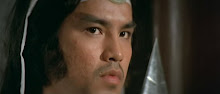
 Masashi Ishibashi as Junjo Shikenbaru
 Among the cast of THE STREETFIGHTER are a number of other luminaries featured in so many of Chiba's other pictures. Real life Karate master, Masashi Ishibashi plays one of the main antagonists, Junjo. It is he that Tokuma saves from the hangman's noose at the beginning and it is he who seeks revenge against Tokuma for selling his sister into prostitution because she and her other brother failed to pay the mercenary's required amount for his services(!) Ishibashi played villains in other Sonny Chiba movies (he reprised his role of Junjo for the sequel) as well as passive roles on occasion. He also features in numerous Chiba television series such as the SHADOW WARRIORS programs. Etsuko Shihomi (who plays Junjo's ill fated sister) was one of Chiba's most successful acolytes having a healthy career in action movies and television shows under the JAC (Chiba's Japan Action Club) banner.
 Ratnose (Rakuda), after revealing the location of Sarai to save Tokuma's life, pleads with his only friend to not abandon him
 Also among the myriad quirky characters is a doting sidekick named Ratnose (Rakuda in the Japanese version). Assuming a role akin to a nagging housewife, Ratnose is hopelessly devoted to Tokuma for saving him from certain death. He ultimately loses his only friend towards the end for disobeying his masters orders, but makes amends in one of the more poignant (and this scene contains a modicum of bizarre humor) scenes in the movie during the conclusion.
 Endoshi, the knife thrower (left) & Moroko, the blind assassin (right)
 The point at which Tokuma reveals his human side; after many scenes of bone breaking brutality, you'd never expect the man to shed a tear
 Tokuma and Junjo prepare to duel to the death
 Needless to say, the concluding battle in and around the oceanliner is one of the bloodiest and most emotion filled brawls in action cinema and recalls the adrenaline charged violence of Chang Cheh's movies for Shaw Brothers Studios in Hong Kong. In the same year, Chiba played a very similar role in another wildly gruesome action picture entitled THE EXECUTIONER (CHOKUGEKI! JIGOKU-KEN; DIRECT HIT! HELL FIST) as well as its one sequel, THE EXECUTIONER 2 (KARATE INFERNO). But it's THE STREETFIGHTER that remains the constant and ultimate Sonny Chiba blood drenched extravaganza in the minds of his fans. Whether you like it or not, this iconic, out of control film is one of the most enduring and influential international action pictures of all time. Without the presence of Shinichi "Sonny" Chiba, THE STREETFIGHTER would, in all likelihood, have been just another run of the mill Karate picture from Japan.
For a sampling of Chiba on the small screen, check out the KAGE NO GUNDAN 2 overview as well as reviews of the entire 26 episode run (broken up into sets of four episodes a piece) of the Chiba ninja program KAGE NO GUNDAN 2 found by episode in the search box above, or by clicking one of the links to the right.
This review is representative of the Optimum Asia R2 DVD
copyright 2013. All text is the property of coolasscinema.com and should not be reproduced in whole, or in part, without permission from the author. All images, unless otherwise noted, are the property of their respective copyright owners.