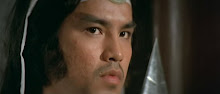
EVIL OF DRACULA 1974 aka CHI O SU BARA (THE BLOODSUCKING ROSE)
Toshio Kurosawa (Mr. Shiraki), Shin Kishida (Principal/vampire), Kunie Tanaka (Doctor Shimura), Moriko Mochizuki (Kumi), Mika Katsuragi (vampire's wife), Katsuhiko Sasaki (Mr. Yoshi), Oota Mio (Yukiko), Aramaki Keiko (Kyoko)
Directed by Michio Yamamoto
The Short Version: The last and least of Yamamoto's triple threat of unusual vampire pictures hailing from Japan and bearing little resemblance to typical Japanese cinema. Nudity and extra gore are added here including a nasty bit of "facial surgery". While several elements are revisited from the previous movies, the back story is the most expansive of the two and also adapts ideas straight out of Stoker's novel. It's not as accomplished as the previous two entries, but well worth a look for vampire lovers and Japanese cinema aficionados.

 Arriving at the Seimei Girl's School to take a job as a psychology professor, Mr. Shiraki meets the principal of the school who has lost his wife in a car accident a few days before. Asking Shiraki to take over as Principal of the establishment, the mysterious man offers that Shiraki stay the night at his home. The teacher accepts and later has an encounter with a woman bleeding from her breast and is attacked by another fanged female in a nightgown. Awakening the next morning, Shiraki assumes it was all just a nightmare. However, upon meeting the students and doctor Shimura, the professor discovers something sinister is taking place at the Seimei School and their lives as well as his own are in grave danger.

 Yamamoto's "Bloodthirsty Trilogy" is the horror version of Sergio Leone's so called "Dollars Trilogy", but where that series ended with a big bang, Toho's trifecta of terror ends on a lesser note in terms of quality. LAKE OF DRACULA was unusually well made and for whatever reason, the filmmakers were unable to capitalize on that films ingenuity by closing out the series with a fabulous finale. Instead, Yamamoto and returning scriptwriter, Ei Ogawa refurbish elements from the previous two movies, utilizing the setting of Hammer's anemic LUST FOR A VAMPIRE (1971) and also indulge in widening the scope of the story. The plot is easily the most ambitious of the three productions, but whether due to monetary reasons, or studio interference, EVIL OF DRACULA loses too much blood and fails to revive before the extended fight to the finish during the closing moments.

 There's more characters, more backstory, more vampires and more blood. But even with all these added bells and whistles the finished product feels a bit rushed in places. There's a certain degree of care taken with portions of the film, but sloppiness is in evidence elsewhere. By this time in Japan, production studios had resorted to stirring a boiling pot of untamed ingredients in an effort to satiate a starving audience that had taken to television to satisfy their hunger. To do this, an increase in sex and violence was injected in addition to a whirlwind of exasperatingly creative themes and ideas. Like Hammer's then flagging style of horror, EVIL OF DRACULA, with its increase in brutality, seems lost among the blood splattered arena populated with LONE WOLF, Sonny Chiba, the FEMALE CONVICT SCORPION and the wacky world of Teruo Ishii.

 It's not nearly as bestial as some of those above mentioned movies and associated personalities, but the attempt to mimic Hammer's gamble to maintain the attention of a weary viewership by adding more gore and bare flesh is noticeable. Not only are there many scenes of nubile Nipponese lovelies parading around in diaphanous gowns showing some skin, but the vampires conduct their business below the neck this time out--from the jugular to the mammaries. The setting at the girls school secretly run by two "Vampire Lovers" is a curious nod to the aforementioned LUST FOR A VAMPIRE, one of the least interesting of all of Hammer's output. With the addition of breast biting the gore is increased with a nasty scene that barely escapes being nothing more than crass exploitation. In it, the Principal's vampire bride wishes to put the bite on Shiraki. To do this, she decides to gorily cut the face off of one of the girls and attach it to her own! The grimness of the scene is accentuated by seeing the shadow of the crude procedures aftermath on a wall where the image of a crow is seen pecking away at the dead girls mutilated face.

 The way the film repeats various shocks and horror set ups from the previous movies shows the makers were having trouble squeezing more plasma from the central character in a fresh manner. Not only that, but on more than one occasion, the picture seems clueless about which direction to take and even when to end things. The conclusion itself is strained in its effort to reach the 80 minute mark. The fight with the vampires goes on longer and is more extravagant in terms of how many walls, windows and furniture are broken, but it seems more out of desperation than necessity. The first two movies were successful in their ability to capture a palpable sense of dread emanating from the encompassing feeling of isolation. EVIL OF DRACULA manages that as well, but only fleetingly and must also resort to making the connection through dialog as opposed to capturing desolation visually.

 Mori Kishida is less imposing here and unlike the previous movie where he never utters a word till the end, his character (once more a nameless monster who is only referred to as 'the Principal') this time out is cunning in that he covertly hides his animalistic nature till opportunity presents itself. At the end when Kishida once more lets loose his vampiric personality, he's less fearsome than before, almost a parody of the savage monster he played in LAKE OF DRACULA. That's not to say Kishida's performance isn't convincing, only not nearly as effective as the earlier movie. He hisses and snarls far too much. He excels in one sequence where his characters deceptive nature comes into play when the police pay him a visit after a particularly raucous evening leaves a girl dead and another person missing.

 One area the film surpasses the others is in its scope. While he's not called by name, an ancient tale is unraveled that a white man shipwrecked on Japan's shores 200 hundred years ago was tortured for being a Christian. Denouncing his god and invoking the devil, the foreigner was banished to the desert where he was forced to drink his own blood to survive. Kidnapping a 15 year old Japanese girl, the foreigner disappeared back into the desert wilderness with his soon to be vampire bride. While it isn't made clear till the final scene, these two "Japanese" bloodsuckers have evaded detection by gruesomely assimilating the identities of their victims as described a few paragraphs up. While never referred to as Dracula, this major plot point is the most blatant connection to Stoker's novel. Another story idea borrowed from Stoker is the inclusion of a previous teacher who was driven mad and imprisoned within an asylum. Shiraki pays the man a visit in an effort to learn more information about the sinister Principal.
 Riichiro Manabe's score is lackluster with only the opening and closing themes being remotely interesting. The rest is an abrasive mix of inharmonious sounds thrown together. It sounds like an experimental score, but fails at every turn although the ghostly concluding theme is the sole cue that captures a Japanese flavor. Toshio Kurosawa bore an uncanny resemblance to Sonny Chiba and he can be seen in such fare as LADY SNOWBLOOD (1973), HANZO, THE RAZOR: THE SNARE (1974) and PROPHECIES OF NOSTRODAMUS (1974). He also played the main villain in Chang Cheh's THE WATER MARGIN (1972), his features hidden beneath a hair piece and goatee. Katsuhiko Sasaki is the entranced vampire servant, Yoshi, the French literature teacher who frequently spouts macabre poetry. Sasaki was featured in both GODZILLA VS. MEGALON (1973) and TERROR OF MECHAGODZILLA (1975). It should also be noted that all three Japanese DVD's of these films have commentary tracks.

 Even though it expands on themes and territory explored in the previous two movies, EVIL OF DRACULA comes up short even repeating shots from its predecessors--a vampirized girl falls over a ledge, a wailing chant is heard in the distance and explored leading to the protagonist receiving an inexplicable bump on the head, thunderstorms, a doctor of science proficient in folklore and Mori Kishida dressing the same as he did in LAKE OF DRACULA. Breaking no new ground and bearing a pallid complexion next to the first two films, this average third picture is still worth seeing especially to lovers of vampire movies and those tolerant of Hammer's 70s output.
The subtitled DVD-R which uses the superior Japanese DVD as a source, can be purchased HERE.
 LAKE OF DRACULA 1971 aka NOROI NO YAKATA: CHI O SU ME (LAKE OF DEATH: THE BLOODTHIRSTY EYES) aka THE BLOODTHIRSTY EYES aka JAPULA
Midori Fujita (Akiko), Choei Takahashi (Saeki), Sanae Emi (Natsuko), Mori Kishida (vampire)
Directed by Michio Yamamoto
The Short Version: The second of Toho's "Bloodthirsty Trilogy" is a unique take on the more widely recognized European styled bloodsucker as told from an Eastern perspective. Most of the familiar accessories of the vampire film are on hand here with Yamamoto playing it safe by paying tribute to the blood drinking cinema of old and what was popular at that time. There's a surprising amount of scares and suspense as well. Mori Kishida goes for the jugular as the "Dracula" of the films title and his frightening, feral performance stands with other actors who've previously donned the Count's cape.

 Akiko, a beautiful young artist, shares a boat house with her sister, Natsuko at Lake Fujimi. Preoccupied with completing a macabre painting, Akiko hopes to come to grips with a nightmarish occurrence from when she was a little girl by visualizing the frightening image of a pair of piercing, golden eyes on her canvas. Not long after, a large box arrives at the secluded lakeside locale containing a coffin. Soon, bodies of young girls begin turning up drained of blood. Akiko's boyfriend, Saeki, is a doctor and after surmising something diabolical is taking place, hypnotizes her to learn if there's a connection between her childhood dream and the inexplicable happenings near her lakeside home. The answer lies in Akiko's hometown of Nanto. Both she and Saeki head there to locate the isolated estate where Akiko's terrible childhood ordeal took place.

 With Shin Toho out of business in the early 60s and Daiei going bankrupt in 1971, Toho stepped into the horror arena to carve their place in the genre. The company's THE VAMPIRE DOLL from the previous year was successful and lead to this, the first of two unrelated sequels. Toho, like Hammer after them, had a YORGAsm at the notion of a modern day bloodsucker when AIP's COUNT YORGA, VAMPIRE (1970) made millions and showed that a sinister character prevalent in oldeworld trappings could be successfully transplanted to a modern setting (not that it hadn't been done before). For years Japan had chiseled their own identity within the horror genre with such period terror tales as the genre defining GHOST OF YOTSUYA (TOKAIDO YOTSUYA KAIDAN [1959]) and the ominous B/W spooker KURONEKO (1968) among so many others. Like America, Great Britain, Italy, Spain and Mexico, Japan created their own unique vision of Gothic horror.

 Dabbling in vampires both traditional and those of a more westernized look, Michio Yamamoto's trilogy--specifically the second and third entries--explored foreign supernatural realms, but within a Japanese framework. While LAKE OF DRACULA recalls the YORGA films, one could also draw comparisons with the modern day series, DARK SHADOWS, a supernatural soap opera from Dan Curtis that enjoyed its biggest success when it introduced Barnabus Collins--a vampire--into the mix in 1967 and garnered the first of two theatrical movies beginning in 1970. Fans of the blood drinking undead will ultimately draw comparisons with Hammer (there's at least one script idea that may have been inspired by a similar occurrence in BRIDES OF DRACULA), but the YORGA and DARK SHADOWS connection is undeniable. Viewers will also notice shades of Stoker's original novel, too. Regarding Hammer, the third film in the series, EVIL OF DRACULA (1974), has LUST FOR A VAMPIRE (1971) stamped all over it.

 Probably the single most curious factor specifically about LAKE OF DRACULA is that Japan's history of the supernatural isn't known for classical interpretations of vampires, a creature more widely associated with European folklore. There had been a few Japanese horror films that featured westernized vampires in the 50s and 60s such as THE LADY VAMPIRE (ONNA KYUKETSUKI) from 1959. This was a modern day monochrome horror opus bearing off kilter elements that seemed to derive more sustenance from the Mexi-horrors than from the examples laid down by Universal and Hammer. It's safe to assume Japanese production company's were keen to experiment with a non traditional mythos in the hopes of scoring good revenue considering how popular their North American variants had been in the 1930s and onwards in addition to the British "cover versions" that began cropping up in the late 1950s.
 Japanese legends have their own take on the undead bloodsuckers among dozens of fearsome Yokai (demons, or monsters), but they are vastly different from the more popular westernized effigy of the caped count Dracula and his bloody brethren. That none of these vampiric monsters in Japanese folklore resemble anything remotely similar to the Anglo mythology associated with these creatures of the night makes these peculiar entries all the more interesting. It would be the same if a North American film company produced hopping vampire movies, a wildly popular sub genre in Hong Kong cinema. Furthermore, there was at least one such Western movie with Eastern influences entitled THE JITTERS from 1989.

 Yamamoto obviously knew his subject matter extremely well and expertly captures all the major components of classic vampire cinema. Of course, nothing would work if you had a less than intimidating performance for the lead antagonist and Yamamoto got great mileage out of Mori Kishida, whom Kaiju fans will remember as the Interpol spy from GODZILLA VS. MECHAGODZILLA (1974). Kishida dominates this film as the vampire--the "Dracula" of the title. Actually, his character is a descendant of the Transylvanian Count, the unholy progeny of two generations that enjoyed a normal bloodline. It's revealed that Dracula had, at one time, taken a Japanese bride and this later distant relative carries on the famed devils nocturnal activities. His character is never given an actual name, though. Kishida brings a fierceness to the role that doesn't rely on a lot of dialog to be scary. What few passages the script gives him (he doesn't talk till near the end) clarify everything that has happened up to that point.

 The topic of God and the Devil, often a relative subject in these movies, is flirted with, but left predominantly unexplored. Oddly enough, considering how "un-Japanese" the film is, religious symbolism and Christian imagery are noticeably absent from this picture as are some of the classical methods with which to dispatch the undead monsters. Crucifixes aren't discussed, but burning and a stake through the heart are stated as the only way to dispatch one of these foreign devils. Some of the spoken dialog during these moments of revelation allude to the notion that vampirism was strictly a foreign affliction before Dracula's penetration of Japan's population.
 In addition to some of the cast and crew from the previous movie, Riichiro Manabe returns to deliver another off kilter soundtrack, but takes a more foreboding approach this time out lacking the forbidden and dark whimsy of the first picture. Dreams and the subconscious are major plot devices in the script. Manabe's score taps into that aspect with some primarily subtle, but encroachingly sinister tunes that bear a slight hint of their Japanese origin, sounding substantially distant from what is normally associated with Japan cinema from this time period. The performances are effective for what most of the cast are given to work with, yet the role of Akiko is given a good deal of depth and attention far more than any of the participants in the previous picture. Incidentally, it should be noted that the Japanese DVD contains a commentary track which would likely prove beneficial to the making of this film if it were ever translated.

 LAKE OF DRACULA, like its predecessor, breaks no new ground, but delivers a nominally eerie 80 minutes that's frightfully well done. The director successfully captures several shock moments and dutifully builds a searing sense of suspense and impending dread. If you have a fondness for bloodsucking cinema, then LAKE OF DRACULA will be easy to sink your teeth into and it's doubtful loyal fans of vampire lore will come away disappointed. It's nothing you haven't seen before, but still a refreshing view from the perspective of a country more widely known for their samurai fables, period set ghost tales and giant monster pictures.
You can buy the subtitled DVD-R, using the Japanese DVD as the source, HERE. This movie, along with the other two in the series, were released separately and as part of a box set in Japan. They were also released to disc in the United Kingdom.
copyright 2013. All text is the property of coolasscinema.com and should not be reproduced in whole, or in part, without permission from the author. All images, unless otherwise noted, are the property of their respective copyright owners.