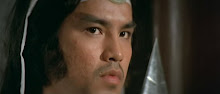
Episode 3: GOODBYE, TEARS (NAMIDA YO SAYONARA) ****
 Toru
and Kaoru, friends of Gen and the MAC Team are being raised by their
dad after their mother died. Leaving the MAC training facility one
night, a mysterious creature kills the man in front of his kids and
leaves a metal object at the scene. Gen Otori becomes seriously
concerned upon seeing the object and notices it has the face of Ultraman
Leo on it. Both Gen and Goro must now figure out who will take care of
the newly orphaned siblings. MAC members, Suzuki, also a family man,
decides to let the kids stay with him temporarily. After leaving, the
deadly creature attacks once more, killing Suzuki and quickly leaves the
scene. On another night, Captain Moroboshi is ambushed by the alien
till Gen arrives and forces it to flee. Later, Moroboshi informs Gen the
alien is named Turuk, an outer space monster with flesh-shredding
blades for hands. To defeat Turuk, Gen must learn yet another martial arts technique to apply to his growing Leo skill set.
Toru
and Kaoru, friends of Gen and the MAC Team are being raised by their
dad after their mother died. Leaving the MAC training facility one
night, a mysterious creature kills the man in front of his kids and
leaves a metal object at the scene. Gen Otori becomes seriously
concerned upon seeing the object and notices it has the face of Ultraman
Leo on it. Both Gen and Goro must now figure out who will take care of
the newly orphaned siblings. MAC members, Suzuki, also a family man,
decides to let the kids stay with him temporarily. After leaving, the
deadly creature attacks once more, killing Suzuki and quickly leaves the
scene. On another night, Captain Moroboshi is ambushed by the alien
till Gen arrives and forces it to flee. Later, Moroboshi informs Gen the
alien is named Turuk, an outer space monster with flesh-shredding
blades for hands. To defeat Turuk, Gen must learn yet another martial arts technique to apply to his growing Leo skill set. The
dark aura that permeated the first two U-LEO shows courtesy of writer
Taguchi Shigemitsu is maintained for these next two shows, another
two-parter -- this one featuring a deadly sword-slinging alien that
enjoys slicing humans in half. In this series the giant monsters also
wreck havoc in human form, and Alien Turuk wallows in it. In a shocking
bit of violence barely five minutes into the show, Turuk cuts two innocent humans in half -- in front of children no less!
The
dark aura that permeated the first two U-LEO shows courtesy of writer
Taguchi Shigemitsu is maintained for these next two shows, another
two-parter -- this one featuring a deadly sword-slinging alien that
enjoys slicing humans in half. In this series the giant monsters also
wreck havoc in human form, and Alien Turuk wallows in it. In a shocking
bit of violence barely five minutes into the show, Turuk cuts two innocent humans in half -- in front of children no less!
As
a man-sized alien, Turuk has a metallic appearance about the face, and
possesses swords for hands. He is also proficient in martial arts style
combat; much like all tokusatsu suit monster creations from this time
period.

 In
his giant monster form, Turuk looks totally different; more reptilian
in nature. His sword arms are now extensions protruding from his
forearms. He moves incredibly fast and dishes out some pain to U-Leo in the climactic fight. Tatsumi Nikamoto (underneath the Leo wetsuit)
jumps, chops, and somersaults all over the miniature set when he isn't
being pummeled by Turuk. He rushes to battle the monster prematurely
before mastering his tri-attack maneuver to counter the giant monsters
dual strike. There's a great cliffhanger where Leo's color timer runs
out (he lasts for less time in Earth's atmosphere compared with other Ultra heroes), Turuk delivers a final blow sending Leo below the watery depths of the harbor.
In
his giant monster form, Turuk looks totally different; more reptilian
in nature. His sword arms are now extensions protruding from his
forearms. He moves incredibly fast and dishes out some pain to U-Leo in the climactic fight. Tatsumi Nikamoto (underneath the Leo wetsuit)
jumps, chops, and somersaults all over the miniature set when he isn't
being pummeled by Turuk. He rushes to battle the monster prematurely
before mastering his tri-attack maneuver to counter the giant monsters
dual strike. There's a great cliffhanger where Leo's color timer runs
out (he lasts for less time in Earth's atmosphere compared with other Ultra heroes), Turuk delivers a final blow sending Leo below the watery depths of the harbor.
 The
monster action is exciting and well choreographed; and the sight of
Turuk splitting buildings and MAC ships in half gives these scenes
additional punch. It moves very fast, and fans of karate/kung fu genre
product get their kicks while tokusatsu fans get their suit action fix.
The
monster action is exciting and well choreographed; and the sight of
Turuk splitting buildings and MAC ships in half gives these scenes
additional punch. It moves very fast, and fans of karate/kung fu genre
product get their kicks while tokusatsu fans get their suit action fix.
Furthermore,
the human drama is handled well for a series that eventually wanders
all over the map in terms of tonal shift. For now, things are
consistently grim, and the series wholeheartedly embraces its downbeat
tone later in the run with some shocking turn of events.
 Dan
Moroboshi gets as much, if not more screen time than Gen does. For all
its action, the writer manages to squeeze in a bit of subtle exposition
for its crippled Captain. Since he can no longer transform into
Ultraseven, he acts as the Obi Wan Kenobi of the series -- training Gen
in his human state to adapt martial arts skills that will accentuate his
Leo techniques. There's one scene where Dan looks intently at his Ultra
Eye -- knowing it is useless to him after his bone-shattering ordeal with the Gillas Brothers and Alien Magma in U-LEO's first episode. This brief scene, bereft of dialog, says more about his emotional state than any melodramatic monologue could.
Dan
Moroboshi gets as much, if not more screen time than Gen does. For all
its action, the writer manages to squeeze in a bit of subtle exposition
for its crippled Captain. Since he can no longer transform into
Ultraseven, he acts as the Obi Wan Kenobi of the series -- training Gen
in his human state to adapt martial arts skills that will accentuate his
Leo techniques. There's one scene where Dan looks intently at his Ultra
Eye -- knowing it is useless to him after his bone-shattering ordeal with the Gillas Brothers and Alien Magma in U-LEO's first episode. This brief scene, bereft of dialog, says more about his emotional state than any melodramatic monologue could.
Gen (Ryu Manatsu)
is still an excitable hot-head, his eyes threatening to fall out of his
skull at any given moment. The series continues its martial arts movie
template by having Gen train in various techniques to battle the monsters all the while
brandishing his best Sonny Chiba expression.

 This
episode not only marks the first appearance of the two kids Toru and
Kaoru, but it's significant for its trend of killing off members of the
MAC team. Suzuki barely recites his few lines before he's felled by
Turuk's blades. Other affiliates of the Monster Attack Crew die, but not
all given much audience connection outside of a face in the crowd, or
the casual line delivery.
This
episode not only marks the first appearance of the two kids Toru and
Kaoru, but it's significant for its trend of killing off members of the
MAC team. Suzuki barely recites his few lines before he's felled by
Turuk's blades. Other affiliates of the Monster Attack Crew die, but not
all given much audience connection outside of a face in the crowd, or
the casual line delivery.
The impressive battle carrier, the MAC 1 (or the MAC Macky 1)
returns, but is seemingly MIA after this -- remaining docked in the
teams space station. Their attack jeep was seen in the series opener,
and it gets some action briefly here. The MAC Attack Jeep has a mounted
bazooka and some laser weapons. It's just as garishly colorful as the
rest of the groups hardware and attire.

'Goodbye Tears' is
just as strong a show as the opening two-parter. The action and drama
finds a stable medium with which to further the story; and thus far
ULTRAMAN LEO delivers quite a bit of everything that attracts fans to
this genre. The series kind of loses its way later on, but for now,
U-LEO is proving to be a radically different approach to familiar
material.
MONSTERS: Alien Turuk (human sized and giant form)
WEAPONS: MAC 1 carrier; MAC #s 2,3; MAC Attack Jeep
To be continued in Episode 4: A VOW BETWEEN MEN!!!