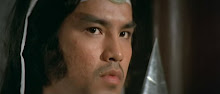
THE LADY ASSASSIN 1983 aka APOCALYPSE IN THE QING PALACE aka REVELATION IN THE QING PALACE
Liu Hsueh Hua (Lu Si Niang), Tony Liu Yung (Yong Zheng), Mok Siu Chung (14th Prince), Norman Tsui Siu Keung (Tsang Jing), Jason Pai Piao (Nian Geng Yao), Sun Chien (Gan Fung Chi), Yuan Te (Bai Tai Guan), Johnny Wang Lung Wei (Lord Loong Foh Do), Ku Feng (Lu Liu Liang), Yang Tsing Tsing (Jade), Daisy Cheung King Yu (Pearl), Kuan Feng (Lord Chang Tieh Yu), Huang Mei Mei (Lu's Daughter), Ching Miao (Emperor Kang Si), Tony Lu Chin Ku (Ninja)
Directed by Lu Chin Ku
The Short Version: Tony Lu Chin Ku’s lavish tale of court intrigue, betrayal and revenge is one of the best swordplay films you’ve never seen. It was largely ignored during its original release due to a rise in modern day stunt action and romantic comedies; and with an increase in television series production quality, you could see the same kind of Swordplay action at home for free. The plot of THE LADY ASSASSIN has been told many times before and since, and it's told particularly well in director Lu's melding of folk tale with the historical. Stylish, bloody, violent and packed with drama and tragedy, THE LADY ASSASSIN closes its curtain with the single greatest final shot in movie history.

 The emperor is near death and among his sons, the choice of successor is between the 4th and 14th princes. Feeling his father will choose his youngest to succeed him, the 4th prince tries to buy off his younger brothers ally and bodyguard, the honorable swordsman Tsang Jing. When this fails, the 4th Prince meets Nian Geng Yao, an arrogant soldier who defeats him in a fight. When Nian Geng Yao learns this commoner he’s beaten is actually the 4th Prince, he becomes his loyal subordinate. Now Prince Four has his own trusted confidant. There is still the matter of Prince Four being chosen.

 He learns of a noble scholar named Lu Liu Liang who may be able to help him. Fiercely anti-Qing, Prince Four promises Lu and his equally righteous family of Han’s that should he become emperor, he promises to implement equal treatment under the law between Han and Manchu. The only way to ensure the 4th Prince ascends the throne is to alter the imperial decree. Lu’s niece, Lu Si Niang, is tasked with stealing the document, hidden somewhere within the “Just and Open” chamber of the palace. She succeeds and her uncle doctors the decree to now state the throne will go to Prince Four instead of the intended 14th Prince.
Adopting the name Yong Zheng, the new Qing emperor quickly angers the Han’s that helped him by not keeping his promise. Instead, he tries to eliminate them and any others who threaten his reign of Manchurian hegemony.

 The story of Emperor Yong Zheng and especially of Lu Si Niang has been told many times in both film and television. Just to name a few of them, the character of Lady Lu was originally the focal point of director Cheng Kang’s THE FLYING GUILLOTINE II (1978) when he started the film in January of 1976 before leaving the project due a series of problems you can read about HERE. A grim and gloomy television series from 1980 titled DYNASTY told the story over the course of 57 episodes. THE REBELLIOUS REIGN, a 1980 movie production, told the story from the POV of Nian Geng Yao, played by Pai Piao in LADY ASSASSIN. Tsui Siu Keung also stars as the 4th Prince in this independent production. Then there was another TV series, a different and much more upbeat one in 1984 titled THE LEGEND OF LU SI NIANG that ran for 25 episodes.
 Director Liu Chia Liang made a comedic, and heavily modified version of the story in 1979 under the title of DIRTY HO. He used the throne usurpation largely as a backdrop for Kung Fu comedy vignettes. And then there’s director Lu’s hyper-kinetic, tragedy-fueled, blood-soaked sword-slinger THE LADY ASSASSIN, shot in the summer of 1982 and released in January of 1983…. One of the classiest films of its kind you’ve never seen.
The following is a review of the film via the new bluray from 88 Films; and an article detailing the making of this woefully underrated dramatic thriller--what led up to it, the shooting of it, and its release.
 When you look at director Lu Chin Ku’s independently made Kung Fu films and those he made at Shaw Brothers, you’ll see a noticeable difference. So much so that it might not dawn on you that the same man who directed THE BLACK DRAGON (1974) and TIGER OVER WALL (1980) also directed HOLY FLAME OF THE MARTIAL WORLD (1983). Lu Chin Ku started his career as an actor; but by 1973, he knew being a leading man wasn't in his future so he turned to directing movies. His directing style was different from everyone else making martial arts films at Shaw Studio. His dizzying photographic style by way of DP Ma Chin Hsing was accentuated by super-cranked wirework and action choreography by Yuan Te, Pan Chien Chun and Chung Wing.
 Director Lu wasn't entirely satisfied with his first film for Shaw Brothers, that being THE MASTER (1980); so he altered his methods for his next two pictures. This led to the executives at Shaw’s being puzzled by the approach director Lu took on those two films--THE AMBITIOUS KUNG FU GIRL (1981) and LOVER’S BLADES (1982). These were two Wuxia comedies made in an unorthodox fashion. The settings were ancient times but used modern diction and a playful, youth rebellion aesthetic; they weren’t the typical mannered swordplay the company normally made. Director Lu preferred making more serious films but the taste of the audience still leaned heavily towards the comical. He had other scripts he’d written but company executives rejected them. It was much easier to get a script to screen with comedy in it than one without it.
 Frustrated with this situation, Tony left the company for several months and made an independent comedy horror film called TOOTHLESS VAMPIRES. While he was away from Shaw’s, Lu's LOVER’S BLADES was a big hit in Singapore. So Shaw Brothers convinced him to come back. With the bump he got from LOVER’S BLADES Singapore profits, director Lu got the go-ahead to do a drama-heavy picture, which he preferred to lighter fare. So he dropped a half-finished movie he was also dissatisfied with and headed back to Shaw Studio.
He had a dark project he was especially passionate about but he wasn’t done writing it, so an adaptation of possibly the most popular version of how Yong Zheng became emperor in 1722 was up to bat. Aside from a script supervisor, no scriptwriter is credited, but director Lu wrote his version himself. Along the way some changes and additions were made.
 As was normal procedure for Chinese language movies back then, not all the roles were cast when filming began. Most of the characters were taken from history but two central to the plot are never referred to by name in the film; those being the 4th (named Yin Zhen) and 14th (named Yin Ti) sons of the Kang Si Emperor. Tony Lu’s script is faithful to the historical figures despite some not living at the same time as others; although in interviews, he points out that this popular version of the story is an unofficial historical account.
 There was certainly plenty of treachery, avarice and debauchery in the official record, but the folklore that has never been substantiated is what is often the subject of numerous motion pictures. Two examples of unverifiable facts is that Yin Zhen, the fourth prince, altered his fathers will to name himself as new emperor by having the character for “14th Prince” doctored to instead list the “4th Prince” as successor. This is a widely circulated story and does lend itself some credence considering that Yong Zheng did indeed ban and or censor any writings on his becoming emperor and anything remotely anti-Qing.

The other is that Lu Liu Liang’s granddaughter Lu Si Niang (his niece in this movie) exacted revenge on Yong Zheng by assassinating him. This revenge is enacted in the movie, and done in spectacular fashion as it is in the unofficial record; wherein Lu Si Niang was said to have broken into the palace and killed Yong Zheng with her sword.

 As portrayed in the film, Liu Hsueh Hua is fantastic as Lu Si Niang. She was one of the most beautiful actresses employed at Shaw Studio during the company's last few years of theatrical operation. She turned a lot of heads in the horror film HELL HAS NO BOUNDARY (1982), where she’s seen puking up a mouth full of wheat worms. When she got the notice to star in THE LADY ASSASSIN, she let it be known she wasn’t fond of doing period-set motion pictures. But her interest was piqued while reading Wuxia novels in the interim.
Any young actress who would stuff their mouth full of wriggling worms would surely throw themselves into a martial arts role, and that’s exactly what Liu Hsueh Hua did.

Liu wanted to do as much of the action as she could. She probably wished she hadn’t on some days; such as when she narrowly avoided serious injury while performing wire stunts in the palace sequences. Sometimes she’d be hanging in midair with nothing but a two inch wooden perch to stand on while waiting to be pulled around the set.
 On one occasion she was up in the air and the pulley and or the rig itself malfunctioned, sending her plummeting to the studio floor. To ensure there were no broken bones, filming stopped so she could be taken to the doctor. Upon her return to the set, it was back into the harness again. This time she was pulled up higher than before—up to the rafters just below the studio lights. This is a 30-40 foot high indoor set. Now she's being spun around and around in different directions vertically and horizontally; with each passing second she's hoping the harness doesn't break or some other mechanical snafu.
 Shortly before filming was finished, she spoke of this incident, stating, “I was scared out of my mind. Everyone on the ground were as scared as I was. They were telling me not to move while I was spinning. They were afraid that if I moved my head or my body at all I might hit a beam or one of the lamps, they had me so high up in the air. They finally let me down and after all this time thinking how brave I am I started crying and telling them ‘I won’t shoot anymore, I won’t shoot anymore’”.
She did compliment director Lu and how much fun it was working with him and his team. Director Lu kept a light and jovial set with a lot of energy in his directions. This translated to the screen. Liu Hsueh Hua would work on Lu's next movie, HOLY FLAME OF THE MARTIAL WORLD (1983); and again on THE BASTARD SWORDSMAN (1983) and RETURN OF THE BASTARD SWORDSMAN (1984).
 The revered scholar Lu Liu Liang, played by workaholic actor and award-winner Ku Feng in the film, wasn’t even alive when Yong Zheng took power. Lu’s anti-Qing writings did inspire the real life Tsang Jing to try and overthrow the Emperor, resulting in Lu and some of his family members being exhumed and their remains violated in some grotesque fashion. For director Lu's film version, Lu Liu Liang occupies the same time as Yong Zheng and is humiliated by him while living,

Tony Liu Yung and Jason Pai Piao essay the roles of the 4th Prince and Nian Geng Yao respectively. The depiction of both men is probably the most accurate segments of the film in relation to their historical counterparts. Probably the one major difference is that Nian was already a rising military figure in the Kang Si Emperor's militia before he became the trusted right-hand man to Yong Zheng (for a time, anyway).
 Liu Yung was a fantastic actor who rose to prominence in 1976 when his starring role in EMPEROR CHIEN LUNG was a top ten hit. Aside from an occasional run-in with the law, he was regularly in the news for his various romances that seemed as normal as any other. It was when he married Tai Liang Chun in 1983 that domestic abuse and violence came to the surface, tarnishing an otherwise impressive career by an equally impressive actor.
 As for Pai Piao, he was close friends with director Lu, going back to their days as contract actors first at major studio Cathay then at the independent film company, Yang Tze Films in the early 1970s (You can read about them HERE). A military commander with many titles to his credit, Nian Geng Yao's story was intended to have been brought to the screen in 1973 starring Bruce Lee as Nian in what was to have been his first of potentially two Shaw Brothers productions. Unfortunately, the mega-star died before he could bring the project to fruition.

 Director Lu had been shooting for five days before the role of Tsang Jing (Hui Jing in the mandarin version) was finalized. There were two actors being considered—both former employees of Shaw Brothers—David Chiang and Norman Tsui Siu Keung. David played the same character on the 1980 ATV series, the aforementioned DYNASTY. Norman had just finished DUEL TO THE DEATH (1983) at Golden Harvest, the directorial debut of former Shaw Brothers choreographer and actor Ching Siu Tung. David Chiang’s star was fading by 1982 and Tsui’s was rising after he became a major player upon his leading role in the hit series TRANSFORMATION OF THE CELESTIAL SILKWORM, aka REINCARNATED, from 1979. It was made into a movie by Shaw Brothers in 1983 as THE BASTARD SWORDSMAN and directed by Tony Lu Chin Ku.
 Shaw executives negotiated terms with both actors and went with Norman Tsui who was the best choice, after all. He’d been a graduate of Shaw’s actor training academy in 1973 but didn’t get roles of substance till his contract was almost up. It wasn’t till he signed with RTV that he became a big star and his movie career quickly gained steam thereafter. He had a reputation for being an unruly actor in that he may show up late to the set or possibly even disappear altogether. He was also a flamboyant womanizer and philanderer, and his movie roles sometimes reflected this lifestyle. His interpretation of Tsang Jing in THE LADY ASSASSIN is superb and one of his best acting turns.

 Wang Lung Wei plays Lord Long, a General Commandant to the 4th Prince who is blackmailed into participating in the plot. Loong
Fu Do (Long Ko Do in the mandarin version) is accurately portrayed in
the non-action sequences. When seven of Kang Si's sons were assembled to
hear the reading of the will just before the emperor died, Lord Long
read the document aloud, which is depicted onscreen. Lord Long disappears an hour into the movie; explained in a line of dialog that his health is declining.
 A new character is then introduced, Chang Ting Yu. Like the main and supporting characters, Chang Ting Yu was a real life court official. Unlike Long Ko Doh, who was Manchu, Chang was Han Chinese. We learn nothing about him in the movie; he just appears and has a few fight scenes till Lord Long shows up again. Played by Kuan Feng, an underrated martial arts actor, the character of Chang Ting Yu wasn’t in the original script.

 Wang Lung Wei was working on other films and as often happened back then, a production would either shut down for several days till an actor returned, or shoot around them if possible. Instead of shutting down, director Lu wrote in the new character and changed other scenes involving Lord Long, including how he exited the movie. Lord Long was originally written to have been killed by Tsang Jing. This was changed to Tsang being mortally wounded by both Lord Long and Lord Chang during a setup when Tsang believes he’s rescuing Lu Liu Liang from execution. This scene is the last we see of Long and Chang; leaving both their fates unknown.

 The ninjas weren’t in the original treatment either. Tony Lu sometimes took small roles in films he directed and he did the same while at Shaw Brothers. His role as the Ninja is probably the biggest and most memorable of his Shaw era. He has a couple of lines and cuts a formidable presence with his long hair and pale complexion. Lu as the Ninja steals the show for the handful of scenes he’s in during the last 20 minutes.
 Also among the cast are Yuan Te and Sun Chien as the two male guardians to Lu Si Niang. Director Lu tried to make Yuan a star in THE MASTER (1980), and then cast him opposite Michelle Yim (Jackie Chan's girlfriend at the time) in THE AMBITIOUS KUNG FU GIRL (1981) but he didn't catch on. He found greater success as an action choreographer, winning for Best Action Design on the Jet Li film FONG SAI YUK (1994). Sun Chien was formerly of Chang Cheh's camp, the Scorpion in THE FIVE VENOMS (1978). A Taekwondo specialist from Taiwan, he never made it as a leading actor. He left director Chang's group in late 1979 after appearing in TWO CHAMPIONS OF SHAOLIN (1980) and embarked on a string of supporting roles like the one he plays here.

 The largest of the indoor sets is a three-story recreation of the Palace of Heavenly Purity—translated in the movie as the “Just and Open Hall”. In real life, it was where the Kang Si Emperor resided; although the 4th Prince, who took the era name of Yong Zheng upon taking power, only used this enormous room for meetings with his cabinet members and for banquets. The emperors will was also hidden in this room and that’s recreated in the film via some swordplay style MISSION IMPOSSIBLE stealth maneuvers. The wildly over the top finale takes place on this huge set as well. Undercranking to speed up action scenes had been in use for years. Director Lu turned it up to a 1990s level of velocity.
 Lu Chin Ku took longer shooting this film compared to his previous Shaw pictures. The film was intended for the international market as opposed to being largely for the local Hong Kong and other southeast Asian territories. The Shaw Brothers had wanted to break into the American market for nearly two decades and periodically made attempts to do so. They’d recently co-produced BLADE RUNNER (1982) and wanted attention paid to any of their more auspicious productions, of which THE LADY ASSASSIN was one. Some of the studios renovated and newly built sets looked magnificent, giving this film a unique look that set it apart from other Shaw pictures of the day.
 Unfortunately, Chinese martial arts movies still had a negative stigma attached to them. As polished a movie as THE LADY ASSASSIN is, it likely wouldn’t have stood up with films like RETURN OF THE JEDI, OCTOPUSSY, JAWS 3D and SUPERMAN III. Meanwhile, Golden Harvest had its own co-production with Warner Brothers out in American theaters in 1983 with HIGH ROAD TO CHINA starring Tom Selleck and Bess Armstrong.
 Filming on THE LADY ASSASSIN lasted for 80 working days. This was double the usual Shaw production. Director Lu had intended to take even longer as there were aspects of the script he wanted to elaborate on and improve things in other areas. The film appears to have had exposition shaved off in favor of action. Shortly before the film was released, the final plotline referred to a character named Doctor Er Feng who lived in an isolated mountain hut where Tsang Jing hides out to recover. Lord Chang tracks him there, and this leads into the scene where he's ambushed by Chang and his archers.
 Lu Chin Ku’s average box office was a consistent HK$2 million. That wasn’t the case with THE LADY ASSASSIN. When it was released in January of 1983, it died a swift death at the box office, being removed from circulation after only five days. Director Lu was devastated. The studio executives were stunned. They thought they at least had a modest success on their hands, but the box office was a shockingly low HK$900,000. Critics were impressed by the production, noting the meticulous sets and costumes. The performances were strong across the board but the audience simply didn’t turn out.
By this time in 1983, television productions had greatly improved and people in Hong Kong could stay home and watch a television series with comparable production values for free. A week after LADY ASSASSIN disappeared from theaters, a TVB series called LEGEND OF THE UNKNOWNS aired for 20 episodes. This series took place prior to Emperor Kang Si’s feuding sons vying for the throne.

 THE LADY ASSASSIN's disastrous box office run was a wake-up call for Shaw executives. They had come to grips with their inability to keep up with current trends and adapt to them. Their martial arts films were hot sellers overseas and it’s what kept them going. In America, these films ruled television, although THE LADY ASSASSIN was missing in action there too. It wasn't till bootleg copies began circulating in the early 1990s that fans got to see this hidden gem.

 Lu Chin Ku’s visual feast may have died in Hong Kong theaters but it thrived in Taiwan where it was a big hit. Swordplay films were still major attractions for Taiwanese audiences and ASSASSIN’s success for Shaw in that market allowed director Lu to soon be able to make his passion project… a story about a revered soldier who suffers enormous pain and strife while trying to clear his name. This script is what eventually became SECRET SERVICE OF THE IMPERIAL COURT (1984), one of the most powerfully dramatic Shaw Brothers films.

 The new blu-ray presentation of THE LADY ASSASSIN looks amazing. The audio track, though, uses the same altered track created for the Hong Kong DVD release with the added music to give your stereo system something to do. You can still hear the original music in the background; and if you've never seen the movie before, you probably won't notice. Even so, the picture quality is a stunner, with all the attention paid to the sets and costumes enhancing what is one of the most polished and visually satisfying Shaw Brothers productions. THE LADY ASSASSIN missed her time to shine back in 1983; now she's got a second chance in 2025.
This review is representative of the 88 Films bluray. Specs and extras: limited edition slipcover with double-sided poster; reversible artwork; new HD transfer from the original negative in 2.35:1 anamorphic widescreen 1080p; interview with fight choreographer Poon Kin Kwan; trailer; stills gallery; running time: 01:30:33