GAMERA: THE GUARDIAN OF THE UNIVERSE 1995 aka GAMERA: DAIKAIJU KUCHU KESSEN (GAMERA: GIANT MONSTER MID-AIR BATTLE)
Shinobu Nakayama (Mayumi Nagamine), Ayako Fujitani (Asagi Kusanagi), Tsuyoshi Ihara (Yoshinari Yonemori), Akira Onodera (Naoya Kusanagi)
Directed by Shusuke Kaneko
The Short Version: While Godzilla was playing Laser Tag at Toho via Koichi Kawakita's monotonous beam battles, Gamera got an imaginative, revolutionary upgrade in Shusuke Kaneko's remake/re-imagining of Daiei's GAMERA VS. GYAOS (1967), and the series in general. With nods and recreations of scenes to its Showa era source, this updated version is geared towards an adult audience with its grotesque, foul-faced man-eating bat monster, psychic bonds to bio-engineered, jet-propelled turtles, and links to ancient civilizations.

 A Japanese naval vessel stationed in the Philippines finds an enormous atoll floating towards Japan. Not long afterward, an ornithologist receives word that a giant bird has been spotted on Himegami Island leaving destruction and dead bodies in its wake. Discovering the birds are reptilian and carnivorous, a plan is hatched to lure the flying beasts to the Fukuoka Dome so they can be captured and studied. At the same time, the atoll surfaces in Hakata Bay and reveals itself to be a gigantic flying turtle, Gamera. Learning the jet-propelled wonder is an ancient weapon created by a lost civilization, destined to duel with the evil Gyaos birds, a battle is waged on land and in the air between the two bio-engineered monstrosities.
In Japan, Godzilla had long ruled the roost when it came to giant monster movies. Having launched a new series starting in 1984, Toho's Heisei Godzilla films hit their box office stride in a big way in the 1990s. It only seemed logical that Gamera would be revived to offer competition for the radioactive lizard -- the likes of which hadn't been seen since the 1960s. In spite of high ticket sales, Toho's Godzilla series was quickly growing stale.

 Fortunately, Daiei's update of their favorite son was a breath of fresh air to the floundering daikaiju market. Echoing the serious tone of GODZILLA (1984), Gamera's second wind is a marvelous science fiction film utilizing a bevy of innovative SPX techniques by Shinji Higuchi. The original budget of $500 million yen was increased to 600 (approximately US$6 million at that time), and it's all up there onscreen. Gamera's 90s debut more or less broke even at the box office, but all the critical accolades and top ten lists it generated guaranteed there'd be a sequel. GAMERA: GUARDIAN OF THE UNIVERSE is the first monster movie to be
featured in Kinema Junpo magazines 'Ten Best' list. It was their
#6 pick of that year. Koichi Kawakita was said to have been impressed with the film and Higuchi's effects work.
Fortunately, Daiei's update of their favorite son was a breath of fresh air to the floundering daikaiju market. Echoing the serious tone of GODZILLA (1984), Gamera's second wind is a marvelous science fiction film utilizing a bevy of innovative SPX techniques by Shinji Higuchi. The original budget of $500 million yen was increased to 600 (approximately US$6 million at that time), and it's all up there onscreen. Gamera's 90s debut more or less broke even at the box office, but all the critical accolades and top ten lists it generated guaranteed there'd be a sequel. GAMERA: GUARDIAN OF THE UNIVERSE is the first monster movie to be
featured in Kinema Junpo magazines 'Ten Best' list. It was their
#6 pick of that year. Koichi Kawakita was said to have been impressed with the film and Higuchi's effects work.
 Incidentally, Higuchi began his career fresh out of high school as a modeler on the aforementioned GODZILLA (1984), itself a reworking of Japan's most famous cinematic export. His work on the 90s Gamera trilogy will likely remain his most accomplished works, at least on these shores. The SPX director was awarded for his efforts on the first two Gamera films from 1995 and 1996. Higuchi was also a director, helming such movies as SINKING OF JAPAN (2006) and the award winning NOBOUNOSHIRO (2010). Reportedly Higuchi's fondness for special effects was hugely influenced by Tsuburaya's hit show RETURN OF ULTRAMAN (1971-1972).
 Aside from the energetic, and still impressive effects work, Gamera's new look is a little edgier, but less scaly looking. He's not the defender of children that the Showa Gamera was, although he does link with Steven Seagal's daughter, Ayako Fujitani in a muddled plot device found in Kazunori Ito's script. Gamera's powers have been given a makeover, too. Instead of a flamethrower in his mouth, he emits devastating, great balls of fire. Retractable organic blades are hidden in his elbows. Gamera's famous jet propulsion method of flight is imported; and seen via CGI as opposed to the old fashioned way of live effects on set. According to Yuasa, it was difficult to show Gamera spinning; this resulted in fewer such scenes in the Showa series. The digital effects used to make Gamera spin look great, although he's seen twirling around in the sky less than he was in his early Daiei works. Additionally, nostalgia hunters will be pleased to hear the original roars for both monsters implemented here.
Naoki Manabe (above) does an incredible job inside the Gamera suit while Jun Suzuki handles the more dangerous, fiery aspects of suit acting. Manabe doesn't seem to have done much, if anything else afterward. Another actor donned the Gamera suit for the two sequels.

 Gyaos is arguably the most popular of Gamera's original opponents. Kaneko's crew of effects artists headed up by Higuchi do a fabulous job recreating him for the 90s. There have been some minor alterations and omissions to what was seen in Noriaki Yuasa's 1967 version, though. The earlier Gyaos was stiff in appearance, barely mobile in flight, and a clean set of chompers. New Gyaos was more gruesome looking with his diseased, gnarly look, and blackened teeth. The flesh-eating aspect of 60s Gyaos is retained, but his poison defense mechanism is done away with. The monsters laser beam that cuts through flesh like a knife is updated here, but unlike vintage Gyaos, version two must charge up before firing. The regenerative properties of 60s Gyaos isn't broached here. The scene from Yuasa's original where Gyaos loses his toes is recreated, but this time it's his whole foot.
Promoted as the very first female monster suit performer, Yumi Kameyama donned the Gyaos suit to go claw to claw with Gamera. Kameyama, an action-martial arts choreographer, founded her own team of action and stunt players (TEAM HANDY) with her husband Hiroshi Atsumi in 1995. Their expertise covers cinema and stage productions. Following in her footsteps were other women wishing to sweat it out with the big boys in big monster movies like Ota Ri-ai (Baragon in GODZILLA, MOTHRA, KING GHIDORAH: GIANT MONSTER ALL-OUT ATTACK [2001]) and Naoko Kamiyo (Rodan in GODZILLA FINAL WARS [2004]).

 Director Shusuke Kaneko cut his teeth as an AD on Nikkatsu Roman Porno movies in the early 80s, and made his US debut with 'The Cold' segment of the horror anthology NECRONOMICON (1993) -- an omnibus based on H.P. Lovecraft stories. Some of that Lovecraftian elements made it into his Gamera series, particularly GAMERA 3: REVENGE OF IRIS (1999). Kaneko loved monsters and monster movies from a young age, and this enthusiasm shines through in a big, if utterly dark way in his interpretation of Gamera. He got his chance to direct a Godzilla movie in 2001 with the critically lauded GODZILLA, MOTHRA, KING GHIDORAH: GIANT MONSTER ALL-OUT ATTACK. His unique brand of doom-laden theatrics were in abundance there, too.
 Another area where Kaneko's movie succeeds is in Otani Kou's score. It's a rousing selection of cues that accentuate the action, and power of the monsters. It's an exceptional soundtrack that provides a radical departure from Akira Ifukube's magnificent, iconic sounds he created for Toho's Godzilla series.

 With so much good about GAMERA '95, about the only thing in Kazunori Ito's script that just doesn't feel right is the military's bewildering decision to see Gamera as a bigger threat than Gyaos -- literally so. Despite the fact the flock of Gyaos show themselves to eat people, and are particularly good at it, they proceed to go after the outsized turtle instead. The only lousy explanation given is that if it were a Tyrannosaur on the
rampage, then people would want it captured and studied; so the
military vociferously attack Gamera, blatantly siding with Gyaos even
while the birds continue enjoying their human buffet. Not sure about
most people, but if there was a gigantic, sabre-toothed flying turtle,
that didn't show interest in eating people, that would be the one to
study. Naturally they come to their senses, but it begs the question, 'what took so long?'
With so much good about GAMERA '95, about the only thing in Kazunori Ito's script that just doesn't feel right is the military's bewildering decision to see Gamera as a bigger threat than Gyaos -- literally so. Despite the fact the flock of Gyaos show themselves to eat people, and are particularly good at it, they proceed to go after the outsized turtle instead. The only lousy explanation given is that if it were a Tyrannosaur on the
rampage, then people would want it captured and studied; so the
military vociferously attack Gamera, blatantly siding with Gyaos even
while the birds continue enjoying their human buffet. Not sure about
most people, but if there was a gigantic, sabre-toothed flying turtle,
that didn't show interest in eating people, that would be the one to
study. Naturally they come to their senses, but it begs the question, 'what took so long?'
Steven Seagal's daughter, Ayako Fujitani makes her big screen debut here, and mostly sleepwalks through the whole thing. Granted, by the third movie, she seemed to deliver her lines with a modicum of conviction. She makes little impression aside from being some sort of vassal for Gamera, with her lifeforce linking with his. It's never sufficiently explained, and she's never sufficiently convincing here.
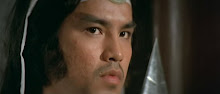
 For those who fondly remember the Showa era Gamera films, viewers may recognize Kojiro Hongo during the opening sequence of GAMERA: THE GUARDIAN OF THE UNIVERSE. Starring in GAMERA VS. BARUGON (1966), GAMERA VS. GYAOS (1967) and GAMERA VS. VIRAS (1968), Hongo, a popular leading man at that time, plays the ship captain who first spots the floating atoll that turns out to be Gamera. He's also the lead in Misumi Kenji's RETURN OF DAIMAJIN (1966)
 Shusuke Kaneko, Shinji Higuchi, and the rest of the crew redefined Japanese monster cinema with GAMERA (1995). An exceptional work, and one that didn't go unnoticed overseas. While Godzilla's death in GODZILLA VS. DESTROYER (1995) made a lot more money, it pales in comparison to the ingenuity on display here. Just like in Japan, the critics in America took notice to the new Gamera, and it was even given a limited theatrical release; something the '95 Godzilla didn't get. GAMERA '95 is so different from prior giant monster movies, it's the sort of film a non-fan might find themselves engrossed by for 95 entertaining minutes.
This review is representative of the Mill Creek Bluray set.