Showing posts with label The Mute Samurai. Show all posts

Sunday, November 23, 2014

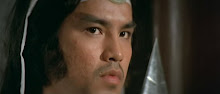
The Mute Samurai: Episode 6


OSHI SAMURAI -- KIICHI HOGAN (MUTE SAMURAI -- DEMON HOGAN)

CHI KAZE TOGE (A WHIRLWIND OF BLOOD) ***1/2

Tomisaburo Wakayama (Kiichi Hogan), Hama Yuko (O-Ran), Yamauchi Akira (Shiba Gunbei), Nakada Yoshiko (O-Mitsu/Mitsuryu), Tatsuo Endo (Councillor Sakata Gyobu)

Directed by Ozu Hitoshi


Demon Hogan has a fateful encounter with Shiba Gunbei, a samurai bent on avenging a wrong against a British swordsman named Blood. Mirroring his own plight against Gonzalez, the two become friends. Losing his duel against the British fencing specialist, Hogan aids in restoring the name of Gunbei's Itakura Clan, and eliminating two duplicitous usurpers engaged in slavery and illegal trade with Blood.

The pet project of Gosha Hideo and Wakayama Tomisaburo continues with quality storytelling in this, the sixth episode of THE MUTE SAMURAI (1973-1974). It fumbles a few times with some sloppiness, but this being small screen samurais on a budget, not everything is perfect. It's one of the busier episodes containing enough material for a feature film. For the most part, all the elements are balanced out well under the direction of Ozu Hitoshi.


There's a nice collage of scenes that show us what a day in the life of a silent samurai bounty killer is like. It's never boring as the opening minutes attest. Beginning with the pre-credits sequence, Hogan uses a gun to dispatch a handful of ambushers. This six shooter makes regular appearances as the series progresses, and this is the first time we see Hogan using one. Collecting bounties has its own price, and the Demon has a number of folks after him. However, Hogan hasn't lived for as long as he has based solely on his sword skills.

Despite his trail of vengeance, Demon Hogan hasn't lost touch with his humanity, either. As violent as this series is (episode five saw director Wakayama in full-bore Misumi mode), the central characters emotional side never diminishes. We see more of that here. It's especially notable in the way he treats a female character from a previous episode.


Chokui Kinya's script reintroduces a particularly nasty character from episode three, O-Ran, the female leader of a band of butchers that terrorized local villagers experiencing a drought. Director Ozu is no Misumi, and the O-Ran character is now in with a much milder gang of robbers. Upon running across Hogan again, she suddenly decides to change her ways; giving back the money she stole, and explaining she only committed crimes to pay her sisters debts. She's definitely the polar opposite of the way she's depicted in that previous episode; yet O-Ran indeed proves her mettle to Hogan, and seemingly falls in love with him in the process! At first this angle appears to be a subplot, but ends up intersecting, then detouring the path this episode takes at the outset.

 
Shiba Gunbei (Yamauchi Akira of GODZILLA VS. HEDORAH, BABY CART IN THE LAND OF DEMONS, BULLET TRAIN) is an interesting character. Both men are kindred spirits in that they share so much in common in regards to their predicaments. Gunbei reminds Hogan not only of himself, but of his late father. Hogan is even mistaken for Gunbei early in the show; which is how the two stories connect. The difference between the two men is that Gunbei isn't the swordsman that Hogan is. Also, when Gunbei is fatally wounded by Blood, he doesn't impose his failed mission on Hogan; the bounty hunter decides to finish it because of the debts of blood they share.


Unfortunately, the Anglo's working on this show aren't very convincing when they're required to perform action. In the sword duel between Gunbei and Blood, the camera is tight on the two men with rapid edits (vainly) attempting to cover up for the Anglo performers lack of menace in the choreography. This is compensated during the finale when Hogan does a Django on Blood's hands before he ever has time to draw his rapier. The actor playing him is supposed to be British, but when he speaks, he has an American accent.


For whatever reason, the makers of this episode dressed up a Japanese extra as Blood's black servant. There weren't many black actors working in Japan at this time. Willie Dorsey played the Spanish villain Espinoza's servant in episode two, so likely it might of been viewed as odd to see the same actor playing the same role in a different capacity. Still, seeing an obvious Japanese man with black paint and an Afro is about as odd as you can get.


'Whirlwind of Blood' does close out with a bang as Demon Hogan lays waste to clan usurper Councillor Sakata (played by prolific villain actor Tatsuo Endo), his men, and the British fencer Blood. The choreography is strong and Wakayama looks very powerful in his variety of maneuvers. The makers employ some uniquely creative camera angles that make this episode stand out. Aside from a few weaknesses, this is a strong entry in this well written series.

TO BE CONTINUED IN EPISODE 7: A SILENT PARTING OF THE WAYS!!!

You can buy the series HERE

Monday, December 9, 2013

The Mute Samurai Series Overview Part 2


Wakayama wears the role of Kiichi Hogan like a glove. It fits him beautifully, and gives him a unique opportunity to display his acting range. Despite lacking the power of speech, the actor handles the part brilliantly -- effectively harnessing an array of emotions with subtle facial expressions and body language. He shows a great deal of versatility here that goes a long way in making the viewer curious about what the next episode will bring.


The actor doesn't excel in the acting department alone -- he wholeheartedly convinces in the action department as well. This should come as no surprise considering Wakayama's extensive theater and martial arts background; and he puts his sword skills, as well as some powerful hand-to-hand combat to good use here. The series went through a few different choreographers, but Kusumoto Eiichi stayed on board the longest. Well known stuntman Shishido Daizen also worked on the show.


With this being a Japanese version of THE GREAT SILENCE (1968), the Italian western accouterments wouldn't be complete without guns. Kiichi Hogan first uses a gun in episode six, 'A Whirlwind of Blood'. At the beginning of the show, a group of samurai approach him as he stands atop a sand dune. Once they get within sword reach, Hogan pokes the barrel of a pistol through his poncho and kills them all. By episode 17, a gun becomes a regular addition to the bounty hunter's arsenal.


Demon Hogan had a couple other add-ons that made his character distinctive, and different from the Silence character essayed by John-Louis Trintignant in the '68 Italian movie. Inside his straw hat there was hidden a rearview mirror. Occasionally he'd flip down this mirror to see who was following, or approaching his direction. It's a neat little gadget, but isn't really needed because he senses those nearby, anyways. The other is a small Akita puppy that acts as his trusted companion. The little fellow mainly just looks cute and adds an extra dimension to Kiichi's emotional side. Once in a while the pup helps out in a small way. He's never given a name.


The show isn't perfect, of course. The low budget is apparent at times, and the series seems to run out of steam towards the finish line. The last episode for instance will likely divide the fans. It's both refreshing and frustrating in how the show wraps up. But there's a bigger problem the series encounters. As often is the case in Asian movies, little care is put into the casting of Anglo actors. Some of them deliver their lines convincingly, but when the script calls for them to participate in the action, these episodes are woefully crippled. The camera is always as tight on the foreign actors as possible to cover up their sword slinging deficiencies; and this even makes Hogan and others seem weak at times. It makes one wonder why they didn't just use a stuntman in wide shots and use the actor for close ups. But then, this would go back to Katsu's insistence in keeping the budgets low and getting the required shots as quickly as possible.


There are also some anachronisms to be found. Kiichi's fascination with guns begins with episode 17; and his choice of firearm is a colt .45. The setting of THE MUTE SAMURAI takes place towards the end of the Tokugawa Shogunate (the Bakumatsu Era), so this model of revolver Kiichi uses hadn't surfaced yet. Still, it mirrors Silence's exotic handgun -- a Mauser -- from Corbucci's movie this series bases its storyline on. Silence had a unique gun as does Kiichi Hogan -- a few years too early.


Aside from our lead bounty hunter, there's a bounty of recurring characters who crop up occasionally. These include Hogan's fiance from his younger years, Kikuno (Matsuo Kayo). Her character is one of the more dynamic arcs of the series. The character of Tokaiya Shinbei (Oki Minoru) figures into the plot on a few occasions mainly to set up Kiichi's attempts to sail for Spain. The character of O-Kiku (Judy Ongg) is a key proponent in one episode, but her appearance later in the series adds nothing. The character of O-Ran (Hama Yuko) is better served appearing first as a villainess, before turning up in a later episode having change her lifestyle. Manji (Katsu Shintaro) is the best, most oft seen recurring character. He's introduced as this mysterious, Zorro-like character who leaves his mark wherever he goes. We soon find out Manji serves an even bigger purpose, on multiple levels, as the series progresses.


Tomita Isao's score for THE MUTE SAMURAI is mesmerizing. His apocalyptic, sonic assaults are reminiscent of his work on Toho's PROPHECIES OF NOSTRADAMUS from 1974. His musical stylings suit this powerfully downbeat show. The composer also added an incredibly catchy theme song that debuted at the end of episode five, 'The Fateful Encounter'. With lyrics by Yasui Kazumi, 'Chased By Loneliness' was sang by Katsu Shintaro. Beginning with episode six, this song replaced the music-only number that played over the credits of episodes one through five. Katsu also sang an additional interlude heard only in episode thirteen, 'A Dark-Haired Human Sacrifice'. By episode fifteen, 'The Bounty Hunters Who Vanished', Tomita Isao introduced an Italian western influenced whistling theme. It, too, is very catchy. This whistling cue dominates the remainder of the series.


For a show with a mood like THE MUTE SAMURAI, it's a no-brainer that veteran doom and gloom director Kenji Misumi would be around to helm some episodes. Having worked with virtually every big name in Japanese cinema, Misumi's resume is judiciously filled out with one classic after another. From his unique B/W version of GHOST OF YOTSUYA (1959); to THE TALE OF ZATOICHI (1962); to the bulk of the LONE WOLF & CUB films; and his last movie before his death, THE LAST SAMURAI (1974), Misumi's signature is found on five MUTE SAMURAI episodes that are as varied as they are engaging.


Wakayama himself goes behind the camera for two exemplar episodes -- numbers 5 and 19. Watching his only efforts as a director in his long career makes one wonder why he didn't do more of it. He's better than some of his contemporaries. The late actor/martial artist had an eye for camera placement and building suspense and drama that likely stemmed from his Kabuki background. Both of his episodes do this, and both are diametrically opposite from one another. The former is about as brutal as you can get with its child killings and political subtext. The latter is more story oriented and touching, but contains some depressing, if dramatic moments of poignancy. The actor was obviously quite taken with his star vehicle. He operated in other capacities behind the scenes on this series.

KATSU SHINTARO: ZATOICHI, THE TRICKSTER


Katsu, having previously directed the violent ZATOICHI IN DESPERATION (1972), proved to be an efficient director in his own right. However, comparing his work to his brother, Wakayama was not only the better martial artist, but also the better filmmaker in this writers opinion. Katsu stepped behind the camera for the first (and his only) episode of THE MUTE SAMURAI to get things started. He continued to direct in television sporadically throughout the decade, most notably in his own Zatoichi TV series.


By the late 1970s, he seemed to prefer drinking, gambling, and scandals to the film and television medium. This is around the time his antics (getting fired by Kurosawa on KAGEMUSHA) and scandals (opium possession arrest) became widely reported. This led to mountains of debt that forced the closing of Katsu Productions in 1991. Prior to this, Shochiku helped Katsu get out one last Zato adventure with the single titled ZATOICHI in 1989. This picture wasn't free of scandal, though, as a stuntman was killed during a swordfighting sequence involving Katsu's son, Ryutaro Gan. Once Katsu Prod. closed, the actor re-christened it Katsu Promotions and signed over the back catalog to one of his mistresses, a bar owner; but the monetary value of the series alone wasn't enough to cover his debts. Reportedly, he owed her a lot of money as well. The actor had multiple arrests throughout his career, and, like his older brother, was a heavy drinker and drug user. Having refused operations for the cancer he had, the much beloved actor, Katsu Shintaro passed away in July of 1997.


In America, Wakayama was, and will likely remain best known for Ogami Itto while his brother was, and remains firmly established as Zatoichi. Neither man headlined a foreign film, but Wakayama did appear in two American movies -- THE BAD NEWS BEARS GO TO JAPAN (1978) and BLACK RAIN (1989). He played a Baseball coach in the former and a Yakuza boss in the latter.


Katsu, too, had an opportunity in the North American market (albeit a missed one) in the late 70s when Dennis Hopper enticed David Geffen with the idea of a western shot Zatoichi movie. But after Katsu was flown to the States, both he and Hopper went on an alcohol and drug binge that soured Geffen on the deal; and kept Zatoichi from making the cinematic trek to America.


Katsu Productions began in 1967 co-producing ZATOICHI THE OUTLAW with Daiei -- the company that had been the birthplace of the wildly popular blind masseur. Daiei filed for bankruptcy in 1971 prompting Toho to step in and co-produce a few Zat pictures with Katsu's company. This led to a collaboration on the BABY CART and HANZO series'. This was around the time that audiences in Japan were staying home to watch for free what they would be paying to see in theaters. Changes had to be made, and Japanese cinema got crazy (not that it wasn't already skirting the edges of insanity and depravity). At the time, Japanese TV shows could get away with a level of violence and nudity that would never fly on American television.


Katsu's company went solo for THE MUTE SAMURAI and the Zatoichi TV series -- which proved to be a ratings success spanning 100 episodes between 1974 and 1979. The closure of the company (discussed above) was a black spot on Katsu's legacy, but it did lead to the Kitano ZATOICHI (2002) movie after he and Warner Brothers Japan bought the property from his mistress.


THE TEN BEST EPISODES OF THE MUTE SAMURAI 6-10

6. Episode 11: Two Brothers in a Raging Sea


Hogan is framed for murder while attempting to charter a ship to Spain to pursue Gonzales. A very busy episode with lots of cliffhangers including a major revelation surrounding Kiichi Hogan (Yanagida Kennosuke) and Manji. Hogan is put in mortal danger. The best episode of the few to feature evil Spaniards.

7. Episode 13: A Dark-Haired Human Sacrifice


This episode is notable for revisiting Hogan's prior relationship with Kikuno who was last seen in episode 5. It expands on Wakayama's character, and is another highly dramatic program. It's integral to the series in that it's a turning point for Hogan's emotional aperture as he drifts further away from merely collecting money to see his vendetta through.

8. Episode 16: Manji, Once Again


Our man Hogan is in dark Zatoichi mode teaming up with Manji to protect both a young girl carrying vital information, and a prostitute with a heart of gold who can expose an illegal drug smuggling ring between corrupt Japanese officials and Spanish traders. Effects artist and DAIMAJIN (1966) director Yasuda Kimiyoshi is at the helm.

9. Episode 17: The Peak of Darkness


The Demon Magistrate is tasked with corralling a Templar style religious cult. The episode is unique in that Kiichi Hogan never uses his sword; instead using a colt .45 revolver the entire time! For several episodes onward, the Italian western influence is unmistakable. Hogan's use of a gun becomes more prevalent from here on out.

10. Episode 22: A Lad and a Vendetta


Masao Kobayashi's best of his three directed episodes finds Hogan taking on a much younger acolyte eager to learn sword fighting. A familiar tale told with a great deal of panache. Another powerful finale closes out this sorrowful episode.


While they may have butted heads at regular intervals, this combination of artistic vision paired with a businessman approach seemed to bring out both the best, and the beast in both men. Their fans have dozens of enormously entertaining films to see for the first time, or revisit multiple times over; and many more left to discover. As for THE MUTE SAMURAI, it's a superlative 26 episode run of Chambara excellence featuring two of Japanese cinemas biggest, and most beloved actors in top form. Both men deliver in front of, and behind the camera. It's Wakayama's show all the way, and those who enjoy his work are in for a treat.

Chased by Loneliness lyrics

At a branch of the willow tree
Knowing that even in Spring
The heart of the journey
Shall forever proceed
Down aimless 100 'ri' roads
More vast than this world
One man goes in sympathy
Even toward the battle
For at the back of a lonely man
The harsh wind blows

THE END 

***A huge thanks to Michael Reid for providing additional information on Wakayama and Katsu.***

THE MUTE SAMURAI episode guide begins HERE.


Sunday, December 8, 2013

The Mute Samurai Series Overview Part 1


The brainchild of renowned Japanese cinema director, Gosha Hideo, THE MUTE SAMURAI is a series that debuted on October 7th, 1973 and wrapped up its 26 episode run on March 31st, 1974. Italian westerns had long been popular in Japan. The Euro variants -- once they broke away from replicating the American western template -- took much inspiration from Samurai Cinema. The feeling was mutual, of course, as the Japanese began returning the favor in their own films.


Reportedly, Katsu and Gosha were enamored with Corbucci's THE GREAT SILENCE (1968) and attempted to wrangle the rights to remake it. Unfortunately, they were outbid by Clint Eastwood who ultimately did nothing with the property. Undaunted, the two forged ahead with a similar, if disparate Japanese equivalent. The Italian films relentlessly unpleasant atmosphere and sadistic tone didn't endear itself to audiences in most territories it played; and Gosha tapped into this with his Nipponese treatment of Corbucci's original story.


THE MUTE SAMURAI tells the tale of Kiichi Hogan (real name Yanagida Kennosuke) and his journey to find the Spaniard that took the life of his parents, his fiance's virginity, and his power of speech 18 years prior. Throughout his trek across Japan, Hogan, now a bounty hunter, amasses his fortune by cutting down his country's most wanted. Along the way, he runs into people he once knew, and or loved; becomes conflicted with whether or not his choices are morally right; and finally meets up with his nemesis, Gonzales.


In comparison with its European source material, THE MUTE SAMURAI is a series about misery and death -- lots of it. Very few episodes have a happy ending; and some of those that do, the so-called upbeat finale generally comes at a cost. Some episodes have a gut-wrenching sense of hopelessness while others have a perceived sense of hope that is pulled out from under you like a rug by the end. An ambiance of dread dominates; and it's this gloomy, sludge-like aroma that makes THE MUTE SAMURAI such an immersive experience. 

The photography further evokes this apocalyptic feel with numerous shots in and around desolate locations such as barren mountain regions, craggy rock quarry's, and desert-like terrain. And like THE GREAT SILENCE, there's also episodes drenched in rain, steeped in snow, and drowned in mud.


Gosha's original story is a spectacular, if forebodingly melancholic assimilation of Corbucci's work. Another writer by the name of Kanda Takeshi contributed to the Demon Magistrate mythology -- yet it's unknown how much input he had, or what his additions to the story actually were. Kanda again worked with Katsu's production company on his bizarre HANZO, THE RAZOR series that began in 1974.

THE SAMURAI SPIRIT OF WAKAYAMA TOMISABURO

"He is neither alive nor dead. Cutting off all tender human feelings, burning with his one desire for revenge. Keeping his personal misfortune deep within his heart, The Silent Samurai, Kiichi Hogan presses onward."


Famous actor Wakayama Tomisaburo (born Okumura Masaru) had been a popular attraction in Japan for over a decade before he donned the straw hat and poncho for THE MUTE SAMURAI. He'd appeared as a one armed swordsman in the first Zatoichi sequel -- a series made internationally famous by his younger brother, Katsu Shintaro. In that same series of films, Wakayama played one of the main villains in the fourth Zato production. The actor accrued numerous credits starring in big series' such as the SHINOBI NO MONO films and SLEEPY EYES OF DEATH pictures. He also starred in two different versions of the oft-filmed, and influential GHOST OF YOTSUYA in 1956 and 1961.


By the late 1960s, he was headlining his own string of films such as the five part WICKED PRIEST series and the trilogy of SHOKIN KASEGI (BOUNTY HUNTER) movies. The latter title became a television series itself in 1975 with Wakayama reprising his role of Ichibei Shikoro. Mind you, Wakayama headlined, or co-starred in other jidageki, yakuza and exploitation pictures throughout his career too numerous to mention.


He found his greatest international fame with his interpretation of Ogami Itto, the Shogunate Decapitator seen in the New World release, SHOGUN ASSASSIN (1980); or, more accurately, the BABY CART (LONE WOLF & CUB) series that began with 1972s SWORD OF VENGEANCE and continued with five sequels that ended rather abruptly in 1974. Ironically enough, the BABY CART movies were not big moneymakers in their native Japan. The two brothers were alleged to have been frequently at odds with one another over money. Wakayama wanted to make glossy, bigger budgeted adventures, and Katsu wanted to keep the budgets as low and modest as possible. The elder was thinking of the bigger picture while the younger was thinking of the bottom line. Still, this personality, and or business clash produced some fine works that both men could be proud of on the big and small screen.


Reportedly, one of the battles the brothers fought was over whether or not to make the move into the lower budgeted arena of television. While audiences abandoned the movie theaters for free TV at home, Katsu moved towards the latter while his older brother wanted to stay on course with the former. Since it was Wakayama who had urged his brother to purchase the LW&C rights from manga writer Kazuo Koike, its subsequent theatrical failure coupled with the huge small screen success of the LONE WOLF television series must have been a serious blow to Wakayama. The sad end to the offscreen side of the BABY CART saga is, that all these years later, Yorozuya Kinnosuke (Nakamura Kinnosuke prior to the Lone Wolf TV series) is the actor most closely associated with the live-action version of Kazuo's creation in its native Japan. In America, the opposite applies; yet, even with a healthy fan base, the six film series remains a cult commodity that, unfortunately, overshadows Wakayama's numerous other cinematic contributions.

Tragically, after suffering a heart attack while having dinner with his brother Katsu and his wife, Nakamura Tamao, Wakayama Tomisaburo would die at hospital of acute heart failure on April 2nd, 1992. Having lived a rather colorful life filled with drinking, drugs, and dozens of memorable roles, the actor who played the stoic Ogami Itto, Kiichi Hogan and many others was but 62 when he died. 


THE TEN BEST MUTE SAMURAI EPISODES 1-5

1. Episode 3: The Dangerous Highway


Misumi's first entry sees a ruthless gang of killers oppress an entire village during a devastating drought. It's the only episode where a female is the leader of a vicious band of marauders. A simple tale executed to perfection and filled with memorably villainous faces.

2. Episode 5: The Fateful Encounter


Wakayama steps behind the camera the first of two times in arguably the grimmest episode of the series. He attempts to scale a mountain to save a dozen women and children who are being held hostage by a gang of young, and blood-thirsty anarchists. The first appearance of Hogan's former fiance Kikuno.

3. Episode 8: The Capture at the Stream


A woman delivering a secret scroll is pursued by ruthless ninja spies. Kiichi Hogan lends his sword to ensure the woman reaches her destination. This is a classic 'chase' episode filled with action and one of the most powerfully somber final scenes of the entire run. The first of two episodes to feature nude scenes. Perennial villain, Mikio Narita is a dominating presence as Fujimaki Samon.

4. Episode 9: The Girl With the Blue Eyes


Demon Hogan follows a little red-haired Caucasian girl who has befriended the leader of a band of pirates in this unusually upbeat programmer from Kenji Misumi. There's still a downer element at the finish, but otherwise a rare "feel good" MS episode.

5. Episode 10: A Widow's Strength


A widowed woman's escort company comes under fire from a rival, less than honorable delivery company. Hogan's services are sought by both. Lots of trouble ensues. This episode is especially noteworthy in that Katsu's wife (Nakamura Tamao) plays the title widow. Pay attention to the finale because it will formulate the backstory of a later episode.

***A huge thanks to Michael Reid for providing additional information on Wakayama and Katsu.***

THE MUTE SAMURAI episode guide begins HERE


THIS SERIES OVERVIEW TO BE CONTINUED IN PART 2

Wednesday, November 27, 2013

The Mute Samurai Episode 5


OSHI SAMURAI KIICHI HOGAN (THE MUTE SAMURAI)

Episode 5: THE FATEFUL ENCOUNTER (RUTEN NO MEGURI AI) ****

Tomisaburo Wakayama (Kiichi Hogan), Kayo Matsuo (Kikuno)

Directed by Tomisaburo Wakayama

Having previously been informed Gonzales is no longer in Japan, Hogan rides to Shimoda to sail to Spain. On his way there, he's compelled to rescue a group of twelve women and children being held hostage atop a mountain by a motley crew of young, angry samurai who call themselves the Fujinto Group. Demanding a ransom of 5,000 ryo ($750,000US) within a days time, the mad swordsmen show no mercy in killing any, or all of their captives. Kiichi Hogan tries desperately to climb the steep precipice to save as many of the hostages as possible.


Star and producer of this series, Tomisaburo Wakayama steps behind the camera to direct himself in the best episode next to Misumi's entry. The actor totally knocks it out of the park, expertly conveying the grim essence of THE MUTE SAMURAI. Every emotional faculty is squeezed dry in the allotted 47 minutes. From the opening scene of a child being shot in the head (the first of many), to the final tear-filled moment, 'The Fateful Encounter' grabs you by the throat and doesn't let go. 

There's so much going on in this episode, it's a miracle Wakayama was able to wring the amount of exposition and emotion out of all the principals as he does. He does a remarkable job in what seems to be his first, and last turn as a director. If true, it's a shame as he shows himself to be just as masterful guiding actors as he is guiding his sword onscreen. 


Firstly, the subject matter will possibly put some viewers off. A number of children are gunned down at point blank range, or pushed off a mountain only to die on the rocks below. The disgusting architect of this savagery is the heartless, emotionless Morishita Ikuma. Leading what he calls the Fujinto Group, Ikuma and his band are essentially an angry mob of anarchists hellbent on toppling the government and eradicating what he sees as corruption. Apparently, executing women and children is his way of starting what amounts to a senseless revolution.


This sort of storyline mirrored much of the turmoil going on around the world at the time. The 1970s was a time of social unrest that had breached seemingly every corner of the globe. Bombings, kidnappings and murders were commonplace. This sort of modern day barbarism is reflective of the chaos that took place during the tumultuous Tokugawa era THE MUTE SAMURAI is set in.

The scriptwriters (there are two this time) go all out with the operatic nuances piling the dramatic moments so high and thick, it would be parody if the material weren't so vicious. Among these is the inevitable reunion between former lovers Hogan and Kukino. On top of that, it's quickly learned that the vile Morishita Ikuma is Kukino's brother! Kiichi's real name, Kennosuke, is also unveiled to us.


Wakayama's title dark hero has been portrayed as seemingly invincible. That all changes here. For the first time, Kiichi Hogan is put in some serious mortal danger. Overcome with sentiment for the endangered hostages, the bounty hunters haste gets him a bullet in the chest. As Hogan lies on the mountainside digging out the bullet, the magistrate's men are gunned down as they, too, try to climb what is ostensibly the Japanese equivalent of Hamburger Hill. 


Reportedly, Wakayama put himself in very real danger while shooting this episode. It's obvious he's performing some dangerous stunts here, particularly during the climbing shots on this treacherous mountain. It's also in this entry that we really get a feel for Hogan as a human being. He loves children. His voiceover at the beginning alerts us to this; and it becomes glaringly apparent later on as he desperately tries to save just one of the kids being executed. There are no feel-good moments in this episode at all. Even the meeting between Hogan and Kikuno is not a happy occasion.


Hogan's ambivalence towards his former fiancee is striking. We've seen flashbacks of her in every episode till now, so this reunion is unexpectedly bittersweet to say the least. He makes eye contact with Kikuno, but nothing else. He doesn't even free her from her bonds! Presumably, his determination to find Gonzales at all costs has taken precedence over anything else. But then, his name means 'demon', so most likely there's no room in his heart for the love of a woman.


Isao Tomita's music matches the barren mountain regions the bulk of the show takes place on. Bordering on progressive tones, the synth cues hint at a slight rock sound that would eventually dominate later Japanese shows and movies eventually morphing into pop-rock ballad beats by the 1980s. Tomita's music is amazing, and continues to fit this series like a glove.


This is a brilliant episode. It's unusually violent, and overwhelmingly depressing. It perfectly captures the look and feel of its original source -- THE GREAT SILENCE (1968) -- and famed director Hideo Gosha's original story has flawlessly transposed that films despair to a samurai setting. Spaniards re-enter the storyline with episode six, but Gonzales continues to prove elusive. The dismal, melancholic ambiance remains out in the open.

You can purchase volume 3 HERE. It contains episodes five and six.

To be continued in episode 6: A WHIRLWIND OF BLOOD!!!

Related Posts with Thumbnails

ShareThis

copyright 2013. All text is the property of coolasscinema.com and should not be reproduced in whole, or in part, without permission from the author. All images, unless otherwise noted, are the property of their respective copyright owners.