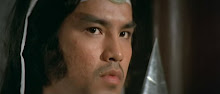
Showing posts with label William Smith. Show all posts

Friday, February 8, 2019

Gentle Savage (1973) review


GENTLE SAVAGE 1973 aka CAMPER JOHN aka I SPIT ON YOUR GRAVE

William Smith (Camper John Allen), Kevin Hagen (Ken Schaffer), Gene Evans (Sheriff McVaney), Barbara Luna (Gayle), Ned Romero (Richard Allen), R.G. Armstrong (Rupert Beeker), C.J. Hincks (Betty Shaffer), Betty Ann Carr (Vicky)

Directed by Sean MacGregor

The Short Version: Low budget clone of BILLY JACK (1971) has William Smith as a muscle-heavy, motorcycle ridin' red man who tangles with a passel of Injun hatin' bigots. There's a teepee full of potential here only MacGregor fails to give his tender Tonto a satisfying retribution and his mediocre movie an actual ending. He does manage to give Smith room to flex his acting muscle, though. The same story was told in slimier fashion in 1975s far more rewarding JOHNNY FIRECLOUD. A fantastic cast and occasional scenes of over-anxious violence means a minor league, light-weight piece of exploitation for Drive-in fanatics. Unfortunately, GENTLE SAVAGE is too benevolent for what it's capable of.


Camper John is an Indian living on a piss poor reservation with his wife, child and brother just outside a town populated by the most egregious bunch of miscreants imaginable. Framed for beating and raping the daughter of the town's biggest businessman, Camper John is arrested while everyone in town wants him dead. After his brother is brutally murdered, the Gentle Savage has to decide whether or not to spill blood for revenge.

With all the potential at his disposal for a sterling piece of Drive-in trash, Sean MacGregor (DEVIL TIMES FIVE) inexplicably fouls up his own tale of Indian revenge. Actually, calling it an Indian revenge movie is a bit of a misnomer. It takes an hour building the rage within Camper John; but just when you think William Smith is going to turn into a not-so Gentle Savage after being told to "spill blood, innocent and guilty", nothing happens. 


After the villains of the film shotgun and castrate Camper's brother, the revenge boils down to blowing up a truck, a barn, and holding some of the killer townsfolk hostage till the press comes to expose the town's crimes! The movie ends just when you think the sheriff is going to pursue Camper for a showdown. 

Imagine if in I SPIT ON YOUR GRAVE (1978)--after nearly an hour of rape and humiliation--Camille Keaton simply captured her attackers and held them hostage till police arrived to arrest them. That's essentially what happens in GENTLE SAVAGE when no vindication is forthcoming for the script's despicable human debris.

Said script goes to great lengths to showcase the town's population as utter savages while indulging in outrageous displays of raping, the pillaging of a shanty village, bullying, and eventual murder. One over-the-top sequence has a mad posse terrorizing a white couple whom they've mistaken for Indians!


Almost everyone in the film comes off like they've had way too much caffeine; either screaming their lines or acting irrationally. Sean MacGregor's directing style is equally irrational. Director MacGregor seems unsure which direction he wants his film to go. It would appear Tom Laughlin's pretentious BILLY JACK (1971) was an inspiration; although Laughlin's overrated hit had sense enough to satisfactorily wrap things up. For the film that GENTLE SAVAGE could have been, see William Castleman's far trashier JOHNNY FIRECLOUD (1975).


Shot in late 1972, CAMPER JOHN, alias GENTLE SAVAGE, wasn't the only time MacGregor worked with Smith; he worked with the actor on another production in 1974 that went unfinished. Titled 'Tiger Cage', it was to star Smith in one of the sub-genre of crazed Vietnam vet pictures that were popping up throughout the 1970s. Apparently, the film did get made in 1988 as A MISSION TO KILL with Smith starring but no longer the lead character.

Co-produced with his LAREDO (1965-1967) co-star Peter Brown, Smith's film is in the same camp as another movie both men starred in that same year, PIRANHA (1972). It, too, suffers from a full-proof Drive-in scenario only to fall well short of its potential. As for the film in question, the filmmakers manage to pack it full of familiar faces; many of which did GUNSMOKE (1955-1975) episodes.

 
As for his GENTLE SAVAGE, William Smith displays a variety of emotions, and the film is clearly his showcase; only the flimsy script by MacGregor and Jacar Lane Dancer gives us an incredible build-up with no payoff. An opportunity to allow Smith to go totally off the deep end is discarded in favor of a more civil response to appalling actions that demand an equivalent justice this film denies both Smith's character and the audience watching it. 

Aside from William Smith's convincing portrayal, he gets to play a rare good guy role and ride a motorcycle in a few scenes. If only Smith's heroic roles made the same impression as his antagonistic ones.

Since so many of the cast appeared in the classic western (GENTLE SAVAGE itself plays out like a modern day western), William Smith did two episodes of the best one, GUNSMOKE. Season 18s 'Hostage!' became a fan-favorite for Smith's portrayal of vengeful half-breed Jude Bonner. What fan's remember most about this episode is Smith beating up and shooting Miss Kitty in the back!


Kevin Hagen is equally impressive as the main villain Ken Schaffer. If you're a fan of LITTLE HOUSE ON THE PRAIRIE, you'll be shocked to see just how vicious 'Doc Baker' can get. In GENTLE SAVAGE he holds a seething hatred for Indians, letting us know every few minutes with a flurry of derogatory terms. He not only kills Camper's brother but rapes his own daughter, too! Like many of his fellow cast members, Hagen acted in a host of GUNSMOKE episodes; some of which saw him playing villains akin to the one he plays here; like the incredibly dark season nine episode, 'No Hands' from 1964.


C.J. Hincks (Candice Roman) is the troublesome spitfire that sets the violence in motion after Camper John refuses to light her fuse. A good, underrated actress, Ms. Hincks's best remembered movie role was in Jack Hill's THE BIG BIRD CAGE (1972). Sadly, Hincks--an actress of stage and screen--passed away from brain cancer on January 11th, 2017.


Gene Evans plays the Indian-loathing lawman, McVaney. Evans was a familiar face in television and Drive-in fare. He would play another shady sheriff in the Tough Guy classic WALKING TALL (1973). Evans played a variety of villains and burly characters on GUNSMOKE (1955-1975); one of his best portrayals was as a fearless mountain man who inadvertently starts a violent chain of events with Chill Wills in the surprisingly bloody episode, 'A Hat' from season 13.

R.G. Armstrong was in practically everything back in the day. He was a familiar face in a slew of horror movies and westerns, and, like many of his SAVAGE co-stars, did several GUNSMOKE episodes. His roles on that classic western series were more stoic. One of the best was the powerful season six show, 'With A Smile'. In it, he plays a wealthy, honorable rancher whose spoiled, violent son (played by future Roscoe P. Coltrane, James Best) believes his father's money and power will save him from the hangman's noose.

As Beeker, Armstrong's bar-owner is Schaffer's lackey and pretty much does what he's told to do. Always a welcome presence, he isn't given a great deal to do.

Barbara Luna, an actress and singer likely best known for playing Marlena in the classic STAR TREK (1966-1969) episode 'Mirror, Mirror', is Camper John's moral center in GENTLE SAVAGE. With an already crowded cast, Luna stands out in her quieter role compared to all the shouting and raucous behavior of most everyone else. One of Luna's best dramatic roles was as Chavela, the Mexican lady who helps Chester (Dennis Weaver) escape from the clutches of Comancheros led by Claude Akins in the season 7 episode of GUNSMOKE, 'He Learned About Women'.

 
In addition to opening with one of those "based on a series of true events" title cards, GENTLE SAVAGE--like many 70s films--comes equipped with a plot-driven main melody. Titled 'Once Upon A Tribe', this somber theme song is sung by half-Cherokee, half-French Indian actress, singer, and teacher Betty Ann Carr. She also plays a part in the movie. Ms. Carr can also be seen in the 1972 Bob Hope comedy, CANCEL MY RESERVATION.


Rated 'R', the violence in GENTLE SAVAGE doesn't justify such a rating. Incidentally,  press materials list an 85 minute running time, but available versions for viewing (no legit release as of yet) taken from old videocassettes are only 76 minutes including credits.

GENTLE SAVAGE had a list of alternate titles during its release history. You can read more about its various advertising campaigns HERE at the Temple of Schlock.

If you're a diehard William Smith fan, GENTLE SAVAGE might momentarily pique your interest for his presence alone. It's grossly disappointing that, for whatever reason, more wasn't done with the concept. It neither satisfies as a message movie, nor as an exploitation one. Arguably, one of the biggest missed opportunities in the revenge movie sweepstakes.

running time: 01:17:56

Wednesday, July 29, 2015

The Swinging Barmaids (1975) review


THE SWINGING BARMAIDS 1975 aka EAGER BEAVERS

Bruce Watson (Tom Brady), Laura Hippe (Jenny Malone), Katie Saylor (Susan Thompson), Renie Radich (Marie O'connor), William Smith (Lieutenant Harry White), Zitto Kazann (Zitto), Dyanne Thorne (Boo Boo Johnson), Jim Travis (Dave)

Directed by Gus Trikonis

The Short Version: It is said one man's trash is another man's treasure--and there's plenty of booty to go around in this seemingly forgotten gold nugget of 70s exploitation. A pre-ILSA Dyanne Thorne is one of the beautiful women being stalked by a Karate fightin' necrophile played by TV actor Bruce Watson in an out of nowhere, off the rails performance. Playing a sicko named Tom Brady(!),this unlucky in love and unbalanced fruitcake manages to keep it together till one of his potential victims calls him "sonny", uses the word "faggot", or indirectly laughs at him. Sweetening the deal is Biker Movie/Drive-in King William Smith as the cop tracking the killer. A well made, well-endowed production from the director of MOONSHINE COUNTY EXPRESS (1977) and THE EVIL (1978).

A psycho killer who looks like Kenny Rogers stalks the sexy barmaids of the Swing-A-Ling Club. After killing one of the waitresses, and failing to kill another three after they catch him in the act, he shaves his face, dyes and changes his hairstyle, and ends up getting a job at the very same club as a bouncer. Oblivious to the fact the killer is in their midst, bodies continue to pile up between the employees and those connected with them. Meanwhile, a resolute police Lieutenant is desperate to bring the maniac's reign of mayhem and murder to an end.


The producer of SUPERSTITION (1982), the writer of DEATH RACE 2000 (1975), and the director of THE EVIL (1978) deliver a fantastic sleaze pizza with all your favorite toppings, and in just under 90 minutes. Low on gore (it does sport some splashy blood squibs), but high on tension and entertainment value, THE SWINGING BARMAIDS is occasionally skeevy, even if, at times, it teases more than it actually shows; this works in the film's favor. Vastly underrated, these imperiled, well-endowed waitresses are currently unavailable in a quality presentation.


Other than the barmaids, neither the film's title (including its re-release title of EAGER BEAVERS), nor its advertising evokes what the actual movie is about. Jack Hill's comedic romp THE SWINGING CHEERLEADERS (1974) was a success, so possibly the producers were trying to siphon some of it for their movie. As for the contents of Trikonis's picture, it has more in common with the misogy-sadistic THE CENTERFOLD GIRLS (1974). Like their cousin, the slasher movie, these psycho killer flicks generally traded gore for an unsavory atmosphere. Both types of films used beautiful, often naked, women as their selling points; and like the slashers, they're only as good as their villain... and BARMAIDS has a damn good one.


Slasher killers live or die by how intimidating they are behind a mask. Psycho killers are almost always viewed as abundantly human, sans any supernatural aura created to mask their true identity. Since we often see the face of the latter early on, these movies rely on the disturbing qualities of the maniac in question to derive disgust from the audience. The killer of BARMAIDS is where this film excels, and much of that success is due to Bruce Watson's unhinged performance as mercurial sadist, Tom Brady!


Bruce Watson never did a whole lot outside of small screen work. If you're a fan of the original STAR TREK (1966-1969), you'll recognize him as a member of Kirk's doomed landing party (non-red shirt, too!) who succumbed to the salt monster in 'The Man Trap'. As Tom Brady, Watson is calculating, cunning, and purely evil. He's also extremely self-conscious despite being able to kick the asses of upwards of a dozen men at once. A necrophiliac (we never see this, but hear about it), he then does mock photo shoots with the corpses--posing them in various positions while snapping pictures for his repulsive collection. 


When we first meet him in the Swing-A-Ling Club, he looks like a wiry Kenny Rogers. Ordering a Virgin Mary, Boo Boo the waitress, sensing he might be a virgin himself, calls him 'Sonny'; but similarly to Leslie Nielsen in AIRPLANE! (1980), Tom doesn't like being called Sonny. Despite his insistence, the waitress continues to refer to him using that "young buck" defining appellation, ensuring she will be receiving an unwanted guest later that night.


Playing the grumpy Boo Boo is Dyanne Thorne. Her fans will be enticed to see this based on her participation alone. But don't get too aroused because her co-star credit amounts to an extended cameo. She hadn't broke out as ILSA, SHE-WOLF OF THE SS (1975) yet, so her part is reduced to victim status. This first attack sequence is very well shot. Both Thorne and Watson really throw themselves into the sequence to make it as believable as possible. The other attack scenes are just as brutal in their realism. The pool attack, for instance, is particularly grim.


After Bruce has managed to cunningly kill off most of his prey with veritable ease, Charles Griffith writes a fantastically taut set piece for the finale involving bloody gun play and a car-motorcycle chase; and when you have motorcycles in a Drive-in movie, William Smith can't be far away.


Easily the greatest actor in exploitation cinema history, and one of the best, most underrated actors in film of any style is William Smith. If you don't recognize the name, you will surely know the face. He fought Clint Eastwood in ANY WHICH WAY YOU CAN (1980) and was Conan's dad in CONAN THE BARBARIAN (1982)--two of his more famous roles. In BARMAIDS he plays Lieutenant White. Smith had a certain attitude he brought to many of his parts--particularly when he was a villain. He could do good guys with the same amount of conviction and ease. In 1973 he played a government agent in the Drive-in classic, INVASION OF THE BEE GIRLS (1973), and his Lt. White is in the same vein.

 
Often associated with Roger Corman movies, Charles B. Griffith's script is wittily effective with its dialog and surprisingly thick with characterization while relying on the usual genre staples to make it work. 

The film isn't without a few silly moments--the obvious fake beard Watson wears prior to changing his appearance; a news reporter stupidly gives out the surviving waitresses names on live television. Other than that, there's nothing major to complain about.

During this time period, Gus Trikonis was an extremely efficient director of quality Drive-in movies. Among his credits you'll find the Philippines set chicken fighting movie SUPERCOCK (1975); the trashy, pre-COAL MINER'S DAUGHTER (1980) drama of NASHVILLE GIRL (1976); and the Southern Fried Car Crasher MOONSHINE COUNTY EXPRESS (1977). Unfortunately, much of his work is unavailable in pristine quality for reappraisal.

On its own merits, THE SWINGING BARMAIDS is an above average thriller with just enough gratuitous moments to keep it in respectable stead with other, more salacious exploitation pictures of a similar brand. Hopefully some DVD company will option it in the near future, allowing for many new customers to frequent the Swing-A-Ling Club.

Friday, May 22, 2015

Angels Die Hard (1970) review


ANGELS DIE HARD 1970

Tom Baker (Blair), William Smith (Tim), Carl Steppling (Sheriff Dan), Frank Leo (Martin), Alan DeWitt (Farragut, the Undertaker), Gary Littlejohn (Piston), Beach Dickerson (Shank), Rita Murray (Naomi), William Bonner (Houston), Mike Angel (Dirty), R.G. Armstrong (Mel Potter), Connie Nelson (Nancy), Les Otis (Tommy), Diane Turley (Patsy), Michael Donovan O'Donnell (Monk), Dan Haggerty (Teddy), Michael Stringer (Seed)

Directed by Richard Compton

The Short Version: Virtually plotless biker shenanigans sees The Angels gang lose one of their members in a town not welcoming of their rowdy presence. Compton's movie fractures things like narrative flow, assuming a quasi-documentary feel in spending more time documenting the biker lifestyle while periodically reminding the audience a story resides somewhere in his script. Compton's ANGELS gets especially chaotic when trying to characterize the gang members and townspeople. Not the best film of its kind, but like a fine wine, these ANGELS age well with repeat viewings. This un-EASY RIDER cycle show is salvaged by several distinguishable attributes that show what Compton was capable of with barely any budget; a highlight of which is its depiction of 70s biker culture versus small town tribalism.

The Angels, an outlaw motorcycle club, stop over in a small town called Whiskey Flats and immediately attract the attention of local law enforcement and the concerned citizenry. One of the bikers, Seed, is mysteriously killed in a motorcycle accident while crossing the county line and the rest of the gang believe the town was in on it. After the funeral, and the Seed is planted, the Angels intend to find who sent one of their own over to the High Side. After saving a kid from a mine cave-in, violence still breaks out between the two factions--the bikers and the law--leading to a violent conclusion and retribution.


New World's first picture was this $125,000 biker movie from Richard Compton, famous for the Southern Gothic classic MACON COUNTY LINE (1974). In the annals of biker cinema, Roger Corman may have helped write the song, but it was guys like William Smith and director Jack Starrett who made it sing. ANGELS DIE HARD is not as glossy as EASY RIDER (1969), nor is it as expositionally sound as RUN, ANGEL, RUN (1969), but it does sport (among other things) a free-wheelin' score, nine cues of which are from a band named East-West Pipeline. It's also blessed with arguably the best title of the genre--even if it doesn't quite live up to it.


The blood and thunder of ANGELS DIE HARD is, obviously, William Smith, the genre identifier of this style of picture. He starred in five of them within a three year period--each one different from the last. His eulogy for Seed during the memorable funeral procession is arguably the highlight of Compton's messy, if monetarily successful movie. Smith is second billed next to Tom Baker (not to be confused with the famous British actor) as Blair the biker leader; although considering Smith's dominating presence, you'd never know it. When folks talk biker films, William Smith's name is synonymous with them. Smith revisited his biker persona a few more times throughout his career (HOLLYWOOD MAN, EYE OF THE TIGER), but nothing quite on the level of his five chopper flicks during the genres heyday.


Another bit of business Compton's ANGELS does well will endear itself to fans of vintage small town iconography. It's Americana as you don't see it anymore; the slow, methodical grasp of industrialization having made town fairs, old style gas stations, coke machines, and hanging out at the local diner all but extinct. For all its rough spots, ANGELS DIE HARD pays a good deal of lip service to this outmoded American past time. 


However, small town life of Whiskey Flats is illustrated as not all peaches and cream. The Angels come in and there's no welcome wagon awaiting them. Bikers wear this badge of trouble on them, and upon entering this sleepy little town, trouble is what they get. You're not even ten minutes into the flick and there's already a brawl outside the town pool hall. Granted, the Angels don't do a whole lot to endear themselves to the citizenry. The tribalism of the locals is understandable, but eventually, the script turns it into all-out hatred. The half-hearted treatment of this dichotomy is possibly the films biggest failure. 

 
Compton's script plays narrative tug-of-war in juggling two storylines at once; well, one is the actual plot and the other is a visual exploration of life in an outlaw motorcycle club. The former pops in and out, never actually taking hold till the last thirty minutes. Partially inflamed by the raucous behavior of the MC (more about that in a bit), a contingent of Whiskey Flats has seething disdain for them. Mel Potter (played by the always reliable R.G. Armstrong), who consistently refers to the gang as 'biker skum' (he spells it with a k!), gathers his own group of rough-housers to get rid of what he deems a plague on the town. Potter and his crew are like their own local MC, only instead of hogs they ride pick-up trucks. Till the last half, Compton seems to have difficulty in clearly defining exactly who we're supposed to root for.

There's one great scene early on where, during the town fair, the sheriff's daughter, Nancy, is noticeably disinterested in her boyfriend (a plot point that crops up later on). Meanwhile, Seed, the biker who was taken into custody after the big brawl the night they arrived, is on his way out of jail, but his bike won't start. He goes in to make a call and Nancy happens over. She walks around the motorcycle in awe of this steel horse. She smiles. The metaphor is obvious. The bike represents the open road, ie freedom; Whiskey Flats, her hometown, signifies constriction. Nancy wants to experience new things and the motorcycle, much like the gang, is the forbidden fruit. It's one of the best scenes that, unfortunately, is never sufficiently explored in a movie that occasionally runs off the celluloid road.


Aside from the younger members of the community experiencing that touch of rebellious youth through their fascination with the gang, these rough riders also seduce the local undertaker, Farragut, an already eccentric character, into their fold. He becomes a temporary tag-along, quickly becoming entranced with the odd practices of the Angels; the epitome being the bizarre funeral procession that culminates in the bikers pissing on the pine box that holds their dead comrade.

 
The script succeeds in making us like the Angels at times, but at others, it does little to dispel their violent image. We're supposed to be sympathetic towards them, but this is difficult to do when they enter a local bar, ransack the place and rape a man's wife while slinging mounds of spaghetti all over her. We never see the rape, but we are left to assume once the lady's top comes off, the gang members that are encircling, or on top of her don't stop there. Towards the end, the script confounds the audience further by rendering the Angels as compassionate when they help in saving a little boy who is trapped in a mine cave-in. This moment of heroism is short-lived, though.


By the end of the flick, the town (consisting of Potter's posse) is out for blood all over again after the gang is blamed for the supposed death of Nancy. Of course, the girls boyfriend, angered that she shows more interest in Blair (leader of The Angels, and a woefully underdeveloped character), smacks her so hard she falls and hits her head on a rock. Thinking she's dead, he goes back to town to report to the sheriff. It's unclear if he blames the gang for her supposed death, but it wouldn't matter anyways. The townsfolk (who aren't all that cultured, either) arm themselves with torches and guns in what amounts to a modern day witch hunt that ends badly for everybody. Even the audience. 


Compton and crew shoot this finale like it's some sort of party. It feels like money was running out and they had to throw together what they could in a matter of minutes. A shocking coda is sloppily edited to the point it's nearly incomprehensible if you're not paying close attention. Additionally, what little dramatic buildup the filmmakers amass just when they need it most is irritatingly thrown away along with a few other wasted opportunities that could have elevated ANGELS DIE HARD to the top tier of B cinema. The level of tension Compton instills in later efforts like WELCOME HOME, SOLDIER BOYS (1971) and MACON COUNTY LINE (1974) makes ANGELS DIE HARD look like amateur hour by comparison. Still, this effort was very successful for New World Pictures. Corman's company would follow this up with another hit, their first actual in-house production, THE STUDENT NURSES (1970).

Biker flicks are often accused of excessive misogyny. It's not something that's exclusive to the genre, but it's something that's a part of the culture; only it's not considered as such within those communities. Regardless, the sight of women being treated as property will raise a few eyebrows. For example, when Seed dies, some of the guys desire his 'old lady'. Piston (stuntman and bike king Gary Littlejohn) brushes his woman aside and sets his sights on obtaining the dead biker's "property". This sort of thing crops up a lot in these movies, and it's part of the documentary approach the picture takes before the actual plot kicks into gear.

Upon first viewing, ANGELS DIE HARD might look like a movie that doesn't know where the hell it's going, or what it's trying to say. Some of the visuals speak volumes; such is the case of the cinematography from Arch Archambault (COUNT YORGA, VAMPIRE). His camera is strapped to just about every prop throughout the movie. There's some experimentation with different lenses that add spice to scenes including some picture-in-picture shots and low angles that give the impression Compton and his crew were trying to do something creative with what little resources they had at their disposal.

With a lot of stumbles and just as much in its favor, ANGELS DIE HARD will still fail to impress some viewers. Biker movies are an acquired taste, but they're an essential part of the exploitation cinema heritage. This one is a mild diversion for biker movie enthusiasts and fans of William Smith. Without him, this picture would have likely died hard around the first reel change. Humorous touches and a consistent soundtrack add to the atmosphere that will likely only be appreciated by those dedicated to the time period it's set in and motorcycle culture in general.

This review is representative of the Entertainment One DVD. There are no extras. The opening title on this DVD edition is not the one on the original film print.


Related Posts with Thumbnails

ShareThis

copyright 2013. All text is the property of coolasscinema.com and should not be reproduced in whole, or in part, without permission from the author. All images, unless otherwise noted, are the property of their respective copyright owners.