This image and all others--google images
This is a list of horror films from Europe ranging from Germany, Spain, France and predominantly from Italy. Some of these have influenced many reputable filmmakers, but sadly, these movies remain obscure to all but the most devoted of cult cinema lovers. Most people won't know who Mario Bava, or Paul Naschy are if you mention them in conversation. Even the mention of Dario Argento is likely to arouse a questionable look from most mainstream moviegoers. Still, he has penetrated the foreign market to a greater extent than most. Nonetheless, the contributions of all the artists below were important in shaping the look, the feel and the sound of European horror and its eerie touch of death has and will continue to be felt abroad for decades to come.

1. THE CABINET OF DR. CALIGARI 1919 aka DAS CABINET DES DR. CALIGARI
Directed by Robert Wiene
Eerily enigmatic German silent picture about a madman carnival barker named Caligari and his main attraction, Cesare, a somnambulist with the power of clairvoyance whose visions aren't necessarily prosperous for interested parties. CALIGARI belongs to the school of German Expressionist cinema along with other movies like THE GOLEM (1920), NOSFERATU (1922) and METROPOLIS (1927). Not for everybody, these movies do offer striking visuals and outlandishly and intentionally fake sets akin to an abstract painting accompanied by an aura that only B/W photography can possess.

2. NOSFERATU 1922
Directed by F.W. Murnau
This unauthorized German version of Stoker's novel is one of the most celebrated horror films of all time. Bearing some of the most recognizable and iconic images this side of a vampires coffin, Count Orlok left an indelible effigy on my eyes in the first grade after spying a photo of his sinister shadow ascending a staircase in a book on vampires in film. Over the years, the picture has been available countless times on VHS and DVD in its original silent form as well as versions backed by an orchestral score and even one with heavy metal musical accompaniment. In 1979, Tobe Hooper would direct what I consider the scariest vampire series/movie of all time--SALEM'S LOT. The make up for the head vampire is reminiscent of that used for Count Orlok.

3. I, VAMPIRI 1956
Directed by Riccardo Freda
This is considered the first Italian horror film that begat a long series of Gothic and subtly sexy creature of the night and ghost films. Mario Bava finished the picture when Freda left at some point during the filming. Freda's contributions have long been overshadowed by Bava's, but apparently, the genre meant far more to Bava than it did to his predecessor. The film itself isn't very engrossing, but its significance holds importance. Star, Gianna Maria Canale plays the vampiress; an actress who went on to play many roles in sword and sandal fantasies and adventure movies as a sorceress, or amazon queen, or the object of the heroes affection.

4. BLACK SUNDAY 1959 aka LA MASCHERA DEL DEMONIO
Directed by Mario Bava
This superbly spooky bloody ballet of vengeance from beyond the grave is arguably the single greatest Italian horror picture of all time. Sumptuously photographed, this B/W bravura and baroque dark fairy tale about vampires and an ancient curse is the crowning achievement of director, Mario Bava. He is well known for his signature style of cinematic ambiance and his ingenuity in turning a few pennies into a million bucks. Bava would again explore vengeance from beyond the grave several more times in color including the opaque, sepulchral horror of BARON BLOOD (1972). The most esteemed name associated with Italian horror, he's also notable for introducing Barbara Steele to the world of Italiano del cinematografo di orrore.

5. EYES WITHOUT A FACE 1960 aka LES YEUX SANS VISAGE
Directed by Georges Franju
This controversial, yet classic French horror film has made a lasting impact on numerous filmmakers outside of Europe despite languishing in obscurity for decades before garnering respect and reverence from the critical cognoscenti. The plot about a mad doctor desperate to graft a new face for his disfigured daughter using beautiful female victims became the crux of more than a handful of similar horror pictures over the years including MILL OF THE STONE WOMEN (1960), THE AWFUL DR. ORLOFF (1961), MANSION OF THE DOOMED (1976) and FACELESS (1988). There are a healthy number of DVD releases of this film on the market.

6. THE GIRL WHO KNEW TOO MUCH 1963 aka LA RAGAZZA CHE SAPEVA TROPPO
Directed by Mario Bava
Black and white brilliance from Bava in this, the first noted example of a 'giallo', Italian murder mysteries that became all the rage throughout the 1970's. The lead character is even seen reading one of the pulpy suspense novels at the outset aboard a plane heading for Italy. With several scenes encapsulating Bava's signature air of omnipresent evil, other scenes contain a playful, almost Hitchcockian vibrance about them. Although unrelated to an American production bearing the same title in 1969, some of Bava's performers have small roles in the US picture.

7. THREE FACES OF FEAR 1963 aka I TRE VOLTI DELLA PAURA
Directed by Mario Bava
Bava returns with his first full on foray of fright in blood curdling color. This macabre compendium is one of the most successful versions of the anthology form. The original Italian version is told with a bit of tongue to cheek playfulness during its wraparound segments with Boris Karloff. While the stories themselves are downbeat affairs, the last scene reminds us that we're only watching a movie after all. The AIP version under the title BLACK SABBATH rearranged the placement of the episodes as well as turning one of them from a giallo with a sexual subtext into a ghost story. 'The Wurdulak' story is one of the best, most creepily artistic pieces of film Bava ever painted.

8. BLOOD AND BLACK LACE 1964 aka SEI DONNE PER L'ASSASSINO (SIX WOMEN FOR THE ASSASSIN)
Directed by Mario Bava
The versatile Mario Bava's candy colored carnage finds him fully immersed in what was soon to become the signature conventions of the giallo style of horror thriller. This atmospheric terror tale stars Cameron Mitchell in a story about a faceless killer butchering fashion models and the search for a diary that contains the various vices committed in secrecy behind the walls of the house. Bava treads into territory he wouldn't fully embrace until the visceral explosion that was BAY OF BLOOD in 1971. For his '64 excursion, the murder set pieces take precedence alluding to the brutality to come.

9. PLANET OF THE VAMPIRES 1965 aka TERRORE NELLO SPAZIO (TERROR IN SPACE)
Directed by Mario Bava
This science fiction horror movie borrows its ending from one of the more famous TWILIGHT ZONE episodes, but a scene from this picture was later lifted for use in Ridley Scott's ALIEN (1979) as well. There's several sincerely spooky sequences and a prime aura of evil permeating Bava's space opera of terror. Outlandish costumes, fog enshrouded set pieces and vampiric, disembodied alien lifeforms possessing humans provides a creepy scenario for this curious piece of European fear from the far reaches of space.
 Science fiction was particularly rare in Italian cinema and the chief proponent, the champion of the fantastic world of outer space adventure was Antonio Margheriti, a director who dabbled in many genres including horror. Some of his choice horror films were CASTLE OF BLOOD (1964), THE LONG HAIR OF DEATH (1964) and a remake of the former as WEB OF THE SPIDER (1971). The former is also considered his masterwork, but it draws its inspiration from Bava's MASK OF SATAN even down to procuring Barbara Steele in the lead. Margheriti was especially enamored with sci fi and his first film was SPACEMEN in 1960. Future futuristic endeavors included BATTLE OF THE WORLDS (1961), WILD, WILD PLANET and WAR OF THE PLANETS (both 1965). He later returned to sci fi with the sprawling star studded fantasy, TREASURE ISLAND IN OUTER SPACE (1986).

10. KILL, BABY...KILL! 1966 aka OPERAZIONE PAURA (OPERATION FEAR)
Directed by Mario Bava
Yet another thickly atmospheric black fable of seethingly viscous ambiance successfully captured by the venerable director. The murderous spirit of a dead little girl looms large over a superstitious Carpathian village. A visiting doctor brings modern science with him and struggles to fathom the diabolical horror perpetrated by the pernicious ghost child. Bava brandishes all the Gothic trappings at his disposal creating the most phantasmogorically rich visual canvas since his debut, LA MASCHERA DEL DEMONIO and his Hercules in hell epic, HERCULES IN THE HAUNTED WORLD (1961). Ghosts, occultism, talismans, violent death and the requisite atmosphere promise this to be one long horror set piece held together by a chilling score by Carlo Rustichelli bearing similarities to his score for Antonio Margheriti's THE LONG HAIR OF DEATH (1964).

11. THE TORTURE CHAMBER OF DR. SADISM 1967 aka DIE SCHLANGENGRUBE UND DAS PENDEL (THE PIT & THE PENDULUM)
Directed by Harald Reinl
The Germans followed Bava into the Gothic arena of horror with this exemplary assimilation that defines the European style of oldeworld terror tales as well as incorporating elements from Poe's 'The Pit & the Pendulum' (the films German title). DR. SADISM not only benefits from some superb set pieces, but also with the participation of Christopher Lee as the cruel Count Regula. A vampiric sadist, he has returned from the dead to exact revenge on the descendants of his torturers and to complete his work in the search for eternal life through the blood of virgins, butchered at the height of terror. The 'Forest of the Dead' sequence is tantamount to the level of quality found in this German production that also features former Tarzan, Lex Barker.

12. THE MARK OF THE WOLFMAN 1968 aka LA MARCA DEL HOMBRE LOBO
Directed by Enrique Lopez Eguiluz
Famed Spanish icon, Paul Naschy, jump started the horror renaissance in Spain with a series of Gothically ghoulish pictures beginning with a tale of werewolfery; the first Polish lycanthrope, Waldemar Daninsky. Inspired by the Universal films of old and the blood red color of Hammer, Naschy's wolfman was a first in several ways including the first such film to feature a fang toothed fiend with an upper set of razor sharp chompers. Over a dozen Daninsky flicks followed as well as Naschy covering the spectrum of other supernatural personalities. Many of his films make little sense and are often on the mediocre side, but films in which he also directed show an adeptness and devout passion for the material.

13. THE BIRD WITH THE CRYSTAL PLUMAGE 1969 aka L'UCCELLO DALLE LIUME DI CRISTALLO
Directed by Dario Argento
The man who came to be known as the Italian master of the giallo made his directorial debut with this European hit that borrows elements from the German 'Edgar Wallace' thrillers and the tone set by Mario Bava in previous pictures, most importantly, BLOOD & BLACK LACE (1964). There were a handful of giallos produced just prior to this one, but it was Argento's film that defined the style and modus operandi that dominated for nearly a decade. Argento became the leading proponent for these movies and continued to produce them throughout the 1980's up to today. PLUMAGE follows a writer who is witness to an attempted murder by a black gloved killer wearing a raincoat. With the police failing to find any leads, the novelist does some investigating of his own becoming the next target of the killer in the process. The ending mimics the finale of Bava's THE GIRL WHO KNEW TOO MUCH (1963).

14. TOMBS OF THE BLIND DEAD 1971 aka LA NOCHE DEL TERROR CIEGO (THE NIGHT OF THE BLIND TERROR)
Directed by Amando de Ossorio
This oppressively eerie little spook show was the first in a popular quartet of innovative zombie pictures from Spain. The budgets may have gotten smaller with each succeeding entry, but there's no denying the infernal power of this Portugal lensed goosebumper with one of the great unsung horror movie scores that is guaranteed to make your skin crawl. Ossorio's blood drinking, sword swinging, dead horse riding knights of the living dead galloped across four official movies and put in appearances in a few other films for other directors. A hauntingly visual experience accentuated by unsettling sounds and the ominous chords of demonic chanting monks. One of the best examples of Euro horror.

15. BAY OF BLOOD 1971 aka REAZIONE A CATENA (CHAIN REACTION)
Directed by Mario Bava
The auteur of atmosphere changed gears for this whodunit murder mystery laced with 13(!) gory deaths that precipitated the slasher onslaught nearly a decade later. Many movies had featured malicious plots over an inheritance, but none had delved so far into despotic depravity as Bava's ghoulishly violent spin on Agatha Christie's book, 'And Then There Were None'. The ending is both shocking and darkly comical in the most macabre way imaginable. Released under a myriad of titles such as CARNAGE (also the title of an Andy Milligan movie), TWITCH OF THE DEATH NERVE and BLOOD BATH (not the same as the Joel Reed anthology horror), it's not Bava's best, but will speak volumes to the grand guinol crowd of horror hounds.

16. THE LIVING DEAD AT THE MANCHESTER MORGUE 1974 aka NON SI DEVE PROFANARE IL SONNO DEI MORTI (THE SLEEP OF DEAD MEN NEED NOT BE DISTURBED)
Directed by Jorge Grau
Superb zombie spook show benefits from some alternately gloomy and gorgeous cinematography melded with extreme gore and arcane occurrences. There are subtle nods and blatantly borrowed motifs from Romero's NIGHT OF THE LIVING DEAD such as the resurrected corpses seen as flesh eating zombies. There's also a peculiar parallel between science and the supernatural. Generally the odd movie out among Euro epics, Grau's gore ghoulash is one of the best movies of its kind and undeserving of obscurity. The soundtrack by Giuliano Sorgini is bound to raise a goosebump, or two. Grau's movie was released under an array of aliases (LET SLEEPING CORPSES LIE, ZOMBI 3), one of which became most popular among heavy metal bands including Rob Zombie.

17. DEEP RED 1975 aka PROFONDO ROSSO
Directed by Dario Argento
At this point, Argento's giallo's became emblazoned with increasingly spectacular scenes of violence. DEEP RED accentuates this with several excruciatingly shocking gore murders that ultimately became the pièce de résistance of the eccentric directors vast oeuvre. The killers calling card is a creepy and cackling doll that appears to have a life all its own. The giallo inspired SAW series utilizes a similar deadly doll like device. Another Argento stylized flourish are his complicated and sweeping camera set ups which are introduced here and are magnified in such films as SUSPIRIA (1977) and TENEBRE (1982).

18. SUSPIRIA 1977
Directed by Dario Argento
This is one of the directors most famous and most grimly violent pictures. The plot makes little sense dealing with a coven of witches hidden within a dancing academy in Munich. The main selling point here are the ferocious visuals executed in a gruelling schism of candy colored vibrance, nightmarishly gory images and dissonant, unnerving music blaring on the soundtrack. Arguably the most explicit expression of a dark fairy tale akin to what Mario Bava had been doing over a decade earlier. The unsettling score by popular Euro band, Goblin, is one of their signature works and led to many more endeavors in the horror genre.

19. ZOMBIE 1979
Directed by Lucio Fulci
Known as ZOMBI 2 in European markets, Fulci's film was an unauthorized sequel to Romero's DAWN OF THE DEAD (titled ZOMBI in Italy), although it differed itself by centering on voodoo as the cause of the zombie outbreak. The widespread threat of a flesh eating apocalypse comes to fruition during the closing moments of the film. Prior to that, Fulci creates some of the scariest, most skillfully crafted scenes of horror on his distinguished resume. One could say this picture was just as influential (reportedly, it was more profitable than DAWN) as Romero's iconic portrait of a world gone mad. Fulci's is one of pure horror backed by a pounding, pulsing score and several stand out sequences of notoriously gory extravagance.

20. CANNIBAL HOLOCAUST 1979
Directed by Ruggero Deodato
Few fans would disagree that this is the ultimate display of jungle savagery; a crash and burn of opposing "civilizations" summed up by Robert Kerman in the final scene of the film. Umberto Lenzi may have cooked up the first sampling of cannibalism in his violent jungle adventure-drama, MAN FROM DEEP RIVER (1972), but Deodato's film is the putrid pinnacle of cannibal cruelty. It's both a fantastic and forbiddingly unpleasant cinematic experience that will likely linger long after the film has finished. The damnation of man is told in such a way that the picture inevitably replicates the very cruelty it proclaims to dispel. Reprehensible, nauseating and repulsive are apt descriptions of Deodato's supreme cinematic representation of the dark side of man and his inadvertent brush with directorial suicide.

21. CITY OF THE LIVING DEAD 1980 aka PAURA NELLA CITTA' DEI MORTI VIVENTI (FEAR IN THE CITY OF THE LIVING DEAD)
Directed by Lucio Fulci
The frequently misunderstood maestro of Euro splatter takes a crack at Lovecraftian lore married to Italian zombie conventions complimented by a generous helping of spectacular gore. There's only one shot of flesh being eaten, but the level of violence is extraordinarily sadistic here. Fulci perfectly captures a supreme aura of evil permeating the sleepy village of Dunwich. Even during the day, the level of pestilence is unmistakable. Arguably Fulci's ultimate depiction of the dead, numerous images penetrate the viewers brain resulting in a skin crawling, maggot infested experience boosted by several scenes of heart pounding surrealism and unmitigated vulgarity.

22. THE BEYOND 1981 aka L'ALDILA'
Directed by Lucio Fulci
The master of gore returns yet again for his third entry in his living dead quartet. Possibly the most ghoulishly artistic of his horror portraits, the film deals with a warlock painting a mural of hell. His brutal execution by persecuting villagers in the basement of a hotel becomes one of seven gateways to the devil's domain. Decades later, the hotel is reopened and the evil is summarily let loose on the world. Frequently incoherent, Fulci paints a visual feast of surrealism, existentialism and metaphysical terror that's highlighted by wildly creative gore set pieces including several instances of ocular mayhem. This is Lucio Fulci's bloody masterpiece.

23. DEMONS 1985 aka DEMONI
Directed by Lamberto Bava
This maddeningly fast paced, gore drenched bucket of bloody, buttered up popcorn is undoubtedly the most well known and popular film of Lamberto Bava, the son of acclaimed filmmaker, Mario. Future director, Michele Soavi, donning a metal mask, hands out free passes to a mysterious movie at the ominous multiplex, The Metropol. A devilish visage on a mask in the lobby provides the catalyst for the demonic plague, a terrible apocalypse that mirrors what unspools on the movie screen the patrons are watching. Irrefutably silly at times, Bava's movie retains a brutal, savage power backed by a blisteringly hellish heavy metal soundtrack. One of the best Italian horrors of the 1980's and innovative in that numerous other Euro horrors utilized metal music for their soundtracks, most famously in the succeeding works of Dario Argento, who acted as a producer here.

24. STAGE FRIGHT 1987 aka DELIRIA
Directed by Michele Soavi
This was Soavi's first stab (haha) at a feature film. He previously helmed the auspicious documentary, DARIO ARGENTO'S WORLD OF HORROR (1986) and quickly became the most promising new talent for the future of horror cinema in Italy. Borrowing elements from the giallo and most obviously the slasher subgenre, Soavi created one of the best stalk and kill pictures at a time when such films had all but dried up. Despite bringing nothing new to the formula, the picture is saturated in bravura set pieces rife with razor sharp editing, mounting suspense and a gaggle of artistic flourishes. An insane madman has escaped and taken up residence within a theater after hours. The actors and actresses meet their doom in various gruesome ways at the hands of the psycho wearing a creepy owl mask. The well worn and brutally butchered slasher conventions are presented here in an unusually fresh, fright filled fashion.


 Professor Laurence Van Helsing travels to China to speak about his ordeals with the supernatural and discovers through an interested student that Count Dracula is alive and well and lording over a peasant village miles away from civilization. Taking his son and a wealthy lady traveler who finances the expedition, Van Helsing joins up with an honorable, yet vengeful Chinese warrior and his seven brothers, one of which is a feisty female fighter. They make their way to the village to protect it from Dracula and the dreaded golden vampires and their army of undead followers.
 Shooting a night time scene; Southern Screen February 1974
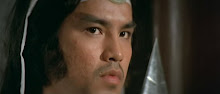
 Liu Chia Yung (left), Peter Cushing (middle) and Huang Pei Chi (right) make their way to Dracula's hideout
 Roy Ward Baker has directed some of the finest examples of Hammer Films style of Gothic horror. Some of these are considered classics (QUATERMASS & THE PIT, THE VAMPIRE LOVERS), some were original takes on familiar material (DR. JEKYLL & SISTER HYDE) and some were far more gory than usual (SCARS OF DRACULA). LEGEND OF THE SEVEN GOLDEN VAMPIRES, the very first horror kung fu combo, falls somewhere in the middle. It's definitely an original take on a time worn tale and one that proved to be one of the most tumultuous, headache inducing experiences for both East and West.
 Roy Ward Baker and David Chiang study the script between takes; Southern Screen Feb. 1974
 Also, as opposed to being quiet on the set, the Shaw's crew had other things going on while shooting was taking place. This was disruptive to the British crew who obviously weren't used to it. Neither crew realized just how differently films were made and it resulted in some seriously bad feelings at the time. Reports of racism from the foreign crew towards the Chinese workers didn't help matters at all. Reportedly, Baker (and some of the other crew) was prejudiced against the Asian technicians constantly shouting aloud about them, which embarrassed many of the more understanding British crew. It got worse when the Shaw's were dissatisfied with the fight scenes Baker had turned out. At one point, the fight sequences were going to be re-shot with Liu Chia Liang and Tang Chia in control, but the production soon carried on under Baker's guidance.
 Even though Baker, in a past interview, made statements that he directed the kung fu sequences better than the Chinese could, his action scenes (arranged by both Liu Chia Liang and Tang Chia; at the time, Liu was working as fight co-ordinator for the venerable Chang Cheh and desired to direct on his own which he did the following year with THE SPIRITUAL BOXER) do resonate with a certain degree of tension. This is especially evident during the first time we see the brothers in bloody battle against a Triad gangster. The finale is also well orchestrated and spectacular accompanied by a stirring score from James Bernard. The picture was very successful in Singapore and later in Britain. It did only moderate business in Hong Kong. Possibly due to their lackluster returns on their previous Hammer releases, Warner, despite the millions earned from their Shaw acquisition KING BOXER, sold the film off to a small time outfit where the picture was literally gutted with scenes rearranged from beginning to end without rhyme or reason.
 After the disastrous reception received by the two modern day Dracula's, Christopher Lee was adamant that he wouldn't be appearing in any more Hammer vampire movies. According to Michael Carreras in 'House of Hammer' #17, "When we saw the finished picture, we thought the Kung Fu parts of the film were much more exciting than the Dracula sequences, so we cut a version without Dracula...what we had was a very good Chinese action-adventure/Kung Fu frolic but unfortunately in that form it was too short so we had to put Dracula back in." Most critics make fun of John Forbes Robertson's make up, but I never really paid all that much attention to it. He looked dead and that was fine by me. More successful is prolific actor, Chan Shen's portrayal as Kah, whose body is possessed by the bloodthirsty Count.
 Chan Shen was a contract player at Shaw Brothers whose career began back in the early 70's. From that time, he amassed an incredible amount of character roles with most of them as nasty villains. Some of the juicier ones are as a Japanese in THE DEADLY KNIVES (1972), a sex crazed rapist in INTIMATE CONFESSIONS OF A CHINESE COURTESAN (1972), another rapist in THE KISS OF DEATH (1973), the Centipede chief in WEB OF DEATH (1976) and yet another despicable rapist/slave trader in the deplorable LOST SOULS (1980). He did play a good guy in Chang Cheh's INVINCIBLE SHAOLIN (1978) as a teacher. Chan had intense, piercing eyes and the film would have worked just fine with him playing the main antagonist.
 David Chiang is impressive as the leader of the seven brothers. He speaks very good English and impressed his occidental counterparts, especially Peter Cushing and Roy Ward Baker. Chiang came to prominence after he got critical notices from his supporting role in Chang Cheh's avant garde tragedy, DEAD END (1969) starring Ti Lung. From there, he featured mostly in swordplay and action films, but did partake in a drama, or two. He was better suited to Wuxia adventures, but occasionally the choreographers made him look good performing kung fu. His skills are convincing here in this visually impressive production.
 Shi Szu during a break in filming; Southern Screen February 1974
 One thing is for certain--the Shaw's were able to instill an epic feel that Hammer couldn't have done at the time. Compared to the other strange vampire picture from the company, CAPTAIN KRONOS (1972), the Shaw-Hammer co-production is the better film in my opinion. KRONOS has a TV movie feel and outside of some fun ideas and quirky moments, the action pales when compared to Baker's movie. GOLDEN VAMPIRES looks like a hellish version of SEVEN SAMURAI (1954) while KRONOS is simply bland.
 Peter Cushing battles the undead minions of Dracula and the Golden Vampires