MYSTERY ON MONSTER ISLAND 1980
Ian Sera (Jeff Morgan), Terence Stamp (Taskinar/Skinner), Peter Cushing (William T. Kolderup), David Hatton (Thomas Artelect), Gasphar Ipua (Carefinatu), Blanca Estrada (Dominique Blanchard), Ana Obregon (Meg), Frank Brana (Birling), Paul Naschy (Flynt), Gerard Tichy (Captain Turkott)
Directed by Juan Piquer Simon
The Short Version: The late director of PIECES helmed this Spain-USA co-production. It's an ambitiously overstuffed and juvenile 1940s styled serial hokum that got frequent TV airplay in the early 80s. For most, there's limited to no appeal. Still, the rambunctious musical score, a few striking island location shots, opening and book-ending scenes by Peter Cushing and Terence Stamp and an opening five minute segment with pirate Paul Naschy--whose role sets the story in motion--may be enough to entertain curious, exploratory viewers for 90 minutes.

 Before settling down to marry, Jeff Morgan wishes to sail around the world. With the consent of his wealthy uncle, Kolderup, Morgan and his teacher, professor Artelect, set off on an oceanic voyage around the globe. Entering a thick fog, the ship is attacked by reptilian creatures who destroy the vessel leaving Morgan and the professor stranded on a mysterious island populated by cannibals and giant monsters. Later encountering rifle bearing gold hunters, castaways and company soon learn the secrets of Monster Island.
 J.P. Simon, the Spanish director of such impressively juicy gore drenched schlock as PIECES (1982), SLUGS (1988) and ENDLESS DESCENT (1990) also dabbled in childish fantasy schlock such as SUPERSONIC MAN (1979), the more serious FABULOUS JOURNEY TO THE CENTER OF THE EARTH (1976) and 1980's MYSTERY ON MONSTER ISLAND, adapted from Jules Verne's 'Godfrey Morgan' novel. Simon's movie is somewhat faithful to the source material in terms of some of the characters and situations, although the addition of monsters is exclusive to the film.

 With such an amazing cast of performers, you'd expect this to be Euro fantasy gold. In some ways the film is a mildly worthwhile excursion and in other ways, it's a bit painful to witness for a few reasons. While the character of Taskinar is the films antagonist, the performance of David Hatton is the true villain of the piece with his shrill, ear piercingly exaggerated delivery that would be better served in a silent feature where the sound of his voice would not be heard. He appears to be channeling Cushing's similar 'professor' role from Amicus' AT THE EARTH'S CORE (1976), but in a far more outlandish, disastrously over the top fashion. Hatton acts as comic relief--the butt of jokes to an endless string of pratfalls, repeated mispronunciations of his last name and playing stooge to both a chimpanzee with ADD and a parrot. While a few sparse moments with Hatton bring a smile to the face, four times as many moments make you cringe in accordance to someone raking their fingers down a chalkboard.


 Racial stereotypes are in heavy abundance here in the form of a Chinese stowaway and a black islander named Carefinatu. While it seems this picture was shot with live sound, the oriental inflection is a bit insulting especially in this day and age and the native "Man Friday" spiel comes close to borderline offensiveness. Still, it becomes quickly apparent that the script doesn't take itself seriously in light of in-jokes to Jules Verne himself. It doesn't take long for the viewer to realize just what audience this infantile production caters to. In addition to Hatton's overactive silliness, the cartoon sound effects, the fake monsters and the juvenile atmosphere, additional comic relief is provided by an overly enthusiastic chimpanzee who makes a monkey out of the rest of the main cast by giving one of the best, most controlled performances of the whole thing. Trash fans will recognize lead, Ian Sera from Simon's phenomenally bad PIECES from 1982.

 The movie itself possesses a nice sense of adventure even if it frequently resembles a bigger budgeted Banana Splits 'Danger Island' segment. The boisterous, grandiose score by Alfonso Agullo, Carlos Villa and Alejandro Monroy is pleasing to the ear, if a bit repetitive at times. The soundtrack definitely stands out just as the participation of both Peter Cushing and Terence Stamp act as the expository glue that holds the film together; the viewer patiently awaits their return as both disappear after the 15 minute mark and don't reappear till towards the end. It's really something else to see General Zod playing a bad guy in a film such as this the same year SUPERMAN 2 (1981) would hit theaters. Cushing of course is his usual reliable self even if his screen time amounts to a little over fifteen minutes total.

 Both of Simon's fantasy adventures were likely inspired by the Kevin Conner/John Dark monster-fantasy productions that began with THE LAND THAT TIME FORGOT (1975) and ended with WARLORDS OF ATLANTIS (1978). For MONSTER ISLAND, the creatures are less than stellar creations, but the Scooby Doo styled finale serves up an explanation by Kolderup (a man with seemingly the deepest pockets the world has ever seen) that clarifies the veritable fakery involved. Furthermore, Simon puts more than enough gusto in the action scenes and generously fills the film with more than enough adventure elements.
 The miniatures and explosions are quite good and robust even if the intentionally wonky monsters are not. Among the otherworldy creations: Gill Men brandishing flares(!), a giant dinosaur creature, giant steam blowing worms, another big lizard in a cave and moss monsters that recall SIGMUND & THE SEA MONSTER.

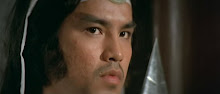
 Adding to the curiosity factor is a five minute opening segment featuring Paul Naschy as Flynt, a pirate being pursued and shot at by gold robbers. Fearing they will make off with his gold, the injured Flynt sets off a massive explosion burying his treasure with him. It is this treasure that Taskinar is after and when he's outbid on the sale of Spencer Island to Kolderup, he provides the film with its one "real" threat.
 With its barrage of monsters, high adventure, tropical locales, frequent, if heavy handed comedy, rousing music, pretty girls and determined villains, J.P. Simon's moderately expensive creature feature is a former Saturday afternoon television mainstay. Beautifully remastered looking better than it probably has any right to, MYSTERY ON MONSTER ISLAND will likely be appreciated the most by those ages 2 to 8, fans of the director interested in checking out his non sleazy output and monster kids who remember catching it on a Saturday afternoon or as a late night creature feature.
This review is representative of the MGM/Sony/Fox Midnite Movies double feature paired with GORILLA AT LARGE (1954).
 All poster images and images from the remake: google images
I SPIT ON YOUR GRAVE 1978 VS. I SPIT ON YOUR GRAVE 2010
1978 version: Zarchi's film is a sick, twisted, fetishistic motion picture--the torrid template by which all other similar films followed. Fascinated with sex, nudity and brutality, this grubby little cinematic stain is a classick mainly by reputation as opposed to possessing any artistic merit. Still, it's a movie that should be seen for its notorious place in the annals of exploitation cinema.
2010 version: Monroe's movie wants so badly to top the original, his film goes to great lengths to both pay respect, and to surpass the original films repugnance. While it's a terribly faithful movie and seemingly pointless on occasion, it nonetheless is the new Rape-Revenge film to beat containing an array of indelible methods of dispatch; it successfully capturing the 70s feel and spirit, if not the raw look of that bygone era.

 In 1978, Meir Zarchi was responsible for one of, if not THE most heinous cinematic atrocities ever to see the light of the silver screen. Rape-Revenge movies had been around for a brief time, but Zarchi's production, then titled DAY OF THE WOMAN was soon to become the epitome of this contentious and emotionally stirring sub-genre. Failing to ignite much notoriety, it was re-christened I SPIT ON YOUR GRAVE. Under that title, this grubby little movie caused a massive uproar among both critics and theater patrons. Since then, the film has become something of an equally controversial conversation piece amongst movie enthusiasts. Some see it as pure exploitation with absolutely no redeeming qualities. Others see it as a powerfully visceral example of the revenge film and empowerment of women on screen.

 In 2010, a remake of the original 1978 shocker directed by Steven R. Monroe (and Executive Produced by Meir Zarchi) was heavily hyped and released on a very limited number of engagements in an unrated version. Possibly due to the times we're in and the fact that so much in a similar vein has come since, the remake failed to replicate the success of the original. However, Steven R. Monroe's version is incredibly faithful to the source material much in the way that Alexandra Aja's remake of THE HILLS HAVE EYES (1977) was an equally impassioned copy with some creative deviations. But faithfulness is one of the few "attributes" one can bestow upon a remake of one of the most vile movies ever made. When talking about this particular bastard icon of the 1970s, there's really only two main focal points to equal, or improve on--the RAPE and the REVENGE.
 The first aspect of the original I SPIT ON YOUR GRAVE that generated the most attention over the years from the time of its release up to now is the rape scene. Some 45 minutes is devoted to this sequence and if nothing else, I SPIT ON YOUR GRAVE inarguably contains the most volatile, disgusting and reprehensible representation of on screen bodily defilement ever captured on film. It's not just the rape, but all the degradation that goes along with it. Camille Keaton's performance is quite good during this most agonizing sequence. She's attacked while relaxing in her boat and raped the first time out in a field.

 Completely naked, she walks a ways only to discover the four thugs are taunting and stalking her. They catch her in the woods and rape her again, this time from behind over a large rock. Left in the woods, she manages to crawl back to her cabin where the four rapists are waiting for her. They beat her, humiliate her more and rape her again. The mentally handicapped member of this motley clutch of sadists is sent in to finish off Jennifer, but fails to do so leading to the revenge after her recuperation.

 The remake attempts to one up the raw power of the '78 feature in the rape scene and it isn't entirely successful. The humiliation goes much farther, but the actual rape scene (there's five assailants this time), mercifully, doesn't reach the originals aspirations. It's still a powerful sequence and has some minor nuances that veer off into BREAKDOWN (1996) territory. Watching just this one segment of the film, one wonders why even bother doing this movie all over again? I don't think it's possible to totally capture the feeling of that movie whatever point, or purpose it may have had/pretended to have. The new film kind of fumbles this infamous sequence, too. As opposed to the original, she's raped the first time in the cabin. When finished, the men leave. Jennifer almost immediately gets up and darts out the door and into the woods. It's as if the filmmakers couldn't have come up with a more reasonable means of getting her from the cabin to the forest. Anyway, she's attacked once more and raped again. We're spared seeing each man take his turn, but here, the whole incident is videotaped. As opposed to the original, Jennifer is in clear view of all her attackers afterward. They plan to kill her, but she falls off a bridge and into the river below seemingly dead. Her revenge comes a short time later after the five thugs get additional exposition.

 The revenge of Jennifer Hills on her would be murderers is vastly different between the two films. It's here that Monroe's film exceeds the original both in creativity and sadism. The original may possess the most deplorable act of rape, but the newer film goes to great lengths to mete out a disturbing brand of justice. In the original, Jennifer recuperates and in the interim, goes to a church and begs forgiveness for what she's about to do. The retarded rapist is lured with sex and during his orgasm, the avenging angel slips a noose around his neck and manages to hoist the man-child up into the air kicking till he's dead. The second death is also one of the most oft imitated scenes of retribution in all of vengeance cinema. Oddly, it's the leader of the gang who goes next. He, too, is lured with sex. This death scene is likely the best shot sequence in the entire movie. The last two get their comeuppance virtually at the same time. This is where the iconic shot of Camille Keaton hoisting an ax over her head while speeding towards her quarry in a motor boat comes from. One of the men gets the ax in his back and the other, unable to swim, is served poetic justice for his earlier line of "Suck it, bitch" as he grasps the outboard motor while begging for his life.

 The new films methods of justice through revenge reach an almost cartoonish level of SAW styled ingenuity. The 2010 version eschews Jennifer's plea for penance from God (that scene was shot, but deleted from the final cut and even then, it's not in a church) for her oncoming actions. To describe what her vengeance entails would require far too much space and it's best left as a surprise to those who wish to see the newer picture. Needless to say, Jennifer's revenge befits the crime and degradation she received. Her onslaught, while incredibly savage, is so over the top, its power is negated slightly and may even bring about a chuckle, or two from viewers. As per most recent movies, more is MORE. There's five rapists as opposed to four. Again, the mental midget is chosen first, but isn't killed straight away. He serves a later purpose. The classic kill from the original is repeated here, but is pulled off much differently and has some added "attractions" for extra incentive. The one major difference is that at no one time does Jennifer lure her prey with the promise of sex in the manner that Keaton did in the first film.
 The acting is better in the new version, but pales next to the raw, guerrilla amateurishness of the 78 feature, which is key to that films power. The look of I SPIT '78 is that typical 70s look with cinematography that embraces the locations making them seem more natural, more real. This intensifies the grittiness that transpires. I SPIT '10 is like any other movie these days--photography is good, but has that same monotonous, monochrome milieu that LOOKS like a movie. Regardless of how much blood, gore and brutality is splashed at the camera, it never truly escapes being "Only a movie...only a movie...only a movie".

 The new version also seems to draw inspiration from a variety of sources. Those familiar with films like the runaway drive in smash MACON COUNTY LINE (1974), the equally geekshow qualities of MOTHER'S DAY from 1980 (also remade last year) and also the Kurt Russell thriller BREAKDOWN (1996) may draw noticeable comparisons to those films and others like them. The one worrisome factor regarding both this I SPIT and its 1978 source are the types of individuals who would actively enjoy seeing such things. The original films prolonged and excruciating sequence of feminine conquest dominates the proceedings fully intent and succeeding in making the viewer wholeheartedly uncomfortable. If Zarchi's purpose was to showcase rape as a dirty, vicious act, he succeeded, but like Deodato's CANNIBAL HOLOCAUST, the line between protesting such malevolence and exploiting it is seriously blurred.

 ADDITIONAL NOTES & COMPARISON: Sarah Butler's appearance appears to be modeled after the look of Camille Keaton in the earlier film. The iconic boat image isn't recreated in the new version. The castration scene in the 1978 film is more accomplished than the new version. It's arguably the best shot sequence attaining, in a my view, a bit of morbid poignancy. The new version aims for pure gross out effect to garner the most visceral audience response possible. The original film has no musical score which adds to the realism and what bonafide true strength the picture may possess. The new film has a subdued, but gloomy soundtrack. Curiously enough, the new production has managed to garner surprisingly good reviews whereas the first film received condemnation across the board, no doubt a huge key in its monetary success. The word "please" is spoken A LOT in Monroe's version, the word of choice following graphic torture, humiliation, rape and mutilation.

 CONCLUSION: The new films "centerpiece" is just as harrowing, but never surpasses the pornographic cornucopia of Zarchi's "vision". However, it's completely successful in its mission to "cut, chop, break and burn five men beyond recognition." Interestingly enough, the original films poster tagline erroneously lists "five men" where there was only four. The new version corrects that, but neither film features an actual burning. By comparison, both films surpass the other in different ways. The remake is a faithful copy that recreates certain lines of dialog and even some of the photographic shots. The remake offers some interesting twists and the absolute most gruesomely ingenious methods of dispatch to appear in a horror film in a long time. I honestly doubt those who found the first film despicable, offensive and tasteless will see this edition any differently. Whatever you've heard about I SPIT ON YOUR GRAVE 2010, it's most likely true. It's definitely the most in your face piece of American horror pie to be baked in years. It's the new millennium's champion of outhouse horror, flies and all.
Original I SPIT images from the Elite Millennium Edition DVD
I SPIT ON YOUR GRAVE 2010: Anchor Bay Blu Ray reviewed
copyright 2013. All text is the property of coolasscinema.com and should not be reproduced in whole, or in part, without permission from the author. All images, unless otherwise noted, are the property of their respective copyright owners.


 Before settling down to marry, Jeff Morgan wishes to sail around the world. With the consent of his wealthy uncle, Kolderup, Morgan and his teacher, professor Artelect, set off on an oceanic voyage around the globe. Entering a thick fog, the ship is attacked by reptilian creatures who destroy the vessel leaving Morgan and the professor stranded on a mysterious island populated by cannibals and giant monsters. Later encountering rifle bearing gold hunters, castaways and company soon learn the secrets of Monster Island.

 With such an amazing cast of performers, you'd expect this to be Euro fantasy gold. In some ways the film is a mildly worthwhile excursion and in other ways, it's a bit painful to witness for a few reasons. While the character of Taskinar is the films antagonist, the performance of David Hatton is the true villain of the piece with his shrill, ear piercingly exaggerated delivery that would be better served in a silent feature where the sound of his voice would not be heard. He appears to be channeling Cushing's similar 'professor' role from Amicus' AT THE EARTH'S CORE (1976), but in a far more outlandish, disastrously over the top fashion. Hatton acts as comic relief--the butt of jokes to an endless string of pratfalls, repeated mispronunciations of his last name and playing stooge to both a chimpanzee with ADD and a parrot. While a few sparse moments with Hatton bring a smile to the face, four times as many moments make you cringe in accordance to someone raking their fingers down a chalkboard.

 Racial stereotypes are in heavy abundance here in the form of a Chinese stowaway and a black islander named Carefinatu. While it seems this picture was shot with live sound, the oriental inflection is a bit insulting especially in this day and age and the native "Man Friday" spiel comes close to borderline offensiveness. Still, it becomes quickly apparent that the script doesn't take itself seriously in light of in-jokes to Jules Verne himself. It doesn't take long for the viewer to realize just what audience this infantile production caters to. In addition to Hatton's overactive silliness, the cartoon sound effects, the fake monsters and the juvenile atmosphere, additional comic relief is provided by an overly enthusiastic chimpanzee who makes a monkey out of the rest of the main cast by giving one of the best, most controlled performances of the whole thing. Trash fans will recognize lead, Ian Sera from Simon's phenomenally bad PIECES from 1982.
 The movie itself possesses a nice sense of adventure even if it frequently resembles a bigger budgeted Banana Splits 'Danger Island' segment. The boisterous, grandiose score by Alfonso Agullo, Carlos Villa and Alejandro Monroy is pleasing to the ear, if a bit repetitive at times. The soundtrack definitely stands out just as the participation of both Peter Cushing and Terence Stamp act as the expository glue that holds the film together; the viewer patiently awaits their return as both disappear after the 15 minute mark and don't reappear till towards the end. It's really something else to see General Zod playing a bad guy in a film such as this the same year SUPERMAN 2 (1981) would hit theaters. Cushing of course is his usual reliable self even if his screen time amounts to a little over fifteen minutes total.
 Both of Simon's fantasy adventures were likely inspired by the Kevin Conner/John Dark monster-fantasy productions that began with THE LAND THAT TIME FORGOT (1975) and ended with WARLORDS OF ATLANTIS (1978). For MONSTER ISLAND, the creatures are less than stellar creations, but the Scooby Doo styled finale serves up an explanation by Kolderup (a man with seemingly the deepest pockets the world has ever seen) that clarifies the veritable fakery involved. Furthermore, Simon puts more than enough gusto in the action scenes and generously fills the film with more than enough adventure elements.

 Adding to the curiosity factor is a five minute opening segment featuring Paul Naschy as Flynt, a pirate being pursued and shot at by gold robbers. Fearing they will make off with his gold, the injured Flynt sets off a massive explosion burying his treasure with him. It is this treasure that Taskinar is after and when he's outbid on the sale of Spencer Island to Kolderup, he provides the film with its one "real" threat.