NEGLECTED DIRECTORS OF SHAW BROTHERS STUDIO: MOU TUN FEI
MOU, THE YOUNG VAGABOND
Throughout the much celebrated, yet highly disruptive era of the Shaw Brothers, there were a good number of exceptionally talented directors who worked on films that had their share of production problems and financial snafus that resulted in an abandoned film, or one that was taken over by another director. For example, THE BLOODY ESCAPE (1975) was originally assigned to Chang Cheh, but was quickly taken over by Sun Chung. Another being CURSE OF EVIL (1982), a film begun by Huang Feng (THE CRIMSON CHARM), but eventually finished and credited to Kuei Chi Hung. There were also a fair number of directors both at the beginning and at the end of Shaw's reign who exhibited an incredible degree of talent that served them well upon leaving the expansive home of Papa Shaw.
 Mou (far right) gives direction to Danny Lee and others on the set of MELODY OF LOVE
However, there were also some who were equally talented, but failed to capitalize on that talent in a lasting fashion. Arguably the single most controversial and underrated filmmaker to enter and exit the fabled studio without truly realizing his full potential was Mou Tun Fei. Considering the level of abuse and indignities suffered by characters in his darkest films, it's ironic that the director himself suffered similar tortures during the filmmaking process.

Having traveled the world with barely any clothes or money, Mou always had designs on being a filmmaker. Working on film sets in Taiwan for essentially no pay, the enterprising young director-to-be eventually attracted the attention of Mona Fong and the Shaw Brothers after his first film, I CAN'T TELL YOU, attracted attention both locally and abroad. One of the most interesting things about one of Hong Kong's most underrated movie makers was his quirky style. Mou was something of a darker, more gritty precursor to Tsui Hark. The two even favor and could have passed for brothers. Both were wiry, skinny guys with similarly messy hair.

With Mou having lived more or less like a hippie for a number of years before finding comfortability within the confines of the once mighty Shaw Brothers, his lifestyle was a fascinating, if unmistakable dichotomy from the more lavish way of life enjoyed by the more famous personalities there. Mou remained unfazed and maintained his eccentricities living in a home that was the equivalent of a do-it-yourself kit. For example, a piece of a tombstone acted as a makeshift table and an old shoe doubled for an ash tray and a mailbox! Adapting to this efficiently crude way of life didn't keep Mou from making waves, or experiencing numerous obstacles that obstructed the vision he wished to put across on camera.

From essentially the beginning of his tumultuous career at Shaw Brothers, Mou Tun Fei stirred the pot with his boss, Sir Run Run Shaw. For many, it had been a common practice at the studio that the company's newly promoted directors undertake commercially viable product. Once a director had proven his box office mettle, they were generally allowed to experiment with a style all their own. There were exceptions to this rule such as the gifted Chang Tseng Chai (FROM THE HIGHWAY, RIVER OF FURY, REDBEARD) and most importantly, the man who changed the face of HK cinema forever, Chang Cheh. Directors like Sun Chung and Kuei Chi Hung toiled away on standard formula pictures till they were given an opportunity to differentiate themselves from the rest of the pack. Having impressed his bosses even before he was hired, Mou Tun Fei was one of those rare exclusions in that he was given an opportunity to show off his talent with any story he had in mind. The worldy filmmaker had something in mind he was particularly passionate about, yet it would be a filmmaking endeavor that wouldn't see completion without some tinkering. It was also a socio-political hot topic he would revisit on a few occasions.
TALES OF LOVE & BULLETS
 Mou Tun fei and his outcasts in 1978
The dilemma with Mou Tun Fei was that he had a dark vision he wanted to get across; a vision that pushed boundaries. He seemed to have little interest in shooting anything with predominantly commercial appeal desiring instead to focus on gritty crime thrillers with social significance and a heightened air of extreme violence. Mou's continued lack of restraint caused more than a few raised eyebrows, but added a unique layer to his filmmaking persona that would define his style for the remainder of his career. Considering the level of violence and exploitation inherent in the Shaw style of production, it would seem a natural pairing between this young, frazzle haired upstart wishing to break into the movie business and the then towering titan of the HK film industry. But while both were passionate about movies, one's interest was more in the monetary aspect while the other was more inclined to convey an idea ever how brutally somber it may have been.
 One of two love stories from the usually somber guiding hand of Mou Tun Fei. This one is a romantic pratfall styled comedy.
Simultaneously helming a love story and what was intended to be a full length feature entitled GUN, the latter became one of two segments in the fifth entry in the popular CRIMINALS series. GUN was a minor tale of two financially starved men who find a package containing a machine gun and some grenades and use the weapons on a crime spree. It's well made for its barely 40 minute running time, but likely would have had more appeal if it had been kept at full length. The second half of this "double bill" was 'The Teenager's Nightmare' directed by Kuei Chi Hung dealing with a psychotic child molester-rapist. This min-movie is without doubt one of the single most disgusting examples of filth filmmaking ever made anywhere in the world. It virtually equals anything Mou had done throughout his career.
 Behind the scenes on GUN, one of two segments from CRIMINALS 5: TEENAGER'S NIGHTMARE (1977)
Looking back at GUN, one could say this was the blueprint for what is considered the man's best work (for those who have seen it), BANK BUSTERS (1978). The topic of the poor, the impoverished and illegal immigrants was a running theme throughout several of Mou's films and a subject he seemed fascinated by. It helped that he more or less lived as a vagabond for a time prior to being hired at Shaw Brothers.
 Advertisement for CRIMINALS 5: THE TEENAGER'S NIGHTMARE (1977)
The plight of the destitute and the desperate was an all too real problem that was a serious issue in Hong Kong at the time. It was a topic that had been explored to a degree in other Shaw Brothers productions such as Kuei Chi Hung's sadistic KILLER SNAKES (1973) and Chang Cheh's and Kuei's modernized, yet sleazier version of THE BOXER FROM SHANTUNG (1972), THE DELINQUENT (1973) to name two. There was an increase in crime of various sorts and Triad organizations were growing in power in a bid to control the city as well as the syndicates having seeped into the filming industry; the latter of which would reach an alarming degree of danger into the 1990s.

Mou Tun Fei, a director who infamously shocked audiences into submission with an array of reprehensible artistry, was also an assured hand at helming dramatic features. Likely coerced into doing these comical-romantic features by his boss, Mou nonetheless displayed versatility by undertaking such films as MELODY OF LOVE (1977) starring future mega-star, Danny Lee and Chen Szu Chia in a tale about three doctors attempting to find love with three women in what amounts to a pratfall comedy. Mou's other lighter production was a dramatic feature entitled ONE SON TOO MANY (1980) which starred Ai Ti, Lin Chen Chi and a returning Chen Szu Chia in a story about a shy man attempting to find love with the help of his friends. Despite not being released to DVD through IVL, the film won attention as a film festival selection in Singapore in 1979.
RED CHAMBER SEX STORIES
 image: from back of IVL DVD cover
Mou's participation (among a motley clutch of other writers and directors) on the sex quickie, DREAMS OF EROTICISM (1977) got him in hot water with his future wife in what amounted to a sloppy, if highly salacious and sexy comical opus meant to steal the thunder from another similar film in production entitled EROTIC DREAM OF THE RED CHAMBER (1977). The latter films gestation was merely to act as a quick cash in on the highly revered director Li Han Hsiang's prestigious and high profile interpretation of the famous novel, DREAM OF THE RED CHAMBER (1977). To further complicate things, the same story was being adapted at an independent studio directed by former Shaw star Chin Han. Shaw's retaliation to protect his profits paid off in the end. During this time, Shaw Brothers had their hands full in trying to maintain their grip on the HK audience with the advent of the indy studio as well as the rise of rival studio, Golden Harvest, itself made up of former Shaw employees. Mou got things straightened out with his fiancee--whom had went back to Taiwan in the interim--and his career continued albeit in a continuously rocky fashion, but wasn't without some happy times for the quirky director.
THE BRIDE & THE BEAST

In 1978, Mou Tun Fei would become engaged July 29th, 1978 to his current wife, Linda Hu Yin Mung. The two deeply loved one another as they were nearly inseparable and frequently photographed together. They married a short time later on November 4th, 1978, a little over a month prior to the release of Mou's sole directorial outing for the year. It was also a film that would become his favorite out of the short list of his Shaw Brothers filmography.
YOUNG, VIOLENT, DESPERATE

For BANK BUSTERS (1978), the director had a great deal of enthusiasm in detailing a very real problem in Hong Kong at the time. Triad movies were a burgeoning topic told in such works as Sun Chung's GODFATHER'S FURY (1978) and Hua Shan's GANG OF FOUR (1978) among numerous others and the subject was a natural for the controversial director. For whatever reason, Shaw relented to Mou in allowing him to utilize a cast of unknowns and background players to headline this true to life production which began under the title of THE BIG ROBBERIES.

The film was heavily promoted throughout 1978 leading up to its December release later that year. The film--like most all of Shaw's gritty crime thrillers--was shot on location. This particular movie dealt with what seemed to be Mou's favorite topic: a group of young and desperate misfits search for paradise among the enormity of Hong Kong's towering skyscrapers and busy city streets. Failing to fit in with society, the group organize into a gang of ruthless criminals and set out on a crime spree.
 The cast of mostly unknowns for Mou's ambitious experiment, BANK BUSTERS (1978)
The cast was made up mostly of recently graduated performers from Shaw's training academy. Mou's assertion that a cast of unknowns would attract an audience due to the brutal reality of the script as opposed to casting known actors failed to generate much in the way of ticket sales. The cast included newcomers Liang Man-szu, Liu Yung-ling, Yuen Hsiang-lin, Teng Peng-teng and Huang Chin Chun. Sadly, this would be the first and last starring role for most of Mou's discoveries. Incidentally, Sun Chung attempted a similar approach the following year with TO KILL A MASTERMIND, an exciting, if failed experiment made up mostly of newcomers and background players.
SWORDS & SAVAGERY IN THE MARTIAL WORLD

The 1980s was a troubled time not only for director Mou, but for Shaw Brothers in particular. Kung fu comedies were still the rage and while there were dozens of independently produced martial arts films being made, Golden Harvest was supplanting itself as the dominant force in Hong Kong. Shaw Brothers were still a viable entity in many other Asian markets, but more and more their once tight grip on Hong Kong was loosening up. But considering how popular their style of movies were overseas, they continued to do the same sort of thing much to the increasing disinterest of the HK audiences. Mou did few actual martial arts pictures, but his first would be an ambitious production that got a great deal of attention in Shaw's promotional publications.

The bleak and brutal swordplay A DEADLY SECRET (1980) was next, and it, too, caused problems with Shaw. Apparently the director has less than fond memories of shooting this movie and like seemingly all of his pictures, the end product was tampered with in some fashion. Shaw ordered re-shoots some of which involved martial arts queen, Shih Szu who was freelancing in Taiwan at the time. The ambitious, high profile picture was, like Mou's previous BANK BUSTERS, heavily hyped within the pages of Shaw's promotional magazines.
 Reading over the script that hides A DEADLY SECRET
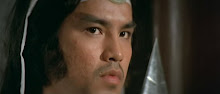
As Chu Yuan had reinvigorated the Wuxia genre with his trailblazing KILLER CLANS (1976), Mou's venture into the Martial World was the antithesis of Chu's 'Romantic Swordsman' productions. The cinematically contentious director had an unusual look for his version of the martial landscape populated by roving swordsmen and duplicitous villains. It's a standard swordplay enhanced by some grotesque torture sequences and seedy characters the most vicious of which is essayed by renowned actor Yueh Hua. Pai Piao plays the lead character who suffers a serious misfortune not too far removed from the character he played in the somewhat similar and ultra violent movie, WHAT PRICE HONESTY (1980). A DEADLY SECRET made profit, but no more than any other basic swordplay at the time. Still, Mou was on an upswing and his next film, another fractured fairy tale, would generate a bit more box office.
GHOSTS, GREED & GORE

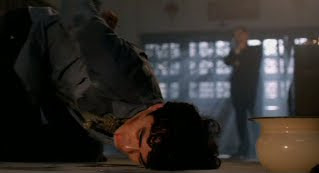
After having seen one of his pictures gutted and fitted for an anthology format, Mou had yet another movie intended for full length shaved down to sixty minutes to accommodate a seriously troubled production started back in 1975 by Chu Yuan and briefly taken over by Ho Meng Hua later in the decade. The film was abandoned yet again and Mou was given the task of putting the pieces of the puzzle together. The result was HAUNTED TALES (1980). Mou's end involved a film that originally began as THE PRIZE WINNER then changed to MARK VI. The segment known as 'The Other World' does in fact look like it was shot much earlier. Shaw's had abandoned a long series of productions for a number of reasons, and later decreed that completing unfinished films was of paramount importance. Considering there was still a list of productions that were trashed, they were seemingly determined to get this troublesome ghost picture out in one form or other. Director Mou's portion of this entertainingly sleazy stew contains his trademark savagery mixed with a pitch black social commentary. Both films are the polar opposite of one another. The ghost story is terribly tame when compared with Mou's "hardcore" segment.

But as is the case with many of the man's works, it's difficult to ascertain the level of seriousness inherent in his finished product. Just when you begin to buy into Mou's view of HK's downtrodden, he throws in some outrageously sordid scenes such as a woman receiving sex stretched over a table. The camera is placed underneath so that we see her breasts being pressed against the glass. This lends an almost pornographic aura to an otherwise cautionary tale of greed. Most of Mou's movies are like this, though. Several of his films are comparable in tone to Ruggero Deodato's CANNIBAL HOLOCAUST (1980), an incredibly savage canvas displaying an immense display of cruel and carnal art that exploited its subject matter to such a degree it became difficult to discern whether Deodato was decrying or championing the onscreen slaughter. Many of Mou's films have this in common with Deodato's signature movie. Whereas Deodato was expunging the media for its potential to incite violence, so was Mou exposing serious societal problems of the day. In the end, both directors straddled the line between delivering a serious message and reveling in outright sensationalistic exploitation.

LOST SOULS (1980) ultimately became the directors most savage film for Shaw Brothers and one that became the talk of the studio for fear of succumbing to heavy censorship restrictions. Mou remained confident his film would pass virtually unscathed since it broached an all too real and serious issue. It was a sad, true tale of illegal Chinese immigrants who sneak into Hong Kong only to fall into the hands of criminals who mercilessly torture them, turn them into sex slaves and subject them to any other indignities that come to mind. Yet again, Mou uses a predominantly unknown cast save for a few well known character actors including Chan Shen. Jenny Liang (BEWITCHED, THE BLOODY PARROT) is also on hand to be abused and shed her clothes once more. It's an uncompromisingly brutal picture that's possibly the single most sadistic movie to ever seep out of the Shaw studio, a filmmaking empire that often specialized in quality lowbrow entertainment. Considering the lukewarm theatrical response afforded his gritty BANK BUSTERS (1978) in Hong Kong, it's surprising that Shaw allowed Mou to utilize a cast of unknowns for yet another hard hitting social subject.
 Mou behind the scenes on THE BIG ROBBERIES aka BANK BUSTERS (1978)
His two previous pictures, A DEADLY SECRET and HAUNTED TALES, were both moderately successful, but these were either fantasy, or only teasingly strayed into the realm of reality. They also carried some big names such as Ling Yun and Pai Piao among others. By the end of the 1980s, Mou had delivered his contracted three films. Entering into 1981, things would get rocky between the director and his frequently frugal boss. Soon, Mou Tun Fei would abruptly leave the Shaw's stable to seek adventure elsewhere. He would leave at least one motion picture unfinished.
BITTER FAREWELL--A NEW BEGINNING
 Cast from Mou's footage of what eventually became PURSUIT OF A KILLER (1985)
In the early months of 1981, Mou began work on yet another gritty, modern day crime thriller. This one was entitled THE STING OF DEATH. Mou worked on the film for the remainder of the year ultimately washing his hands of the studio before the film could be finished. Both sides seemed to be increasingly frustrated with one another and it seemed the best solution was to simply part ways. Mou managed to get at least half of the film in the can, if not more. In his absence, an entire character arc was discarded and other discrepancies would crop up impeding the production. Considering the passage of time, Pai Piao's appearance had changed between the time he worked on the film with Mou and the time that the film started anew in 1983. Pai was also appearing in a movie entitled MEN FROM THE GUTTER wherein he sported curly hair. This clashed with the scenes already shot that showed him wearing a standard comb over.
 The boat driver character to the bottom left was dropped from the film when Taylor Wong took over the production sometime in 1983.
The Shaw's apparently had no desire in spending more money to reshoot Pai's scenes and just carried on as is. The film was released re-christened PURSUIT OF A KILLER in 1985 where it died a quick death. Considering they had lost their footing in Hong Kong at this time and their films were viewed as an antiquated format, it was probably the best decision as opposed to simply discarding the film altogether. Even though their "old fashioned" style of action films were vital to overseas markets, the Shaw's, like Hammer Films before them, had lost touch with the times and while they had a handful of ragtag filmmakers with a unique vision, it just wasn't enough to make them a viable commodity in the New Wave style of Hong Kong motion picture.
 Taylor Wong and Alex Man Chi Leung on the set of BUDDHA'S PALM (1982)
During the latter part of 1981, a young television director named Huang Tai Lai (aka Taylor Wong) was enticed into the fold of Shaw and was tasked with directing a big screen version of a popular comic book. That film was BUDDHA'S PALM (1982). The picture was a massive success and one of the biggest moneymakers for the studio during their run in the 1980s before closing the moviemaking doors later in the decade. Wong immediately capitalized on his success with an even bigger hit with the drama BEHIND THE YELLOW LINE (1984). While the Shaw's had discarded tons of footage for other pictures, or abandoned them altogether, the mogul apparently saw something in ever how much footage Mou had gotten in the can. Wong (who also bore a striking resemblance to Mou) was then tasked with salvaging the footage and taking over the production. Wong is given sole directorial credit on the film.

Meanwhile, Mou headed to Mainland China (one of the very first 'outsiders' to shoot there) where he took up making a kung fu kids movie bearing the title of YOUNG HEROES (1983). Working in the open expanse of China's lush locales was a joy for the enterprising director and his effort yielded a hit film, albeit cut down from his original work. Soon after, Mou would embark on his most troubling, and most notorious picture of his entire career--MEN BEHIND THE SUN (1988), an idea that came to him whilst shooting YOUNG HEROES. Although he directed many other films, this will likely remain the most discussed (and disgusting) on his resume.

Totally overshadowing his prior accomplishments, seeing Mou's earlier works enhances ones opinion on his most controversial picture as well as alluding to where the director was headed by the end of the decade. LOST SOULS was essentially his strongest movie prior to his true account of the atrocities committed on the Chinese by the Japanese during WW2. MEN BEHIND THE SUN (1988) was deadly serious in its depiction of human savagery in one of humanities darkest times and a subject that is criminally overlooked, or glossed over because of political reasons. As sadistic and overbearingly depressing as this film is (as well as its lesser known and undermined sequel, NANKING MASSACRE [1995]), it pales next to the level of torture and repugnance of the real death and destruction perpetrated on the Chinese at the time.
A FORGOTTEN LEGACY

Mou Tun Fei was and still is an enigma in Hong Kong's long and storied history in the world of movies. His influence and stamp of photographic depravity can be traced from his very beginnings as an enlightened wanderer with an intelligent, if off-kilter personality. Within a decades time, Mou made waves all over Asia. Sadly, his work has been overshadowed by that of others who were more prolific. Compared with Shaw's other directors, Mou's works were unjustly neglected, or given less than stellar treatment. Only two of his Shaw pictures were released to DVD in Hong Kong, with three others given VCD releases only and his two remaining Shaw productions not being released at all.

His work was daring for the time and while mimicking the rough severity of Kuei Chi Hung's films, Mou's movies had a certain air of rebellious, reckless abandon about them that made them stand out like the misfits that often populated Mou's cinematic terrain. And like those misfits, this promising directors films were either neglected, or forgotten to time. Mou Tun Fei seemingly dropped out of the limelight in the mid 1990s whether by choice or by a lack of work. He's amassed an impressive resume of signature examples of boundary pushing cinema. Without him and his MEN BEHIND THE SUN, there would likely never have been a Category III rating and the subsequent onslaught of slaughter that followed. Hopefully the day will come when the HK movie loving world can experience Mou's entire eclectic and eccentric brand of love, hate and barbarism of the silver screen in all its gory glory.
For information on when the new, revised documentary on the life and films of Mou Tun Fei will become available, click HERE.