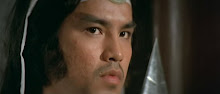
NO BLADE OF GRASS 1970
Nigel Davenport (John Custance), Anthony May (Andrew Pirrie), Jean Wallace (Ann Custance), John Hamill (Roger Burnham), Lynne Frederick (Mary Custance), Christopher Neame (Locke)
Directed by Cornel Wilde
The Short Version: Rarely seen 'End of the World' movie goes for the throat in its depiction of a worldwide meltdown after an unknown virus destroys Earth's agricultural food sources such as grass and grains. A band of survivors attempt to make the trek to a farm further north and encounter all manner of savagery along the way, and indulge in some of their own. Wilde's movie even tosses in a marauding motorcycle gang. Occasionally bloody and frequently sadistic, NO BLADE OF GRASS is not a good time at all. It's a thought provoking, experimental, overly political, and vicious movie that goes off the rails as a serious societal warning when it embraces exploitational shenanigans.

 A mysterious and devastating plague erupts around the world that wipes out grass and other grain sources resulting in worldwide famine and starvation. Anarchy, panic, violence and cannibalism are the outcome. A family led by John Custance attempt to make it to England's northern territory to his brothers farm. Along the way they pick up additional survivors and engage in assorted confrontations with thugs, the military and a biker gang on their dangerous and savage trek to start a new life.
 It's difficult to say one enjoyed a movie like NO BLADE OF GRASS. It's an ugly, heavy handed "warning label" for a possible future generously littered with documentary footage of pollution and dead animals. The film begins on an extremely melancholic note with a five minute visual cacophony of bleak imagery backed by the somber vocals of Roger Whittaker singing the main title theme. The film ends much the same way, but with an even less sense of hope and an even greater sense of despair.
 Cornel Wilde's taut, depressingly angry disaster movie is essentially a 97 minute exploitation picture decked out in 'message movie' attire. It's a string of vignettes, violent encounters for the pictures dwindling band of human survivors to endure till they reach their destination; the "holy grail" of a farm where a new life supposedly awaits them. Possibly the first such film of its kind to emerge at the dawn of the 70s, its failure to find an audience did not impede other 'End of the World' scenarios found in such works as THE ANDROMEDA STRAIN (based on Michael Crichton's book) from 1971 and THE OMEGA MAN in 1973; the latter picture from Richard Matheson's novel, I Am Legend, a book already brought to the screen the first time in 1964 as the creeptastic Vincent Price vampire tale, THE LAST MAN ON EARTH.
 NO BLADE OF GRASS itself is based upon a 1956 novel by British author John Christopher under the title of The Death of Grass. Incidentally, the books US edition bore the No Blade of Grass moniker, this title being the one chosen for the MGM financed production. Christopher's novel was possibly influenced by George R. Stewart's cataclysmic novel Earth Abides, a 1949 post apocalyptic tale about mankind's destruction by an airborne virus and its eventual rebirth.
The script, co-written by director Wilde, seems to follow the pattern laid down by actor Ray Milland's own directorial effort PANIC IN THE YEAR ZERO from 1962. That film substituted a nuclear attack for this films grain and grass obliterating virus. Both films explore the need to survive and the lengths, or depths civilized society will go to protect themselves and their families.
The subject of a learned society succumbing to savagery was also explored in a classic and equally intense 1961 TWILIGHT ZONE episode written by Rod Serling entitled The Shelter from season three.
 As per the more permissive decade, Wilde's movie is punctuated with brutish scenes of violence that, while not excessive, carries a sordid, disturbing tone. These moments are made even more unsettling during intermittent instances of juxtaposition such as a group of Londoners enjoying a hearty meal, oblivious to the emaciated, dying African child succumbing to starvation on a television monitor. Another such instance is a birthing sequence that intercuts a flashback to the protagonists then newborn daughter with one of the plague survivors giving birth to a dead baby on the road.
 Wilde was seemingly fascinated with the dark recesses of man's psyche having explored civilized man's propensity for savagery in his works such as THE NAKED PREY (1966), BEACH RED (1967) and also in SHARK'S TREASURE in 1975. While those films concentrated on a group of individuals thrust into life-threatening ordeals (an African safari, a Japanese controlled island in WW2, shark infested waters off the coast of Honduras respectively), NO BLADE OF GRASS widens the playing field by placing the entire planet into a state of anarchy culminating in a "new" dystopian society where savagery, wanton murder and cannibalism (we never see anybody being eaten, but we hear about it) are the answers to survival.
 If there was one film that was influenced by Wilde's downer, cinematic bomb, it would likely be Toshio Masuda's PROPHECIES OF NOSTRADAMUS (1974), Toho's own entry in the 'Armageddon' sweepstakes. It's a nasty little number that was, and still is banned in its own country and was cut off at the kneecaps for its US release under the title LAST DAYS OF PLANET EARTH. Toho's earlier, livelier, but still moderately disturbing GODZILLA VS. HEDORAH (1972) tackled similar ecological disaster themes in much the same way Wilde's film does with its imagery of toxic pollutants and a more upbeat mantra on saving the Earth.
Back in America, eco-disasters soon poured over into the 'Nature Amuck' movies reaching a pinnacle of sorts with the little seen PHASE IV (1974) and denigrating itself in AIP's moneymaking THE FOOD OF THE GODS in 1976. A cure for serious endeavors like NO BLADE OF GRASS (1970) had been found by this point in the decade. That the film slipped in and out of circulation with little notice is as depressing as the film itself.

A bit ahead of its time, later pictures like DAWN OF THE DEAD (1978) would appear to draw some influence from it. Similar disaster movies would crop up in later years such as the frightening THE DAY AFTER (1983) and even the later apocalyptic horror picture STAKE LAND (2010) share a grim kinship with Cornel Wilde's neglected curio.
 There's some missteps, too, that lessen the impact and seriousness of the narrative. These lacking moments are taken up mostly during an overlong assault by a motorcycle gang wherein the horned helmet wearing bikers attack the heavily armed nomadic bunch like ducks in a shooting gallery. In a particularly questionable move, the bikers attack from the bottom of the hillside.
 Still, even this sequence finishes quite well in quick cuts showing these formerly normal, non-violent folk overpowering the imposing bikers in close quarters combat.
Burnell Whibley's score is also a bit of a letdown. The pulsing, heartbeat-like cues do well to create tension, but the rock styled tracks do nothing but take away from the doom-laden atmosphere especially in some of the attack scenes, particularly during a rape sequence early on.
There's also a bizarre editing choice employed by the director with some color tinted shots that foreshadow things to come. Presumably an experimental touch, they're not necessary and, at least in my opinion, lessen the impact of those sequences to a degree when they occur.

 The performances are good across the board, especially Nigel Davenport as the former military man who must apply his wartime knowledge to an all new battle for survival. Davenport's character wears an eye patch and even with this hindering accoutrement, manages to elicit the right amount of nuance in certain scenes where he is forced to slip into barbarity for the safety of his family. There is a rivalry of sorts between Custance and crack shot Andrew Pirrie, played to the hilt by Anthony May. There's a hint of a rift between them in relation to leadership of the group. It rears its ugly head on a few occasions and adds another layer of tension to an already incendiary plot.
 Lynne Frederick debuts here as Mary Custance and does fine with what few moments she's allowed to speak. Probably her best scene is the stand-off between Custance, Pirrie and Mark when Pirrie claims "ownership" over her; to which her boyfriend, Mark, takes great issue. The scene doesn't end the way you think. Hammer fans will of course recognize the late Frederick from VAMPIRE CIRCUS (1972). She also reunited with Davenport in the aforementioned, surreal and recommended doom and gloom science fiction picture, PHASE IV (1974).
The horror tinted NO BLADE OF GRASS may have evaded its audience theatrically, it can at least be seen by 70s film enthusiasts and science fiction fans via the Warner's Archive Collection. It's an unusually violent movie, and devastatingly poignant in places, even if it sometimes clobbers its message over your head in between shootings, rapes and overall savagery.
This review is representative of the Warner Archives Collection DVD.