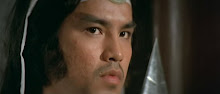
TO KILL A MASTERMIND 1979
Teng Wei Hao (Fan Tao), Yuen Wah (Hsi Chao), Wang Lung Wei (Peng Shih Hao), Shi Gang (Liang Ying), Yuen Pin (Ho Ming Tien), Lo Sheng (Lu Yi Fei), Lo Chun (Liang Chieh), Meng Ting Ke (Chuan Pao Pao), Ku Feng (Chou Tung Lou), Liu Hui Ling (Ms. Ying), Ai Fei (Guan Jie), To Lung (Huang Chang), Lin Zhi Tai (Lo Hsiang Tai), Hsiao Yu Ming (Peng Shi Ji), Jaime Luk Kim Ming (Martyr Group Member)
Directed by Sun Chung
The Short Version: Sun Chung's action-packed mystery thriller was an inspired, if failed, attempt to transform new trainees--including a disco dancer, a construction worker and a male model with a black belt in Karate--into new action stars in 1979. Heroism gets in the back seat while a rogues gallery of martial miscreants take the wheel. Spies integrated within their ranks use deception to foment distrust, leading to the villains literally killing each other off in what is basically a Wuxia/Kung Fu version of THE THING. I Kuang's script is exciting, if stitched together using plot points from other works. Meanwhile, Tang Chia's action design is among the man's best work of his career. TO KILL A MASTERMIND is a vastly enjoyable, hidden gem on the resume of one of HK cinemas criminally underrated directors.
“Abide by the five elements… enshrined by the sun and moon… my partner lies in the tiger’s den… waiting to kill the mastermind with me”.

 After eight years of failed attempts to annihilate the dreaded Seven Evils syndicate and to expose the identity of their mysterious leader, Minister Yang Chen Yu, under orders of the Imperial Court, hatches a new plan to destroy them from within. Clans of gallant fighters come together to topple the Evils once and for all, awaiting the right time while an unknown informer masquerading as one of the killers turns them against one another from the inside. Unbeknownst to the heroes, the true leader of the Seven Evils, whoever he is, may have the last laugh on them all.
  In October of 1978, Sun Chung began filming his 20th Shaw Brothers production. Originally titled 'The Culprit', it was an action thriller about a criminal organization operated by an unknown leader being brought down from within after one, maybe more, informers infiltrate the organization. The title was then changed to 'Seven Untouchables’. Director Sun Chung was fascinated by the story, attracted to the potential for building suspense in keeping viewers wondering who was good and who was evil. Finally, its Chinese title became SEVEN EVILS with an English export title of TO KILL A MASTERMIND; that moniker being a reference to a code phrase for spies to recognize each other.
This article is both a new review of the movie (you can read our old review with promotional materials HERE) and a lengthy piece detailing the production history of this action-packed, and unjustly overlooked movie before, during, and after its release.
 Also that year in 1978, director Sun was enjoying his biggest box office to date with THE AVENGING EAGLE, his most successful film up to that point upon his return to Swordplay cinema a year earlier with 1977s JUDGMENT OF AN ASSASSIN. Director Sun first explored the Wuxia Universe in 1972s wildly entertaining THE DEVIL'S MIRROR; a film he was proud of but brought to tears over, upon sitting in an empty theater on the night of its debut.
 THE SEXY KILLER (1976) was Sun's first hit movie in Hong Kong, but it was THE AVENGING EAGLE (1978) that solidified him as one of the then British colony's best martial arts action filmmakers. In release for 14 days, Sun's searing tale of redemption and revenge made HK$2,028,480. It ranked 12th for the years domestic releases. It was also one of only two Shaw productions to make more than HK$2 million that year; the other being THE 36th CHAMBER OF SHAOLIN. His previous Wuxia picture, THE PROUD YOUTH (1978), based on a famous novel that was made as the SWORDSMAN trilogy in the 90s, had been a hit as well.
  With these back-to-back hits, and THE DEADLY BREAKING SWORD set for release in April of 1979, interest in what Sun would choose as his next project was high. The success of THE AVENGING EAGLE was due to the pairing of Ti Lung and Alexander Fu Sheng playing characters of opposing viewpoints but with the same goal. They played the same type of roles costarring again in THE DEADLY BREAKING SWORD. This was yet another epic Wuxia drama that ended up making HK$2.7 million.
For TO KILL A MASTERMIND, though, director Sun Chung would go a different route.
 The venerable director Chang Cheh had an uncanny ability for spotting talent and giving them opportunities that lead to thriving careers as actors and directors. In August of '78, Chang's THE FIVE VENOMS was released in HK and was a surprise success considering the six main leads were unknowns; all of whom were being formally introduced to an audience for the first time. Some of them had been visible from a co-star turn or supporting role, but in FIVE VENOMS, all six were carrying the picture themselves. It was #14 for the year, making HK$1,814,609 in 13 days of release.
  Inspired by Cheh's talent-spotting abilities, Sun Chung decided that for his next picture, he would create some new stars of his own. He felt that audiences had become more astute in not only appreciating an actors skills, but also a directors. The shooting of TKAM would be a test of this theory that audiences, if nothing else, would want to see a film based on Sun Chung’s name value alone.
 There was another reason Sun Chung wanted to transform unknowns into stars. On his previous pictures where he worked with big names, director Sun had to contend with scheduling conflicts with his actors. Back then, actors would be working on as many as three to five movies at once. So a film may shut down for several days or even longer depending on the importance of one of the other productions.
 Of the 60 graduates from Shaw's Actor's Training Academy in 1978, director Sun personally chose 7 to be his leading actors in TO KILL A MASTERMIND. He added Yuen Wah and Yuen Bun, both of whom had been in the industry for years as stuntmen. He'd already directed Yuen Bun, a future award-winning action choreographer; he was among the Eagles fighting Ti Lung at the beginning of THE AVENGING EAGLE.
  Upon selection, the new faces were sent to intern with director Chang Cheh to both observe and act as gophers, performing basic tasks like serving coffee and getting anything that's needed inside the studio. Industry types thought it was a bold move to shoot with so many inexperienced actors, but also a risky one. The director was confident in this project, even though he was unsure how the end result would turn out.
 Sun Chung had originally planned on using established stars Ti Lung, Fu Sheng, Yueh Hua, and Chen Hui Min as the major players in TO KILL A MASTERMIND. Noting the heavy amount of twists and double-dealing in the plot, he concluded that audiences were familiar with those stars and would expect them to play a certain part; using unknowns would only add to the suspense of not knowing what side a particular character was on. In November of 1979, just before the film hit theaters, Sun Chung remarked, "By using new faces, these actors have not yet established the perception of good and evil in the minds of the audience. When patrons go to see TO KILL A MASTERMIND, they're not going to know how the film ends".
 Reporters drew comparisons to Chang Cheh's new, 4th generation of actors (CRIPPLED AVENGERS began filming the same month) and those of Liu Chia Liang’s class, curious if director Sun would form a group of regular actors of his own. Sun Chung had no such plans, other than to enhance his own career and help create new stars that would move on to work with other directors. Despite using mostly new actors, he did believe his movie could at least make a million dollars at the box office.
 By early 1979, it became clear that TO KILL A MASTERMIND would take more time than
originally anticipated; one reason being there were so many lead
performers that had little to no experience in front of the camera. Sun Chung felt each actor needed their own specific look that was easier to match to the character in the script. Director Sun spent hours photographing each of them separately and together, in a variety of costumes and weapons till he found the look he felt suited each individual.
By early 1979, it became clear that TO KILL A MASTERMIND would take more time than
originally anticipated; one reason being there were so many lead
performers that had little to no experience in front of the camera. Sun Chung felt each actor needed their own specific look that was easier to match to the character in the script. Director Sun spent hours photographing each of them separately and together, in a variety of costumes and weapons till he found the look he felt suited each individual. Filming lasted for one
hundred working days, which was an inordinate amount of time. The first twenty days were reportedly excessively taxing on director Sun in getting the new actors comfortable with both the camera and taking direction. Moreover, the problem of training 7 new performers in timing, posture and expressing themselves wasn’t the only issue preventing a smooth shoot.
Filming lasted for one
hundred working days, which was an inordinate amount of time. The first twenty days were reportedly excessively taxing on director Sun in getting the new actors comfortable with both the camera and taking direction. Moreover, the problem of training 7 new performers in timing, posture and expressing themselves wasn’t the only issue preventing a smooth shoot. Shortly into filming, one of the main cast, Mai Te
Lo (playing Iron Leg Chuan Pao Pao of the Seven Evils), won Hong Kong's first ever Disco Dancing Competition; and had a chance to participate in an even bigger competition. Mai was inspired by SATURDAY NIGHT FEVER (1977), and like Tony Manero, Mai had to dance. He decided his dancing skills and disco's popularity was the way to go, so he tried to get director Sun to allow him to participate in these dancing contests. Sun Chung told him he couldn’t spare him and that he needed to do what he signed up for. So the next day Mai didn’t show up at the studio. He broke his contract and
refused to fulfill his obligation. Mai had signed a two-year contract and once he broke the deal so soon after he signed it, a lawsuit for breach of contract was expected but never came. After negotiations
failed, Sun Chung recast the part with bit actor Meng Ting Ke (Mang Ding Goh). Of course, this meant every scene with Mai in it had to be reshot... well, most of them.
Shortly into filming, one of the main cast, Mai Te
Lo (playing Iron Leg Chuan Pao Pao of the Seven Evils), won Hong Kong's first ever Disco Dancing Competition; and had a chance to participate in an even bigger competition. Mai was inspired by SATURDAY NIGHT FEVER (1977), and like Tony Manero, Mai had to dance. He decided his dancing skills and disco's popularity was the way to go, so he tried to get director Sun to allow him to participate in these dancing contests. Sun Chung told him he couldn’t spare him and that he needed to do what he signed up for. So the next day Mai didn’t show up at the studio. He broke his contract and
refused to fulfill his obligation. Mai had signed a two-year contract and once he broke the deal so soon after he signed it, a lawsuit for breach of contract was expected but never came. After negotiations
failed, Sun Chung recast the part with bit actor Meng Ting Ke (Mang Ding Goh). Of course, this meant every scene with Mai in it had to be reshot... well, most of them.
 Due to the magic of film restoration, one five-minute sequence features multiple shots of Mai Te Lo in costume that made it into the finished film (see above pic standing outside). It begins roughly at the 39 minute mark when the gang are doing away with another of their chiefs, believing him to be the informer. Mai is present in the background, and twice in a medium shot, although he's slightly hidden in darkness (see insert: Mai is at the left).
 There's one insert shot of Mai's replacement, Meng Ting Ke, delivering a line of dialog (see insert image). Director Sun likely figured nobody would notice Mai (see above pic in middle background) since there were no clear closeups of him in the sequence and it would save time on having to re-shoot the entire segment. If he was originally participating in this action scene, those shots were not re-filmed.
When a dancing career didn't pan out,
Mai did return to Shaw Brothers a few months later to star in DISCO BUMPKINS (1980), a
musical comedy that capitalized on his popularity and dancing skills. This film was already being prepared for him before he split to hit the dance floor; so when he returned to the studio, the project was waiting on him.
 Having studied a variety of martial arts styles since he was a small boy and having won a few judo competitions, Mai became a background
player in several of Chang Cheh's and Sun's films upon signing with Shaw's company after he graduated from their Actor’s Training Academy. He'd already been given direction by Sun Chung as a prison guard in THE DEADLY BREAKING SWORD. After DISCO BUMPKINS, Mai embarked on a string of Kung Fu pictures mostly for revered filmmaker and martial artist, Liu Chia Liang (Lau Kar Leung). Some of these are MY YOUNG AUNTIE (1981), THE MARTIAL CLUB (1981) and THE LADY IS THE BOSS (1983).
Having studied a variety of martial arts styles since he was a small boy and having won a few judo competitions, Mai became a background
player in several of Chang Cheh's and Sun's films upon signing with Shaw's company after he graduated from their Actor’s Training Academy. He'd already been given direction by Sun Chung as a prison guard in THE DEADLY BREAKING SWORD. After DISCO BUMPKINS, Mai embarked on a string of Kung Fu pictures mostly for revered filmmaker and martial artist, Liu Chia Liang (Lau Kar Leung). Some of these are MY YOUNG AUNTIE (1981), THE MARTIAL CLUB (1981) and THE LADY IS THE BOSS (1983). Regarding Liu Chia Liang and his stable of actors, Mai wasn't the only one to end up making movies almost exclusively for him. Actress Hui Ying Hung was originally cast in TO KILL A MASTERMIND as a character named You Ju. Presumably it was one of the brothel women under the employ of Ms. Ying played by Liu Hui Ling (see insert: Liu at far right). She'd played a minor role of that kind in Sun Chung's THE DEADLY BREAKING SWORD released in 1979. She was removed from the MASTERMIND roster and given four films--DIRTY HO, TIGRESS OF SHAOLIN, MAD MONKEY KUNG FU, and CLAN OF THE WHITE LOTUS.
 The TKAM shoot may have been excessively stressful for Sun Chung, but a few things happened during filming that were bright spots for him. GODFATHER’S FURY (1978), a Triad movie Sun Chung directed that was co-produced with independent writer, producer and director Chung Kuo Jen, had been a hit in 1978. It made HK$1,172,149 in seven days of release. Sun Chung seemed somewhat embarrassed by the film, noting he completed it in a total of 14 days; Chung Kuo Jen was known for getting his films done quickly. However, Run Run Shaw was amazed at the level of quality Sun Chung and his crew achieved, telling the director it was one of the best gangster pictures he’d ever seen, comparing it to THE GODFATHER (1972). Run Run Shaw was so impressed with the film, it was among the company’s re-releases in 1979; barely a year after its original release, and just ahead of TKAM. Today, GODFATHER’S FURY is the rarest of Sun Chung’s action films.
 By 1979, Sun Chung had been in Hong Kong for eight years. While the talks with Robert Mak were ongoing to get him back to the studio, director Sun decided to go home. He had been working longer hours than usual on TKAM and collapsed due to exhaustion, so time off was definitely warranted. He and his family took a 15-day vacation to return to his hometown of Kaohsiung in Taiwan to visit his family and to see how everything had changed in those eight years. When he returned to HK, he immediately went back to shooting TO KILL A MASTERMIND. He was also vocal about Mai quitting: “As long as Mai comes back to finish filming, he won’t be held responsible for the delays. I don’t understand why he’s dealing with such a simple matter in such a complicated way”.
As for the cast, there were actually nine newcomers--seven were playing antagonists and two were protagonists. The seven villains, though, had the grander focus placed on them.
 A
familiar face to Shaw Brothers movie fans, Lin Zhi Tai initially signed
a three-year contract with Shaw's, first appearing in Chang Cheh movies
in background roles. Sun Chung's intriguing Kung Fu Whodunit afforded
him his first supporting part even though his total screentime doesn't amount to much. Off-screen, Lin Zhi Tai was a Mantis Kung Fu practitioner. On-screen, his roles remained more or less
this size for at least the duration of his Shaw tenure.
A
familiar face to Shaw Brothers movie fans, Lin Zhi Tai initially signed
a three-year contract with Shaw's, first appearing in Chang Cheh movies
in background roles. Sun Chung's intriguing Kung Fu Whodunit afforded
him his first supporting part even though his total screentime doesn't amount to much. Off-screen, Lin Zhi Tai was a Mantis Kung Fu practitioner. On-screen, his roles remained more or less
this size for at least the duration of his Shaw tenure.  He would
frequently flip-flop between Chang Cheh and Sun Chung productions;
although his parts in the former's movies gave him more camera time than
the latter. He was Lu Feng's first victim at the beginning of THE MAGNIFICENT RUFFIANS (1979), the first of the Ten Tigers students killed at the beginning of TEN TIGERS OF KWANG TUNG (1980) and was run through with a trident that was then pulled out of his back while removing the mask of one of the three evil chiefs in MASKED AVENGERS (1981).
He would
frequently flip-flop between Chang Cheh and Sun Chung productions;
although his parts in the former's movies gave him more camera time than
the latter. He was Lu Feng's first victim at the beginning of THE MAGNIFICENT RUFFIANS (1979), the first of the Ten Tigers students killed at the beginning of TEN TIGERS OF KWANG TUNG (1980) and was run through with a trident that was then pulled out of his back while removing the mask of one of the three evil chiefs in MASKED AVENGERS (1981). Hsiao
Yu Ming (see insert: Hsiao at left) was among the nine new faces, and one of the few good guys. His part isn't a sizable one, going by what made it to the
screen. Hsiao was picked up by Chang Cheh for use as an extra in
CRIPPLED AVENGERS (1978) where he got a couple lines of dialog talking
to Yang Hsiung about Wang Lung Wei's broken chain weapon. He studied
Hung Gar with Chang Cheh discovery Chi Kuan Chun, Wei Pai (the Snake in THE FIVE
VENOMS) and TKAM newcomer Shi Gang.
Hsiao
Yu Ming (see insert: Hsiao at left) was among the nine new faces, and one of the few good guys. His part isn't a sizable one, going by what made it to the
screen. Hsiao was picked up by Chang Cheh for use as an extra in
CRIPPLED AVENGERS (1978) where he got a couple lines of dialog talking
to Yang Hsiung about Wang Lung Wei's broken chain weapon. He studied
Hung Gar with Chang Cheh discovery Chi Kuan Chun, Wei Pai (the Snake in THE FIVE
VENOMS) and TKAM newcomer Shi Gang.  Director Chang regularly used
him although the size of his roles never rose above the supporting cast.
One of his larger parts was in the re-shoots for Chang's TEN TIGERS OF
KWANG TUNG (1980) when it began filming again in January of 1980; and
the Alliance fighter who takes a great deal of damage battling the Wood
Element in FIVE ELEMENT NINJAS (1982).
Director Chang regularly used
him although the size of his roles never rose above the supporting cast.
One of his larger parts was in the re-shoots for Chang's TEN TIGERS OF
KWANG TUNG (1980) when it began filming again in January of 1980; and
the Alliance fighter who takes a great deal of damage battling the Wood
Element in FIVE ELEMENT NINJAS (1982).  The above-mentioned Meng Ting Ke (or Mang Ding Goh in Cantonese), the actor that replaced Mai Te Lo (or Robert Mak as he later became known)
in the role of Iron Legs Shuan Jia Bao, had been a bit player for
several years. He reportedly didn’t have a martial arts background but
did learn various styles like White Crane and Eagle Claw for filming
purposes. Sun Chung had worked with him on 1978s GODFATHER’S FURY so TO
KILL A MASTERMIND was his biggest role up to that point.
The above-mentioned Meng Ting Ke (or Mang Ding Goh in Cantonese), the actor that replaced Mai Te Lo (or Robert Mak as he later became known)
in the role of Iron Legs Shuan Jia Bao, had been a bit player for
several years. He reportedly didn’t have a martial arts background but
did learn various styles like White Crane and Eagle Claw for filming
purposes. Sun Chung had worked with him on 1978s GODFATHER’S FURY so TO
KILL A MASTERMIND was his biggest role up to that point.  He was friends
with FURY’s producer Chung Kuo Jen. He put Meng in a costarring role
in VICE SQUAD 633 (1979), a co-production with Golden Harvest. If you're
a fan of these films, you may remember Meng as a prison guard detailing
to villain Kuan Feng about the half-medal that passed hands at the beginning
of Lo Mar’s MONKEY KUNG FU (1979); another film with inexperienced
actors turned lead performers.
He was friends
with FURY’s producer Chung Kuo Jen. He put Meng in a costarring role
in VICE SQUAD 633 (1979), a co-production with Golden Harvest. If you're
a fan of these films, you may remember Meng as a prison guard detailing
to villain Kuan Feng about the half-medal that passed hands at the beginning
of Lo Mar’s MONKEY KUNG FU (1979); another film with inexperienced
actors turned lead performers. Like
his elder brother Lo Mang, the Toad in THE FIVE VENOMS (1978), 23
year-old Lo Chun was a Mantis boxer and was taught by Lo Mang himself. Playing the Seven Evils
Chief with the Iron Rings, Lo Chun only featured in a few movies before
quitting the business almost as quickly as he'd signed on.
Like
his elder brother Lo Mang, the Toad in THE FIVE VENOMS (1978), 23
year-old Lo Chun was a Mantis boxer and was taught by Lo Mang himself. Playing the Seven Evils
Chief with the Iron Rings, Lo Chun only featured in a few movies before
quitting the business almost as quickly as he'd signed on.  The 21
year-old Lo Sheng, who plays Lu Yi Fei, the Iron Flywheel Chief in the
gang, is Lo Chun's brother, and another younger brother to Lo Mang. Sheng worked
with their father in his construction business before being coaxed into
trying his hand at acting. They saw the success Lo Mang had attained
and thought they could do the same for themselves.
The 21
year-old Lo Sheng, who plays Lu Yi Fei, the Iron Flywheel Chief in the
gang, is Lo Chun's brother, and another younger brother to Lo Mang. Sheng worked
with their father in his construction business before being coaxed into
trying his hand at acting. They saw the success Lo Mang had attained
and thought they could do the same for themselves. Both
brothers appeared in the same movies together; and both quit their
five-year contracts barely a year into them. Without giving it much of a
chance, they felt the industry held no prospects for them. The
original plan was to stick it out for the five years and if they hadn’t
gotten anywhere by the contract expiration, they’d go back to their
previous lives. Sadly, the biggest roles the two brothers had in the five films they appeared in was TO KILL A MASTERMIND.
Both
brothers appeared in the same movies together; and both quit their
five-year contracts barely a year into them. Without giving it much of a
chance, they felt the industry held no prospects for them. The
original plan was to stick it out for the five years and if they hadn’t
gotten anywhere by the contract expiration, they’d go back to their
previous lives. Sadly, the biggest roles the two brothers had in the five films they appeared in was TO KILL A MASTERMIND.
 Both Lo Chun and Lo Sheng make background appearances in three other Sun Chung
movies. Likely going from lead status to essentially being extras had a
devastating effect on them. They’d hoped to do a film with their older
brother, Lo Mang, but outside of playing two sons of the Tian Nan Tigers who are
crippled by Lu Feng in CRIPPLED AVENGERS (1978), they never appeared
onscreen with their older brother.
Both Lo Chun and Lo Sheng make background appearances in three other Sun Chung
movies. Likely going from lead status to essentially being extras had a
devastating effect on them. They’d hoped to do a film with their older
brother, Lo Mang, but outside of playing two sons of the Tian Nan Tigers who are
crippled by Lu Feng in CRIPPLED AVENGERS (1978), they never appeared
onscreen with their older brother. The
aforementioned Shi Gang as Chief #3 of the Seven Evils saw his role changed from what was originally written. In the beginning he had sleeve arrows in addition to those hidden on his back; but the sleeve missiles were discarded for unknown reasons. Akin to his
co-stars, this was his biggest role, and it's one of the major parts in
the film. He was the tallest man of the new roster at 5'10" tall.
The
aforementioned Shi Gang as Chief #3 of the Seven Evils saw his role changed from what was originally written. In the beginning he had sleeve arrows in addition to those hidden on his back; but the sleeve missiles were discarded for unknown reasons. Akin to his
co-stars, this was his biggest role, and it's one of the major parts in
the film. He was the tallest man of the new roster at 5'10" tall.  Shi
Gang was also an electrician and TV repairman before entering the movie
business; for the brief time it was. He had a brief but pivotal role in a
flashback sequence in Chang Cheh’s darkest film, MASKED AVENGERS
(1981). Liu Chia Liang gave him some minor roles with dialog and an
occasional fight scene. One of his last parts was playing one of the
Tartar Generals in the classic THE EIGHT DIAGRAM POLE FIGHTER (1984)
where Shi is almost unrecognizable wearing heavy facial hair appliances.
Shi
Gang was also an electrician and TV repairman before entering the movie
business; for the brief time it was. He had a brief but pivotal role in a
flashback sequence in Chang Cheh’s darkest film, MASKED AVENGERS
(1981). Liu Chia Liang gave him some minor roles with dialog and an
occasional fight scene. One of his last parts was playing one of the
Tartar Generals in the classic THE EIGHT DIAGRAM POLE FIGHTER (1984)
where Shi is almost unrecognizable wearing heavy facial hair appliances. Finally,
finishing out the new roster is Teng Wei Hao. Arguably the most
versatile of the cast-members, he was a black belt in Karate before
joining Shaw's organization. This was another obstacle to get
over—training a new actor in the more fluid and graceful maneuvering of
Chinese-style action versus the harder, forward motion of Japanese
martial arts. With his darker complexion, Teng worked as a model in
advertisements and fashion shows. Unfortunately, he never
took off as an action star. Aside from a few other substantive roles,
TKAM was the biggest one of his career. However, Teng himself felt he was lucky getting this opportunity even though he believed his time in the industry was going to be short--which it was.
Finally,
finishing out the new roster is Teng Wei Hao. Arguably the most
versatile of the cast-members, he was a black belt in Karate before
joining Shaw's organization. This was another obstacle to get
over—training a new actor in the more fluid and graceful maneuvering of
Chinese-style action versus the harder, forward motion of Japanese
martial arts. With his darker complexion, Teng worked as a model in
advertisements and fashion shows. Unfortunately, he never
took off as an action star. Aside from a few other substantive roles,
TKAM was the biggest one of his career. However, Teng himself felt he was lucky getting this opportunity even though he believed his time in the industry was going to be short--which it was. As
Fan Tao, the #8 chief of the Seven Evils, he's imposing in his fight
scenes using twin knives. With his wild eyes, facial stubble, flowing
black cape and intimidating body language, he's like a Chinese Count
Dracula. The stubble was Sun Chung's idea to help his character stand out even more. Teng was interested in all aspects of filming and was always watching the filming when he wasn't required in front of the camera.
As
Fan Tao, the #8 chief of the Seven Evils, he's imposing in his fight
scenes using twin knives. With his wild eyes, facial stubble, flowing
black cape and intimidating body language, he's like a Chinese Count
Dracula. The stubble was Sun Chung's idea to help his character stand out even more. Teng was interested in all aspects of filming and was always watching the filming when he wasn't required in front of the camera.  He had this to say about his first leading role and working for director Sun Chung: "We were all fortunate to meet director Sun Chung. Without him, we may not have gotten this chance he's given us with this film. He taught us acting, taught us how to move, how to come in and out of frame, performing close-up shots, facial expressions and timing. It took a lot of energy and effort. When it comes to acting, we are all still immature. It's undeniable. There were times I fumbled my lines. There were times I moved relatively slow and my reaction time was not fast enough. Director Sun would curse loudly and scold us which got our attention. As for myself, he still had the patience to work with me in how to perform in front of the camera. He is a first class teacher and I will always remember my time working for him".
  Wang Lung Wei was certainly not a newcomer. He'd become famous for playing villains, first appearing onscreen in Chang Cheh's superb SHAOLIN MARTIAL ARTS (1974), followed by FIVE SHAOLIN MASTERS (1974), then MARCO POLO (1975). A few months before TKAM was released to theaters, Wang was in the dressing room reading a magazine joked to a reporter, "I never expected that after so many years of filming, the company would market me as a newcomer". Wang was another Chinese martial artist who trained in the Japanese arts. In TKAM, Wang plays Peng Shih Hao, the highest ranking chief next to the mysterious Supreme Leader of the syndicate.
 The
role of Yuen Wah as the #2 Chief Hsi Chao is one of the biggest acting
roles he had, and the most prominent up to that time. He's impressive in every scene he's in. Under Sun Chung's guidance, Yuen Wah shows an ease at playing villains. He has a stand-out fighting sequence late in the movie that spans multiple sets. Unlike the other cast members, Yuen's character is made up of characteristics from two personas from Sun's THE AVENGING EAGLE. He wears a skullcap with the long hair dangling beneath the metal headband like Wang Lung Wei wore in that movie; and he uses one of the metal Eagle Claw gauntlets Ku Feng wore at the end of the film.
The
role of Yuen Wah as the #2 Chief Hsi Chao is one of the biggest acting
roles he had, and the most prominent up to that time. He's impressive in every scene he's in. Under Sun Chung's guidance, Yuen Wah shows an ease at playing villains. He has a stand-out fighting sequence late in the movie that spans multiple sets. Unlike the other cast members, Yuen's character is made up of characteristics from two personas from Sun's THE AVENGING EAGLE. He wears a skullcap with the long hair dangling beneath the metal headband like Wang Lung Wei wore in that movie; and he uses one of the metal Eagle Claw gauntlets Ku Feng wore at the end of the film. Yuen's first major
role as an actor was in Li Pai Ling’s THE SUPREME SWORDSMAN (1984),
known then as THE EAGLE’S SWORD when it began filming in late 1978. Prior to switching over to acting, he made a
good living as a stuntman and stand-in. Yuen
had changed his contract from a stuntman to an actor contract. It
was Ti Lung who encouraged him to do so. It wasn't unusual for the elder
actor brothers that came before like Ti Lung and Chen Kuan Tai to help
bring up the next generation.
Yuen's first major
role as an actor was in Li Pai Ling’s THE SUPREME SWORDSMAN (1984),
known then as THE EAGLE’S SWORD when it began filming in late 1978. Prior to switching over to acting, he made a
good living as a stuntman and stand-in. Yuen
had changed his contract from a stuntman to an actor contract. It
was Ti Lung who encouraged him to do so. It wasn't unusual for the elder
actor brothers that came before like Ti Lung and Chen Kuan Tai to help
bring up the next generation.  Yuen Wah was working on other films too, and was sometimes known to pull a 24 hour shift, and still did stand-in work. In his day, he was probably the best acrobat in the HK film industry. He was famous for being Bruce Lee's stand-in, and for many others, including female stars like Connie Chan Po Chu. Despite the easily agitated evil chief he plays in TKAM, Yuen was a quiet and reserved man.
  There was a period of downtime where the new-to-acting actor was asked about shooting TKAM and the length of time it was taking. He said, "It's been nearly 60 working days so far. I don't know when it will be finished because there are too many directors working on new films using the same studios. These days, most of the productions use the studio factories on a rotating basis. The main set for SEVEN EVILS has been dismantled for the time being. We are on standby so other directors can finish their work".
 Yuen Pin (or Yuen Bun) was the older brother to Yuen Wah. Both men had great faces for villainy. If you're a fan, you'll have already seen Yuen Pin in dozens of Kung Fu and Swordplay movies playing minor characters. THE AVENGING EAGLE was his first speaking role. He's only in the beginning, but Sun Chung would expand his screentime for TKAM by making Yuen Pin one of the main characters. Playing the #4 chief Ho Ming Tien, he uses a trick sword that has multiple blades sheathed within the main sword. It's actually a modified blade using the same scabbard that Ti Lung used in Sun Chung's THE DEADLY BREAKING SWORD (1979).
 Yuen
Wah and Yuen Pin were part of the Seven Little Fortunes, an opera
troupe made up of a much larger class of child actors who performed on
stage and screen. This was the original Yuen Clan, as the seven (and others) were all
trained by master Yu Zhan Yuan (Yu Jim Yuen in Cantonese) and took the name of “Yuen” while under his tutelage. Jackie Chan was among the seven (as was Sammo Hung and Yuen Biao)
whom were all trained by master Yu.
Yuen
Wah and Yuen Pin were part of the Seven Little Fortunes, an opera
troupe made up of a much larger class of child actors who performed on
stage and screen. This was the original Yuen Clan, as the seven (and others) were all
trained by master Yu Zhan Yuan (Yu Jim Yuen in Cantonese) and took the name of “Yuen” while under his tutelage. Jackie Chan was among the seven (as was Sammo Hung and Yuen Biao)
whom were all trained by master Yu. In the same 1979 interview quoted above, Yuen Wah was asked about the Seven Little Fortune members that had become big stars... "I'm very happy for [Sammo and Jackie]. We all grew up in very difficult times, and no one's success or failure is a matter of luck. It's that everyone's circumstances are different. I am honored to have outstanding brothers like Sammo Hung and Jackie Chan".
 However, it was the second Yuen
Clan that propelled Jackie Chan to superstardom in 1978; changing the face of
the industry from one of a serious, stoic visage to a clumsy and funny
face. There had been transformative years in the HK film industry throughout the 1970s, but the year of '78 was a far-reaching change that altered martial arts moviemaking. Both Yuen clans were integral in this cinematic change. It was the year that signaled the beginning of the end for the traditional Kung Fu film.
However, it was the second Yuen
Clan that propelled Jackie Chan to superstardom in 1978; changing the face of
the industry from one of a serious, stoic visage to a clumsy and funny
face. There had been transformative years in the HK film industry throughout the 1970s, but the year of '78 was a far-reaching change that altered martial arts moviemaking. Both Yuen clans were integral in this cinematic change. It was the year that signaled the beginning of the end for the traditional Kung Fu film. This
second Yuen Clan were an actual family of actors and stuntmen fathered
by Yuen Siu Tien, an actor who’d been in the business for decades.
Others like Yuen Woo Ping, Yuen Cheung Yan and Yuen Shun Yee had been in
Shaw Brothers since the 60s as extras, stuntmen and action
choreographers. But in 1978, all that changed. Movies with serious plot
lines like TKAM were losing favor with audiences. People wanted to laugh
and it didn’t matter how shoddy the production was so long as there was
plentiful humor.
This
second Yuen Clan were an actual family of actors and stuntmen fathered
by Yuen Siu Tien, an actor who’d been in the business for decades.
Others like Yuen Woo Ping, Yuen Cheung Yan and Yuen Shun Yee had been in
Shaw Brothers since the 60s as extras, stuntmen and action
choreographers. But in 1978, all that changed. Movies with serious plot
lines like TKAM were losing favor with audiences. People wanted to laugh
and it didn’t matter how shoddy the production was so long as there was
plentiful humor. The
success of two independently produced Kung Fu films, SNAKE IN THE
EAGLE’S SHADOW and DRUNKEN MASTER, were as much a shock as the failure
of Sun’s movie. The two pictures directed by Yuen Woo Ping were top ten
hits in 1978. The former was the #7 hit of the year, playing for 15 days
and making HK$2,708,740. The latter was an even bigger success,
amassing HK$6,763,793 in 30 days of release. The irony was the star of
these two films was Jackie Chan—the headliner of over half a dozen back
to back disasters between 1976 and 1978. This was a level of financial
failure that would’ve bankrupted most independent companies. Yuen Woo
Ping, a former stuntman and choreographer directing for the first time,
took a chance on Chan while producer Ng See Yuen was rolling the dice
funding a movie starring that same young man who made a multitude of
movies few went to see.
The
success of two independently produced Kung Fu films, SNAKE IN THE
EAGLE’S SHADOW and DRUNKEN MASTER, were as much a shock as the failure
of Sun’s movie. The two pictures directed by Yuen Woo Ping were top ten
hits in 1978. The former was the #7 hit of the year, playing for 15 days
and making HK$2,708,740. The latter was an even bigger success,
amassing HK$6,763,793 in 30 days of release. The irony was the star of
these two films was Jackie Chan—the headliner of over half a dozen back
to back disasters between 1976 and 1978. This was a level of financial
failure that would’ve bankrupted most independent companies. Yuen Woo
Ping, a former stuntman and choreographer directing for the first time,
took a chance on Chan while producer Ng See Yuen was rolling the dice
funding a movie starring that same young man who made a multitude of
movies few went to see.  Sun
Chung was making a similar gamble, but with a large number of unknown
faces. Yuen's two Jackie Chan pictures in comparison had less to lose,
what with there being virtually no sets to build and barely a budget to
go around. Something else to take note of is the #1 hit of 1978, a Hui Brothers comedy co-produced with Golden Harvest called THE CONTRACT. It made HK$7,823.090 in 21 days of release. This was further indication that comedy had become a genre trend that wasn't going away anytime soon.
Sun
Chung was making a similar gamble, but with a large number of unknown
faces. Yuen's two Jackie Chan pictures in comparison had less to lose,
what with there being virtually no sets to build and barely a budget to
go around. Something else to take note of is the #1 hit of 1978, a Hui Brothers comedy co-produced with Golden Harvest called THE CONTRACT. It made HK$7,823.090 in 21 days of release. This was further indication that comedy had become a genre trend that wasn't going away anytime soon.Regardless
of what some might think of Kung Fu comedies, these cheaply made
productions that couldn’t always afford scriptwriters, set decorators,
and even the fees required to get the films into theaters, had taken
over the action film market… for the time being.
 As for TKAM,
the film was released in November of 1979 to mediocre business--failing
to even breach the million dollar mark that would have made it a moderate success
for the time. With the rise of the Kung Fu comedy in 1978, even more people were going to the movies as there were more family-friendly films to see. This resulted in more films making the long-coveted HK$1 million prize in revenue that categorized a hit film.
As for TKAM,
the film was released in November of 1979 to mediocre business--failing
to even breach the million dollar mark that would have made it a moderate success
for the time. With the rise of the Kung Fu comedy in 1978, even more people were going to the movies as there were more family-friendly films to see. This resulted in more films making the long-coveted HK$1 million prize in revenue that categorized a hit film.  Sun Chung's experiment had failed and, for his next
Swordplay project, was back to using established names for his motion pictures; and the box office increased. TKAM possibly did better business in other markets like Singapore and Taiwan. Director Sun wouldn't attempt this sort of gamble again. It appears one of the biggest reason for TKAM's failure was due to the genres new trend towards comedy in 1978.
Sun Chung's experiment had failed and, for his next
Swordplay project, was back to using established names for his motion pictures; and the box office increased. TKAM possibly did better business in other markets like Singapore and Taiwan. Director Sun wouldn't attempt this sort of gamble again. It appears one of the biggest reason for TKAM's failure was due to the genres new trend towards comedy in 1978.  The
newcomers of TKAM never broke out as stars; they either quit the business, or went back to being bit players (with
an occasional major role) and action choreographers where, in the case of Yuen Wah and Yuen Pin, they continued to find
great success. Yuen Wah, though, wanted to do more work in front of the camera and his star gradually grew well into the 1980s and into the 1990s. Audiences weren't willing to give them a chance. It didn't matter how good the story or production values were.
The
newcomers of TKAM never broke out as stars; they either quit the business, or went back to being bit players (with
an occasional major role) and action choreographers where, in the case of Yuen Wah and Yuen Pin, they continued to find
great success. Yuen Wah, though, wanted to do more work in front of the camera and his star gradually grew well into the 1980s and into the 1990s. Audiences weren't willing to give them a chance. It didn't matter how good the story or production values were. I Kuang’s script goes deep in creating an actual mystery with a wide range of characters. Director Sun succeeded in doing what he sought out to do even if his efforts weren't rewarded with a hit film. There’s even three masked men added to the roster to keep you guessing whether or not one of them is the prime leader of the Seven Evils. Apparently
Sun Chung wasn't confident in the script as it was written because he
added new fight scenes to cover up whatever shortcomings he felt were
there.
I Kuang’s script goes deep in creating an actual mystery with a wide range of characters. Director Sun succeeded in doing what he sought out to do even if his efforts weren't rewarded with a hit film. There’s even three masked men added to the roster to keep you guessing whether or not one of them is the prime leader of the Seven Evils. Apparently
Sun Chung wasn't confident in the script as it was written because he
added new fight scenes to cover up whatever shortcomings he felt were
there. What the script doesn’t do well is depicting the Seven Evils as wicked as their reputation purports. We see them kill people and we hear about how ruthless they are; but we never see them do much to make the audience feel they’re as fearsome as we're told. For the largest part of the running time, we see the plans of the Seven Evils constantly foiled. Granted, this “by design”
inner turmoil is what brings them down, but had we spent some time
seeing them laying waste to their opposition, these later scenes of their downfall would
have greater resonance.
What the script doesn’t do well is depicting the Seven Evils as wicked as their reputation purports. We see them kill people and we hear about how ruthless they are; but we never see them do much to make the audience feel they’re as fearsome as we're told. For the largest part of the running time, we see the plans of the Seven Evils constantly foiled. Granted, this “by design”
inner turmoil is what brings them down, but had we spent some time
seeing them laying waste to their opposition, these later scenes of their downfall would
have greater resonance. To compare it to its predecessor, TKAM is the reverse of THE AVENGING EAGLE in that, unlike the latter title, we spend most of the movie with the villains as opposed to the men hunting them. Moreover, it's missing the dramatic punch of EAGLE but perfectly balances plot with plentiful action.
 When the Shaw restorations were being released in the early 2000s, anticipation was high to finally see TO KILL A MASTERMIND in a restored format. The only version available at the time was a terrible quality bootleg. Unfortunately, TKAM never came out on DVD or VCD during the five-year licensing period that IVL had with Celestial Pictures. The film did turn up on the ZiiEagle Box, a hard drive containing all 549 remastered Shaw Brothers titles and some 60-70 additional titles that had only been partially cleaned up. TKAM was among these titles exclusive to the box. Several years later, the film was fully remastered in 4K and had aired on Chinese television. Now, after all these years, we finally have a blu-ray presentation to enjoy at home.
 As
it is, TKAM is simply a hugely entertaining, Wuxia-Kung Fu hybrid with a
good storyline centered almost entirely around the main villains. Tang Chia's choreography is varied with grounded fist
vs feet action and moments where armed combatants leap high into the air
or fly across the screen to avoid enemy attacks. It's a nice mix of
Wuxia extravagance and complex Kung Fu maneuvering. In May of 1979, Tang was working 20 hour days on films for Sun Chung and Chu Yuan. He had done this schedule for the past four years due to an obsessive diligence in maintaining his level of quality in the choreography. He was asked about taking a break and his response was "I can't take a break right now. I have to watch the crew".
As
it is, TKAM is simply a hugely entertaining, Wuxia-Kung Fu hybrid with a
good storyline centered almost entirely around the main villains. Tang Chia's choreography is varied with grounded fist
vs feet action and moments where armed combatants leap high into the air
or fly across the screen to avoid enemy attacks. It's a nice mix of
Wuxia extravagance and complex Kung Fu maneuvering. In May of 1979, Tang was working 20 hour days on films for Sun Chung and Chu Yuan. He had done this schedule for the past four years due to an obsessive diligence in maintaining his level of quality in the choreography. He was asked about taking a break and his response was "I can't take a break right now. I have to watch the crew".  Tang had a great work ethic that didn't go unnoticed with Run Run Shaw. He'd been trying to get Tang to become a director for some time and he turned down the offer again in 1979. He finally agreed to direct in 1982, his first film as a director being SHAOLIN PRINCE (1983). His brother Huang Pei Chi, who often collaborated with him on films, has a cameo appearance at the beginning (see insert: Huang in the center). TO KILL A MASTERMIND has some of Tang's best work. Director Sun carried the biggest load in teaching the new actors, but it was also Tang Chia (as well as both directors of photography Tsao An Chun and Lan Nai Tsai) helping out as they all not only had to learn to act in front of the camera, but fight in front of it, too.
 It was a huge disappointment for director Sun Chung to watch his heavily promoted film die in theaters after a few back to back successes. GODFATHER'S FURY, THE AVENGING EAGLE, THE PROUD YOUTH, THE DEADLY BREAKING SWORD and THE KUNG FU INSTRUCTOR were all profitable--ranging between HK$1-HK$3 million. Possibly had it come out a couple of years earlier, or even earlier in 1978, it might have gotten more attention from filmgoers. Fortunately for fans, the MASTERMIND isn't remaining unknown any longer.
This review is representative of the 88 Films blu-ray. Specs and extras: new HD transfer from the original negative; 1080p 2:35.1 anamorphic widescreen; still gallery; limited edition slipcase and reversible artwork; running time: 01:39:00