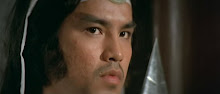
FAIRY IN A CAGE 1977 aka ORI NO NAKA NO YOSEI
Naomi Tani (Namiji Kikushima), Hirokazu Inoue (Lt. Nishizaki), Rei Okamoto (female sex torturer), Reika Maki, Kazuo Satake (Keita Taoka), Minoru Okochi (Maron Murayama)
Directed by Koyu Ohara
***WARNING! This review contains images of nudity and sexual situations***
The Short Version: With very little plot to hold itself together, FAIRY IN A CAGE compensates by using its shoestring storyline of a WW2 era authoritarian sadist "interrogating" captives as an excuse for a chain of sexual tortures and degradations. But with this being of Japan's celebrated and condemned 'Roman Porno' genre, there's a modest stylistic air that lends it a uniqueness unlike the typical exploitation picture.
 After being falsely accused of financing an anti-government political activist, the lovely Kikushima -- along with a young Kabuki actor -- is arrested and handed over to the sadistic judge Murayama. To satiate his psycho-sexual lust, Murayama "interrogates" his prisoners in his own sex-torture dungeon. An inexperienced military officer named Taoka becomes increasingly unstable as the tortures persist, eventually desiring Kikushima for himself. A short time later, the libidinous Taoka plots their escape from Muryama's clutches.

Japan's controversial and critically celebrated 'Roman Porn' movies have held a
minor cult following outside of their native Japan up until recently
when a gaggle of them were unleashed to North American shores on DVD. These are films that showcase sexual fetishes, bondage, S&M, subjugation, sex, nudity and torture. Oh, and they have the propensity to be extremely misogynistic. If your cinematic savories are geared towards Drive In fare, exploitation films and general celluloid trash, than these types of movies will be an attractive proposition for those tantalizingly twisted tastebuds.
 Having never journeyed into the realm of Nikkatsu's contentious, yet popular Roman Porno movies, this picture was my first experience with these movies. I read about them (and skimmed over them) in their extensive coverage in the now defunct Asian Cult Cinema digest back in the 1990s. These movies, that often feature lots of bondage, torture and rape, never interested me. With Synapse releasing them through their Impulse Pictures arm, I decided to play the role of voyeur and purchase a few of these violent erotica quickies just to see what they're all about.

Having watched a few so far, these movies seem to only be interested in shock and titillation. Plot is secondary to the sex and violence. For the most part (at this point, anyways), these are essentially the sort of lascivious exploitation you might find littered among Jess Franco's oeuvre, only here, there's a startling amount of craftsmanship and sense of camera placement.
In the case of FAIRY IN A CAGE, this particular example of Japan's 'pink' pictures calls to mind such movies as the ILSA series and Pasolini's SALO (1975).

In addition, the script contains a socio-political undercurrent that attempts to detract from, or rise above the near endless bondage and assorted torture shenanigans, but is drowned out by them instead -- yet it lingers just under the surface via the dichotomy of its central protagonist and antagonist. This air of capitalism vs. big government erects itself on a few occasions, and would have been a vastly intriguing premise; but the gratuitousness of the films selling points take precedence.
 For instance, at the beginning the judge and Nishizaki are pondering how they can manipulate their way into capturing some new sex slaves. They ogle Kikushima from afar, watching intently as she mingles with her clientele enjoying the toasts and accolades they're giving her. With a look of hate-filled vehemence on his face, Nishizaki mumbles "merchant-class scumbag" denoting his disdain for those he cannot control with a militaristic iron hand.
 The violence that is perpetrated on Tani's character could easily be viewed as a metaphor of a totalitarian regime "pacifying" -- with jackboot authority -- those enjoying the benefits of a free market society. The subjugation and torture of Kikushima means more than mere misogyny -- it represents the crippling of a capitalist system.
 At one point, the sadistic judge attempts to justify his twisted decadence to his accomplice, Lt. Nishizaki that these "pleasures" were always reserved for nobility. These "pleasures" run the gamut from various torture devices, to bondage, and the drinking of female urine. Where SALO reveled in the eating of excrement, FAIRY IN A CAGE sees its crazed authoritarians quenching their thirst on Kikushima's bodily fluids.
 And it is this sin-sationalism where the filmmakers show their true loyalties -- not in anti-capitalism rants, but in various tortures and the raping of women. The film hasn't been on five minutes and we see a whipping and candle wax-to-crotch torture while the opening credits drape themselves over the violence. To be fair, one of the women in this film (the judges aristocratic plaything played by Rei Okamoto) rapes and tortures a male captive repeatedly. However, her lechery is used against her to mount a premature escape.

Outside of some artsy photographic touches, there's very little here that stands out. The limited, but efficient set decor is quite good, and stands in stark contrast against the steady flow of nudity and torture scenes. The characterizations are barren, relegated to the actions of the people playing them as to how they touch the viewer on an emotional level. At 70 minutes, there's really no time to build on any one person.

Naomi Tani is a famous actress for her numerous roles in 'Roman Porn', yet this would seem more for her willingness to strip and be tied up in assorted and elaborate ways than for her acting ability. But then, I've not seen enough of her films to truly say. Her oppressive, near constant victimization here will make the viewer wince on multiple occasions, or make you shut off the movie altogether.

FAIRY IN A CAGE (and this genre in particular) will not be for everybody's taste. Some could classify these pictures as trash, or exploitative, misogynistic junk; but labeling them as 'Stylized Sex and Violence' is an apt description, too. Apparently a feather-ruffling production during the time of its release, it's recommended for those who are fans of exploitation movies looking for new cinematic kicks on the far out fringes, and for those not easily offended.
This review is representative of the Impulse/Synapse DVD.
 FEARFUL INTERLUDE 1975
Wang Chung (Li), Szu Wei (Zhou), Liu Lu-Hua (Wang), Lin Wei Tu (Zhang Songen), Wang Hsia (Detective Wang), Kang Kai (Song Li-he), Chen Shu Yi (Pei Fang), Liu Hui Ling (Feng Zhen), Jennifer Liu Ya Ling (Feng Ying), Wong Ching Ho (Shun Lai)
FEARFUL INTERLUDE 1975
Wang Chung (Li), Szu Wei (Zhou), Liu Lu-Hua (Wang), Lin Wei Tu (Zhang Songen), Wang Hsia (Detective Wang), Kang Kai (Song Li-he), Chen Shu Yi (Pei Fang), Liu Hui Ling (Feng Zhen), Jennifer Liu Ya Ling (Feng Ying), Wong Ching Ho (Shun Lai)
Directed by Kuei Chi Hung
***WARNING! This review contains nudity***
The Short Version: This minor effort from Kuei Chi Hung bears a title that's an apt description of its contents. Built around 45 minutes of an abandoned production the director began working on in late '74, this 'interlude' is stretched to feature length via the anthology format. The second story is the best, while the third -- the aborted feature -- is the most polished of the trilogy. Sporadically effective, the stories deal with two men spending the night in a spooky mansion; a young man's dead mother returns from the grave; and a period tale about a horny young scholar and his servant encountering ghouls on his way to take an imperial exam. Even for Shaw fans and those of the underrated director, this lower tier terror tale is like your favorite Chinese food -- it leaves you wanting more not long after you've digested it.
 This anthology presents three tales of horror -- the first is about a haunted house and a bet between three men. The second depicts an old woman who haunts her son after death; and the third concerns the ghoulish encounters of a young man and his servant lost within a fog enshrouded forest. Ghouls, ghosts and hopping vampire zombies populate these three doom-laden yarns.

 Kuei Chi Hung was among a clutch of Hong Kong filmmakers that never quite got the recognition they deserved outside of Asia; or even a lasting impression in their home territory for that matter. His versatility is spotlighted in a few dozen films during the 1970s and into the early 1980s. Only in Hong Kong could a director formulate critically acclaimed works such as THE TEAHOUSE (1974) only to balance the spectrum the same year with supreme sleaze like THE KILLER SNAKES. By comparison, it would be akin to Martin Scorsese following up BOXCAR BERTHA (1972) with LAST HOUSE ON THE LEFT (1972).
 To put the film being reviewed into context, 1974 also saw the release of Kuei's intriguing semi-vampire spooker GHOST EYES and the spectacularly lowbrow VIRGINS OF THE SEVEN SEAS. 1976 had the directors brutal take on STRAW DOGS in the form of KILLERS ON WHEELS and his uniquely baroque segment in HOMICIDES: CRIMINALS 2. Wedged in between these (and others) is FEARFUL INTERLUDE. And that's exactly how this movie feels -- like an interlude -- a simplistic piece of entertainment bridging a more epic composition.
FEARFUL INTERLUDE is harmless fluff, although not recommended for children. Gore is kept to a minimum (mostly just moldy corpses and a bit of bloody violence in the second and third stories), but there's also a good amount of nudity found in the last segment.

 Asian anthologies never seem to have wraparound segments, and this picture is no different. Things get started with 'The Haunted House'. It's basically a condensed, modified version of the Italian Gothic horror classic CASTLE OF BLOOD (1964). Li and Wang make a bet with their friend Zhou they can survive an entire night in his great grandfather's spooky estate. Of course, things don't go so well for the two friends left alone in this creepy domicile with a murderous former resident.
 The screenplay by Szu Tu On skimps on certain details (such as a book Wang is reading about a haunted house that contains details that happen for real; and the reasons Zhou's great grandfather was beheaded is never revealed), but finds time to cram a couple of twists into this 20 minute creeper. One of these twists -- as absurd as it is -- feels inserted last minute resulting in this poetic justice motif ending on an ambiguous note in relation to the alleged spectral evil lurking within the house.

 Not to disappoint those expecting it, the typical haunted house tropes are also accounted for -- creaking doors, hidden passageways and ominous footsteps are heard around the house. The crew also did a fine job of making the mansion set look decrepit and suitably decayed. Had some things been expanded upon a bit more, we'd of had a much better segment to kick things off with. As it stands, 'The Haunted House' is adequate, with a modicum of suspense, but nothing worth spending the night in a big creepy mansion for. Compared with the other two, it's mediocre at best.

The second story in Kuei's trifecta of fear is the best of the three and definitely turns things up a notch. It's a poignant, and very sad tale about a mother and son who live on top of a mountain where they grow and sell flowers in the village below. Both mother and son have a strong bond between them. One day the mother gets seriously ill. Before she dies, she tells her son that after she's gone, she'll come back to keep him company -- literally.

 Titled 'The Cold Skeleton', it refers to the bond of love being broken after death -- that the returning spirit means harm to those who loved them when they were alive. This is a fascinating bit of superstitious folklore that fits well within the isolated, sporadically situated hovels in and around the hill-capped regions of Southwest China. It's also interesting to note that Szu Tu On's screenplay counters the superstitions of the villagers by inserting some psychological banter by way of a young intellectual who claims that Songen must surely be suffering from somnambulism; that it is he who is digging his mother up!
 Lin Wei Tu (LEGEND OF LUST, THE FLYING GUILLOTINE, THE MIGHTY PEKING MAN) is exceedingly believable as the lovelorn son distraught over his mother's death. That he keeps having to bury her again and again (she rots more and more each time she comes back) drives him to the point of insanity. But is she really coming back, or is it all in his mind?

 This story lasts a little over 30 minutes and would have made a solid character study if stretched out to a full length feature. The score is solemnly haunting and the cues perfectly chosen. Made up of piano and violin, there's also a modified version of a Morricone cue from THE ROVER (1967) included. A fine piece of filmmaking, it's a love story at its heart, albeit a bleak one. With that said, Kuei (who has orchestrated some truly grotesque scenes of brutality) cannot resist inserting a gruesome scene even here; punctuated by a grim coda that may bring a tear to your eye.

 'A Wolf of Ancient Times' is a period piece, and one that is of interest on a few levels. It's about a brash, bucktoothed young master who gets lost on his way to take an imperial exam. Perpetually horny, he desires to have sex with a female ghost -- apparitions of the opposite sex have great respect for scholars according to him. Both he and his much wiser servant happen upon an isolated mansion situated near a graveyard. The young man believes this home to be owned by spiritual entities and upon entering, he takes every opportunity to ogle and fondle the beautiful daughter of the house. When things don't go quite the way he expects (the inhabitants turn out to be quite human), they're lashed dozens of times then thrown out.
Moving on with not only hurt pride, but also a hurt backside, the impertinent fool and his servant end up encountering a pit of snakes and a severed head in a stream! With the fog growing more and more thick, they are found by an old woodsman who takes them back to his small home where he lives with his two beautiful daughters.

 Up to this point, 'A Wolf of Ancient Times' has been an erotica laced comedy similar to the period sex films of the renowned Li Han Hsiang. During its last ten minutes, the story morphs into full blown horror capped off with a bit of cruel irony. It's also an early look at China's unique hopping vampire-zombie creatures that wouldn't become de rigueur till the 1980s. These peculiar creatures were utilized throughout the 70s in numerous other Asian horror films, but these offbeat bloodsuckers caught on in a huge way with the release of MR. VAMPIRE in 1985.

What makes this segment of special interest is that it's a comedy horror piece. As far as Shaw Brothers are concerned, their horror output was always of a serious nature. It would be five more years before comedy and horror (as well as kung fu) would become a uniformly successful box office formula with Sammo Hung's SPOOKY ENCOUNTERS (1980).
 In addition, this segment originally started in late 1974 as a full length feature under the working title of THE SEX WOLF. To speculate, Shaw, or possibly Kuei felt this film wouldn't work as a stand alone feature and decided late in the game to shoot two more segments and turn it into an anthology. It actually works quite well in this format. This also wasn't the only time Shaw films were aborted, or recycled as part of another movie. Despite a static first segment, the other two have some additional qualities lying under the surface.

 The first story is the weakest, and most commercial of the three. The second and third are of the most interest mostly because of the subtext buried within them. Both these yarns are striking dichotomies of one another presenting opposing views of societal archetypes -- superstition versus modernization. The second story shows traditionalism to be both outmoded and dangerous in lieu of psychological advancements -- that those who cling to superstitious beliefs isolated from the industrialization around them can have dire consequences.
 The third story, however, presents the same scenario, but subverts it to show intellectualism embracing folklore as factual. The student is so obsessed with sex, he believes that intercourse with a ghost will be a satisfying conquest simply because some scholarly author had written about it. However, the young master scoffs at his elder servants wish for him to wear an amulet to protect him from said evil spirits. The way the film plays out, the young student does have his ghost-lore correct, but is misguided in his initial assertion. This story also presents a polarizing view of societal classes -- that things are not always what they seem whether you're rich or poor.

Many Asian horror films of this vintage were very heavy-handed in the treatment of the material, often opening and concluding as a morality tale warning the young, easily influenced, and the desperate of the consequences of their actions. This third story teeters on that, but again, it's left as an underlying theme that's never made explicit.
The music score heard here is specific to each tale and they all fit nicely. The score of the first story suits the haunted house motif and some of these tracks will be recognizable from other Shaw horror pictures. The second is of a decidedly more melancholy design that likewise suits the material. The third being a period set story, the music is of the traditional Chinese style. Some of these Asian flavored cues also turned up in the classic HEROES OF THE EAST (1978).

 Taken as a whole, the film is a minor footnote in the career of its director. It's merely a product that entertains for 94 minutes. FEARFUL INTERLUDE offers up some curious themes and ideas that aren't sufficiently realized nor do they ever allow the film to rise above average. The second story alone is enough to recommend this; although upon first glance, causal viewers may not find a whole lot to be fearful of.
The FEARFUL INTERLUDE poster image seen above from this site HERE.
Taken as a whole, the film is a minor footnote in the career of its director. It's merely a product that entertains for 94 minutes. FEARFUL INTERLUDE offers up some curious themes and ideas that aren't sufficiently realized nor do they ever allow the film to rise above average. The second story alone is enough to recommend this; although upon first glance, causal viewers may not find a whole lot to be fearful of.
The FEARFUL INTERLUDE poster image seen above from this site HERE.
copyright 2013. All text is the property of coolasscinema.com and should not be reproduced in whole, or in part, without permission from the author. All images, unless otherwise noted, are the property of their respective copyright owners.


 After being falsely accused of financing an anti-government political activist, the lovely Kikushima -- along with a young Kabuki actor -- is arrested and handed over to the sadistic judge Murayama. To satiate his psycho-sexual lust, Murayama "interrogates" his prisoners in his own sex-torture dungeon. An inexperienced military officer named Taoka becomes increasingly unstable as the tortures persist, eventually desiring Kikushima for himself. A short time later, the libidinous Taoka plots their escape from Muryama's clutches.
 Having never journeyed into the realm of Nikkatsu's contentious, yet popular Roman Porno movies, this picture was my first experience with these movies. I read about them (and skimmed over them) in their extensive coverage in the now defunct Asian Cult Cinema digest back in the 1990s. These movies, that often feature lots of bondage, torture and rape, never interested me. With Synapse releasing them through their Impulse Pictures arm, I decided to play the role of voyeur and purchase a few of these violent erotica quickies just to see what they're all about.


 The violence that is perpetrated on Tani's character could easily be viewed as a metaphor of a totalitarian regime "pacifying" -- with jackboot authority -- those enjoying the benefits of a free market society. The subjugation and torture of Kikushima means more than mere misogyny -- it represents the crippling of a capitalist system.
 At one point, the sadistic judge attempts to justify his twisted decadence to his accomplice, Lt. Nishizaki that these "pleasures" were always reserved for nobility. These "pleasures" run the gamut from various torture devices, to bondage, and the drinking of female urine. Where SALO reveled in the eating of excrement, FAIRY IN A CAGE sees its crazed authoritarians quenching their thirst on Kikushima's bodily fluids.
 And it is this sin-sationalism where the filmmakers show their true loyalties -- not in anti-capitalism rants, but in various tortures and the raping of women. The film hasn't been on five minutes and we see a whipping and candle wax-to-crotch torture while the opening credits drape themselves over the violence. To be fair, one of the women in this film (the judges aristocratic plaything played by Rei Okamoto) rapes and tortures a male captive repeatedly. However, her lechery is used against her to mount a premature escape.