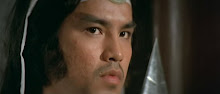
CONAN THE BARBARIAN 1982
Arnold Schwarzenegger (Conan), James Earl Jones (Thulsa Doom), Max Von Sydow (King Osric), Sandahl Bergman (Valeria), Gerry Lopez (Subotai), Ben Davidson (Rexor), Sven Ole-Thorsen (Thorgrim), Mako (Wizard/Chronicler), Valerie Quennessen (The Princess), William Smith (Conan's Father), Nadiuska (Conan's Mother)
Directed by John Milius
The Short Version: Irrefutably the signature, most influential Sword & Sorcery adventure. Arnold Schwarzenegger, with the aid of director Milius (and some assist by Oliver Stone), forged a character based on Robert E. Howard's original that became the pinnacle of all things cinematically barbaric. Heavy on violence and primeval doctrine, Conan cuts and clobbers his way through blood-strewn landscapes beneath his sandaled feet, by Crom.

A young Cimmerian grows up to avenge the slaying of his people at the hands of marauding cultists led by Thulsa Doom, an evil sorcerer with powers over men and beasts.

 Robert E. Howard's famous creation came to the big screen in the form of musclebound Arnold Schwarzenegger, a role the Austrian bodybuilder was born to play (although devout Howard fans would disagree). Having already starred in films such as STAY HUNGRY (1976), THE VILLAIN (1979), and THE JAYNE MANSFIELD STORY (1980), it was this savage tale of high adventure that put Schwarzenegger on the map, and made him a legend in cinematic history. Milius's script (Oliver Stone gets co-credit, but little of his input survives) mixes and matches various Howard stories and characters to create the film version of Conan. Opinions differ on Milius's faithfulness, and or adherence to Robert E. Howard's original material. If anything, CONAN THE BARBARIAN led many to the flock of Howard worshipers to see more of who and what this Cimmerian warrior was.
 The entire look of the film is meticulous in its execution. The alluring landscapes captured by Duke Callaghan's camera gives the adventure that sweeping aura such pictures need; and Ron Cobb's production design is the finest example of prehistory architecture the Sword and Sorcery genre has ever seen. There are a number of moments where the film looks like a Frazetta, or Boris painting come to life.
A review on this movie would be remiss without mentioning the fantastic score by Basil Poledouris. His soundtrack is one of the keys to CONAN's success. It's hard to imagine the film without it. Of the upper echelon of manly music, just hearing the main theme is enough to make a guy feel like forging his own sword; or chopping down some trees at the very least. Words don't do Basil's goosebump inducing score justice. It's just that damn good.

As Basil's bombastic overture and elegant cues overpower many scenes, there's not a great deal of dialog in this movie; which is good considering it plays like an opera. There's more blood and body parts per square inch compared to the number of lines uttered throughout. The visuals sell Milius's movie. His penchant for engaging speeches serves the film well, piling on macho bravado and philosophical pontifications like Arnold packing on pounds of muscle in the gym.

Coincidentally, Schwarzenegger was inhumanly massive prior to working on CONAN. He ended up losing 30 pounds as per the directors request so as to look less like a man straight out of the gym, and more like one whose sculpted form came from strength through adversity.

Talking about Tough Guys, there's none tougher than perennial 70s macho man, Big William Smith, the very definition of the Tough Guy. Reportedly passed over to play the title barbarian, Smith ultimately snagged the role of the man that brings Conan into the world. Despite his brief screen time, Smith has stated in interviews he was on set for 13 weeks, and during his stay, he found time to beat Arnold at arm wrestling. I wonder if anyone ever asked Smith what was best in life?

James Earl Jones and that memorably deep tonality essays Thulsa Doom -- formerly a rampaging merchant of metal (relieving both the swords and the lives from those with impressive bladesmanship), and now the messianic leader of a cannibalistic cult of snake worshiping hippies.

 Jones is a firm believer in The Riddle of Steel; that, in his interpretation, flesh is stronger than steel -- "what is steel compared to the hand that wields it?" This clashes with Conan's father's proclamation that you can put faith in no one in this world, but steel you can trust. As it turns out, Conan's father's sword (that is forged over the opening credits) is broken during his battle with Rexor; and Doom's flesh doesn't stop him from having his head separated from his shoulders at the end by the same broken sword that he'd stolen at the films beginning. During their last meeting, Doom reminds Conan that he has made him, and all that he is; even referring to him as his son. He states, "I am the wellspring from which you flow" -- this just before Conan makes Doom's neck a wellspring from which his blood flows. I will go out on a (severed) limb and state that The Riddle of Steel is answered only by the flesh of the man that holds it. Individualism. A man's destiny.
 CONAN THE BARBARIAN is arguably the supreme example of the Sword and Sorcery genre (although THE SWORD & THE SORCERER from the same year gives it a run for its money), yet there's a lot of the former, and very little of the latter. Milius made a conscious decision to keep as much of the film grounded in reality as opposed to a full-on story peppered with supernatural fantasy. What little fantastical elements survive lack optical effects enhancements, and have an organic feel about them. Thulsa Doom's evil magic is subtle -- relegated mostly to hypnotic powers. His ability to transform into an enormous snake is seen in very brief shots; the camera cutting away to our stealthy heroes maneuvering around the underground lair amidst a cannibalistic orgy; Doom's power over serpents allows his dark magic to turn them into poisonous arrows; and this is the extent of his sorcerous ways visualized onscreen.
 The bloodletting in CONAN was unparalleled in American mainstream cinema at the time. Milius alludes to his gory prehistoric savagery in his 1973 feature, DILLINGER, an AIP production with an abundance of red erupting from the many holes made by machine gun fire. His penchant for Shaw Brothers level of splatter was in evidence there, and was mastered by the time CONAN rolled around. The cannibal orgy towards the end, while never gratuitous, is pushing the envelope. You can see corpses being split open, or strung up, headless for their meal preparation. Possibly one day a version will surface with much of the cut footage put back in (more on that below).
The inclusion of the Wolf Witch that literally, and very nearly tears into Conan's flesh during a sex session is as Dungeons & Dragons as it gets outside of the animated demons that attempt to claim a nearly dead Conan. There's also a giant, mechanical snake. According to the actress that played the witch, Cassandra Gaviola (Gava), she made another appearance in the picture, but this encore cut in the final edit.

The giant snake is a pretty impressive construct. According to articles related to the films making at that time, this mechanical monstrosity was 36 feet long, and cost $100,000 to build. Reportedly it didn't work very often. A giant rubber snake was also used.

Looking back, CONAN THE BARBARIAN likely would have lost some of its visceral punch had there been more fantasy elements. The violence would have been alleviated to a degree. It's just the right amount for the sort of tale its storyteller wanted to tell.
SEEING CONAN THE BARBARIAN FOR THE FIRST TIME
 As a then 7 year old, I remember having an increasingly heightened curiosity leading up to CONAN's release back in 1982. I'd been introduced to the character not from Howard's novels, but via Marvel's color comic book, and their far more adult B/W comic magazine, The Savage Sword of Conan the Barbarian. I was never allowed to own the latter till I was 9 years old in 1984. I'd always read them at the barber shop much to my mother's chagrin. I didn't care about the car magazines on the table in there, I cared about Conan. The comic book was fine with my mom since it was nowhere near as gruesome, nor was it fraught with sexual proclivities like the magazine. It was forbidden, so naturally I gravitated towards it. I remember the son of my babysitter in the early 80s was huge into Heavy Metal music and the barbarian iconography that was a natural fit for that musical styling. His walls were adorned with fantasy paraphernalia; much of it revolving around Sandahl Bergman, including a life-sized poster on the inside of his room door. When CONAN was released on videocassette later in the year, my father bought a copy of it. My mom's sister and her boyfriend were invited over to watch it. Naturally, I was not allowed to see it, but I did sneak down the stairs leading into the den to hear some of what was transpiring onscreen. After my parents divorced in 1983 I was able to finally see CONAN THE BARBARIAN (1982), and I was not disappointed at all. CTB was a big influence on me as a young kid, aiding in shaping interests I still hold today. I enjoy this picture just as much now as I did back then.
Reportedly threatened with an 'X' rating multiple times, CONAN THE BARBARIAN had to be trimmed for its 'R' rating. Cut scenes, or unfilmed sequences were numerous with many of them involving gore and violence. A selection of these are listed below:
- Conan's mother's decapitation was shown, but the effect was said to have not been realistic enough, so it was cut, and the shot of only her hair as the head falls was used. Personally, this actually works better than had a severed head twitching in the snow been seen.
- The Pit Fighting sequence was said to have run much longer -- with a running series of battles -- as opposed to the montage edited together for the final cut. Valeria was to have been introduced there, although it would seem she and Conan don't meet at this point. A female gladiator is among those Conan battles with. A few shots of this duel are in the finished version, but we aren't aware it's a woman. Conan fells her with his weapon, then decapitates the woman warrior, hoisting her head in the air. The shot of Conan holding up a severed head in the film is from this scene.
- In one of the villages Conan and Subotai visit, a thief attempts to steal his sword. The Cimmerian responds with relieving the man of his hand. Publicity materials feature this scene, but it's not in the release version.
- When Conan, Subotai, and Valeria climb the Tower of the Snake, they encounter a three-eyed monster (two in front, and one in the back of its head) that is summarily put down by Subotai. Considering Milius wanted to avoid too much of a supernatural influence, it's logical this scene was discarded for that reason.
- A different ending was written, but never shot that had Conan and Subotai parting ways in a closing bit of male bonding.

 With the films popularity around the world, that meant clones and
rip-offs were a bounty reaped by hungry movie producers seeking a big
hit of their own. Italy was where the bulk of the CONAN clones came
from, and none of them approached the majesty of Milius's movie. A
handful were made on domestic shores, too. Some of the best are the
aforementioned THE SWORD & THE SORCERER (1982), THE BEASTMASTER
(1982), DEATHSTALKER (1983), and HUNDRA (1983); that last title is of
special interest in that it's a female version of the story with an
equally spectacular score by Ennio Morricone. Incidentally, HUNDRA got a
rip-off in the form of RED SONJA (1985), co-starring Arnold
Schwarzenegger. Some of the best of the worst offenders are ATOR, THE FIGHTING EAGLE
(1982), THE SWORD & THE BARBARIAN (1983), THE WARRIOR & THE SORCERESS (1984), and WIZARDS OF THE LOST KINGDOM (1985).
With the films popularity around the world, that meant clones and
rip-offs were a bounty reaped by hungry movie producers seeking a big
hit of their own. Italy was where the bulk of the CONAN clones came
from, and none of them approached the majesty of Milius's movie. A
handful were made on domestic shores, too. Some of the best are the
aforementioned THE SWORD & THE SORCERER (1982), THE BEASTMASTER
(1982), DEATHSTALKER (1983), and HUNDRA (1983); that last title is of
special interest in that it's a female version of the story with an
equally spectacular score by Ennio Morricone. Incidentally, HUNDRA got a
rip-off in the form of RED SONJA (1985), co-starring Arnold
Schwarzenegger. Some of the best of the worst offenders are ATOR, THE FIGHTING EAGLE
(1982), THE SWORD & THE BARBARIAN (1983), THE WARRIOR & THE SORCERESS (1984), and WIZARDS OF THE LOST KINGDOM (1985).
 A
sequel to CONAN came in 1984 titled CONAN THE DESTROYER. It delivered a
far heavier dose of fantasy and monsters that the original lacked.
Audience reaction was even more divided this second go round. In 2011, a
mostly horrible remake surfaced from Lionsgate. A 90 million
mega-bomb, it was a failed attempt to create a new franchise with
character spin-offs. Amazingly, producers are trying again with a
reported LEGEND OF CONAN film starring Arnold in what has been reported the
first of a trilogy. It remains to be seen if this becomes a reality
considering the poor showing of the remake, and lack of audience interest in Arnold's spate of films
since his comeback.
A
sequel to CONAN came in 1984 titled CONAN THE DESTROYER. It delivered a
far heavier dose of fantasy and monsters that the original lacked.
Audience reaction was even more divided this second go round. In 2011, a
mostly horrible remake surfaced from Lionsgate. A 90 million
mega-bomb, it was a failed attempt to create a new franchise with
character spin-offs. Amazingly, producers are trying again with a
reported LEGEND OF CONAN film starring Arnold in what has been reported the
first of a trilogy. It remains to be seen if this becomes a reality
considering the poor showing of the remake, and lack of audience interest in Arnold's spate of films
since his comeback.
 Arguably the finest example of the Sword and Sorcery formula, John Milius created a unique world that was influential on cinema around the globe. It cemented its star as a legend among the new crop of Hollywood action heroes that dominated the 1980s. Castigated by some, and celebrated by many, CONAN THE BARBARIAN (1982) asks what is best in a celluloid legacy -- to crush the opposition, see pretenders driven before you, and to hear the lamentations of your detractors, by Crom.
This review is representative of the Universal Blu-ray.