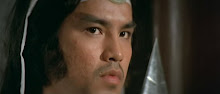
William Smith (Rafe Stoker), Mary Woronov (Julie Martin), Ray Giardin (Harvey), Jennifer Billingsley (Buttons), Don Stroud (Barney), Jude Farese (Rhodes), Tom Simcox (the Sheriff), Carmine Caridi (Anthony), Angelo Farese (Angelo Russo), Michael Delano (J.J.), John Alderman (Jesus), Wade Preston (Tex), Clay Tanner (Dave)
Directed by Jack Starrett
"Make a good movie, Mr. Hollywood."
The Short Version: One of the most unusual 70s Drive-in pictures is this occasionally rowdy, rough around the edges exploitation movie about making exploitation movies. It comes to you from celluloid specialist Jack Starrett. Tough Guy William Smith is an actor and film director--but still a Tough Guy--who runs into A LOT of trouble after taking mob money to finish his movie. If you enjoyed Starrett thrillers like RACE WITH THE DEVIL and A SMALL TOWN IN TEXAS, you'll wanna meet up with the HOLLYWOOD MAN.


 Rafe Stoker is a struggling actor turned filmmaker who needs $375,000 to make his magnum opus, but his boss won't pony up. Desperate, and ignoring his producer's warnings, Rafe cuts a deal with local mobsters for the dough. They agree, but only under the stipulation he complete the picture in four weeks; otherwise he loses his house, his assets, and everything else he owns. Literally signing his life away, Rafe takes them at their word, only these wiseguys have no plans on keeping it. They send a psychotic biker and his motley crew of crazies to shake things up to keep Rafe from finishing on time even if it means raping and killing a few people along the way.
 HOLLYWOOD MAN is one of the great unsung exploitation pictures of the 1970s. If you love Drive-in movies, HOLLYWOOD MAN has a little something for every lover of low budget genre fare. You got stunts, you got drama, you got deranged motorcyclists, you got the shadiest sheriff this side of the MACON COUNTY LINE (1974), you got gratuitous violence, and then there's the Toughest Tough Guy of them all, Big Bill Smith. To sweeten the deal, Smith not only wrote, but produced the damn thing. Incidentally, all that's missing is a 'Based On A True Story' title card since the financiers of HOLLYWOOD MAN were mobsters. Thankfully, the meat and potatoes of the movie wasn't recreated afterward. There is, however, a foreshadowing title card that states 'You always find out what something is worth when you pay for it.'
The Mob connection with movies was nothing new, but it made for a great idea to build a movie around. Considering the dangerous situations Hong Kong personalities found themselves in once the Triads infiltrated the film industry there--particularly in the 1990s, the plotline of HOLLYWOOD MAN isn't as sensationalized as you might expect.
"Why'd you waste your money showing me this crap? Bike movies are out."
 If you're familiar with Smith and director Starrett, HOLLYWOOD MAN feels
like you're watching a movie about making a Jack Starrett movie.
Starrett had a signature style all his own that, if you'd missed seeing
his 'Directed by' credit, you'd still be able to recognize his style.
It's also something of a tribute to the biker genre that both Starrett
and Smith had a major hand in popularizing. This was the third and last
time the two worked together; the previous pictures being biker cult favorites RUN, ANGEL,
RUN (1969) and THE LOSERS (1970).
If you're familiar with Smith and director Starrett, HOLLYWOOD MAN feels
like you're watching a movie about making a Jack Starrett movie.
Starrett had a signature style all his own that, if you'd missed seeing
his 'Directed by' credit, you'd still be able to recognize his style.
It's also something of a tribute to the biker genre that both Starrett
and Smith had a major hand in popularizing. This was the third and last
time the two worked together; the previous pictures being biker cult favorites RUN, ANGEL,
RUN (1969) and THE LOSERS (1970). Chock full of great ideas and
self-referential humor, about the only negative to be levied at this unconventional actioner is its lack of a sufficient budget to do it complete
and total justice. It's still quite a great deal of fun, and frequently
engaging. Starrett was gifted in that he could take 90 minutes and give it equal helpings of exposition and exploitation. Similar to HOLLYWOOD BOULEVARD (1976), Starrett's 'making of a movie movie' is far more serious, and punctuated with some
shocking violence. The script has a few surprises up its sleeve that you may, or may not see coming. The picture starts off with a fairly light tone, then quickly nosedives into LAST HOUSE ON THE LEFT territory with motorcycles and movie sets.
Chock full of great ideas and
self-referential humor, about the only negative to be levied at this unconventional actioner is its lack of a sufficient budget to do it complete
and total justice. It's still quite a great deal of fun, and frequently
engaging. Starrett was gifted in that he could take 90 minutes and give it equal helpings of exposition and exploitation. Similar to HOLLYWOOD BOULEVARD (1976), Starrett's 'making of a movie movie' is far more serious, and punctuated with some
shocking violence. The script has a few surprises up its sleeve that you may, or may not see coming. The picture starts off with a fairly light tone, then quickly nosedives into LAST HOUSE ON THE LEFT territory with motorcycles and movie sets.
 If Krug and his goons rode hogs, they'd look like Harvey and his gang of misfit thugs. Ray Giardin is off the charts as the increasingly demented mob enforcer, Harvey ("I was in Spartacus with Kirk Douglas"); a mad biker who, if his irrational emotional state is anything to go by, is a huge fan of Jack Nicholson. Giardin's scenes with Smith are some of the best in the movie. From their first uncomfortable meeting where Harvey, before getting knocked on his ass, says, "2 1/2 weeks I worked with ya' on RUN, ANGEL, RUN, for chrissakes", to the unsettling moment where Harvey again threatens both Rafe and his girlfriend in a restaurant, Giardin wrote a fantastic bad guy for himself (co-wrote with William Smith). Working mostly in television, it's unfortunate that Giardin never did more film work than he did since he made such a fantastic sadist in this.
  Harvey's main muscle is this guy named Rhodes. A big and dumb brute with the mind of a child and the will of a killer, Rhodes is the live-action version of one of those clumsy Warner Bros. cartoon characters who dote after their much smaller in stature, but much smarter second half. Played by Jude Farese, he plays the role just like a cartoon with a bit of the retarded giant from Steinbeck's 'Of Mice and Men' thrown in; on a few occasions, Rhodes strength gets the best of his easily influenced mind resulting in dialog like, "I didn't mean to kill him/her, Harvey."
"Look, you came on my set, you shot a couple a holes in the generator, and I punched ya' in the mouth... let's call that even. But I wanna tell ya', if I see ya' again... or ya' get back on my set, and I don't give a shit about that gorilla there... I'm a' hurt you. Now I wanna be clear."
 William Smith is the Hollywood Man of the title. Smith bypasses his usual evildoer to play the hero of the piece. As much as fans love to hate him when he's a villain, he's just as likable orating Tough Guy dialog with the utmost sincerity as a protagonist. Smith probably smiles more in this movie than much of his career put together. When he smiles in HOLLYWOOD MAN, it's genuine as opposed to a prelude to violence as is often the case in all your finer Smith as malefactor roles. A shame this movie isn't more well known. It's one of Smith's more interesting roles not just because he's playing a gentle giant of sorts, but because of the storyline.
  Jennifer Billingsley is one of the more magnetic characters found in the script. Playing Harvey's pathetic, if unstable woman, Buttons, she's desperate for affection from her man, but he couldn't be less interested. Even though she's only slightly less despicable than the rest of the pack, she is able to occasionally derive a modicum of audience sympathy before wiping it away a few minutes later. The major set piece with her in the wedding dress in the ocean is a highlight. Billingsley appeared with Smith in his more lightly toned biker movie, C.C. AND COMPANY (1970). Possessing a fantastic body, exploitation fans will know her from BRUTE CORPS (1971), WELCOME HOME, SOLDIER BOYS (1971), WHITE LIGHTNING (1973), and THE THIRSTY DEAD (1974).
There's so many familiar faces in this, most of which were friends of Smith including Giardin, Woronov, and Don Stroud. Woronov, of course, is known for her work in films like DEATH RACE 2000 (1975), ROCK AND ROLL HIGH SCHOOL (1979), and EATING RAOUL (1982). Her role as Smith's girlfriend is mostly window dressing and, surprisingly, considering her cult status, she's probably the least interesting character in the entire film.
 Don Stroud, another Tough Guy who was friends with stunt master Robert Conrad and his co-star William Smith, was a black belt, a surfer, and a bouncer before getting into movies. You've seen him in Eastwood flicks like COOGAN'S BLUFF (1968) and JOE KIDD (1972). He played the lead hero in the AIP biker flick ANGEL UNCHAINED (1970), and the sadist menacing Brenda Vaccaro in THE HOUSE BY THE LAKE (1976). With his friend, Robert Conrad, he co-starred in LIVE A LITTLE, STEAL A LOT (1975) and the Filipino exploitationer, SUDDEN DEATH (1975).
Another friend of Smith is Hollywood stuntman and motorcycle enthusiast Gary Littlejohn. He isn't in a featured role, but he is onscreen pulling off some of the bike stunts.
 The soundtrack is kind of chaotic, a bit all over the
place. There's this epic main theme by the Neil Diamond styled singer,
stage actor Tony Chance. It's a good tune, but it creeps up at awkward
times; one of which is a tender moment between Smith and Woronov. We
can't hear what they're saying because the song is playing over the
dialog. The song again interrupts the flow of the finale, if briefly. It's moments like this where the low budget shines through.
The soundtrack is kind of chaotic, a bit all over the
place. There's this epic main theme by the Neil Diamond styled singer,
stage actor Tony Chance. It's a good tune, but it creeps up at awkward
times; one of which is a tender moment between Smith and Woronov. We
can't hear what they're saying because the song is playing over the
dialog. The song again interrupts the flow of the finale, if briefly. It's moments like this where the low budget shines through.
 Till a restored, widescreen version of HOLLYWOOD MAN surfaces, its virtues will remain unrealized. As it is (in its longer 90 minute cut), it's one of Smith's stand out titles in his lengthy filmography, and one of Jack Starrett's least discussed, most creative works. Recommended for fans of both, as well as those with a fondness for 70s Drive-in fare and exploitation cinema from a time period where it was at its most creative.
This review is based on the longer 90 minute version of HOLLYWOOD MAN (1976).