Friday, July 2, 2021

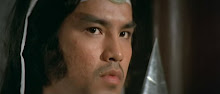
The Awaken Punch (1973) review


THE AWAKEN PUNCH 1973 aka FURY OF THE BLACK BELT
 
Henry Yu Yung (Cheung Da Gang), Susanna Au-Yueng (Jun San), Tien Feng (Mr. Wong), Nancy Siu (Cheung's Sister), Ko Hsiang Ting (Cheung's Father), Fang Yeh (White Fan), San Kwai (Black Fan), Meng Li (Brothel Madam), Kenneth Tsang Kong (Ying Ho), Feng Ko An (Mr. Chow), Li Chao (Han Chu)
 
Directed by Fong Lung Seung
 
The Short Version: One of literally hundreds of empty-hand fight flicks that proliferated in the early 1970s; and one of the better shot of that bunch. Headlining as hero is newcomer Henry Yu Yang; and as villain it's perennial bad guy Tien Feng, late of ONE-ARMED SWORDSMAN (1967) and FIST OF FURY (1972) to name two. It's quite good for its genre to the point even non-fans may find it mildly entertaining. KF fans, though, should definitely not sleep on THE AWAKEN PUNCH.

 
A crime syndicate controls a small coastal town in Hebei Province, forcing the residents to pay protection money. A young fighter named Cheung rises up to thwart the villains and becomes a hero to the people. Out of gratitude, the local business owners give Cheung money from legitimately protecting them and also from local fights. At one point, Cheung saves a young lady who falls in love with him. He has no time for romance as his father is dying back home so he hops a train back to his hometown. His father's last wish is that his son keeps their land in the family and that he gives up fighting for good. 

 
Cheung agrees; and upon doing so, a new criminal element appears in the form of Mr. Wong, an expert knife-thrower and wealthy land owner with a small army of Kung Fu fighters who oppress the people even worse than before. Wong's goons attempt to buy Cheung's family property, but he refuses to sell. Elsewhere, the lady he rescued goes to fin him and ends up kidnapped by Wong's men and forced into prostitution. The violence escalates out of control till Cheung has once more had enough. Breaking his promise to his father, Cheung's fists awaken and dole out justice to the criminals.

 
In the 1970s, Kung Fu movies were a dime a dozen. Scores of them were made every year. Mostly interchangeable, the plots had little variance. The Swordplay pictures that dominated screens before them were more complex in plot while the empty-hand versions born from their bladed brethren simplified narrative to a primal level. 
 
 
THE AWAKEN PUNCH is one of hundreds in the 'Revenge' and 'You Killed My Master' sweepstakes. There's nothing overly spectacular about it, but it's shot well and better directed than many others of this time period. It's quite good and does something relatively few others in the genre did during this era, and that's focus largely on characterization. It doesn't lack action, but the bulk of it comes in the last 40 minutes.
 

A Kung Fu movie doesn't need lots of exposition to be enjoyable, but it's definitely a bonus when a film from a much-maligned genre goes beyond the stigma of being little more than 90+ minutes of monotonous, mindless fighting. The man responsible for the script is also the director, Fong Lung Seung.
 
 
Primarily a writer, his association is mostly in the drama and thriller style of cinema. Fong's expertise in those other genres makes his sole Kung Fu movie a more satisfying viewing experience than it otherwise would have been. Among his writing credits, you'll find some Hong Kong James Bond clones like SUMMONS TO DEATH (1967) and THE ANGEL STRIKES AGAIN (1968); both produced by the Shaw Brothers. 
 

On the fighting front, fist and kick fans will be pleased with the early work of the prolific Yuen Woo Ping and Yuen Chueng Yan. The choreography is what you'd expect from empty-hand action of the early 1970s, but the brothers mix it up with some spear work during the finale. The fighting is the type of brutal Karate-style choreo that was the dominant form till trends changed in 1974; when Chinese martial arts styles like Hung Gar were showcased. From there the action design would evolve even further over the next two years. 

 
Participating in lots of bit parts prior, newcomer Henry Yu Yung is the lead. He isn't as imposing as either Bruce Lee or Chen Kuan Tai--two men who were influential on the martial arts movie in the early 1970s. THE AWAKEN PUNCH strongly resembles then recent box office smashes THE BIG BOSS (1971); and to a lesser degree, BOXER FROM SHANTUNG (1972), in how it unfolds. Regardless of his slight physique, he's a good actor whose emotions shine through; and he looks believable in the fight scenes. He never became a major star, but had a handful of important roles throughout his career.

A treat for fans of these movies, and particularly the early 70s films, is seeing future big names--whether in front of or behind the camera--in small roles. Among them is a young Jackie Chan as a thug. He has no lines, he's just there to beat up a young girl who is attempting to escape a brothel. 
 
Chan had been signed to the Great Earth Film Company in 1972 by the facility's founder, actor-turned-director Chu Mu. Fans will remember Chu as the rebel General in ALL MEN ARE BROTHERS (1973) and the main villain in HEROES TWO (1974). Chan did two movies for Chu, NOT SCARED TO DIE and POLICE WOMAN (both 1973).
 
 
Actor and director Tien Feng is the main villain here, and the film's biggest marquee name. He's the wealthy businessman who moves in and takes over the town that had previously been freed of mob ownership by the film's hero. An expert knife-thrower, he is like most other KF heavies, bringing in a small army of specialists to assist in the rampant criminal activities. Curiously, Tien isn't in the movie all that much; likely due to his appearing in over 20 other movies between 1972-1973. 
 

At Shaw Brothers, Tien essayed some of the most despicable bad guys to ever grace the Silver Screen. Some of his characters were easy candidates for the Evil Bastard Hall of Fame in such films as Pao Hsueh Li's splatter-fest OATH OF DEATH (1971) and Ho Meng Hua's  THE BLACK ENFORCER (1972). One of Tien's most jaw-dropping roles in the annals of screen villainy came in Cheng Kang's THE SWORD OF SWORDS (1968) starring Jimmy Wang Yu.
 

A frequent villain in a few dozen independent fist and kickers, Fang Yeh has more presence than Tien Feng's lead bad guy for the reasons specified above. For roughly the entire middle portion of the movie, Fang and San Kwai (as White Hat and Black Hat, respectively) have near exclusive exclusive screen time as antagonists. Some of Fang's other work is THE BLOODY FISTS (1972), CHINESE HERCULES (1973), BROKEN OATH (1973), and the cult favorite THE DRAGON LIVES AGAIN (1977).

 
Something else THE AWAKEN PUNCH does differently is its ending. Instead of the usual freeze-frame ending or a final shot of the hero walking off into the sunset, this one shows what would happen after that--to a person who had just taken the law into their own hands. It's a morality play finish that says Cheung would have been fine if only he'd heeded his father's dying wishes and went to the law like he originally was going to do. Still, the way the film plays out he would likely have ended up dead with everyone else. So the takeaway is another real life dictum, that life isn't always fair.
 

Good direction or an interest in surpassing standard material is something a lot of these movies aren't afforded; especially on the independent front. Many are only interested in cramming as many fights into 90 minutes as possible. When one of these pictures puts in extra effort with its script and visuals, you have a film that stands out; and THE AWAKEN PUNCH is one such production.

This review is representative of the Pearl River Collection: The Basher Box blu-ray. Specs and Extras: 4K transfer from35mm inter-positive, 1080p 2.35:1 for THE AWAKEN PUNCH; 4K transfer from 35mm negative, 1080p 2.35:1 for THE PRODIGAL BOXER; commentary (PB only); interviews with Michael Worth & John Kreng (PB only); original theatrical trailers for both films; running time: 01:41:04.


Tuesday, June 1, 2021

Mausoleum (1983) review

 
MAUSOLEUM 1983

Marjoe Gortner (Oliver Farrell), Bobbie Bresee (Susan Walker Farrell), Norman Burton (Dr. Simon Andrews), Maurice Sherbanee (Ben), LaWanda Page (Elsie), Laura Hippe (Aunt Cora Nomed), Sheri Mann (Dr. Roni Logan)

The Short Version: Bobbie Bresee's first major acting gig is a ridiculous B horror-gore flick that has her either wearing little clothing or lots of monster makeup. She's the film's best attribute aside from the monster suit with the masticating mammaries. The 'barely-there'  plot plays second-banana to John Carl Buechler's rubber appliances and splatter FX. Then there's former child-evangelist Marjoe Gortner and LaWanda Page of SANFORD AND SON fame as added incentive for this production-plagued picture. If it weren't for the snapping demon breasts, MAUSOLEUM would likely have stayed dead and buried. 

 
A familial curse possesses the first born daughters of the Nomed (demon spelled backwards) lineage when an ancient demonic force is released from the family mausoleum. Haunted from when she was a little girl, Susan Farrell undergoes a literal transformation that leaves a trail of corpses till the demon is sent back to Hell.

Low on plot but high on makeup FX, MAUSOLEUM (1983) dangles precariously from the lower rung of the demonic possession sub-genre. It's not as brutally grim as THE INCUBUS (1981), nor as garishly over the top as AMITYVILLE 2: THE POSSESSION (1982) and nowhere near as well made as either of those two. 
 
 
MAUSOLEUM is closer in style to similar, middle-tier genre fare like EVILSPEAK (1981) and SUPERSTITION (1982) in that spectacularly creative sleaze makes for a memorable experience. It doesn't make much sense (what the hell is going on in the inexplicably confusing final scene?!), but this cheap tale of a devil-cursed sepulcher manages to hold your attention due to a surprisingly spunky performance by Bobbie Bresee; along with a horde of splatter effects and rubber monster transformations.
 
 
Feeling more like an Italian horror movie than an American one, MAUSOLEUM's cryptic script is as threadbare as Ms. Bresee's clothing. Aside from the aforementioned, and numerous rubber creature effects and splattery gore from the late John Carl Buechler, there's little else holding it together. In its defense, MAUSOLEUM's cumbersomeness was possibly due in part to its troubled production history.
 
 
According to articles at the time, the original story was written by Katherine Rosenwink, an author who would later work on some episodes of the hit TV series ALICE (1976-1985). The rights to Ms. Rosenwink's story ended up in the hands of a man named Morton Green. Reportedly, Mr. Green signed a contract giving the rights to producers Jerry Zimmerman and Robert Barich in exchange for the opportunity to direct the movie himself for a salary of $60,000. Shortly after filming began in late February 1981, Green was let go. He subsequently sued the two men for breach of contract and civil fraud. On top of that, both Zimmerman and Barich were arrested, along with others, for separate crimes involving grand theft and conspiracy to cheat and defraud. 
 
 
Yet another lawsuit surfaced after the film was finally released in the summer of 1983 from Michael Zide over non-payment of a $30,000 loan to Zimmerman's and Barich's production company Western International Pictures in July of 1982. Zide was acting as a representative for them through his Producers Service of Woodland Hills and was reportedly contracted to receive percentages of the theater rental profits and monies received by Western International Pictures. The various suits ran up into the millions and included other companies as defendants like the film's distributor Motion Picture Marketing. All this trouble over a movie that likely only cost a few hundred-thousand dollars. It's amazing the picture saw completion.

 
At some point Barich was out and Michael Franzese, then a mob boss for the Colombo crime family, became co-executive producer along with Jerry Zimmerman. Franzese would later serve in the capacity as a producer on the revenge film favorite SAVAGE STREETS (1984). MAUSOLEUM would be the only motion picture credits known for both Zimmerman and Barich. Moreover, Barich is also credited as a co-writer and the film's cinematographer. Actually, the photography is one of the film's few attributes, with a number of sequences possessing a Bava-esque visual style.

Making this story even more peculiar, according to Buechler on the DVD/Blu-ray, Michael Dugan (also a DP) wasn't actually the director calling the shots, but Robert Barich. Dugan had earlier helmed the Sea World set kiddie flick, SUPER SEAL (1976) starring Sterling Holloway (the voice of Winnie the Pooh).
 
 
Previously a music teacher and Playboy Bunny before becoming an actress, MAUSOLEUM was Bobbie Bresee's first theatrical feature. Prior to this she had small roles in several TV shows before being handed the lead role in her horror debut where she goes above and beyond the flimsy material she had to work with. It's an exploitation movie after all, so most aren't looking for technical achievements; only cheap thrills and MAUSOLEUM has an abundance of them. 
 
Despite what some reviews may say, Bresee delivers a surprisingly effective performance playing the happy homemaker suffering from a case of demonic possession. She throws herself into the part and frequently throws off her clothes, too. 
 
Drawing comparisons to THE EXORCIST (1973) isn't out of the question since MAUSOLEUM takes some cues from the 1973 trendsetter. Instead of a bed-ridden Linda Blair spouting obscenities and slowly succumbing to the Devil inside, Bresee goes into hellspawn mode whenever angered or seducing gardeners and grocery delivery boys.

 
Bresee owns the movie that, in all likelihood, would be nearly unwatchable without her. The actress takes the material very seriously, even though the movie is unmistakably stupid throughout. When she kills the gardener, for example, she fully transforms into the monster for the first time. But instead of simply clawing her victim to death, she offs him with a small garden rake instead. Bresee appeared in a few other horror pictures but unfortunately, she never attained major Scream Queen status. 
 
 
Her co-star, the usually reliable Marjoe Gortner, just seems to have taken the job to collect a paycheck. A former evangelist, Gortner is subdued compared to some of his other film work. His rowdy lead role in the little seen WHEN YOU COMING BACK, RED RYDER? (1979) is one of the most quotable movies ever made. He played the energetic hero in AIPs FOOD OF THE GODS (1976) and Lynda Carter's crazed criminal boyfriend in BOBBIE JO AND THE OUTLAW (1976). This role doesn't require he deliver a manic performance, he just doesn't seem to have his heart in this one.
 
 
LaWanda Page, Aunt Esther from the hit comedy series SANFORD AND SON (1972-1977),  plays the housekeeper. She's in a handful of scenes and, if you're already familiar with her classic SANFORD AND SON character, the entertainment factor in MAUSOLEUM goes up a few notches. A world-traveled dancer and comedienne, her comedy style was hilarious if filthily funny. If you're only familiar with her as Aunt Esther, you should check out her comedy routines.

 
Highly publicized at the time in all your finer horror periodicals for the demon-breasted monster suit, Buechler's work is just as rubbery looking as other movies he worked on; the GHOULIES series and TROLL (1986) being two of the most popular. Some of his best work appeared in movies like RE-ANIMATOR (1985), FROM BEYOND (1986) and DOLLS (1987), all for director Stuart Gordon. He directed a number of features, including the near bloodless FRIDAY THE 13TH PART 7: THE NEW BLOOD (1988); a tired sequel but one that had the best Jason makeup of the entire series. Sadly, Buechler died March 18th, 2019 aged 66.

 
The occasional atmospheric set-piece and colorful photography really pop on this 4K restoration from Vinegar Syndrome; while the gore is another saving grace, and just as messy as the movie is. One of the weakest films of its sub-genre, MAUSOLEUM nonetheless sustains itself in large part to the Scream Queen-worthy performance of Bobbie Bresee. It's a shame it didn't lead to a healthy string of similar roles for her considering the effort she puts in here. A multi-talented actress and musician, thanks for the (monster) mammaries, Ms. Bresee.

This review is representative of the Vinegar Syndrome DVD/Blu-ray combo. Specs and extras: new 4K scan from original 35mm negative; 1080p 1.85:1 anamorphic widescreen; interview with makeup effects artist John Carl Buechler; original theatrical trailer; TV spots; still gallery; reversible artwork; English subs; running time: 01:36:58
Related Posts with Thumbnails

ShareThis

copyright 2013. All text is the property of coolasscinema.com and should not be reproduced in whole, or in part, without permission from the author. All images, unless otherwise noted, are the property of their respective copyright owners.