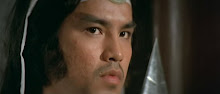
LOS CAMPEONES JUSTICIEROS 1970 (THE CHAMPIONS OF JUSTICE)
Blue Demon (himself), Mil Mascaras (himself), El Medico Asesino (The Killer Doctor/himself), Alejandro Cruz (The Black Shadow), Tinieblas (Darkness/himself), La Sombra Vengadora (The Avenging Shadow/himself), David Silva (Dr. Zarkoff/Black Hand), Elsa Cardenas (Elsa)
Directed by Federico Curiel
The Short Version: Before THE AVENGERS movie, there was THE CHAMPIONS OF JUSTICE. Five of Mexico's biggest wrestling stars engage a mad scientist and his superhuman, machine gun totin' midget militia in a neverending string of action set pieces. Just like the action, the jazzy soundtrack seldom slows down. Beautiful girls, some explosions, and slicker production values than usual enhance this lively, absolutely bonkers, low budget Bondian piece of Lucha madness.

 Dr. Marius Zarkoff, alias Black Hand, seeks revenge against The Champions of Justice for putting him in prison five years earlier. The Champions are a five man team of wrestlers that fight evil when they're not battling opponents in the ring. To see his vendetta through, Black Hand creates an army of superhuman midgets he uses to kidnap the Goddaughters of the Champions -- all of whom are beauty contest participants -- in addition to setting a variety of traps for our heroes. Zarkoff eventually captures one of the Justice members and takes control of his mind. The rest of the Champions battle their way to Zarkoff's hideout for a final showdown.
 Prolific Mexican director Curiel is often reliable in delivering shoestring entertainment that satisfies its core audience; other times, not so much. Thankfully, this is among the man's best efforts. LOS CAMPEONES JUSTICIEROS is also one of the best of the Lucha canon, and appears to have been granted something resembling a budget. Make no mistake, it's still an impoverished affair, but rarely has mediocrity been this ingeniously rewarding.
The action sequences are (moderately) varied as opposed to having the heroes and villains slug it out in the same locales over and over again; cars and boats are blown up, which is unusual for this sort of thing. The heroes drive motorcycles, as well as their own signature vehicles that only adds to spice up their personalities. If nothing else, this Mexican 'Justice League' is ambitious well beyond its means.
Prolific Mexican director Curiel is often reliable in delivering shoestring entertainment that satisfies its core audience; other times, not so much. Thankfully, this is among the man's best efforts. LOS CAMPEONES JUSTICIEROS is also one of the best of the Lucha canon, and appears to have been granted something resembling a budget. Make no mistake, it's still an impoverished affair, but rarely has mediocrity been this ingeniously rewarding.
The action sequences are (moderately) varied as opposed to having the heroes and villains slug it out in the same locales over and over again; cars and boats are blown up, which is unusual for this sort of thing. The heroes drive motorcycles, as well as their own signature vehicles that only adds to spice up their personalities. If nothing else, this Mexican 'Justice League' is ambitious well beyond its means.
 For this genre, wrestling is an integral factor to the success of these pictures. There's often at least two, but for this first entry in the trilogy, there's only one wrestling match, and that's at the very beginning. Oftentimes these matches have no impact on the plot, but sometimes are integrated into the storyline. The one that opens LOS CAMPEONES JUSTICIEROS seems like it's the former, but turns out to be the latter when one of Black Hand's peewee perpetrators attempts to assassinate three of our heroes with a machine gun!
 Blue Demon (real name Alejandro Munoz Moreno) was a hugely popular Lucha star; not worshiped to the level of the one and only Santo, but his popularity was on par with that of El Enmascarado De Plata; as was a long standing rivalry between the two that began with the unmasking of Blue's then partner, Black Shadow in 1952. Making his first wrestling appearance in 1948 in Laredo, Texas, Moreno made his way back to Mexico where he adopted the famous Blue Demon persona. On September 25th, 1953, Blue defeated El Santo, and his career skyrocketed from there. In 1964, Blue began a film career that spanned 25 films (a little under half of the number Santo starred in); 27 if you count his first two minor roles. Blue retired from the spotlight in 1989. He died from a heart attack on December 16th, 2000 while coming home from a gym. He was 78 years old.
 Mil Mascaras (real name Aaron Rodriguez) is among the biggest, most popular Mexican wrestlers in history. His legendary status is due in no small part to his crossing borders around the world cementing his name in the United States and Japan to name two. Debuting in 1964 as Ricardo Duran, he was spotted by Valente Perez, a magazine owner who was looking for a man to fill the mask of a new Lucha character. On July 16th, 1965, Ricardo Duran had officially become Mil Mascaras, or Thousand Masks. Mil was voted Most Popular Wrestler in American wrestling publications in the 1970s. In 1966, he began a film career that prospered till 1977 with 14 movies. Between 1980 and 2010, Mil starred in 5 more pictures, and counting. Clarifying in a 1977 interview, Mil has stated he will unmask upon his retirement. At 74 years old, Thousand Masks is still wrestling today.
 At 6'3", Tinieblas (Darkness) earned his subtitle, El Gigante. He debuted in the ring shortly after he made his big-screen debut in this film. Despite his imposing size and bodybuilder status, Darkness never got a film series of his own, but did co-star with virtually all the big names within a ten year span. His last two pictures were with Lucha cinema king, El Santo. Like the Saintly one, Darkness was popular enough to garner his own comic book series that outlasted his film career. Under his real name, Manuel Leal, the giant played Satan in the classic smash THE MUMMIES OF GUANAJUATO (1970). His nicknames were El Gigante Sabio (The Wise Giant) and Captain Adventure. Like many Luchas, his son carries on the Darkness tradition. Tinieblas, Sr. retired from the ring May 21st, 2011 at 72 years of age.
 El Medico Asesino of CHAMPIONS was not the same as the original Killer Doctor (Dr. Wagner, real name Manuel Gonzalez Rivera), who was the star of 1952 movie THE MAN IN THE SILVER MASK; a role turned down by Santo (and one he accepted in 1958 leading to a famous series of 52 films). Gran Markus, the Killer Doctor (real name Juan Chavarria Galicia) began his professional wrestling career in 1963 as Doctor Markus, and teamed with the original Medico Asesino some time later. Like Mil Mascaras, Gran Markus wrestled in America; particularly in the once thriving Texas organization, World Class Championship Wrestling teaming with Gino Hernandez. His film career began in 1969 where he was a stuntman in SANTO & BLUE DEMON VS. THE MONSTERS (1970). His onscreen debut as The Killer Doctor started with CHAMPIONS in 1970. died at 64 on November 15th, 2007 from diabetes.
 Alejandro Cruz Ortiz began wrestling at 19, but didn't go under the mask as The Black Shadow (above at left) till 1947. At that time, Black Shadow teamed with Blue Demon, begetting an intense rivalry with Santo; this culminated in a 70 minute match wherein Black Shadow lost both the match, and his mask. He was famous for his versatility, and fathering some of the sports most famous tropes like high-flying maneuvers. Despite losing his mask, Ortiz's career never slowed down. He supplemented his wrestling career with one on the Silver Screen appearing in numerous Santo films as a wrestler. He wore his mask in CHAMPIONS, and even played Blue Demon's doppelganger in SANTO & BLUE DEMON VS. THE MONSTERS (1970). Ortiz passed away March 8th, 2007 from pneumonia at 82 years of age.
 The Avenging Shadow (also listed as the Shadow Avenger) is a movie character created by producer Luis Manrique, and played by Fernando Oses in four movies all from 1954, and directed by Rafael Baledon. The character appeared again in at least two films in the 1960s. LOS CAMPEONES JUSTICIEROS was the last onscreen appearance of The Shadow Avenger. Oses was a well-rounded talent, not only as a wrestler and an actor, but also as a prolific writer, producer and director. Onscreen he mostly played bit parts as wrestlers, or henchmen of the bad guys; and on some occasions, the main antagonist like the vampire BARON BRAKOLA (1965). Oses had a rugged look about him, and his matches with El Santo were some of the best, often most brutal matches seen in Lucha cinema. The Man of a Thousand Talents, Fernando Oses, died May 2nd, 1999.
Another popular wrestler Rayo de Jalisco (Lightning from Jalisco) wore an almost identical outfit for his in-ring persona, and took the place of the Avenging Shadow in the two sequels, VUELVEN LOS CAMPEONES JUSTICIEROS and EL TRIUNFO LOS CAMPEONES JUSTICIEROS.
 Black Hand (not to be confused with the wrestler of the same name) is your typical mad scientist that crops up in these movies, virtually interchangeable from the last. Where Zarkoff differs is in his small army of midgets (redundant, ain't it?). These are no ordinary half-pints, mind you. They dress all in red, wear capes, and have an 'M' emblazoned on their chest. These lethal little people have been scientifically enhanced with the strength of ten hombres. Your jaw will hit the floor when you see agitated midgets beating the hell out of Blue Demon, Mil and the rest. There's also some spectacular dummy moments where the heroes show off their midget tossing skills.
 Much like the Italian sword and sandal movies during their declining years, midgets were a popular plot device in Mexican genre pictures. It made sense considering midget wrestling matches were always crowd pleasing attractions around the world in the sport of professional wrestling. It gets hysterical watching the wrestlers having to bend down in some way so the hyperactive halflings can Karate chop them. The little guys get to strut their stuff a lot in this one.

 Much of the fun factor of CHAMPIONS OF JUSTICE is due to some glaringly ridiculous, brain-dead moments; some of these include The Killer Doctor and Tinieblas on a boat wired to explode. For some unexplained reason, they never notice the explosives in plain sight just to the right of them. Apparently watching the bikini clad Elsa Cardenas on water skis was too much of a distraction. Another perplexing scene has our maniacal Lilliputians shooting ray guns that emit flame, but instead of setting the target on fire, it freezes them instead.
 Federico Curiel has been so prolific in Mexican cinema, his name bears mentioning twice. The man's hand guided numerous Mexican genre pictures from the Nostradamus vampire quartet, and several Lucha films of varying entertainment value; one of which was the biggest Lucha hit of them all, the aforementioned THE MUMMIES OF GUANAJUATO (1970). He helmed the first sequel to CHAMPIONS OF JUSTICE, VUELVEN LOS CAMPEONES JUSTICIEROS (1972) while Rafael Lanuza took the reigns of the third, and final entry, EL TRIUNFO DE LOS CAMPEONES JUSTICIEROS (1974).
Fans of masked wrestler pictures will get more than their money's worth from this one. The box office smash from 1970, THE MUMMIES OF GUANAJUATO gave you three Luchas, this one gives you five in a typically nutty adventure packed with mad scientists, midgets, and mucho acciones.
This review is representative of the Brentwood/BCI DVD.
***WARNING! This article contains two images of nudity***
SANTO EN INGLES
 Like other examples of foreign cinema, Mexican horror and fantasy films (like THE VAMPIRE, CURSE OF THE DOLL PEOPLE, and THE BRAINIAC)
were imported here and dubbed into English; in most cases by K. Gordon
Murray and others via Television Enterprises Corporation. Some of
the Mexican wrestling movies were likewise brought over. Of the Santo
series, only 4 of the 52 films he appeared in made it to America in
dubbed format. Those
features being: INVASION OF THE ZOMBIES (SANTO CONTRA LOS ZOMBIES
[1961]), SAMSON VS. THE VAMPIRE WOMEN (1962), SAMSON IN THE WAX MUSEUM
(1963), and SANTO VS. DR. DEATH (1973). For the two middle titles
Santo's name was switched to Samson; a name Americans would be familiar
with since Italian muscleman epics were very popular with youngsters at
that time; and both those titles featured an assortment of monsters.
Like other examples of foreign cinema, Mexican horror and fantasy films (like THE VAMPIRE, CURSE OF THE DOLL PEOPLE, and THE BRAINIAC)
were imported here and dubbed into English; in most cases by K. Gordon
Murray and others via Television Enterprises Corporation. Some of
the Mexican wrestling movies were likewise brought over. Of the Santo
series, only 4 of the 52 films he appeared in made it to America in
dubbed format. Those
features being: INVASION OF THE ZOMBIES (SANTO CONTRA LOS ZOMBIES
[1961]), SAMSON VS. THE VAMPIRE WOMEN (1962), SAMSON IN THE WAX MUSEUM
(1963), and SANTO VS. DR. DEATH (1973). For the two middle titles
Santo's name was switched to Samson; a name Americans would be familiar
with since Italian muscleman epics were very popular with youngsters at
that time; and both those titles featured an assortment of monsters.

 The five NEUTRON movies were dubbed into English as well, and released straight to television through Television Enterprises Corporation.
This
quintuplet of science fiction films featured a mysterious main character
who, like Santo in his first couple of outings, was not a wrestler, but
a crime fighting agent combating evil. For the first three movies,
Neutron goes toe to toe with Dr. Caronte, a mad scientist who, like
Neutron, dresses like a wrestler in his white tights and mask. The first
three movies were virtually interchangeable with Caronte
attempting to build a devastating bomb and eliminating scientists
associated with the device. He also commands an army of prune-faced
zombies he keeps inside a trap door in his laboratory; and like so many
Mexican genre product, Caronte had a midget assistant to do his light
work. The fourth and fifth films saw Neutron
tackling a psycho killer and an army of Karate fighting automatons
respectively. Curiously, Neutron's costume changed in the last two
movies. Similar to American comic book heroes, Neutron hid his
identity as detective Carlos Marquez.
The five NEUTRON movies were dubbed into English as well, and released straight to television through Television Enterprises Corporation.
This
quintuplet of science fiction films featured a mysterious main character
who, like Santo in his first couple of outings, was not a wrestler, but
a crime fighting agent combating evil. For the first three movies,
Neutron goes toe to toe with Dr. Caronte, a mad scientist who, like
Neutron, dresses like a wrestler in his white tights and mask. The first
three movies were virtually interchangeable with Caronte
attempting to build a devastating bomb and eliminating scientists
associated with the device. He also commands an army of prune-faced
zombies he keeps inside a trap door in his laboratory; and like so many
Mexican genre product, Caronte had a midget assistant to do his light
work. The fourth and fifth films saw Neutron
tackling a psycho killer and an army of Karate fighting automatons
respectively. Curiously, Neutron's costume changed in the last two
movies. Similar to American comic book heroes, Neutron hid his
identity as detective Carlos Marquez.
LIVIN' LA VIDA LUCHA LOCA
 The more of these movies you watch, the more you will understand why so
few of them made it here in English friendly versions. Some of the ingredients that appealed to Hispanic audiences would be lost in translation to foreigners. Many of these movies could be described as
80 to 90 minute variety specials peppered with wrestling matches,
nightclub sequences with jiggly go-go girls and singing groups. For
instance, in 1970s SANTO CONTRA LA MAFIA DEL VICIO (SANTO VS. THE VICE MAFIA),
the picture opens with a 2 1/2 minute music video with Peruvian pop
sensation Jimmy
Santy. Singing and dancing atop a precipice overlooking the sea,
bikini clad babes boogie down while Santo's participation shows him to
be enjoying
himself, but never quite displays his Mexican rhythm. The catchy tune of
this light opening dissipates by the end with some bloody gun battles.
The more of these movies you watch, the more you will understand why so
few of them made it here in English friendly versions. Some of the ingredients that appealed to Hispanic audiences would be lost in translation to foreigners. Many of these movies could be described as
80 to 90 minute variety specials peppered with wrestling matches,
nightclub sequences with jiggly go-go girls and singing groups. For
instance, in 1970s SANTO CONTRA LA MAFIA DEL VICIO (SANTO VS. THE VICE MAFIA),
the picture opens with a 2 1/2 minute music video with Peruvian pop
sensation Jimmy
Santy. Singing and dancing atop a precipice overlooking the sea,
bikini clad babes boogie down while Santo's participation shows him to
be enjoying
himself, but never quite displays his Mexican rhythm. The catchy tune of
this light opening dissipates by the end with some bloody gun battles.

 After a hard night at the arena clobbering guys in tights, Luchadores need to relax. Watching lovely ladies shake their moneymakers, or some Rico Suave making the women swoon is a nice way to close out the evening. But in the world of masked wrestlers, they are often so busy, they have to go to bed in their wrestling attire to be ready at a moments notice. But I digress. Even in the more digestible of these movies it's not unusual for there to be a scene in a nightclub. One film took this to a whole other level of gratuitousness.
In SANTO CONTRA EL
ESTRANGULADOR (1963), the storyline centers around a PHANTOM OF THE
OPERAish type madman with a disfigured face strangling women at a
musical variety theater. This plot is but a disguise to trot out some
nine song and
dance numbers -- two of which are sang in English. If nothing else, you
get a very lengthy view into Latin American nightlife back in the mid
1960s. Made a year before, but released after the "world's first monster musical", THE
INCREDIBLY STRANGE CREATURES WHO STOPPED LIVING AND BECAME MIXED-UP
ZOMBIES (1964), SANTO AGAINST THE STRANGLER unbelievably got a slightly
better sequel with EL ESPECTRO DEL ESTRANGULADOR (1963). There's only
eight song and dance numbers in that one.
After a hard night at the arena clobbering guys in tights, Luchadores need to relax. Watching lovely ladies shake their moneymakers, or some Rico Suave making the women swoon is a nice way to close out the evening. But in the world of masked wrestlers, they are often so busy, they have to go to bed in their wrestling attire to be ready at a moments notice. But I digress. Even in the more digestible of these movies it's not unusual for there to be a scene in a nightclub. One film took this to a whole other level of gratuitousness.
In SANTO CONTRA EL
ESTRANGULADOR (1963), the storyline centers around a PHANTOM OF THE
OPERAish type madman with a disfigured face strangling women at a
musical variety theater. This plot is but a disguise to trot out some
nine song and
dance numbers -- two of which are sang in English. If nothing else, you
get a very lengthy view into Latin American nightlife back in the mid
1960s. Made a year before, but released after the "world's first monster musical", THE
INCREDIBLY STRANGE CREATURES WHO STOPPED LIVING AND BECAME MIXED-UP
ZOMBIES (1964), SANTO AGAINST THE STRANGLER unbelievably got a slightly
better sequel with EL ESPECTRO DEL ESTRANGULADOR (1963). There's only
eight song and dance numbers in that one.

 Other Santo films used their plots as blatant advertisements for sporting events other than wrestling. SANTO CONTRA EL REY DEL CRIMEN
(1962) is, at times, a
showcase for popular Mexican sport Jai Alai that sees Santo and Interpol
working together to bust a criminal organization. Meanwhile, Santo is
integrated into stock footage of Jai Alai games to give the impression
he's participating. The game itself figures into the finale of the
movie. Possibly the sportiest of Santo's oeuvre, it might make you go
outside and run around the block afterward. The inclusion of such things
-- along with the wrestling matches -- likely cut down on the scripting
of the actual movie thereby saving some money. These particular films
in the Lucha genre are comparable to the eccentricities associated with
other foreign movies that are geared towards a local audience. To the
casual viewer, this genre style won't be
for everybody, but the curiosity value will be enough to attract bizarro
cinema lovers, as few as they may be these days.
Other Santo films used their plots as blatant advertisements for sporting events other than wrestling. SANTO CONTRA EL REY DEL CRIMEN
(1962) is, at times, a
showcase for popular Mexican sport Jai Alai that sees Santo and Interpol
working together to bust a criminal organization. Meanwhile, Santo is
integrated into stock footage of Jai Alai games to give the impression
he's participating. The game itself figures into the finale of the
movie. Possibly the sportiest of Santo's oeuvre, it might make you go
outside and run around the block afterward. The inclusion of such things
-- along with the wrestling matches -- likely cut down on the scripting
of the actual movie thereby saving some money. These particular films
in the Lucha genre are comparable to the eccentricities associated with
other foreign movies that are geared towards a local audience. To the
casual viewer, this genre style won't be
for everybody, but the curiosity value will be enough to attract bizarro
cinema lovers, as few as they may be these days.

 Possibly
what makes the Lucha movies so appealing to their clutch of fans are
the cross breeding of styles. In the most popular entries you have
wrestling and monsters. Wrestling was the life's blood of a great many
Luchador adventure. In his first two movies, Santo is barely in the
films, barely has any dialog, and nary a wrestling match in sight. SANTO
CONTRA LOS ZOMBIES changed all that by merging the man and his matches
while defining the character as the People's Champion. From there on
out, virtually every Santo movie would feature at least one arena bout.
These matches didn't always have anything to do with the plots of the
films, either.
Possibly
what makes the Lucha movies so appealing to their clutch of fans are
the cross breeding of styles. In the most popular entries you have
wrestling and monsters. Wrestling was the life's blood of a great many
Luchador adventure. In his first two movies, Santo is barely in the
films, barely has any dialog, and nary a wrestling match in sight. SANTO
CONTRA LOS ZOMBIES changed all that by merging the man and his matches
while defining the character as the People's Champion. From there on
out, virtually every Santo movie would feature at least one arena bout.
These matches didn't always have anything to do with the plots of the
films, either.
 At
times -- and especially in Lucha Libre movies of the 70s -- wrestling
matches were little more than a means to pad out the running time when
the filmmakers were saddled with the flimsiest of scripts; such is the
case with the goofy, and intentionally campy LEYENDAS MACABRAS DE LA
COLONIA (MACABRE LEGENDS OF THE COLONY [1974]). Around 30 minutes
is afforded to wrestling leaving approximately 45 minutes for the time
travel plot that mixes sword duels, Aztec warriors, the living dead, a
Crypt Keeper type host, and a sensually venomous performance from Lorena
Valezquez as Dona Luisa. Some like SANTO CONTRA LOS CAZADORES DE
CABEZAS (1969), and ASESINOS DE OTROS MUNDOS (1971) feature no wrestling matches at all.
At
times -- and especially in Lucha Libre movies of the 70s -- wrestling
matches were little more than a means to pad out the running time when
the filmmakers were saddled with the flimsiest of scripts; such is the
case with the goofy, and intentionally campy LEYENDAS MACABRAS DE LA
COLONIA (MACABRE LEGENDS OF THE COLONY [1974]). Around 30 minutes
is afforded to wrestling leaving approximately 45 minutes for the time
travel plot that mixes sword duels, Aztec warriors, the living dead, a
Crypt Keeper type host, and a sensually venomous performance from Lorena
Valezquez as Dona Luisa. Some like SANTO CONTRA LOS CAZADORES DE
CABEZAS (1969), and ASESINOS DE OTROS MUNDOS (1971) feature no wrestling matches at all.

 Changing
audience trends on the international scene meant Lucha cinema and its
champion proponent would need to evolve to remain viable. In the
beginning, Santo was this clean-cut hero of the people whose sole reason
for being was to save those oppressed by every sort of villain
imaginable -- when he wasn't scheduled in an arena somewhere. In his
early to mid 60s B/W period, he was seen many times in his secret
laboratory; or zipping around in his convertible combating evil, cape
flowing in the wind. In some movies Santo was defined as a symbol of
religious iconography (his name is The Saint after all). For
example, in ATACAN LAS BRUJAS (1964), one of the witch's tries to seduce
Santo in an unusually spicy sequence; in another, he repels the
villains by outstretching his arms turning his body into a makeshift
cross! However, Santo became something of a ladies man as the 1970s drew
closer. SANTO CONTRA LOS VILLANOS DEL RING (1966) was the Holy's last feature in B/W, ending his Saintly crusade; well, not actually closing the door, more like leaving it cracked just a bit.
Changing
audience trends on the international scene meant Lucha cinema and its
champion proponent would need to evolve to remain viable. In the
beginning, Santo was this clean-cut hero of the people whose sole reason
for being was to save those oppressed by every sort of villain
imaginable -- when he wasn't scheduled in an arena somewhere. In his
early to mid 60s B/W period, he was seen many times in his secret
laboratory; or zipping around in his convertible combating evil, cape
flowing in the wind. In some movies Santo was defined as a symbol of
religious iconography (his name is The Saint after all). For
example, in ATACAN LAS BRUJAS (1964), one of the witch's tries to seduce
Santo in an unusually spicy sequence; in another, he repels the
villains by outstretching his arms turning his body into a makeshift
cross! However, Santo became something of a ladies man as the 1970s drew
closer. SANTO CONTRA LOS VILLANOS DEL RING (1966) was the Holy's last feature in B/W, ending his Saintly crusade; well, not actually closing the door, more like leaving it cracked just a bit.

 1967 was a turning point for Santo. Two of his best movies were made that year. Both were co-productions (with another Mexican company, Cima Films),
both were shot simultaneously, and both were directed by father and son
team, Rene Cardona, Sr. and Jr. With OPERACION 67 and EL TESORO DE
MOCTEZUMA Santo had officially become a secret agent while exiting the
B/W world and entering the one of Eastmancolor. He retained his status
as a superhero with a high-tech lab, and used his wrestling career as a
front to investigate whatever diabolical plan the bad guys were
hatching. From here on out, you saw more of Santo in a suit and tie, or
casual wear, and less of him running around in his wrestling tights and
cape. You will also see more of Santo actually kissing women as opposed
to merely rescuing them before driving off into the sunset. He
maintained his decor in that he never shot nudity, or engaged in sex
scenes, but seeing Santo with a woman humanized him, pacifying some of
that superhero aura his earlier films imbued him with.
1967 was a turning point for Santo. Two of his best movies were made that year. Both were co-productions (with another Mexican company, Cima Films),
both were shot simultaneously, and both were directed by father and son
team, Rene Cardona, Sr. and Jr. With OPERACION 67 and EL TESORO DE
MOCTEZUMA Santo had officially become a secret agent while exiting the
B/W world and entering the one of Eastmancolor. He retained his status
as a superhero with a high-tech lab, and used his wrestling career as a
front to investigate whatever diabolical plan the bad guys were
hatching. From here on out, you saw more of Santo in a suit and tie, or
casual wear, and less of him running around in his wrestling tights and
cape. You will also see more of Santo actually kissing women as opposed
to merely rescuing them before driving off into the sunset. He
maintained his decor in that he never shot nudity, or engaged in sex
scenes, but seeing Santo with a woman humanized him, pacifying some of
that superhero aura his earlier films imbued him with.
SANTO CONTRA LAS MUJERES DESNUDAS VAMPIROS (SANTO AGAINST NUDE WOMEN VAMPIRES)

 Regarding
sex, some of the Saint's movies had risque scenes added showing bare
breasts and tame bedroom shenanigans. The most infamous of these is Rene
Cardona, Sr's EL TESORO DE DRACULA
(1969). The version with the added sexual content ran under the name of
EL VAMPIRO Y EL SEXO. As the story goes, Santo never shot such scenes,
and these additional unclothed moments were shot for the European market
and released in that form. Unlike Paul Naschy's pictures -- clothed for
local audiences and butt naked everywhere else -- these racier Lucha
movies are harder to find. The most famous, and easily accessible one is
Cardona's sexy version of NIGHT OF THE BLOODY APES (1969). This
alternate cut of EL TESORO DE DRACULA was, according to Film Calderon,
kept confined as an agreement between Santo and the films producer,
Guillermo Calderon. Film Calderon restored the picture for a showing at a
Mexican film festival in 2011 till Santo's son put a stop to it stating
it would tarnish his father's name and image since he didn't
participate in such scenes of carnality. The restored sexy version was
shown anyways on more than one occasion that year. Allegedly, there are
upwards of six such sexed up Santo movies (including the awful SANTO CONTRA LOS JINETES DEL TERROR, aka THE LEPERS AND SEX); one of them is a version of SANTO Y BLUE DEMON CONTRA LOS MONSTRUOS (see insert).
It's worth mentioning that while both films were shot in color, B/W
versions are the most prominent for the former, and the latter has both
color and monochrome versions on the digital market.
Regarding
sex, some of the Saint's movies had risque scenes added showing bare
breasts and tame bedroom shenanigans. The most infamous of these is Rene
Cardona, Sr's EL TESORO DE DRACULA
(1969). The version with the added sexual content ran under the name of
EL VAMPIRO Y EL SEXO. As the story goes, Santo never shot such scenes,
and these additional unclothed moments were shot for the European market
and released in that form. Unlike Paul Naschy's pictures -- clothed for
local audiences and butt naked everywhere else -- these racier Lucha
movies are harder to find. The most famous, and easily accessible one is
Cardona's sexy version of NIGHT OF THE BLOODY APES (1969). This
alternate cut of EL TESORO DE DRACULA was, according to Film Calderon,
kept confined as an agreement between Santo and the films producer,
Guillermo Calderon. Film Calderon restored the picture for a showing at a
Mexican film festival in 2011 till Santo's son put a stop to it stating
it would tarnish his father's name and image since he didn't
participate in such scenes of carnality. The restored sexy version was
shown anyways on more than one occasion that year. Allegedly, there are
upwards of six such sexed up Santo movies (including the awful SANTO CONTRA LOS JINETES DEL TERROR, aka THE LEPERS AND SEX); one of them is a version of SANTO Y BLUE DEMON CONTRA LOS MONSTRUOS (see insert).
It's worth mentioning that while both films were shot in color, B/W
versions are the most prominent for the former, and the latter has both
color and monochrome versions on the digital market.
SANTO'S SUPER FRIENDS
 While there's no denying these movies have a limited audience, Santo's
popularity in those days, and the burgeoning market for other Mexican
wrestlers to get film careers of their own didn't go unnoticed in other
territories -- particularly in Europe. Italian and Spanish producers got
together for a short-lived, two film series starring stuntman-actor
Giovanni Cianfriglia in SUPERARGO VS. DIABOLICUS (1966) and an inferior
sequel, SUPERARGO VS. THE FACELESS GIANTS (1968). Like Santo, Superargo
was a professional wrestler and crime fighter all rolled into one.
Turkey
even got in on the act with their own Santo impersonator in 3 DEV ADAM
(1973), aka 3 GIANT MEN. It featured not only a Santo clone, but a
Turkish Captain America and Spiderman as well! Spidey is a villain in
this, and it's up to Santo and Cap to defeat him and his crime
syndicate.
While there's no denying these movies have a limited audience, Santo's
popularity in those days, and the burgeoning market for other Mexican
wrestlers to get film careers of their own didn't go unnoticed in other
territories -- particularly in Europe. Italian and Spanish producers got
together for a short-lived, two film series starring stuntman-actor
Giovanni Cianfriglia in SUPERARGO VS. DIABOLICUS (1966) and an inferior
sequel, SUPERARGO VS. THE FACELESS GIANTS (1968). Like Santo, Superargo
was a professional wrestler and crime fighter all rolled into one.
Turkey
even got in on the act with their own Santo impersonator in 3 DEV ADAM
(1973), aka 3 GIANT MEN. It featured not only a Santo clone, but a
Turkish Captain America and Spiderman as well! Spidey is a villain in
this, and it's up to Santo and Cap to defeat him and his crime
syndicate.
 Going
back to Mexico, comic book heroes like Kaliman and Chanoc were two
others to translate their printed page adventures to the big screen.
Kaliman is a martial arts and mystical arts master that debuted on the
radio in 1963, and then in comic form in 1965. There were two movies
made in Mexico about him in 1972 and 1976, and both starring Jeff Cooper
(CIRCLE OF IRON from 1978). Chanoc was a seafaring adventurer
whose comic exploits hit newsstands in 1959. His film journey's began in
1967 for at least eight voyages including one with the Son of Santo in
1981. Neither of these two were wrestlers, but their trajectory is
similar to the popular industry of the Luchadores and are possibly
indebted to them.
Hispanic
Houdini and feats artist Professor Zovek was extremely popular and was a
real life success story that reached a pinnacle in the late 1960s. His
film career came rather quickly in 1971 with the release of EL INCREIBLE PROFESOR ZOVEK in 1972. Unfortunately, his life was cut short during the filming of his second feature, BLUE DEMON Y ZOVEK EN LA INVASION DE LOS MUERTOS (1973).
Going
back to Mexico, comic book heroes like Kaliman and Chanoc were two
others to translate their printed page adventures to the big screen.
Kaliman is a martial arts and mystical arts master that debuted on the
radio in 1963, and then in comic form in 1965. There were two movies
made in Mexico about him in 1972 and 1976, and both starring Jeff Cooper
(CIRCLE OF IRON from 1978). Chanoc was a seafaring adventurer
whose comic exploits hit newsstands in 1959. His film journey's began in
1967 for at least eight voyages including one with the Son of Santo in
1981. Neither of these two were wrestlers, but their trajectory is
similar to the popular industry of the Luchadores and are possibly
indebted to them.
Hispanic
Houdini and feats artist Professor Zovek was extremely popular and was a
real life success story that reached a pinnacle in the late 1960s. His
film career came rather quickly in 1971 with the release of EL INCREIBLE PROFESOR ZOVEK in 1972. Unfortunately, his life was cut short during the filming of his second feature, BLUE DEMON Y ZOVEK EN LA INVASION DE LOS MUERTOS (1973).
 Interestingly
enough, there were a few Lucha heroes who were created specifically for
the screen. The aforementioned superstar Tinieblas was one. Others
include the bodybuilder Blue Angel (Orlando Hernandez), and the Superman styled curio, Superzan (Alfonso Mora Veytia). Both characters were created by producer Rogelio Agrasánchez Sr. and had relatively short film careers in a string of movies (usually paired with other, bigger name stars)
shot in Guatemala. A number of these were the Guanajuato Mummy sequels.
Superzan was unique in that he could fly and had superhuman strength.
He headlined two hopelessly ridiculous movies beginning with 1971s SUPERZAN EL INVENCIBLE (onscreen title is SSUPERZAM EL INVENCIBLE),
and followed by SUPERZAN E EL NINO DEL ESPACIO (1972). Famous rock and
roll singer Johnny Laboriel co-starred as Superzan's sidekick in the
first movie. Superzan's career is something of an enigma. There's little available about him. According to Tito Novaro, director of THE CASTLE OF THE MUMMIES OF GUANAJUATO (1973), Superzan trained, and later became a wrestler. It's also stated his in-ring debut was cut short because of an injury during the training process.
Blue Angel was a wrestling character in movies only lasting four films
in a two year period. Something of a Mexican version of Captain America,
he was a replacement for a busy Blue Demon on EL CASTILLO DE LAS MOMIAS
DE GUANAJUATO (1973).
Interestingly
enough, there were a few Lucha heroes who were created specifically for
the screen. The aforementioned superstar Tinieblas was one. Others
include the bodybuilder Blue Angel (Orlando Hernandez), and the Superman styled curio, Superzan (Alfonso Mora Veytia). Both characters were created by producer Rogelio Agrasánchez Sr. and had relatively short film careers in a string of movies (usually paired with other, bigger name stars)
shot in Guatemala. A number of these were the Guanajuato Mummy sequels.
Superzan was unique in that he could fly and had superhuman strength.
He headlined two hopelessly ridiculous movies beginning with 1971s SUPERZAN EL INVENCIBLE (onscreen title is SSUPERZAM EL INVENCIBLE),
and followed by SUPERZAN E EL NINO DEL ESPACIO (1972). Famous rock and
roll singer Johnny Laboriel co-starred as Superzan's sidekick in the
first movie. Superzan's career is something of an enigma. There's little available about him. According to Tito Novaro, director of THE CASTLE OF THE MUMMIES OF GUANAJUATO (1973), Superzan trained, and later became a wrestler. It's also stated his in-ring debut was cut short because of an injury during the training process.
Blue Angel was a wrestling character in movies only lasting four films
in a two year period. Something of a Mexican version of Captain America,
he was a replacement for a busy Blue Demon on EL CASTILLO DE LAS MOMIAS
DE GUANAJUATO (1973).
 The year before teaming up with Santo in two marvelous movies, famous Mexican actor, the muscular Jorge Rivero (OPERACION 67, EL TESORO DE MOCTEZUMA, SOLDIER BLUE, CONQUEST) played
Golden Mask in Rene Cardona's EL ASESINO INVISIBLE (1965), AKA EL
ENMASCARADO CONTRA ASESINO INVISIBLE. Unfortunately, this was Rivero's
sole excursion into masked wrestling-superhero cinema. The English version of this production ties it into the Neutron series as NEUTRON VS. THE INVISIBLE KILLERS;
yet the original movie has nothing at all to do with the character
popularized by former wrestler, magician, athlete Wolf Ruvinskis.
The year before teaming up with Santo in two marvelous movies, famous Mexican actor, the muscular Jorge Rivero (OPERACION 67, EL TESORO DE MOCTEZUMA, SOLDIER BLUE, CONQUEST) played
Golden Mask in Rene Cardona's EL ASESINO INVISIBLE (1965), AKA EL
ENMASCARADO CONTRA ASESINO INVISIBLE. Unfortunately, this was Rivero's
sole excursion into masked wrestling-superhero cinema. The English version of this production ties it into the Neutron series as NEUTRON VS. THE INVISIBLE KILLERS;
yet the original movie has nothing at all to do with the character
popularized by former wrestler, magician, athlete Wolf Ruvinskis.

 The
ring wasn't just for the men to toss their opponents around in; the
women got in on the action too, much like in the real sport. The most
famous actress associated with Lucha cinema, and Mexican genre pictures
in general is the stunningly gorgeous Lorena Velazquez. She has ran the
gamut from strong heroine, to object of the hero's rescue, to the
sinister villainess. Her most famous role is in SANTO VS. THE VAMPIRE
WOMEN (1962) as Zorina, the Queen of the Vampires. She also famously
played the luchadora Gloria Venus in the first three of five lady
wrestler movies directed by the wildly prolific Rene Cardona, Sr. Miss
Venus first appeared in LAS LUCHADORAS CONTRA EL MEDICO ASESINO (1963);
or, as it's known here in English, DOCTOR OF DOOM. Cardona the elder
helmed four more films related to this series, and a graphically gory
unrelated one, LA HORRIPILANTE BESTIA HUMANA (1969); or, as it's known
here in English, NIGHT OF THE BLOODY APES.
The
ring wasn't just for the men to toss their opponents around in; the
women got in on the action too, much like in the real sport. The most
famous actress associated with Lucha cinema, and Mexican genre pictures
in general is the stunningly gorgeous Lorena Velazquez. She has ran the
gamut from strong heroine, to object of the hero's rescue, to the
sinister villainess. Her most famous role is in SANTO VS. THE VAMPIRE
WOMEN (1962) as Zorina, the Queen of the Vampires. She also famously
played the luchadora Gloria Venus in the first three of five lady
wrestler movies directed by the wildly prolific Rene Cardona, Sr. Miss
Venus first appeared in LAS LUCHADORAS CONTRA EL MEDICO ASESINO (1963);
or, as it's known here in English, DOCTOR OF DOOM. Cardona the elder
helmed four more films related to this series, and a graphically gory
unrelated one, LA HORRIPILANTE BESTIA HUMANA (1969); or, as it's known
here in English, NIGHT OF THE BLOODY APES.

Mexican Lucha Libre movies with their pulpy plots, comic book styled villains, beautiful women, and plethora of monsters have been influential inside the ring of world cinema. With many of them shot in serialized format (for monetary reasons),
they often have a look and feel of the 30s and 40s serials of old such
as FLASH GORDON and SUPERMAN. They wear their own influences with pride.
14 PELÍCULAS DE CAMPEONES (14 MOVIE CHAMPIONS)
All but three of the 14 titles listed below feature
fantastical elements in them. There are other films
of interest in the Lucha Libre genre, but the films on this list are a good and groovy
start in determining whether or not you wish to pursue further
adventures of Mexico's manic tradition of masked wrestlers -- the
champions of justice and the ring.
1. SANTO CONTRA LOS ZOMBIES (1961/1962)
A
famous professor disappears after returning from Haiti followed by a
string of robberies committed by a small army of seemingly invincible
zombie slaves. Pulpy fun with Santo battling a hooded menace.
2. SANTO CONTRA LAS MUJERES VAMPIROS (1962)
The Queen of the Vampires must choose a successor before she can join Satan in hell. Choosing a professors daughter, Santo intervenes to stop the ritual from taking place.
The ultimate Santo movie, and the most well known example of the form on
these shores. Santo battles an array of vampires; some of which can
turn into werewolves. Reportedly the best selling Mexican export ever.
3. SANTO EN EL MUSEO DE CERA (1963)
Just
as good as the above entry. A blend of ISLAND OF LOST SOULS and HOUSE
OF WAX with some unusual twists in the mix. Mad scientist makes monsters
and waxen figures out of victims. Santo to the rescue. Exciting fights
and nice atmosphere enhance this film.
4. EL HACHA DIABOLICA (1964/1965)
Very
low budget Santo film has enough ideas for a few features put together.
Santo is more of a bonafide superhero in this entry as he travels
through time to lay his true loves soul to rest while combating a
devil-worshiping enemy that has pledged Santo's destruction.
5. SANTO CONTRA LA INVASION DE LOS MARCIANOS (1966/1967)
Santo
versus martian musclemen with blonde wigs. Aliens arrive on Earth
threatening to destroy it if mankind doesn't dismantle their atomic
arsenal. Of course, things don't go well, and after disintegrating a
bunch of people, it's Santo to the rescue.
6. OPERACION 67 (1966/1967)
Still low budget, but the most polished and best production values of the Santo adventures belongs to this, and its sequel (see below).
A crime syndicate steals the currency printing plates in an attempt to
disrupt various Latin American economies. Santo and Jorge Rivero are
secret agents sent to stop them.
7. EL TESORO DE MOCTEZUMA (1966/1968)
Sequel
to OPERACION 67 finds Santo and Jorge Rivero going after another crime
ring that intends to locate and steal the vast Aztec Treasure of
Moctezuma. The action seldom lets up. The gorgeous Maura Monti co-stars.
8. SANTO CONTRA BLUE DEMON EN LA ATLANTIDA (1969/1970)
The
two titans of the ring clash in this goofy, yet colorfully fun science
fiction silliness about a Nazi scientist ruling Atlantis with plans of
ruling the entire world.
9. SANTO Y BLUE DEMON CONTRA LOS MONSTRUOS (1969/1970)
Santo
and Blue Demon vs. a mad monster party of assorted famous creatures.
One of the more well known masked wrestler movies, as well as one of the
worst in the best sort of way. No real plot just an unstoppable amount of comic book action.
10. LAS MOMIAS DE GUANAJUATO (1970/1972)
The
biggest Lucha hit of them all stars the three biggest wrestling
athletes taking on a gaggle of mummies, one of which fought Santo
generations earlier. Several sequels followed teaming up other
Luchadores. Released in 1972.
11. THE CHAMPIONS OF JUSTICE (1970/1971)
Influential
Lucha Libre movie packs five wrestlers into a simplistic plot about a
vengeful mad doctor out for the Justice Champions blood. This crime
fighting quintuplet attempts to thwart his plans while battling an army
of superhuman midgets. Non-stop action and about as nutty as they come.
12. SANTO CONTRA LA HIJA DE FRANKENSTEIN (1971/1972)
The
centuries old Frankenstein's daughter stays alive with a special serum
and wants some of Santo's blood that contains special properties to live
even longer. Meanwhile, she's hard at work on furthering her father's
experiments. Some good performances enhance this nutty movie that is one
of the few that depicts Santo as more than human.
13. SANTO Y BLUE DEMON CONTRA DRACULA Y EL HOMBRE LOBO (1972/1973)
Another
monster mash cult favorite.Very polished with some atmospheric
sequences and a fantastic finale. Dracula and the Wolf Man want 400
years of payback on the Cristaldi family and it's up to Santo and Blue
to stop them and their army of vampires and werewolves. Some brutal fisticuffs with street fighter werewolves.
14. SANTO CONTRA LAS LOBAS (1972/1976)
The
most serious Santo film is this surprisingly moody horror number about a
cult of werewolves reviving their king and obtaining a new queen in
between terrorizing an isolated village. One of the most unusual Santo productions. A few unexpected twists are included.
For
some, the wacky world of Lucha cinema is manna from heaven. For others,
they may find the low level production values intolerable. The
diabolical genius of joining a carnivalesque sporting attraction with
mad scientists, monsters, and aliens from outer space is a proposition
the dedicated cult film fan simply should not pass up.
FIN
copyright 2013. All text is the property of coolasscinema.com and should not be reproduced in whole, or in part, without permission from the author. All images, unless otherwise noted, are the property of their respective copyright owners.