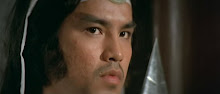
EMPIRE OF THE ANTS (1977)
Robert Lansing (Dan), Joan Collins (Marilyn), John David Carson (Joe), Albert Salmi (Sheriff, Art Kincade), Jacqueline Scott (Margaret), Pamela Shoop (Coreen)
Directed by Bert I. Gordon

 Disreputable real estate saleswoman, Marilyn Fryser, invites a varied group of possible investors to a new development; a secluded island getaway called Dreamland Shores. Shortly after there arrival, it is discovered that thousands of ants have grown to enormous size after feasting on drums of toxic waste dumped into the ocean and washed ashore on the island. The survivors attempt to make it to civilization alive while being eaten one by one by the marauding ants. They make it to a small town where they are about to make a frightening discovery.
 Mr. B.I.G. strikes yet again in this, his last hurrah of the 1970's. The enterprising director makes it count with one of the most memorably awful, yet hilariously fun movies of the creature feature era. Gordon's double KO of rampaging Rattus norvegicus and flesh eating Formicidae make a perfect double feature of movie monster mayhem.
 Note John David Carson (just behind Lansing) swinging in the opposite direction as if something were supposed to be onscreen
 As with the previous years FOOD OF THE GODS, the special effects are of the macro enlarged variety featuring humans reacting to rear projection of the overgrown monsters. A handful of ant "money shots" appear to be footage of ants inside of an aquarium, or ant farm of some sort as the glass is visible. During the river sequence where the survivors try to move a tree blocking their passage, the ants attack and you can see one of the actors wildly swinging an oar at nothing! Apparently, B.I.G. forgot to insert some real ant footage in that shot, but since Lansing is in the cameras center, he probably figured nobody would notice.
 Some of these shots (very few) are actually slightly effective, but lose what (very) little substance they possess during the scenes wherein totally lifeless giant ant mock ups "attack" the cast. These shots are very distinguishable as the camera shakes wildly to keep the viewer from noticing just how flimsy the "live" ant effects really are. The rat mock ups in FOTG are much more convincing. This is probably the one and only time you will ever read the word convincing being used in the same sentence with Bert I. Gordon.

 To say the effects are terrible would be a serious understatement. They rival the awful wasp footage from FOOD OF THE GODS. In addition to occasional transparent optical effects, we have actors (and offscreen technicians) hopelessly manipulating the ant models to give them the appearance of motion. But the total inertia of these ants is unmistakable. I can only imagine what must have been going through the actors minds while they were filming this riotous cult favorite. The sheer audacity that AIP would give this and the more (surprisingly) successful FOOD OF THE GODS a theatrical release is a joke in itself.
 The similarities between Wells' short story and B.I.G.'s movie are minor. Some of the locations are similar (a river) and the notion of intelligent ants outsmarting their human enemies is the other which is explored to a ludicrous degree during the last half of the picture.

 This is where the film takes a turn towards full blown absurdity once the now dwindled band of humans make their way into a town seemingly unaffected by the ant onslaught. The last thirty minutes, as outrageous as it is, is nonetheless creative and deviates from the usual monster movie mold. Another film that is far more cerebral and much more rewarding is the 1974 movie PHASE IV. It kind of follows the trajectory laid down by Wells' short story. Ants also figured into the TV movie ANTS! (1977) aka IT HAPPENED AT LAKEWOOD MANOR. Inarguably the best killer ant film would be THEM! from 1954.
 EMPIRE OF THE ANTS will always be fondly remembered by fans of no budget monster movies, even though many involved with the film would say it was best forgotten. Joan Collins has nothing but contempt for the production citing it as one of her worst experiences ever. She and the other actors had to perform their own stuntwork in the crocodile infested Florida swampland. She says this in her autobiography among other humorous highlights...


"
The water was absolutely disgusting, foul green slime. It probably hadn't moved in two thousand years and it was thick and warmish. I tried to keep my head above the loathsome liquid while acting convincingly terrified. I swam as fast as possible to the sanctuary of the camera barge. Under the water my legs and feet became entangled in the submerged giant roots of a swamp plant. I thought of swamp snakes and kicked with all my might, trying to untangle my legs from this moving mass of God knows what. I crawled onto the barge like a beached whale, blood oozing from at least a dozen cuts on my legs and from the gash over my eye. I'd swallowed some of the putrid water and felt definitely ill."
 Although this was her last horror movie, Collins definitely wasn't afraid of appearing in genre movies whether good, or bad. She also featured in the first story of Amicus' TALES FROM THE CRYPT (1972), the mostly dull TALES THAT WITNESS MADNESS (1973), the silly devil movie I DON'T WANT TO BE BORN (released here as THE DEVIL WITHIN HER;1975) and the Italian crime film FEARLESS FUZZ (1977) where Collins got naked on several occasions.

 Robert Lansing was a familiar face on dozens of television shows. I remember him mostly from his role as Gary Seven from the season three episode of the original STAR TREK, 'Assignment: Earth'. This was supposed to have been a springboard for a spin off series that never happened. His performance shows him to be a bit grumpy and a bit ashamed for having done this turkey. According to Collins' memoirs, none of the cast were happy to have participated during the November-December of '76 shoot. Lansing takes control of the movie, but at the same time, appears to not be enjoying himself at all.
 The remaining five cast hot wire a car and try to escape the town. The police set a trap for them....
 ....which results in a nicely captured car stunt, only you can clearly see the five occupants have now been reduced to one despite overdubbed screams of women on the soundtrack.
 The one area where EMPIRE is successful are the moments leading up to the ants first appearance. Here, Gordon truly doesn't falter. These scenes do generate suspense aided by the music of Dana Kaproff. The eerie sound effects, reminiscent of those heard in the far superior B/W horror science fiction classic, THEM! (1954), also add to the ambiance. Once the ant attack scenes begin, it's a fast ride down a steep hill. However, Gordon does manage to briefly pick things up a bit once the remaining characters reach the town where they encounter strange and odd behavior from some of the locals. Then, things again drop off dramatically once the preposterous final ten minutes arrive.
 Joan Collins about to be indoctrinated
This review is representative of the MGM DVD. EMPIRE OF THE ANTS is available either by itself, or on a double feature DVD with TENTACLES (1976).
 PHASE IV 1973 (released in 1974)
Nigel Davenport (Dr. Ernest Hubbs), Michael Murphy (James Lesko), Lynne Frederick (Kendra Eldridge)
Directed by Saul Bass
The Short Version: Astonishing science fiction film foretells a potential Armageddon at the pinchers of millions of super intelligent species of ants, the product of a mysterious cosmic occurrence. Two scientists--one wishing to study, the other wishing to destroy--attempt to thwart the impending doom of mankind. Incredible visuals accentuate this confounding, if spine-chillingly unusual entry in the 'Animals Attack' sub genre. Impatient and easily distracted viewers should look elsewhere, but those with some time to ponder what's transpiring onscreen might find the proceedings enlightening.

 An unknown cosmic event hits the Earth. Predicted to have almost cataclysmic results, the effects to the planet seem insignificant. However, the rays from space have an extraordinary effect on various species of ants. They begin to think, make plans and eventually wage war with mankind. An ecological imbalance is discovered in an Arizona desert location with the eradication of beetles, scorpions and spiders--creatures that feed on ants. Two scientists are dispatched to an isolated location specially built so as to study the escalating and potentially devastating problem in an effort to quell the onslaught of this new super intelligent breed of ant.
"...their ability to adapt genetically. I believe that after this test run they'll move rather quickly into desert areas taking over the countryside first then laying siege to towns and cities. I believe they will learn as they advance...anticipating our moves and continue to stay a move ahead."
 This fascinating and frequently frightening science fiction slow burn is arguably the most ambiguously complex motion picture of the entire 'Nature Amok' sub genre. An incredible visual experience, this movie is unlike anything else that has ever been made in this style of film. This is the thinking man's version of any number of the 'Killer Kritter' flicks that propagated during the 70s renaissance. One way to describe it would be a cross between THE ANDROMEDA STRAIN (1971) and EMPIRE OF THE ANTS (1977) with a dash of 2001: A SPACE ODYSSEY (1968).

 Undeniably unique and possessing a sprawling, hypnotic visual style, Saul Bass created a thought provoking, apocalyptic creature feature for the intellectual set. Equally terrifying as it is provocative, PHASE IV is based on a novel by Barry Malzberg. Whatever this mysterious planetary alteration was is never explained, but its effect on ants puts them on a level equal to, and in some cases, surpassing that of man. Instead of building ant hills, the ants construct towering monolithic skyscrapers that, compared to the size of the creatures, match the dimensions of the type of buildings made by man. When Dr. Hubbs attempts to get the ants' attention, he does so by destroying their "city". The insects retaliate by destroying a nearby family's home.

 After the scientists fire back with a yellow poison, the ants then build these reflective surfaces which threatens to burn the humans out of their scientific dome. Not only that, but the ants act as martyrs in an effort to bring back a sample of this yellow poison (it hardens into a sugar like powder shortly after exposure) to the queen in a bid for immunity. The queen then gives birth to a new yellow tinted species! Another mind boggling scene is when the scientists use a sonic weapon to liquidate the reflective constructs threatening to burn up the station and destroy their computers. Thousands of the yellow ants are wiped out. The black ants emerge, drag the bodies back to the hive and neatly align the carcasses in single file formation for a bizarre funeral procession!

"We knew then we were being changed and made part of their world. We didn't know for what purpose...but we knew we would be told."

 In an interesting dichotomy, the aged Dr. Hubbs is the one wishing to destroy the ants while Lesko the cryptologist is more interested in communicating with the creatures. This time, older isn't necessarily the wiser. Lesko, using his techniques of geometric and mathematic configurations, gains more answers in his quest to "talk" to the war mongering ants than Hubbs with his strategic assaults. Lesko manages to come to the conclusion that the ants want something from them--from man. Just exactly what it is these super intelligent insects wish to do with us is one of the unanswered questions that leaves the answer up to the audience. The final few minutes still invoke a chilling denouement even if the end result isn't entirely clear. Do they want us as slaves to the queen? A new source of food? A new species of ma-nt that can peacefully co-exist?

 Whether the sometimes confusing nature of the proceedings was intentional or not is unknown. Very little is spelled out for the viewer and a good number of questions go unanswered, especially the aforementioned ambiguous ending. Apparently, the film suffered at the hands of studio intervention sacrificing 9 minutes in the process (this DVD is that abridged version) which allegedly soured Saul Bass on directing leaving this as his only such credit in the chair. Regardless, it's also unknown whether the removed footage would make the film anymore linear, or confound things further. One thing is certain, the film is a visual showcase and unravels in such a way that the convoluted aspects are never irritating, but add to the perplexing, oppressively scary atmosphere.

 One of the more peculiar portions of the film is at the beginning when Hubbs and Lesko find what appears to be a crop circle with a small patch in the center and the dead carcass of a sheep lying in the patch. Hubbs inspects the dead animal and finds three holes--perfect circles in a line from which several ants exit from this wound (these bizarre wounds later turn up on a human corpse, but this, too, is never explained). Hubbs divulges to Lesko that certain species of ants retaliate against any opposing species including man, should they threaten their food supply. Later in the movie Lesko receives an "answer" from the ants told in a geometric pattern--a circle with a round dot at the center. He surmises the ants want Hubbs. The next scene correlates with Hubbs' assertion earlier in the movie that the insects do indeed annihilate any threatening element.

 Ken Middleham's special photography of the numerous insect sequences are both incredible and occasionally skin crawling. We see thousands of them make a quick meal of both a large spider and a rat. Another astounding sequence has a single black ant attempting to chew through the air conditioning cables to shut down the computer inside the dome. A praying mantis watches stealthily from above. Snatching the ant, we see in close up as this predator eats the ant alive. But below, the mantis doesn't realize one of the yellow ants is watching it, too. The new species grasps the long leg of the mantis and pulls it down into the electrical grid frying it to a crisp.

 Dick Bush, the DP on a handful of Hammer productions as well as Tigon's BLOOD ON SATAN'S CLAW (1971), was responsible for the eerily striking phantasmagorical color palette that saturates the world seen in PHASE IV. The electronic soundtrack by Brian Gascoigne (THE DARK CRYSTAL) is of an otherworldy quality and creepily conveys both the natural and the unnatural that unspools on the screen. It's an incredible score that fits the film like a glove. Another novel touch is the how the film is presented. At the beginning, we see a view of space. The words 'Phase 1' appears in the right corner. Over the course of the film, we see Phases II and III and in the last shot, the films title appears--PHASE IV--apparently the final stage in civilizations new evolution.
 Fans will remember actor Michael Murphy as one of the good guys in Bob Kelljan's creepy COUNT YORGA, VAMPIRE (1970) and one of the bad guys in Richard Franklin's delightful CLOAK & DAGGER (1984). British actor Nigel Davenport played Van Helsing in Dan Curtis's version of COUNT DRACULA (1974) and also took a major role in Don Taylor's version of THE ISLAND OF DR. MOREAU (1977). The late and lovely Lynne Frederick was in Robert Young's VAMPIRE CIRCUS (1971) and Lucio Fulci's FOUR OF THE APOCALYPSE (1975).

 With so many facets of interest in PHASE IV (1974), this enigmatic science fiction horror opus portends to prophecise calamity on a genocidal scale, but by the end, the true meaning is left up in the air for the viewer to ponder. Naturalistic in approach, the inherent realism is far more frightening than if these tiny arthropods were depicted as gigantic. It's not a film for impatient viewers, but those with a serious interest in science fiction will be rewarded with one of the most unusual visual experiences they've likely ever witnessed.
This review is representative of the Legend Films DVD
CONTINUED FROM PART 1...
Under construction...
 The 7th Voyage of Sinbad (1958)
 A new type of monster/fantasy film was born in 1958. This film was going in a different direction from previous monster movies. This time, the tales of the Arabian Nights would be explored. Considering the plethora of monster films before had been shot in B/W, this production was being shot in color and featured effects by the man who had brought many a monster to life beginning with BEAST FROM 20,000 FATHOMS (1953)-- Ray Harryhausen.
 The 7th Voyage of Sinbad (1958)
 The film was the classic SEVENTH VOYAGE OF SINBAD (1958). Harryhausen had previously assisted famed animator Willis O'brien (KING KONG) on the original version of MIGHTY JOE YOUNG (1949), a film that won an Oscar for special effects. Here, Harryhausen introduced a new filmmaking process--'Dynamation'--which combined stop motion animation with live action performances making sequences that looked as if the fantastic and the realistic were sharing the same space together.
 The 7th Voyage of Sinbad (1958)
 The first in the famous trilogy, SEVENTH VOYAGE starred Kerwin Matthews (JACK THE GIANT KILLER) as the Arabian adventurer. Sinbad must travel to a danger filled island to free his betrothed from a spell put upon her by an evil wizard. The film is filled with many stop motion animated monsters; a painstaking process of filming an object one frame at a time. SEVENTH VOYAGE was Harryhausen's first film in color and his introduction to the above mentioned 'Dynamation' process. The film was a major success and a highly enjoyable movie for young and old alike. However, it would be 16 years before Sinbad would grace the silver screen again.
Harryhausen's next project was 1961's MYSTERIOUS ISLAND, which also combined another Jules Verne adventure, 20,000 LEAGUES UNDER THE SEA. When civil war prisoners from both sides end up stranded on an island inhabited by numerous giant creatures (Bees, chickens, crabs, etc) they put aside their differences to survive until they meet up with Captain Nemo (played by Herbert Lom) who informs them the island will be destroyed by an erupting volcano. Another hit for the Howard H. Schneer-Harryhausen team. Likable characters and a sense of adventure similar to the Sinbad films hold the piece together. Harryhausen and Schneer had teamed in the 50's on the B/W sci fi/monster films BEAST FROM 20,000 FATHOMS (1953), IT CAME FORM BENEATH THE SEA (1955), EARTH VS THE FLYING SAUCERS (1956) and 20 MILLION MILES TO EARTH (1957) .
 Jason & the Argonauts (1963)
 JASON & THE ARGONAUTS (1963) is quite possibly Harryhausen's most famous work. A timeless and classic motion picture, one of the greatest fantasy films ever made, it tells the story of Jason and his search for the Golden Fleece going from one peril to the next. The film contains some of Harryhausen's best work without doubt. Probably the most fondly remembered sequence involves Jason and a few of his men doing battle with an army of skeletons. An intricate and difficult scene to pull off that took months to finish as the men had to perform the scene against invisible opponents. The stop motion skeletons were inserted carefully to match the actors movements. The scene where Jason and Hercules (played by Patrick Magee) confront the gigantic living statue Talos and the duel with the 7 headed Hydra are other memorable moments.
 Jason & the Argonauts (1963)
 One Million Years B.C. (1966)
 Harryhausen later teamed up with Hammer for one film--ONE MILLION YEARS BC (1966) starring John Richardson, Raquel Welch and Martine Beswicke. This film was a huge success much to the delight of Hammer who had become disenchanted with the length of time it took to produce the animated dinosaur sequences. Even so, Hammer wanted to do another dinosaur picture but Harryhausen proved too costly and meticulous as Hammer wanted to get the film out as quickly as possible. Jim Danforth was hired to do the next picture for them entitled WHEN DINOSAURS RULED THE EARTH (1970) starring the beautiful Victoria Vetri.
 The Valley of Gwangi (1969)
 Harryhausen's next workload was a film that was supposed to have been done earlier by Willis O'brien, THE VALLEY OF GWANGI (1969). This was a western with dinosaurs starring James Franciscus. A group of cowboys find an Euhippus, the earliest form of the modern horse; only it's very, very tiny. Some local gypsies protest that the creature must be returned to the valley lest suffer the wrath of Gwangi. The tiny animal is stolen and Franciscus and team go after it and into the valley where they encounter many dinosaurs including Gwangi, an Allosaurus.
 The Valley of Gwangi (1969)
 The Golden Voyage of Sinbad (1974)
 Next came the long awaited return of Captain Sinbad. This time essayed by John Phillip Law who Spaghetti western fans will remember from DEATH RIDES A HORSE (1967). Law's portrayal is the best of the series as he (along with a cast of able performers) fully captures the flavor of the Arabian Knights Adventures. In it, Sinbad must find a series of gold tablets that, once put together, reveal a map of the location of a magical fountain that grants immortality. Tom Baker, most famous from the classic British tv show DOCTOR WHO, plays the main villain here and does an appropriately menacing job. There are many memorable scenes here but one of the most impressive is the battle with the six armed stone God Kali.
 The Golden Voyage of Sinbad (1974)
 The beautiful British actress Caroline Munro, a favorite of horror fans everywhere, also stars as the slave girl, Marianna. An absolutely stunning soundtrack by Miklos Rozsa befits the Arabian ambiance. Robert Shaw, Quint in JAWS (1975), is uncredited as the oracle. Science fiction fans will remember John Phillip Law as Jane Fonda's winged friend Pygar in BARBARELLA (1968) and the star of the Mario Bava comic book styled DANGER: DIABOLIK (1968).
 Sinbad & the Eye of the Tiger (1977)
 In 1977 the third and final Sinbad film saw release-- SINBAD & EYE OF THE TIGER. This time Patrick Wayne (son of the Duke) essayed the role of Sinbad. Jane Seymour, Patrick Troughton (another DOCTOR WHO) and Damien Thomas (TWINS OF EVIL) fill out the cast. Sadly, Patrick Wayne is the weakest of the three Sinbad interpretations although the film features some of Harryhausen's most impressive work. Patrick Wayne was well on his way to becoming something of a cult fantasy film actor appearing the same year in the AIP-Amicus co-production THE PEOPLE THAT TIME FORGOT.
 Sinbad & the Eye of the Tiger (1977)
 Initially there was to have been a fourth Sinbad picture but it was put aside as Harryhausen and Schneer noticed a changing trend in the Fantasy genre. People were growing tired of these types of adventure films and likened the heroes in movies to be a bit more rough around the edges. The team of Harryhausen-Schneer would ultimately go out with a bang with the classic MGM production CLASH OF THE TITANS (1981); a film that would go on to become one of the most requested films on cable television.
 Clash of the Titans (1981)
 A great cast was on hand for this ambitious production-- Sir Lawrence Olivier as Zeus, Maggie Smith, Ursula Andress, Harry Hamlin and Burgess Meredith. Many brilliant sequences fill out this excellent film from the giant Kraken to the suspense filled (and scary as hell seeing it as a kid) duel with Medusa. The Medusa scene was even copied almost note for note (but very sloppily) in Luigi Cozzi's incredible "comedy" HERCULES 2 (1984) starring Lou Ferrigno. Love also sprouted for some of the cast members on the set of TITANS. Actors Hamlin and Andress became romantically entangled on the set and had a child together. Andress was over 20 years older than Hamlin.
 Clash of the Titans (1981)
 Although CLASH was very successful, Harryhausen had written a script for a follow-up entitled FORCE OF THE TROJANS. The creatures for this one were likewise impressive (seen in the exhaustive hard back book on Harryhausen's films released in 2005) Although MGM showed interest initially, the picture never got made. Realizing audiences had lost the attraction to their kind of heroes, CLASH OF THE TITANS (1981) was the last of the Harryhausen-Schneer films as well as the last of its kind. Films featuring mystical or mythological heroes were replaced by a more brutal form of champion, the birth of the anti hero.
 Squirm (1976)

 Aside from JAWS (1975) and JAWS 2 (1978), the most successful (and one of the most successful films of 1976) of these was GRIZZLY. Promoted as "JAWS with claws", the film starred Christopher George, Andrew Prine and Richard Jaeckel as the trio that try to stop a rampaging Grizzly that's been making meals of vacationers. Some startling violence for a PG film shows just what could be gotten away with at the time. Seeing the film today it's not very memorable but the three main leads do a good job of holding the film together.

 The largest Grizzly alive was used for several scenes. Director William Girdler fired back the following year with (in my opinion a superior film) DAY OF THE ANIMALS. GRIZZLY made millions in 1976 (grossing over 30 million in the US alone) and was the biggest moneymaking independent film till HALLOWEEN (1978) dethroned it two years later. Producer Edward L. Montoro made off with much of the profits from Girdler's film. The notoriously fraudulent producer was taken to court by Girdler and others to get a piece of the box office pie.

 DAY OF THE ANIMALS (1977) stars Chris George again along with his wife (who did numerous films with her husband), the beautiful Lynda Day George. Leslie Nielsen, who plays the polar opposite of his later comedic roles, is the films human villain. Nielsen steals the show from the nasty animal antagonists turning in a performance just as brutal and shocking as the rampaging animals seen in the film. Richard Jaeckel and the fine character actor Michael Ansara also star.

 A hole in the Ozone layer has caused all manner of wildlife to go berserk and attack humans. A group of hikers must make their way off a mountain alive and break up into two separate groups--one that follows their guide (George) and the other that follows the sly businessman (Nielsen). The finale where the remaining survivors are trapped in a small shed by a half dozen crazed canines is very well done. The films animal trainer was the first victim at the opening of JAWS and she also falls prey to animals here as well.
William Girdler was a promising young director who delivered fun and entertaining (if often flawed) movies. His career would be cut short soon after filming the 1978 film THE MANITOU, about an evil Indian medicine man that takes up residence in a woman's back. Director Girdler was killed in a helicopter crash scouting locations for his next movie.
 Kingdom of the Spiders (1977)
 KNIGDOM OF THE SPIDERS (1977) is one of the best, as well as one of the best remembered, nature-amuck films from the 1970's. Here, repeated use of various pesticides has killed off the natural food supply of all varieties of spiders in the region. The angry arachnids begin attacking small animals at first then move there way up to humans. William Shatner plays the hero along with 70's fave, Tiffany Bowling and Woody Strode, an actor familiar from countless Italian crime and western films.
 Kingdom of the Spiders (1977)
 Some truly spine tingling sequences are present and it's obvious the actors are not faking their terror in the many all too real spider attack scenes. The finale features an incredible shocker of an ending. The soundtrack is one of the best ever horror scores and was stock cues heard most famously in the original TWILIGHT ZONE show. Shatner's wife at the time also features in the film as the wife of his late brother. Shatner was set to direct a sequel to KINGDOM OF THE SPIDERS in the early 90's but the film, concerning experiments on inmates in an insane asylum, never came to fruition.
Bert I. Gordon who had done many of the big bug and giant creature films of the 1950's started up again with his 70's entries EMPIRE OF THE ANTS (1977) and FOOD OF THE GODS (1976). Both were film adaptations of HG Wells stories. Gordon was famous for his less than steller effects work seen in his films. He was also known for usually writing, directing and creating the special effects himself. His effects generally consisted of taking a real lizard, spider, locust, etc... and using a macro lens to enlarge it, then compositing the shot with live actors. The results were seldom very convincing but Gordon was an incredibly energetic and ambitious man who obviously loved his work. Some of his other work include were THE CYCLOPS (1957), EARTH VS THE SPIDER (1958), VILLAGE OF THE GIANTS (1960; starring Ron Howard!) and ATTACK OF THE PUPPET PEOPLE (1963). These movies, along with his others discussed above earned him the nickname "Mr. B.I.G.", hence his real name Bert I. Gordon.
For his return to cinema in the late 70's, Gordon tackled what would eventually become one of his most enduring works-- THE FOOD OF THE GODS (1976). Although the effects (for the most part) are laughable, some of the process shots are still pretty decent. His old method of macro enlarged creatures returns here in addition to some mock up effects for the various giant worms, wasps and rats. Gordon was able to secure a good cast for the film including former child evangelist, Marjoe Gortner and Ralph Meeker. The scenes showing the cast blowing away the giant rats look painfully realistic as if the rodents were really being harmed or even killed.
For his next effort, Gordon was able to get Robert Lansing and Joan Collins for the silly AIP film EMPIRE OF THE ANTS (1977). Collins ridicules the movie in her autobiography claiming director Gordon was not very nice to her the duration of the picture and that AIP would not pay for medical bills should the cast get injured during filming. The movie itself is one of the So-Bad-It's-Good school. However, in its defense up until the ants are seen there are several very suspenseful sequences and a very creepy soundtrack. When the macro lens isn't used to enlarge the ants, unconvincing models take their place. The camera shakes wildly during the shots that involve the obviously inanimate ant props; the cast moving them around to simulate the giant creatures attacking.
Both films are similar in structure and both mangled Wells's original source material to resemble throwbacks to Gordon's "glory days" of giant creature cinema. In FOOD, the reasoning for the animals enormous size is the eruption of an oozing substance that emerges from the ground. The animals eat the strange goop and grow to abnormal size and attack and eat man. A group of survivors hole up inside a cabin in the woods in an effort to stave off an attack by a growing number of giant, carnivorous rats. In EMPIRE, the giant ants are the result of a toxic waste spill when barrels of waste are dumped into the sea and wash up on the shores of an island. A group of tourists are invited to this new island resort to be courted for possible land purchases but get more than they bargained for when they are attacked by the creatures. With their means of escape having been destroyed, the dwindling survivors manage to make their way to a town where it is soon discovered the ants are using the humans as slaves!
 Killer dogs featured in the obviously titled DOGS (1976) aka SLAUGHTER. It stars MAN FROM U.N.C.L.E.'s David McCallum and busy tv and frequent movie actor, George Wyner. Future DALLAS actress, Linda Gray has a supporting role. In this film, a growing number of dogs have turned on their owners with no explanation. The terrifyingly ominous howling sounds the dogs make once they pack together is very unsettling.
 THE PACK (1977) features Joe Don Baker about vacationers on an island that are preyed upon by a pack of wild, bloodthirsty canines; the result of vacationers who have abandoned their pets. Left to fend for themselves or simply starve to death, the dogs soon turn their attentions (and hunger) on the island visitors. The Wes Craven produced film THE BREED (2006), which sat on a shelf for two years follows this same plotline.

 ALLIGATOR, from 1980, directed by action director Lewis Teague, is about a baby alligator flushed down the toilet feeding off an illegal growth hormone that causes it to grow to gigantic size. A famous urban legend about alligators in the sewers formed the basis for this movie and shockingly enough, alligators have been found in the sewers by animal control officers in the big cities. Robert Forster and Robin Riker along with a scene chewing Henry Silva, star. A very popular film with a strong cult following. It was a bomb at the box office but later became one of the biggest hits on the ABC network during the mid 80's. ABC even commissioned a sequel, the dismal ALLIGATOR 2: THE MUTATION (1991).
SPASMS is one of the most interesting of the nature-amuck genre. Filmed in 1981 but not released until 1983, the film stars Oliver Reed and Peter Fonda. Fonda is a big game hunter who is after a gigantic snake revered as a God in Asia. The snake is finally captured and shipped to the US where it arouses the curiosity of the proprietors of a satanic church who wish to have the snake for themselves. It is discovered that Reed and another Hunter had pursued the giant snake before. The other man was killed while Reed, also bitten, did not die, but instead has a psychic link to the snake and "sees" it when it kills even feeling the victims pain. The snake is accidentally let loose by the devil worshippers and the slithery serpent goes about killing everyone it comes into contact with. Peter Fonda and Reed team up to kill the rampaging monster. One of the films weaknesses is it seems unfinished as the subplot involving the devil worshippers is dropped midway through. A number of other scenes seem incomplete or end rather abruptly. This could account for the two years between the making and the films release. The special effects by world reknowned make-up artist Dick Smith are impressive. Based on a novel entitled 'Death Bite'. It's not a bad movie, but a definite missed opportunity that I wouldn't mind seeing a remake of.
DEADLY EYES from 1982 was a Golden Harvest-Warner Brothers co-production directed by Robert Clouse; returning to the killer animal genre after helming THE PACK in 1977. This one is about giant sized rats (actually dachsunds dressed in rat suits! A nod to THE KILLER SHREWS?) that get into a shipment of contaminated grain thereby growing larger than normal and begin to kill and eat the cast including Scatman Crothers. One particularly nasty scene has the rats drag off and eat a baby. Lots of bloody violence in this one. The film was based on the novel, 'The Rats'.

 ORCA from 1977, is often unjustly called a JAWS rip-off which it is not. It has more in common with MOBY DICK than the shark film. A 17 million De Laurentiis production, it starred Richard Harris, Charlotte Rampling, Will Sampson, Keenan Wynn, Bo Derek and a young Robert Carradine (soon to star in the REVENGE OF THE NERDS films). Harris plays a seafaring hunter who wants a killer whale as his next trophy. Things don't quite go as planned as he ends up spearing a female whale that proceeds to (in a shocking scene) give birth to a dead baby whale once hoisted on deck. The whale's mate (witness to all this) eventually goes after Harris nearly destroying a seaside town in the process. Nolan (Harris), having already lost some of his crew to the vengeful whale, sets out to confront the creature at sea.

 Producer De Laurentiis was an extravagant, thrift spending Hollywood mogul (not unlike Irwin Allen). He financed many seriously expensive box office failures. A few of these became cult films-ORCA (1977), THE WHITE BUFFALO (1977; a western with Charles Bronson chasing a giant rampaging Buffalo), FLASH GORDON (1980), KING KONG (1976) and DUNE (1984). Of these, KING KONG (1976) was the most successful. However, it was lambasted upon release and even more so once STAR WARS (1977) assaulted movie screens the following year.

 One of the most memorable scenes in ORCA (1977) is where Bo Derek has her leg bitten off by the whale. Morricone's soundtrack is also very good utilizing the beautiful voice of Italian singer, Edda Dell' Orso in several pieces. Some complained of Harris's overacting here but I think it suits his character considering there are parallels between the character of Nolan and the rampaging whale--they both share loss and grief. At the time of the films release, Harris valiantly defended the film against critics who repeatedly compared it to JAWS.

 An interesting (possibly coincidental) comparison occurs at the films beginning. Orca attacks and kills, in rather spectacular fashion, a great white shark (possibly a jab at JAWS) ramming it with its snout ejecting the shark into the air and crashing back into the sea where it proceeds to eat the shark. Then, the following year in JAWS 2, there is a scene in which a mutilated, partially eaten killer whale washes up on shore (possibly return fire at De Laurentiis' film) the victim of the killer shark.
 Piranha (1978)
 PIRANHA from 1978 is reportedly Steven Spielbergs favorite of the JAWS clones (I wonder what he thinks of Castellari's THE LAST SHARK?). A very funny and memorable horror film from Roger Corman's New World Pictures. It's about a group of experimental piranha released from an army test site after two people searching for a missing couple accidentally drain the pool thinking they will find the bodies at the bottom. The fish, to have been used during the Vietnam War, are an even more rabid strain of man eaters. They eventually gobble up the supporting cast in rapid succession. Some very bloody scenes and a nifty soundtrack by the great Pino Dinoggio (THE HOWLING). A stellar cast, too with Bradford Dillman (ESCAPE FROM THE PLANET OF THE APES), Keenan Wynn (ORCA), horror film faves Dick Miller (GREMLINS), Barbara Steele (BLACK SUNDAY), Kevin McCarthy (INVASION OF THE BODY SNATCHERS) and Paul Bartel (EATING RAOUL). Directed by horror/fantasy director, Joe Dante (THE HOWLING, GREMLINS, SMALL SOLDIERS, INNERSPACE).

 A sequel followed in 1981 entitled PIRANHA 2: THE SPAWNING. It was an Italian production starring Lance Henriksen and Tricia O'neal. The film had nothing to do with the first film and instead told a story of genetically altered piranha that could not only kill in the water, but also fly and feast on humans on land. The only link to the original is that the ending of PIRANHA (1978) hints that the flesh eating fish have escaped into the ocean. The second film builds on that premise but the script is a completely different story. It was also director James Cameron's directorial debut. Although he retained directors credit, he was fired not long after the film was underway and direction was overtaken by producer Ovidio Assonitis (TENTACLES, BEYOND THE DOOR). Special effects were created by Italian specialist Gianneto de Rossi. The film also played on television as PIRANHA 2: FLYING KILLERS and early release posters for the film were simply entitled THE SPAWNING (with some great artwork, by the way).
 One Million Years B.C. (1966)

 Amicus, Hammer's biggest rival, got in on the act and co-produced with American based AIP, three of four films all starring Doug McClure (McClure only co-stars in the third film). Three of the films were based on Edgar Rice Burroughs novels. All were directed by Kevin Conner. The first film, THE LAND THAT TIME FORGOT (1975), took place during WW1. Survivors from a U-boat attack manage to take over the submarine that sank their vessel. The group form an uneasy alliance till they are able to find a port whereby the two groups will go their separate ways.
 Becoming lost and running out of supplies, the sub enters uncharted territory ending up in a land inhabited by prehistoric creatures. The two sides form a temporary truce in order to survive until they can find a means of escape. They encounter numerous perils including many dinosaurs and cavedwellers alike. At the conclusion it turns out the island is actually a gigantic volcano that destroys the escaping submarine save for Tyler (McClure) and his girlfriend, Lisa.

 In place of the stop motion photography, huge mechanical mock-ups are substituted with some more convincing than others. Excellent set design and a colorful soundtrack are pluses. McClure makes a good leading man backed by a supporting troupe of players recognizable from various other British horror films. Originally, Stuart Whitman was tapped for the lead role but reportedly, he was disliked by one of the producers so he was replaced by McClure who was said to have been difficult to work with at times.
 The second film, AT THE EARTH'S CORE (1976), sees McClure and Peter Cushing traveling in a gigantic drill to the center of the Earth and encountering more strange monsters in the land of Pellucidar. They also run across the stunning Caroline Munro in a revealingly skimpy costume. Cushing steals the show as the wily and ostentatious professor who is afraid of nothing and joins McClure in many of the films action set pieces. The mock-up monsters return as do the unusual set decoration and another adventurous score.

 The third picture, THE PEOPLE THAT TIME FORGOT (1977), is a direct sequel to LAND THAT TIME FORGOT (1975). Patrick Wayne along with Thorley walters, Sarah Douglas and Shane Rimmer take off to find Bowen Tyler (McClure) hopefully still alive in the land of the dinosaurs. After their plane is attacked by a huge Pterodactyl, they are forced to land and head out on foot. They find the gorgeous cave girl, Dana Gillespie (A protege of David Bowie who was instrumental in her singing career) whose bosom threatens to erupt from her costume.

 She says she knows where Tyler is but not whether he is still alive. They head off for the Mountain of Skulls where he is being held prisoner by a new race of people--the Naga's, a vicious bunch who dress like samurai but hide a monstrous visage beneath their masks. After several cliffhangers, they find Tyler and must save Douglas and Gillespie from being sacrificed to the volcano and escape in time before the living island explodes taking them with it.

 There is much to recommend here. Although the effects are uneven, the sense of adventure is more prominent here than before and a rousing soundtrack adds to the high spirited nature of the production. Very likeable characters from the entire cast of capable actors and actresses. It's a shame Wayne isn't as good in his SINBAD film of the same year as he is in this film. By this point, Amicus was bankrupt and AIP would produce the last film with Columbia Pictures backing it. An interesting side note is that both Sarah Douglas and Dana Gillespie screen tested for SUPERMAN: THE MOVIE (1978) immediately after completion of PEOPLE THAT TIME FORGOT (1977).

 WARLORDS OF ATLANTIS (1978), the fourth and final of the Kevin Conner/John Dark series (and the only one not an Edgar Rice Burroughs tale) is the most polished of the bunch and benefits from some interesting creature designs. Again, McClure stars. This time, he plays a scientist that creates a diving bell and along with another scientist, the two descend the oceans depths to search for the lost city of Atlantis after a giant gold artifact is found at sea. The two are soon attacked by an undersea creature and end up stranded in Atlantis where they free the slaves of the populace from their captives and manage to escape back to the surface. John Ratzenberger (Cliff Claven of the hit tv show CHEERS) has a supporting role. Shane Rimmer returns from the previous film and this time takes the role as the ship captain.
 The first three films are available either separately or double feature presentations from MGM. LAND and PEOPLE together and AT THE EARTH'S CORE (1976) is paired with the Vincent Price undersea adventure WAR GODS OF THE DEEP (1965). Strangely, WARLORDS OF ATLANTIS (1978) remains unavailable on DVD in America although it is out in Britain on disc.
 Having seen most all of these on late night television, these films have provided many great memories of Shock Theater, The Late Movie or the many showings on Saturday mornings and afternoons when monster movies had an assured time slot and popularity where they relatively owned the airwaves on weekends.
copyright 2013. All text is the property of coolasscinema.com and should not be reproduced in whole, or in part, without permission from the author. All images, unless otherwise noted, are the property of their respective copyright owners.


 Disreputable real estate saleswoman, Marilyn Fryser, invites a varied group of possible investors to a new development; a secluded island getaway called Dreamland Shores. Shortly after there arrival, it is discovered that thousands of ants have grown to enormous size after feasting on drums of toxic waste dumped into the ocean and washed ashore on the island. The survivors attempt to make it to civilization alive while being eaten one by one by the marauding ants. They make it to a small town where they are about to make a frightening discovery.
 Note John David Carson (just behind Lansing) swinging in the opposite direction as if something were supposed to be onscreen
 As with the previous years FOOD OF THE GODS, the special effects are of the macro enlarged variety featuring humans reacting to rear projection of the overgrown monsters. A handful of ant "money shots" appear to be footage of ants inside of an aquarium, or ant farm of some sort as the glass is visible. During the river sequence where the survivors try to move a tree blocking their passage, the ants attack and you can see one of the actors wildly swinging an oar at nothing! Apparently, B.I.G. forgot to insert some real ant footage in that shot, but since Lansing is in the cameras center, he probably figured nobody would notice.

 To say the effects are terrible would be a serious understatement. They rival the awful wasp footage from FOOD OF THE GODS. In addition to occasional transparent optical effects, we have actors (and offscreen technicians) hopelessly manipulating the ant models to give them the appearance of motion. But the total inertia of these ants is unmistakable. I can only imagine what must have been going through the actors minds while they were filming this riotous cult favorite. The sheer audacity that AIP would give this and the more (surprisingly) successful FOOD OF THE GODS a theatrical release is a joke in itself.

 This is where the film takes a turn towards full blown absurdity once the now dwindled band of humans make their way into a town seemingly unaffected by the ant onslaught. The last thirty minutes, as outrageous as it is, is nonetheless creative and deviates from the usual monster movie mold. Another film that is far more cerebral and much more rewarding is the 1974 movie PHASE IV. It kind of follows the trajectory laid down by Wells' short story. Ants also figured into the TV movie ANTS! (1977) aka IT HAPPENED AT LAKEWOOD MANOR. Inarguably the best killer ant film would be THEM! from 1954.

 "The water was absolutely disgusting, foul green slime. It probably hadn't moved in two thousand years and it was thick and warmish. I tried to keep my head above the loathsome liquid while acting convincingly terrified. I swam as fast as possible to the sanctuary of the camera barge. Under the water my legs and feet became entangled in the submerged giant roots of a swamp plant. I thought of swamp snakes and kicked with all my might, trying to untangle my legs from this moving mass of God knows what. I crawled onto the barge like a beached whale, blood oozing from at least a dozen cuts on my legs and from the gash over my eye. I'd swallowed some of the putrid water and felt definitely ill."

 Robert Lansing was a familiar face on dozens of television shows. I remember him mostly from his role as Gary Seven from the season three episode of the original STAR TREK, 'Assignment: Earth'. This was supposed to have been a springboard for a spin off series that never happened. His performance shows him to be a bit grumpy and a bit ashamed for having done this turkey. According to Collins' memoirs, none of the cast were happy to have participated during the November-December of '76 shoot. Lansing takes control of the movie, but at the same time, appears to not be enjoying himself at all.
 The remaining five cast hot wire a car and try to escape the town. The police set a trap for them....
 ....which results in a nicely captured car stunt, only you can clearly see the five occupants have now been reduced to one despite overdubbed screams of women on the soundtrack.
 The one area where EMPIRE is successful are the moments leading up to the ants first appearance. Here, Gordon truly doesn't falter. These scenes do generate suspense aided by the music of Dana Kaproff. The eerie sound effects, reminiscent of those heard in the far superior B/W horror science fiction classic, THEM! (1954), also add to the ambiance. Once the ant attack scenes begin, it's a fast ride down a steep hill. However, Gordon does manage to briefly pick things up a bit once the remaining characters reach the town where they encounter strange and odd behavior from some of the locals. Then, things again drop off dramatically once the preposterous final ten minutes arrive.
 Joan Collins about to be indoctrinated