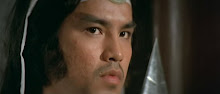
Mario Bava's I TRE VOLTI DELLA PAURA (1963) is one of the true crowning achievements of European horror cinema. The film -- in its unaltered form -- represents a range of Gothic horror styles including a then burgeoning genre that would explode with black gloved precision by the 70s -- the Giallo.

But prior to its release in America, American International Pictures (one of the pictures financiers) had changes made. These changes not only toned down some of the horror and gore, but also eliminated any sexual subtext found in Bava's original version. The following is merely a guide and visual aid in detailing all the major (and minor) differences found between the two releases.
At the bottom of this article there's a summary of everything discussed here, since the American print has been confusingly compiled. Essentially, this addendum is a 'cliff's notes' of BLACK SABBATH with additional info not covered in the article (ie running times, titles, etc.).

At the beginning of both movies, the first thing we see is Boris Karloff. In the Italian version, it's Karloff standing on some rocky terrain flanked by a backdrop of swirling blue lights as he introduces himself (top pic at left).
 For the US release, the opening statement is roughly the same, but with Karloff's disembodied head coming closer into frame. He never refers to himself by name as he does in the Italian cut, but calls the film by name with, "...this is BLACK SABBATH....". Aside from that, there's very little variance in this introductory segment between the two versions. However, the US AIP release contains Karloff in THRILLER mode hosting the three tales delivering an introduction before each one begins. For the European cut, Karloff is only seen hosting the opening, and ending of the movie. And now, on with the show!
 When AIP released Bava's movie on American shores, the order of the
tales was shuffled around. I am speculating when I say they seem to have
wanted to open and close the film with a bang; relegating the weaker
segment for the middle. So the story that CLOSES the Italian version OPENS the US variant -- that story being the 'The Drop of Water'
segment; a 22 minute spooktacular creeper that remains one of the single eeriest pieces of celluloid of all time.
When AIP released Bava's movie on American shores, the order of the
tales was shuffled around. I am speculating when I say they seem to have
wanted to open and close the film with a bang; relegating the weaker
segment for the middle. So the story that CLOSES the Italian version OPENS the US variant -- that story being the 'The Drop of Water'
segment; a 22 minute spooktacular creeper that remains one of the single eeriest pieces of celluloid of all time. But before we take a drink of water, it's time to check that telephone...

 "We can say all we like about ghosts, but we really still don't know how or where they may appear. (phone rings. Karloff answers)... yes, yes, yes, I know all about that. In the old days, they used to drag their chains through the icy corridors of castles or stalk through the musty rooms of deserted houses. But now, ha... you never where you'll find one of the terrible things... as you will see from our next story... 'The Telephone'."--Karloff's narration introducing the second story in the US cut of BLACK SABBATH, but the first in the original Italian version.
 As 'The Telephone' begins, Rosy enters her apartment to no musical accompaniment in the Italian cut; and to the tune of Les Baxter's score for the US cut. You'll quickly discover that Baxter generously peppers the American version of BLACK SABBATH with lots of music where it was mostly subdued in the original version of the film. As Rosy begins to disrobe, her phone rings a few times to which nobody responds when she says hello. About the time she re-enters the room to answer upon the third call with but a towel-bathrobe around her, this discrepancy in dialog occurs...
ITALIAN VERSION:
Stranger (Frank): You're so beautiful... too beautiful, Rosy.
Rosy: Who is this?
Stranger: You'll know right before you die. I can see your heavenly body. Your silky arms... your perfect legs. No, don't cover them up. A body like yours can drive a man to madness. And I will kill you!
ENGLISH VERSION:
Stranger (Frank): Hello, Rosy. How are you?
Rosy: Who is this speaking? Who?
Stranger: Don't you know? Think, Rosy. How nice you look with that towel around you. You always did have a beautiful body... beautiful. A body to drive someone crazy. No, don't cover yourself. I like seeing you this way. Are you listening, Rosy?
As you can surmise from the dialog, the intent of the person on the phone is detailed right from the start as well as the sexual nature of this episode -- such as when the camera lovingly caresses downward on Michele Mercier's fabulous frame. However, certain aspects of the sexual subtext are drastically altered in the US cut.
As Rosy hangs up the phone, there's another major difference here between the two versions.

ITALIAN VERSION:
After hanging up the phone, Rosy (now wearing a gown) lays her towel, or bathrobe on her bed as she sits down (left side of top pic). The camera cuts in close to show her smoking a cigarette. She looks over to the phone as the camera slowly zooms in on it. No music is heard. The ticking of a clock is heard in the background. She gets up and begins to pull back the blankets on her bed when the phone rings again. Nicolosi's music is absent the duration of this sequence.
ENGLISH VERSION:
After hanging up the phone, Rosy, now wearing a gown under her bathrobe (right side of top pic), removes the bathrobe and places it in a chair next to her bed. She then moves to the living room and grabs a cigarette from a table, lights it up and takes a drag on it. She then goes to the window and closes the shutters all the way. Les Baxter's score is heard the entire time. Unlike the other episodes, it matches, and sound of a similar nature to Nicolosi's cues on the Italian version. She goes back to the center of the living room and smokes some more as the camera slowly zooms in on the phone. From here, the Italian sequence described above begins.
She answers the phone and here's an example of the difference in this second phone conversation.
ITALIAN VERSION:
Rosy: What do you want from me?
Stranger: I told you! I want to kill you. I want revenge. You did well to turn on all the lights. I want to see you die. Do you understand, Rosy?
ENGLISH VERSION:
Rosy: What do you want of me?
Stranger: Everything... everything that you have. But for now I just want you to take off that dressing gown. I want to watch you... embrace you with my eyes. See you!
There's a third phone conversation that's roughly the same between the two cuts, but oddly enough, the US version continues to eliminate any explicit plans that this mysterious man on the other end intends to kill Rosy. The dialog is of a sexually threatening nature whereas in the Italian cut, the caller is very clear he plans to kill her.

 Immediately following this, there's a sequence not found in the Italian version. After Rosy runs to her door upon hearing a noise, the camera cuts to outside her apartment. An old man exits the building to take his dog for a walk. As the man passes the camera, the dog barks and the old man tells him to be quiet that they are alone outside. Yet, once the man and dog are out of frame, we see a shadow appear in the background creeping towards the building (see insert photo). The English version then cuts back to the inside of Rosy's dwellings (where the Italian one remains). She looks down and notices someone has slipped a note under her door.
Another difference occurs right after she spies the note in the US cut. Rosy inexplicably, and hurriedly unlocks her door to rush out of her apartment. She runs into the old man who notices she's distressed. After speaking with him momentarily, she then rushes back inside her apartment and we see the old man reluctantly go upstairs with his dog (see above photo).
Both versions then pick back up at the moment Rosy reaches down to pick up this letter slipped under her door. And here is where yet another major alteration is made.

In the European release, it's clearly a newspaper clipping that reads 'Frank Rainer has escaped'. For the US release, it's obvious she's holding the same clipping, yet there's a cutaway that reveals a blank piece of paper. Suddenly, words begin to magically write themselves on the paper. It reads, 'There's no way of avoiding it Rosy -- it won't be long now! Frank'. It's at this moment in the US cut that a supernatural angle is introduced.
After this revelation, the phone rings again resulting in a conversation that is similar between the two versions albeit for Rosy's response in the US cut -- her dialog reinforcing the supernatural angle AIP implemented on this story...
ITALIAN VERSION:
Rosy: Frank, listen... listen to me, Frank!
ENGLISH VERSION:
Rosy: Frank is dead! This can't be Frank!
After Frank hangs up, Rosy then puts in a call to her friend Mary. A bit of dialog from the actress playing Mary during this conversation is edited from, or not dubbed over for the US cut, "You said you didn't want to see or speak to me anymore." This then leads into more differences in the storyline between the two versions detailed in this phone conversation below...
ITALIAN VERSION:
Rosy: Frank has escaped.
Mary: Yes, I read about it. So why you telling me? Now you two will get back together.
Rosy: Mary, cut it out! I'm scared! He wants revenge, I'm sure of it! Come over right away, please.
Mary: You want me to come to you? Did I hear correctly?
Rosy: Yes, yes. As fast you can. He wants to kill me!
Mary: Alright, honey. I don't bear grudges. Give me five minutes.
Rosy: Thank you. Hurry.
ENGLISH VERSION:
Rosy: Mary, it's important. Frank just called me!
Mary: What are you talking about? You worry me. You know as well as I do he's dead.
Rosy (Cut to Mary's room): No, he's alive!
Mary: Take it easy.
Rosy: Oh, Mary, Mary, I'm afraid. He wants to get even, I know he does! Come over here, right away, please! (Cut to Mary's room) You can't imagine the things he said when he spoke to me!
Mary: What? He spoke to you? Did I hear you right?
Rosy: Yes, yes, I beg you, come right away, he's been threatening me!
Mary: Alright, I'm coming. I don't have any hard feelings. I will be over right away.
Rosy: Thanks. Hurry.
After Rosy hangs up, there's yet another huge change in both cuts of the film. Below are the two sets of dialog...
ITALIAN VERSION:
Frank: Rosy, why did you go and call your friend, Mary? Are you hoping she can help you? Did you think I wouldn't hear? You spoke in a whisper, but it's no use. Because I'm close, I told you. Very close. Call whoever you want, Rosy. It's all of no use. Even if you had an army around you. By dawn, you'll be dead. Do you hear me, Rosy? By dawn... you will be dead!
ENGLISH VERSION:
Frank: Why did you call our old friend, Mary? How she loved me. But I gave her up for you! So you can turn me in! Call whoever you want to. It won't help because... you'll be dead before dawn!
 This is one of, if not the most significant change in this tale; aside from the supernatural element evident solely in the US version. The above dialog exchange from the Euro cut reveals the actual nature of the phone calls, as well as hinting further at the lesbian angle that's totally eliminated from the US version. As you can tell by the above English dubbed dialog exchange, it's noticeably briefer, and also hints at a confusing love triangle from beyond the grave.
After Rosy hangs up the phone, she then goes about cutting on all the lights in her home. She is startled by a knock at the door just as Mary announces herself. Rosy lets Mary in and she begins talking about how her home has changed little since she was there last. Mary also lets it be known that she used to pay her former lover Rosy a visit on a frequent basis. In the English dubbed print, it cuts from Rosy hanging up the phone immediately to Mary already in her apartment having a drink. Again, hints of lesbianism are removed.

During their conversation, more differences in dialog occur -- Italian version: Frank has been calling Rosy all night since his prison break. English version: Frank has been dead for three months, but has come back from the dead for revenge. It's worth mentioning that this is one of the few times we hear subtle cues of Nicolosi's score in the Euro print and no music additions at all from Baxter on the US cut.
It's also during the above mentioned conversation that the lesbian angle is made fairly obvious in the Euro version, and notice how the dialog is tweaked in the US cut...
ITALIAN VERSION:
Mary: He always knew about us. But what he doesn't know is that you swore never to see me again.
ENGLISH VERSION:
Mary: Don't, don't think about it. Listen to me... what you need is to go to bed and relax.

After Mary gets Rosy to go to sleep with the help of a sleeping pill, some lighting effects reveal a passage of time. There's a longer tracking shot in the Italian version panning over to Mary writing a confessional letter. The letter translated from the Italian release reads as follows:
"Dear Rosy, I'm sorry I frightened you so. But it was the only way for me to get you to reconsider your decision that caused me such pain. Reading about Frank's escape gave me the idea. The voice you heard... was mine. Don't hate me for it. Was seeing me again really so bad?"
In the US cut, the letter is Mary detailing that while she's out cold from the sleeping pill, she intends to get Rosy some psychiatric help since she believes Frank has returned to kill her from beyond the grave. You can see the differences in the side-by-side photo above.

While she's reading over her letter, Frank suddenly appears and sneaks up behind Mary and begins choking her with a stocking. This scene is longer in the Italian version including a shot of Frank strangling Mary while she's still in the chair prior to falling to the floor (see photo above).
In the US release, it cuts to Rosy waking up, then back to Mary, who is now already on the floor.
 The Italian release then cuts to a close up of Rosy's petrified face. She covers her mouth. The film then cuts back to Frank finishing off Mary. He turns her corpse over and says, "Damn you! Always where you shouldn't be!" All this, of course, is missing from the US cut (see insert photo of missing shot). That last line from Frank reaffirms the lesbian angle. Both versions then pick up with Frank rising from the floor, but not without some additions to the American variant that close out this confusing segment...
As Frank approaches Rosy in her bed, the US version adds some dialog (spoken off camera) where none is present in the Euro cut -- "No, no, Frank! It's not you! You're dead! Don't you understand! You're dead!!"
Both versions feature Rosy stabbing Frank (ghosts can bleed after all!) with a knife hidden under her pillow. The camera carefully pans from her bed over to the phone with the handset off the hook. The US cut adds dialog from Frank voicing one last threat from beyond, emanating from the receiver -- "Rosy, Rosy... you can't kill me. I'll always be here -- close to you. I'll be talking to you every night. No matter where you are... I'll be calling you... on the telephone!"

After that, there's a forced zoom into the phone as Rosy apparently screams off camera, and so ends this segment on the US release. For the original version (see pic above), the camera continues to pan past the phone giving us one last look at Mary's lifeless body lying on the floor. All we hear are the sounds of Nicolosi's jazzy score and the tone of the phone off the hook.

There are some puzzling things about this weak story (in the US cut, anyways). It seems AIP was content with maintaining the shows sexual angle so long as the lesbianism was excised completely. The phone calls in the US variant are highly sexual in the dialog, although the hint of bodily harm brought to Rosy is merely felt in Frank's voice; unlike the Euro version, where Rosy's murder is bluntly stated, and at the top of Frank's list.
 Another curiosity about the US cut of this segment is that Rosy never once mentions to Mary the letter that formed sentences all on its own -- not in the dubbing, or even an exclusive scene (this film does have its share of alternate takes). Apparently there just wasn't enough time to adjust this tale to appease AIP, or they simply didn't want to spend the extra money to make this story more in the horror realm, opting instead to do what they could via editing and dubbing. The stabbing of Frank, who's supposed to be a ghost, is also curious. But then, that last added phone call (through a headset off its receiver!) alerts us that Frank will indeed be back.
 "And now a few words about vampires! Usually they live in Central Europe. Some people say they only leave their coffins at night... and they cannot see themselves in mirrors (clears throat). Some people deny all these things. But everyone agrees on one thing -- they live on blood! This then from a novel by Evan Tolstoy is the story of the Wurdulaks... vampires who live only on the blood of those they love!"--Karloff introducing the third segment in the US cut of BLACK SABBATH. It's the second tale in the European release.
As this story begins, the horror of the US version is immediately throttled by Baxter's bombastic assault on the soundtrack. As good as his music is, it doesn't serve this picture very well, especially if you're already familiar with the subdued, yet creepily ominous cues of Roberto Nicolosi. The Wurdulak (Wurdalak in the subtitles) episode is the only segment of BLACK SABBATH (Italian version) where Nicolosi delivers some strong, yet powerfully somber orchestral cues that come close to matching the sonic attacks of Baxter's work; the latter of which sucks the horror right out of this episode. Nicolosi's score is superior all the way, mind you, and Baxter's contribution -- as it applies to 'The Wurdulak' -- is strong, if seemingly out of place at times. The main theme for this episode is also heard during the opening credits on the Euro release.
 'The Wurdulak' hasn't been on but a minute and there's already some alterations during Mark Damon's gallop across the eerie, wintery European plains. His ride is longer, more extensive in the US cut. As he crosses a patch of snow covered land, he spies a trail of blood in the snow. He then sees a horse atop a mountain. Damon's character (Count Vladimir) rides to the top of the precipice. We then see a medium shot of the horse with a body draped over it -- a body with a knife in its back. Count Vladimir then catches up with the horse (now situated by a stream) and its lifeless cargo and this is where both cuts pick up synonymously. Vladimir then finds an isolated cottage where he meets Giorgio and Pietro, two brothers living with their family awaiting the arrival of the family patriarch, Gorca.
 When Vladimir and Giorgio run out to inspect the headless corpse that had the dagger in its back, they discover the body is gone. They then see Pietro (Giorgio's brother) run over to the corpse (we learn it's the body of a Wurdulak named Olibek!), lying at the gated entrance, and run his sword through it. The following line of dialog is missing, or edited out of the US cut, "I ran my sword through his heart. Now he can't hurt anyone anymore."
Another bit of dialog cut from the US release (uttered from Pietro at Vladimir) more or less reiterates the same thing, is as follows...
Pietro (Peter in US cut): You saw me, I ran through his heart. You should have done it.
Vladimir: I should have done it? Why on Earth?
From there, both versions introduce the first utterance of a Wurdulak, a vampiric creature that's described in graphic detail (Italian version; less so in the US cut) later on.

Once the action shifts to the cottage, we see Sdenka (Sdenya in US cut) fixing Vladimir some dinner. As she does this, we get this off camera dialog reading from Giorgio (Italian version only) explaining their fathers search for Olibek (Alibeq on Anchor Bay's subs). The same scene plays out in the US version, but without any dialog (see what was cut below) and replaced with Baxter's music...
Giorgio (Gregor in US cut): We lived in fear. No one was safe and the number of victims grew day by day. Any other scourge would have been easier to bear.
The dialog in the US cut begins with Vladimir now in frame with Giorgio (Pietro in background) continuing his talk about his father and Olibek. There's yet another difference in this scene -- not in any missing dialog, but as Vladimir offers a toast to the death of the evil Olibek. The US release contains a shot of Vladimir in camera saying his lines whereas in the Euro cut, we only hear him state it OFF CAMERA as the film cuts between the worried facial expressions of the family (see photos below).

After both films sync up again, there's another cut to Vladimir stating his bewilderment as to why the family isn't happy that Olibek is no more. Oddly enough, the Euro version cuts to the fear filled face of Sdenka by the fire place, her eyes moodily highlighted by the lighting while Vladimir utters his dialog off camera. The two shots of Damon in the set of photos above are exclusive to the US cut.
Following this, there's the sound of a clock heralding the new hour. The camera cuts between the faces of the family and back to Vladimir who is noticeably confused at the somber, frightened faces as the chime strikes 9pm. It's here where the two versions sync once more, but there's some slight differences in the dialog. The US cut states their father has but ONE hour to return home (at 10 o'clock), while the Italian version states he has TWO hours to get home (at midnight). For whatever reason, there's a time difference between the two cuts in relation to this most important plot point.

The following scene when Sdenka shows Vladimir to his quarters reveals an alternate take between the two versions. Notice the camera positioning and the slightly different stance of Sdenka in the photos above. Her description of a Wurdulak to him is also longer in the European version as detailed below...
ITALIAN VERSION:
Sdenka: If you had been born in these parts, you would be afraid even say the word. I'll tell you what it means. The Wurdulaks are bloodthirsty corpses. They yearn for the blood of those they loved most when they were alive.
Vladimir: Sdenka, you can't really believe that old legend.
Sdenka: You say that, but the legend is true. The more they've loved someone, the more they long to kill them... to suck their blood. Those killed in this way also become Wurdulak until someone manages to stab them in the heart.
ENGLISH VERSION:
Sdenka (Sdenya in US cut): Even if anyone pronounces the word, something in us trembles in terrible horror. A Wurdulak is a corpse. It's a cadaver always seeking blood... the blood of the living. So now you know, my lord.
Vladimir's initial response in the Italian cut is missing in the US release. The two versions then sync up with Vladimir asking Sdenka about the five days their father allotted himself to return after slaying Olibek. The scene following has the group gathering before the fireplace as the clock chimes away. And yes, the clock strikes 12 in the Euro, and only 10 in the US cut.
As Gorca (Karloff) approaches his home, there's an added sound effect of his dog growling at him (US cut), although we never see the dog. It's worth mentioning the sounds of the dog are different in the two versions as well. The Italian version has the more traditional, old-fashioned spooky dog howling, while the US cut sounds more ghostly.

The moment we get our first zoom-in close up of Gorca, revealing it to be Boris Karloff, Nicolosi gives us a musical sting whereas the Baxter score, curiously stays neutral with no rise in tempo.
 After Gorca orders Giorgio to shoot his dog for its incessant howling, he asks to hold his grandson. While he caresses the boy by the fire, we hear a gunshot go off. The US cut adds a yelp from the dog after it's shot. In the Italian cut, we only hear the gunshot. What follows is a brief bit of dialog from Gorca that's cut from the American release (see insert photo above). Gorca, looking rather hungrily at his grandson says, "Come, Ivan. Give Grandpa a big kiss!"
 The next alteration is a curious one. It involves Gorca toying with both his family and Vladimir as to whether or not Olibek is indeed dead. After all, it was a headless corpse! Gorca proceeds to remove a severed head from his satchel, gleefully showcasing it for his family and Vladimir. What's unique about this scene is that not only are the two shots of Gorca holding the head removed from the US version, but it also appears to be an alternate take. Notice the difference in the background. Also, in the Euro version, Gorca slings the head out of frame with one hand and in the US version, you only ever see the hair sticking out from the satchel, which he tosses aside with both hands. Even so, the shot of the decapitated noggin swinging from a post away from the house is intact in both versions.
 When it becomes obvious to the audience that Gorca is indeed a Wurdulak, there's a scene where we see him skulking around the cottage in what amounts to him stalking his prey. Once he sets his sights on his grandson, the scene where he steals him away from his bed goes on longer in the US version. We see Gorca looking around before approaching the bed. Of course, Baxter's music is more pronounced than the Euro cut where Nicolosi's quieter cues are complimented by the blowing wind outside.
After escaping into the night with the boy, Giorgio pursues Gorca on horseback begging him to return his son. There's an additional shot from behind some thickets showing a silhouette of the horse galloping through the blackened night (top left pic). When Giorgio pursues on foot through the woods, there are different shots for this brief foot chase (top right--US version). The scene also goes on longer in the Italian release. We see Giorgio find a blood trail in the snow. The US version cuts away to Sdenka looking out the window right after the wide shot of Giorgio running through the woods (bottom left--US; bottom right--Italian).
The shot of Sdenka looking out the window is not in the Euro version. There's also a brief snippet of dialog when Vladimir enters the room and startles her to which he says, "I'm sorry I frightened you." After that, both films once again sync up.

Upon retrieving little Ivan's dead body, the scene where his mother Maria weeps over his corpse is different in both movies. Judging by the movement, and positioning of the actors, alternate takes were done here, too. The only major difference outside of Baxter's abrasive music is that Maria's crying leading up to her outburst is longer, more dramatic, and contains more build up in the US release (top pic at right). Even so, the Euro version comes off better yet again, and even more so without any music save for the sound of the ominous wind outside. The horror is more pronounced in Bava's original version.
After the dramatic sequence described above, there's an extended shot of Vladimir, seen in shadow from outside, walking towards a door (US cut). Inconsequential, but as he makes his way outside to sneak out with Sdenka, both versions offer there own style of music or sound effects. There's also a longer take on the front of the cottage as we hear the two ride away on Vladimir's horse off camera (Italian version).
 The scene where Giorgio and Maria are awakened to the spectral cries of "mama" from their dead son Ivan in the Italian version is audibly different in the US cut. Instead of hearing the vampirized child call out to his mother (the dubbing does say it, just not till Giorgio's perspective looking out the window) from the start, we hear the familiar ghostly wailing heard at other points during the movie.
When the film cuts to Vladimir and Sdenka riding through the countryside, they stop at an old convent. The dubbed print has a line of dialog not in the Euro print...
Vladimir: We'll spend the night here. At daybreak, we'll go on to Gersey.
Once they delve further into the monastery, there's dialog IN THE EURO PRINT that's not in the English dubbed version. There figures are darkened from the lighting, so you can't see their mouths move, anyways...
Vladimir: Come, don't be afraid. We'll be safe in this old convent.
Sdenka: We should have kept going.
Vladimir: We're far away. The horse is tired.
 They wander further through the dilapidated temple when a simple line is uttered from Vladimir, "I think we'll be safe in here." This is not heard in the Italian cut. It doesn't matter much since Damon has his face turned away from the camera, so this line was simply dubbed over by taking advantage of the shot.
After finding the skeletal remains of a corpse, they explore further. Once more, there's some dialog snuck in, this time on the Euro version. Vladimir tells Sdenka to "Wait here". This isn't heard on the US version. During this entire sequence, both versions have been trading on bits of dialog.
After Gorca goes after his daughter, she is beckoned to awaken from her sleep. Journeying outside the monastery, she confronts her father. Interestingly enough, in the Italian release, Sdenka is startled by Gorca calling out her name. while in the US version, SHE calls out to him first. There's some minor extended dialog during this sequence when she's surrounded by her now entirely vampirized family. The line "Why did you leave us?" is repeatedly dubbed over in the English print, but absent in the Italian one. When the scene cuts to a creaking door inside the monastery, Sdenka's scream is heard on the Italian soundtrack, but missing from the US one.
 Upon discovering Sdenka is gone, Vladimir rides back to her family cottage. His careful approach to the front of the house is longer in the US version. His search of the house is also longer in the North American cut. The entering of Sdenka's room upstairs is also longer. Vladimir enters more quickly in the Euro cut.
The final dialog between the two doomed lovers has some variance, an added word or two, but nothing major. However, the shot of Maria, Ivan and Gorca watching them from the window is a zoom-in on the US cut while the Italian one, the camera simply cuts to a close up of them in the window.

The US version also features a brief shot of Vladimir's horse attempting to escape before cutting to the dark, muddy road leading to the cottage. Bizarrely enough, the final shot of the English dubbed print shows the horse galloping off, disappearing into the fog. The Italian version simply fades out on the wind-swept road.
This episode is the most visually impressive. Unlike 'The Telephone' segment, this one has no drastic alterations in tone, but lots of alternate takes and editing and adding bits of dialog. It also benefits from having Boris Karloff playing a vampire, and hearing his voice is the only reason to watch the English dubbed version.

"Psst! Psst! Do you believe in ghosts? You don't? Well, now... you must admit there are things that frighten us... you can't deny there are signs from the dead. In this tale by Chekov, 'The Drop of Water', we prove that a ghost doesn't have to be seen... to be believed!"--Karloff's opening narration for the first segment in the US version of BLACK SABBATH. It's the last story in the European version.
This last segment of BLACK SABBATH is tampered with the least in its American variant; but ironically enough, it's damaged the most by lots of added sound effects and the overpowering, intrusive cues of Les Baxter. This story is simply one of the scariest, nerve-jangling pieces of horror cinema ever made and its power is lessened considerably by unnecessary additions to "beef up" AIP's perception of the fright factor.

 About five minutes into this show, the dubbed dialog is very different once the night nurse (called Miss Chester in the Italian cut and Miss Dorrit in the English release) arrives at the creepy medium's mansion. The dialog in Bava's original adds an additional layer to the nurse showing her to be a rather cold, self-centered woman that's amplified by her theft of the dead woman's ring.
In the English release, the dubbed lines put her in a less ill-mannered light. There's also one major difference in this exchange from the dead medium's caretaker that gives away what's coming. The differences in dialog are below:
ITALIAN VERSION:
Nurse: I bet you won't even pay me!
Caretaker: Don't worry about that. There are still a few shillings in the house. I'll pay you.
Nurse: Couldn't you call a relative?!
Caretaker: You know she didn't have any. She had no friends other than the ones who made the table shake.
ENGLISH VERSION:
Nurse: Well, take me to her!
Caretaker: I just have to warn you first -- you must not touch any of my mistresses things when you get in there! She told me there'd be a terrible curse on anyone who did... that they would die a horrible death! I believe her! She had such strange powers as a medium!
As you can see, the power of dubbing compels a totally different tone by this change for the US release. As mentioned earlier, the mangling of dialog isn't the only difference in this scary story.

Right after the nurse has gotten the dead woman dressed for burial, she's still alone in the room with the corpse. It's in this scene where one of the weirdest additions was made to the US cut. The oppressive sound of dripping water makes its first appearance; but for some reason, there are two different pans the drops of water fall into! Note photo above -- the Euro version on the left and the US one on the right.
After the caretaker brings the nurse some shoes for the dead medium, there's some slight editing alterations (and musical cues added) made between the two prints.
 When
the nurse notices the dead woman's eyes are open again, the US version
has a musical sting once we see her disturbingly contorted face with those wild eyes looking back at us. There's no musical accompaniment in the Italian cut during this spooky shot.
When
the nurse notices the dead woman's eyes are open again, the US version
has a musical sting once we see her disturbingly contorted face with those wild eyes looking back at us. There's no musical accompaniment in the Italian cut during this spooky shot. The shot of the nurse looking down and noticing the fly on the dead woman's finger is edited differently in the US print -- instead of a cut from the dead woman's face to her hand with the fly where the ring used to be, the nurse (in close up) turns and looks down, screams, then we see the hand with the fly where the ring used to be. In the Italian version, we see the hand first, then the close up of the nurse followed by the scream.
Touching on the music again, Roberto Nicolosi's dissonant, haunting organ cues laced with echoing sound effects are replaced by Les Baxter's boisterous music added for AIP's release. This is especially damaging once the action shifts back to the nurse's home, and where the terror is ratcheted up considerably.
In comparing the two side by side, the Baxter music ruins the flow of this episode robbing it of almost all its inherent morbidity and skin-crawling terror.
 Aside from the music (particularly during the moments inside the nurse's home), there are lots of sound effects such as a generous helping of thunderclaps. These are in the original version, too, but far more subtle in their usage. When the nurse gets up to inspect the noises she hears coming from the bathroom, we hear but a creaking door in the Italian original followed by some slight thunder as background noise. There's no dialog during this sequence.
The US print substitutes the creaking door for loud, increasingly rapid drops of water backed by pouring rain, thunder and other knocking sounds. There's also demonic groans on the soundtrack as she approaches her bathroom door! With her back to the camera, AIP felt it necessary to add some dialog here with -- "Who's in there" and "Please... who are you?" Below are additional alterations.
ITALIAN VERSION:
Once the nurse re-enters her living room area, the lights go out and she screams in terror, covering her face. We hear only Nicolosi's searingly spooky score as background noise. She runs into the room and falls down.
ENGLISH VERSION:
Once the nurse re-enters her living room area, the lights go out and she screams in terror, covering her face. We hear increasingly loud drops of water, the buzzing of a fly and reverberations of some spectral female screaming with laughter. She runs into the room and falls down. As she does, we hear her scream loudly.
ITALIAN VERSION:
As the nurse lights a candle and looks around, she hears the moaning of a cat. Aside from the rain hitting against her home, no other sound is heard as she makes her way to her bedroom door.
ENGLISH VERSION:
As the nurse lights a candle and looks around, she hears a long, ghostly moaning of what sounds like a woman. She hears it four times as she gets closer to her bedroom door.

 Once the now terrified nurse realizes the dead medium has come for her, again Baxter's music lessens the impact of Nicolosi's slight tones that heighten the horror. Also, that sound of the moaning ghost woman is heard again (in the US release) as the nurse attempts to get away with her life. There are also added cat hissing and growling effects in the US cut (in the Italian version, it's but a plain meowing of the cat) as the scene shifts to the daytime. Below is an example of more dialog added to the last scene, which is detailed below:
ITALIAN VERSION:
Policeman: It looks like someone wrenched a ring from her finger.
(There is no more dialog from this point. The woman who found the body looks around, then at the cop. It's obvious she's stolen the ring. The echoing sound of water droplets can be heard as well as the buzzing of a fly as the camera slowly zooms in on the dead woman's contorted face)
ENGLISH VERSION:
Policeman: Hmmm... this could've been from a ring being pulled from her finger.... must of been in a hurry... it's the only bruise on her... strange case... no sign of violence, yet she looks completely contorted in fear... almost as if she'd been frightened to death... as if she'd seen something too horrible to live through...
 In the US version, the film moves on to the next segment, 'The Telephone'. But in the original Italian version, we close out with this ending monologue from Karloff decked out in his Wurdulak costume -- "So there it is. Didn't you see that end coming? There's no fooling around with ghosts, because they take revenge. Well, we've come to the end of our tales... so, sadly, I must leave you now. But watch out on the way home. Look around you, look behind you... careful when you open the door! And don't go in without turning on the light! Dream about me! We'll become friends!"
The camera then backs away revealing Karloff atop a fake horse as film technicians run around giving the illusion he's riding passed trees. This light-hearted, comedic moment was discarded from the US print, which closes without any final words from Karloff. Instead, it goes straight to the end credits backed by a lighter toned Baxter composition that sounds similar to the sort the man created for the Roger Corman-Poe pictures that were popular at the time.

In closing, the inferiority of the US cut when compared to Mario Bava's original work is easily apparent. If you've not seen the Bava version, the impact is no doubt lessened, but comparing the two in this fashion, it reveals there's very little to recommend the US variant over its superior Italian counterpart. The single recommendation afforded AIP's version would be the pleasure of hearing Boris Karloff in his own voice. Outside of that, there's nothing else. Les Baxter's score has been damned often throughout this article, but it's not a bad score, just a bad fit for this movie. It would be better served hearing it on CD and not on this film.
BLACK SABBATH SUMMARY
1. The opening credits between the two cuts are different -- Italian credits list all major participants and technical crew. US credits list only the main actors. Both cuts feature extensive ending credits.
2. Music scores are vastly different -- Roberto Nicolosi did music in Bava version; Les Baxter did music in US version.
3. There's are entirely different Boris Karloff opening segments in US version. Original Italian version only has Karloff at the films beginning and ending sequences.
4. 'The Drop of Water' is first story in US version; third in Italian. It begins at 00:2:21--ends at 00:24:12 (US version); begins at 01:08:33--ends at 01:30:29 (Italian version).
5. There are lots of added sound effects in US version of this segment.
6. The dubbed dialog is different in a key sequence.
7. Segment is approximately 22 minutes in US version and 22 minutes in Italian version.
8. Title in Italian is 'LA GOCCIA D'ACQUA'.
9. 'The Telephone' is second segment in US release; first in Italian. It begins at 00:24:54--ends at 00:49:42 (US version); begins at 00:02:05--ends at 00:27:10 (Italian version).
10. There are a few major examples of added shots and editing that change tone of this episode.
11. Dubbing is different telling us that Frank is dead. In original version Frank has escaped from jail.
12. All dialog revealing lesbianism sub-plot is eliminated in US cut.
13. Segment is approximately 25 minutes in US version and 25 minutes in Italian version.
14. Title in Italian is 'IL TELEFONO'.
15. 'The Wurdulak' is third segment in US release; second in Italian. It begins at 00:50:45--ends at 01:34:45 (US version); begins at 00:27:11--ends at 01:08:32 (Italian version)
16. Lots of alternate and longer shots between the two segments.
17. Gore is cut from this segment -- shot of Karloff removing severed head from bag is cut, although shot of head swinging outside of house is retained. Example of alternate footage used here in US cut.
18. Segment is approximately 44 minutes in US version and 51 minutes in Italian version.
19. Title in Italian is 'I WURDULAK'.
20. Total feature running times -- 01:35:25 (US cut); 01: 32:12 (Italian cut)
21. Each segment begins with a title and cast credits in Italian version. No titles or cast list for US version as each story begins.
22. The dubbed widescreen print used here (from a satellite broadcast) is missing information on all sides.
***The dubbed, widescreen English language version used for this article came from a satellite airing on the Epix Drive In Channel.***


.bmp)