THE SWINGING BARMAIDS 1975 aka EAGER BEAVERS
Bruce Watson (Tom Brady), Laura Hippe (Jenny Malone), Katie Saylor (Susan Thompson), Renie Radich (Marie O'connor), William Smith (Lieutenant Harry White), Zitto Kazann (Zitto), Dyanne Thorne (Boo Boo Johnson), Jim Travis (Dave)
Directed by Gus Trikonis
The Short Version: It is said one man's trash is another man's treasure--and there's plenty of booty to go around in this seemingly forgotten gold nugget of 70s exploitation. A pre-ILSA Dyanne Thorne is one of the beautiful women being stalked by a Karate fightin' necrophile played by TV actor Bruce Watson in an out of nowhere, off the rails performance. Playing a sicko named Tom Brady(!),this unlucky in love and unbalanced fruitcake manages to keep it together till one of his potential victims calls him "sonny", uses the word "faggot", or indirectly laughs at him. Sweetening the deal is Biker Movie/Drive-in King William Smith as the cop tracking the killer. A well made, well-endowed production from the director of MOONSHINE COUNTY EXPRESS (1977) and THE EVIL (1978).
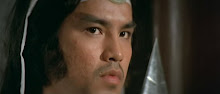
 A psycho killer who looks like Kenny Rogers stalks the sexy barmaids of the Swing-A-Ling Club. After killing one of the waitresses, and failing to kill another three after they catch him in the act, he shaves his face, dyes and changes his hairstyle, and ends up getting a job at the very same club as a bouncer. Oblivious to the fact the killer is in their midst, bodies continue to pile up between the employees and those connected with them. Meanwhile, a resolute police Lieutenant is desperate to bring the maniac's reign of mayhem and murder to an end.
 The producer of SUPERSTITION (1982), the writer of DEATH RACE 2000 (1975), and the director of THE EVIL (1978) deliver a fantastic sleaze pizza with all your favorite toppings, and in just under 90 minutes. Low on gore (it does sport some splashy blood squibs), but high on tension and entertainment value, THE SWINGING BARMAIDS is occasionally skeevy, even if, at times, it teases more than it actually shows; this works in the film's favor. Vastly underrated, these imperiled, well-endowed waitresses are currently unavailable in a quality presentation.
 Other than the barmaids, neither the film's title (including its re-release title of EAGER BEAVERS), nor its advertising evokes what the actual movie is about. Jack Hill's comedic romp THE SWINGING CHEERLEADERS (1974) was a success, so possibly the producers were trying to siphon some of it for their movie. As for the contents of Trikonis's picture, it has more in common with the misogy-sadistic THE CENTERFOLD GIRLS (1974). Like their cousin, the slasher movie, these psycho killer flicks generally traded gore for an unsavory atmosphere. Both types of films used beautiful, often naked, women as their selling points; and like the slashers, they're only as good as their villain... and BARMAIDS has a damn good one.
 Slasher killers live or die by how intimidating they are behind a mask. Psycho killers are almost always viewed as abundantly human, sans any supernatural aura created to mask their true identity. Since we often see the face of the latter early on, these movies rely on the disturbing qualities of the maniac in question to derive disgust from the audience. The killer of BARMAIDS is where this film excels, and much of that success is due to Bruce Watson's unhinged performance as mercurial sadist, Tom Brady!
 Bruce Watson never did a whole lot outside of small screen work. If you're a fan of the original STAR TREK (1966-1969), you'll recognize him as a member of Kirk's doomed landing party (non-red shirt, too!) who succumbed to the salt monster in 'The Man Trap'. As Tom Brady, Watson is calculating, cunning, and purely evil. He's also extremely self-conscious despite being able to kick the asses of upwards of a dozen men at once. A necrophiliac (we never see this, but hear about it), he then does mock photo shoots with the corpses--posing them in various positions while snapping pictures for his repulsive collection.
When we first meet him in the Swing-A-Ling Club, he looks like a wiry Kenny Rogers. Ordering a Virgin Mary, Boo Boo the waitress, sensing he might be a virgin himself, calls him 'Sonny'; but similarly to Leslie Nielsen in AIRPLANE! (1980), Tom doesn't like being called Sonny. Despite his insistence, the waitress continues to refer to him using that "young buck" defining appellation, ensuring she will be receiving an unwanted guest later that night.

 Playing the grumpy Boo Boo is Dyanne Thorne. Her fans will be enticed to see this based on her participation alone. But don't get too aroused because her co-star credit amounts to an extended cameo. She hadn't broke out as ILSA, SHE-WOLF OF THE SS (1975) yet, so her part is reduced to victim status. This first attack sequence is very well shot. Both Thorne and Watson really throw themselves into the sequence to make it as believable as possible. The other attack scenes are just as brutal in their realism. The pool attack, for instance, is particularly grim.
After Bruce has managed to cunningly kill off most of his prey with veritable ease, Charles Griffith writes a fantastically taut set piece for the finale involving bloody gun play and a car-motorcycle chase; and when you have motorcycles in a Drive-in movie, William Smith can't be far away.

 Easily the greatest actor in exploitation cinema history, and one of the best, most underrated actors in film of any style is William Smith. If you don't recognize the name, you will surely know the face. He fought Clint Eastwood in ANY WHICH WAY YOU CAN (1980) and was Conan's dad in CONAN THE BARBARIAN (1982)--two of his more famous roles. In BARMAIDS he plays Lieutenant White. Smith had a certain attitude he brought to many of his parts--particularly when he was a villain. He could do good guys with the same amount of conviction and ease. In 1973 he played a government agent in the Drive-in classic, INVASION OF THE BEE GIRLS (1973), and his Lt. White is in the same vein.
 Often associated with Roger Corman movies, Charles B. Griffith's script is wittily effective with its dialog and surprisingly thick with characterization while relying on the usual genre staples to make it work.
 The film isn't without a few silly moments--the obvious fake beard Watson wears prior to changing his appearance; a news reporter stupidly gives out the surviving waitresses names on live television. Other than that, there's nothing major to complain about.
 During this time period, Gus Trikonis was an extremely efficient director of quality Drive-in movies. Among his credits you'll find the Philippines set chicken fighting movie SUPERCOCK (1975); the trashy, pre-COAL MINER'S DAUGHTER (1980) drama of NASHVILLE GIRL (1976); and the Southern Fried Car Crasher MOONSHINE COUNTY EXPRESS (1977). Unfortunately, much of his work is unavailable in pristine quality for reappraisal.
On its own merits, THE SWINGING BARMAIDS is an above average thriller with just enough gratuitous moments to keep it in respectable stead with other, more salacious exploitation pictures of a similar brand. Hopefully some DVD company will option it in the near future, allowing for many new customers to frequent the Swing-A-Ling Club.