"...
East did not meet West. I have a tremendous admiration for Shaw and his
operation and the relationship between him and us should have been very
successful but unfortunately it wasn't, and nobody's blaming anybody.
We just had two different points of view."--Michael Carreras interview, The House of Hammer #17, February 1978
 This
two-part entry of Celluloid Trails is as much about the making of the
Hammer-Shaw co-production THE LEGEND OF THE 7 GOLDEN VAMPIRES (1974) as
it is the undoing of the two companies that produced it. Much has
already been written about the film in various books on Hammer,
including most recently the film's production as detailed in the Hammer
magazine 'Little Shoppe of Horrors' #32. Still, while virtually
every aspect of the British side of the production has been covered,
little has been specified on the Hong Kong side to put the film into
better context; nor has anything been written about the two companies
status at that time and how both Hammer and Shaw were strikingly similar
in their eventual decline.
This
two-part entry of Celluloid Trails is as much about the making of the
Hammer-Shaw co-production THE LEGEND OF THE 7 GOLDEN VAMPIRES (1974) as
it is the undoing of the two companies that produced it. Much has
already been written about the film in various books on Hammer,
including most recently the film's production as detailed in the Hammer
magazine 'Little Shoppe of Horrors' #32. Still, while virtually
every aspect of the British side of the production has been covered,
little has been specified on the Hong Kong side to put the film into
better context; nor has anything been written about the two companies
status at that time and how both Hammer and Shaw were strikingly similar
in their eventual decline.
Accompanying
this article are nearly five dozen images from Shaw's Southern Screen and Hong
Kong Movie News magazines, many of which that have never been seen before.
Additionally, many of the errors in the LSOH issue and on the new Scream
Factory bluray commentary track regarding the HK portions of the
production are corrected HERE.
PRELUDE TO KUNG FU BROTHERS & BLOODSUCKERS
 Hammer
Films of Great Britain was famous for bringing the classic B/W
Universal Monsters back to life in bloodcurdling color in the late
1950s. The popularity of THE CURSE OF FRANKENSTEIN (1957), THE HORROR OF
DRACULA (1958) and THE MUMMY (1959) exploded around the world--leading
to several sequels for all three. More horror was to come as Hammer
enjoyed good box office for the next decade with atypically scathing
critical notices. Mixing blood, nudity, and boundary pushing scenes for
their time, Hammer paved the way for more gruesome horrors that emerged
in the 1970s.
Hammer
Films of Great Britain was famous for bringing the classic B/W
Universal Monsters back to life in bloodcurdling color in the late
1950s. The popularity of THE CURSE OF FRANKENSTEIN (1957), THE HORROR OF
DRACULA (1958) and THE MUMMY (1959) exploded around the world--leading
to several sequels for all three. More horror was to come as Hammer
enjoyed good box office for the next decade with atypically scathing
critical notices. Mixing blood, nudity, and boundary pushing scenes for
their time, Hammer paved the way for more gruesome horrors that emerged
in the 1970s. Over
in Hong Kong, Shaw Brothers Studio--at one time the largest privately
owned film production facility in the world--had been making a lot of
noise after reinventing the swordplay movie in the late 1960s. Chang
Cheh (see insert), the preeminent action filmmaker in HK at that
time, had brought masculinity to the forefront of Asian cinema in the
most violent, gory ways imaginable. In the early 1970s, Shaw's bloody
style of Kung Fu movies became all the rage around the world--opening
the door for Bruce Lee and countless others vying for martial dominance
at the international box office.
Over
in Hong Kong, Shaw Brothers Studio--at one time the largest privately
owned film production facility in the world--had been making a lot of
noise after reinventing the swordplay movie in the late 1960s. Chang
Cheh (see insert), the preeminent action filmmaker in HK at that
time, had brought masculinity to the forefront of Asian cinema in the
most violent, gory ways imaginable. In the early 1970s, Shaw's bloody
style of Kung Fu movies became all the rage around the world--opening
the door for Bruce Lee and countless others vying for martial dominance
at the international box office. When
Kung Fu movies were exploding in popularity globally, and Hammer's
style of Gothic horror was dimming, it seemed like a perfect match that
these two companies would join forces to produce the first entertainment
of Hammer Horror and Kung Fu Thrills. Combining the two genre styles
had never been done before; nor had their ever been a teaming of a
British and a Chinese film company. Unfortunately, there was no
forethought as to the cultural and creative
differences that was to arise between two diametrically opposite
filmmaking forces.
When
Kung Fu movies were exploding in popularity globally, and Hammer's
style of Gothic horror was dimming, it seemed like a perfect match that
these two companies would join forces to produce the first entertainment
of Hammer Horror and Kung Fu Thrills. Combining the two genre styles
had never been done before; nor had their ever been a teaming of a
British and a Chinese film company. Unfortunately, there was no
forethought as to the cultural and creative
differences that was to arise between two diametrically opposite
filmmaking forces.
A few factors led to this unusual partnership. On the British side,
Hammer wasn't in a financially stable place in the early 1970s. With
financing from US companies evaporating amid a changing marketplace, the
company was finding it increasingly difficult to make a profit backing
their own projects in addition to the poor distributorship of their films
elsewhere; only Warner Brothers was sticking around and that was about
to change.
 Hammer head Sir James Carreras wanted to
sell the company and began negotiations with Laurie Marsh of Hemdale--an
entrepreneur and philanthropist who had recently merged with Tigon, one
of Hammer's rivals responsible for pictures like THE BLOOD BEAST TERROR
(1968), WITCHFINDER GENERAL (1968) and BLOOD ON SATAN'S CLAW (1971).
The possibility of a competitor being a potential buyer didn't sit well
with James's son Michael Carreras; so he made a deal to buy out his
father's stake in the company making him sole owner. In early 1973,
Michael Carreras became President of Hammer and the new owner of a host
of problems that came with it. Blindsided by a handful of crippling blows damaging Hammer's foundation, Carreras was
faced with the reality that his company was no longer the powerhouse of the
previous 15 years.
Hammer head Sir James Carreras wanted to
sell the company and began negotiations with Laurie Marsh of Hemdale--an
entrepreneur and philanthropist who had recently merged with Tigon, one
of Hammer's rivals responsible for pictures like THE BLOOD BEAST TERROR
(1968), WITCHFINDER GENERAL (1968) and BLOOD ON SATAN'S CLAW (1971).
The possibility of a competitor being a potential buyer didn't sit well
with James's son Michael Carreras; so he made a deal to buy out his
father's stake in the company making him sole owner. In early 1973,
Michael Carreras became President of Hammer and the new owner of a host
of problems that came with it. Blindsided by a handful of crippling blows damaging Hammer's foundation, Carreras was
faced with the reality that his company was no longer the powerhouse of the
previous 15 years.
Meanwhile, back in Hong Kong...
"We've discovered happily that the Americans and Europeans shared our
taste for action films. The reason I think we've been so successful in
the western world is because we offer more action than any other
producer."--Sir Run Run Shaw, Women's Wear Daily, August 1st, 1973
 1973
was not good for Hammer, but was arguably the most crucial year for
Hong Kong cinema. Run Run Shaw was in the spotlight at the center of a
wave of
international interest in Chinese martial arts. Warner Brothers, seeking
something new and different, found it in Hong Kong. Gambling on the
Oriental mystique of Kung Fu movies, Warner reps selected a little film
titled KING BOXER (1972) to test in western markets. Interestingly, the
chosen film was not a
huge success in Hong Kong, but went on to smash the competition
everywhere else in the world, including America where it grossed nearly
$8 million in four months of release in 500 cities. With the global
success
of KING BOXER (famously re-titled FIVE FINGERS OF DEATH in the US),
everybody--like the hit 1974 Carl Douglas song--was Kung Fu Fighting; and if
they weren't, they wanted to see what all the fuss was about.
1973
was not good for Hammer, but was arguably the most crucial year for
Hong Kong cinema. Run Run Shaw was in the spotlight at the center of a
wave of
international interest in Chinese martial arts. Warner Brothers, seeking
something new and different, found it in Hong Kong. Gambling on the
Oriental mystique of Kung Fu movies, Warner reps selected a little film
titled KING BOXER (1972) to test in western markets. Interestingly, the
chosen film was not a
huge success in Hong Kong, but went on to smash the competition
everywhere else in the world, including America where it grossed nearly
$8 million in four months of release in 500 cities. With the global
success
of KING BOXER (famously re-titled FIVE FINGERS OF DEATH in the US),
everybody--like the hit 1974 Carl Douglas song--was Kung Fu Fighting; and if
they weren't, they wanted to see what all the fuss was about. Both before and after Kung Fu became all the rage, Shaw Brothers Studio was featured in major publications like Time and
Life magazines, Newsweek and others like Oui Magazine. In another instance, an ABC film crew spent two days (July 3rd-5th) with Run Run Shaw filming a documentary on his empire in 1973 titled 'The World of Run Run Shaw'. In November of that year, a BBC crew went to Shaw Studio to film FISTS OF
FIRE, a documentary on Movie Town and the Kung Fu craze that aired in 1975. The crew
visited the sets of both THE LEGEND OF THE 7 GOLDEN VAMPIRES (see insert) and the
Italy-HK co-pro, THIS TIME I'LL MAKE YOU RICH.
Both before and after Kung Fu became all the rage, Shaw Brothers Studio was featured in major publications like Time and
Life magazines, Newsweek and others like Oui Magazine. In another instance, an ABC film crew spent two days (July 3rd-5th) with Run Run Shaw filming a documentary on his empire in 1973 titled 'The World of Run Run Shaw'. In November of that year, a BBC crew went to Shaw Studio to film FISTS OF
FIRE, a documentary on Movie Town and the Kung Fu craze that aired in 1975. The crew
visited the sets of both THE LEGEND OF THE 7 GOLDEN VAMPIRES (see insert) and the
Italy-HK co-pro, THIS TIME I'LL MAKE YOU RICH.  Chinese
martial arts movies were unlike anything that
had been seen before. It wasn't long till foreign studios wanted to
partner
with the Shaw Brothers to get a piece of the Kung Fu action. Shaw's had
previously aligned with Japanese, Korean, and other Asian companies, but
now they would be working with European and American producers. Between
1973 and 1975, some ten co-productions were slated for filming at the
renowned HK studio. Unfortunately, the quality varied wildly on many of
them--emphasizing heavy doses of exploitation that held appeal with the
rabid Drive-in and trash crowds. Before sinking our teeth into the tale
of the LEGEND, it's necessary to cover some of those collaborative
efforts for context.
Chinese
martial arts movies were unlike anything that
had been seen before. It wasn't long till foreign studios wanted to
partner
with the Shaw Brothers to get a piece of the Kung Fu action. Shaw's had
previously aligned with Japanese, Korean, and other Asian companies, but
now they would be working with European and American producers. Between
1973 and 1975, some ten co-productions were slated for filming at the
renowned HK studio. Unfortunately, the quality varied wildly on many of
them--emphasizing heavy doses of exploitation that held appeal with the
rabid Drive-in and trash crowds. Before sinking our teeth into the tale
of the LEGEND, it's necessary to cover some of those collaborative
efforts for context.
SHAW & ITALY
 The first of these co-pro's was
with Italy's INDIEF (International Nembo Distribution Import Export
Film) company; that picture being SUPERMEN AGAINST THE ORIENT--the
last film in the goofy THREE SUPERMEN series. After Lo Lieh's KING BOXER
reigned mightily in foreign theaters, SUPERMEN was his first of two
chances to shine on the international scene.
Directed by Bitto Albertini and an uncredited Kuei Chi Hung, the picture
barely made a dent at the HK box office despite an enormous amount of
promotion from Shaw's publicity department. Aside from being quirky fun,
it
is mostly notable for being an early credit for Jackie Chan as an action
choreographer.
The first of these co-pro's was
with Italy's INDIEF (International Nembo Distribution Import Export
Film) company; that picture being SUPERMEN AGAINST THE ORIENT--the
last film in the goofy THREE SUPERMEN series. After Lo Lieh's KING BOXER
reigned mightily in foreign theaters, SUPERMEN was his first of two
chances to shine on the international scene.
Directed by Bitto Albertini and an uncredited Kuei Chi Hung, the picture
barely made a dent at the HK box office despite an enormous amount of
promotion from Shaw's publicity department. Aside from being quirky fun,
it
is mostly notable for being an early credit for Jackie Chan as an action
choreographer. A second Italian team-up bearing the title THIS TIME
I'LL MAKE YOU RICH began filming in Hong Kong in November of 1974 and was released there in 1975 to even less interest from
audiences. A Bud Spencer & Terence Hill type action comedy directed
by SABATA's Gianfranco Parolini (Frank Kramer), the Hong Kong actors--like Danny Lee (Li Hsiu Hsien)--were basically supporting players next to the silly antics of Italian Antonio
Sabato and American bodybuilder Brad Harris.
A second Italian team-up bearing the title THIS TIME
I'LL MAKE YOU RICH began filming in Hong Kong in November of 1974 and was released there in 1975 to even less interest from
audiences. A Bud Spencer & Terence Hill type action comedy directed
by SABATA's Gianfranco Parolini (Frank Kramer), the Hong Kong actors--like Danny Lee (Li Hsiu Hsien)--were basically supporting players next to the silly antics of Italian Antonio
Sabato and American bodybuilder Brad Harris.  Yueh Hua got more screen time, but fared worse in Alfonso Brescia's (under his pseudonym as Al Bradley)
oppressively atrocious AMAZONS AGAINST SUPERMEN--shot entirely in Italy
and released under various titles in 1975. In America AIP released it as
SUPER STOOGES VS. THE WONDER WOMEN. If only the movie was as interesting as that overly ridiculous title.
Yueh Hua got more screen time, but fared worse in Alfonso Brescia's (under his pseudonym as Al Bradley)
oppressively atrocious AMAZONS AGAINST SUPERMEN--shot entirely in Italy
and released under various titles in 1975. In America AIP released it as
SUPER STOOGES VS. THE WONDER WOMEN. If only the movie was as interesting as that overly ridiculous title.
Another joint effort between Shaw and
Italy, a comedy tentatively titled 'The Assassin', never got made.


The
last partnering of HK and Italy was the most prestigious of their
co-productions. Big time producer Carlo Ponti teamed with the Shaw
Brothers (along with a US company, Harbor Productions) to produce 1975s uneven, but relentlessly fun THE STRANGER AND THE GUNFIGHTER (known in Hong Kong as BLOOD MONEY),
starring Lee Van Cleef, Lo Lieh and directed by Antonio Margheriti.
Filming began in June of 1974 with some shooting in Hong Kong but the bulk of it in Spain.
SHAW & GERMANY
 German producer Wolf C.Hartwig (the SCHOOLGIRL REPORT series)
joined forces with Run Run Shaw to co-produce VIRGINS OF THE 7 SEAS
(1974), the trashiest and most outrageous of all the Shaw Brothers
collaborative pictures. Ernst Hofbauer co-directed with Kuei Chi Hung;
and really, you couldn't of gotten two more flamboyant exploitation
filmmakers working on the same film. Production began February 11th, 1974. Utilizing an international cast,
and despite an abrupt change in casting, VIRGINS did decent business in
HK and is a highly entertaining, if virtually plotless affair.
German producer Wolf C.Hartwig (the SCHOOLGIRL REPORT series)
joined forces with Run Run Shaw to co-produce VIRGINS OF THE 7 SEAS
(1974), the trashiest and most outrageous of all the Shaw Brothers
collaborative pictures. Ernst Hofbauer co-directed with Kuei Chi Hung;
and really, you couldn't of gotten two more flamboyant exploitation
filmmakers working on the same film. Production began February 11th, 1974. Utilizing an international cast,
and despite an abrupt change in casting, VIRGINS did decent business in
HK and is a highly entertaining, if virtually plotless affair.SHAW & USA
 The
most extravagantly budgeted of the Shaw Brothers co-productions was
their first team-up with Warner Brothers in CLEOPATRA JONES AND THE CASINO OF GOLD (1975); a Bondian style sequel to Warner's black action
favorite CLEOPATRA JONES (1973) directed by Jack Starrett. Tamara Dobson
(see insert) played Cleo in both pictures. Shot entirely in Hong
Kong, CASINO featured a slew of familiar Shaw faces and a stellar cast
that included Stella Stevens and Norman Fell. It was a suitably high-end
finale to the Black Action genre that exploded with the release of
SHAFT in 1971.
The
most extravagantly budgeted of the Shaw Brothers co-productions was
their first team-up with Warner Brothers in CLEOPATRA JONES AND THE CASINO OF GOLD (1975); a Bondian style sequel to Warner's black action
favorite CLEOPATRA JONES (1973) directed by Jack Starrett. Tamara Dobson
(see insert) played Cleo in both pictures. Shot entirely in Hong
Kong, CASINO featured a slew of familiar Shaw faces and a stellar cast
that included Stella Stevens and Norman Fell. It was a suitably high-end
finale to the Black Action genre that exploded with the release of
SHAFT in 1971.
SHAW & GREAT BRITAIN
 THE
LEGEND OF THE 7 GOLDEN VAMPIRES was the first time a British and
Chinese company worked side by side; and also the second co-production (following SUPERMEN AGAINST THE ORIENT)
between Shaw Brothers and a foreign company. This production was among
the most heavily promoted of these alliances with foreign companies.
Hammer Films were a well known commodity around the world, and popular
in Hong Kong as well. Naturally, the prospect of the first Kung
Fu-Horror production gathered a lot of attention. Needless to say, it
was a famously chaotic collaboration. The tension began virtually from
the first day of filming on October 22nd, 1973, lasting
up to the end of filming on December 11th of that year.
THE
LEGEND OF THE 7 GOLDEN VAMPIRES was the first time a British and
Chinese company worked side by side; and also the second co-production (following SUPERMEN AGAINST THE ORIENT)
between Shaw Brothers and a foreign company. This production was among
the most heavily promoted of these alliances with foreign companies.
Hammer Films were a well known commodity around the world, and popular
in Hong Kong as well. Naturally, the prospect of the first Kung
Fu-Horror production gathered a lot of attention. Needless to say, it
was a famously chaotic collaboration. The tension began virtually from
the first day of filming on October 22nd, 1973, lasting
up to the end of filming on December 11th of that year. Problems were exacerbated when the action-adventure SHATTER, the second Hammer-Shaw co-production, began shooting December 7th, 1973... but that is another story.
THE FAR WEST IN THE WILD EAST
 The two-picture deal between
Hammer Films and Shaw Brothers was sealed on September 29th, 1973. On
Run Run's behalf, Shaw's son, Harold Shaw, signed the contract with
Hammer's head of production Michael Carreras in London (see insert). His father was
unable to attend as he was involved in wedding preparations for one of
his famous actresses, Lily Ho, on October 4th, 1973 to businessman
George Chao.
The two-picture deal between
Hammer Films and Shaw Brothers was sealed on September 29th, 1973. On
Run Run's behalf, Shaw's son, Harold Shaw, signed the contract with
Hammer's head of production Michael Carreras in London (see insert). His father was
unable to attend as he was involved in wedding preparations for one of
his famous actresses, Lily Ho, on October 4th, 1973 to businessman
George Chao.
Shaw
publications stated the budget for LEGEND was US$2 million. As much as
this co-production was ballyhooed, there was a certain amount of public
curiosity surrounding what the end result of such a groundbreaking
team-up would look like. There was an enormous potential in this
partnership in all aspects of its production. One of the key proponents
was in the casting.

 You
had Hammer's resident vampire slayer and frequent Mad Scientist, Peter
Cushing doing battle not just against Count Dracula, but against the Chinese undead in a far more energetic
capacity than his previous Van Helsing portrayals.
You
had Hammer's resident vampire slayer and frequent Mad Scientist, Peter
Cushing doing battle not just against Count Dracula, but against the Chinese undead in a far more energetic
capacity than his previous Van Helsing portrayals.
In her second Hammer movie, Norwegian beauty Julie Ege stars as the headstrong, wealthy financier of the expedition to find the lair of the Golden Vampires; a role unlike some of her others, this one requiring her to keep her top on.
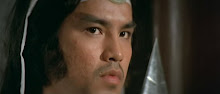
On the Shaw side you had two of the biggest HK stars in David Chiang and Shih Szu (more on them later). Up and coming Shaw actor Wang Chung (see above at left next to David Chiang) was initially cast but removed possibly because of at least four other projects he was working on including two lead roles in THE DELINQUENT (1973) and POLICE FORCE (1973). The stars were literally aligned for a powerhouse production.
 Peter
Cushing's participation is notable for more reasons than just acting in
the movie. Always an amicable man, his presence was felt in ways not
exclusive to appearing in front of the camera. He'd designed models of
the vampires lair that were remarkably detailed (see insert). The
actor also contributed his narration, accompanied by music and sound
effects, to the LP release of the movie coinciding with its theatrical
unveiling. With his wife Helen having been dead for two years, Cushing
kept himself occupied and busy; performing in his usual stellar capacity
and remaining a source of contentment for those around him despite the
grief he carried with him till his passing in 1994.
Peter
Cushing's participation is notable for more reasons than just acting in
the movie. Always an amicable man, his presence was felt in ways not
exclusive to appearing in front of the camera. He'd designed models of
the vampires lair that were remarkably detailed (see insert). The
actor also contributed his narration, accompanied by music and sound
effects, to the LP release of the movie coinciding with its theatrical
unveiling. With his wife Helen having been dead for two years, Cushing
kept himself occupied and busy; performing in his usual stellar capacity
and remaining a source of contentment for those around him despite the
grief he carried with him till his passing in 1994.
As for the exciting prospects of East marrying with Western cinema styles, in approximately two weeks, the British cast and crew would make the journey to Hong Kong where this newfound couple would discover just how incompatible they were.

 You
had Hammer's resident vampire slayer and frequent Mad Scientist, Peter
Cushing doing battle not just against Count Dracula, but against the Chinese undead in a far more energetic
capacity than his previous Van Helsing portrayals.
You
had Hammer's resident vampire slayer and frequent Mad Scientist, Peter
Cushing doing battle not just against Count Dracula, but against the Chinese undead in a far more energetic
capacity than his previous Van Helsing portrayals. In her second Hammer movie, Norwegian beauty Julie Ege stars as the headstrong, wealthy financier of the expedition to find the lair of the Golden Vampires; a role unlike some of her others, this one requiring her to keep her top on.
On the Shaw side you had two of the biggest HK stars in David Chiang and Shih Szu (more on them later). Up and coming Shaw actor Wang Chung (see above at left next to David Chiang) was initially cast but removed possibly because of at least four other projects he was working on including two lead roles in THE DELINQUENT (1973) and POLICE FORCE (1973). The stars were literally aligned for a powerhouse production.
 Peter
Cushing's participation is notable for more reasons than just acting in
the movie. Always an amicable man, his presence was felt in ways not
exclusive to appearing in front of the camera. He'd designed models of
the vampires lair that were remarkably detailed (see insert). The
actor also contributed his narration, accompanied by music and sound
effects, to the LP release of the movie coinciding with its theatrical
unveiling. With his wife Helen having been dead for two years, Cushing
kept himself occupied and busy; performing in his usual stellar capacity
and remaining a source of contentment for those around him despite the
grief he carried with him till his passing in 1994.
Peter
Cushing's participation is notable for more reasons than just acting in
the movie. Always an amicable man, his presence was felt in ways not
exclusive to appearing in front of the camera. He'd designed models of
the vampires lair that were remarkably detailed (see insert). The
actor also contributed his narration, accompanied by music and sound
effects, to the LP release of the movie coinciding with its theatrical
unveiling. With his wife Helen having been dead for two years, Cushing
kept himself occupied and busy; performing in his usual stellar capacity
and remaining a source of contentment for those around him despite the
grief he carried with him till his passing in 1994.As for the exciting prospects of East marrying with Western cinema styles, in approximately two weeks, the British cast and crew would make the journey to Hong Kong where this newfound couple would discover just how incompatible they were.
THE SOUND OF SILENCE
 Despite
the fact that screenwriter Don Houghton had scouted Shaw's Studio
operations prior to the arrival of the Hammer cast and crew, there
seemed to be some surprise as to how the Chinese did things versus what
the British were accustomed to. For example, Director Roy Ward Baker was
very vocal about what he felt was less than adequate conditions; and
particularly the Chinese filming without sync sound. He understood the
reasoning behind it, but to him, it was an annoyance in trying to shoot
while an assortment of distractions occurred around him--with or without
live recording.
Despite
the fact that screenwriter Don Houghton had scouted Shaw's Studio
operations prior to the arrival of the Hammer cast and crew, there
seemed to be some surprise as to how the Chinese did things versus what
the British were accustomed to. For example, Director Roy Ward Baker was
very vocal about what he felt was less than adequate conditions; and
particularly the Chinese filming without sync sound. He understood the
reasoning behind it, but to him, it was an annoyance in trying to shoot
while an assortment of distractions occurred around him--with or without
live recording.
Actually,
when Shaw's was building Movie Town, the plan was to install soundproof
stages although some were resistant to the idea. According to Chang
Cheh, he had convinced the Shaw's it would be more economical for them
to film without sync sound since, among other reasons, they would be
dubbing their movies into a variety of dialects and languages anyway.
The Italians shot without live sound as well, but this practice was
alien to the incoming Brits from the Hammer camp.
 Another
problem that Baker and some others had was they felt the Shaw Studio
was not up to their standards. At that time with 1.4 million square feet
of land; 1,500 employees on staff and 38 various departments including
prop houses, horse stables, costuming, and makeup facilities.
Dormitories housed actors and technicians; and at that time (see above photo;Shaw Studio, December 1973), there were 10 indoor sets and several massive outdoor sets.
Another
problem that Baker and some others had was they felt the Shaw Studio
was not up to their standards. At that time with 1.4 million square feet
of land; 1,500 employees on staff and 38 various departments including
prop houses, horse stables, costuming, and makeup facilities.
Dormitories housed actors and technicians; and at that time (see above photo;Shaw Studio, December 1973), there were 10 indoor sets and several massive outdoor sets.
One minor issue that seemed to somewhat hinder the British crew was the horses used in the movie. Claiming they were taken straight from the horse races, the Shaw's most certainly had stables with 15 steeds occupying them. It's possible they were being allocated elsewhere, but they most certainly had them on-site.
 Another
problem that Baker and some others had was they felt the Shaw Studio
was not up to their standards. At that time with 1.4 million square feet
of land; 1,500 employees on staff and 38 various departments including
prop houses, horse stables, costuming, and makeup facilities.
Dormitories housed actors and technicians; and at that time (see above photo;Shaw Studio, December 1973), there were 10 indoor sets and several massive outdoor sets.
Another
problem that Baker and some others had was they felt the Shaw Studio
was not up to their standards. At that time with 1.4 million square feet
of land; 1,500 employees on staff and 38 various departments including
prop houses, horse stables, costuming, and makeup facilities.
Dormitories housed actors and technicians; and at that time (see above photo;Shaw Studio, December 1973), there were 10 indoor sets and several massive outdoor sets. One minor issue that seemed to somewhat hinder the British crew was the horses used in the movie. Claiming they were taken straight from the horse races, the Shaw's most certainly had stables with 15 steeds occupying them. It's possible they were being allocated elsewhere, but they most certainly had them on-site.
 Don Houghton (see insert; pictured with his wife) was asked by one of Shaw's journalists if
Chinese filmmaking technology was behind the British methods and he
remarked, "It can't be considered backward, it can only be said that the
method is different. For example, Shaw's record their sound after
filming is complete. We record ours on-set. This is the most
significant difference." Houghton was married to a Chinese woman so he
already had some knowledge of Chinese mythology while writing the
script; although she didn't contribute to its content. He apparently was
a fan of Kung Fu/Swordplay pictures as he enjoyed Chang Cheh's NEW
ONE ARMED SWORDSMAN (1971), having saw the film back home in the UK. He
liked David Chiang so this gave an opportunity for Houghton to work with one of Hong Kong's biggest movie stars of the time.
Don Houghton (see insert; pictured with his wife) was asked by one of Shaw's journalists if
Chinese filmmaking technology was behind the British methods and he
remarked, "It can't be considered backward, it can only be said that the
method is different. For example, Shaw's record their sound after
filming is complete. We record ours on-set. This is the most
significant difference." Houghton was married to a Chinese woman so he
already had some knowledge of Chinese mythology while writing the
script; although she didn't contribute to its content. He apparently was
a fan of Kung Fu/Swordplay pictures as he enjoyed Chang Cheh's NEW
ONE ARMED SWORDSMAN (1971), having saw the film back home in the UK. He
liked David Chiang so this gave an opportunity for Houghton to work with one of Hong Kong's biggest movie stars of the time. Houghton's
script apparently went through some changes as Chinese materials
mention the film takes place in 1880 while the finished picture spans a
100 year time frame between 1804 and 1904.
Elsewhere, the location of the lair of the vampires isn't given in the
movie, but Chinese articles state it takes place in Taoyuan County in
Hunan Province. Shaw's periodicals feature several scenes and images
that are either alternate shots, or exclusive to their version, or
removed altogether. Images for some of these are seen and specified
throughout this two-part article.
Houghton's
script apparently went through some changes as Chinese materials
mention the film takes place in 1880 while the finished picture spans a
100 year time frame between 1804 and 1904.
Elsewhere, the location of the lair of the vampires isn't given in the
movie, but Chinese articles state it takes place in Taoyuan County in
Hunan Province. Shaw's periodicals feature several scenes and images
that are either alternate shots, or exclusive to their version, or
removed altogether. Images for some of these are seen and specified
throughout this two-part article.
HORROR AND KUNG FU CLASH
 There
were many differences between the two cultures that foreshadowed the
two studios would be destined to failure. Shaw Studios was so big, they
could film a multitude of movies at once without interruption. It
wasn't uncommon for stars to shoot a few different pictures at the same
time; working a few hours on one set, then move on to another for an
entirely different production. Hammer, on the other hand, had done
back-to-back movies before but nothing at the breakneck pace of Hong
Kong cinema. What was seen as chaotic and disorganized by the Brits was a
typical day at the office for the Chinese crew.
There
were many differences between the two cultures that foreshadowed the
two studios would be destined to failure. Shaw Studios was so big, they
could film a multitude of movies at once without interruption. It
wasn't uncommon for stars to shoot a few different pictures at the same
time; working a few hours on one set, then move on to another for an
entirely different production. Hammer, on the other hand, had done
back-to-back movies before but nothing at the breakneck pace of Hong
Kong cinema. What was seen as chaotic and disorganized by the Brits was a
typical day at the office for the Chinese crew. Another
point of contention was that the Shaw's were making changes and, as was
felt by some on the British side, attempting to take over the
production.
Another
point of contention was that the Shaw's were making changes and, as was
felt by some on the British side, attempting to take over the
production.
Run
Run Shaw had a hand's on approach to his empire. He would tour the sets
of the films he was producing; watch the footage or rough cuts in his
private theater and give pointers on whether the picture was going well.
If it wasn't, he'd shelve it for possible future use, or simply trash
the footage altogether. In the case of GOLDEN VAMPIRES, the shooting of
the action sequences wasn't to his liking.
 Baker,
on the other hand, thought he knew how to shoot Kung Fu fights better
than the Chinese despite the fact he'd never shot a martial arts
sequence in his career. The distinguished Liu Chia Liang (Lau Kar Leung),
who was the film's fight choreographer along with the equally qualified
Tang Chia, was obviously insulted. Liu had been Chang Cheh's action
designer since 1966. He, like Chang Cheh, was very busy at this time
trekking between HK and Taiwan working on an innovative series of Kung
Fu films based on the Shaolin Temple and the styles of martial arts that
originated there. Prior to GOLDEN VAMPIRES scheduled start date, Chang
Cheh had returned to Shaw Studios in September '73 to resume filming on
THE SAVAGE 5 (1974), a Chinese take on THE SEVEN SAMURAI (1954)--a film
that likewise served as inspiration for Don Houghton's GOLDEN VAMPIRES
script.
Baker,
on the other hand, thought he knew how to shoot Kung Fu fights better
than the Chinese despite the fact he'd never shot a martial arts
sequence in his career. The distinguished Liu Chia Liang (Lau Kar Leung),
who was the film's fight choreographer along with the equally qualified
Tang Chia, was obviously insulted. Liu had been Chang Cheh's action
designer since 1966. He, like Chang Cheh, was very busy at this time
trekking between HK and Taiwan working on an innovative series of Kung
Fu films based on the Shaolin Temple and the styles of martial arts that
originated there. Prior to GOLDEN VAMPIRES scheduled start date, Chang
Cheh had returned to Shaw Studios in September '73 to resume filming on
THE SAVAGE 5 (1974), a Chinese take on THE SEVEN SAMURAI (1954)--a film
that likewise served as inspiration for Don Houghton's GOLDEN VAMPIRES
script.
 Baker,
on the other hand, thought he knew how to shoot Kung Fu fights better
than the Chinese despite the fact he'd never shot a martial arts
sequence in his career. The distinguished Liu Chia Liang (Lau Kar Leung),
who was the film's fight choreographer along with the equally qualified
Tang Chia, was obviously insulted. Liu had been Chang Cheh's action
designer since 1966. He, like Chang Cheh, was very busy at this time
trekking between HK and Taiwan working on an innovative series of Kung
Fu films based on the Shaolin Temple and the styles of martial arts that
originated there. Prior to GOLDEN VAMPIRES scheduled start date, Chang
Cheh had returned to Shaw Studios in September '73 to resume filming on
THE SAVAGE 5 (1974), a Chinese take on THE SEVEN SAMURAI (1954)--a film
that likewise served as inspiration for Don Houghton's GOLDEN VAMPIRES
script.
Baker,
on the other hand, thought he knew how to shoot Kung Fu fights better
than the Chinese despite the fact he'd never shot a martial arts
sequence in his career. The distinguished Liu Chia Liang (Lau Kar Leung),
who was the film's fight choreographer along with the equally qualified
Tang Chia, was obviously insulted. Liu had been Chang Cheh's action
designer since 1966. He, like Chang Cheh, was very busy at this time
trekking between HK and Taiwan working on an innovative series of Kung
Fu films based on the Shaolin Temple and the styles of martial arts that
originated there. Prior to GOLDEN VAMPIRES scheduled start date, Chang
Cheh had returned to Shaw Studios in September '73 to resume filming on
THE SAVAGE 5 (1974), a Chinese take on THE SEVEN SAMURAI (1954)--a film
that likewise served as inspiration for Don Houghton's GOLDEN VAMPIRES
script. It's
unclear at what point Chang Cheh was instructed to oversee the action
direction as a co-director of LEGEND, but the first major fight sequence
is clearly all Roy Ward Baker's guidance. Reportedly, Liu Chia Liang (see insert; Liu at far left)
was initially going to fill this position since he was the assigned
action director anyway. This ruffled Baker's feathers as he felt like
there wasn't much point in him being there if somebody else would be
giving direction alongside of him. Master Liu was actually anxious to
direct his own movies. In 1975, he would break from Chang Cheh's camp
in Taiwan and return to Hong Kong where he'd embark on a very
successful directorial career beginning with that year's comedic Kung Fu
hit, THE SPIRITUAL BOXER (1975).
It's
unclear at what point Chang Cheh was instructed to oversee the action
direction as a co-director of LEGEND, but the first major fight sequence
is clearly all Roy Ward Baker's guidance. Reportedly, Liu Chia Liang (see insert; Liu at far left)
was initially going to fill this position since he was the assigned
action director anyway. This ruffled Baker's feathers as he felt like
there wasn't much point in him being there if somebody else would be
giving direction alongside of him. Master Liu was actually anxious to
direct his own movies. In 1975, he would break from Chang Cheh's camp
in Taiwan and return to Hong Kong where he'd embark on a very
successful directorial career beginning with that year's comedic Kung Fu
hit, THE SPIRITUAL BOXER (1975). There
are no photos of Chang Cheh on the LEGEND sets, but apparently he
ensured the action would flow in the Chinese style while Baker would
shoot everything how he saw fit. It's also possible some additional
scenes were filmed exclusively for the HK theatrical version after the
British crew went home; although no one has seen it since its July 1974
release. There are photos, however, of Chang Cheh on the set of SHATTER
directing the fights (see insert) while director Monte Hellman
was eventually replaced by Michael Carreras. Unlike Hellman, Baker,
having a lengthy resume prior to this feature, had a much bigger ego to
bruise.
There
are no photos of Chang Cheh on the LEGEND sets, but apparently he
ensured the action would flow in the Chinese style while Baker would
shoot everything how he saw fit. It's also possible some additional
scenes were filmed exclusively for the HK theatrical version after the
British crew went home; although no one has seen it since its July 1974
release. There are photos, however, of Chang Cheh on the set of SHATTER
directing the fights (see insert) while director Monte Hellman
was eventually replaced by Michael Carreras. Unlike Hellman, Baker,
having a lengthy resume prior to this feature, had a much bigger ego to
bruise.  Makeup
Effects Artist Les Bowie had nothing but good things to say about Run
Run Shaw, but was apparently frustrated by the lack of resources in Hong
Kong to devise the film's many special effects that reportedly was
constantly changing as to the look of the creatures. Makeup effects in
HK were rudimentary in comparison to the Anglo filmmaking world,
although breakthroughs for Asian pictures were evident in such works as
the Shaw's colorful JOURNEY TO THE WEST series that began in 1966 with
THE MONKEY GOES WEST directed by Ho Meng Hua. The market for FX-heavy
pictures in Hong Kong wasn't there, but moguls like Shaw, who literally
lived and breathed cinema, sought to change that.
Makeup
Effects Artist Les Bowie had nothing but good things to say about Run
Run Shaw, but was apparently frustrated by the lack of resources in Hong
Kong to devise the film's many special effects that reportedly was
constantly changing as to the look of the creatures. Makeup effects in
HK were rudimentary in comparison to the Anglo filmmaking world,
although breakthroughs for Asian pictures were evident in such works as
the Shaw's colorful JOURNEY TO THE WEST series that began in 1966 with
THE MONKEY GOES WEST directed by Ho Meng Hua. The market for FX-heavy
pictures in Hong Kong wasn't there, but moguls like Shaw, who literally
lived and breathed cinema, sought to change that.  Bowie,
who began his career as a matte artist before entering into special
effects, worked on many of Hammer's horror output and some Ray
Harryhausen pictures. SUPERMAN (1978) was Bowie's last credit before
his death in 1979. With so many bloodsuckers on screen (8 including Dracula),
GOLDEN VAMPIRES required a number of vampire makeups and dissolves.
Surely it must hold a record for most vampires turned to dust on camera.
A crew of 45 assisted Bowie in creating the vampires and the dozens of
skull-faced, long-haired, living dead minions adapted from Chinese
folklore. Nothing like this had ever been seen in a Hammer picture, so
being in an entirely new environment under conditions you're
unaccustomed to, it couldn't be anything other than a challenge.
Bowie,
who began his career as a matte artist before entering into special
effects, worked on many of Hammer's horror output and some Ray
Harryhausen pictures. SUPERMAN (1978) was Bowie's last credit before
his death in 1979. With so many bloodsuckers on screen (8 including Dracula),
GOLDEN VAMPIRES required a number of vampire makeups and dissolves.
Surely it must hold a record for most vampires turned to dust on camera.
A crew of 45 assisted Bowie in creating the vampires and the dozens of
skull-faced, long-haired, living dead minions adapted from Chinese
folklore. Nothing like this had ever been seen in a Hammer picture, so
being in an entirely new environment under conditions you're
unaccustomed to, it couldn't be anything other than a challenge. For years rumors persisted that LEGEND originally never had Dracula in
the script at all; that the Shaw's insisted at the last minute to
include the character. Other stories have claimed that Warner's insisted on Dracula
being included and revisions were made to compensate. But according to
Michael Carreras himself, Dracula was always a part of the story. Don
Houghton had written it so that Dracula would appear at the opening and
ending, and make an appearance somewhere in the middle.
For years rumors persisted that LEGEND originally never had Dracula in
the script at all; that the Shaw's insisted at the last minute to
include the character. Other stories have claimed that Warner's insisted on Dracula
being included and revisions were made to compensate. But according to
Michael Carreras himself, Dracula was always a part of the story. Don
Houghton had written it so that Dracula would appear at the opening and
ending, and make an appearance somewhere in the middle.
As Carreras put
it in an interview with 'The House of Hammer' magazine, "What happened
when we saw the finished picture was that we thought the Kung Fu parts
of the film were much more exciting than the Dracula sequences so we cut
a version without Dracula at all, and what we had was a very good
Chinese action-adventure/Kung Fu frolic but unfortunately in that form
it was too short so we had to put Dracula back in."
 Easily
one of the most ambitious of Hammer's catalog, the higher
production values outshine other, more quaint pictures they were making
during this time period. A few stumbles aside, there's a sense of
adventure that's missing from Hammer's other horror output. The only
thing that could've made LEGEND even better would've been the return of
Christopher Lee to the role. Lee had
previously turned down other Dracula roles but was always lured
back into donning the fangs and cape. By this point, he meant it. John
Forbes Robertson (1970s THE VAMPIRE LOVERS) played Dracula in an admirable approximation even if his voice was dubbed (see insert image of an alternate shot not in the movie).
Easily
one of the most ambitious of Hammer's catalog, the higher
production values outshine other, more quaint pictures they were making
during this time period. A few stumbles aside, there's a sense of
adventure that's missing from Hammer's other horror output. The only
thing that could've made LEGEND even better would've been the return of
Christopher Lee to the role. Lee had
previously turned down other Dracula roles but was always lured
back into donning the fangs and cape. By this point, he meant it. John
Forbes Robertson (1970s THE VAMPIRE LOVERS) played Dracula in an admirable approximation even if his voice was dubbed (see insert image of an alternate shot not in the movie). Incidentally, Lee had starred in a movie filmed at the Shaw Studios several years earlier playing the "yellow peril incarnate" in THE VENGEANCE OF FU MANCHU (1967).
As for the Chinese cast of 7 GOLDEN VAMPIRES, the Shaw's, like Hammer, were meticulous in their selection in the hopes that both their actors and exotic nature of the film would attract the maximum amount of audience interest.
THE CONCLUSION IN PART 2 HERE.